The Learning Circle Collaborative (LCC) is a capacity building and technical assistance program that prioritizes organizations conducting grassroots work and serving Chicago’s South and West sides.
The LCC builds grantee capacity by offering masterclasses to organizational leaders, key staff, and boards from expert consultants, who provide group trainings, tailored one-on-one sessions, and shared learning experiences.
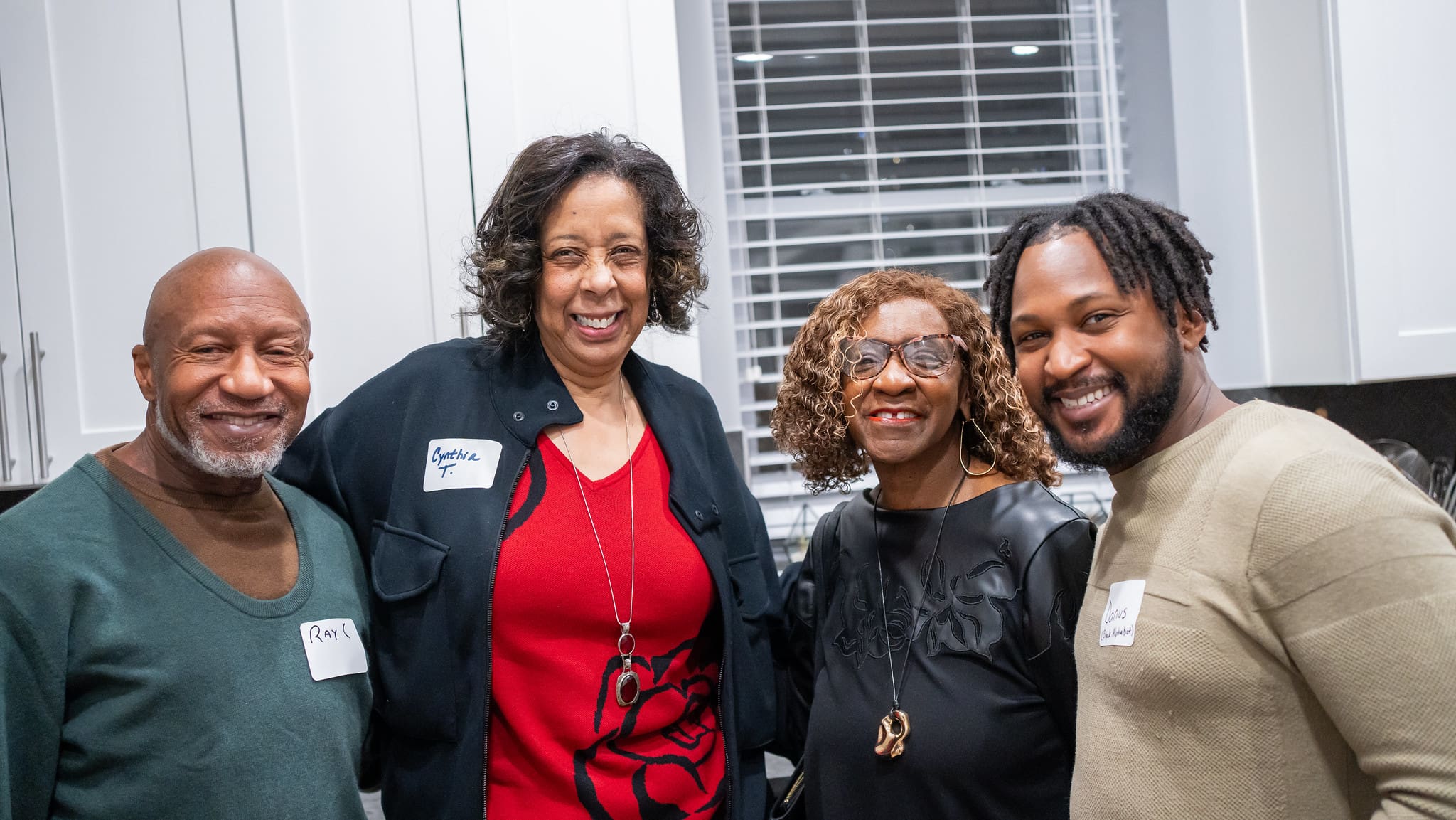
Recently, an interview took place that involved four of the LCC individuals—Cynthia Tucker, Dr.P.H., (she/her) senior vice president of community partnerships and special projects at AIDS Foundation Chicago (AFC); Tamika Foust (she/her), MBA, MHRM, director of capacity building, training and workforce development; Gina Lamar Evans (any pronoun, with respect), CEO/founder at NEFUSE; and Jahari “The Hippie” Stamps (he/him), the chairman of Southside Health Advocacy Resource Partnership (SHARP). NEFUSE and SHARP are two LCC grantee programs.
Note: This conversation was edited for clarity and length.
Q: Dr. Tucker, I was wondering if you could talk a little bit about how the Learning Circle Collaborative came into being?
Dr. Cynthia Tucker: Sure. So the Learning Circle Collaborative started in 2016.
The program was launched after I completed a series of focus groups with community-based organizations. And at the time, many of the organizations were reaching out for support and partnerships to help build their capacity; collaborate on funding opportunities; and get their communications, boards and other infrastructure needs in place so that they would be competitive for more funding opportunities.
In response, I started the Learning Circle Collaborative with $10,000. We began small; partnering with three organizations. Things continued to grow over the years where we’ve built up cohort-based learning. Today, we have a cohort of six organizations that are a part of our program, and the initiative has evolved into the Master Class Series.
Each iteration of the Learning Circle Collaborative has been shaped with the times and what the needs of the organizations are. Recently, they’ve centered on information and guidance on implementation of science and how to use AI—which is good, because that’s what’s needed right now, and it’s essential for many smaller organizations. And Jahari Stamps from SHARP and Gina Evans from NEFUSE are parts of our cohort.
Q: Tamika, I was wondering if you could talk even more about what LCC does. Obviously, Dr. Tucker mentioned the classes, but it seems like you all do a lot toward establishing support for these grantees.
Tamika Foust: Yes. So, essentially, there are a lot of moving components because of the subject matter experts that we work with. We have Jacqueline Boyd, who is doing leadership development. We have Dr. Ulysses Burley, who is experienced in community engagement. We have Jeremy Holston, who is an expert in board development and fundraising, and we have Diana Beasley, who has insight on human resources, operations, and talent management. And we also have Jonathan Briggs, who is our communications and AI expert.
We are planning a joint meeting with foundations to help the cohort members grow skills in relationship building with funders, and to make sure that they can capture their attention for their specific funding priorities.
We practice elevator pitches and things of that nature. Another component is actual one-on-one coaching time with the subject matter experts. We highly encourage people not to wait until we’re in the workshops to ask their questions. When you have a question, you have a subject matter expert who you are assigned to, so you have the opportunity to engage with the experts during the entire year.
Q: You two have talked about how the grantees benefit from the collaborative. How are they chosen?
Tucker: There is a selection process. There’s an application, and then we have a review group to review applications with internal and external reviewers.
We want to make sure that it’s fair. We also want to make sure that the agencies really are ready to make changes and are committed to coming to the trainings and partnering with the coaches. The cohort members receive seed funding as part of this initiative. It’s a small amount of funding, but it’s really for their time that allows them to be away from the organization and to build their organizations.
Foust: And I want to stress that Dr. Tucker and I don’t vote. Once we assemble the review team together, she and I take a step back because we want to be fair.
Q: Gina and Jahari, I was wondering if you could talk with me about how each of you found out about the collaborative and how you’ve benefited from it.
Gina Lamar Evans: I received an email with an invitation. I do recognize that it had been going on before I heard about it and was invited, and so I didn’t know how I was invited other than I deserve to be here, right? I hadn’t heard about it before. I do feel like I was, I don’t know, maybe in my feelings a little bit when I found out my other colleagues had been a part of the trainings.
But I think this is really good for us. And so, I’m glad Jahari is in now, to be able to soak it up early so we can both be better prepared. And it feels like a safe and comfortable space to talk about challenges.
I feel like when someone else is presenting, I always pick up a couple of nuggets. But having a direct person that I’m working with now and meeting regularly, I will say I like the way this is giving me the full benefit of what we’re doing.
Jahari “The Hippie” Stamps: So, I was actually a part of the Getting to Zero Community Advisory Board, and through my work and engagement with them, someone had suggested that my organization apply to be a part of this collective and this collaborative. I had previously been a part of a similar situation, and I was a little apprehensive about applying for it, honestly. But knowing that this was something that Dr. Tucker cultivated and Tamika was [involved in] made it really, really appealing to me because I’ve always loved the way they work.
Frankly, I am a champion for anything that has Black women sitting at the forefront of it because I was raised by a Black mama and Black aunties. And I know when it comes to taking care of people and getting the job done, they will be tenacious about seeing that through.
Being in our cohorts, and like Ms. Gina said, it feels safe to ask the questions if you don’t know. And I appreciate the wealth of knowledge that I’m able to get—not just from my coaches, but also the other EDs and CEOs at the table. When I bring an idea to the table to the cohort, it’s never disregarded. I’ve never been made to feel “less than”—and that has been very, very empowering.
Q: And how long does this cycle last? Will it end in June of this year or some other time?
Tucker: It ends in June of this year. So, this is our second year of doing a full year with the agencies, and some said (when we did interviews and their readiness assessments) that more time would be more beneficial. Of course, that would involve more money and more opportunities to connect with corporate foundations. I want to say that it’s just a benefit to the AFC to partner with these agencies as they do programs.
They do community work and are experts in their own right. So we get the opportunity to partner and collaborate with them on their programs, their events. And we’re happy to be there and assist many of them. And when they come to us, Tamika and I are ready to jump in.
Jahari knows about community engagement and networking. Gina does a lot of work in the community as well, and she does case management – she brings that background and expertise with her. So, everyone else and the other cohort members are able to learn what they also have to offer through shared experiences. So, that’s why we created, developed and built out the Learning Collaborative Circle—because it is a circle of learning.
Q: So this presidential administration has been something else. How has it affected LCC, if at all?
Tucker: Well, I think we’re all feeling the impact. And if we’re feeling the impact as a larger, mid-sized organization, then we know our smaller organizations who do fantastic work and who we need, are feeling it, too. So, we need to continue programs like the Learning Circle Collaborative to ensure that we can collaborate, partner, apply for funding, work together and, if we get something, share it.
I remember it used to be LCC grants, Chicago Department of Public Health, and Illinois Department of Public Health. We had a lot of pharmaceutical funding coming into Chicago, but it is all decreasing. There are hardly any funds for prevention, which has always been underfunded, and now they’re trying to defund it. So, now, we must work on other strategies to get funding opportunities for the agencies that we work with.
Foust: I think another thing is—and Dr. T has taught me this since I’ve been here—I’ve learned how to pivot and bring different activities together so that you’re addressing more than one deficit at a time.
Because we know funding is being decreased in one area, we try to beef up what we’re supporting and what we’re doing in another area. You also have to make sure that you keep your ear to the ground and know and understand the nuances of what is happening in the administration.
And we have to stop gatekeeping what is going on in one area and bring everything together so that we can work together and knock down a lot of different bricks that they’re trying to build up against us.
Stamps: The word you all are looking for is “nefarious” because that is what is happening. And that would be a great word to describe this current administration and what it’s doing.
As a person who eats, sleeps, lives and loves in this community, people are afraid and unsure about what the future looks like for them. How is their housing being affected? We’re already seeing housing programs go away. But I have had great experiences with AFC. Even things as basic as having transportation or being set up with resources for food boxes, AFC has just always been a landing spot—a landing place in spite of whatever is happening. And I think that the reason that it’s able to operate like that is because it’s innovative, it’s forward-thinking. So, our approaches have to be innovative.
Evans: I appreciate Jahari on the call-out. There have been gatekeepers and so much stuff has been happening. But open, honest conversation is the only way we’re ever going to move forward. If we still are trying to test you for HIV and we can’t say the word, we’re never going to move forward.
The other thing I wanted to push back on with what Cynthia said about funding. We keep saying, “More money, more money.” But the reality is that I have found more value in this [collaborative]. Who doesn’t want $100 million? But $100 million isn’t going to make me do better with the agency—it’s going to make me hire somebody to do it.
Q: Is there something you’d like to add about LCC?
Tucker: I think just the fact that AFC is working in partnership and collaboration with these organizations. I agree with Gina; it’s about the training because it’s not about having a whole bunch of money. It’s not like we can provide $50,000 or more to each agency.
Foust: For me, the biggest thing that I want to walk away with everyone understanding is, even though we are “sponsoring” the Learning Circle Collaborative, it’s a learning experience for us as well. Because if we don’t engage and listen, we don’t learn.
Evans: Really and truly, I think they’ve said it all. This has been, truly, one of those things that they took and made it happen for us and for smaller agencies. And I just appreciate them making it happen. And I look forward to [helping] the next set of people rather than just still being a recipient.
Stamps: I’ll just say that I’m excited and honored to be here. I don’t have anything else to add other than what’s already been stated. These ladies have stated it so eloquently and so straight to the point.
Find out more about the Learning Circle Collaborative here.


