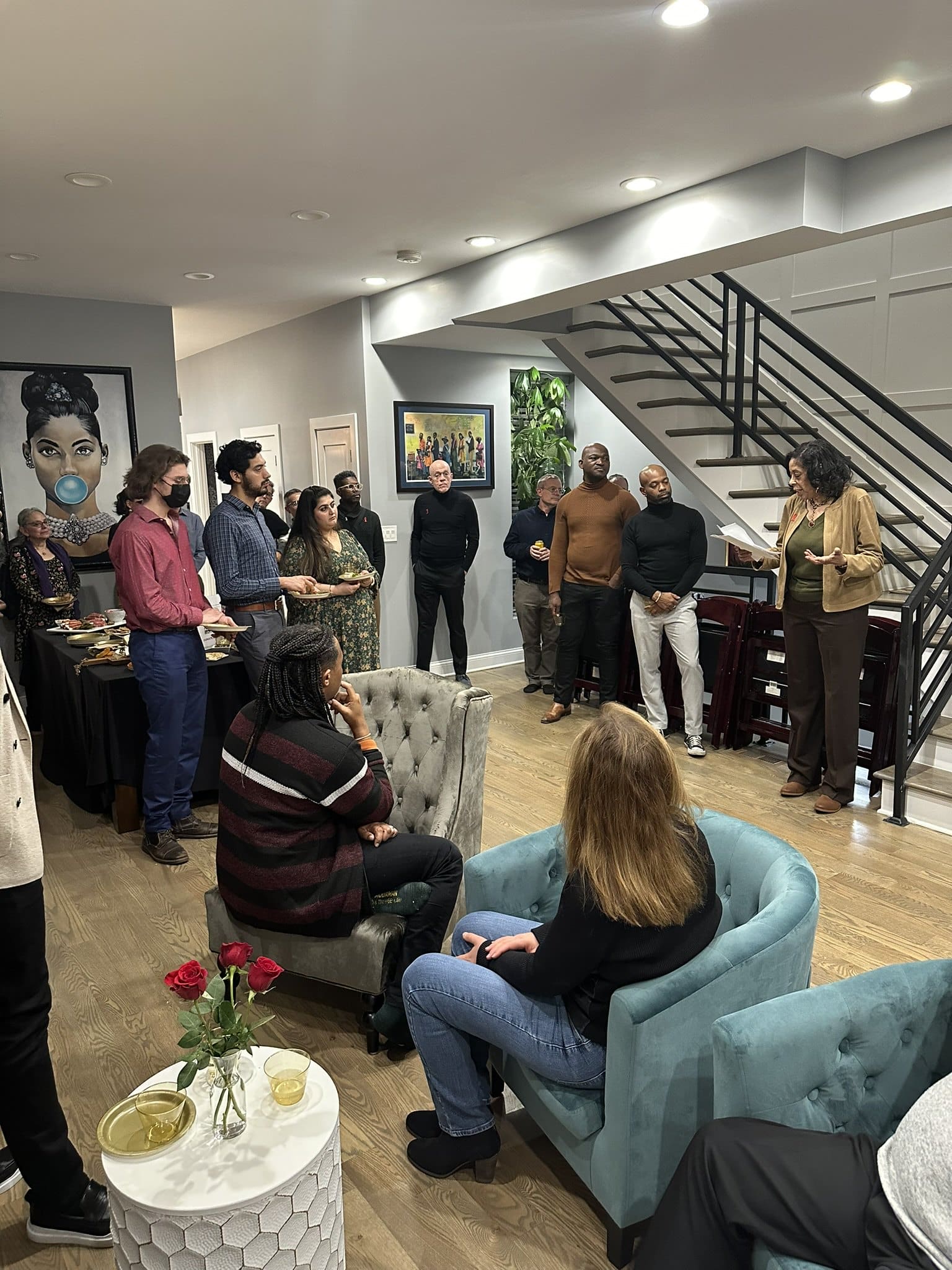
Carla Davis is a senior case manager with AIDS Foundation Chicago (AFC)—and in a recent interview she demonstrated the critical nature of her work with the organization. Last year, Davis was chosen through a vote of her peers to receive the Christina Santiago award at AIDS Foundation Chicago and Northwestern University Feinberg School of Medicine's Public Health Boot Camp in recognition of her leadership.  Davis discussed with us how she came to work with AFC; the bond she shares with her boss, Sr. Vice President of Partnerships and Special Projects, Dr. Cynthia Tucker; the importance of faith and community in her life and work; and the revelation of something that even most of her relatives don’t know.

AIDS Foundation Chicago: How did you become part of AFC?

Carla Davis: It’s funny because I originally started at the CORE Center. I was a patient navigator there, but the program was under AFC; it was the SSRP [Safe and Sound Return Partnership]. But I wasn’t aware that the program only had a year left, so I was, like, “Wait a minute.” But Cynthia [Tucker] reassured me that there were other things in the works, like me being transferred to another program—which actually happened. So then I went on to work with the Women Evolving program, where I was also a patient navigator, assisting the case manager.  Then the case manager left, and I asked Cynthia on a trip to a Philadelphia conference, “Why wasn’t I considered for this position? I was told by my supervisor at the CORE Center it was because I didn’t have an associate’s degree.” And Cynthia said, “That’s not the case. One of the requirements is that you have lived experience—and you have that. And you have a strong connection with the clients. If they let you have that position, I would love for you to be the case manager.”

AFC: It’s a good thing you stepped forward.

CD: Yes—because, honestly, I was afraid. I was a peer with no high school diploma—all I had were my story, my life and my relationships with my clients. So when I started wanting more, God started placing people in my life who elevated and motivated me. They said things like, “You can go back to school.” All I ever strived to be was a peer, honestly; that was my goal. I didn’t see further than that. But then people in higher positions saw something in me and encouraged me—and Cynthia was one of those people. To have Cynthia say, “I’ve got your back”—for her to encourage me like that—I was, like, “Why not?” I was going to be the spokesperson for everything HIV because that’s my journey, or identity - that’s my story. But that’s not all there is to me. And she assured me, [saying,] “You’re not getting the job because you’re HIV-positive. You’re getting the job because you’re a great case manager and know what you’re doing.  You’re able to connect with the clients in a way that no one else can.”

AFC: When people find out that you’re HIV-positive, are they surprised in any way?

CD: I don’t share with everyone that I’m positive; people don’t know. It used to be something that I was really ashamed of because I didn’t want to be judged or looked at differently. But at this stage in my life I’m at now, I’m just happy with the people who love and respect me, and who want to be around me.

AFC: March 10 was National Women and Girls HIV/AIDS Awareness Day. So, judging from your last answer, there’s still a stigma around HIV?

CD: Oh, yes! It’s funny that we’re talking about this. I’ve been married to my husband 16 years and everyone in our family knows about the work I do. But nobody on his side of the family, except for my husband, knows that I’m positive. The reason is that we’re privy to conversations that they have. Even knowing that I’m in the field, they ask things like “Walking around there, aren’t you scared?” This is one of the reasons my husband and I have held off on telling them—because they’re acting like this, even in this day and age. I try to educate them and bring pamphlets. And it’s not just me. I have a client who’s been HIV-positive for 30 years, and his family and friends don’t know. He said that he’s afraid of how his family will respond. He lives in a home with his parents and he’s afraid they’d kick him out. [Note: Davis later confirmed that it was fine to mention her seropositivity in this article.]

AFC: What’s the best part of your job and what’s the most challenging part of it?

CD: The best part is getting to work with clients who remind me of the fight, the struggle, of how hard it was to walk into a room and see if the person on the other side of the desk truly understands my plight. I might have an issue that day and, in that moment, we’re problem-solving. I love that the people who I work with are receptive and open. My clients call me “Miss Carla,” respectfully. I tell my story to a client when it’s necessary—when a client needs to feel a connection. It’s so beautiful to me when a client calls and says, “Thank you, Miss Carla.”  The most challenging part is when we don’t have the resources immediately available, like housing or employment. They’ll come to me and say, “Oh, Miss Carla, I’m looking for housing.” I’ll say, “Okay. I’ll connect you with housing.” The next day, the client will say, “When am I moving?” I’ll say, “We just started the process and I’m not the housing person.” It seems like there’s a disconnection with that. That is stressful. Burnout is real.

AFC: Last year, you received the Christina Santiago Award. I actually knew Christina so I’m curious what getting that award meant for you.

CD: So, when I went to public-health boot camp, I honestly went there to just learn how to be a better case manager. And the plus was that I got to meet a bunch of wonderful, wonderful people. And then to know that these people collectively voted for me—that was heartfelt. I literally cried. Coming from the background I come from and not having a bunch of people say that you’re worthy—and then to have people say, “We see you”… [Cries] That meant a lot. You never know how you affect people.

AFC: [Talks about who Santiago was and the circumstances of her passing.]

CD: Anytime something tragic happens—especially when it’s unexpected—it’s normal for people to feel shock and anger. When stuff like that happens, I lean heavily on my faith. I know that she’s in a better place. It’s a testament to who she was that people are still talking about her, in such a good way.

AFC: What would you advise HIV-positive young people who are unsure and who are worried about stigma?

CD: I was working with this young girl. She had so much anger in it—and the only person who could calm her down was me. But I totally understood where that anger came from: She was in her 20s and was diagnosed with this—and she was devastated.  I would tell the young generation that [a diagnosis] does not mean that your life is over. It just means that you have to move on differently. You definitely have to pick and choose who you share this information with; this is not clubhouse information or “smoking on the corner” information. People could see you differently. You need to figure out how strong you are in handling the haters.  Also, you can’t handle this kind of information by yourself. You definitely need a community. Find that community you can call on and depend on. Your life is not at an end—and I thought [initially] thought that. I wondered who was going to marry me and who would want to be with me. My husband goes to almost all of my appointments with me. There’s life after HIV. It’s not your identity.

AFC: What does working at AFC mean to you?

CD: Before I started working with AFC—when I was at the CORE Center—all I knew about it was that it was “one of the big dogs,” that it had the money. But once I actually started working with AFC, it’s almost like this family feeling. Even though we’re not all in the office at the same time, it’s this thing that I can’t explain. I may not know what someone else is doing, but I know that we’re all on the same team. And being on the same team as someone just brings something out of you—that we’re doing something that has a bigger purpose. Even when I met with [President/CEO] John Peller, when he comes to hear me speak at panels, it’s not intimidating; it’s just like being with a friend. That’s why I’m proud to have that AFC logo on the shirt I wear.


AIDS Foundation Chicago Communications work is not supported through federal funds.