Safety Guidance
Testing
Vaccines Access and Distribution
Suggested Readings
Additional Resources
Safety Guidance
CDC: How to protect yourself & others
COVID Testing
Chicago Department of Public Health
Vaccine education, access and information
Find a vaccination location near you.
IDPH: Vaccine reports from Providers
Cook Country Vaccine Distribution Program
Zocdoc: Book a COVID-19 Vaccine appointment
The State of Illinois has partnered with retail pharmacies to provide COVID-19 vaccinations.
7 Things to Know About COVID-19 Vaccines Video
*New Site* Chicago State University
*New Sites* Humboldt Park : Erie Family Health Centers and Protect Chicago Plus
*New Location* Englewood
*New Location* Lawndale
AFC: 7 Things to know about COVID vaccines
AFC: How to get vaccinated in Chicago and Cook County
Suggested readings
National Institutes of Health: Building trust through Behavioral and Social Science
The Atlantic: A guide to understanding COVID-19.
CDC: Reasons for Not Vaccinating Among Groups Prioritized for Early Vaccination
TheBody.com: How a Leading HIV Advocate Responds to COVID-19 Vaccine Mistrust
CDC: Vaccination Implementation for People Experiencing Homelessness
What people living with HIV need to know about COVID-19 vaccines
What you need to know about Johnson & Johnson vaccine
The Impact of the COVID-19 Pandemic on LGBT People
Additional Resources
FEMA Funeral Cost Assistance
Assistance for those struggling to pay funeral costs for loved ones lost during this pandemic.
Grand Rounds
This is an ongoing series of webinars focused on various topics and issues related to coronavirus and COVID-19.
Chicago Department of Public Health Survey
On behalf of the Chicago Department of Public Health, we invite you to participate in a short survey to help CDPH better understand the attitudes and evolving challenges surrounding the current COVID-19 pandemic.
By Danie Muriello
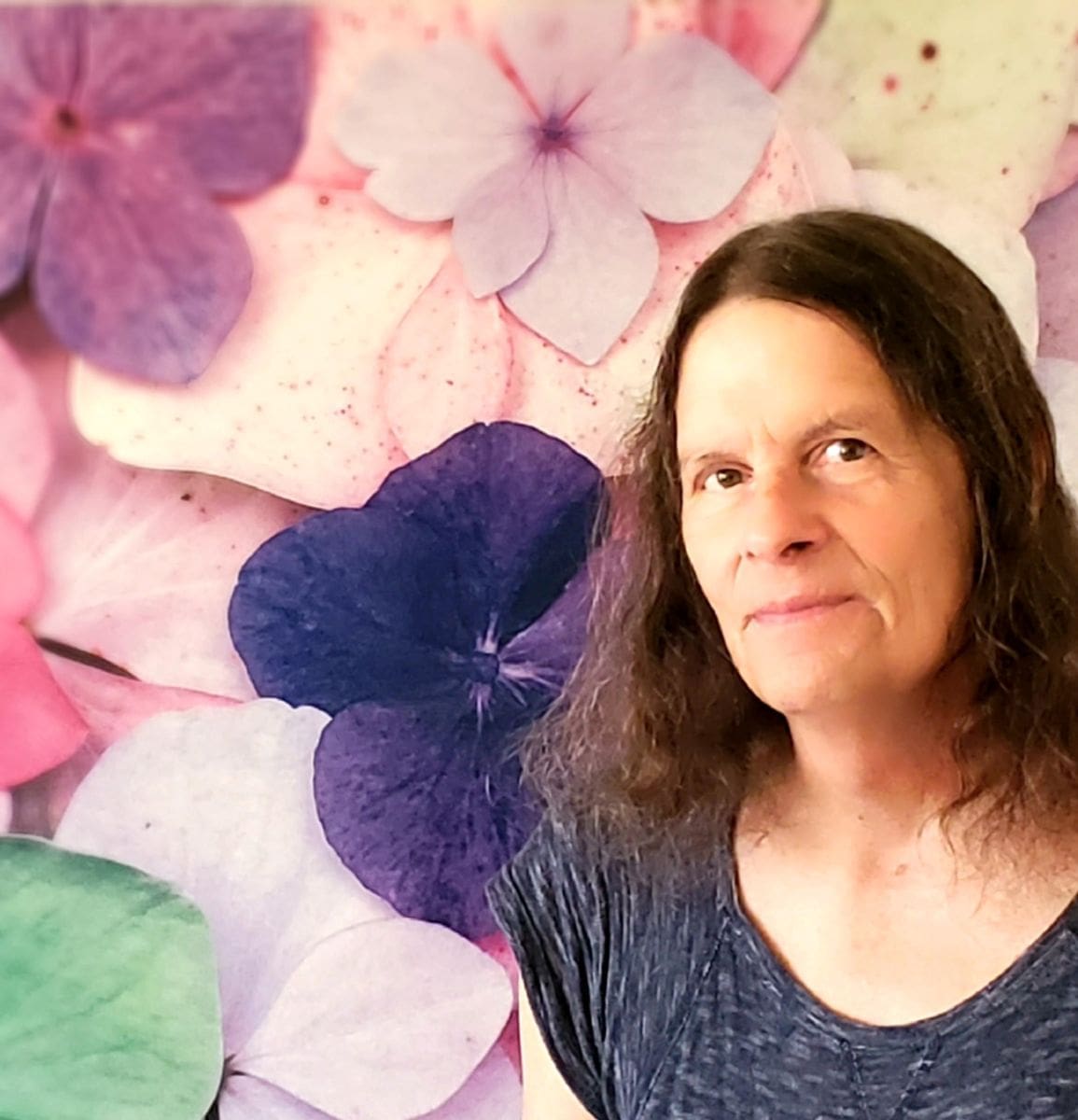
Everyone in the LGBTQ+ community has a coming-out story. I am a 69-year-old transwoman, and I’d like to share just the beginning of mine.
A little more than six years ago on a very ordinary Sunday afternoon, I was leisurely reading the paper, something I did almost every Sunday. One of the sections I really liked had two or three pages dedicated to announcements of weddings that had taken place the day before. The announcements were comprised of a head shot of the couple followed by a brief bio. Most of the couples, based on appearances and language, were straight. A few were gay men. But on this particular Sunday and for the first time in my reading experience, there appeared a photo of two young women, smiling brightly, clearly happy and in love.
What happened in that moment can best be described as a recognition or a revealing. Something deep inside me had cracked open, suddenly and with force. The feeling was visceral, completely detached from my mind. After more than six decades of believing I was male and living as a male, I was being presented with what I deeply felt to be the truth of my gender, of who and what I was. And everything was about to change.
I spent the next week or so just trying to get through the disorientation of all of this. I also needed to recover from the shock I had experienced before I could begin to understand. I had so many questions. Eventually those questions would be answered, but that would come later.
As the next days and weeks unfolded, I began to feel brand new and so joyous. I was barely able to contain myself. What I wanted was to share this wonderful thing with everyone. After all, I thought, wouldn’t people want to know and share in the joy of it? Wouldn’t they see how happy I was and be happy for me in turn?
The answers to those questions would come later. For the time being, I would take a moment of pause and hold my tongue.
Soon, I began to experiment with more feminine clothing. This was so new to me. I did not have any experience or knowledge of women’s clothing.
I found that focusing on creating outfits and the complexity of it was a daunting task. I found I wanted to take it slow. Little steps. I decided to let my feminine heart take the lead. I started with tops first. Shortly followed tops with shoes. This was a good strategy because it helped keep me focused. Soon, I came to learn what I liked. I shopped exclusively at discount clothing stores. As I did this, I learned exactly and precisely what it was that my heart wanted. It gave me joy. How exciting it was to reveal myself in this simple way.
I began to let my hair grow. I’ve always had wavy, curly hair and although as a result of aging my hair has thinned a bit, it still holds that wavy curly aspect that to me has helped get me closer to the look and presentation that I wanted.
I began hormone replacement therapy because I wanted a more feminine body. After a period of a few months I noticed that my face was filling out, my skin was becoming softer and that my breast tissue was enlarging.
Doing all of these things felt wonderful precisely because they were aligned with my gender identity. I began to look and move differently. I was being seen as my authentic self.
I didn’t know it at the time but it was in the process of presenting more feminine that I was in fact advocating. I came to see this later. Allowing my authentic self to emerge is in fact a form of advocating.
As I mentioned earlier, I had thought that those around me would want to know of this wonderful change that was happening and would be happy for me. After a few short months of presenting my authentic self, I learned clearly and definitively that they were not happy in any way.
This came as a shock to me. Although my rational parts were not particularly surprised, my heart, which was the place from which I was revealing myself, was devasted. My heart was broken.
I learned a painful lesson. I learned that in most spaces that I occupied at the time, that I was unwelcome.
I had offered my authentic self to those around me only to be made to feel unwelcome. This is precisely what brought me to begin my work as an advocate. I knew how it felt to be unwelcome. LGBTQ+ people experience discrimination in housing, health care, employment, families and communities of faith. The list goes on. I have experienced discrimination in all of these places, and that is why I continue to advocate.
Danie Muriello is a transwoman and a steadfast advocate for trans inclusion and affirmation. She serves as a community member of the Howard Brown Aging Services Advisory Board, is active on the Center on Addison’s speaker program, and is a member of the SIC Intergenerational Dialogue Project. She is a parent of four adult children and has four granddaughters.
To learn more about Danie and her advocacy, watch her share her story at a Pride Action Tank Storytelling Showcase here.
By Timothy S. Jackson, AFC Director of Government Relations
With a final gavel at 3:10 a.m., the 102nd Illinois General Assembly adjourned its Spring session on Tuesday, June 1, 2021. Blending the traditional bill debate from legislators on the Senate and House floors with new virtual committee hearings and COVID-19 precautions, the hybrid nature of this legislative session was certainly unique.
The General Assembly tackled several complex issues facing our state including filling a $1.3 billion budget deficit, reapportionment of state legislative districts following the 2020 Census, closing corporate tax loopholes, ethics reform, and the distribution of the state’s $8.1 billion in federal funds from President Biden’s $1.9 trillion American Rescue Plan.
Entering the 2021 spring legislative session, AIDS Foundation Chicago (AFC) developed an ambitious state policy priority agenda that centered people living with or vulnerable to HIV, galvanized by the organization’s belief that systemic racism is a public health crisis.
AFC is proud to have advocated for the following bills that have passed both chambers and await Governor JB Pritzker’s signature. A brief summary of key HIV-related state budget positions is at the end of the report:
HB1063, HIV Decriminalization, repeals the state’s harmful and outdated law that criminalizes people living with HIV. The repealed law worked against public health, increased stigma and discrimination, and did not align with current science. The bill was sponsored by Representative Carol Ammons (D-Urbana) and Senator Robert Peters (D-Chicago).
SB2800 HA3: Illinois State Budget To realize the priorities and goals of the statewide Getting to Zero Illinois (GTZ-IL) plan to end the HIV epidemic by 2030, AFC believes that the state must invest in the resources necessary to increase HIV/STI treatment and prevention services, including additional resources to address the disparities experienced by Black people living with or vulnerable to HIV.
Specific to health and human services, Illinois lawmakers passed a state budget that flat-funds most HIV-related programs when compared to FY21. However, AFC and other advocates were able to secure $15 million in federal American Rescue Plan Act (ARPA) funding for the African American HIV/AIDS Response Act (AAHARA) to address the prevention and treatment of HIV/AIDS and reduce the disparity of HIV/AIDS impacting African Americans and other vulnerable communities despite the state’s precarious fiscal outlook. AFC is grateful for House Majority Leader Greg Harris, State Senator Mike Simmons and State Representative Lamont Robinson for their steadfast work in the General Assembly to ensure these additional investments were made.
HB3308, Protection of Telehealth, preserves the access and affordability of telehealth services that allow all Illinoisans to continue receiving necessary medical, mental health, substance use care and case management services post-COVID-19 pandemic. This bill was sponsored by Representatives Deb Conroy (D-Villa Park) and Thad Jones (D-South Holland) and Senators Mattie Hunter (D-Chicago) and Napoleon Harris, III (D-Harvey).
SB818, Keeping Youth Safe & Healthy Act, establishes standards for public and charter schools that decide to teach comprehensive personal health and safety education in grades K-5 and comprehensive sexual health education in grades 6-12. The curriculum must be age and developmentally appropriate, medically accurate, complete, culturally appropriate, inclusive, and trauma informed. The bill was sponsored by Senator Ram Villavalam (D-Chicago) and Representative Camille Lilly (D-Chicago).
SB2133, Inclusive Data Collection, requires ten state agencies to collect critical demographic data based on age, sex, sexual orientation, gender identity, disability status, and primary or preferred language. This legislation was championed by Senator Mike Simmons (D-Chicago) and House Majority Leader Greg Harris (D-Chicago), two proud members of the LGBTQ+ community.
HB158, IL Legislative Black Caucus’ Health & Human Services Omnibus, addresses systemic racism in Illinois’ health care system through several reforms including the extension of Medicaid coverage for doulas, the creation of an Anti-Racism Commission, a Racial Impact Note mandate for all state legislation, and an Implicit Bias training requirement for medical providers. This historic legislation was the final pillar of the Illinois Legislative Black Caucus’ policy agenda and was championed by Representative Camille Lilly (D-Chicago) and Senator Mattie Hunter (D-Chicago). This legislation was signed into law by Governor Pritzker on April 27, 2021.
HB1745, Out-of-Pocket Prescription Drug Costs, seeks to lower and limit out-of-pocket prescription drug costs by offering more affordable prescription drug coverage choices including a requirement that 25% of insurance plans in Illinois have a fixed copay. This legislation was sponsored by House Majority Leader Greg Harris (D-Chicago) and Senate Insurance Committee Chairman Napoleon Harris, III (D-Harvey).
HB3493, Healthy Illinois for All, championed by Representative Delia Ramirez (D-Chicago) and Senator Omar Aquiño (D-Chicago), would have extended Medicaid eligibility to all low-income Illinois residents ages 19 through 64 with household incomes of up to 138% Federal Poverty Level (FPL). Though it did not advance out of the House Appropriations-Human Services Committee, amended language from the legislation was included in the BIMP (Budget Implementation bill), SB2017 HA#2. Specifically, this amended language provides medical coverage for all adults regardless of immigration status ages 55-64 with incomes at or below 138% FPL. The BIMP bill, including the amended language, passed the Illinois General Assembly on May 31, 2021.
HB2877, COVID-19 Emergency Housing Bill, provides necessary protections, such as foreclosure moratoriums and emergency rental assistance, to ensure Illinoisans can stabilize their housing situation for the duration of the pandemic and beyond. Championed by Representative Delia Ramirez and Senator Omar Aquiño, this important legislation was signed into law by Governor Pritzker on May 17, 2021.
HB711, Prior Authorization Reform, addresses concerns about the delays caused by the prior authorization processes used by state-regulated health insurance plans. This legislation was championed by House Majority Leader Greg Harris (D-Chicago) and Senator Linda Holmes (D-Aurora).
Overall, AFC was able to secure several critical legislative victories during the 2021 Spring Legislative Session. I encourage you to review Positive Impact, AFC’s full 2021 state legislative report, that includes detailed information about each of our policy priorities, the additional bills that AFC supported, a report on AFC’s Advocacy Week and much more.
AFC is proud to work with various coalitions and workgroups to advance legislation that helps the people and communities we serve. However, we are always mindful that the stories and voices of advocates like you make the difference, and we are eternally grateful. THANK YOU.
Although this legislative session has ended, AFC’s commitment to protect those most vulnerable in our communities, including people living with or vulnerable to HIV will not waver. We encourage you to stay engaged in our advocacy work over the summer and fall by signing up for AFC’s Mobile Action Network. With your help, we can #ActivatePowerIL to end the HIV epidemic in Illinois by 2030.
By Ella Shapiro
For over a century, drag has been an essential performance art within the LGBTQ+ community. While the roots of drag can be traced back to theatre performance in the late 1800s, the 1900s saw drag transform into a unifying space for the LGBTQ+ community in the face of oppression and criminalization. Drag shows have served as places to come together, be entertained, challenge social concepts of gender and explore and celebrate personal gender identity and expression.
When it became clear last March that it was no longer safe to gather in large groups because of the COVID-19 pandemic, the drag community knew that things would have to change. All over, drag performers packed up their wigs, heels and makeup kits and made their way to the digital stages of Instagram, Facebook and Zoom where they have continued to perform in the age of COVID-19.
Still, moving online has not been without its challenges. At most drag shows, being able to interact with the audience is an important part of the experience, both for the audience members and the performer. The absence of that interaction coupled with the technical difficulties of using online platforms has made this transition hard, but for some, it has been a great opportunity to think outside the box and redefine what drag can be.
 Lila Star Escada, who has been doing drag since 2007, said that going online has required her to enhance her skills, and learn new ones, like how to edit photos and videos. She has become very detail-oriented and loves putting lots of time and effort into perfecting the digital content that she creates.
“It was challenging, but I’m such a creative [person] that it was exciting as well,” Lila said.
Lila has been performing in digital drag shows since last year. The Chicago-based queen has shared glamorous photoshoots of herself in drag, and performed in live shows on Instagram, Facebook, Twitter and Zoom. Like many, she misses being able to interact with audiences in person, but she has welcomed the complications that have arisen.
Alexander Martin, a 28-year-old drag queen from Peoria, Illinois, was also excited to see how this new landscape could expand their creative potential. In 2017, Alexander completed a Masters in Fine Art, and since then has found drag to not only be a space to explore their gender identity, but also to grow as an artist. Since the start of the COVID-19 pandemic, Alexander has been producing imaginative videos on Instagram that combine drag performance with digital storytelling.
“It’s been a fun year to explore creativity and invest more into my drag since I’m at home,” Alexander said. “It’s making me invest more in things I want to do. It’s making my drag better and my studio work better.”
Digital drag shows have not only been newfound sources of creativity and innovation but are also proving to be more accessible and wide-reaching than in-person shows, especially for people who previously turned away from drag due to its connection with the nightlife scene.
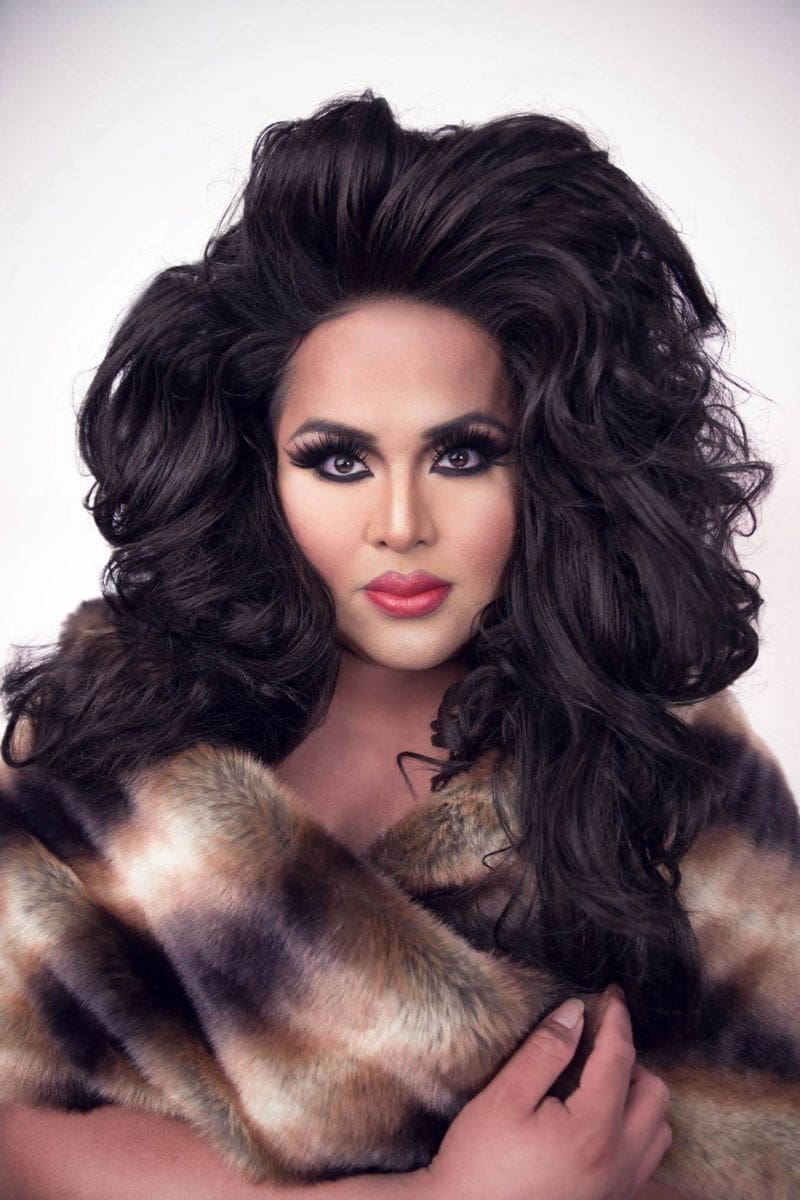 “I actually saw a bigger diversity in these virtual drag shows,” said Milani Varela, a 33-year-old drag queen from Chicago. “It also gave a platform for performers who normally wouldn’t get booked at bars to show their talents.”
Milani has been performing as a drag queen for over a decade. When she was 21, Milani started performing in bars and clubs in Chicago’s North Halsted neighborhood (formerly known as Boystown), which is one of the largest LGBTQ+ communities in the Midwest. In the 12 years that she has performed in drag, Milani has developed strong relationships with other drag performers, many of whom she now considers to be family, and she has grown more confident as an individual.
“It gave me a voice,” Milani said.
Lila and Alexander echoed Milani’s love of drag. All three agree that the drag community has been a welcoming and supportive space to examine and affirm their identities.
“It saved my life,” said Lila, who is a proud trans woman. “I can do drag and live my authentic life as a woman.”
Alexander agreed with Lila and spoke about how doing drag has given them the space to explore their gender identity and learn that they were trans and nonbinary.
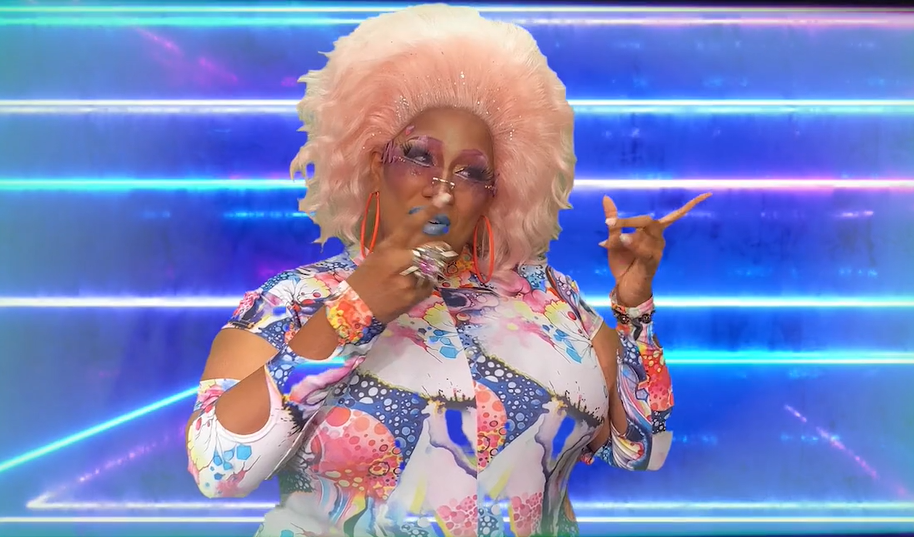 Today, drag shows are generally known for being fun and entertaining, but drag has also historically served as a way for the LGBTQ+ community to rebel against social structures. Its significance, both as a way for people to come together to rejoice, and to transgress gender constructs, is powerful. Taking part in drag shows, whether online, in person, as a performer or an audience member is one of many ways to celebrate pride this month.
“Pride for me is living my truth,” Alexander said. “Drag lets me do that.”
Wanna learn more? Connect with Lila @lilastarescada, Alexander @ArtemisiaVanho and @Xander9210 and Milani @millusi0n on Instagram! Lila, a Latina Trans rapper, also plans to debut new music this year. Alexander is also on YouTube. You can watch a short film of theirs here.
By Ella Shapiro
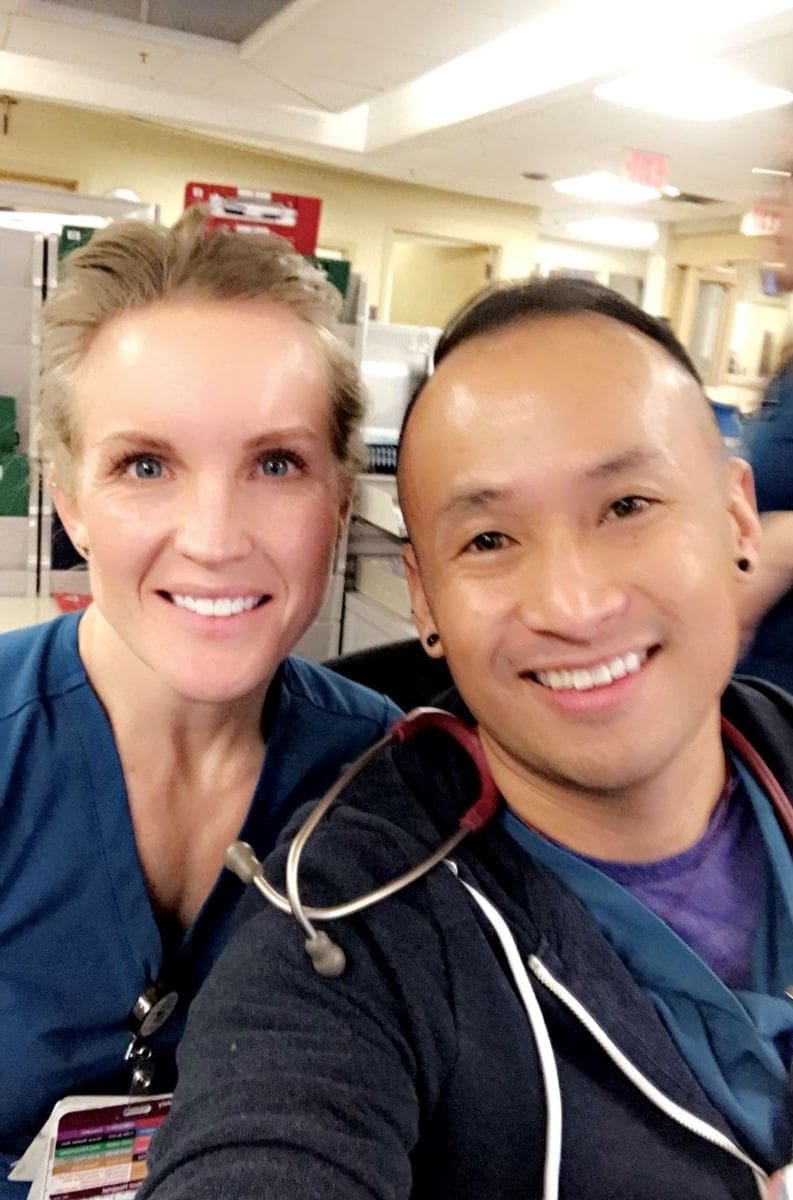 Marc Querol, a TEAM TO END AIDS (T2) athlete and an emergency room (ER) trauma nurse from Chicago, is one of many health care professionals who have dedicated themselves to caring for others during the COVID-19 pandemic. Marc and other nurses working in hospitals around the world have displayed enormous acts of selflessness while fighting the COVID-19 pandemic, but that does not mean that they have been unaffected. According to The Lancet, 72% of health care workers treating patients with COVID-19 have reported feeling distressed during the pandemic.
Above all, Marc and other nurses are humans who care, grieve and need support in the same ways that we all do. As the pandemic continues to impact our communities and the health care workers on the front lines, we can do our part by celebrating, appreciating and supporting nurses like Marc.
Last May, AIDS Foundation Chicago (AFC) shared the T2 athlete’s story of working as an ER trauma nurse during the pandemic. When we interviewed Marc last year, the pandemic still felt largely new and unknown. He spoke about the stress that nurses like him were facing each day at work, and the ways in which he and his colleagues were taking care of themselves while working in such an overwhelming environment.
Now, Marc is thinking about the past year and what he has learned from working on the front lines during the COVID-19 pandemic.
“This past year has given me a different understanding on people that I value, people that I can help with what I do,” Marc said.
Since the onset of the pandemic, we have gained a more comprehensive understanding of COVID-19 and how we can stay safe. We have also developed multiple vaccines, which are helping protect people from getting seriously sick from COVID-19 and have lowered the number of new COVID-19 cases across the country.
Marc said that even though many people, including himself, are getting vaccinated against COVID-19, it is still crucial that people follow CDC guidelines and understand exactly what getting vaccinated means.
Recently, Marc has seen an influx of young people, under the age of 40, come into the hospital he works at with severe cases of COVID-19 because they misunderstood what protection the vaccine gave them. Many of them stopped socially distancing and wearing their masks after receiving the first dose of the Pfizer/BioNTech and Moderna vaccines, not realizing that they needed both doses before they were fully vaccinated. Witnessing people get sick like this is heartbreaking for Marc and other nurses.
Like many of us, Marc has lost friends, family members, coworkers and patients to COVID-19. It has been a year filled with grief, but in the face of those devastating losses, Marc has felt more assured than ever about being an ER trauma nurse and recognizes how important his job is.
Marc also understands how important it is that he has support during these hard times.
“I have a wonderful support system,” Marc said. “I have a partner who is very supportive of me decompressing when I have to talk about certain things at work.”
In addition to finding support from his friends and family, Marc has started attending therapy, something that he feels many people are not open to discussing publicly but thinks they should. For Marc, connecting with a therapist has been another important step in creating a strong and meaningful support system this year.
Marc also runs with T2, the endurance training charity team that raises money for AFC and other HIV-related charities, which has served as another valuable part of his support network. Marc plans on participating in both the Bank of America Chicago Marathon and Berlin Marathon this year, which he is greatly looking forward to.
Marc lives with asthma, so running did not always seem like something he would be able to do. Learning how to manage his asthma and in turn becoming a successful and spirited runner has been life changing for Marc. It has proved to him that people do not have to feel defined by a diagnosis, and he is motivated to be an example of that. Now, he is part of a community of runners who not only share his passion for helping people living with HIV, but who also support him no matter what.
“I have some really good friends through T2 who still check up on me,” Marc said. “T2 is really [a] part of my family that I didn’t expect to get.”
Click here to join T2 by registering or donating for the 2021 Bank of America Chicago Marathon.
Updated May 26, 2021
All people ages 12 and older are now eligible to get a COVID vaccine. There are many ways to get vaccinated in Chicago and Cook County – here are some of the main ones:
1. Your primary care provider: Call and see if they are offering vaccines. If you don’t have a medical provider that you see regularly, contact a health clinic or hospital where you have gotten medical care in the past.
2. Pharmacies: Walgreens, CVS, Jewel, Costco, Mariano’s and Walmart are offering vaccines, often with no appointment required.
3. Zocdoc.com (Chicago only): Go to www.zocdoc.com/vaccine and find local COVID vaccine appointments. There are appointments available same-day at many sites.
4. City vaccination sites: For a full list of locations, go to City of Chicago Vaccination Sites. All vaccine sites will accept walk-ins. Appointments can be booked through the City’s call center at 312.746.4835 or through www.zocdoc.com/vaccine.
5. Vaccination Events Near You (Chicago only): The city has many pop-up locations and other special vaccination events. Go to calendar of events to find a vaccine in your neighborhood or check out Vaccination Station for days and times a mobile vaccination clinic is in Austin, Englewood, Roseland, or Southshore neighborhoods.
6. Cook County Department of Public Health (any Cook County resident): Sign up at https://vaccine.cookcountyil.gov/ to find vaccine distribution locations throughout Cook County and schedule a vaccine appointment through Cook County Health. You can also call the vaccine hotline at 833-308-1988 (M-Fr, 7 a.m.-10 p.m., Sat. 8 a.m. – 10 p.m.).
7. Statewide Vaccination Locations – Go to https://coronavirus.illinois.gov/s/statewide-vaccination-locations for info about vaccinations available to all Illinois Residents regardless of zip code.
Today, the Illinois Senate voted to approve House Bill 1063, which would end criminal penalties against people living with HIV (PLWH). Under current law, PLWH face the threat of arrest, prosecution and incarceration even if they do not transmit HIV to another person. Additionally, PLWH may face longer sentences simply because of their HIV status.
“We are thrilled the Illinois Senate took decisive action and voted to end criminal penalties against people living with HIV in Illinois. Thank you to lead sponsor Senator Robert Peters for his steadfast dedication and leadership to this important issue.
HB 1063 has now passed both chambers with bipartisan support, and now it is time for Governor Pritzker to sign this bill and repeal this outdated and dangerous law. The truth is HIV criminalization never improved safety or public health in Illinois – instead, it has only caused suffering to people living with HIV, their families, and their communities. It has promoted stigma and discrimination, and it has discouraged testing, treatment, and disclosure for decades.
We urge Governor Pritzker to sign HB 1063 into law as soon as he can.”
The Illinois HIV Action Alliance
SPRINGFIELD, IL — Today, the Illinois Senate voted to approve Senate Bill 818, the Keeping Youth Safe and Healthy Act, legislation that will establish the requirements for public and charter schools that decide to teach comprehensive personal health and safety education (grades K-5) and comprehensive sexual health education (grades 6-12) in Illinois.
“Everyday students across Illinois face unique challenges that prevent them from being their authentic selves,” said State Senator Ram Villivalam (D-Chicago), lead Senate sponsor of SB 818. “To meet these challenges, we must ensure that all students in Illinois can receive the age-appropriate education necessary to be safe and healthy. Senate Bill 818 does just that.”
State Senator Celina Villanueva (D-Chicago), a chief co-sponsor of SB 818, offered the following remarks on the Senate’s passage of the Keeping Youth Safe and Healthy Act:
“As a former sexual health educator, I know it is critical that young people receive a full toolbox of knowledge and skills to reduce harm and support overall health and well-being now and for their entire lives. I thank my colleagues in the Senate for passing the Keeping Youth Safe and Healthy Act and I hope that my colleagues in the Illinois House will do the same.”
If passed, the Keeping Youth Safe and Healthy Act will ensure that the comprehensive personal health and safety education taught in grades K-5 and comprehensive sexual health education taught in grades 6-12 is inclusive and affirming of communities who historically have been stigmatized or excluded including youth living with a disability, LGBTQIA youth, pregnant or parenting youth, and survivors of interpersonal and sexual violence. Additionally, this education will not discriminate on the basis of sex, race, ethnicity, national origin, disability, religion, gender expression, gender identity, or sexual orientation.
The Keeping Youth Safe and Healthy Act is supported by a statewide coalition of community organizations including the ACLU of Illinois, Planned Parenthood Illinois Action, Equality Illinois, AIDS Foundation Chicago, American Association of University Women (AAUW) of Illinois, Ann & Robert H. Lurie Children’s Hospital of Chicago, Chicago Abortion Fund, Chicago Alliance Against Sexual Exploitation, Chicago Children’s Advocacy Center, Chicago Women’s Health Center, Citizen Action/Illinois, Comprehensive Sex Ed Now, Cook County Health, EverThrive Illinois, Healing to Action, Hult Center for Healthy Living, Illinois Caucus for Adolescent Health, Illinois Coalition Against Domestic Violence, Illinois Coalition Against Sexual Assault, Illinois National Organization for Women, Illinois Public Health Association, Illinois School Counselor Association, Kenneth Young Center, Lambda Legal, Life Span, McHenry County Citizens for Choice, Mujeres Latinas en Accion, National Association of Social Workers-Illinois Chapter, National Council of Jewish Women Illinois, Peoria Proud, PFLAG Council of Northern Illinois, Prairie Pride Coalition, Public Health Institute of Metropolitan Chicago, Rainbow Cafe LGBTQ Center, Religious Coalition for Reproductive Choice, Resilience, She Votes Illinois, SIECUS, The Network: Advocating Against Domestic Violence, Uniting Pride of Champaign County, and YWCA Evanston/North Shore.
Senate Bill 818 will now move to the Illinois House of Representatives for consideration and will be championed by lead House sponsor State Representative Camille Lilly (D-Chicago) and chief co-sponsor State Representative Kathleen Willis (D-Northlake).
 By Ella Shapiro
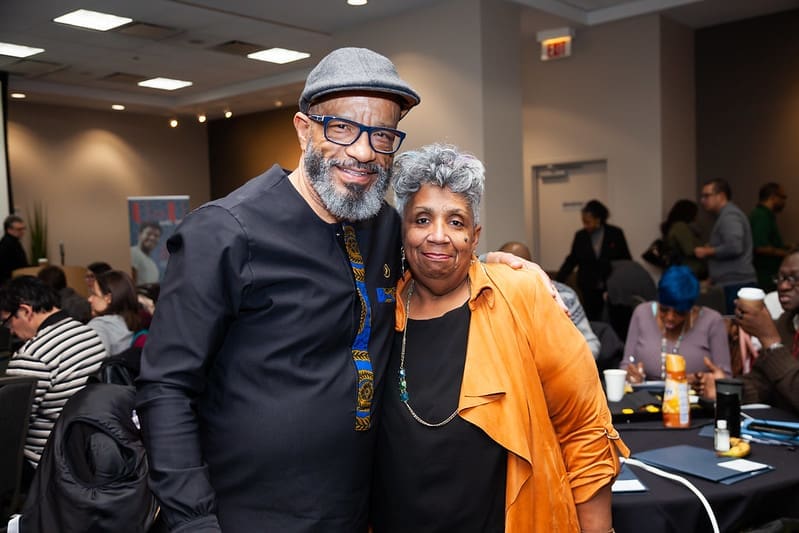
When you talk to Judy Brown, it is immediately clear that the 69-year-old Chicagoan is passionate about advocating for the people around her. Every day, Judy commits herself to helping others and has been doing so since she and her husband tested positive for HIV in 1993. Judy is an active member of AIDS Foundation Chicago (AFC)’s Ryan White community advisory board and works with Universal Family Connection Inc. to support Black women in underserved communities connect with health and wellness resources. Despite the challenges that Judy has faced in her life, she has maintained a positive attitude and has always worked to both support and find support from her Chicago community.
Early life
Judy was born and raised on Chicago’s West Side. She remembers her childhood fondly, recalling growing up in a big house with her parents, two sisters and brother. In 1965, when Judy was in eighth grade, she met her future husband. The two were married in 1971 and were young parents, giving birth to their first daughter when Judy was 15. The couple later had two more children whom Judy adores.
In addition to being the mother of three and eventual grandmother of many, Judy worked in the medical field as a certified nursing assistant, a phlebotomist (someone who draws blood) and a dialysis nurse. She lived a busy lifestyle, both professionally and personally, and she was caught by surprise when her and her husband tested positive for HIV in 1993.
Adjusting to life with HIV
When Judy tested positive for HIV in 1993, she did not have the same resources and information that is available today. At the time, HIV testing and medication was relatively new. In 1985, the Food and Drug Administration (FDA) licensed the first commercial blood test to detect HIV, and two years later, the FDA approved the first medication to fight HIV, AZT. Despite the limited knowledge and treatment that existed, Judy was devoted to embracing life after testing positive.
“I’ve never been ashamed of it,” Judy said. “It’s just something that happens, and I accept it and life goes on. It didn’t make me depressed. It was just a change of lifestyle.”
Beyond medication and treatment, Judy carried this positive attitude with her as she navigated living with HIV. She and her husband were lucky to have a strong support system made up of their family and friends, but she still remembers feeling misunderstood by people that did not know her personally, such as new doctors.
In the 1990s, there was not a comprehensive understanding of HIV within the medical field. Judy recalls her doctors often asking her invasive and inappropriate questions about her health, leaving her feeling hurt and stigmatized.
Judy witnessed similar things happening while she worked as a dialysis nurse at West Suburban Dialysis Center. Sometimes, she was the only nurse who was willing to take care of patients that were living with HIV.
“They were scared,” Judy recalls of the other nurses. “I didn’t have a problem with it. I just always believe in treating people the way I want to be treated.”
Sudden loss and finding support
In 2005, Judy’s husband passed away from colon cancer. In order to cope with his death, Judy joined a support group for individuals who were grieving the loss of a significant other. This support group helped her process her emotions and feel connected during a time of loneliness.
Judy expanded her support system a few years later by joining a women’s support group through the Chicago Women’s AIDS Project. Judy eventually became a group facilitator and was able to create a strong, welcoming community where she inspired other women to advocate for themselves at their doctor appointments.
It was in these support groups at Chicago Women’s AIDS Project that Judy was introduced to Angela Jordan, AFC’s Intake and Referral Manager. Impressed by Judy’s work and charisma, Angela informed Judy that she was accepting applications for AFC’s Ryan White community advisory board and encouraged Judy to apply. Judy did so and joined AFC’s community advisory board in 2018.
Serving on AFC’s Ryan White community advisory board
AFC’s community advisory board is made up of individuals who are living with HIV and use their firsthand knowledge as participants to improve the organization’s programs. For Judy, joining the board has been an incredible opportunity to learn from her peers. She loves listening to the other board members share their thoughts and ideas and provide feedback on the services that are available to them.
Since joining the board, Judy has expanded her knowledge of case management and has been connected to a new case manager through AFC. By improving her understanding of the different types of case management, she has not only been able to more easily access the services she needs, but she has also been able to pass information about available resources and programs to other women who might need them.
“She is passionate about making sure services are geared towards all women, especially African American women,” said Angela, who facilitates the community advisory board. “Ms. Judy has truly been an asset to the group.”
Judy’s service on AFC’s community advisory board encapsulates the empathy that she exhibits every day. Whether it is being a mother, grandmother, nurse, group facilitator or board member, Judy is driven by her desire to learn from and help others.
“I really love advocating,” Judy said. “Sometimes I don’t know what to say, but I know what’s in my heart.”
To learn more about AFC’s Ryan White Community Advisory Board members click here.
To support Universal Family Connection Inc. click here.
To learn more about and support women living with HIV click here.
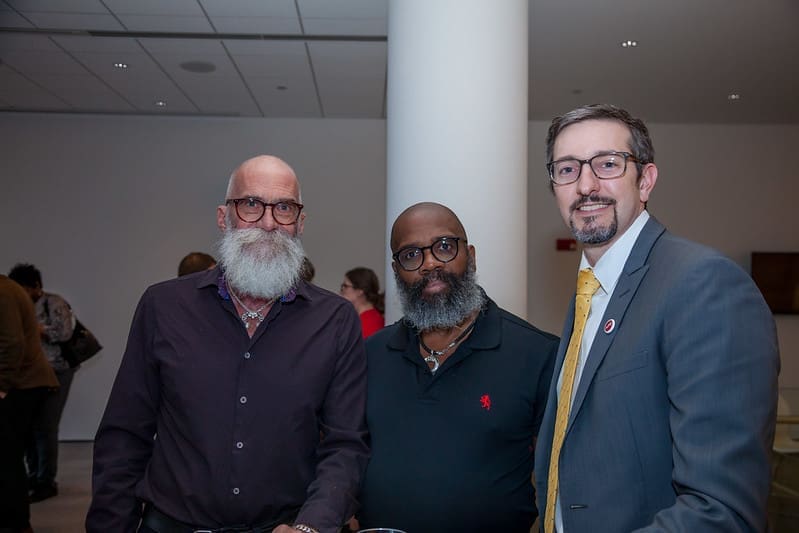 Meet Roy Ferguson: AFC board member
By Ella Shapiro
One of Roy Ferguson’s greatest pleasures in life is spending time with his granddaughters. Every morning the 70-year-old Chicagoan and his partner, Michael, each take one of their youngest granddaughter’s hands and walk her to school. The pair’s eldest granddaughter just got onto her high school’s softball team, and Roy is looking forward to watching her play. These moments with his family – morning walks and softball games – is not something that Roy takes for granted, because he did not always think he would get to take part in them.
During the 2007-2009 Great Recession, Roy, alongside nearly 9 million other Americans lost his job. He subsequently went through bankruptcy and lost his house to foreclosure. Losing his income, insurance and home created barriers for Roy in supporting his health, just as is does many. According to the Centers for Disease Control and Prevention, employment and access to stable housing, along with other factors, impact one’s overall health. These “social determinants of health” can exacerbate pre-existing health conditions.
Some years prior, Roy had tested positive for HIV. Roy had managed to attain treatment and medication through his employer-provided health insurance. However, when he lost his job, he became responsible for the full price of his medication, rather that splitting it with his insurance. The financial challenges that Roy was facing made it impossible for him to continue paying for his HIV medication, forcing him to go without. Once he stopped, Roy’s viral load began rising rapidly and his health quickly declined. Roy was left feeling depressed and unsure of what to do next.
Just when it seemed as though things were not going to get better, Roy, a veteran, got connected with the Edward Hines, Jr. VA hospital.
“Once I got involved with Hines, everything in my life really turned around,” Roy said.
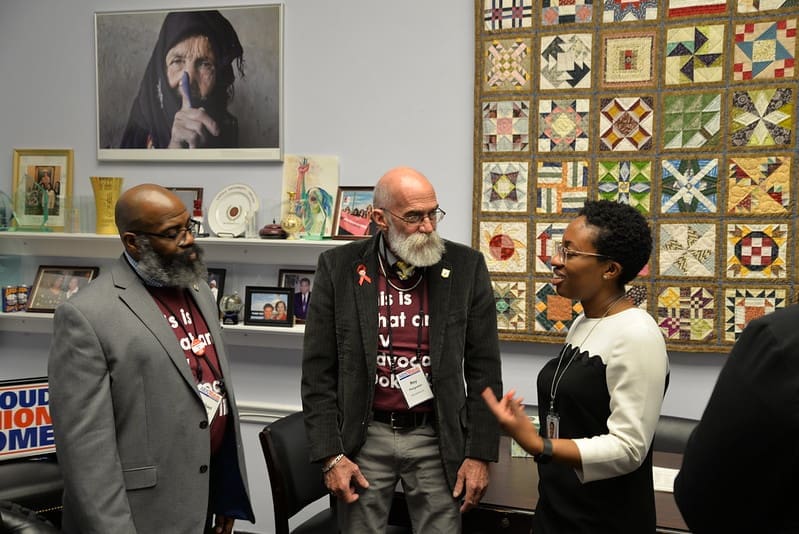 At the VA hospital, Roy was reconnected with HIV treatment and received mental health services for his depression. Once he was back on medication, Roy joined the Hines Positive Attitude Veterans (PAV) group, a self-help and education group for HIV-positive veterans, which he later began leading.
“Coordinating the Hines HIV group is my way of playing back and paying it forward at the same time,” Roy said.
From there, Roy fell in love with advocacy. He found his voice, and he was ready to be heard. Roy joined AIDS Foundation Chicago (AFC) in Springfield, where he spoke with state legislators about HIV and AIDS.
In 2016, he went to Washington D.C. to participate in AIDSWatch, the largest national constituent-based HIV advocacy event. Last year, he began serving on AFC’s board of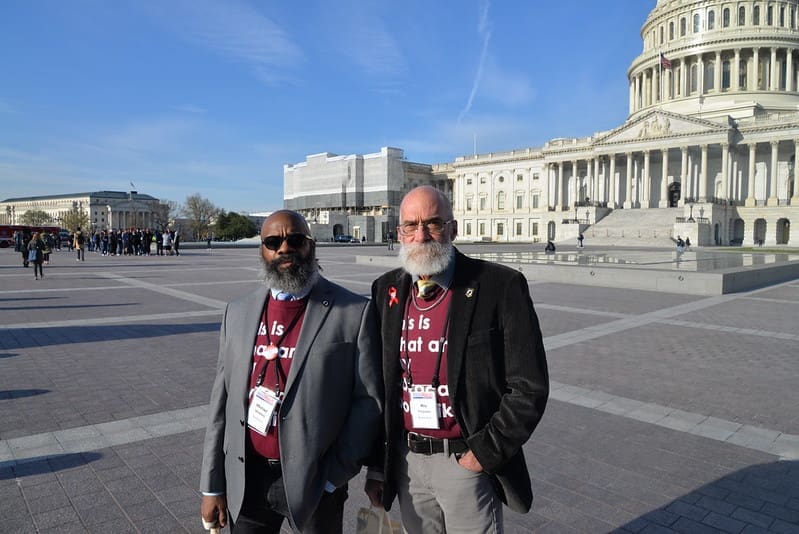 directors, where he takes part in overseeing the work and leadership of the organization.
“The VA was very instrumental in turning my life around and helping me find purpose, so much so that I’m now on the board of directors at AFC,” Roy said. “I don’t know what better purpose I could have in my life right now.”
If you meet Roy today, you would never assume that the optimistic, outspoken man once felt so hopeless. Now, he is someone that approaches each day with gratitude, and is confident in his abilities to handle whatever comes his way. He no longer feels as though HIV defines him, now it is just one part of his life.
“People plan for the worst instead of planning for the best,” Roy said. “I started to think that maybe I should just plan for the best. If it doesn’t work out then that’s okay, we’ll try a new path.”
To learn more about AFC’s board of directors, click here.