Revised March 29, 2021
1. Safety
The safety of COVID-19 vaccines is a top priority. No steps have been skipped during the rigorous and highly regulated development process. All COVID-19 vaccines were thoroughly reviewed and approved for use by the U.S. FDA.
2. How COVID-19 vaccines work
All three vaccines –Johnson & Johnson (J&J), Pfizer, and Moderna –work by causing your own cells to produce the spike protein that the novel coronavirus uses to attack human cells. This ensures that your immune system learns to recognize and respond quickly to a real infection. COVID-19 vaccines do not use a live virus and cannot give someone COVID-19.
3. Benefits
The Moderna, Pfizer and Johnson & Johnson COVID-19 vaccines have been proven to be safe and highly effective at preventing serious illness and hospitalization due to COVID-19 infection. New studies show the Moderna and Pfizer vaccines prevent COVID-19 infections, too.
4. Number of doses needed
The COVID-19 vaccines from Pfizer and Moderna each require two shots, and everyone needs to receive both shots to get the most benefits the vaccine can offer. The Johnson & Johnson vaccine requires just one shot. You’re fully vaccinated two weeks after your last injection. You will still need to wear a mask in public and around non-vaccinated people, practice social distancing and frequently wash your hands after you get the vaccine. You don’t need to wear a mask around other fully vaccinated people (for example, at home).
5. Availability and cost
While supply continues to be limited, certain groups (such as health care workers, people living in nursing homes, essential workers and people living with HIV in some areas, such as Chicago) are prioritized to receive the vaccine first. The vaccine will be offered to all people age 16 and up who want it in Illinois after April 12 and is expected to be more widely available in Chicago in June. The vaccine is free for everyone, regardless of insurance status.
6. People living with HIV
COVID-19 vaccines have gone through the same safety tests and meet the same standards as other vaccines. People with HIV were included in clinical trials. Public health authorities recommend that people living with HIV get vaccinated.
7. Medical mistrust
Some people may decide not to take the COVID-19 vaccine at first because of historic and ongoing medical mistreatment of Black, Indigenous and people of color (BIPOC) communities in the U.S. Extensive, community-driven education is needed to address people’s concerns about COVID-19 vaccines thoughtfully and without judgement. Medical mistrust can also stem from lack of access to vaccines. Ensuring equitable access for all communities is critical.
By Ella Shapiro
Before the COVID-19 pandemic, Milani Varela, 33, used to take the Chicago Transit Authority (CTA) twice a week to a clinic where she attended individual and group therapy sessions. When her clinic closed to support social distancing, Milani’s therapy sessions moved to Zoom. This let Milani sleep in later, save money on transportation and reduce her risk of exposure to COVID-19.
But the real benefit Milani found was witnessing more people have access to mental health care, a change Milani is deeply passionate about.
“For some people, I find that because of specific mental health issues, like depression, they really can’t get out of bed to actually go to therapy,” said Milani, an ambassador for the Centers for Disease Control and Prevention (CDC)’s Lets End HIV Together campaign. “But they know that they [now] have an option of not getting out of bed and still being able to participate through Zoom.”
These Zoom therapy sessions are a result of an executive order that Gov. J.B. Pritzker passed in response to COVID-19. This order expanded telehealth services for all Illinoisans, meaning that all residents could access medical care, mental health care, substance use care and case management services virtually, through phone calls, FaceTime or Zoom video calls like Milani is doing.
Currently, AIDS Foundation Chicago (AFC) is partnering with the statewide Coalition to Protect Telehealth, the Illinois Health and Hospital Association and other community partners to advance HB3498. If enacted, the legislation would make telehealth services permanently available in Illinois.
While Milani misses seeing her provider and group in person, Milani’s online therapy sessions have made it possible for her to safely sustain a sense of community during a time of increased isolation. Because of the elimination of barriers related to the cost and physical demands of travel, Milani’s group sessions have also grown and added new members to her mental health community.
“I see people that would not come to therapy, or be in the group therapy, because… they couldn’t travel,” said Milani. “The numbers might not be huge, but there’s a bigger number [of people attending] than there sometimes would be for in-person therapy.”
While Milani has found Zoom therapy sessions to be an incredible option, she wished she had the same options for her physical health. In spring of 2020, Milani had a telehealth doctor’s visit with her primary care provider that resulted in a request for in-person lab work. Milani has not yet had these labs run due to the continued risk of COVID-19 exposure and the challenges of traveling to and from her doctor’s office. Now that COVID-19 cases are decreasing, Milani plans to get back on track with scheduling her appointments.
Milani’s experience is consistent among other people in her age group. A survey conducted by Harmony Healthcare IT reported that 73% of millennials search for medical advice online before contacting a doctor, and 48% of millennials would prefer to see a doctor virtually rather than in-person.
Telehealth services have increased accessibility and made it easier than ever for Milani, and many others, to take care of their mental health and stay connected with their communities even during these difficult times.
“When it comes to therapy, I feel it’s a little easier to do it through Zoom,” Milani said. “I would love to keep it that way.”
If you’d like to join Milani in advocating for the permanent expansion of telehealth services, call or email your state legislator and ask them to support HB3498, the legislation that would ensure permanent access to health care through telehealth. To find out who your state legislator is, click here.
 Español abajo
Editor’s Note: This publication was orginally published March 26, 2021. To keep the spirit of Román Buenrostro alive, minor updates was made to the narrative.
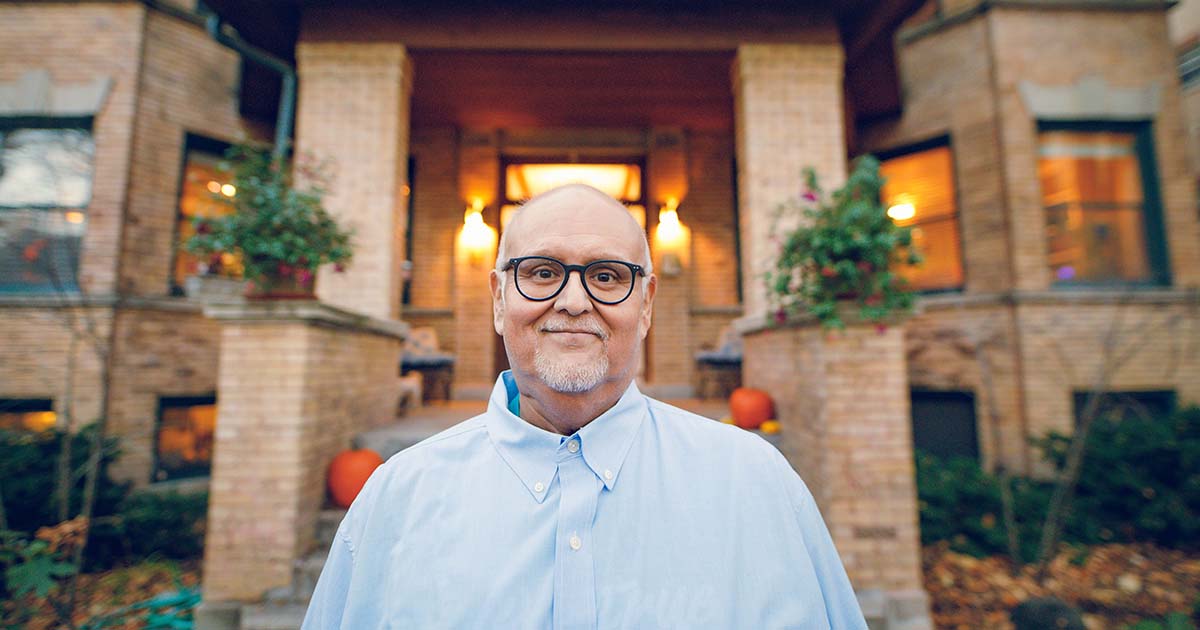
AIDS Foundation Chicago (AFC) staff, board and partners give remembrance to Román Buenrostro, who passed away on March 25, 2021, from complications of cancer. Román, who at the time of departing this world, served as AFC’s Director of Special Projects, is survived by his husband, Daniel Skelton, and many friends and family members.
Román’s legacy as a longtime LGBTQ+ leader and activist for people living with HIV stretches back to his co-founding of the Association of Latina/o/x Motivating Action (ALMA), which started in 1989 to serve gay, bisexual, queer and questioning Latino men at the height of the AIDS epidemic. Román also started volunteering for STOP AIDS Chicago in 1989 by leading “charlas,” or talks, to educate the community about AIDS and help promote HIV prevention. He also spent 10 years supporting the Center on Halsted on its HelpLine program.
For 23 years, Román supported AFC’s growth as a leader in HIV services for the Chicagoland area. He led targeted, community-centered initiatives that prioritized communities most impacted by HIV, including the Salud Y Orgullo Mexicano campaign, which supported Mexican gay and bisexual men living with HIV in Chicago.
Román led the creation and implementation of the HIV Resource HUB, which in 2020 helped 412 people access emergency rent, utility and other financial assistance totaling $755,539. Román also chaired AFC’s Race and Social Justice Committee, which is leading the way for the organization’s efforts to build radical racial equity among staff, board and partners.
Román’s leadership has been honored numerous times; he was inducted to the LGBT Hall of Fame in 2016 and received a commendation from Mayor Lori Lightfoot in 2019.
Román’s sense of humor and radiating love of people, and encyclopedic knowledge of culture provided a rich counterbalance to the critical and difficult work he led.
“Román’s beautiful smile lit up the room and opened our hearts,” said AFC’s President & CEO, John Peller. “Román’s leadership at AFC and in the Chicago HIV community has transformed the lives of thousands of people living with and vulnerable to HIV. And from sing-along movie musicals to homemade songs and skits at AFC parties, Román kept us all laughing at AFC. I am so grateful for everything I learned from Román.”
Photo by Seed Lynn, Storyographers.
Fallece el reconocido líder y activista LGBTQ+ Román Buenrostro
La Fundación Sida de Chicago (AFC), su mesa directiva y sus asociados, recuerdan a Román Buenrostro, quien falleció el 25 de marzo por complicaciones relacionadas con cáncer. A Román, quien fuera recientemente el Director de Proyectos Especiales, le sobreviven su esposo Daniel Skelton y un gran número de familiares y amigos.
El legado de Román como un reconocido líder y activista LGBTQ+ y de personas VIH+, se remonta a la co-fundación de la Asociación Latina Motivando Acción (ALMA), la cual se creó en 1989 con el propósito de servir a la comunidad latina/o/x de hombres gay, bisexuales, queer y aun cuestionándose durante el pico de la pandemia de SIDA. De igual forma, Román sirvió como voluntario en la agencia STOP AIDS en 1989, liderando charlas y presentaciones para educar a la comunidad sobre el SIDA, y promocionando la prevención del VIH. También, por un periodo de 10 años, apoyó a la fundación Center on Halsted en su programa de línea telefónica de ayuda (HelpLine). Durante 23 años, con su trabajo y dedicación, Román ayudó a la Fundación Sida de Chicago a crecer como agencia líder en servicios relacionados con el VIH en Chicago y sus alrededores. Lideró iniciativas centradas específicamente en la comunidad, dando prioridad a las más afectadas por el VIH, incluyendo la campaña Salud y Orgullo Mexicano, que apoyó a hombres homosexuales y bisexuales mexicanos que viven con VIH en Chicago. Mas recientemente, Román lideró la creación e implementación del centro de recursos para el VIH (HUB) que, en el año 2020, ayudó a 412 personas a acceder a asistencia financiera para pagar la renta, servicios públicos y otras emergencias, por un total de $755,539 dólares. Román también presidió el comité de Raza y Justicia Social de la AFC el cual lidera el esfuerzo de la organización para edificar una igualdad racial radical entre sus trabajadores, asociados y miembros de la mesa directiva.
El liderazgo de Román ha sido reconocido en numerosas ocasiones. Fue incluido en el Salón de la Fama LGBT en 2016 y recibió elogios de la alcaldesa Lori Lighfoot en 2019.
El sentido del humor de Román y su amor radiante hacia sus semejantes, sumado a su conocimiento enciclopédico de la cultura LGBTQ+ latina/o/x proporcionaron un inigualable balance a la difícil obra que lideró. En palabras de John Peller, el presidente y director ejecutivo de AFC, “La hermosa sonrisa de Román, iluminó la habitación y abrió nuestros corazones. El liderazgo de Román en AFC y en la comunidad de VIH en Chicago, ha transformado la vida de miles de personas con o vulnerables al VIH. Cantando musicales, o canciones inventadas para las parodias y comedias en las celebraciones y fiestas de AFC, Román nos hizo reír a todos muchas veces. Estoy agradecido por todo lo que aprendí de Román”.
Over a year into the pandemic, equitable progress has not been made to address the racial disparities in health outcomes that have existed and been exacerbated throughout the COVID-19 pandemic. In short, systemic racism made Black, Indigenous and Latinx/e communities deeply vulnerable to increased risk of illness, and as a result, we have seen disproportionate numbers of deaths from COVID-19 complications in Black, Indigenous and Latinx/e communities. It’s unacceptable and must be remedied in a timely and comprehensive manner.
In a letter addressed to city, county and state officials, AIDS Foundation Chicago (AFC) and Howard Brown Health – in partnership with nearly 100 organizations and individuals – called for equitable COVID-19 vaccine distribution for people living with HIV and Black and Latinx/e communities by ensuring vaccine supply and the person power necessary to administer vaccines in these communities. In doing so, these levels of government would operationalize their stated goals around equitable distribution of the COVID-19 vaccines in the communities most impacted by COVID-19 morbidity and mortality.
We accomplished our first ask, expanding vaccine access for people living with HIV, and now it’s time to renew focus on our second. After a year of seeing the devastating effects of systemic racism in how Black, Indigenous and Latinx/e communities grappled with COVID-19, city, county and state health officials have an opportunity to reduce racism-rooted inequities in the rollout of COVID-19 vaccines.
AFC and Howard Brown demand that both Chicago and Illinois Departments of Public Health include and name all majority Black, Indigenous, and Latinx/e communities as priorities for vaccine distribution immediately.
The numbers make clear why Black and Latinx communities, in particular, must be given priority access to vaccines in Chicago and Illinois.
As WBEZ reported March 24, “weeks after Chicago released data showing most COVID-19 vaccine doses were going to white residents, the Illinois Department of Public Health released high-level data showing the same was true for the entire state.”
In Chicago, as of March 2021:
- Black and Latinx/e Chicagoans represent roughly 59% of the city’s population, but make up more than 70% of its COVID-19 deaths and just 54% of its vaccines administered
- White Chicagoans represent 33% of the city’s population, but make up just 23% of its COVID-19 deaths and 36% of its vaccines administered (Source) (Source)
And in Illinois, as of March 2021:
- Black and Latinx/e Illinoisans represent roughly 33% of the state’s population, but make up 34% of its COVID-19 deaths and just 18% of its vaccines administered
- White Illinoisans represent 61% of the state’s population and make up 59% of its COVID-19 deaths and 68% of its vaccines administered (Source) (Source)
For Indigenous communities, who have experienced ongoing genocide and racism, the lack of data about these communities is indicative of the need for each level of government to collaborate with tribal governments on COVID-19 vaccine support.
Ensuring equitable vaccine access directly impacts AFC’s and Howard Brown’s community. Black and Latinx/e people are impacted by HIV at the greatest rates in Chicago and are more likely to not be engaged in medical care for HIV. As a result, they are more likely to get seriously ill if they are diagnosed with COVID-19. Expanding vaccinations to Black and Latinx/e communities will be one of the fastest ways to expand COVID-19 vaccines to all people living with or vulnerable to HIV.
Ensuring equitable vaccine access in Black, Indigenous, and Latinx/e communities also benefits all communities. Increasing vaccination rates in communities that are especially vulnerable to COVID-19 transmission is an essential strategy for stemming the tide of new infections, and ultimately bringing an end to the pandemic in Chicago and Illinois.
While Chicago’s Protect Chicago Plus initiative has contributed to increased vaccine availability in BIPOC communities, more must be done to ensure true equitable vaccine distribution. Explicitly naming these communities as priority populations along with the other vulnerable populations listed in the vaccine distribution plan will help to ensure a lasting, intentional, and accountable commitment to equitable vaccine distribution to Black and Latinx/e communities throughout the rest of the pandemic.
To learn more about the importance of prioritizing Black, Indigenous and Latinx/e communities in the city, county and state’s COVID-19 vaccination approach, click below to read the full letters sent to City of Chicago, Cook County, and State officials.
Illinois: COVID-19 vaccine distribution advocacy letter, February 2021
Cook County: COVID-19 vaccine distribution advocacy letter, February 2021
Chicago: COVID-19 vaccine distribution advocacy letter, February 2021
By Mia Caballero
I started my social media internship at AIDS Foundation Chicago (AFC) in January of 2020, a few months before most staff started working remotely. I am extremely grateful to have had two months to get to know some staff and attend in-person meetings like the Annual Meeting. Because a lot of the work I do is online, it wasn’t too hard to transition to working from home. Still, I do really miss my commute to the office and being able to pop by colleagues’ desks just to talk.
The many changes that the COVID-19 pandemic prompted taught me a lot about myself. As it pertains to work, I’ve learned that just because you’re remote it doesn’t mean you never need a break. I’ve found it difficult to schedule out time for myself to eat when I’m doing work or school, so I’ve been trying to work on time management. These changes also taught me to love my own company. As an introvert, I didn’t really struggle with having to stay inside because it gave me the best excuse I could ever ask for to not go anywhere. But still, I learned how to enjoy time with myself whether it be learning new Tik Tok dances with my sisters or developing my new plant obsession.
As I’m sure this year has affected us all in a variety of ways, I checked in with seven different staff members at AFC to see how the COVID-19 pandemic has impacted their time at AFC, and what they’ve learned from this year of isolation.
 Erwin Saenz
Director of Corporate and Foundation Relations
Has been at AFC for 10 months.
“COVID has impacted every step of my journey with AFC. At the start of the pandemic, I began my interview process; I recall asking my friends if they thought I needed to wear pants with my suit during my first Zoom interview.
Once I accepted the job, I had to figure out how to move from Seattle to Chicago. That was a journey! Traveling across half the country to a new location gave me lots of time to think about little things like “how will I even get my work computer?” The only first-day hiccups involved me explaining that I had bleached my hair at the beginning of the stay-at-home orders and couldn’t get a haircut.
The realization that the folks that fund our organization would have an intimate view of my home was shocking at first. Gone was the comfort of a conference room and the formalities that come with an office setting. I learned COVID-19 presented an opportunity to develop authentic, meaningful conversations with my stakeholders. One of my favorite discussions involved a corporate partner and I summarizing the Mariah Carey autobiography for over an hour; those type of interactions would never happen in person!
Realizing that COVID-19 would be affecting us for longer than we thought motivated me to learn new ways to form connections with my friends and family. During the first months of quarantine, I started a podcast, streamed my weekly live DJ sessions, and learned how to make resin crafts. I used these new skills to build a community to raise funds for various mutual aid funds.”
 Kennedy Brookins
Community Outreach and Education Specialist
Has been at AFC almost 9 months.
“COVID has completely shaped my time at AFC. I haven’t seen any of my coworkers in person and have only been to the office a handful of times. Working from home and doing community outreach remotely has been my normal, so I think it’s going to be a huge adjustment for me to have to go back to the office one day and re-learn how to do my job.
I’ve learned that institutions and organizations are capable of so much more than they have let on in the past, and because of that I’m less likely to accept no as an answer. I feel like I’ve been given the runaround in the past on why certain things at nonprofits are not possible. These same organizations were able to adapt so quickly when the pandemic hit. Not to say that we should work from home forever, but a lot of the ‘new ways’ of life are actually things that have been asked for by employees and activists for years. Innovation is possible, new voices are necessary and, quite frankly, tradition is overrated and ineffective.”
 Sacha Urban
Director, Individual & Planned Giving
Has been at AFC for 3 1/2 years.
“I purposely took a downtown job after my daughter graduated from high school and tremendously enjoyed the commute on the train, which allowed me to knit and listen to music or books on tape. It has been an adjustment for me to consistently work from home. I much prefer the office where I can focus solely on my work and interact with my co-workers and of course, with AFC’s donors and constituents.
As an extrovert, I thrive in interactions with living beings/things (I guess that’s why I added so many houseplants over past year, from zero to 10). I love the arts, the exchange of ideas and energies. I only can knit, bake, watch Netflix and reorganize my closet so much.
The earth definitely took a breather, in terms of environment. I spent significant time with my mother in Switzerland — and we literally gave each other new life energy. I started to do yoga (Yoga with Adriene). I learned to make and bake sourdough bread. My garden last summer never looked so beautiful, and I pickled cucumbers for the first time.”
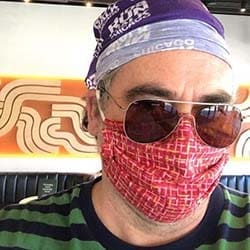 Jim Pickett
Senior Director of Prevention Advocacy and Gay Men’s Health
Has been at AFC roughly 17 years.
“Prior to COVID-19, my job had me on the road a lot, sometimes around 100,000 miles a year attending conferences and meetings all over the world. When I wasn’t in other cities, much of my time in Chicago was spent out of the office leading trainings and workshops and helping implement the many conferences AFC does. So, when COVID-19 came, all of that ended immediately.
While I have gotten more comfortable using Zoom and other virtual platforms to engage in advocacy, research and educational projects, I really do miss connecting with people in the ‘real world’ and catching up with far-flung colleagues. Zoom doesn’t take the place of running into a ‘partner in crime’ at a conference and plotting over a quick coffee. Some of my most exciting projects have been hatched in hotels and conference centers.
I’d say that being forced to slow down and not being on the run all the time has helped me appreciate, or should I say better appreciate, the value of home, spending time with my partner, being more accessible to my family and community. Checking in and out of hotels means you miss a lot of things, big and small, that really matter.”
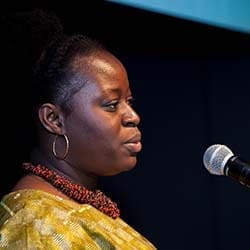 Bashirat Olayanju
Vice President of Care
Has been at AFC for 9 years.
“I have not been able to connect with my peers as much as I had in the past. I have a tight knit team, and it’s been a huge adjustment only communicating with them through video, email and chat. It is good to know that work can still be done as efficiently when working remotely, and AFC has been able to provide multiple tools that have been beneficial to make remote work seamless. We have also been able to provide direct services in a different way which we have found to be beneficial for many clients who would rather not have in-person interactions.
Tomorrow is not guaranteed. Hold your family close, your friends, and your support system close — be very intentional about your words to them. My family is spread around multiple states and countries, and not all resources were/are equal across each location. A lot more work is needed as it pertains to health equity. More Black and Brown folks had negative health outcomes compared to white folks as with everything else.”
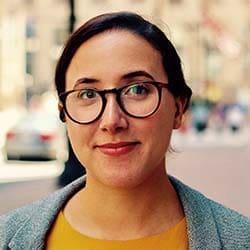 Nora Bouacha
Senior Manager of Research and Evaluation
Has been at AFC for about 1 ½ years.
“I started about 6 months before COVID, so I feel like I was pretty fortunate to be able to get a good understanding of the organization and the projects I work on before everything changed. I am also grateful that I at least got the chance to meet and get to know my colleagues in-person before everything moved to Zoom.
As far as what has changed — my work requires managing multiple research and evaluation projects. As part of that, we recruit participants and meet with project clients to administer assessments, all of which were primarily conducted face-to-face before the pandemic. This allowed us to meet people at locations that were convenient to them, and took into account the fact that not everyone has a phone or access to the internet. During the quarantine, we had to shift everything to remote data collection. This was definitely a big adjustment, but luckily my team has gone above and beyond in order to make this happen — dropping off research incentives in person and coordinating with case managers to make sure we were still able to access clients at times and using methods that were feasible for them.
Routines are important! I (eventually) learned that there needs to be some separation between work and home, even when you are working from home, so I started doing some small things to book-end the workday. Every morning I make a French press coffee and once that is done brewing, I know it is time to start work. At night I usually start cooking dinner right after I send my last email for the day. This has helped me to maintain a reasonable work-life balance. It’s still a struggle though.”
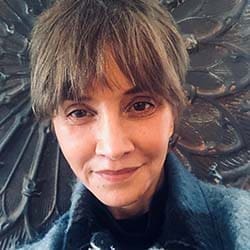 Carolyn Bloom
Substance Use Care Coordinator
Has been with AFC/CHH for almost 3 years.
“COVID has impacted my clients profoundly since I do direct service and provide harm reduction counseling and support to people who use drugs. Our clients generally are under-resourced, stigmatized and without consistent access to basic needs. The pandemic has made that much worse with connections disrupted and overdose deaths skyrocketing.
Working in direct service can also be isolating for me. My one-time weekly day in the office allowed me to feel connected to AFC/CHH and my co-workers — I really miss that. What I’ve learned since COVID is that we have a lot that needs to be fixed!”
By Ella Shapiro
For 35-year-old Chicago-based community activist Jo MaMa, attending their doctor appointments used to be a nightmare. At the time, Jo wasn’t comfortable with their HIV status being public. When Jo went to the doctor in-person, they felt they ran the risk of seeing someone they knew and compromising their privacy. As a result, Jo would experience severe anxiety when at the clinic and needed constant communication and support from a friend through text messages to make it through their appointments.
However, since the start of the pandemic, most of Jo’s appointments have moved online to minimize the risk of COVID-19 exposure. Switching to online appointments has been a relief for Jo and means that aside from occasional in-person visits to run labs and have their vitals checked, they can communicate with their doctors safely and securely over Zoom from the comfort of their own home.
“[Having doctor’s appointments at home] is extremely confidential, just you and whoever your [provider] is, and that was a big win for me,” Jo said.
Jo’s Zoom doctor appointments are a result of an executive order that Gov. J.B. Pritzker passed in response to COVID-19. This order expanded telehealth services for all Illinoisians, meaning that Illinois residents could access medical care, mental health care, substance use care and case management services virtually, through phone calls, FaceTime, or Zoom video calls like Jo is doing.
Currently, AIDS Foundation Chicago (AFC) is partnering with the statewide Coalition to Protect Telehealth, the Illinois Health and Hospital Association and other community partners to advance HB3498. If enacted, the legislation would make telehealth services permanently available in Illinois.
“I’m just grateful for the entire new system [of using telehealth services],” Jo said. “The efficiency is a big highlight for me.”
Even though Jo is no longer concerned about keeping their HIV status private, Jo said telehealth services have provided additional benefits including saving time and money from fewer commutes to and from their doctor appointments.
It has also decreased wait times that Jo previously experienced when visiting their doctors in person. Previously, Jo prepared to wait for up to two hours at the clinic before finally getting to see their doctor. The longest Jo has had to wait on Zoom is five minutes.
Although adjusting to change can be hard, some changes can prove to be positive. Despite being unsure about telehealth at first, Jo quickly adjusted and found them to be a wonderful resource. Moving forward, Jo wants to keep having appointments over Zoom even after it’s safe to meet in person.
“Now that it’s set up, I hope that it does stay because I find it helpful,” Jo said. “I love it!”
If you’d like to join Jo in advocating for the permanent expansion of telehealth services, call or email your state legislator and ask them to support HB3498, the legislation that would ensure permanent access to health care through telehealth. To find out who your state legislator is, click here.
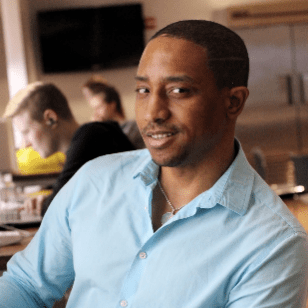 |
Cecil Dearborne joined AFC’s Board in 2020. Since 1992, he has worked in the IT consulting industry, focusing on business transformations and product development. He currently leads operations and strategy within North America for his company’s Enterprise Modernization, Platforms, and Cloud service line. Although he is a tech guy at heart, as a gay Black man who grew up witnessing inequities in Houston, Cecil also has a passion for social and economic justice. He has proudly served on the executive board for the Chicago Roundup, a not-for-profit organization that hosts an annual global conference and thought-provoking workshops, engaging speakers, pure entertainment and fellowship opportunities throughout the year. |
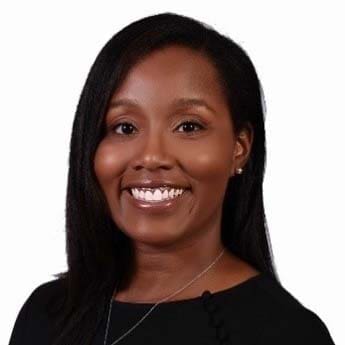 |
Adwoa Antwi-Barfi joined AFC’s board in 2020. She currently serves as the Portfolio & Process Manager on McDonald’s Global Technology Strategy & Planning Team. She also serves on the Executive Council of the Associate Board of Providence St. Mel School in Chicago. Adwoa has over 15 years of experience in program and project management, procurement, insurance solutions and people management. In the past, she has served on the Executive Board of the National Coalition of 100 Black Women Inc., as a member of the Illinois Quality of Life State Board, the chair of the Parks & Recreation Committee for an incoming mayor’s transition team, an adjunct member of the HIV Prevention Planning Group of Chicago’s – Gap Analysis Committee, an HIV / STD Prevention Instructor for the Red Cross and the Chicago Dept. of Public Health and a volunteer instructor for the National Society of Black Engineers NSBE Jr. Summer Program. |
 |
Caprice Carthans joined AFC’s board in 2020. She is a Trans advocate, author and has worked more than 30 years in the field of HIV and LGBTQ+ issues. Her early career on the East Coast included serving as the Trans Coordinator for Gay Men’s Health Crisis and as an independent consultant for Gay Men of African Descent and the Callen-Lorde Community Health Centers. After Caprice relocated home to Chicago, she served as a Housing monitor for Chicago House’s Translife Center and then as Peer Health Navigator for the Affordable Care ACT, where she enrolled 327 individuals, with 204 being of Trans experience. Caprice is currently a consultant serving at the Southside Help Center and the Coalition for Justice and Respect. She was the former Vice-Chair of the AFC’s Integrated Community Advisory Board (CAB) and currently serves as the Co-Chair of the Chicago Area HIV Integrated Services Council and Vice-Chair of the Christian Community Health Center’s CAB. She has received two awards from the office of Chicago Mayor Lori Lightfoot, AFC’s Innovation award, and is a 2020 inductee in the Illinois LGBTQ Hall of Fame. |
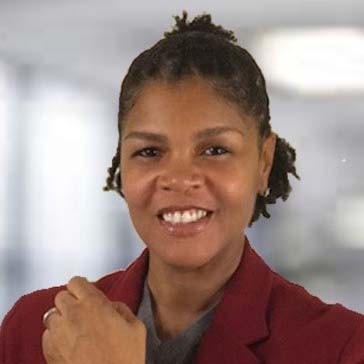 |
Liu Montsho joined AFC’s board in 2020. She is a training and instructional design professional who partners with companies to help their teams work better together. As the co-founder and principal consultant of 360 HR Solutions in Chicago, she has built trusting relationships and facilitated creative learning programs that deliver results for over 50 clients and thousands of employees. In her work with small businesses, Liu has served as a certified Business Advisor for the Illinois SBA. Liu’s 14-year professional training career has included roles such as Director of Training & Development, and she has consulted widely in a variety of sectors. Her training specialties include leadership development, diversity & inclusion, change management, instructional design and facilitation. Liu is True Colors®, Growth Wheel®, Organizational Culture Inventory (OCI™) and Organizational Effectiveness Inventory (OEI™) certified. She is experienced in coaching at all levels, including senior executives. |
By Bailey Williams
Courtney Eshay Key, age 25, was shot and killed Christmas Day, 2020. Courtney, a Black trans woman, is survived by her mother, brother, and sister, who loved her dearly.
“I know for a fact that Courtney just wanted to thrive,” said longtime friend Beverly Ross. “She just wanted to beat the odds and become something. When we talk about beating the odds, we’re talking about a girl from the projects becoming something and defining herself.”
Born and raised on Chicago’s South Side, Courtney attended Chicago Public Schools (CPS)’s Fiske Elementary School and graduated from Hyde Park High School. Beverly remembers Courtney as being hilarious. They often would have friendly roasts and share jokes on Facebook. Years later, friends remember that humor and outgoing spirit.
Courtney loved wearing colorful hair, playing Spades and eating soul food prepared by her chosen grandfather. She also loved getting her nails done and listening to trap music.
Most recently, Courtney just desired love and respect, Beverly added. She wanted to receive the same love she put out into the world. She was a sweetheart who just wanted to flourish, Beverly said.
Rest in power, Courtney.

Funeral services for Courtney were held, Friday, Jan. 1 and Saturday, Jan. 2, 2021 at Higgins Family Funeral Home and Resurrection House Baptist Church. To honor her life, consider making a donation to Black and Trans-led Brave Space Alliance whose work directly supports Black, Brown and Indigenous transgender and gender nonbinary lives.
By Bailey Williams
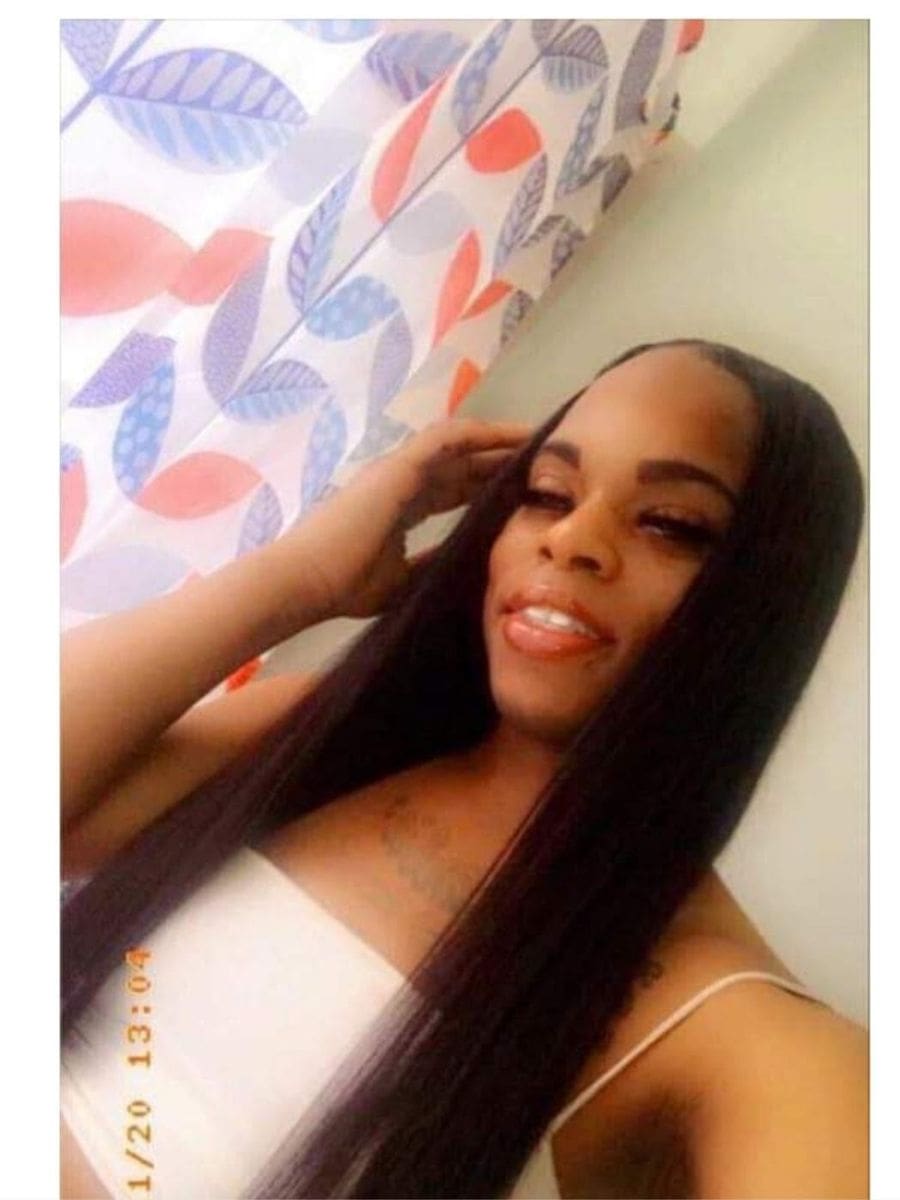 Tyianna “Davarea” Alexander, age 28, was shot and killed Saturday, Jan. 6, 2021 in a car with her best friend Brandon Chris, who also died. Tyianna, a Black trans woman, is survived by her sister and mother, who loved her dearly.
Born and raised in Chicago, Tyianna attended Chicago Public Schools (CPS) and graduated from CPS’ Harper High School in West Englewood. Beverly Ross, a longtime friend, remembers Tyianna as full of energy in high school. A lover of Chicago house music, Tyianna loved to dance and footwork. That spirit continued into adulthood, as people remember her as the life of the party.
“Her energy was intoxicating,” Beverly said. “I think that’s what’s going to be missed most. She was a sweetheart. She loved everybody, and everybody loved her.”
Most recently, Tyianna lived with her mother, who she loved so much. Tyianna also loved wearing bobs, eating Chicago food like Harold’s and pizza, and finding any music that would make her dance.
Ultimately, she was in a place where she was waiting to thrive. She did not have time to live her life wholly, Beverly said.
“Tyianna was on her way to greater,” said Beverly. “She was just about to get her gender affirming surgeries done.”
Rest in power, Tyianna.
Funeral services for Tyianna were held Thursday, Jan. 14 and Friday, Jan. 15, 2021. at Higgins Family Funeral Home and Resurrection House Baptist Church. To honor her life, consider making a donation to Black and Trans-led Brave Space Alliance whose work directly supports Black, Brown and Indigenous transgender and gender nonbinary lives.
By Kennedy Brookins
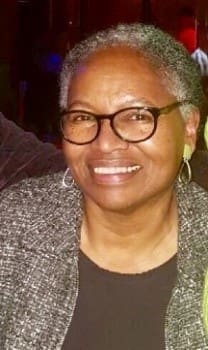 When I agreed to write a post about Dr. Mildred Williamson, who most recently served as the Executive Director of HIV Services at Ruth M. Rothstein’s CORE Center, I thought this would center Mildred ’s career — the accomplishments, metrics and awards. And let’s be clear, she’s got all of those. But as I started talking with Mildred and her colleagues from years past, I realized that her legacy isn’t confined by the ways she fulfilled and exceeded at her job. Her legacy is the humanity she brought to the job itself.
Mildred was born and raised on the South Side of Chicago, where her love of people and justice bloomed.
“Social justice has always been my grounding,” Mildred said.
She became deeply involved in social justice movements at age 13, campaigning and marching alongside others with the same heart as hers: a heart for people and a hope that they would be treated as such.
Mildred decided early on to pursue a career in social work and got experience working at various nonprofits around the city before eventually starting her master’s program at the School of Social Service Administration at the University of Chicago. Though her initial interest was in maternal health, through various internships she started learning more about mother and child HIV transmissions, which piqued her interest. As graduation approached and the HIV epidemic started rising, she applied for a job at Cook County Hospital in their general HIV program.
“I found that every element of injustice, everything that I cared about, was and is so clearly represented in this epidemic,” Mildred said. “Everything is about an equity lens. That’s what was important to me: horizontal equity in the places I worked. We all bring our strengths and experiences into this work. We all bring value. That’s how we move forward.”
There’s a noticeable difference in the way Mildred interacts and cares for those around her. AIDS Foundation Chicago (AFC)’s Chief Programs Officer, Simone Koehlinger, spoke about her first time working with Mildred.
“There’s something about Mildred where she makes everyone around her feel that they are welcomed and they have a voice,” Simone said. “She has time for everybody.”
That seems to be the magic of Mildred: Her presence doesn’t intimidate or hoard power; it permits others to tap into theirs.
Ariq Cabbler, Executive Director at Brothers Health Collective, said that Mildred was simply “a game changer.” Most people know while at the Illinois Department of Public Health Mildred led one of the biggest HIV sections in the country. Many remember that she ensured that thousands of people living with HIV were able to get medications through the state’s drug assistance program. And others will recall her leadership of multiple community groups throughout the years. But for Mildred, it wasn’t about redefining a field. Mildred simply wanted to advance health equity and social justice.
When thinking about the road ahead to end the HIV epidemic, Mildred advises the next generation to go back to the basics.
“People are not getting what they need to thrive in society,” Mildred said. “The major interventions we invest in have to tackle the basic elements of what it means to be a human being: food, shelter, safety, education, et cetera. The goal is for our work and for policy to prevent poverty and suffering altogether, not merely help people cope with it.”
When you mention Mildred in conversation, people smile. It’s clear she was more than just a colleague or a boss. She was a friend and endless source of inspiration for many. Though she’s now retired, you are likely to still see Mildred in public health spaces. She hopes to consult when possible and, ultimately, reconnect with her original love of grassroot campaigning.
“The work doesn’t stop,” she said. “I’ll just go at a slower pace now.”
Kennedy Brookins earned her Master’s in Social Work from the School of Social Service Administration with a focus on clinical interventions. She currently serves as the Community Outreach and Education Specialist for Getting to Zero Illinois (GTZ-IL).