It’s almost Census time, and while it might seem scary, the Census is important, safe, and easier to complete than you may think.
by Anthony Ruth
In 2010, Dan Savage started “It Gets Better,” Lady Gaga wore the meat dress, Oprah still had her daytime talk show, and everyone with a smartphone—which wasn’t yet everyone—was playing Angry Birds.
That was also the year the last Census was taken. Obama was in the White House, the Affordable Care Act had just been signed, and “Don’t Ask, Don’t Tell” was on its way out. At the same time, the Defense of Marriage Act was still the law of the land, there wasn’t yet Truvada for PrEP, and “U = U” was far from entering our lexicon.
A lot can change in a decade, which is why the Census attempts to count every person living in the U.S. every 10 years. For some of us, the idea of submitting a survey to the government that asks our name, sex, ethnicity and other personal details might be complicated, stress-inducing and deeply upsetting—but it doesn’t have to be.
Here’s why you need to complete the Census, and some advice on how to make it easier on yourself.
The Census is Required by Law and Only Takes 10 Minutes
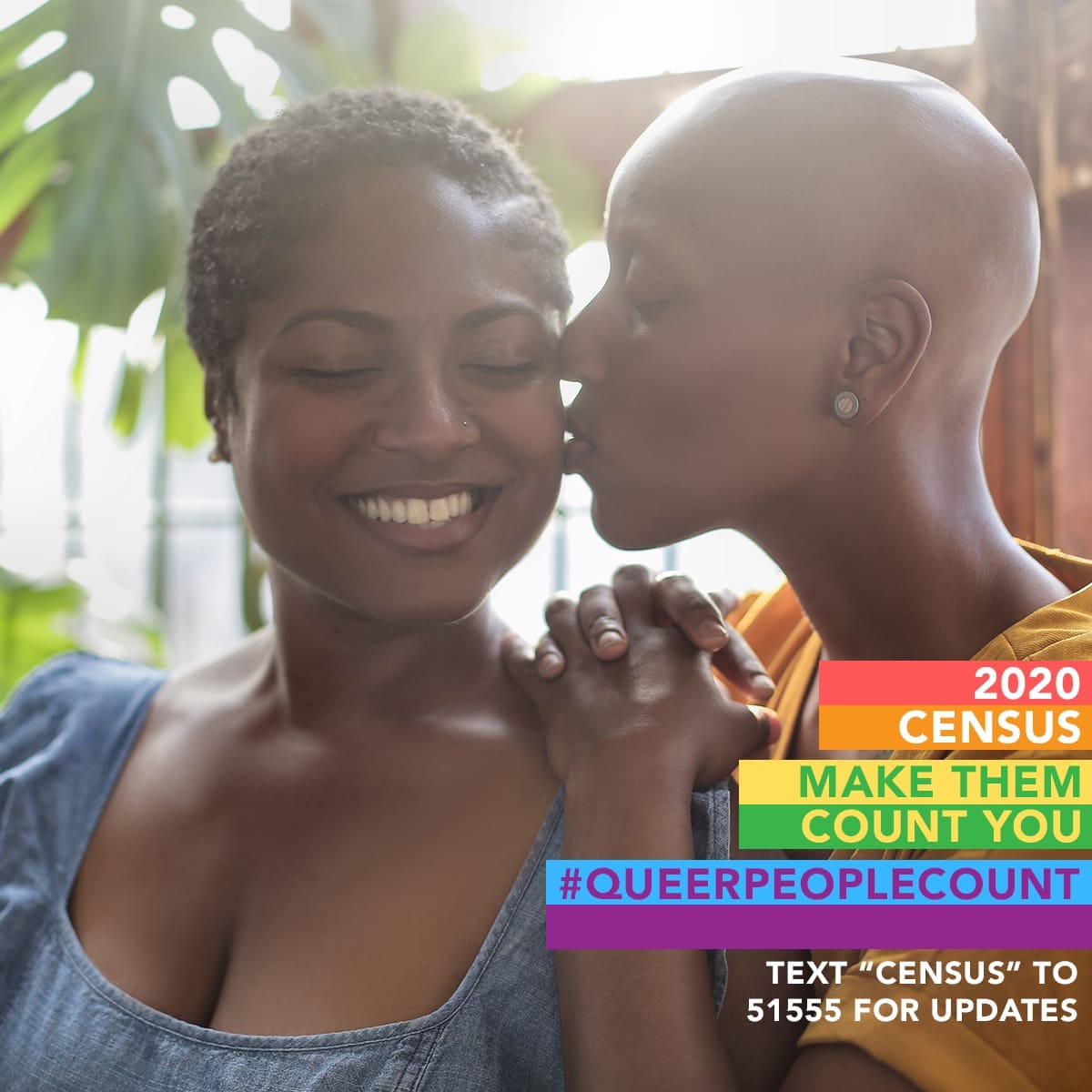
The Census is so important that the Constitution requires it. You should receive your survey by mail in March. If you don’t complete it—which you can also do by phone or online—the Census Bureau will try to follow up with you by phone or in person. There are only nine questions, plus seven for each additional person living in your household. And AFC can connect you to someone who can help you complete the Census online.
The Census Actually Helps You
Yes, you. While it doesn’t ask directly about HIV status, gender identity, or sexual orientation (more on this below), the Census dictates how billions of dollars are spent that benefit our communities, including public dollars for transportation, schools, and emergency services as well as social services like Medicaid, Section 8 housing vouchers, and the Supplemental Nutrition Assistance Program (SNAP). And Census data are used to redraw district lines and assign representative seats, so that your vote carries weight in Washington.
The Census Can’t Ask About Citizenship or Share Your Info
The Supreme Court ruled that the 2020 Census cannot include a question about citizenship. The Census only aims to count who is living in the United States on April 1, 2020, not how many citizens or non-citizens there are. And the Census Bureau is restricted by law from sharing your personal information with anyone, including ICE or any other government agency, for 72 years.
“There is definitely some fear in this age, especially among LGBTQ+ people who are immigrants or I would say targets of the current administration, and that includes certainly transgender people,” says Kim Hunt, executive director of the AIDS Foundation of Chicago’s Pride Action Tank. “But there are folks who have worked in the federal agencies for decades who really understand that the Census should not be played with, and there are protections around your data that are respected.”
You Can Self-Identify (to a Degree)
The Census asks for your sex and only offers “Male” and “Female” as responses, unfortunately failing to acknowledge the full array of sexes and genders. Still, you have more flexibility here than the boxes may suggest. The National LGBTQ Task Force says that the Census respects how you self-identify and doesn’t cross-check your response with other official documents.
This means you can check the box that most closely aligns with your identity, regardless of how you’ve answered other government surveys, and this won’t be considered a “false” answer by Census standards. And while you are required to complete every question, it’s unlikely the Bureau will send someone to your home should you choose to leave this question blank.
It’s Still Better to Be Counted
This year, the Census includes designations for same-sex spouses or unmarried partners living in your household, but this leaves out many types of identities, partnerships and relationships. While it can be sad, frustrating or infuriating to feel unseen by the Census, it’s still important to be counted, because it helps demonstrate the need for many of the services our communities depend on.
“There’s a big difference between saying, ‘You’re counting me, but you’re counting me wrong,’ versus, ‘I’m not even participating,’ says Saúl Zepeda, Director of Special Programs. “For these services to exist, you need to be counted.”
And if you don’t complete the Census, the Bureau will fill out the survey on your behalf, using statistics to guess what your household looks like. You’d then be giving up complete ownership of your identity and data and might allow yourself to be misrepresented to an even greater degree.
We Can’t Afford to Not Be Counted
LGBTQ+ folks, people of color, immigrants and people experiencing homelessness are among the most undercounted populations in the Census. Illinois lost one congressional seat due to the 2010 Census and is projected to lose one or two more based on 2020—which also means losing one or two electoral votes. In other words, we’d lose clout in Congress, and the money and opportunities to pass good policies that go with it. “In a state where we have amazing protections, especially compared to states around us, we can’t afford to lose any resources,” says Hunt, referring to protections around gender identity and sexual orientation. ”States like Illinois will become a safe haven for LGBTQ+ folks and others who feel extremely exposed and vulnerable by the Trump administration.”
The Census is Not the Only Way to Count Our Communities
The Census is an important method for counting who lives where in the U.S. and distributing funding for programs we depend on. But it isn’t the only one. “Even though the questions are not all that we would want them to be, fortunately in many areas there are specific efforts to count LGBTQ+ people, to make sure that our needs are met,” says Hunt. She points to the Chicago LGBTQ Community Needs Assessment and the U.S. Transgender Survey as two examples.
April 1, 2020, is Census Day, a great day to complete your survey. For more information on how to respond and why, we recommend the National LGBTQ Task Force’s Guide to the 2020 Census.
 The AIDS Foundation of Chicago (AFC)’s Board and staff send our deepest condolences to Marc Loveless’s family and friends. Chicago has lost an unstoppable advocate, champion for the voiceless and fierce fighter for justice. Marc was everywhere, seemingly at once. Just last week, Marc was at AFC’s Annual Meeting cheering us on.
Marc will long be remembered for his incredible legacy of activism on a host of intersecting LGBTQ+ and progressive issues. AFC has partnered with Marc on many advocacy issues, going back to the Illinois African American HIV/AIDS Response Act in 2005 and the first-in-the-nation Quality of Life Illinois lottery scratch-off ticket that raises money for HIV prevention and care services.
On this year’s National Black HIV/AIDS Awareness Day, Feb. 7, the Black AIDS Institute (BAI) released We the People — a sweeping, national, Black-led plan to end the HIV epidemic in the U.S. The AIDS Foundation of Chicago (AFC) enthusiastically endorses the Black AIDS Institute’s plan and commits to supporting BAI in implementing the plan through AFC’s statewide efforts to end new cases of HIV and connect all Illinoisans living with HIV and AIDS to care.
“Ending the HIV epidemic must start in the Black community. We know that if we end the epidemic in the most marginalized communities, we will end the epidemic everywhere,” said Coleman Goode, AFC’s manager of community organizing and a co-chair of the Black Treatment AIDS Network’s Chicago chapter (an affiliate of BAI). “The We the People plan outlines the importance of addressing this epidemic from all sides — not just the biomedical — but this is not going to happen unless everyone is working together.”
We the People is predicated eliminating racism and anti-Blackness, and investing in, increasing access to health care for, and building capacity in Black communities. “Only if Black communities are empowered, supported and effectively resourced will it be possible to end this national epidemic,” the plan states.
Nationally as well as in Illinois and Chicago, the HIV epidemic disproportionately impacts gay and bisexual Black men and Black cis- and trans- women more than people of other races and ethnicities. Despite this difficult truth, the federal Ending the HIV Epidemic: A Plan for America doesn’t effectively address race or recognize the need to provide enhanced support to Black communities across the U.S.
AFC commits to partnering with BTAN Chicago to bring this national plan to the state level here in Illinois. In fact, many of We the People’s priorities align with AFC’s priorities, particularly within Pillar One: Dismantle Anti-Black practices, systems and institutions:
- AFC and its project Pride Action Tank have advanced gender-affirming laws, policies and practices in Illinois
- AFC serves as a co-leader on the Illinois HIV Action Alliance (IHAA), a statewide coalition working to end Illinois’ HIV criminalization laws, which disproportionately impacts the Black community, and reform the racist criminal justice system overall
- AFC is currently advocating for the Healthy Youth Act, a dramatic reform to enact comprehensive sexual health education in the state
- AFC, in its role as a leader in the Getting to Zero Illinois initiative, is advancing accountability by creating a state and local dashboard to help all Illinoisans monitor our collective effort to end the state’s HIV epidemic by 2030
“We at AFC are emboldened by the We the People plan,” said John Peller, AFC’s president/CEO. “We will more deeply embrace the intersections of this plan and our work, and we will find new ways to incorporate the innovative and thoughtful proposals of We the People into our future endeavors.”
Next steps:
- Read the We the People plan and provide feedback to BAI at [email protected]
- Attend a townhall meeting about We the People hosted by BTAN Chicago on Monday, March 9
- Learn more about (and join!) BTAN Chicago and AFC’s commitment to this leadership body
The AIDS Foundation of Chicago (AFC) successfully transferred 150 supportive housing clients from a partner agency refocusing their work in this arena to six organizations that would continue to provide individualized support. The AFC Housing team worked for 8 months to prepare new case managers to support their new clients and ensure that clients could stay in their homes.
“Our goal was to make the transition seamless for program participants,” said Senior Director of Housing Operations Brandi Calvert. “We were able to achieve that by maintaining open lines of communication with all agencies involved in the transition.”
This project, spearheaded by Calvert and Director of Supportive Housing Sherise Alexander, was led with a personal approach. All program participants affected by this transition remained in their existing apartments, thanks to strong communication between AFC’s Housing team and case managers and supervisors from all agencies involved in the transition process.
In the transition, the AFC Housing team prioritized expanding or creating new partnerships with organizations located in Chicago’s South and West Side neighborhoods and led by people of color. This led to increasing capacity with existing partners (The Boulevard, Christian Community Health Center, Facing Forward, Housing Opportunities for Women and Alexian Brothers Housing and Health Alliance (AMITA)) and creating a new partnership with Featherfist. Three of these organizations have Black leaders, highlighting AFC’s commitment to racial equity.
“We are extremely thankful to these six organizations for stepping in at a critical time to ensure program participants continue to receive caring supportive services, remain stably housed and to keep them on a path to achieving stability in their lives for themselves and their families,” said Alexander.
This accomplishment could not have happened without the support and diligence of AFC’s Program Development and Finance teams. They handled the logistics and backend work for this project with a fast-approaching deadline, yet were dedicated to complete the transition with care.
Click here to learn more about AFC’s housing programs.
The AIDS Foundation of Chicago (AFC) is disheartened by today’s news regarding the Trump Administration’s dangerous public charge rule. The U.S. Supreme Court’s dissolution of the Illinois statewide injunction, which prevented the new public charge rule from going into effect, now invites discriminatory restrictions on immigrants’ pathway to a green card.
As the public charge rule takes effect in Illinois and throughout the country today, Feb. 24, 2020, many non-citizens will begin weighing their use of lifesaving public benefits — such as Medicaid, SNAP, and certain federal housing programs — against their dreams of permanent residency.
The Department of Homeland Security’s (DHS) public charge rule effectively places wealth-based sanctions on immigrants pursuing permanent residency, penalizing a large swath of individuals including immigrants living with HIV and AIDS and other chronic health conditions.
This Final Rule will only apply to applications and petitions submitted on or after Feb. 24, 2020, and though many categories of immigrants are exempt from public charge, this latest news is expected to have a continued chilling effect.
In Illinois alone, three out of five people living with HIV rely on Medicaid for their health care and may utilize other forms of public assistance included in this rule. Not only does this rule significantly diminish the ability of people living with HIV and AIDS and other chronic health conditions to immigrate to the U.S. or obtain legal permanent residency, it relies on fearmongering to disincentivize immigrants and their families from seeking health care. This is a trend that has already seen alarming decreases in doctor’s visits and participation in essential public programs.
“This ruling will cause major harm to immigrants and their families. Even before its official rollout, this rule has already made immigrants afraid to seek programs that support their basic needs,” shared Simone Koehlinger, AFC’s chief programs officer. “We will continue to work closely with our partners across Chicagoland to ensure immigrants know if or how this new rule may affect them.”
AFC vehemently opposes this decision and will continue to fight for all immigrant and migrant families in the U.S., including those affected by and living with HIV and AIDS.
Immigrant families and community members who want more information about the public charge rule can visit Protecting Immigrant Families Illinois and Immigrant Family Resource Program, a statewide network with staff who are trained on public charge, may provide free legal assistance, and collectively speak over 55 languages.
Staff members of organizations working with immigrants can also ask public charge questions on HelpHub, a free online technical assistance portal.
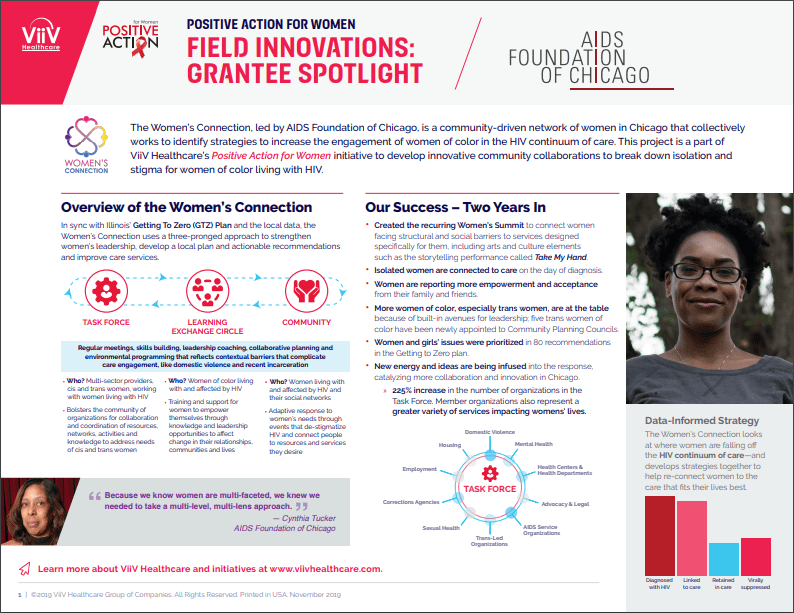
The Women’s Connection, led by AIDS Foundation of Chicago, is a community-driven network of women in Chicago that collectively works to identify strategies to increase the engagement of women of color in the HIV continuum of care. This project is a part of ViiV Healthcare’s Positive Action for Women initiative to develop innovative community collaborations to break down isolation and stigma for women of color living with HIV. Read the full report below:
The AIDS Foundation of Chicago and Center on Halsted are thrilled to announce the launch of Chicagoland’s first HIV Resource Hub. The Hub will officially open for business on Friday, Feb. 14, 2020.
What is the HIV Resource Hub?
The HIV Resource Hub is a new initiative funded by the Chicago Department of Public Health to expand the number of people who are linked to and successfully use HIV services in the Chicago area. The Resource Hub will provide comprehensive information and direct connections to HIV services for people living with and vulnerable to HIV. Individual assessments will be provided to identify specific needs and connection to appropriate resources.
How will providers and clients be able to connect with the HIV Resource Hub?
The Hub will include a web portal for clients and providers, a call center that is connected to Center on Halsted (1-844-HUB-4040), and in-person assistance at Center on Halsted and other community venues from a team of outreach experts.
Who will benefit from the HIV Resource Hub services?
- People who are living with HIV and are seeking medical and other supportive resources
- People who are HIV negative and are interested in learning about and connecting to prevention services such as HIV testing or PrEP (pre-exposure prophylaxis)
What services are available through the HIV Resource Hub?
Services provided can include HIV testing and PrEP support, mental health counseling, medical transportation, primary care, housing navigation and more.
What can HIV service providers do to help?
Stay tuned! We’ll be sharing more information in the coming days. The HIV Resource Hub will be able to help you address the social determinants of health so your clients and patients can access and are retained in services.
“We are excited to be a part of an effort that will help Chicagoland residents get the information they need and connections to HIV services,” said Román Buenrostro, Director of Special projects at AFC.
The Trump Administration is trying once again to take away our health care — this time with another attempt to block grant the Medicaid program.
The Centers for Medicare and Medicaid Services (CMS) issued guidance encouraging states to apply for waivers to block grant Medicaid funding at the state level. This guidance aims to dramatically restructure Medicaid, which provides health insurance coverage to nearly 3 million Illinoisans and 3 in 5 people living with HIV and AIDS in Illinois.
“If implemented, the Trump Administration’s Medicaid Block Grants Plan will eviscerate access to health care coverage for a majority of people living with HIV in in Illinois and across the country. This plan runs completely counter to this same administration’s Ending the HIV Epidemic Plan announced just last year.” Nadeen Israel, Vice President of Policy & Advocacy at the AIDS Foundation of Chicago.
Block grants will exacerbate Illinois’ mental health crisis and opioid epidemic because they will translate to devastating cuts to federal dollars for addressing these crises. Illinois cannot make up for the lost federal Medicaid investment if a Medicaid block grant is put in place.
The AIDS Foundation of Chicago calls on our state elected leaders, including Gov. JB Pritzker, to say NO to the Trump administration’s Medicaid Block Grants plan.
The AIDS Foundation of Chicago mobilizes communities to create equity and justice for people living with and vulnerable to HIV and related chronic diseases.
 By Zac Hansen
I am a runner by choice rather than natural inclination. And that choice came about because I was a coward.
I pride myself on three key components: self-sufficiency, planning well and limiting risk. The first I gained by being gay in a world with limited support. The final two I adopted after I became the victim of a hate crime that left me stabbed, bleeding and dying in the street. Shackled by the post-traumatic stress of the attack, my toxic narrative — that I was an inherently cowardly person — began. I felt so much anxiety so intensely that it became a reflexive, default response to the world.
My life continued in the negotiation of a truce: I could do the things I “wanted” provided they could pass a litmus test of anxiousness. I adored the word “no” since it is so warmly resolute in its rejection of uncertainty and danger. If I am being completely honest, it worked rather well.
And then chaos erupted during the 2016 presidential election. I was not so naive as to believe that homophobia, racism and nationalism were gone, but suddenly they were everywhere, amplified and championed at the highest levels. And the truce I had so carefully won between the fearful, careful me and the me who just wanted to live and do my best in the world, evaporated in an instant. Inside me lay the torrent of all my fears and anxieties, bare and toothy. I cried for weeks and I knew in my heart I was a coward all along because I felt powerless.
I had a loving spouse, but no community. Years of isolation and self-reliance left me with no support system outside of me and him. I was inactive, overweight and sedentary because going out in the world was scary, and exercise was hard. I was out, but not always proud: Being overtly homosexual had “caused” my attack, after all. I was so unmoored from myself that I didn’t realize the truce I had negotiated between myself as I wanted to be and the person my fears created was really a prison.
In the months following the election, I needed a big, structural change in my life, the type we talk about for our institutions and culture but rarely advocate for ourselves. We are either too indoctrinated with making small changes, or we fetishize our flaws in order to reclaim them as empowering traits. Neither would work for me. And sometime after admitting to this need, and in the spiral of my depression, I heard about ordinary folks who ran marathons for charity.
It seemed absurd at first: a nerdy, unhealthy and chronically tearful man running a marathon without previous running experience. But I made a bold choice because I needed the intensity of the choice to match the enormity of my emotions. A marathon is so uniquely epic that it captures the imagination at once: an endurance event that is propelled by willpower and your own two feet, tempered in salty, hard-earned sweat.
I also needed to believe that my actions should improve not only myself, but also my immediate world — a counter-balance to the destructive forces that were emboldened in the aftermath of the 2016 election. And while searching the charities that sponsor marathon participation, I discovered TEAM TO END AIDS (T2) and the work they support.
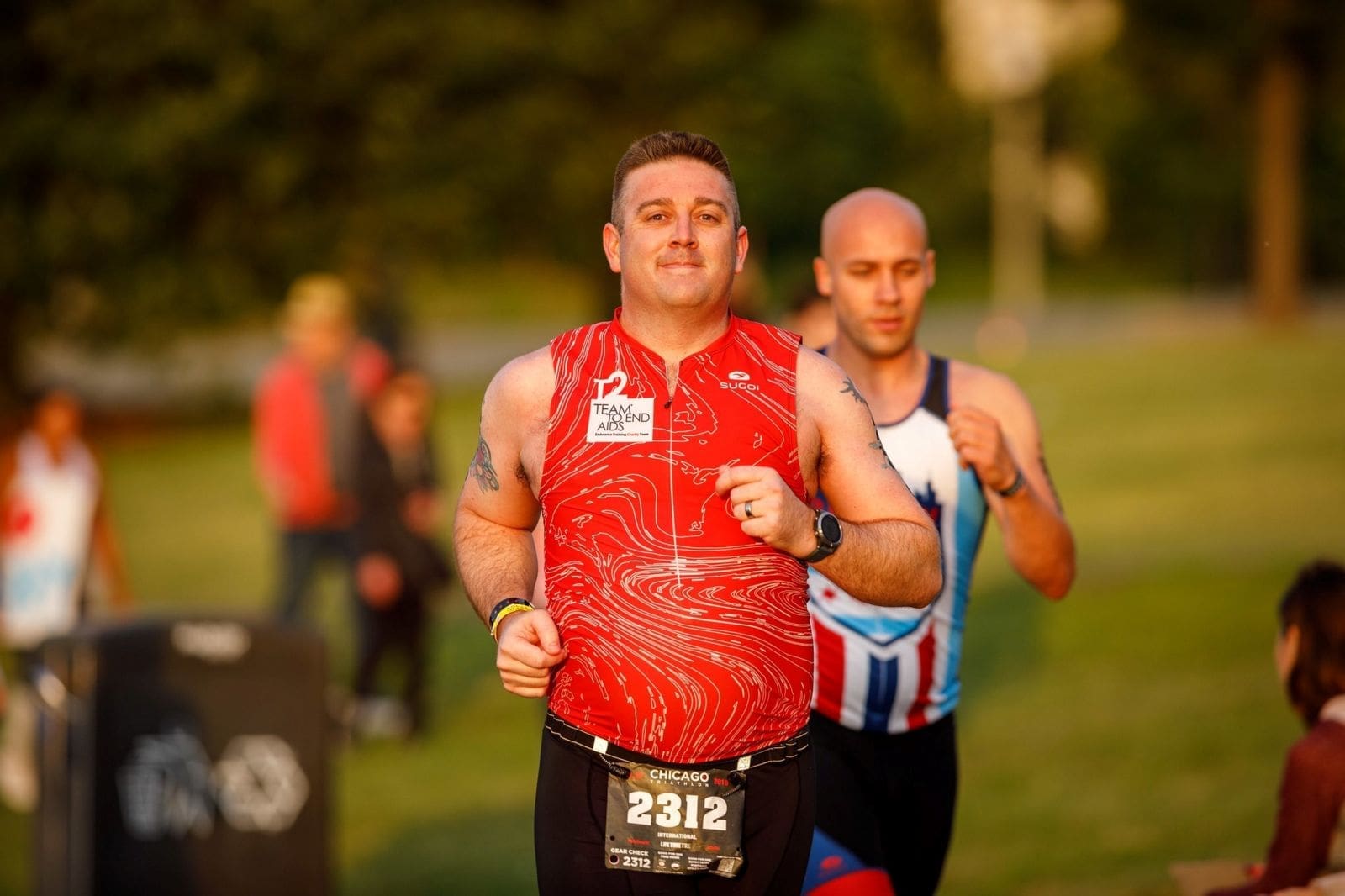
In T2 I have found a true community. Here, I can effect change in my communities by supporting individuals living with HIV and AIDS. I can fight HIV stigma, celebrate gayness  and advocate for equitable access to PrEP. Here, I could contribute to a divisive, fractured world, and be my divided, fractured self. I can be queer, messy, emotional and just a big dork. I can run marathons or finish triathlons. Here, I can be myself.
It has been among my T2 family that I learned I no longer need to make truces — I make choices.
I was never truly a coward and it was lazy thinking to equate anxiety with who I am as a person. At the time, I did, however, stop trying to be anything else. T2 and the marathon reminded me, for the first time in many years, to exercise my own agency. It doesn’t mean I am always in control, or that anxiety is gone. What it does mean is that I am not the remainder in an equation of self vs anxiety; I am the entirety of a beautiful calculus that is constantly adding, multiplying, and yes, subtracting and dividing.
Once gone, agency is earned back by degrees, in small choices and negotiations we make with ourselves that, however little, makes us stronger. In that respect, it’s much like a marathon: step-by-step we will ourselves forward, and it is only in their totality we realize how far we’ve come.
This year for World AIDS Day, we celebrated how communities make a difference in supporting our movement to eliminate HIV stigma, create equity and justice for people living with HIV and chronic conditions and to end the HIV epidemic. The AIDS Foundation of Chicago (AFC) mobilizes communities on World AIDS Day and every day. Watch the videos below to learn how our colleagues at AFC support people living with HIV and AIDS.
Coleman
One big way AFC supports our HIV community is through creating, hosting or participating in conversations that lead to action. Coleman Goode leads a coalition to reform HIV criminalization laws in the state, Illinois HIV Action Alliance. Learn more from his video.
Angela
Angela Jordan helps Chicagoans living with HIV and AIDS connect to care through her work as the intake and referral manager at AFC. Watch this video and read her story to learn more about Angela’s work.
Cynthia
Cynthia Tucker leads the Women’s Connection project, which is focused on improving health care access for trans- and cisgender women of color in Chicago. Watch her video to learn more.
Sara and Meg
Watch how Sara Semelka and Meg McElroy support Getting to Zero Illinois, a plan built by our statewide HIV community to improve lives and end new HIV transmissions by 2013.