 The AIDS Foundation of Chicago (AFC) is profoundly disappointed that the Department of Homeland Security has decided to finalize a “public charge” rule that will place severe restrictions on who may enter or stay in the country, based on arbitrary evaluations of their supposed potential to use public assistance programs like Medicaid.
“The continued barrage of intimidation tactics to undermine immigrant families is antithetical to what our country stands for,” said Simone Koehlinger, AFC’s Chief Programs Officer and a committee member of the coalition Protecting Immigrant Families – Illinois. “It is unfathomable that the administration intends to disincentivize people from seeking medical and social support and unfairly deny people living with HIV the opportunity to adjust their immigration status.”
Today’s announcement comes after months of critical feedback against the rule. In 2018, individuals and organizations submitted more than 266,000 comments in response, many of which described the negative impact it could have on immigrants pursuing necessary services for their health and well-being. According to the final rule, immigrants could be denied access to a green card for participating in “cash benefits for income maintenance, SNAP [food assistance], most forms of Medicaid, Section 8 Housing Assistance under the Housing Choice Voucher (HCV) Program, Section 8 Project-Based Rental Assistance, and certain other forms of subsidized housing.”
The rule will be published on Aug. 14 and will become effective on Oct. 15. This final rule has already placed a significant toll on the lives of immigrant families: the Kaiser Family Foundation reports that immigrants in the U.S. have been afraid to participate in public programs even in times of serious hardship because of the threat of this rule. Among other findings, they reported a 42% increase in skipped medical appointments among immigrants and migrants since the public charge rule was unveiled for review.
AFC will continue to fight for all immigrant and migrant families in the U.S., including those affected and living with HIV and AIDS. Read our reaction to the rule from December 2018.
Updates as of 10/11/2019
[1] Advocates are using every tool at their disposal to stop this rule from taking effect, including numerous lawsuits filed across the country. Cook County and the Illinois Coalition for Immigrant and Refugee Rights (ICIRR) filed suit in federal court to block implementation of the public charge rule.
[2] Many immigrant status are NOT subject to this rule. Many public benefits are NOT included in the public charge test in the new rule. Family members’ use of benefits is not counted in the rule’s public charge test. Please see attached fact sheets for more detailed information (in English, Spanis, Simple Chinese, Arabic, Polish, Korean and Urdu).
[3] The rule is scheduled to go into effect October 15, 2019. Green card applications filed on or after that date will be subject to the new test. Use of the new list of benefits prior to October 15, 2019 (e.g., Non-emergency Medicaid (with exceptions below), Supplemental Nutrition and Assistance Program (SNAP or food stamps), Section 8 Housing Choice Voucher Program, Section 8 Project-Based Rental Assistance, and Public Housing) should not be considered in the new public charge test. Note that there are three important exceptions to the receipt of Medicaid: (1) by those who are under 21 (All Kids program); (2) by those who are pregnant (Moms & Babies); or (3) for emergency medical services.
[4] PIF-IL can provide free trainings, webinars for your organization. Email us! Community based organizations can assist immigrants with their public charge questions. See this link. HelpHub experts can answer your public charge and immigrant eligibility questions. Sign up to be a HelpHub user here.
by Kim Hunt, Executive Director, Pride Action Tank
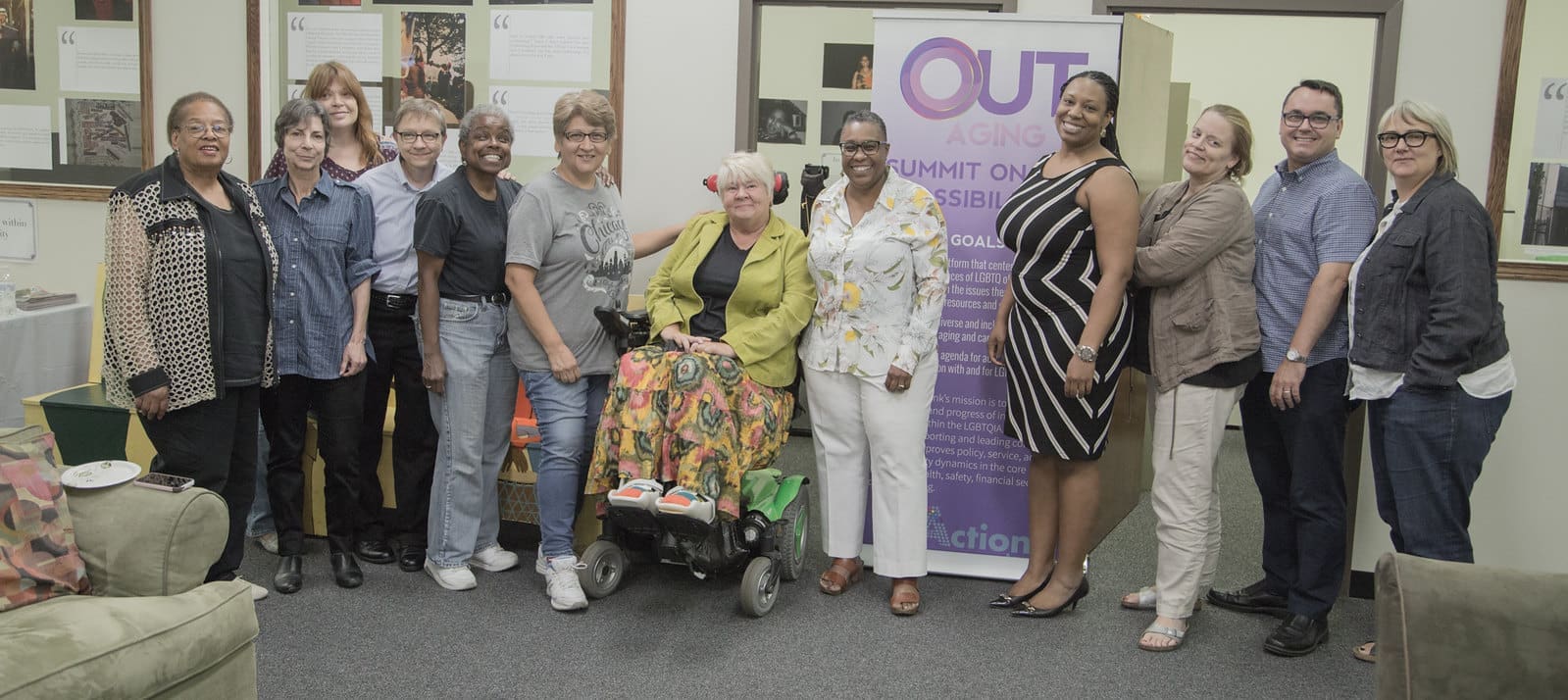 Pride Action Tank applauds Gov. JB Pritzker for signing SB1319 on Friday. The new law, which takes effect July 1, 2020, helps ensure that the needs of LGBTQ older adults and people living with HIV are recognized and supported across Illinois.
Through our OUTAging Committee, we have been uplifting the voices and concerns of LGBTQ older adults. The committee organized OUTAging: Summit on Our Possibilities in 2017 to hear what LGBTQ older adults want and want others to know about them. We heard over and over again about the fear of LGBTQ older adults becoming invisible in mainstream care facilities and the need for LGBTQ cultural competency in facilities that care for older adults.
SB1319 amends the Illinois Act on Aging to add LGBTQ and HIV status to the definition of communities of “greatest social need.” Illinois is the first state to include HIV status and only the third to include LGBTQ in the definition. The new law will also protect Illinoisans from discrimination in assisted living and shared housing facilities. The governor’s signature on the bill paves the way for requiring facilities to demonstrate their LGBTQ cultural competency.
We also send thanks to the bill sponsors, State Sen. Ram Villivalam and State Rep. Theresa Mah, to Equality Illinois for shepherding the bill through the Illinois General Assembly, and to SAGE for working across the country to ensure that state laws recognize and address the needs of LGBTQ older adults.
The OUTAging Committee includes LGBTQ older adults and representatives from AARP, Affinity Community Services, Center on Halsted, Howard Brown Health and SAGE, the national leader in advocacy and service for LGBTQ older adults. The committee is a working group of Pride Action Tank, which is a project of the AIDS Foundation of Chicago.

On Wednesday, August 7, Gov. JB Pritzker signed HB 2665 (the Youth PrEP bill) into law. This enables young people across Illinois to access preventive health care services, like PrEP, without parental consent.
“Young people don’t wait to have sex until they’re 18, and HIV doesn’t wait either. This legislation will help ensure young people under the age of 18 have easy access to an incredibly effective and safe HIV prevention tool,” said Jim Pickett, AFC’s Senior Director of Prevention Advocacy and Gay Men’s Health.
This law would align Illinois law with existing federal guidance by the U.S. Food and Drug Administration, who in 2012 approved PrEP for use by young people who do not have HIV to reduce the risk of transmission of HIV. PrEP is nearly 100% effective at preventing HIV transmission when used consistently and correctly.
Increasing access to PrEP is critical to helping the state achieve its Getting to Zero Illinois goal of ending the HIV epidemic in Illinois by 2030.
“I am so proud to have introduced and be the chief House sponsor of the Youth PrEP Bill,” Rep. Lamont Robinson (D-Chicago) shared.
“While new HIV/AIDS transmissions are down 35% in Illinois over the last decade, black gay men are experiencing an increase in HIV cases, particularly among youth. They need easy access to the highly successful PrEP drug, and this will help them achieve that. Thank you to the AIDS Foundation of Chicago for its initiative on this issue, to Sen. Robert Peters for sponsoring it in the Senate and to Gov. Pritzker for his support,” said Robinson.
Gay youth constitute 85% of new HIV diagnoses among youth aged 13-24. Black and Latinx youth are disparately impacted.
“There are a lot of young people who don’t feel safe going to their parents with issues like these, which puts them at risk. No kid should be afraid due to shame or cost to get their medical needs met,” said Sen. Robert Peters (D-Chicago), Senate Sponsor of HB 2665.
“With this new law, young people will be empowered to take control of their health.”
AFC thanks Gov. JB Pritzker, House sponsor Rep. Lamont Robinson and Senate sponsor Sen. Robert Peters for their leadership on this issue.
AFC also thanks Rep. Kelly Cassidy (D-Chicago), Sen. Linda Holmes, Sen. Emil Jones and Sen. Toi Hutchinson for standing up for young people across Illinois during the floor debate in the House and Senate, and assisting in getting HB 2665 passed this past legislative session.
AFC is appalled to learn that the U.S. government uses HIV status as cause for the cruel separation of immigrant and migrant families. In the Oversight of Family Separation and U.S. Customs and Border Protection Hearing yesterday, Chief Brian Hastings of the Customs and Border Patrol (CBP) stated that HIV status is a criteria used to separate families at the border. This new, insidious attempt at criminalizing HIV and AIDS hurts our community and stigmatizes people living with and vulnerable to HIV.
In addition to being cruel and inhumane, and completely antithetical to human rights, separating children from their parents because of HIV status ignores science and established U.S. policy.
Ultimately, parents who are living with HIV and AIDS pose no threat to their children; HIV is not transmitted casually. The non-communicability of HIV has been well established for a very long time. In 2010, the Centers for Disease Control and Prevention and removed HIV from the list of communicable diseases after the Obama administration ended the HIV travel ban into the U.S. This decision finally aligned travel and immigration policies with science. Using HIV as just cause for excluding entry in the U.S. and separating immigrant families is not humane, just or based on science and sound public health policy.
Trump’s discriminatory, hateful zero-tolerance policies affect all of us. These practices completely contradict the administration’s plan to end the epidemic. Stay informed and contact your legislators to put a stop to this!
 By Raven Feagins
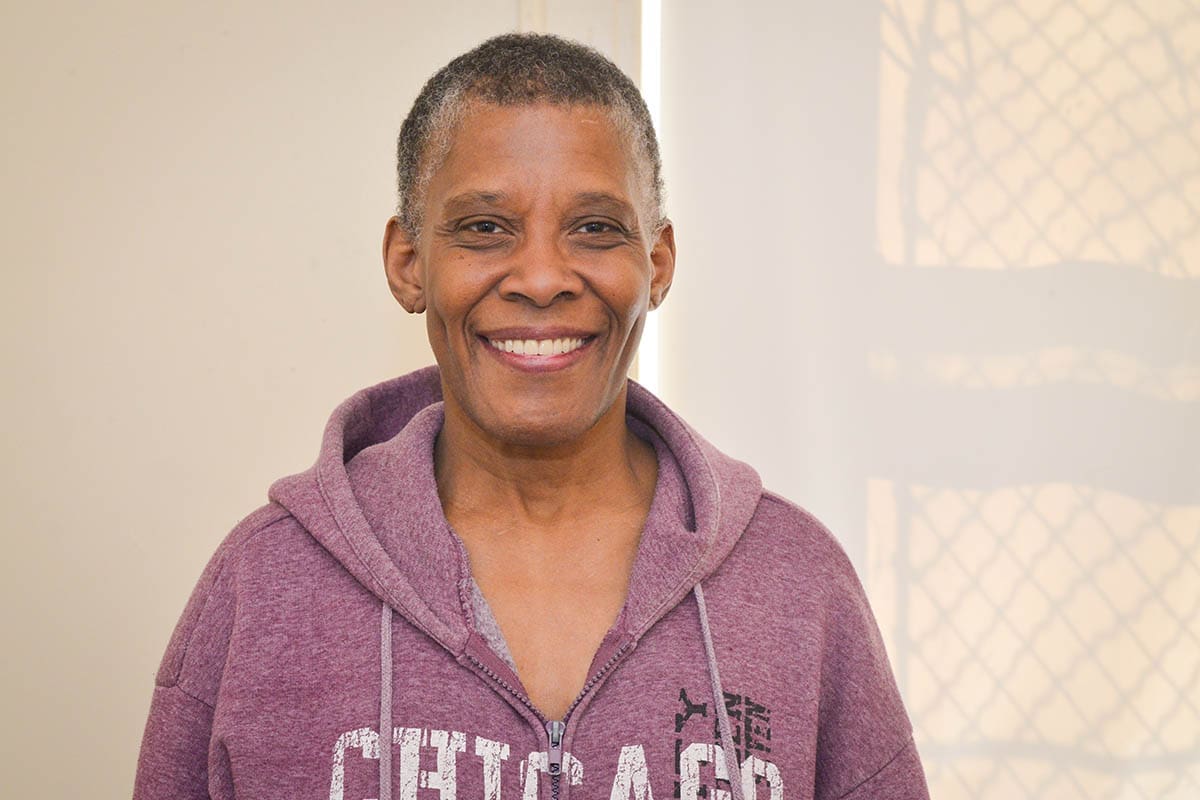
Jeraldine Taylor is a petite, 60-year-old woman who enjoys the simple things in life. She loves to cook, read and watch TV when she gets a chance to catch up on the news or indulge in shows like Judge Mathis and Steve. These are the things that help keep her mind off the past and humble her to be grateful for where she is today.
For most of her life, Jeraldine was among the over 80,000 Chicagoans experiencing homelessness. Although there were several contributing factors, she believes that her challenges with housing instability stem back to when she started drinking alcohol.
“When I was in my late teens, I started thinking on my own and doing my own thing. Everyone wanted me to go to college, but I decided to go to work instead,” said Jeraldine. “At that time, I was introduced to alcohol and started drinking on the daily.”
Jeraldine was able to hold down a steady job working for the Department of Housing and Urban Development (HUD) for a few years and was making a good living for herself. Although she felt invincible at the time, one thing she did not notice was her growing dependence to alcohol and, soon after, a dependence to other drugs as well.
“All of a sudden, it just got out of control. In ‘83 and ‘84 I started doing cocaine and it just went downhill. Everybody saw that I had this addiction, this problem, but I didn’t,” Jeraldine recalled. “I got big-chested. I was like, ‘I got a job. I’m independent. I can come and go as I please,’ but I didn’t know that the addiction was really affecting me.”
Jeraldine’s life eventually took a turn for the worse: She lost her job and no longer had a place to live.
“The cocaine, it just…it took me down to the point where I lost all respect from my family. Even though they were there for me, it just got to the point where I lost control, and I was kicked out of my family’s house because of the drugs. I was so preoccupied with the drugs and for so long I’d been in and out of halfway houses and shelters and I still didn’t think that I had a problem.”
This went on for years with no end in sight. Jeraldine thought she would spend the rest of her life jumping between shelters until she overstayed her time at every place she went. With nowhere else to turn, she decided to start using hospital emergency rooms as a place of refuge.
“Year before last, I was doing the ERs and going from one hospital after another. If it wasn’t Stroger it was Mercy, if it wasn’t Mercy, it was RUSH, if it wasn’t RUSH it was UIC. I see now how insane it was,” Jeraldine recalled. “Thinking back it’s like, ‘Jerry, what were you doing?!’ It got to the point where I thought that I was losing my mind. I thought that I was really going nuts.”
Although Jeraldine does have COPD (chronic obstructive pulmonary disease, which is a long-term lung disease that causes her to have a shortness of breath and a persistent cough), she would often exaggerate or fake an injury or illness just so she could get a hospital bed to sleep in at night. Otherwise, her last resort was to find a secluded area at a park to sleep. This went on until December 2017.
“I was doing one of my scams [at UI Health] saying I hurt my back and one of the doctors that used to see me said, ‘Jeraldine, I’m going to try to help you get out of the situation you’re in.’”
Jeraldine did not know it at the time, but this contact at UI Health was connecting her to the Better Health through Housing (BHH) program. BHH brings together the housing and health care worlds by working with hospitals and managed care organizations to identify individuals who frequently utilize emergency services and are experiencing chronic homelessness. The program then links clients directly to housing through its network of 28 supportive housing organizations to provide housing stability and improve health outcomes for clients in the program. Since its inception, BHH has helped lower health care system costs by reducing emergency department usage among BHH clients and providing housing interventions for over 90 people throughout Chicago.
“I remember on the 13th of December 2017 I was homeless no more. That was it. I was done. The 14th of December, that’s when I met Jamin Fox and he’s been my case manager ever since.”
Jamin works for H.O.W., one of the 28 supportive housing organizations in the BHH network, and meets with Jeraldine regularly to ensure that she is on track to meet all her health and wellness goals. He helped her settle in her studio apartment on Chicago’s West Side, where she has lived for the past year and a half. Since then, Jeraldine has reconnected with her family and been able to better manage her drug and alcohol dependence.
“Working with Jeraldine is one of the highlights of my week,” said Jamin. “Jeraldine and I have spent our time discussing what she plans to do in the future and right now Jeraldine is working on the aspects of her physical health that she neglected while she was homeless. Once she has addressed her physical health, she intends to return to the workforce and possibly finish her associate’s degree.”
Jeraldine is proud to say that she now has a primary care doctor and is vigilant about making sure she stays on top of all her doctor’s visits. She is determined to get to a point in her life where she is stable enough to move out of her current apartment and become even more independent, but, until then, she does her best to stay patient. Reflecting on her journey and where she is at today, Jeraldine stated, “It feels good … it really does. It’s true what they say, ‘This too shall pass.’ I’m just taking it one day at a time. That’s all I can do.”
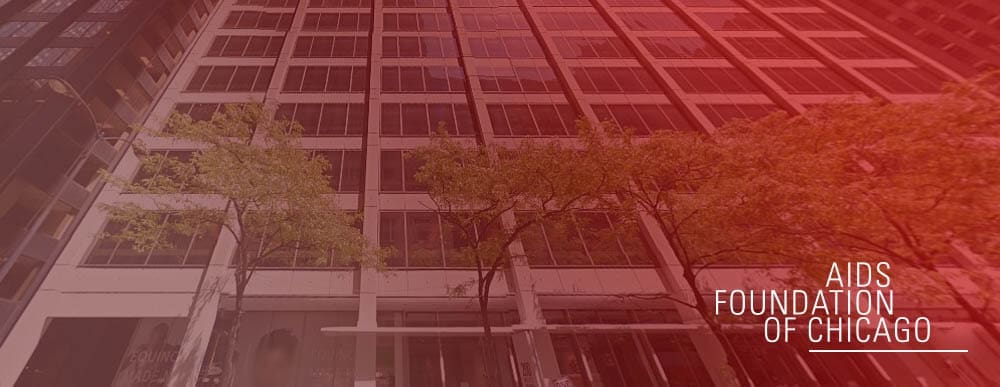 On Monday, Aug. 5, the AIDS Foundation of Chicago (AFC) will relocate its offices to 200 W Monroe, Suite 1150. For years, AFC has been expanding its program areas to better serve the region’s housing and case management services for people living with HIV or other chronic health conditions. AFC’s new space allows us to better support our 124-person staff as well as our vibrant network of more than 30 partner organizations and nearly 200 case managers.
AFC will occupy one-and-a-half floors at 200 W Monroe, complete with workspaces for all employees, a vastly improved training center for case managers, and more meeting and conference spaces so that AFC teams can connect with one another and the clients we serve. AFC’s office will remain in Chicago’s Loop neighborhood to provide equitable access to transportation for our partners and clients.
“Our new office space will strengthen our organization and help us better mobilize our community and achieve our mission,” said Tom Menard, Vice President of Operations. “The new offices will provide sufficient space for our growing staff and meet our organization’s technology and space needs.”
AFC proudly established and achieved its goal of ensuring that 50% of the subcontractors and suppliers for the construction phase of the project were minority- or women-owned business enterprises.
Please update your records to reflect AFC’s new address as of Monday, Aug. 5:
AIDS Foundation of Chicago
200 West Monroe, Suite 1150
Chicago, IL 60606-5075
 By AIDS Foundation of Chicago, Policy and Advocacy Chair, Craig W. Johnson
Hold on to your rainbow-hued glasses as we list how PrEP can help us eliminate the transmission of HIV by 2030.
The AIDS Foundation of Chicago along with Governor J.B Pritzker and Illinois and Chicago Departments of Public Health announced the Getting to Zero Illinois plan in Springfield last month, a state-wide initiative to end the HIV epidemic in Illinois by 2030. The framework of the plan focuses on HIV treatment options, most notably pre-exposure prophylaxis (PrEP). We outline why this treatment and prevention is so crucial in getting Illinois to zero and what you can do to help ensure PrEP is affordable and accessible.
How is it possible to eliminate HIV transmission by 2030?
Anything is possible when there are resources firmly invested!
Getting to Zero Illinois (GTZ-IL) launched last month, mapping out how Illinois can eliminate the transmission of HIV by 2030. This is a huge statewide commitment from government entities, social service providers and clinicians to transition our system to more effectively serve the entire population of people living with and vulnerable to HIV. HIV treatment options, like PrEP, are vital in carrying out this ambitious plan to end the HIV epidemic within the next decade.
Where does PrEP come into play?
The GTZ-IL framework focuses on two primary goals: increase the number of people living with HIV who are virally suppressed and increase the number of people vulnerable to HIV who use PrEP. If you’re in the Chicago area, you may have seen the beautiful PrEP4Love campaign. This is a citywide marketing campaign intentionally showing all identities can use PrEP as a safer sex option.
The power of PrEP – a prevention pill and program that is up to 99% effective at preventing an HIV-negative person from acquiring HIV when used consistently and correctly – creates the opportunity to merge HIV prevention and care systems. Recently, the Youth & PrEP bill was passed ensuring that youth 12 and over can access PrEP, too, without consent from their parents! Let’s be honest, young people are having sex. There are so many barriers for youth to get condoms, HIV/STI screenings and accurate information about safer sex, so this is huge news!
I hear you, but what exactly do we need?
We need to know that help with HIV services and programs are free, available and can bring value to our lives. People feel motivated to seek help when they need it.
We need to increase investment in community-informed statewide marketing campaigns, like PrEP4Love, to share knowledge and raise awareness of HIV and STI services, HIV care and treatment, STI screening and post-exposure prophylaxis (PEP). Black and Brown communities need to be at the forefront due to systemic disinvestment and social stigma driving higher HIV transmission rates. We need to lead, represent and be properly compensated for marketing and media campaigns ensuring we can access PrEP and other safer sex options. This needs to be a statewide, community-driven effort in partnership with the Chicago Department of Public Health (CDPH), Illinois Department of Public Health (IDPH) and other funders at the table.
We need to know our HIV status. Expanding health-care-based routine HIV, STI and viral hepatitis screenings to reach people who are living with or vulnerable to HIV will greatly help us achieving our goal. PrEP is a program that already incorporates HIV and STI testing during routine doctor’s visits every three months. It’s like a one-stop shop for all things repro health-related!
Thanks to the Affordable Care Act, nearly everyone in Illinois living with or vulnerable to HIV has access to comprehensive, affordable health insurance that can meet our basic needs.
Understanding health care insurance can be a daunting task.
We need support to improve health and insurance literacy for people living with or vulnerable to HIV. You would be surprised by how many doctors still don’t know about PrEP or assume their patients won’t need it as a prevention option because of social stigmas. Required statewide trainings will make sure doctors and service providers understand the newer options available, and the impact HIV has on communities of color, transgender and gender-nonconforming people and patients over 50.
How can we PrEP for the future?
This can look like:
- Encouraging the CDC to update PrEP guidelines to include on-demand PrEP
- Supporting national efforts to keep Truvada affordable and accessible for PrEP
- Implementing the United States Preventive Services Task Force recommendations that PrEP be available with no cost-sharing
- Working with local pharmacies to raise awareness of programs that help people afford the medication for PrEP
Treatment doesn’t end with a diagnosis. We must advocate for wider use of on-demand PrEP in the U.S. This will normalize HIV prevention and treatment that can be empowering for all of us. We may be talking specifically about Illinois, but our advocacy needs to span across the nation.
Stay connected with us! Get the latest advocacy updates by texting “AFC” to 40649.
 By Brian Solem
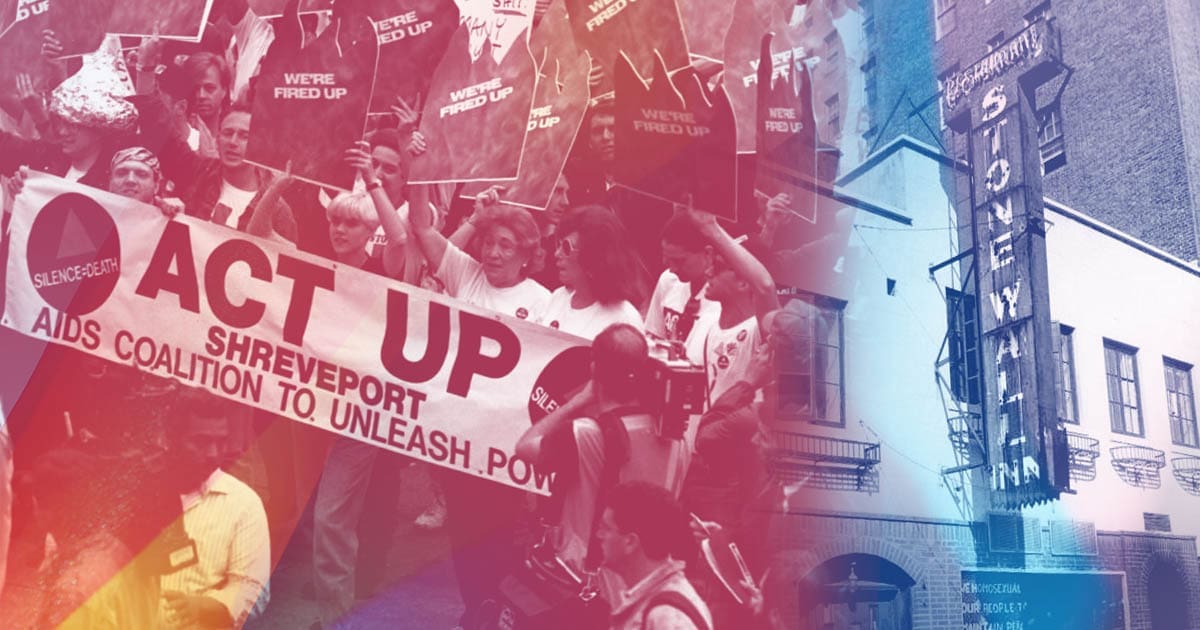
Some say it started with a brick — a brick hurled at New York City Police Department officers by a trans woman of color (perhaps Marsha P. Johnson, perhaps someone else). The brick (or high heel or shot glass or heavy bag or other projectile — reports vary) was a response to a violent, Saturday-night raid of the Stonewall Inn, a popular gay space in New York City in June 1969. That brick crashed not just through a wall of glass, or a wall of police officers, but through a wall that previous LGBTQ pioneers had worked very hard to overcome.
The Stonewall riots between police and an intersectional collective of queer Black and Latinx folks, transgender and gender-nonconforming people, and other members of the LGBTQ spectrum lasted on and off for days. The result: many arrests, hospitalizations and irreparable damage to the Stonewall Inn itself.
But in the days and weeks after Stonewall, the underground movements for gay liberation that had been simmering suddenly boiled over, taking greater action and growing their numbers. The work of the Mattachine Society, which had been advocating for LGBTQ inclusion for at least two decades before Stonewall, now had a radically visible counterpart in the fight. In the 50 years since that violent and unifying night in the East Village outside of Stonewall, the LGBTQ movement in New York City and beyond has made giant strides in securing equity for this community. The bombastic tactics used at Stonewall and subsequent protests, actions and rallies became the right recipe for success in advancing LGBTQ rights.
Twenty years later, a new and terrible struggle came to light that affected mostly gay and bisexual men: AIDS. During the AIDS crisis of the 80s and 90s, a governmental and societal silence and shunning prevented immediate systemic action to research treatment for HIV and provide real, comprehensive support for the people who were dying from the virus. But on March 24, 1987, the HIV/AIDS movement had its own Stonewall: the AIDS Coalition to Unleash Power (ACT UP) stormed Wall Street and demanded that the U.S. federal government take the AIDS epidemic seriously and advance research and treatment for the virus (see clips from this protest and subsequent actions of ACT UP here). Like Stonewall, the protest relied on a tenacious, militant energy, which successfully turned the attention of the nation to a vital movement.
Stonewall’s legacy pumps through the veins of the work of ACT UP and other movements that built a path toward acceptance, support and liberation for people living with HIV and AIDS. “Stonewall gave LGBTQ people a sense of the tremendous power they have as a collective and how focused anger can be used as a tool for change,” reflected Kim Hunt, executive director of Chicago-based Pride Action Tank (a project of the AIDS Foundation of Chicago). “Stonewall let people know that institutions could be toppled, at least for a moment. The act of physical rebellion, camp, performance as activism, speaking truth to power were all incorporated in the direct-action strategies of ACT UP.”
“Because the LGBTQ movement was stronger after Stonewall, that really helped fuel a strong response to the HIV/AIDS crisis,” observed Tracy Baim, a longtime Chicago journalist and founder of Windy City Times, the city’s primary beacon of information for the LGBTQ community. Baim was an active documenter and participant in the HIV/AIDS movement of the 80s and 90s and now is publisher of the Chicago Reader. “Stonewall was an important predecessor and created a larger pool of activists, and a greater general understanding of LGBTQ people when it came time to respond to the crisis of HIV/AIDS. It provided foot soldiers in activism, and caregivers in the hospitals. We had a larger and stronger movement in place to be able to respond to this horror within, and to fight the ignorance and neglect from the outside.”
Director of Building Healthy Online Communities Dan Wohlfeiler was also at the front lines of the response to the AIDS crisis in the 90s. He ran programs at the STOP AIDS Project in San Francisco from 1990 to 1998 (the project merged with the San Francisco AIDS Foundation in 2011). Looking back, he notes that Stonewall ushered in a new approach to resistance: bold radicalism, rather than the more restrained approach of groups like the Mattachine Society. “The Stonewall riots really marked the beginning of a new era of open confrontation and radicalism in the fight for gay rights. In the eighties and nineties, we continued to see both kinds of organizing to fight HIV: Some in the HIV movement took a much more individual-focused, more client-based approach, and some mobilized and took on quite radical approaches to address some of the larger forces — a non-responsive government, poverty, racism, homophobia — that drive the epidemic.”
Stonewall contributed vital lessons learned to an American playbook for effectively protesting for human rights, which movements for equity, visibility and inclusion continue to contribute to today. It also created an emotional model for coming out publicly with very personal, very stigmatized news. Author and activist John-Manuel Andriote noted, “The first gay men to go public about having AIDS acted from a place of gay pride and power that came after Stonewall . . . They likened ‘coming out’ about having HIV/AIDS to their experience of coming out as gay.”
Stonewall was one of many movements that inspired an effective response to HIV and AIDS in those early days; in addition to the civil rights movement for Black liberation, Tracy observed, “the women’s health movement of the 1970s also helped lead to a strong response on both a caregiver and a political level. Women were fighting back for control of their bodies, and women in the LGBTQ movement of the 1980s used that experience to help respond to HIV/AIDS. Men learned from their sisters, and all new activists learned from their predecessors to ‘fight back’ and ‘silence = death.’”
Reflecting on 50 years of advancement in LGBTQ rights since Stonewall, and almost 40 years of advancement in supporting people living with HIV and AIDS since the height of the epidemic, a multi-pronged approach to resistance and liberation can achieve the best outcome. Unfortunately, this is still an aspiration, not the rule. Kim observed, “When I think of Stonewall, I also think of the messiness that the LGBTQ community, writ large, still struggles with. With all those trans and nonbinary folks and street youth [who led the Stonewall riots], many of whom were people of color, prominently displayed in popular photos of the Stonewall riot, I think about how the most marginalized and targeted in our communities often have to push the more privileged within LGBTQ communities to act more visibly, show their anger and imagine bigger.”
The AIDS Foundation of Chicago, in partnership with Illinois advocates, implore Governor Pritzker to revise currently proposed Medicaid regulation.
This month, during Pride, our community makes time to celebrate and takes time to reflect on our history. With an eye towards both celebration and reflection, we have to take stock of the current landscape of LGBTQ healthcare access, especially for those of us who are transgender and gender non-conforming (TGNC). We at the AIDS Foundation of Chicago are particularly aware of how far we have come as well as how far we still need to go.
We applaud Governor Pritzker for his commitment to LGBTQ issues and dedication to ongoing dialogue with community members about the community’s needs. In his first few months in office, Gov. Pritzker’s administration took an important step by removing the Illinois Medicaid coverage exclusion for the surgical treatment of gender dysphoria – a move that eliminates a very serious barrier for some of the most marginalized members of our community.
It is also a move that helps bring Illinois in line with the majority of states – at this moment, Illinois is one of just eight states that prohibit Medicaid coverage for gender affirming procedures. And while many opponents turn to the question of cost for covering these medically necessary procedures, studies show that Medicaid coverage for the surgical treatment of gender dysphoria promotes public health and is cost effective. In choosing to remove the broad ban on all gender affirming procedures, the current administration has advanced the needle toward greater public health for all of Illinois.
However, to truly ensure that we are removing all unneeded barriers to healthcare access for TGNC people, we must revise the current proposed regulation. As written, the proposed regulation is inconsistent with the current medical standards for the treatment of gender dysphoria, as championed by providers in Illinois and nationally who see, work with, and treat TGNC patients. The proposed regulations include a list of procedures that have been erroneously deemed “cosmetic” – a classification that interrupts the patient-provider relationship by prohibiting coverage for lifesaving medical care.
We have shared our concerns about the proposed regulations both in letters to and meetings with the Illinois Department of Healthcare and Family Services and members of Governor Pritzker’s administration. We have also submitted formal written comments expressing the need to revise the proposed regulations to remove the harmful restrictions to care for TGNC people.
We in Illinois have the opportunity to make important progress in reducing discrimination against TGNC people. As we reflect on the history of Pride – including the Stonewall Riots – we must remember that our work needs to center and protect the rights of those among us who face the greatest oppression. In that vein, we look forward to the Governor’s administration continuing to advance the work he has set out to accomplish in supporting the LGBTQ community by revising the proposed Medicaid regulation and ensuring that lifesaving care is not unnecessarily and dangerously restricted for TGNC people in Illinois.
 A recent study by the Chicago Center for HIV Elimination at the University of Chicago reveals the PrEP4Love social marketing campaign generated roughly 41 million unique views across various social media platforms within four months of its pilot launch across Chicago.
In 2016, the Chicago PrEP Working Group (now the Illinois PrEP working Group) launched PrEP4Love, a citywide, sex-positive social marketing campaign designed to increase awareness of PrEP, a daily HIV prevention pill that is up to 99% effective when taken consistently and correctly. The campaign featured intimate photos of individuals from Chicago communities that are especially vulnerable to HIV, particularly young, Black, gay and bisexual men and other men who have sex with men, transgender women of color and Black heterosexual women. PrEP4Love displayed ads throughout Chicago on CTA trains and buses in addition to digital campaigns and pop-up events.
According to the study, the PrEP campaign successfully built awareness and was, overall, positively received by the public. This was demonstrated by the reach of nearly 41 million ad views and the high volume of website engagement. The website shows the first wave of marketing had a positive impact on PrEP awareness through the percentage of returning site users and the increasing amount of time users spent on the website.
Moreover, the website page listing health care providers who said they can prescribe PrEP was the most popular link clicked by users – potentially indicating that users were seeking to connect with providers to start taking PrEP. Data reviewed from the PrEPLine – a phone number that connects callers who are interested in PrEP to local resources – further supports evidence that the campaign demand has moved beyond online features to in-person calls made related to PrEP. The data indicates the campaign is reaching young, Black gay and bisexual men and other men who have sex with men based on how PrEPLine callers identified.
“With these astounding numbers—41 million views of the PrEP4Love campaign and nearly 25,000 users clicking on its content—we know the social marketing elements, pop-up events, ads and messaging clearly resonated. I’m grateful for the leadership of Jim Pickett and the Illinois PrEP Working Group on this project. We still have much progress to make, however, and must continue to find innovative ways to increase PrEP awareness and access in the communities most impacted by HIV,” said John Peller, AFC President/CEO.
Dr. John Schneider from University of Chicago added, “this paper is the first to describe a sex-positive PrEP public health campaign that is affirming to young, same gender-loving men, transgender women and cisgender women, and is inclusive of their sexual orientation. Overall, the campaign reached millions of individuals, with substantial numbers receiving continuous education through multiple modalities including online, phone and print. More studies are needed to examine this type of campaign in other contexts and to determine how to sustain its impact in the United States and abroad.”
The study also concluded that grassroots-organized social movements promoting health equity can successfully side-step the increasing power of commercial and market interests in shaping public health interventions. While the study did acknowledge that the campaign’s click-through-rate was below industry standards, the data from the ad views, website and PrEPLine outcomes demonstrated that grassroots campaigns, such as PrEP4Love, can be implemented successfully and reach millions of people to increase awareness for other areas in public health within a short amount of time.
Elijah McKinnon, Creative Director and Founder of People Who Care and PrEP4Love model ambassador added, “the PrEP4Love campaign has proven the value of centering pleasure and intimacy over traditional fear-based tactics that are commonly found in HIV/STI prevention. People of all identities, specifically those prioritized in this social marketing initiative, crave genuine connection and experiences that make them feel good. Hopefully, PrEP4Love can serve as an example for future campaigns aimed at truly engaging communities in authentic conversations around safe and healthy harm-reduction practices, such as PrEP.”
The campaign was made possible by pro bono and volunteer services from four creative agencies: Leo Burnett, Starcom, Spark and Razorfish. These sibling agencies provided creative services, media strategy and website development for the campaign under the auspices of Égalité, the LGBTQIA business resource group of Publicis Groupe. The campaign was supported by a generous grant from the Alphawood Foundation and the thoughtful contributions of numerous individuals. Extensive community input, including focus groups, helped shape the campaign.
Read the published article in its entirety here: https://publichealth.jmir.org/2019/2/e12822/.
###
About Illinois PrEP Working Group: The IPWG is a coalition of more than 350 individuals representing dozens of Illinois organizations and clinics that provide PrEP services, conduct PrEP education and navigation, perform PrEP research, and engage in PrEP advocacy. The goal of the IPWG is to improve awareness of, and access to, PrEP for those most vulnerable to HIV.
About the AIDS Foundation of Chicago: AFC mobilizes communities to create equity and justice for people living with and vulnerable to HIV or chronic conditions. AFC aspires to create a world in which people living with HIV or chronic conditions will thrive, and there will be no new HIV cases. More at: aidschicago.org.