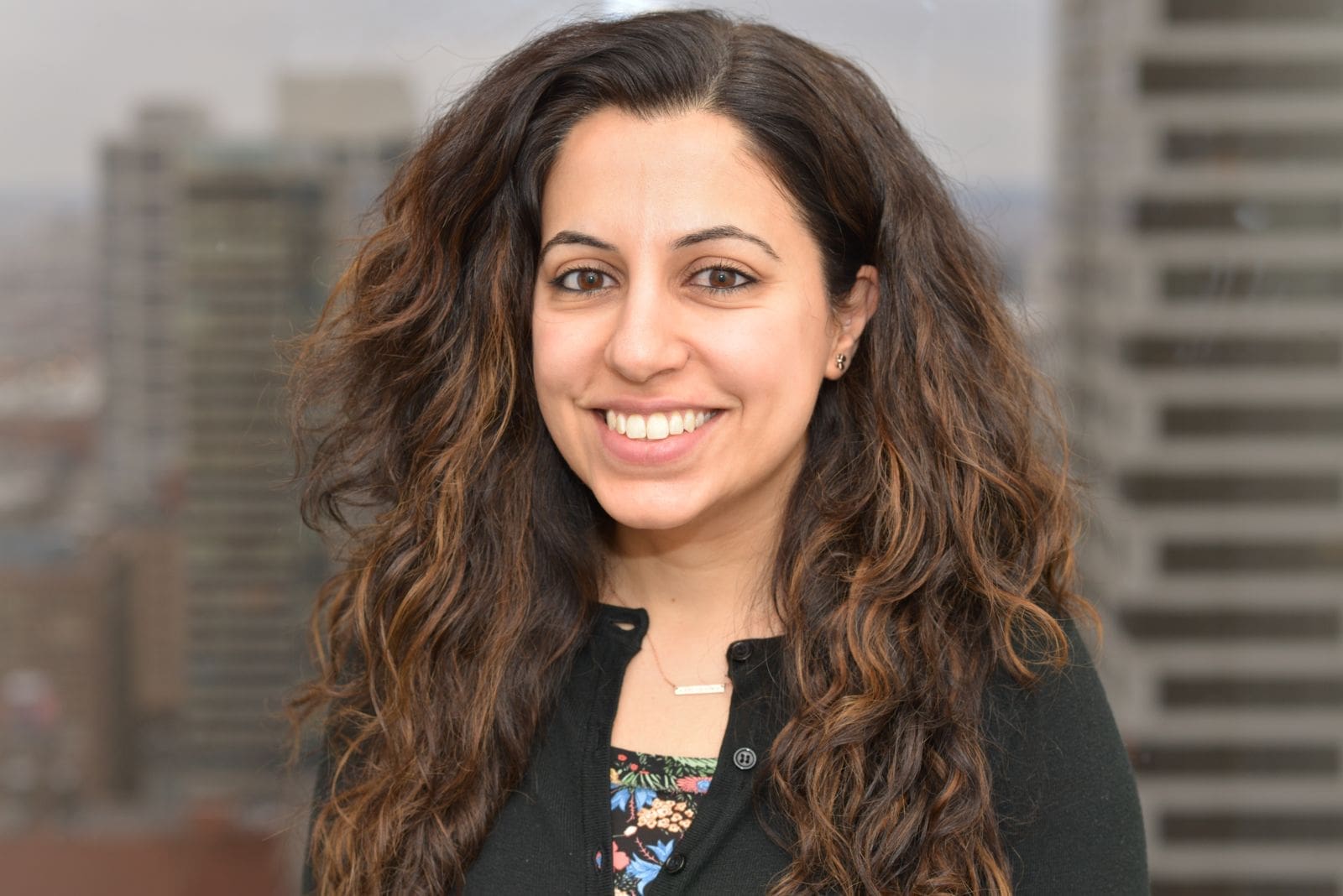
Nadeen started at AFC earlier in 2018 as the Director of Policy, bringing her extensive expertise of influencing policies impacting Medicaid, the Affordable Care Act, Ryan White Care Act and more.
In her new role as VP of Policy & Advocacy, she will provide guidance to help AFC create a strong policy strategy that supports the HIV community and advances health equity for all Illinoisans.
“I’m humbled to have this opportunity and energized to work with my AFC colleagues and our partners to create equity and justice for people living with and vulnerable to HIV,” said Israel.
Prior to AFC, Israel served as the Director of Policy & Advocacy at EverThrive Illinois where she led the organization’s policy development and implementation efforts on issues ranging from Medicaid and the ACA to maternal and infant mortality and morbidity.
“Her deep knowledge of health policy and the social determinants of health, including housing, will help AFC move the needle on our major initiatives, including the Getting to Zero Illinois plan, which aims to end the HIV epidemic by 2030,” said AFC’s President/CEO John Peller. “I am proud to appoint a strong, smart, compassionate woman of color to this role.”
The Illinois HIV Action Alliance is a new statewide coalition of legal, health, policy organizations, and other advocates – launched today in an organized effort to end HIV criminalization in Illinois.
Currently, Illinois law criminalizes people living with HIV who are aware of their status and engage in condomless anal or vaginal intercourse (or who shares needles, donates blood, or “otherwise provides blood, tissue, semen, organs, or other possibly infections bodily fluids”) without being able to later prove disclosure of their HIV status.
A person living with HIV can be prosecuted even if they do not actually transmit HIV to another person. Violating this law can lead to felony criminal prosecution punishable by three to seven years in prison and a $25,000 fine.
The Illinois HIV Action Alliance consists of: AIDS Foundation of Chicago, American Civil Liberties Union of Illinois, Central Illinois Friends, Chicago Black Gay Men’s Caucus, Equality Illinois, Howard Brown Health, Illinois Public Health Association, Lambda Legal, Legal Council for Health Justice, Southside Health Advocacy Resource Partnership, and individual coalition members Christian Castro and Betty Donoval.
Illinois’ HIV-specific criminal law is harmful and unjust. The medical community and American society have made great progress in our understanding of HIV and how it is transmitted, prevented, and treated. Despite this, people in Illinois and other states still face antiquated laws that are rooted in harmful stereotypes and outdated science.
Rather than protect the public, this law may actually harm public health by discouraging individuals from getting tested for HIV and reducing the likelihood of disclosure to sexual or needle-sharing partners. Fearing prosecution – as well as stigma – some people living with HIV avoid learning their HIV status. Laws like Illinois’ increase stigma towards people living with HIV by leading to inflammatory or ill-informed media coverage that may perpetuate misinformation regarding modes of HIV transmission, reveal a person’s sexual orientation or HIV status against their will, or play on harmful stereotypes.
People living with HIV who harbor no ill will and have no intent to harm anyone are prosecuted and often convicted under these laws, sometimes pleading guilty as part of a plea deal to avoid trial and a potentially longer sentence. Additionally, the enforcement of HIV-specific criminal laws also foster racial and sex-based disparities.
The Illinois HIV Action Alliance seeks to eliminate HIV-based social stigma and criminalization by centering the voices of people living with HIV, we promote the dignity, rights, and respect of the community through engagement, advocacy, and education.
For more information and to stay up-to-date on coalition efforts, go to:
Illinois HIV Action Alliance Facebook: www.facebook.com/hivactionIL
Illinois HIV Action Alliance Twitter: https://twitter.com/HIVActionIL
Illinois HIV Action Alliance Instagram: https://www.instagram.com/hivactionil/
 By Jamie Hock
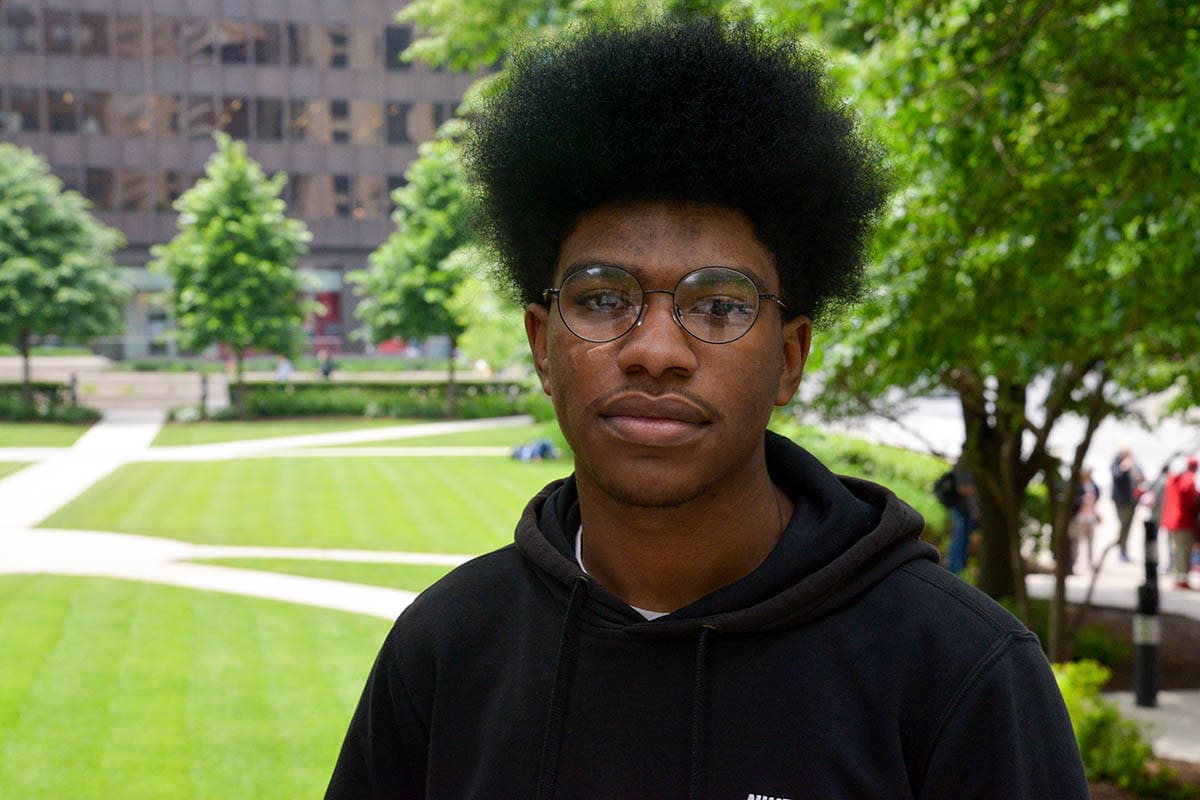
Barely being able to contain his smile, Dyonte explains the significance of the tattoo on his lower forearm. The verse from Romans 8:18 reads “The pain you feel today can’t amount to the joy that’s coming”. Beaming he explains “It means a lot to me because I go through a lot, you know? So it’s like I got that tattoo you know so when I do feel low and when I don’t have motivation and I don’t really have confidence, I look at this tattoo every day. When I look at it, it gives me another motive to not give up and keep striving.” At the young age of 18, Dyonte unfortunately knows all too well about the pain life can inflict. Dyonte is one of the approximately 80,000 people who are experiencing homelessness in Chicago. For the past two years he has been living on his own, going through each day not knowing where his next meal will come from or where he can rest his head at night. Like many others experiencing homelessness, Dyonte would stay several nights outside on the streets, in parks, or in the subway. Regularly, he would not fall asleep until around 3 a.m. due to feeling wary about other people around him, but once 3 a.m. hit he would finally feel at peace and get some rest.
Dyonte is a participant in the Road to Health and Housing program (R2H). This is a new grant funded program that is part of the housing department at AFC. The focus of the program is to work with individuals experiencing homelessness who have been matched to housing program. As a participant in the R2H program, Dyonte works with a Clinical Engagement Specialist who assists with navigating the housing system. This includes obtaining and providing required documentation for housing (i.e. birth certificate, social security card), accompanying clients to housing appointments, advocacy on behalf of clients, and clinical support services. In theory, helping clients who have been matched to housing sounds easy. However, as Dyonte’s story illustrates, individuals experiencing homeless face countless barriers and injustices along their journey.
Homelessness is a societal and human rights issue that is being tackled at every level from federal courts to direct service practitioners. As the issue and awareness about the issue continue to be brought to light through advocates, there is unfortunately still a negative stigma surrounding people experiencing homelessness. Often, this stigma stems from the perception that people experiencing homelessness have brought it upon themselves and deserve their situation. Data from the National Law Center on Homelessness and Poverty found that the top causes of homelessness among unaccompanied individuals were lack of affordable housing, unemployment, poverty, mental health and the lack of treatment, and substance abuse and lack of treatment. Dyonte describes what it was like to be scrutinized by people who saw him sleeping in public. “I can just tell that people are looking at me crazy. It made my confidence go a little low. I just felt weird I guess, like, disappointed in myself”. He wishes that people who saw him on the streets and others on the street would take time to consider that everybody has a situation going on their life and not everyone’s life is stable.
Dyonte’s story is not just about experiencing homelessness. People experiencing homelessness often intersect with other systems such as the health care, criminal justice and education system. For example, Dyonte is among the over 17,000 students in Chicago who are experiencing homelessness. On top of worrying about food and finding a place to sleep, Dyonte is also a senior in high school on track to graduate. Dyonte discussed the challenges he faces as a student experiencing homelessness. “It is sometimes difficult because I wouldn’t get the best sleep as I’m supposed to cause going to sleep at three o’clock in the morning when you outside and stuff and then you got to make it to school at eight. So it’s like you get real tired.” Overall, Dyonte said that he has appreciated his time in school and feels at ease knowing that at least for a few hours of the day he has the chance to get off of the streets and have a meal.
In addition to navigating the educational system, Dyonte has current involvement in the criminal justice system. In the fall of 2018, he was charged with unlawful use of a weapon for possessing a gun and was arrested. He now faces thousands of dollars of court fees in addition to having to keep up with his probation officer. Facing financial hardship, Dyonte fears he won’t be able to pay his fines and probation costs. Additionally, meeting with his probation officer is a struggle due to the financial cost and amount of time it takes. His school day goes from 8:30 a.m. to 12:41 p.m. He only has the opportunity to meet with his probation officer during the week from 3:30 p.m. to 6:30pm, so Dyonte leaves school and heads to his probation officer right away. Taking a train and two buses one way, it takes a grand total of 2 hours to get to his probation office in Bridgeview, Illinois. After paying for the fares of public transportation round trip and paying his probation fees, Dyonte is out $75 in a single day. He often has difficulty coming up with that type of money and has frequently skipped school in order to work odd jobs to cover these costs.
People experiencing homelessness are disproportionately represented in the criminal justice system. In fact, one study found that 54% of individuals receiving homeless services had a history of interaction with the criminal justice system. Often people are bouncing back and forth between these two systems and struggle to break the cycle because individuals with a criminal background are more likely to have difficulty finding housing resulting in them becoming homeless. Individuals experiencing homelessness are often charged with “survival crimes” such as trespassing and robbery, which result in incarceration. This endless cycle perpetuated by the housing and criminal justice system unfortunately does more harm than good. Dyonte wishes that law enforcement would take the time to understand people before making assumptions and judgments. “I wish police knew that everybody is not the same. They should try communicating better. Because when you demand something from someone, you know, once you start yelling I stop listening.” His hope is that police will take more interest in people in the community and take time to understand their situation. “You don’t even know me. Probably if you at least try to get to know who I am or you know ask me if I’m in school or ask me what type of positive thing is going on in my life. Be more willing to listen to the community that you serve.”
At the center of these two issues — homelessness and interaction with the criminal justice system –Dyonte brings up a point that should not be ignored: People of color are 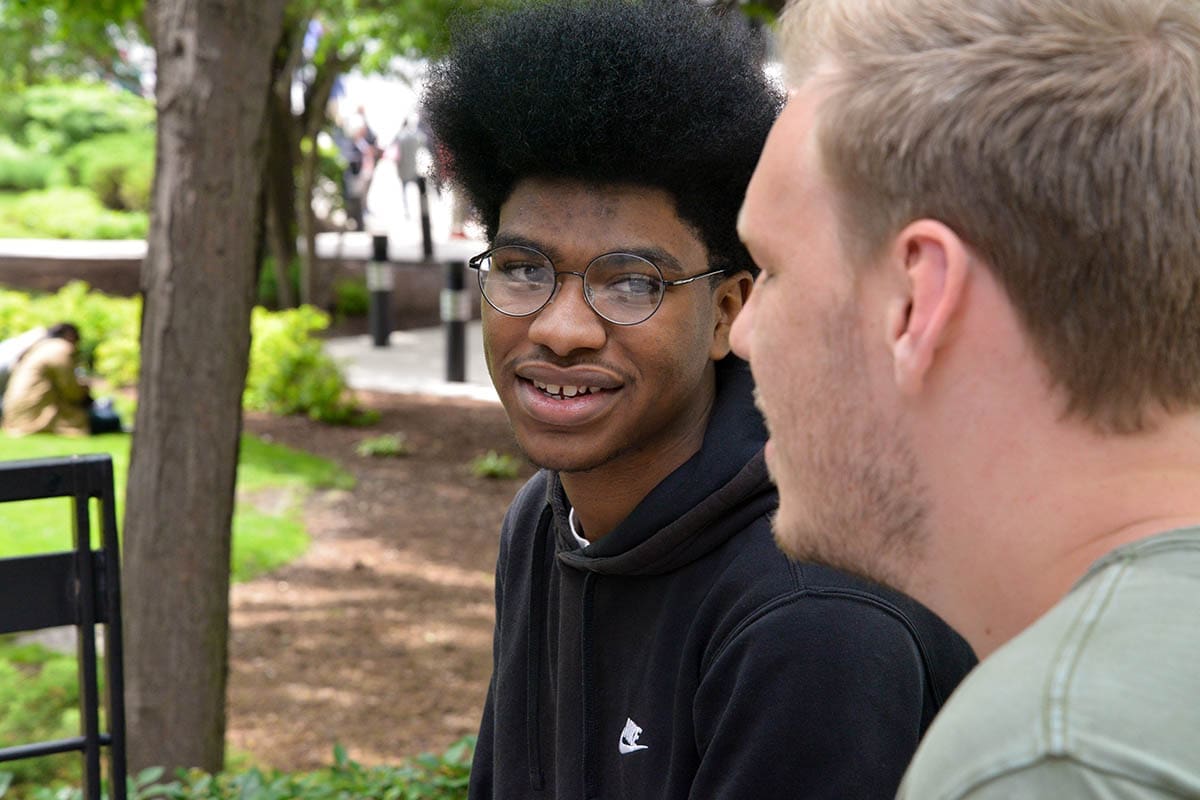 overrepresented in both categories. Despite making up only about one-third of the city of Chicago’s total population, people who identify as Black/African American represent 74% of people experiencing homelessness in Chicago according to Chicago’s Point-in-Time Count report. Similarly, the 2017 Annual Report distributed by the Chicago Police Department showed that African Americans accounted for 74% of arrests that year and Latinx people accounted for 17%. Dyonte described his past encounters with law enforcement and the court. “I feel like I was racially profiled. I was just around a whole lot of people that’s not my skin complexion and that don’t have my best interest. None of them took the time to ask me, you know, ‘Why’d you make this mistake? What made you do this?’ Well, you know, they never really asked me anything. All it is is you guilty, you guilty, you guilty.”
Dyonte’s powerful story helps to illustrate what life is like for people who have to navigate multiple systems daily. If you take anything anyway from his story, Dyonte wants you to remember this: “I want to tell people that before you judge somebody, you should get to know that person because everybody has a story. And everybody goes through tough times in life. Be more sensitive to people’s situations”.
To the world, Dyonte might appear as just another young Black man on the streets with a criminal record. However, having worked with Dyonte you should know that at the age of 18 Dyonte is one of the wisest people I have ever met. Compassionate, caring, motivated and bright are only a few words that embody Dyonte. To whoever has read this, whether you work in housing, education, health care, law enforcement, I hope it has inspired you. I hope you read this and begin to start thinking about ways to listen to people better, be more understanding, and take the time to learn about the people you serve. I also hope that it motivates all of us to work together across fields in order to create a system designed to empower people rather than punish. In the words of Dyonte’s tattoo, let’s work together towards the joy that is coming.
Jamie Hock works as a Clinical Engagement Specialist for the Road to Health and Housing (R2H) program under the AFC Housing Team. The Road to Health and Housing program provides navigation and clinical support services to individuals who have been matched to housing through CES. Along with helping clients get connected with housing, R2H also helps individuals establish physical and mental health care. Dyonte has been a part of the R2H program since February 2019. Dyonte was recently matched to a housing opportunity and is currently in the process of working towards getting housed.
 On Sunday, the Illinois General Assembly concluded its spring legislative session in Springfield. This Session, Illinois had a new governor and many new faces in the state legislature tackling some of the most complex and impactful issues in the state.
“AFC is proud to see Illinois take the necessary steps to invest in the services all Illinoisans need to be healthy and thrive,” said John Peller, President/CEO of the AIDS Foundation of Chicago. AFC advocated for the following bills that passed out of both chambers and are currently awaiting Gov. JB Pritzker’s signature:
HB 2259, the Medicaid Drug and Therapeutics Board Transparency Bill, seeks to increase transparency in the decision-making process and makeup of the Medicaid Drug and Therapeutics (D&T) Board, that with the Department of Healthcare and Family Services (HFS), determines the fee-for-service medication formulary in the Illinois Medicaid program. The bill was sponsored by Rep. Sara Feigenholtz (D-Chicago) in the House and Sen. Julie Morrison (D-Deerfield) in the Senate.
HB 2665, the Youth PrEP Bill, aligns Illinois law with federal guidance on a minor’s ability to access preventive health care services, like PrEP, without parental consent. The bill was sponsored by Rep. Lamont Robinson (D-Chicago) in the House and Sen. Robert Peters (D-Chicago) in the Senate.
HB 465, the Copay Accumulator Bill, bans a newer barrier to health care access called copay accumulators and regulates pharmacy benefit managers. Copay accumulator policies are an unfriendly consumer practice where insurance companies don’t count the value of a copay card to an individual’s out-of-pocket costs. Copay assistance programs are critical for people living with HIV and other chronic diseases, as the cost of prescription drugs for these diseases tends to be even higher. The bill was sponsored by Rep. Greg Harris (D-Chicago) in the House and Sen. Andy Manar (D-Bunker Hill) in the Senate.
SB 1321, the Medicaid Omnibus Bill, contains some provisions from AFC’s legislative efforts as part of the Protect Our Care Illinois Coalition (POC) work to address Illinois’ Medicaid eligibility and redetermination backlogs. The omnibus Medicaid bill is a package of proposed fixes to Medicaid that was developed by the bi-partisan, bi-cameral Medicaid Legislative Working Group. The legislation makes some changes to streamline the process of initial Medicaid eligibility determinations and renewals. The bill is an important step towards addressing backlogs and the Coalition looks forward to continuing to work with the Administration, General Assembly, and stakeholders to keep Illinoisans healthy by ensuring continuity of coverage and care.
We also now have a state budget, which estimates $40.3 billion in revenue, roughly $1.4 billion more revenue than the governor’s introduced Fiscal Year 20 budget at $38.9 billion. The final budget contains level appropriations for the HIV lump sum at $25.5 million, HIV services to address the disproportionate impact of HIV/AIDS on African Americans and other communities of color at $1.2 million, and supportive housing at $15.6 million. These budget lines support primary care and HIV prevention, education, housing and treatment services throughout the entire state.
Finally, the Fair Tax amendment will be on the November 2020 ballot, and voters will get a chance to decide whether the Illinois state constitution should be amended to include a Fair Tax.
The Fair Tax would allow low- to middle-income households to pay less in income taxes, while higher-income households would pay a fairer share. 97% of Illinoisans would see no increase in taxes, while only 3% would be required to pay more. The Fair Tax would generate much-needed revenue for critical health and human services across Illinois, including lifesaving services for people living with or vulnerable to HIV.

The Trump administration kicked off the holiday weekend with new attempts to strip away the rights of LGBTQ+ people by proposing rule changes that will create more barriers for them to access housing and health care. First, the U.S. Department of Housing and Urban Development (HUD) issued a proposed rule change that would make it easier to discriminate against transgender people experiencing homelessness who are seeking housing in shelters.
A few days later, the Department of Health and Human Services proposed a rule change to the Affordable Care Act that reverses the Obama administration rule that expanded discrimination “on the basis of sex” to include gender identity.
The AIDS Foundation of Chicago and its project, Pride Action Tank, are appalled by the Trump administration’s ongoing efforts to erase transgender and gender non-conforming people by denying their existence. Housing and health care are basic human rights. Transgender people are human beings. This hate must stop!
Stay tuned for information on how to submit comments.
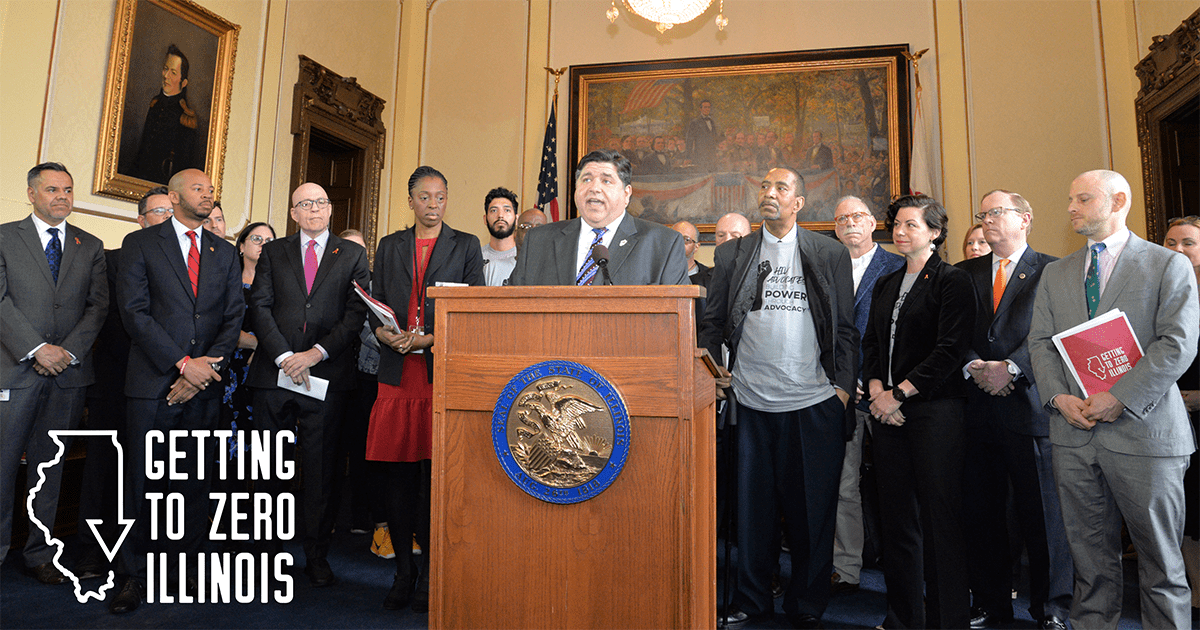 On May 14, Governor JB Pritzker, Mayor Rahm Emanuel, the Illinois Department of Public Health (IDPH), the Chicago Department of Public Health (CDPH), and the AIDS Foundation of Chicago (AFC) introduced the Getting to Zero Illinois (GTZ-IL) five-year comprehensive plan that details actions to end the HIV epidemic in Illinois by 2030. As part of the Getting to Zero Illinois collaboration, the plan includes goals and strategies that will reduce new HIV transmissions, support the health of people living with HIV and AIDS, and help Chicago and Illinois get to “functional zero,” a point where the HIV epidemic can no longer sustain itself.
“After taking steps to end the HIV epidemic during my first weeks in office, today I’m proud to say we have a five-year plan to get to zero in Illinois,” said Gov. JB Pritzker. “Through partnerships and a renewed focus on testing, treatment and prevention, we will save lives and stop HIV from impacting so many communities.”
“While unprecedented investments have led to a record-low number of HIV diagnoses in Chicago, our work is not done until we hit the number zero,” said Mayor Rahm Emanuel. “By collaborating closely with residents, providers and advocates, we will continue to be on pace to end the HIV epidemic in Chicago within the next ten years.”
Getting to Zero Illinois is a statewide public-private partnership of 50 government, community, and health care organizations that was launched in 2017. It has two primary objectives. The first objective is to increase the number of people living with HIV who are virally suppressed (when an individual has sustained viral suppression, the virus cannot be transmitted sexually, a concept known as undetectable = untransmittable, or U=U). The second objective is to increase the use of pre-exposure prophylaxis (PrEP) among people who are vulnerable to HIV. PrEP is a daily pill and strategy that is nearly 100% effective at preventing HIV transmissions.
The plan is being released after almost two years of planning and preparation, which included town hall meetings, surveys, focus groups, draft recommendations, and feedback from communities all over Illinois. The plan focuses on major shifts in six areas:
- Build HIV health care and public health workforce that uses new approaches and adapts to the evolving needs of people living with and vulnerable to HIV.
- Increase access to health care services that support the use of PrEP for HIV treatmen
- Improve health equity by using data and allocating resources to the communities that face the greatest disparities.
- Increase efficiency through governmental coordination.
- Provide services and care for linked, co-occurring conditions, including mental health and substance-use treatment, screening and treatment for sexually transmitted infections, and vaccination against diseases such as viral hepatitis and meningitis.
- Measure progress through surveillance and other data at state, city and community levels.
“The goals that are set in this plan are high but so are our residents’ expectations,” said CDPH Commissioner Julie Morita, M.D. “Every person living with HIV in Chicago deserves access to high-quality care. Together with our partners, we will continue transforming HIV care and prevention.”
To further accelerate progress, Mayor Emanuel and CDPH are providing $40 million to over 40 organizations to develop and support programs in health care, health disparities, housing, and education and awareness. The new funding opportunities aim to increase access to HIV clinical and supportive services for HIV treatment and HIV PrEP and address the structural barriers preventing people from accessing responsive and high quality HIV services.
“Through our HIV prevention and support efforts, our goal is to get to a point where the transmission of HIV cannot be sustained – approximately 100 or fewer new HIV diagnoses each year,” said IDPH Director Dr. Ngozi Ezike. “We must focus on eliminating the stigma of HIV, addressing health disparities, and educating communities on how to prevent HIV transmission, as well as identifying where people can go for support and health care services. The Getting to Zero Illinois plan has strategic steps to help us attain our goal.”
In 2017, an estimated 39,842 people were living with HIV in Illinois, 23,835 of whom lived in the City of Chicago. There were 1,375 new HIV diagnoses in Illinois in 2017, an almost 35% decrease from 2006 to 2017. In Chicago, there were 752 new HIV diagnoses in 2017, the fewest since 1990. However, despite significant progress in reducing the number of new HIV diagnoses, specific communities continue to be disproportionately impacted by HIV, especially Black and Latino/Latinx gay, bisexual and other men who have sex with men; transgender women of color; and Black women.
“The AIDS Foundation of Chicago (AFC) is proud to partner with IDPH and CDPH to co-lead development of the GTZ-IL plan,” said John Peller, President & CEO of AFC. “We are grateful for the community leaders and people living with HIV who have worked so hard to ensure that this plan will address the specific needs of people living with and vulnerable to HIV across Illinois.”
In February 2019, Governor Pritzker signed an Executive Order that included funding for increased HIV testing, PrEP, the African-American HIV/AIDS Response Act, and other public health initiatives. In addition, the state committed to more closely monitor viral load metrics to ensure that more people in Illinois are achieving and maintaining an undetectable viral load.
Additionally, IDPH is providing almost $26 million to 62 agencies across Illinois to create and support sustainable HIV prevention and care programs that align with the Getting to Zero Illinois plan. Agencies will promote surveillance, perinatal HIV prevention, same-day HIV and hepatitis C testing, syringe services, linkage to HIV treatment, PrEP, and other HIV prevention tools. PrEP4Illinois will continue to provide PrEP education and prescriptions, regardless of ability to pay. You can read the plan at GTZillinois.hiv/plan. For more information about PrEP, call the Chicago PrEP Line at 872-215-1905 or visit PrEP4Love.com. For more information about HIV testing visit www.PrEP4Illinois.com.
###
 By Raven Feagins
HIV affects people of all genders, sexualities, races and ethnicities, but Black Americans in particular are overrepresented in the numbers. While Black Americans only make up about 12% of the US population, 43% of people with new HIV diagnoses and approximately 42% of people living with HIV in the U.S. are Black. Multiple factors contribute to this enormous health disparity, including higher rates of poverty and a lack of access to high-quality health care. All of this and more is the driving force behind The Black AIDS Institute’s mission to focus solely on addressing HIV and AIDS in Black communities. The organization works to mobilize and engage institutions and individuals to address these disparities, and one way they tackle this is through their Black Treatment Action Network (BTAN) chapters across the country.
BTAN works at the community level to address systemic barriers lowering the rates of HIV and AIDS in Black communities by bringing together organizational representatives and community members to the same table. Each chapter meets to learn with one another, share resources, get connected to the community and, ultimately, develop a well-informed and well-equipped collective working to end the HIV epidemic. Chicago is home to one of those BTAN chapters, which has been active in the community by having a presence at events such as Fahrenheit Chicago, co-sponsoring HIV/AIDS awareness day events, conferences and more. Chicago’s chapter recently voted in new members to leadership positions, including Erica Gafford from Center on Halsted and Coleman Goode from the AIDS Foundation of Chicago as the two new co-chairs.
Gafford and Goode were active members of the HIV workforce and BTAN before taking on these new roles. Because of their experience, they have a deep understanding behind the need to focus specifically on Black communities.
“Young Black [men who have sex with men] in Chicago are 16 times more likely to have HIV than their white counterparts, despite lower numbers of sexual partners, less ‘unsafe sex’ and more frequent testing for HIV. Additionally, the rates of HIV acquisition for Black women (cis- and trans-) continue to be extremely disproportionate,” said Gafford. “We are not going to solve the problems faced by the Black community from reaching their full health equity unless and until institutions that are about, by and for us are properly and sufficiently supported with the infrastructure we need to succeed.”
“BTAN cannot be successful if we are not supporting Black-led organizations and strong, intelligent and dedicated Black leadership,” said Goode. “BTAN Chicago’s mission is to break down the walls built by years of systemic racism against Black people by removing the harmful social determinants of health that keeps Black communities from reaching its full health equity.”
Both of the new co-chairs have high hopes for the future of BTAN in their new roles and are particularly interested in diversifying group membership and keeping more people actively engaged.
“I want to take BTAN to the next level as a community organization group. I want us to become strong, effective community organizers in our jobs and in our work as BTAN members. I guess you can say I hope that I can help build some social and racial justice warriors,” said Goode.
“As BTAN co-chair, I have several goals. The first is to increase the representation of community members — in particular, young, Black MSM and Black trans women,” said Gafford. “The second is to work towards increasing the political power of Black people in Chicago by engaging the membership in activities around activism, advocacy and policy change. Building our power through a coordinated action of our collective vision.”
BTAN Chicago is always looking for new members who are interested in learning more about what they can do to support the mission. To learn more about BTAN Chicago and become a member, reach out to the head of the Membership Committee Clyde Jones as [email protected].
 This week, the Illinois General Assembly will be back in session after two weeks of spring break where legislators have been in-district. The AIDS Foundation of Chicago (AFC) is looking forward to being back in Springfield to continue our advocacy. In the meantime, here are some brief updates substantive legislation AFC is championing, the budget and the Fair Tax.
Substantive Legislation
HB 2259 seeks to increase transparency in the decision-making process and makeup of the Medicaid Drug and Therapeutics (D&T) Board, that with the Department of Healthcare and Family Services (HFS), determines the fee-for-service medication formulary in the Illinois Medicaid program. It was sponsored by Rep. Sara Feigenholtz (D-Chicago). The bill passed the House with 112 voting yes, 0 voting no and 1 voting present. It is now in the Senate where Senator Julie Morrison (D- Deerfield) is sponsoring it.
HB 2665 would align Illinois law with federal guidance on a minor’s ability to access preventive health care services, like PrEP, without parental consent. The Youth PrEP bill was sponsored by Rep. Lamont Robinson (D-Chicago) and passed out of the House with 62 members voting yes, 48 voting no, and 1 voting present. It is now in the Senate where Senator Robert Peters (D-Chicago) will be sponsoring it.
HB 465 is sponsored by Rep. Greg Harris (D-Chicago) and would ban copay accumulator policies in addition to regulating pharmacy benefit managers. AFC worked with Leader Harris on language around copay accumulator policies, which are an unfriendly consumer practice where insurance companies don’t count the value of a co-pay card to an individual’s out-of-pocket costs. Copay assistance programs are critical for people living with HIV and other chronic diseases, as the cost of prescription drugs for these diseases tends to be even higher. It passed out of the House with 113 voting yes, 0 voting no and 1 voting present. It is now in the Senate where Senator Andy Manar (D- Bunker Hill) will be sponsoring it.
SB 2021 / HB 2353 or the Medicaid Eligibility Determination & Renewal Reform Act is sponsored by Senator Heather Steans (D-Chicago) in the Senate and Rep. Kathleen Willis (D-Northlake) in the House. AFC worked with the Protect Our Care Coalition to put together a comprehensive approach to reforming Illinois’ Medicaid application and renewal processing system. The bill is part of a larger Medicaid Omnibus bill that legislative working group members are currently considering. AFC and coalition members have been active in advocating with working group members about the importance of including comprehensive application and renewal reforms in the legislation they ultimately consider.
Budget News
AFC has been continuing to advocate for the investment in HIV services that is needed in order to advance Getting to Zero Illinois and end the HIV epidemic by 2030 in both House and Senate budget hearings. We are pushing for $26.5 million (a $1 million increase to the Governor’s proposed budget) for the HIV Lump Sum and $2.4 million (a $1 million increase to the Governor’s proposed budget) in targeted HIV programs for communities of color.
Fair Tax
As part of the Responsible Budget Coalition, AFC has also been supportive and pushing for the Fair Tax, which would raise the revenue needed for much needed services. We will continue to speak with legislators about the importance of voting to allow on the ballot a question as to whether the constitution should be amended from a regressive tax to a fair tax.
Up Next
The House and Senate will be in session this week and will remain in session through May 31, when they will adjourn for the summer, or until called back for additional session days. AFC will continue to work with legislators so that our priority bills move forward.
Also, on Tuesday May 14th, advocates from across the state will be coming down to Springfield as part of AFC’s Advocacy Day. If you’d like to join us in advocating and being a bold voice for change, there’s still time to register.
I hope to see many of you down in Springfield with us!
 The AIDS Foundation of Chicago (AFC) is gearing up for its third annual TEE UP TO END AIDS, set to be hosted at Harborside International Golf Center in Chicago on Wednesday, May 22. We sat down with golf-enthusiast and AFC Board of Directors member Tony Tintinalli to learn more about the event and his connection to AFC’s mission.
Q: First off, can you tell me what you do for a living and what your role is with AFC’s Board of Directors?
A: I am the regional president for Chicago North for BMO Harris, and I am the chair of the Finance Committee on the AFC Board of Directors.
Q: What brought you to AFC? What connection do you have to the mission?
A: I learned about AFC when joining BMO Harris because it was an organization that we supported and sponsored. From there, I knew I wanted to get involved.
Being a gay man, for me, I’ve always felt that it was important that we educate people about HIV and that we work to eradicate the disease. I just felt that in any way that I could support doing that, would be something I would be passionate about. I have friends who are living with HIV, and I had friends who passed away as a result of the disease, so it’s just something that affects our community, and I would like to see an end to the epidemic.
Q: What prompted you to join the Board of Directors?
A: I’ve always been passionate about understanding and helping to define the strategies of an organization and getting involved in that capacity. I felt that when I moved to Chicago from Canada two years ago, this would be a great way to meet people and get involved in an organization in a different way. It’s one thing to volunteer, but to sort of help define the path of an organization – it was more aligned to my skillset and the things that I do from a work perspective that I thought would be beneficial.
Q: Can you tell me about the event Tee Up to End AIDS?
A: Tee Up is just a great opportunity for supporters to have a wonderful day on a golf course. I think a lot of people are into golf and into organizations like AFC, so this is a great way for parts of our community to connect with individuals who may not necessarily think about it being, like, a “gay” event. This event also allows companies outside of AFC’s network to connect with the cause and enjoy a great afternoon. We are so grateful to Andy Bohnker for leading the event – Andy is an amazing volunteer for AFC who helps get sponsors, turn out golfers and inspires everyone with his personal story.
Q: What was the event like last year?
A: It was a beautiful day, and we had a tremendous turn-out. I think that there was a lot of comradery and fun that people had at the lunch while enjoying winning some prizes. It’s just a really fun day for people to come out with a group of colleagues or friends and for a really great cause – And this is coming from a golfer!
Q: Why are fundraising events such as Tee Up important?
A: The important thing is just being able to connect with the community in a variety of different ways — to come out and enjoy giving to a great cause and having fun doing it. I 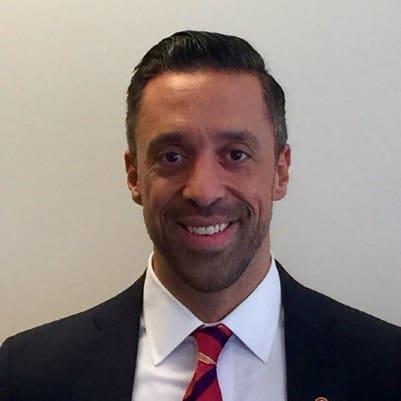 think people want to come and do things that they enjoy, and this is a great opportunity to do that.
Q: What are you expecting this year?
A: The goal of this year is to have more people come out and participate. There’s always great prizes that people have the opportunity to win. It’s just a really fun way to spend the day and to do something a bit different. If you’re into golf, whether you’re an amateur player or an experienced player, I think it’s just a great day to spend time with friends.
Want to join Tony and other golfers at TEE UP TO END AIDS this year? Click here to grab your tickets and mark your calendars for Wednesday, May 22!
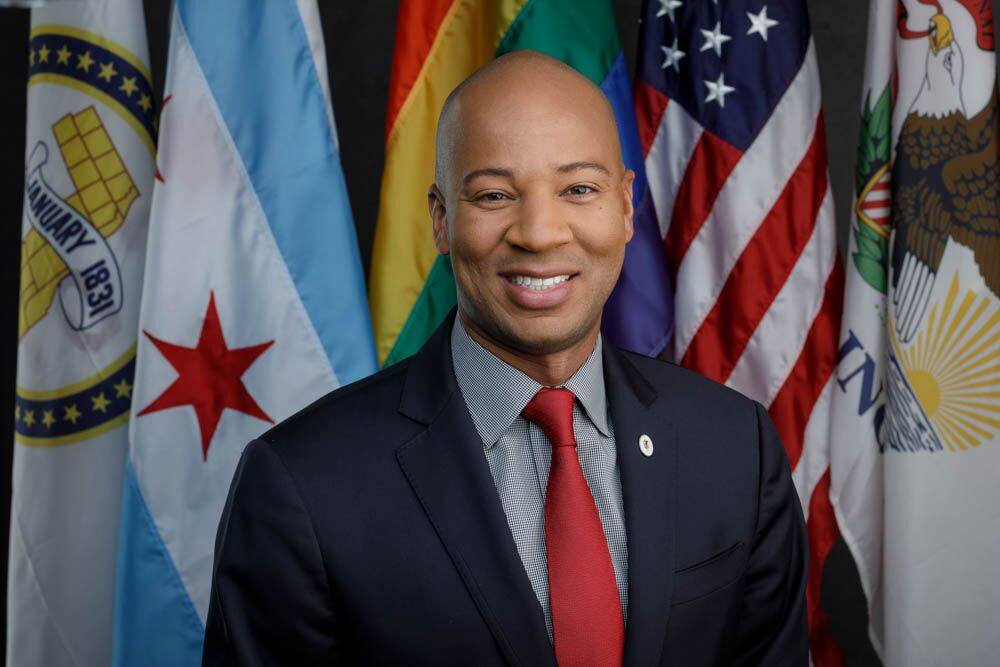
The AIDS Foundation of Chicago (AFC) congratulates State Representative Lamont Robinson (D-Chicago) on successfully passing HB 2665 (the Youth PrEP bill) out of the Illinois House.
AFC thanks the House members who supported this bill and especially Rep. Kelly Cassidy (D-Chicago).
HB 2665 would align Illinois law with federal guidance on a minor’s ability to access preventive health care services, like PrEP, without parental consent. The bill passed 62-48 with one member voting present.
Read more about the Youth PrEP bill.
The U.S Food and Drug Administration approved PrEP for use by young people who do not have HIV to reduce the risk of transmission of HIV. While overall HIV cases have dropped by 28% over the last decade in Illinois and mother-to-child HIV transmission has nearly been eliminated, HIV diagnoses are increasing among youth in Illinois.
- Young people aged 13-24 make up 25% of new HIV diagnoses according to the Chicago Department of Public Health.
- Reports show that Black and Latinx youth are being disproportionately affected.
Increasing access to PrEP is critical to helping the state achieve its Getting to Zero goal of ending the HIV epidemic in Illinois by 2030.
HB 2665 modernizes Illinois law to allow young people to access PrEP without parental consent and would empower young people to take control of their health.
While the bill made it out of the House and is now on to the Senate, we still have more work to do.