
The application process for capacity building and technical assistant mini-grant support to bolster Chicago-area HIV/AIDS organizations will be released in January 2019. This opportunity will support up to five community-based organizations in Chicago.
The grant will offer selected CBOs a one-year program to improve their strategic clarity and strategic planning goals, board development, messaging, and alignment with other organizations doing work in the HIV/AIDS sector.
“Every organization has defined mission and values and goals, but this grant will help key organizations leverage their strategy and core principles to compete for essential resources,” said Cynthia Tucker, vice president of prevention and community partnerships for the AIDS Foundation of Chicago (AFC). Tucker will oversee the grant application and execution process on behalf of AFC.
This capacity-building opportunity is the latest in a series of grants issued by AFC and led by Tucker to key organizations that have unique approaches and abilities to serve vital communities in Chicago — especially communities that are most impacted by HIV and AIDS. Previously, Tucker and AFC have supported organizations like these through yearlong collaborative sessions that are led by consultants in key areas of opportunity, including financial management, fundraising and communications, board development and more.
The application will be made available to current and prospective organizations; they can expect to receive materials by the end of January 2019. Questions can be directed to Special Projects Manager Donnise Gaffeney at [email protected].
By Raven Feagins
 This post originally appeared on November 29, 2018 on GTZIllinois.hiv.
Conversations around U=U, PrEP and condom use are common among folks in the HIV workforce, but how can these conversations get started in middle and high school classrooms? The Hult Center for Healthy Living addresses this, among other topics, in their comprehensive sexual health curriculum that they bring to all 6th-9th grade students in the Peoria Public School District in central Illinois. By the time students reach high school, they have a baseline knowledge about what STIs are, how they affect the body and what they can do to prevent themselves from acquiring them. Educators then spend time building on that knowledge by explaining what U=U means, what PrEP is and how these scientific breakthroughs are big not just for the people in the HIV community but also for people around the world.
“We’re really communicating the message that it is possible that we could live in a world where there are no new transmissions,” said Becca Mathis, adolescent health coordinator at the Hult Center. “Essentially, by the time they reach high school … we’re really trying to empower them to learn how to access resources beyond just that content information and even talking about where PrEP is available in our community.”
Their curriculum is derived from the FLASH program, which originated in King County, Washington, that provides adaptable comprehensive sex education to fit the needs of the community and works to connect students with the already existing resources in the area. Peoria Public Schools have worked with the Hult Center for the past five years to develop this curriculum in response to the high number of STIs and pregnancies among youth in the area,
  which has already proven to have a positive impact on the community.
“Last year we did three different GYT [Get Yourself Tested] events – one event at each of the three high schools – and the number of confirmed positives for STIs that we saw dropped 50% from the year before,” said Mathis. “We recognize that there are all kinds of factors that go into that, but that just shows us that the more that we do talk about this, the more empowered students feel.”
Parents and caregivers in the community are also benefitting from this programming, and the curriculum would not be successful without their support. In Illinois, school districts are not required to teach sexual health education, but if they choose to, parents/caregivers must have the option to opt their students out. However, Holly Bill, assistant manager of youth development at the Hult Center for Healthy Living, pointed out that only less than 20 students from the entire Peoria Public School district have been opted out of these courses.
“Sometimes, parents/caregivers are a little hesitant about the curriculum, but we make an effort to be available for these parents/caregivers to answer any questions and walk through any curriculum they may have questions or concerns about,” said Bill. “Usually, the parents/caregivers are just really happy that we respond and we are providing research-based education that supports every family’s values. Being transparent about what we are talking about has been a huge key to our success!”
It is also important to note that the Hult Center does not do this work alone. They work with a number of community organizations, such as Central Illinois Friends and Positive Health Solutions, to help them implement and supplement the curriculum by training their own staff to go into classrooms and teach. With this collaboration, partner organizations provide their own specialized content knowledge around their focus areas and supplement an already robust curriculum.
“We are helping spread the word and getting the community on board,” said Pam Briggs, director of administrative operations at Positive Health Solutions. “We have to keep the dialogue going. The more discussion, information and education, the easier it will become to talk about.”
This comprehensive sexual education sets an example for other communities to model after and is one of the many elements that will help the Getting to Zero Illinois plan reach its goal of achieving functional zero new HIV transmissions throughout the state by 2030. With more conversations around safer sex practices and prioritizing the development of sexual health knowledge, students, parents and all communities throughout Illinois will benefit.
Are you interested in creating equity and justice for people living with and vulnerable to HIV or chronic conditions?
If the answer is yes, we have just the volunteer opportunity for you!
The AIDS Foundation of Chicago (AFC) is seeking candidates for board membership. If you are interested, please email Sarah Menke at [email protected] with your resume and a brief letter of interest!
We’re looking for individuals who can help us achieve our goals of equity and justice by serving on the Board of Directors for AFC.
AFC is particularly seeking Board members with expertise in fundraising, strategic planning, social marketing and communications, finance and investments, human resources, and experience in the corporate sector. Previous board experience is helpful, but not necessary.
What does it mean to be a board member?
Board membership goes beyond traditional volunteering and into the highest level of visionary leadership for the organization, assuming legal and financial responsibilities while serving as a community ambassador for AFC’s mission. Serving as a board member provides a unique opportunity to put your passion for a social cause into action by applying your experience and expertise to advance an organization’s impact. It’s a rewarding way to serve your community, while learning new skills that can enhance your own career and grow your own personal and professional networks.
More about AFC
AFC mobilizes communities to create equity and justice for people living with and vulnerable to HIV or chronic conditions. Our work is guided by the vision that people living with HIV or chronic conditions will thrive, and there will be no new HIV cases.
For over 33 years, AIDS Foundation of Chicago has brought together service providers and funders to develop systems that meet the needs of those living with HIV/AIDS and to maximize the use of scarce resources. AFC manages more than $17 million in local, state, and federal funds for an array of HIV-related services, provides expertise and leads high-quality delivery across the region, as well as housing and other services for people who are formerly homeless and living with chronic conditions.
The AIDS Foundation of Chicago is committed to diversity and ensuring an appropriate balance of skills and experience on our Board and committees. Our Board is comprised of people of different experiences, backgrounds, and opinions. We believe creating an inclusive and diverse culture improves the effectiveness of our Board and better reflects the diverse populations that we serve. We especially encourage people of color (i.e. Black, Latinx, Native American), those who identify as LGBTQ+, and individuals living with HIV to apply for a position on the Board.
If you are interested, please email Sarah Menke at [email protected] with your resume and a brief letter of interest!
By Raven Feagins
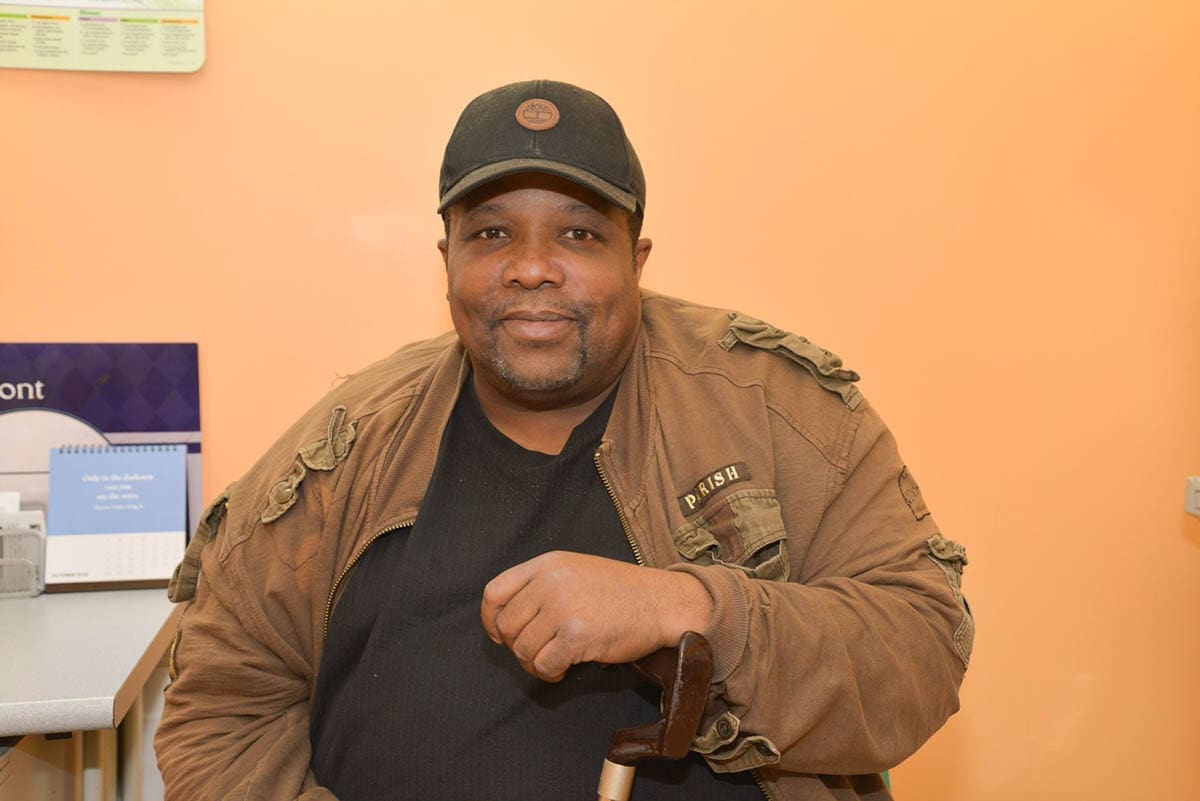 Darrow Alexander is a Chicago native originally from the Englewood neighborhood. He thrives on connecting with others, especially if it’s through food, and he loves giving back to his community. However, before he settled into his cozy apartment in Uptown almost six years ago, Darrow whole-heartedly believed that he would forever be alone.
“I was struggling with homelessness all my life – on and off,” said Darrow. “It was depressing. It actually caused me to get more addicted to drugs because I didn’t feel like anyone cared. I didn’t think nobody loved me. I thought I was alone. I thought I was out there by myself.”
Darrow did not know it at the time, but he was experiencing episodes of depression and anxiety. He coped with his symptoms by self-medicating with recreational substances, but the worst part was that he convinced himself that he was meant to spend the rest of his life like this. Darrow bounced between staying at shelters and with friends for years with no end in sight and no leads to a path to stability. Although he knew he wanted a place of his own and wanted to get healthy, Darrow did not know how or where to start. It was not until he was sitting in an ER hospital bed in 2012 that he finally caught a glimmer of hope.
“I was in a hospital and a guy, a social worker, came by and saw me reading my Bible,” Darrow recalled. “He asked me was I homeless basically, and I said yes. He said he could get me a place and to give him a call. It ended up being Mercy Housing. I was on the waiting list and eventually he called me and I got here.”
At first, Darrow was a little wary about the program he was signing up for, but he decided to take a chance at the opportunity. He still remembers what it was like the first day he set foot in his new home.
“I took a picture of the key and I laid down. It was so dusty everywhere, I’m not even going to lie about it, but I didn’t care,” Darrow recalled. “I mean … mine – this is mine. I never thought I’d have my own – I didn’t. I thought I was going to be homeless the rest of my life, but this was wonderful. My heart just went BOOM!”
In addition to the new apartment he signed a lease for, Darrow was provided a case manager who helped him connect to supportive services and resources to help keep him stably housed. His current case manager is Kate Farrar, housing intensive case manager at the AIDS Foundation of Chicago (AFC), who has been working with Darrow for the past year and a half.
“Something that we talk a lot about at AFC is housing is health care. If you have a bunch of doctor’s appointments, it’s really hard to get to them if you don’t know where you’re staying that night or you have to get in line for a shelter or you are worried about where you’re getting food from or you don’t know where you can keep your stuff while you go to this appointment,” said Kate. “Basically, housing just provides that base for everything to fall into place. For Darrow, if he has medical appointments, those appointments are going to be easier for him to get to if he is housed stably. Him being housed helps him as a whole.”
Framing housing as part of health care has proven to be successful time and time again, especially when used with the housing first model. This model links people, like Darrow, 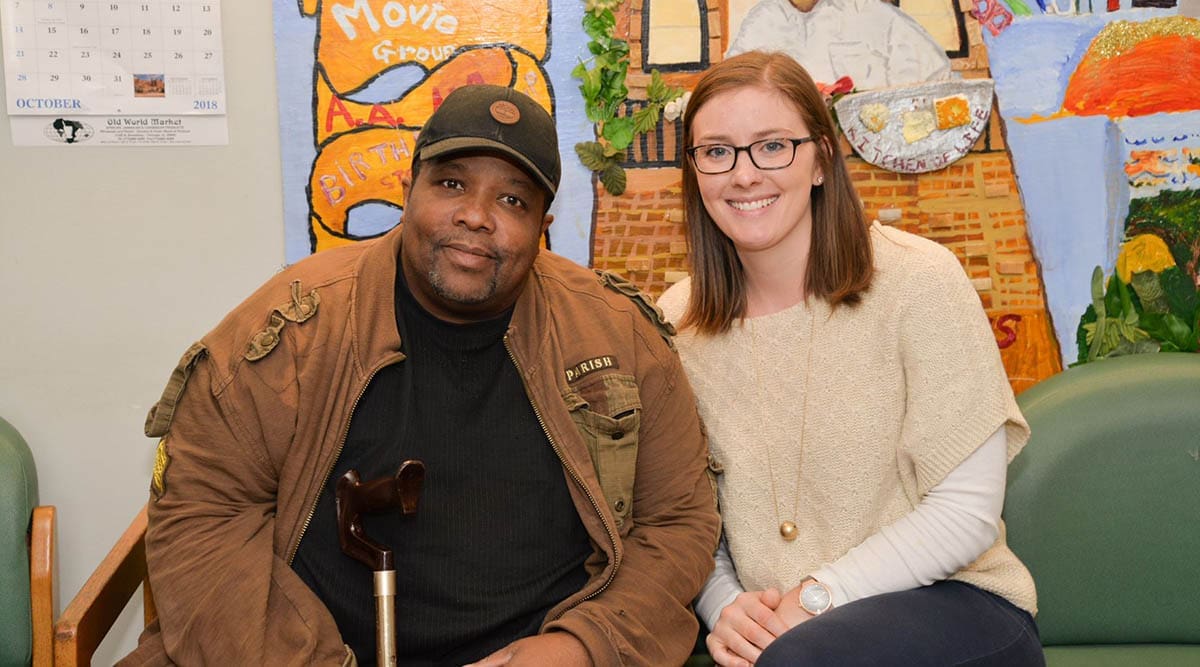 who were experiencing chronic homelessness to housing as quickly as possible to fully address other health and social needs without housing as a barrier. Stable housing is especially important for people with chronic health conditions, such as anxiety, depression or HIV, that typically require individuals to take daily medications and keep regular doctor appointments to stay healthy.
“I think I probably would have died out there,” said Darrow when thinking about where he would be if he never met that social worker at the hospital. “Like [Kate] said, if you don’t have no foundation, then you don’t have nothing to start with. I’m telling you, I would have been dead, so I’m glad I do have a foundation.”
Now, Darrow is still housed through Mercy Housing and is able to focus on working towards his goals with help from Kate. Instead of being consumed by thoughts of figuring out how to get through to the next day, Darrow is working on ways to rebuild his connections to his communities. He is particularly excited about the fact that he has reconnected with his sister again and has been able to visit her from time to time. Additionally, Darrow has worked with Kate to start a game club in his building to bring residents together to play chess, checkers and other board games while providing an opportunity to socialize with neighbors.
“Some people in the building don’t have nobody. I think that we should be here for other people,” said Darrow. “I see now that Kate’s really behind me on this and she really wants to help out … She’s more than a case manager, she’s a friend to me and I appreciate that. Here, I’m learning to do the responsible things, you know, and supportive services have helped me.”
 A thousand guests came together at Revel Fulton Market to celebrate the AIDS Foundation of Chicago’s (AFC) World of Chocolate gala on Friday, Nov. 30. The evening raised over $200,000 (gross) to support the vital services AFC provides to thousands of Chicagoans each year, in addition to its policy and advocacy work to make equity and justice a reality in Illinois and beyond.
“Today, we feast — and tomorrow we fight,” said John Peller, AFC’s president/CEO. “This party revs us up for another year of supporting Illinoisans living with HIV and ensuring that Illinois can end new HIV transmissions by 2030.”
At the 17th year of this event, guests sampled chocolate creations crafted by 22 area chocolatiers and confectioners, each ranging from sweet to savory to boozy. Six local celebrities, food writers and Chicago-area chefs judged the participating vendors this year: Valerie Beck, Ariel Cheung, Veronica LePinske, Sean Lewis, Paul Lisnek and Liz Winiarski.
Winners include:
People’s Choice: My Chocolate Soul, feat. Walgreens
Best Sweet: Longman & Eagle
Best Savory: Just Like U Like It – Gourmet Cheesecake
Best Sculpture: Longman & Eagle
Best Libation: CH Distillery
Best Small Business: Prasino
Best Large Business: LondonHouse Chicago
World of Chocolate was proud to feature four Black-owned businesses at this year’s feast: Vivere, Noir d’Ebene Chocolat et Patisserie, My Chocolate Soul and Just Like U Like It Gourmet Cheesecake. You can find a complete list of generous chocolatiers participating in World of Chocolate here.
Through a zero-landfill initiative in partnership with Walgreens Boots Alliance, the 22 chocolatiers and event catering team diverted over 60% of waste from landfills and into the  city’s recycling and compost programs.
Beyond chocolate, the evening featured a punchboard filled with donated prizes and a raffle with extravagant vacations. Funds raised through World of Chocolate support AFC’s work to mobilize communities to overcome health inequities and help people living with chronic illnesses like HIV thrive. Proceeds from the event will:
- Fuel AFC’s policy and advocacy efforts to make health equity a priority among lawmakers in Springfield and Washington
- Provide housing support, from temporary assistance to long-term homes, to 1,100 Chicagoans
- Enable more than 5,000 clients to receive case management services
- Build awareness about PrEP, a once-a-day pill that is up to 99% effective at protecting against HIV
- Launch Getting to Zero Illinois, a plan to end new HIV transmissions by 2030 while helping all Illinoisans have better access to care
You can find a list of sponsors here. Event photos can be found here.
Media contact: Charlie Rice-Minoso, PCI Communications on behalf of AFC
312-558-1770; [email protected]
By Kirstin Brockenborough
 Enrollment in the Illinois Health Insurance Marketplace will be open for a few more days, and the excitement for another year of the Affordable Care Act (the ACA, a.k.a. Obamacare) is still in the air. (It could also be climate change, but who knows!)
The ACA created a way to expand Medicaid and create more opportunities for people to enroll in health care. Since Obamacare was signed into law back in 2014, it has enabled over 20 million people to have health insurance in the U.S., including three out of five Illinoisans living with HIV. Its impact is huge, especially for the HIV community!
This year, the Trump administration has actively targeted trans people by attempting to erase trans and gender non-conforming (GNC) communities and taking away key protections of Obamacare legally preventing gender-based discrimination. To eliminate these key parts proves to be dangerous, as these communities are historically overlooked and demonized for wanting to receive basic human rights to thrive in this world.
This is a social issue that requires continuous education and multi-pronged advocacy on our part to tell people in power that our trans/GNC siblings will continue to die unless we improve our harmful systems.
It should be emphasized and acknowledged that Black trans and GNC people face the highest levels of discrimination. As seen in the recent survey, Injustice at Every Turn: A Look at Black Respondents in the National Transgender Discrimination Survey, the numbers don’t lie:
- Black transgender people had an extremely high unemployment rate at 26 percent, two times the rate of the overall transgender sample and four times the rate of the general population.
- A startling 41 percent of Black respondents said they had experienced homelessness at some point in their lives, more than five times the rate of the general U.S. population.
- Black transgender people lived in extreme poverty with 34 percent reporting a household income of less than $10,000 per year. This is more than twice the rate for transgender people of all races (15 percent), four times the general Black population rate (9 percent), and eight times the general U.S. population rate (4 percent).
- Black transgender people were affected by HIV in devastating numbers. More than one-fifth of respondents were living with HIV (20.23 percent), compared to a rate of 2.64 percent for transgender respondents of all races, 2.4 percent for the general Black population, and 0.60 percent of the general U.S. population.
To put it in perspective, anyone who is non-white and identifies as anything other than an able-bodied, “middle-to-upper class,” heterosexual, white cis-man are part of a marginalized community. This indicates we are more likely to run into issues accessing affordable health care, housing and employment opportunities to survive.
Let’s be real: transphobia, along with racism, homophobia and other insidious forms of oppression cannot be cured overnight. We can start to break down these harmful systems by placing our trust and investment in trans and GNC leadership and decision-making to improve health access. I fear that if larger public health organizations do not actively do this, they are complicit in the harm against our trans and GNC siblings.
What can we do?
- To learn more about how to support trans and GNC folks, contact and volunteer for some local community organizations: Brave Space Alliance, Trans Liberation Collective, Howard Brown Health, and Illinois Caucus for Adolescent Youth to name a few.
- Reach out to legislators to advocate for health care specific to trans and GNC folks. Go to AFC’s website to find out who your legislators are and let them know how they can advocate for our collective community’s health.
- Open Enrollment ends on Saturday, Dec. 15! Make sure to enroll in health care using healthcare.gov. If you’re a person living with HIV, we have resources and people who can help getting enrolled in care that works with ADAP! For resources on trans and GNC-specific health care, check out this guide from The National Center for Trans Equality.
 By Raven Feagins
The U.S. version of the TV show Shameless focuses on a dysfunctional family from Chicago’s Back of the Yards neighborhood. The show is filled with cringe-worthy moments, plenty of (often dark) humor and compelling storylines. During seasons six and seven (2016) the show also included a character named Caleb who was living with HIV. Caleb was an attractive firefighter who, unlike most characters on the show, had his life together. He was the love interest of Ian Gallagher, the third-oldest among the six Gallagher siblings, and during one of their first intimate on-screen moments Caleb disclosed his HIV status to Ian at the same time Ian opened up about having bipolar disorder. The two bonded in that scene and Caleb talked openly about how HIV was transmitted to him, provided a quick lesson on how his undetectable status meant that he could not transmit HIV to any of his sexual partners and also encouraged Ian to get tested since he had never been tested before. There was no anger, sadness or harsh feelings towards one another – just empathy.
That scene provided an exemplary look at how a TV show can introduce a character living with HIV in a way that is non-stigmatizing, realistic and healthy. More moments like this on scripted TV shows can help normalize HIV. It can help viewers better understand how HIV prevention and treatment have advanced since the 80s, while also bringing attention to the fact that HIV is still very real in our world today. However, characters living with HIV are few and far between, which only allows the myths and misinformation about HIV to persist.
In 2011, the 30-year mark since the start of the HIV/AIDS epidemic in the U.S., Kaiser Family Foundation (KFF) released a report that broke down a national survey public perceptions on HIV/AIDS. While they noted that negative perceptions about people living with HIV were trending on a decline, KFF stated that “many continue to hold potentially stigmatizing attitudes.” For instance, 45% of survey respondents said they would be uncomfortable with having their food prepared by someone who is HIV-positive and 36% would feel uncomfortable with having a roommate who was living with HIV.
Unsurprisingly, the Kaiser survey noted that, across all groups, the public’s top source of information about HIV/AIDS was through the media. Scripted TV shows, particularly dramas, are the most popular form of TV consumption in the U.S., so analyzing these shows provides a look into the types of stories audiences are most engaged with and (more importantly) whose stories are being shared on a regular basis. This is one of the reasons GLAAD creates a yearly report that tracks the presence of characters on all scripted primetime shows on major broadcast and cable TV networks as well as on streaming services, such as Hulu and Netflix. Specifically, GLAAD tracks characters who are LGBTQ-identified, people of color, women and people with disabilities who would be covered by the Americans with Disability Act (ADA), which includes people living with HIV. Their report, titled Where We are on TV, celebrated another record-breaking year; the 2018 – 2019 TV season included the highest number of regular and recurring characters who were LGBTQ-identified. However, it was still noted that out of the 857 characters tracked this season, only 7 were HIV-positive.
Elijah McKinnon, the head of marketing and design at Open TV, pointed out, “Although there aren’t many shows that feature fully-developed characters living with HIV, media has attempted to make strides in more inclusive narratives and experiences – but there is a long way to go.” McKinnon went on to say that, although there are some TV shows that have included characters living with HIV, “most of these characters have a very specific type of placement within the narratives that highlights a monolithic portrayal of folks living with HIV (i.e. sick, anti-sexual, non-romantic, etc.).”
The lack of a range in representation of people living with HIV on shows that Americans enjoy so much is easily connected to the lingering myths and stigmatizing prejudices about people living with HIV that persist after all these years. Even with the advancements of groundbreaking prevention methods such as PrEP and increasing awareness of U=U, HIV and people living with HIV are practically nonexistent in these TV worlds, which positions people living with HIV as nonexistent in our own world. Also, it is not just important that we share the stories of people living with HIV, but we also need to consider how these characters are portrayed.
“Representation in the media is not only important, it is vital to the ways we educate communities about intersectional identities and experiences,” said McKinnon. “When marginalized people see themselves accurately portrayed and represented in scripted TV programs it activates a sense of belonging and gives life into a world that is familiar to the individuals that they share identities with. Diverse representation in TV and the media at large also helps educate us about the many nuances of people’s experiences.”
This past June saw the premiere of a new instant hit TV show on FX called Pose, which featured four characters in the first season who were living with HIV (two of which are regulars on the show). The show takes place in 1987 during the height of the HIV/AIDS epidemic in the U.S. and highlights the deaths, hardships and stigma faced by those living with HIV (and even those assumed to be living with HIV). The main cast is comprised of cisgender and transgender Black and Latinx LGBTQ New Yorkers who are all connected through the ballroom scene, which sheds light on communities heavily impacted by HIV and AIDS. This show has received tons of praise from viewers and critics about the portrayal of people living with HIV and the ballroom scene, but ultimately it has helped reinvigorate conversations around HIV and AIDS.
“Pose is a very important period piece that showcases the impact of the HIV/AIDS epidemic on Black and brown LGBTQ-identified people in the ballroom community,” said McKinnon. “While the representations are highly dramatized, shows like Pose and VICELAND’s My House help amplify the voices and experiences of people that have been and continue to be disproportionately impacted by HIV.”
Although many major TV networks and streaming services have a long way to go when it comes to being more inclusive of sharing the stories of characters living with HIV, there is some hope. Web series that spotlight the lived experiences of their creators are increasingly popular, and some have become shows on major TV networks, such as HBO’s Insecure and the coming-soon Brown Girls. The doors have opened to further the development of independently produced shows that are not only popular but make space for people of lived experience to amplify their own experiences as well as those of their communities. So, with more investment in more of these projects, the future of the representation of people living with HIV on TV is promising.
For more than 30 years, AFC has worked to transform the systems that contribute to HIV prevention, awareness and access to lifesaving care and services. AFC leads the largest coordinated HIV case management system in the country, ensuring over 5,000 clients receive medical and supportive services every year. Through the networks AFC has built and continues to fund and lead, thousands of people living with or vulnerable to HIV are supported along a continuum of care that includes prevention services, primary medical care, emergency support and basic needs, as well as engaging individuals and organizations in vital advocacy efforts. As a leader for effective HIV policies and a national expert on the impact of health care reform on people living with HIV, we are alarmed that the proposed rule will cause parents and children to forgo critical assistance.
Read the letter here.
Submit your comment to oppose this Public Charge ruling by Monday, Dec. 10!
By Aaron Talley
 An Ill-Fated Hookup
In early October 2015, when Sanjay Johnson, then 22, met up with college freshman James Booth for a hookup after meeting on Jack’d, he had no idea this consensual encounter would lead to Booth accusing him of knowingly transmitting the HIV virus.
I interview Johnson over the phone. It is now three years later, and after going to court the same day of our interview, he’s discovered that his case has been pushed back until February 2019. I learn that the two had met on Jack’d in the same way hookups between gay men often do, full of silence and nondisclosure. “We didn’t know each other’s names or anything,” said Johnson. “No details, no conversation. No asking each other’s statuses. That’s it.” Johnson doesn’t speak with the nervousness I might expect of someone facing 30 years in prison; instead, the voice I hear through the phone speaks in a steady, paced cadence that befits someone born and raised in Arkansas.
The two parted ways after the initial hookup only to reconnect two years later. They became casual acquaintances, going to the movies together and hanging out. He describes the event nonchalantly. “I remembered his face,” Johnson says, “I was going through Facebook and happened to see his name. I wasn’t trying to make him a friend. It was something different. Nothing sexual. I felt, in a sense, comfortable.”
Tensions started to mount roughly two months after reconnecting. Booth disclosed his own positive status, and suddenly began questioning Johnson once again, assumedly in order to determine if Johnson was the one who transmitted the virus to him. “Things started turning down when he mentioned the situation of him being positive,” says Johnson. “[Booth] had said he was undetectable. He [asked] what he should do…and I explained to him that, you know, it couldn’t have been me who infected you…I’ve been undetectable since 2013.”
But shortly after, Johnson received multiple calls from a detective telling him that he would need to come in for questioning for “knowingly and willfully exposing someone to HIV.” Johnson was then arrested and held in jail for a week. His accuser? The same acquaintance with whom he had had a single hookup with just two years prior.
Booth claims in an article on TheBody.com that Johnson did not disclose during the initial hook-up, even when he was explicitly asked. But Johnson asserts that he would have definitely responded honestly if asked, and likely disclosed his HIV status. Since it has been so long, he can’t remember the conversation. In a later trial, Johnson was able to provide health records which corroborate that he was in fact undetectable when he hooked up with his accuser. The CDC has determined that someone who has an undetectable viral load effectively has no risk of transmitting the virus. The medical records and the science were ignored, with the judge ruling that there was still a “risk,” even though the risk is largely theoretical. This adds an unfortunate layer of irony, where a legal system meant to mediate justice between two Black gay men is ill-equipped to understand the latest science behind HIV transmission.
The accusations against Johnson now place him firmly in the snare of HIV criminalization. Arkansas is one of 34 states that have HIV-specific laws that criminalize HIV transmission. These laws disproportionately affect people of color, specifically Black people, who are more likely to be arrested and prosecuted for HIV-related crimes relative to their demographic portion of people living with the virus. In Arkansas, knowingly transmitting the virus to another person is a Class A felony, akin to attempted murder.
While the penal system might seem like an appropriate response for someone who transmits the virus with malicious intent, HIV criminalization laws are ineffective at best and racist at worst. The laws were born of outdated 1980s fear around HIV, and the legal system has failed to adjust its tenets to match the latest science. A recent study has shown that HIV criminalization laws have “no association” with HIV diagnoses, effectively illustrating that these laws do not aid in the prevention of HIV transmission. Coleman Goode, Manager of Community Organizing for the AIDS Foundation of Chicago, believes that these laws actually deter folks from getting tested. “HIV specific criminal laws are not only racist and stigmatizing but they are also an ineffective and archaic form of addressing the HIV Epidemic. Because most of the state’s laws are dependent on the accused knowing their status, many of the most marginalized are choosing to forego testing all together. We want people to know their status, share their status and arm themselves with all the information that allows consenting adults to be as sexual as they want.”
Furthermore, especially for Black gay men, these laws ignore the social determinants that lead to HIV transmission in the first place: institutional inequity and the need for intimacy in the midst of these inequities. This year alone saw a record amount of STIs, largely because of consistent budget cuts to public health for the past 15 years, and yet despite engaging in no riskier safe-sex practices than other racial cohorts, Black gay men consistently report the highest rates of HIV transmission.
The System Is What’s Guilty
These facts ultimately underscore that the system is what truly should be on trial. The state should not have the power to punish people for living with HIV when it so ardently fails to prevent transmission in the first place. Structural and socioeconomic determinants, coupled with stigma, are what result in the transmission of HIV. Draconian laws rooted in outdated fears of the 1980s cannot mitigate this fact.
More importantly, both statistics and criminalization laws fail to address less tangible determinants, such as a need for intimate connection in a world that oppresses Black gay men on multiple fronts. Scholar Marlon Bailey, in his essay “Black Gay (Raw) Sex,” argues that Black gay men wish to satisfy a craving for a “deep intimacy…a ‘being desired and wanted’ in a world where Black gay men are rarely desired and wanted.” Although ill-fated, Johnson and Booth reconnected, suggesting a need for “comfort,” as Johnson says. Intimacy cannot be litigated by a flawed justice system.
Ultimately, both Johnson and his accuser now find themselves in the nexus of a systemic apparatus that fails them on multiple fronts. But Johnson’s understanding of this system allows him to cope with his current allegations. I asked him if he is still mad at Booth, and he replies, “of course, being honest, going through the beginning stages, I became very very angry. But then I became angry at other things, like how the system does criminalize people with HIV.” Johnson is stalwart and resolute, citing conferences like HIV Is Not A Crime III (which hosted hundreds of anti-criminalization advocates in Indianapolis this past summer) as places where he finds community and support. When asked how he feels about the HIV decriminalization movement, he replies, “I’m happy it’s a movement.”
Indeed, a much-needed movement in a time where the penal system is being exposed for targeting Black men on all fronts. Johnson advises others in his predicament to tell their story. “Have the mindset to fight … grab ahold of yourself … and take control of your narrative. The narrative starts with you. You are the source, so find the strength to tell your story.”
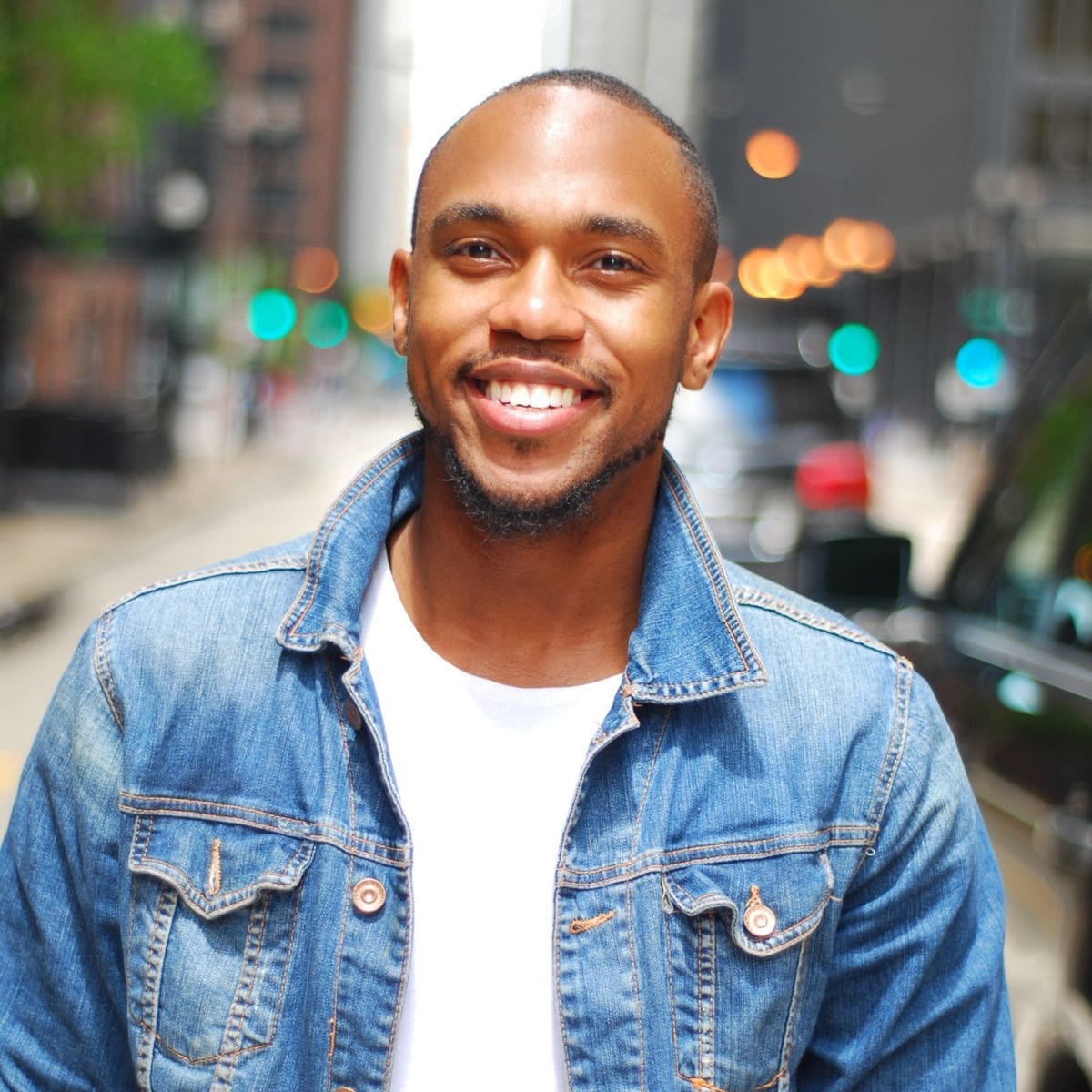
Author Bio: Aaron is a Chicago-based writer, activist, facilitator, and educator. His work has been featured in various news outlets, including Colorlines, the Feminist Wire, The Advocate, Education Post, and Chicago South Side Weekly. An alumni of the Voices of Our Nations Arts Fellowship (VONA), he is currently working on a speculative fiction novel for young adults and teaches middle school on Chicago’s South Side. Follow him on Twitter and Instagram: @Talley_Marked and read more of his work on his blog Newer Negroes.
World of Chocolate 2018 is right around the corner, folks! Check out our behind the scenes interviews with our launch party chocolatier, Four Seasons Hotel Chicago, who delighted us last month with their chocolate-filled treats at the World of Chocolate launch party held at the British Consulate General Chicago. Get ready to indulge at our premiere World AIDS Day event on Friday, Nov. 30! Click here to buy tickets today.