Are you interested in creating equity and justice for people living with and vulnerable to HIV and related chronic diseases? If the answer is yes, we have just the volunteer opportunity for you!
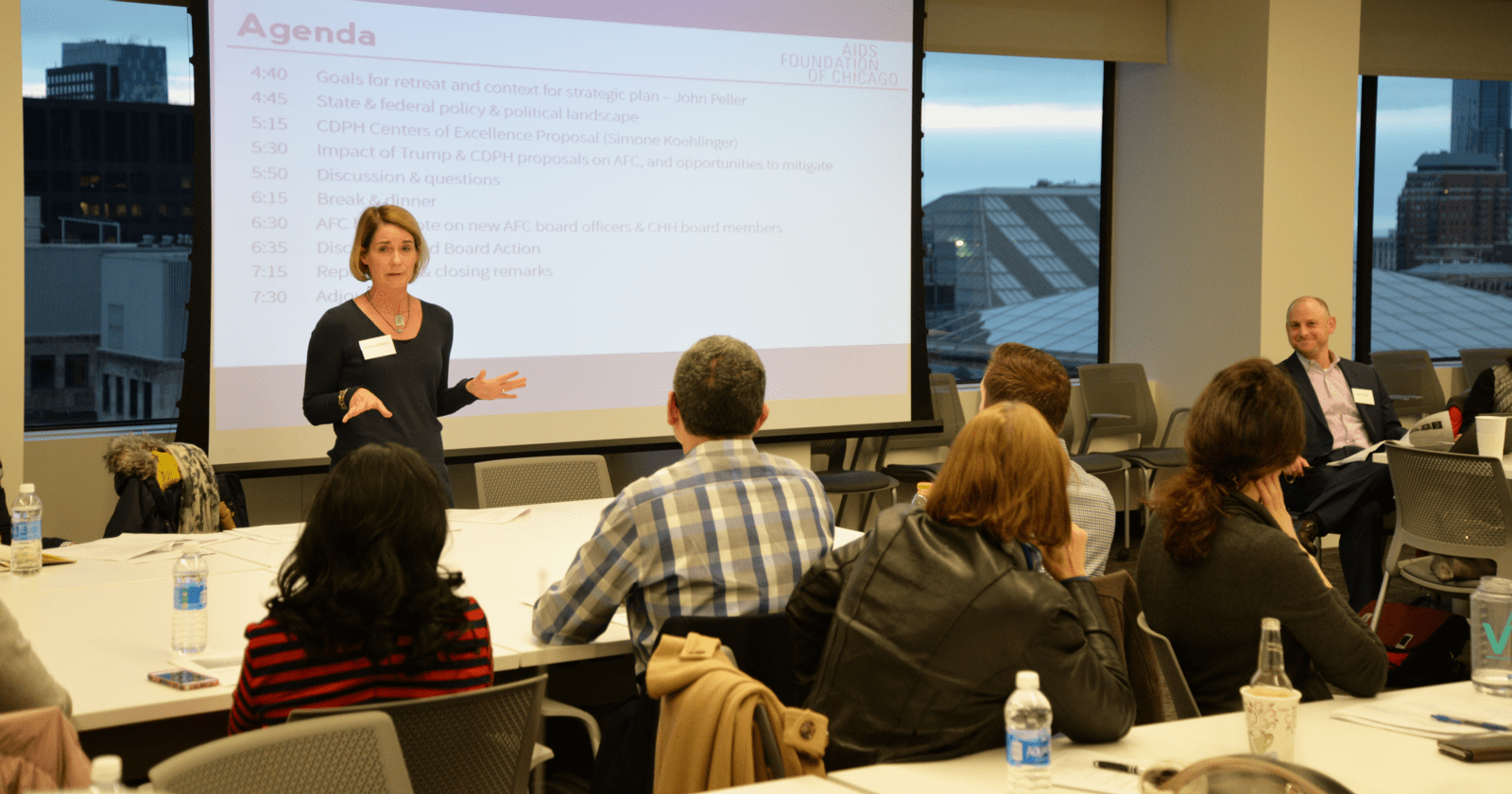 The AIDS Foundation of Chicago is seeking candidates for board membership. Please apply by Wednesday, Feb. 28.
We’re looking for individuals who are passionate about creating equity and justice for people living with and vulnerable to HIV and related chronic diseases to serve on the Board of Directors for the AIDS Foundation of Chicago (AFC).
AFC is particularly seeking Board members with expertise in fundraising, grant writing, social marketing and communications, finance and investments, and/or human resources. Previous Board experience is helpful, but not necessary.
What Does It Mean To Be A Board Member?
Board membership goes beyond traditional volunteering and into the highest level of visionary leadership for the organization, assuming legal and financial responsibilities while serving as a community ambassador for AFC’s mission. Serving as a Board member provides a unique opportunity to put your passion for a social cause into action by applying your experience and expertise to help advance an organization’s impact. It’s a rewarding way to fulfill your need to serve your community while learning new skills that can enhance your own career and grow your own personal and professional networks.
More About the AIDS Foundation of Chicago
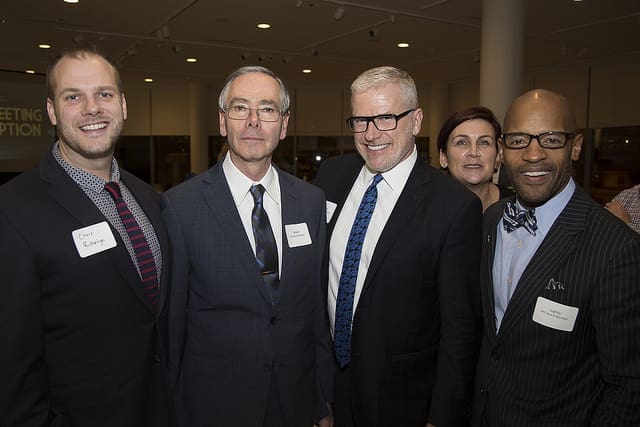
AFC mobilizes communities to create equity and justice for people living with and vulnerable to HIV and related chronic diseases. Our work is guided by the vision that people living with HIV and related chronic diseases will thrive, and new HIV infections will be rare.
For over 32 years, AFC has brought together service providers and funders to develop systems that meet the needs of those living with HIV/AIDS and to maximize the use of scarce resources. AFC manages more than $17 million in local, state, and federal funds for an array of AIDS-related services, providing expertise and promoting high-quality delivery across the region.
AFC is committed to diversity and ensuring an appropriate balance of skills and experience on its board and committees. Our Board is comprised of people of different experiences, backgrounds, and opinions. We believe creating an inclusive and diverse culture improves the effectiveness of our Board and better reflects the diverse populations that we serve. We especially encourage people of color (i.e. Black, Latinx, Native American), those who identify as LGBTQ+, and individuals living with HIV to apply for a position on the Board.
If you are interested, please email Sarah Menke at [email protected] with your resume and a brief letter of interest!
By Raven Feagins
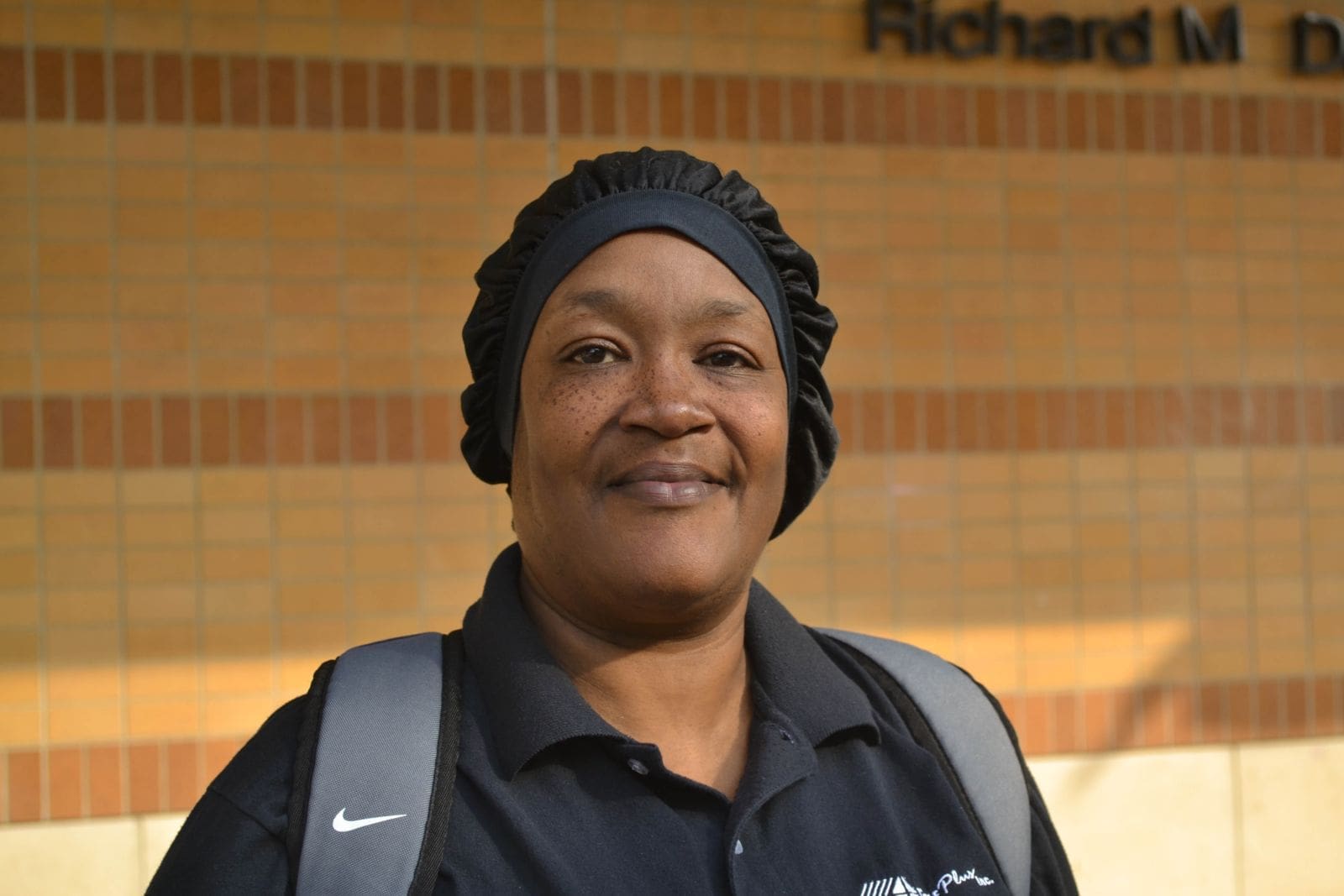 Until the age of 45, Latesha never had a place of her own. For years, she relied on friends and acquaintances to have a safe place to sleep at night, but, when she wasn’t lucky enough to find someone to stay with, she resorted to sleeping on the streets of Chicago.
“I was always here, here, here and here. Each time there were setbacks after setbacks,” says Latesha. “The longest I’ve been on the street nonstop was probably a year. Other than that, I was always staying at somebody’s house.”
Latesha’s struggle with housing instability only worsened when she noticed that her health was slowly deteriorating. She says she would visit the UI Health emergency room on the Near West Side at least 3 times a week for reasons ranging from her battle with depression and suicidal thoughts to trying to figure out why she was having seizures and panic attacks.
“I needed some help because I have all these health issues, but nowhere to stay,” says Latesha. “It got to a point where I went and they started knowing me … because I was going that much!”
Little did she know, UI Health staff were taking note of her frequency of visits; they identified Latesha as a patient experiencing chronic homelessness – living with a chronic medical condition while experiencing homelessness. They referred Latesha to the Center for Housing and Health as part of the Better Health through Housing (BHH) program, which brings together the housing and health sectors to combat homelessness and improve patients’ health in Chicago.
Latesha was matched with a case manager from Christian Community Health Center who was able to immediately place her in a temporary bridge housing unit. Here, Latesha lived in a single-occupancy room while she worked with her case manager to figure out how to best meet her medical needs as well as find a new, permanent place to call home. After 2 months of questioning whether or not she would actually move, the day she had been waiting for finally came. Latesha’s case manager called to notify her that he found a realtor who was willing to work with the program and located a rental in the Humboldt Park neighborhood; this would soon become Latesha’s new home.
“First of all, I thought I would never get there no matter what I did,” says Latesha. “He said that we had an interview, so I had to go way out south to meet him … I had to brace myself. Then, he showed me the pictures and that was it. I cried. I didn’t hold it in — I cried.”
“I needed some help because I have all these health issues, but nowhere to stay,”
Latesha successfully made it through her interview with the apartment building manager and moved into her new home in less than a week. She now lives happily in her apartment with her new kitten and continues to work with her case manager to help her meet a number of health and wellness goals that she’s already started to see improvements on.
“I have food now. There used to be a time where I wasn’t eating and I had lost so much weight – I was so little. I wasn’t eating right because I was always at someone’s house or on the street,” says Latesha. “Since my case manager has helped me … my health has gotten better!”
Additionally, Latesha is working to quit smoking and make sure that she keeps her doctor’s appointments, but her biggest challenge right now is gearing up for surgery to address a heart defect she was born with. However, now that she is in her new home, Latesha is dedicated to bettering herself in hopes that one day she can get well enough to look after her children again and lead a healthier life.
“There’s just so many opportunities where I’m at now,” says Latesha. “I just thought about, you know, there really are people out there that care about homeless people like me.”
 By Raven Feagins
As advocates, we work hard to ensure the rights of our communities are protected. Despite the whirlwind that was 2017 (a.k.a. the year that made me question my faith in humanity), together we did have some wins.
Below are six major victories we’ve achieved this year.
1. The ACA is still the law!
One of the biggest challenges this year has been keeping the ACA (the Affordable Care Act, a.k.a Obamacare) the law of the land. Advocates everywhere made constant calls to politicians, attended town halls and called out those who hid from their constituents. With the recent repeal of the individual mandate, we know this fight isn’t over. We’re working with organizations across the state through the Protect Our Care Illinois coalition to preserve Medicaid and the ACA in Illinois and to make sure affordable health care remains a right for everyone.
2. Illinois finally has a state budget!
After three operating years without a state budget, the General Assembly enacted a full Fiscal Year (FY) 18 budget that moves us toward health equity. This would not have been possible without the work of hundreds of advocates who continued to call their legislators and showed up in Springfield. The budget includes $25.4 million for HIV services and support. We’re grateful for the many state legislators – Democrats and Republicans – who supported the budget despite Gov. Rauner’s veto. Learn more about the FY 18 state budget HERE.
3. Surgery no longer required to change gender marker on IL birth certificates
Thanks to the leadership of coalition partners ACLU of Illinois and Equality Illinois starting in January 2018, people living in Illinois will be able to change the gender marker on their birth certificates without having to undergo any costly surgery. Before, state law required transgender and intersex individuals to demonstrate they underwent gender affirmation surgery before changing the gender assigned on their birth certificates, but now Illinoisans are able to feel more affirmed in their identities. Learn more HERE.
4. Additional test now provided to prevent babies in Illinois from being born with HIV
While physicians have provided HIV tests for people during the first trimester of pregnancy for years, now a new Illinois law is in place that provides HIV counseling and testing to pregnant people during their third trimester as well. The CDC recommends a repeat HIV test for people in their third trimester of pregnancy if they live in an area where HIV is more common (such as Illinois) to provide treatment as soon as possible to pregnant parents who are HIV-positive. This ensures that no child is born with HIV in Illinois.
5. Added protections for abortion access
Thanks to Gov. Rauner’s support of this pro-choice legislation, Illinois will protect access to women’s reproductive health including, abortion in the event that the Supreme Court would overturn Roe v. Wade through HB 40. Thanks to the work of lead coalition partners ACLU of Illinois passing this bill further ensures that women throughout the state continue to have control over their health care options, including the choices they make about their reproductive health.
6. Building our power!
Thank you to the almost 100 HIV advocates who joined us in Springfield, Illinois to prompt their state legislators to take action on issues that affect people living with HIV and  AIDS. Additional thanks to our 1,121 mobile advocates who called, emailed and tweeted federal legislators to protect the Affordable Care Act and vital safety net programs.
We look forward to achieving even more victories in 2018!
Want to stay in the know? Text “AFC” to 40649 and sign up for our advocacy alerts.
 By Raven Feagins
Veronica* is the loving matriarch of her Chicago-area family. When she’s not taking care of two of her grandchildren, her mom and her aunt, she works as a talented seamstress. She’s open with her family about most things – except her own health status.
Veronica is living with HIV and has for the past 20 years. Most of her family, except her husband, don’t know her status. She prefers to be the caretaker they’ve always relied on rather than being taken care of. Since being diagnosed, she’s maintained an undetectable status.
This last year, outside stressors caused Veronica to become extremely ill, particularly when her husband – the family breadwinner –underwent a surgery that left him out of work.
“It seemed like the bottom just fell out from up under my family,” Veronica says. “I started getting sick, but I found myself tending to them more than myself. I was still taking my medication, but still not doing everything that I possibly could for myself to maintain … 2017 was not my year.”
Veronica’s business designing and making clothes did not generate enough money to fully support her and her family and her husband’s last paychecks soon ran out. Already overwhelmed with overdue bills, Veronica’s family eventually received an eviction notice. Homelessness wasn’t new to Veronica and not a situation she wanted to be in again, so this eviction notice was her sign that she needed to ask for help.
“I went to one of the advocates at the clinic that I go to and I told him, ‘I don’t know what to do. I don’t know where to go. I just don’t know,’” says Veronica. “He told me about AFC and gave me a number.”
Two days after making her initial call, she was connected to Alex Delakis, a Resource Specialist at AFC. Alex works to prevent people living with HIV from experiencing eviction, homelessness, foreclosure, and utility shut-off by providing temporary financial assistance.
Veronica made the trip from the suburbs into downtown Chicago to meet with Alex, and together, they went through the process for getting her approved for emergency rental assistance. After two months of working closely together, Veronica finally received the financial assistance she needed to keep her and her family afloat right as her stress levels reached their peak.
“Working with Alex, working with the rental company, working with my doctors … it was worth it. I feel this way: if you utilize AFC’s services and do what’s necessary, you can  come out of a great part of what you’re going through,” says Veronica. “It does work. I’m a witness to that.” Veronica is still not completely out of debt, but she was able to receive $1,500 in rental assistance to cover the rough patch in her family’s life and, more importantly, she’s able to stay in her home.
Reflecting on her experience with working with Alex, Veronica says, “Because of these people, I am learning to accept help for myself. Someone once asked me, ‘You take care of so many people, who takes care of you?’ And I had to really think about that.”
Looking for temporary rental or utility assistance to help you through a rough patch? Head over to aidschicago.org/i-need/housing or reach out to our intake team at 312-922-2322 for your options.
*Not her real name
By Raven Feagins
 Imagine a world where the people from communities most affected by HIV are leading the HIV workforce to end the epidemic. That’s the world Anthony Betori, Youth Program Manager at Chicago House and Social Service Agency, is striving to create with their new Community Health Apprenticeship program (CHAP). This 8-week training helps committed young people get their start in the HIV workforce while developing employment skills and gaining certification in HIV testing and counseling.
“People who have lived experiences of living with HIV or being a young person in a community with a lot of HIV are going to know better strategies for how to manage the epidemic in their communities,” says Anthony.
This mindset drove Anthony to recruit folks for the program with this sort of experience. They successfully identified 10 apprentices from communities most heavily affected by HIV, including Black and Latinx gay and bisexual men and transgender women of color.
The Impact
Young people from these communities experience the heaviest impact of the HIV epidemic in Chicago and across the country, while, at the same time, young Black and Latinx folks also experienced higher rates of joblessness.
These were the reasons Kokumo Kinetic, a recent graduate of CHAP, joined the program. She was looking to become certified as an HIV tester but found it impossible to do if she wasn’t already working for an HIV-focused organization.
The Program
Before jumping into community outreach and testing, apprentices go through five weeks of intensive training on HIV, public health and employment readiness. Anthony collaborated with a variety of individuals and organizations to make sure lessons involve different learning styles and encourage high levels of engagement and participation. In the final 3 weeks, apprentices put their new skills to work and coordinated their own HIV-testing event. This gave Kokumo and her class the opportunity to leverage connections to 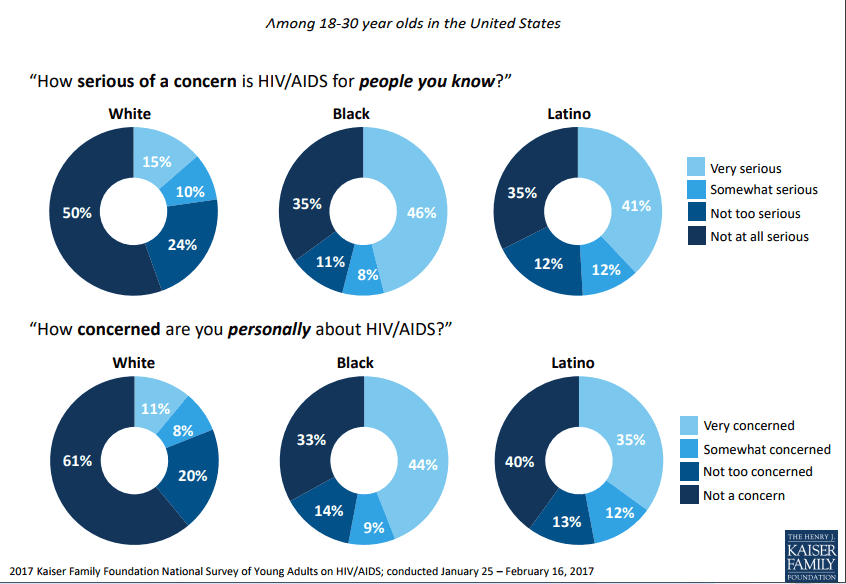 the ballroom scene to test 24 people at a community event.
“We’re not just looking at them as a group of testers that we’ll hire for a year and it doesn’t matter what happens to them. We want to answer the question, ‘What’s really their career plan?’” says Anthony.
Anthony is clear about this goal from the get-go, and it has already had a positive impact on Kokumo. Since graduating from the program in November, she has already been interviewing with HIV-focused organizations throughout Chicago in hopes that she can become a full-time HIV tester. She wants to take the knowledge she’s gained through CHAP and share it with other LGBT youth of color in her community to encourage them to get more involved.
“I don’t know the strategies that will end the epidemic, but I think that the people that I’m working with do,” says Anthony. “I really do believe that these are the people — it has to be someone. The epidemic is going to end.”

By Alaina Kennedy
The Trump Administration issued a detailed budget proposal for 2018 and the next decade. This budget does not contain any binding language but does lay out the president’s priorities for federal programs. It is regarded as a powerful directive from the executive branch to Congress regarding national policy and priorities, but the “power of the purse” ultimately lies with Congress.
The House approved the Budget Committee’s plan on Oct. 5. That same day, the Senate Budget Committee voted on its own version. These resolutions are not law; they are a roadmap for what Republicans would like, and they change the rules for passing certain legislation. While the details vary, all three plans are broadly similar.
Health Care in the Budget Resolution
The budget resolution supports continued efforts to repeal and replace the Affordable Care Act (ACA) and Medicaid Expansion.
Senate Plan: cut Medicaid, Medicare, ACA subsidies for health insurance, and related health programs by $1.8 trillion;
Trump and House plans: cut these programs by $1.9 trillion and $2.0 trillion, respectively.
The House and Trump plans also explicitly endorse the ACA repeal legislation that the House passed in May, which the Congressional Budget Office (CBO) estimates would cause more than 20 million people to lose health coverage and raise premiums, weaken coverage, or both, for millions of others. The House and Trump plans also propose additional Medicaid cuts on top of those in the House-passed repeal bill.
These budget resolutions are setting the stage for devastating cuts to programs and services our communities and networks rely on.
Lastly, the AIDS Budget & Appropriations Coalition (ABAC)’s letter to Congress about maintaining funding and rejecting cuts for domestic HIV and related programs. There was an impressive amount of organizations which signed onto the letter: 231 organizations to be exact! The letter was sent to all Hill staff this week.
“Scientific advances have shown that antiretroviral therapy (ART) preserves the health of people living with HIV. We also have strong evidence of the prevention effectiveness of ART. When ART results in viral suppression, defined as less than 200 copies/ml or undetectable levels, it prevents sexual HIV transmission. Across three different studies, including thousands of couples and many thousand acts of sex without a condom or pre-exposure prophylaxis (PrEP), no HIV transmissions to an HIV-negative partner were observed when the HIV-positive person was virally suppressed. This means that people who take ART daily as prescribed and achieve and maintain an undetectable viral load have effectively no risk of sexually transmitting the virus to an HIV-negative partner.”
Let’s break this down.
We have long known that antiretroviral therapy (ART) for people living with HIV, like me, helps us stay healthy and live long and strong. That’s not news.
And the part about undetectable viral loads isn’t exactly a newsflash either. The evidence has been mounting for some time that people living with HIV on successful antiretroviral treatment – meaning their viral load is undetectable for at least six months (virally suppressed) – are not capable of transmitting HIV sexually to their HIV-negative partners.
When the CDC released this statement, it wasn’t only due to the overwhelming scientific evidence, it was because of massive community engagement and mobilization the world over – loud, noisy, science-based ACTIVISM. This activism forced them to update their outdated messaging with scientifically accurate language concerning HIV transmission. Check out the Prevention Access Campaign at preventionaccess.org to see where all this beautiful noise came from.
In case you missed it: Undetectable = Untransmittable. U=U! Toot toot, hey, beep beep!
This is HUGE for all of us living with HIV and it is HUGE for all of us who serve communities of people living with HIV, including those who are vulnerable to acquiring HIV. It is cause for celebration. Many (if not all of us) living with HIV have been considered “armed and dangerous” by far too many in the general public for decades. We have been treated like viral demons, vectors of disease, and untrustworthy. We have been criminalized (in fact, some states still have laws on the books that criminalize HIV positive people.) Celebrating this amazing milestone is necessary.
Now, let’s focus on how U=U should impact our delivery of HIV care services to people living with HIV. Here are some “musts” on my list.
1. All people living with HIV must have access to this information. There is no acceptable reason to withhold it.
2. All people working the HIV field, serving both HIV-positive and HIV-negative individuals, must know this information and share it (see #1.)
3. This information must be shared widely through public health education and social marketing campaigns everywhere people are living with HIV.
4. We must clearly and unequivocally state that viral suppression (undetectable = untransmittable) is safer sex. Period. Condoms do not need to be part of the equation here, and condoms are not the only means of having safer sex. Viral suppression in and of itself is safer sex. Period.
5. While we celebrate loudly, we must take care to not create new ways to stigmatize people living with HIV. The truth is, not everyone living with HIV on ART will achieve an undetectable viral load for a whole host of biological or societal reasons. We must not shame or judge them. It is not a moral failing to have a detectable viral load. It does not make you a bad person. HIV is a tough customer, and the meds used to treat it don’t work for everyone all the time. And many people with HIV are struggling with behavioral health issues, homeless, poverty or other issues that get in the way of HIV treatment, and can’t be solved overnight.
6. We must not coerce anyone living with HIV into treatment. While we know there are many benefits to ART – individual and community benefits – going on treatment MUST be a decision made freely by the individual.
There’s been considerable debate in the community about how quickly people with HIV should start HIV treatment. Some cities and clinics have developed admirable programs to provide HIV medications the same day they are diagnosed with HIV. That’s a great option for some people.
But not everyone is ready to start ART the day they find out they’re positive. Some folks want to start right away, others want to wait. Waiting is valid – a person may have other issues they want to address first, they may want to deal with the shock and awe of learning their status first, they may want to cry for a while. They may want to curl up in the fetal position for a minute, they may want to grieve.
Testing positive is still a big deal. And let’s be honest, someone just learning they have HIV may not be quite ready to contemplate a lifetime of pill taking. ART is a “forever marriage” – once you start you will be on meds the rest of your life. This fact may change at some point in the future – but that is a fact today and it will be the same tomorrow. And likely for years to come. We must not set up “shotgun marriages” between a positive person and ART. It MUST be a marriage entered willingly, eyes wide open. Forcing/coercing someone to do something they are not ready to do will have negative consequences.
At the same time, it’s critical to get people connected to medical care and supportive services as rapid as possible, even if they aren’t ready to start treatment. Medical and supportive services are, after all, not defined by or limited to ART. The National HIV/AIDS Strategy aims to link 85% of people newly diagnosed with HIV to medical care within one month of their diagnosis. Chicago fell just short of this goal in 2016, with 80% linked to medical care 30 days after diagnosis.
We must always remember to meet people where they are, not where we want them to be, or where we think they should be, but where they are. Respecting people’s priorities and helping them reach the goals THEY set is what is important – and the odds are, if we do this, we will also be successful on the HIV treatment side.
by Raven Feagins

Illinois is #GettingtoZero to put an end to the HIV epidemic in our state. Below, our community members and staff shared their thoughts on this new initiative and what getting to zero new cases of HIV in Illinois means for them.
Want to join us in #GettingtoZero? RSVP for our first town hall on Wednesday, Dec. 13 to share your hopes about ending the HIV epidemic in Illinois and let us know what getting more people on PrEP and in HIV treatment means to you.
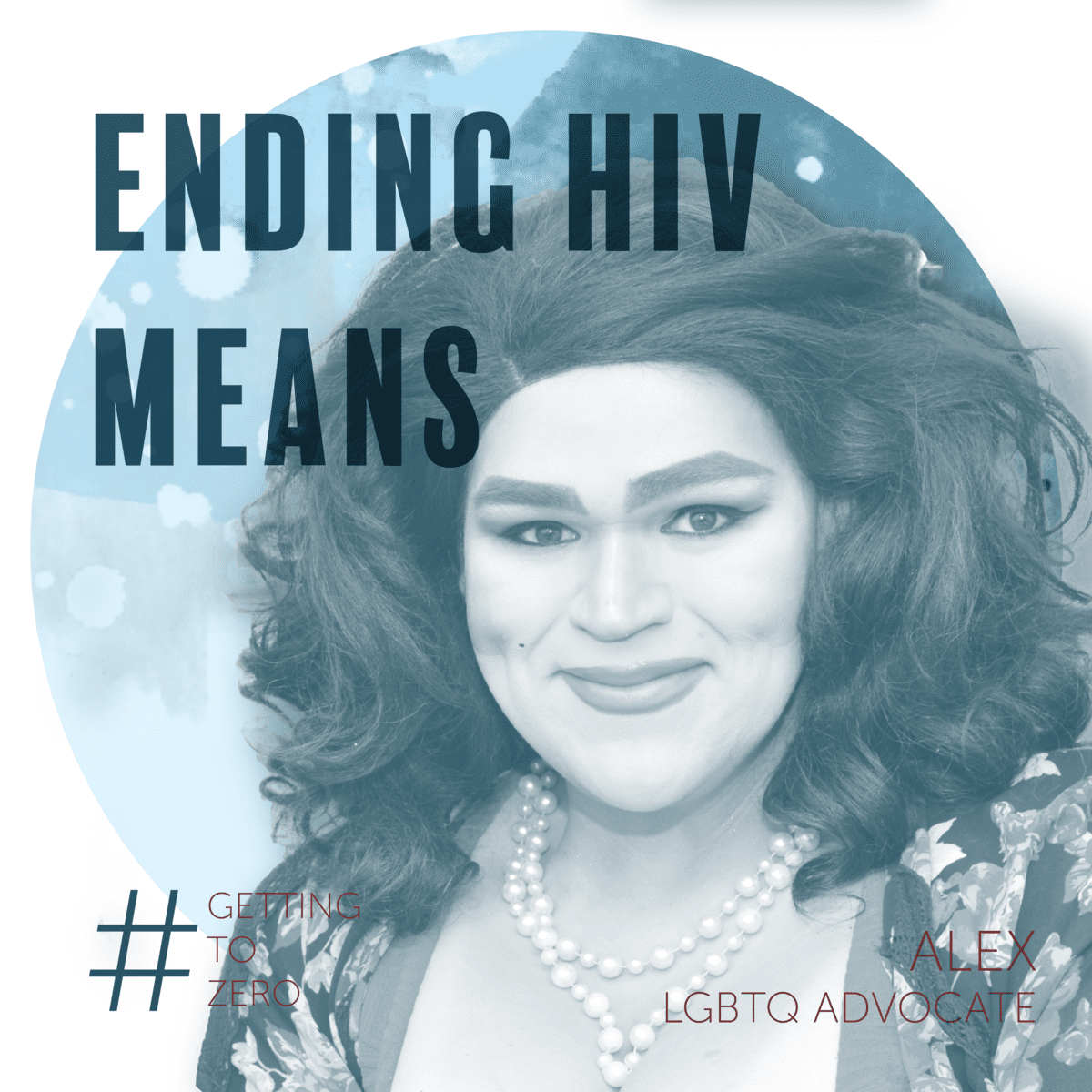
“Getting to Zero brings me joy because I see that there is the possibility to end this epidemic in our communities. Allowing ourselves to envision the end of the HIV epidemic is empowering. It is possible, and we can get there together. ”- Sara Semelka, Getting to Zero Project Manager
“Getting to Zero means my queer family could live their longest and healthiest lives in order to have the biggest impact on our society and our world” – Alex Corona, LGBTQ advocate
“Getting to Zero means that my decades-long dream of a world without HIV/AIDS is one step closer to reality. This would truly be a milestone beyond compare in the fight against HIV!” – Tom Menard, Vice President of Operations
“We have the tools to end the epidemic by reducing new infections and getting those diagnosed to undetectable. Getting to Zero is the state rolling up of our sleeves to say we know we can end the AIDS epidemic and we are going to work together to make that a reality.” – Roman Buenrostro, Director of Special Projects and Planning
 “To me, Getting to Zero means that people living with HIV achieve viral suppression. With access to case management services and adherence to medication and medical treatment this goal is achievable.” – Angela Jordan, Intake and Referral Manager
“Getting to Zero means no one will die from lack of access to HIV medication or affordable primary health care.” – Peter McLoyd, HIV advocate
“Getting to Zero would rely on strong relationships between people in Illinois and their doctors. I’m looking ahead to a time when all Illinoisans can trust their medical professionals and feel comfortable going to them with health needs. That can’t happen without securing the Affordable Care Act’s many game-changing provisions and ending the shame and stigma around sexual health, which can act as a barrier between doctor and patient.” – Brian Solem, Senior Director of Communications
“Getting to Zero means deepening relationships with community leaders and people living with and vulnerable to HIV across the state. I’m so grateful to the many people who are stepping up to lend their expertise as we collectively build a realistic, achievable, statewide plan. ” – John Peller, President & CEO

“Getting to Zero means that we are continuing to provide services and resources to individuals that are HIV positive, so they can live longer healthier lives. Getting to Zero means we are continuing to break down the myths associated with HIV/AIDS and educating individuals who are disproportionately impacted by the HIV/AIDS epidemic to find prevention methods that work best for them.” – L’Oreal Bailey, Special Projects Manager – Prevention
“Fostering a Chicago community that cares relentlessly for our own, like never before. Getting to Zero is a race to a healthier, more beautiful and thriving future, and I can’t wait to cross that finish line.” – Tony Guerrero, Associate Board Co-Chair
“For me, Getting to Zero means huge improvements in access to and delivery of voluntary, rights-based, culturally literate, intersectional, holistic, empathetic, loving, robust and sustainable prevention and care services for all of our communities heavily impacted by HIV.” – Jim Pickett, Senior Director of Prevention Advocacy and Gay Men’s Health
Kickstart #GettingtoZero with us by donating $10 at aidschicago.org/donate, and keep an eye out for upcoming town halls at aidschicago.org/GTZ.
 People who are HIV-negative and vulnerable to HIV infection can take a daily medication called Truvada to help prevent HIV. It’s recommended by the U.S. Centers for Disease Control and Prevention and the Chicago and Illinois Departments of Public Health.
If you need health insurance, you can shop for and choose a plan on the health insurance marketplace (must be before Friday, Dec. 15). If you take PrEP, or are considering taking PrEP, we want to share some great resources to help you find the best health insurance plan for you and get help paying for PrEP.
Pick a PrEP-Friendly Plan
Start here: Go to PrEPcost.org to find plans offered in your area, see if you can get help paying for the plan (known as a “subsidy”), and learn how much Truvada might cost. Developed by our partner the National Alliance of State and Territorial AIDS Directors, PrEPcost.org is a new tool to make it easy to find the right plan for you. It will also tell you if a plan has any kind of restriction that might make it harder to get PrEP, such as a requirement for a “prior authorization (your provider has to get approval from your insurance company before they can prescribe PrEP).” Prior authorizations require more time and paperwork, so it’s good to try and avoid them if possible.
Step 2: Choosing a plan can definitely be complicated. If you need help, please make an appointment with a trained assister. Tip: Schedule your appointment ASAP — don’t wait until the last minute! This open enrollment season is really busy! Remember it ends Dec. 15th.
Step 3: Enroll! Once you’ve found the plan that’s right for you, visit Healthcare.gov or the Illinois Health Insurance Marketplace (or call 866-311-1119) to enroll in a plan. The deadline is Friday, Dec. 15. You can link directly to these sites via PrEPcost.org as well.
Get help paying for PrEP
Check out (and sign up for) these two programs that can help you pay for Truvada.
1)PrEP4Illinois: Start by enrolling in the PrEP4Illinois program (visit www.PrEP4Illinois.com or call 800-825-3518). It’s run by the Illinois Department of Public Health (IDPH). It works with the Gilead co-pay assistance program (see below), and you may be able to get Truvada with no out-of-pocket costs (for free!). PrEP4Illinois will help you access PrEP if you are insured or uninsured through a simple application process that connects you to a variety of resources. The program will help cover people who are under 18, or who are insured but might not want to use their insurance (if they’re worried about using parental insurance or are in situations where there may be intimate partner violence, for example). You must be an Illinois resident to use this program.
2)Gilead Co-Pay Assistance Program: Gilead (the manufacturer of Truvada) has a copay assistance card that will help reduce your out-of-pocket costs for Truvada. If you have insurance, you can apply for a card at https://www.gileadadvancingaccess.com/. There are no income limits. The card will pay up to $3,600 per year toward the cost of your prescription and can help you meet any deductible required by your plan. Note that not all insurance plans will allow you to use a copay card, or may have special conditions. For example, BlueCross BlueShield plans allow co-pay cards, but they do not count towards meeting your deductible. Check with the insurance plan before enrolling. Tip: PrEP4Illinois will help you enroll in the Gilead Co-Pay Assistance Program, so start there first.
More information on Gilead’s patient assistance programs:
- Gilead operates an integrated website that can help you navigate your insurance and obtain financial support.
- Uninsured? Gilead also has a Medication Assistance Program that will cover the costs of Truvada as PrEP if you are eligible. Check the website for eligibility and other program information.
- If you need more help paying for PrEP, the Patient Access Network Foundation and the Patient Advocate Foundation may provide support to people with insurance. The Gilead copay card may be used with these programs. Assistance from these two foundations may start and stop during the year, so make sure to check each foundation’s website to see if they are active.
Find a PrEP Provider
Finally, to learn more about PrEP and where to get it, call the Chicago PrEP Line at 872-215-1905 or visit www.PrEP4Love.com. The operators at the Chicago PrEP Line are also able to help you with insurance questions in addition to answering your PrEP questions and giving referrals to friendly PrEP providers.
More Tips
- Denied? Speak up! Insurance companies almost always cover Truvada as PrEP. However, if for some reason you are denied, you can always appeal the decision. Our experience shows that folks who appeal are often successful. “The squeaky wheel gets the grease,” after all, so when it comes to your health care and your well-being, it’s good to squeak as loudly and persistently as necessary.
- Verify. Insurance companies can change their formulary (list of drugs they cover) and coverage at any time. Always verify medication coverage and costs directly with a plan before enrolling.
- Prior authorization. Plans that require prior authorization for Truvada will make your health care provider fill out forms for you to receive PrEP. This could cause delays, but many providers and pharmacies will help you with this – they have a lot of experience with these sorts of things. If you must choose a plan that requires prior authorization, do so with your eyes fully open. Note that plans can add or remove prior authorization requirements at any time.
- Consider the total cost of PrEP (including medical visits and labs). When choosing a plan, consider how much it will cost to visit your health care provider four times a year as recommended by medical guidelines for people who take PrEP. PrEP requires ongoing HIV and STI testing – these services can potentially be utilized at public health departments and community organizations, so you don’t necessarily need to do them in your doctor’s office (which can be expensive and not always fully covered by insurance plans.) Also consider the costs of lab visits that are required for PrEP. PrEPcost.org will show you these costs. Make sure your provider of choice is in the health plan’s network to save the most money.
- Choose your plan wisely. People who earn less than $30,150 (250% of Federal Poverty Level, for a single person) will have lower deductibles and out-of-pocket costs if (and only if) they choose a silver plan purchased from www.healthcare.gov. If you can afford it, choose a silver or gold plan — you will get much better coverage for a slightly higher premium. Catastrophic plans with very high deductibles and bronze plans will likely be more expensive for people who take PrEP and are usually not good value. However, everyone is different. Talk to a health insurance navigator if you have questions.
 This post is an excerpt from John-Manual Andriote’s recently published book Stonewall Strong: Gay Men’s Heroic Fight for Resilience, Good Health, and a Strong Community.
The walls of Jim Pickett’s office at the AIDS Foundation of Chicago display the set of posters created for a new campaign aimed at promoting PrEP use by the gay men and women, including transgender individuals, who could benefit from it. In an interview on my October birthday in 2016 at his office on West Jackson Street, Pickett, the foundation’s director of prevention advocacy and gay men’s health, said the time has come to “focus on the good things that make us happy.”
As for gay men he explained, “We characterize gay men’s problems all the time. Can we focus on resilience? Strength? It’s not ignoring the problems. It’s your frame. If you’re a young African American gay man, honey, you are resilient!” The foundation’s “PrEP for Love” campaign—created pro-bono by a coalition of gay and nongay organizations and ad agencies, and aimed at vulnerable African American communities—is about engaging the community in conversations about PrEP with popular individuals they know. The posters, with campaign taglines like “Transmit love,” “Contract heat,” and “Catch desire,” feature men and women of various sizes and skin tones represented in sex- and body-positive images.
Pickett points out one of the key differences between the new PrEP campaign and past campaigns. “So many things have been negative, focused on fear,” he said. “Let’s focus on our strength and joy, not on ‘risk.’ This is a great example of resilience and taking a positive frame, not a loss frame.” He said we need to focus on what keeps gay men negative. “What assets are in place that people are able to rely and thrive on?” he asked. “We want people to learn about PrEP, but we have to remember HIV prevention is not the only thing on people’s list of challenges. It may not be at the top of their lists, either. If you don’t address people that way, as myriad and complex, but only as potential vectors, you are not respecting them.” It’s far more effective, said Pickett, to start by talking about pleasure and intimacy, “things that make us juicy and warm and tingly.” Showing an interest in someone’s feelings, finding out what makes him tick, is a much better way to get to a conversation about his personal business. “When we tell people to have a good day, we don’t necessarily say ‘Be careful of the traffic,’” said Pickett. “It’s about respecting people as beautiful and complex.”
John A. Schneider, MD, MPH, an associate professor of epidemiology and medicine at the University of Chicago, researches networks and how to use them to create positive, health-promoting change. “After thirty years,” he told me in an interview for an Atlantic article about the LGBT health movement, “we are moving away from individualized behavioral interventions toward things that can integrate those components. We are looking at networks and structural things that can drive HIV.” His clinical work with largely young African American gay and bisexual men on the South Side of Chicago has yielded intriguing findings about how best to support those at greatest risk. Schneider has found, for example, that the more men there are involved in a young man’s life—straight or gay, and especially male kin, fathers and also brothers or male cousins—the more inclined he is to protect himself if he is HIV-negative and adhere to treatment if he’s positive. “Some of my very young guys have come in with their fathers,” said Schneider. “There is  something powerful about that.”
In the ball community, where a good deal of Schneider’s recent work has focused, “a lot of these guys have a gay father or gay mother,” he said, suggesting that a more nuanced approach is needed in talking about “families of choice” and “chosen families.” What is any functional family but a “network of mutual commitment,” as Schneider puts it, and it can include relatives as well as trusted friends. With that in mind, Schneider said, “We found that having a greater proportion of family members in one’s personal network is negatively associated with drug-use and group sex, and positively associated with having a regular primary care physician and with discouraging group sex and drug use among one’s network of men who have sex with men.”
In the same Deco Arts Building on East Fifty-Fifth Street as Tooth Fairy World and Chaturanga Holistic Fitness, at the clinic where Schneider’s re- search and clinical work come together, he told me in an interview it’s hard to predict when someone tests HIV-positive how he will respond, whether with resilience or what Schneider called “nonresilience.” Whether the man responds with shame or self-esteem depends largely on his sensitivity to stigma, “the threshold of resilience,” Schneider said. He sees in the young black men he works with from the ball community the resilience they developed, too often, from having to fend for themselves and simply growing up black in a society preoccupied with skin color. “I think there are survival skills the young black guys develop even before they realize they are gay,” he said. “So having a gay identity may be just another issue that comes up for them.” The ball community itself is a source of resilience. “Vogueing and dance are very liberating and healing activities,” said the doctor.