

by Dan Frey, Director of Government Relations
Good afternoon everyone, just wanted to take a quick moment to update you on a busy week in Springfield.
Substantive Bills
This week saw a number of bills AFC is working on moved out of committee and to the House floor:
HB 2800 (Flowers) passed unanimously, 12-0-0, out of the House Human Services Committee on Wednesday, March 15. This legislation will add a third trimester HIV test for pregnant women in addition to the current first trimester test. The CDC recommends a repeat test for women in the third trimester of pregnancy if women are determined to be at high risk for HIV, or live in an area of high prevalence for HIV. Illinois is on the CDC’s list of high-prevalence areas, because our statewide prevalence of HIV is 1% or greater. AFC will fight to make sure pregnant women receive the most comprehensive HIV testing to ensure that no child is born in Illinois who is HIV-positive.
HB 1785 (Harris) which amends the Vital Records Act, passed out of House Human Services on a partisan roll call, 7-4-0. This bill is a modernization of Illinois’ law that allows transgender individuals to change their gender designation on their birth certificate to reflect their lived gender identity without necessarily undergoing surgery. Many transgender individuals must undergo costly surgery before being allowed to change their birth designation.
HB 311 (Harris) which creates the Network Adequacy and Transparency Act passed unanimously, 16-0-0, out of the House Insurance: Health & Life committee. This bill provides that administrators and insurers, prior to going to market, must file with the Department of Insurance for review and approval a description of the services to be offered through a network plan, with certain criteria included in the description. This legislation would help to ensure that health insurance providers maintain an adequate network of providers and have that information easily accessible to their members which will make it easier for people living with HIV to understand where they can seek care.
Budget News
There was little movement in regard to budgets this week in Springfield. The House and Senate each continued hearing directly from departments on the governor’s proposed budgets in subject matter hearings. Those hearings are expected to continue for the next several weeks. The Senate “Grand Bargain” attempt appears all but removed as a factor after the governor told Senate GOP members to not vote for a package that Senate members of both parties were ready to vote out of their chamber. Since that development, both Rauner and Senate Democrats have insisted the other side make the next move.
Other News
An Illinois court heard arguments this week on whether the Illinois Comptroller can delay paying paychecks to legislators, who’s pay has been covered by a continuing appropriation since Gov. Pat Quinn attempted to remove legislator pay to force the legislature to pass a pension reform plan, a move which was blocked by Illinois courts. Their paychecks have been operating on a delay, however, since former Comptroller Leslie Munger put them in line with other programs. Comptroller Susana Mendoza has continued with that practice since assuming office. A ruling is expected next week.
In Washington, the House of Representatives plans to vote next Thursday, March 23, on their repeal and replace of the Affordable Care Act. Please visit Protect Our Care IL to learn about events near you to make in known that you do not support this repeal that would force an additional 24 million people off of their healthcare.
Please register for AFC’s Advocacy Days! We have our first coming up April 4, and would love to have you in Springfield with us making your voice heard!
Up Next
The House reconvenes in Springfield on Tuesday, March 21. The Senate, after a week break, are back in Springfield on Tuesday, March 28.
About the blog
BudgetWatch is a weekly update from the AIDS Foundation of Chicago’s on-the-ground team in Springfield about the state’s longstanding budget impasse. Follow along at aidschicago.org/budgetwatch.
By Cotrell Loftin
Jessica Glaspie and I met in a small Starbucks in Mundelein, IL, on a Sunday morning shortly after I returned to Chicago on a 6-hour overnight bus trip. The precious caffeine helped fuel both my energy and an incredible conversation. In recognition of National Women’s and Girls’ HIV & AIDS Awareness Day, Glaspie, a powerful advocate featured in a prior Inside Story post, agreed to share her advice for women disclosing their HIV status.
When Jessica Glaspie was diagnosed with HIV at 22 years of age, she didn’t know what it meant. She wasn’t yet educated on HIV. When she found the confidence to define living with HIV and disclose her status, her whole life took on new meaning.
There are many women living with HIV who have not yet decided to disclose their status. There are many reasons for this hesitancy but there are many ways to overcome them.
The first step: love yourself and your status
Glaspie says the first step toward disclosing your status is to become confident about it, to own it and to embrace it. As long as you are comfortable with it, Glaspie notes, others’ reactions to your status won’t matter as much. They’ll still matter, but they won’t make or break you.
Glaspie explains you must also decide whether it’s even worth it or necessary to disclose in certain situations. In the age of Tinder and online dating, reaching a second date in general has its own obstacles. Disclosing is a lot of trouble to go through for the date who stared at their phone the whole time and never responded to your texts afterward.
“I think you need to get to know somebody first because otherwise you’re wracking your brain over something that’s not even worth wracking your brain for,” says Glaspie. “Say you tell them, right? [It turns out] he wasn’t worth telling, but now he’s going and telling a million people. And then you’re going to feel some type of way about telling him in the first place.”
In short, unless you’re planning on entering a sexual relationship, there’s not as much pressure to disclose to anyone. Think of all the people you want to be allies and focus on getting comfortable with telling them.
Disclosing your status to a close friend or potential partner is not easy. We want people to like us, and we want the people who do like us to stay around. There are many people with bad intentions but with confidence about our status, we attract the good in people. The people who will wholly accept you regardless of HIV status and educate themselves about HIV and find the process worthwhile are out there.
You choose how to disclose
If you decide to disclose to family, partners, friends – what does disclosing look like? There is no one size fits all way to make disclosing easier and every way may not work for everybody. But there are many ways to share your status.
Though Glaspie disclosed to her family first her most powerful disclosure came through her poetry. After years of writer’s block the words flowed effortlessly in her car in the twilight of the life-changing morning she first disclosed publicly.
“On December 21 of 2015, I pulled up to work, and I sat in the car and I wrote a poem – what is it called, free hand? It was totally from my brain at like 7 in the morning, in my car, on a Facebook status. And I was going, and going, and going and then before I knew it – it was my whole story written in a span of two minutes, maybe,” she recounts.
Disclosure can be a powerful act but what if you’re just not ready or feel you have anyone in particular to disclose to? How can you disclose to yourself to begin picking up the pieces and taking control of your life?
Below are ways Glaspie disclosed her status and how others can gain the confidence to disclose. They may not all work for everyone but whether people are disclosing to others or working up the courage to “disclose to themselves,” there’s something for everyone:
- Discussing with family or friends
- Disclosing via social media
- Recorded or written interviews with the media
- Journaling/Writing
- Music
- Support Groups
- Writing it on a sheet of paper and burning it
- Saying it aloud to oneself
Disclosing for life
Disclosure can be empowering but doesn’t come without its share of cons. “Being a woman and being African-American, you already have your own stigma,” Glaspie acknowledged sternly. “Now to add to that, I have HIV and I didn’t have a degree and I was working full time.” Already disadvantaged, women can be intimidated by adding another “strike” to their record. But they’re not impossible to surpass.
Glaspie helped me see was that disclosure isn’t a one-time act. For many, especially those who become HIV advocates after learning their status, disclosure happens throughout their lives. And deciding again and again to challenge stigma by disclosing only inspires others facing the same struggles.
When I walked into the coffee shop that refreshingly warm February morning, I was greeted by the sight of Glaspie’s family – her two children and fiancé. Love and life are still possible and immensely valuable after you disclose your status. As Jessica said in our conversation, along with the people who will wholeheartedly support you, other people are going to have something negative to say regardless of how you feel. Choose life to embrace those who love you, and love yourself.
By LeSherri James

LeSherri is an HIV advocate living in Chicago and a Mobile Engagement Team Member for the AIDS Foundation of Chicago.
In 2003, I was pregnant, homeless, and HIV-positive. But worst of all, I felt completely helpless and had nowhere to turn for help. I received my diagnosis after my senior year of high school. In college, I thought I might be pregnant. I went to the doctor to make sure.
The doctor confirmed the pregnancy. This should be a happy experience in a woman’s life, but for many women living with HIV it is confusing, scary and stressful. Pregnancy for HIV-positive women is often filled with unsympathetic strangers, family members and even medical professionals. Lucky for me, my mother was with me every step of the way.
Unfortunately, my doctor was a generalist and didn’t know how to provide care to someone living with HIV, let alone help them deliver a healthy baby. I needed the care of an HIV specialist. I waited at the hospital for six hours before my doctor referred me to someone who could help. That was when the hospital’s HIV social worker directed me to the Pediatric AIDS Chicago Prevention Initiative (PACPI), which connected me to the care I needed.
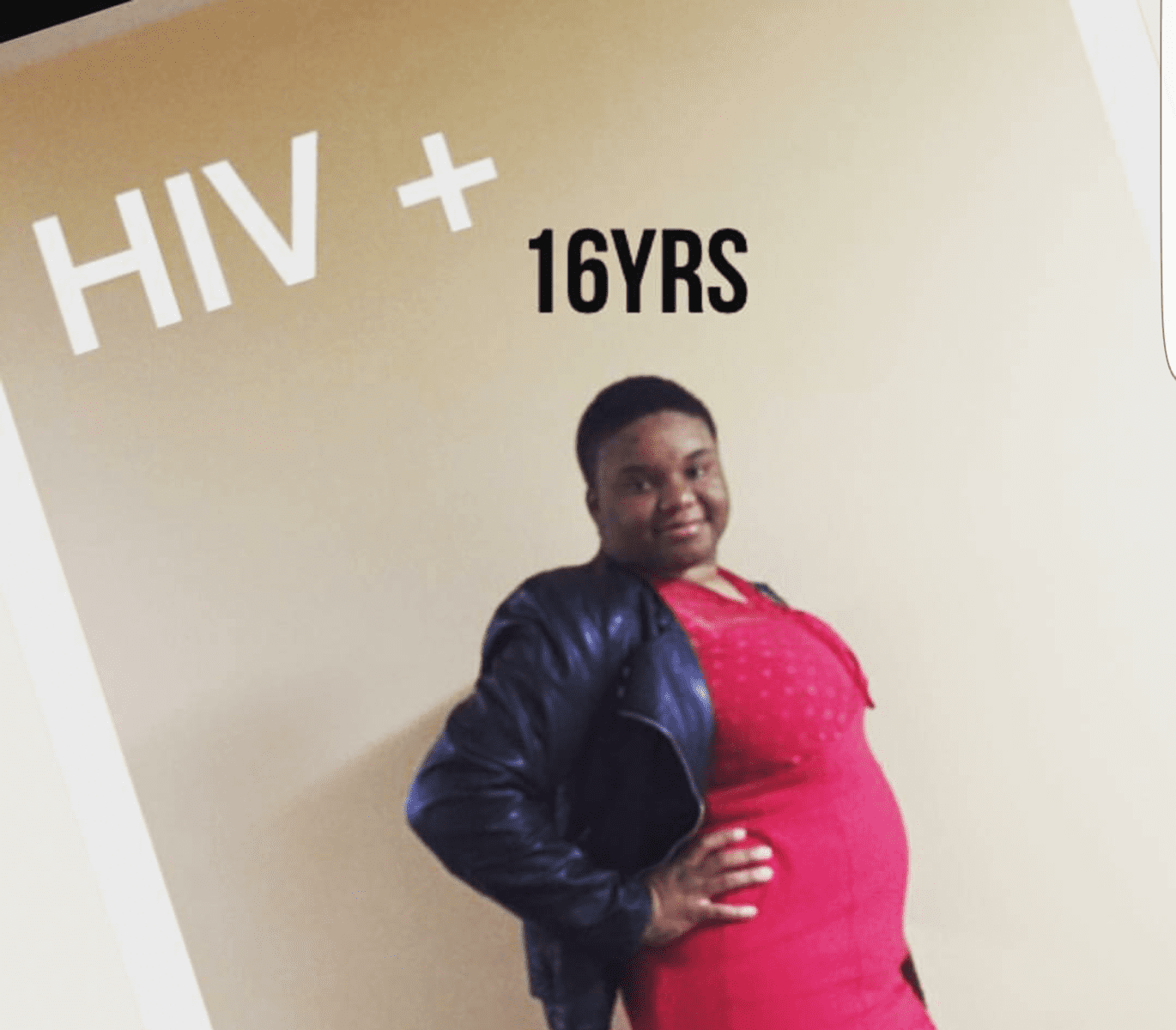 I was immediately assigned a case manager, Jaime, who genuinely cared about my health and wellbeing. She made sure I got to my doctor’s appointments on time, filled my prescriptions and enrolled in prenatal training courses so I could learn how to care for my child. She also helped me sign up for health insurance and food assistance and find my very own apartment. This support is the reason my daughter was born without HIV. It is also the reason I am an empowered, strong, and independent mother. Today, I am able to provide for myself and my children and, most importantly, my daughter and son are HIV-negative and completely healthy.
We’re the lucky ones.
Not all women receive this kind of support though. Many women don’t know about the services that can help them. And like me, they face big challenges like stigma from an uninformed doctor or nurse when they test positive. Not knowing or not believing that there are resources to support HIV-positive pregnant women can leave women feeling scared and unsure about if and how having and baby born HIV-free is possible. My story of being connected to quality case management and health care shouldn’t be unique. It should be the story of every woman living with HIV. All women living with HIV have the right to such support and care.
 Over the past sixteen years, I have learned how to be strong and in the right battles. I’m strong enough now to speak to the world. I know I can make things change. That’s why I speak out now to lawmakers, to media and to Black women living with HIV in my home state of Illinois. I know my speaking out can help young Black women, and all women, overcome HIV and stop the stigma. I tell my daughter, stigma is just like fear and not knowing what the outcome is going to be.
You don’t have to be afraid. You can overcome that fear within yourself. If you don’t know your HIV status, get tested. Testing positive for HIV ain’t the end of the world. You can get the care and support you need to get healthy, stay healthy and have a healthy family. You’re not alone. There are thousands of Black women living with HIV in this country, and we are strong.
Reach out, find a group, get support, get into care – you don’t have to do this all by yourself.
LeSherri’s story originally appeared on Black Women’s Health Imperative‘s blog. The Black Women’s Health Imperative is the only national organization dedicated to improving the health and wellness of our nation’s 21 million Black women and girls – physically, emotionally and financially.
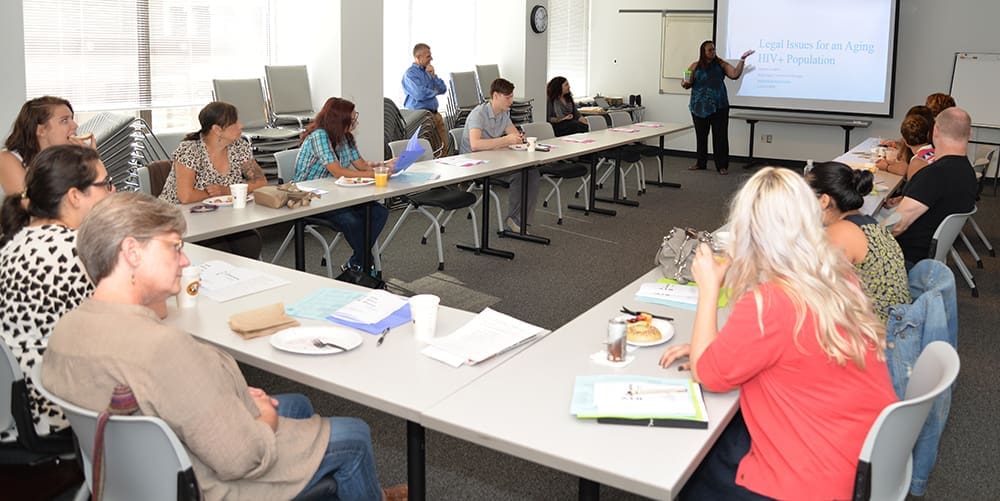
Despite the uncertainty of the ACA’s future and fear about the new administration’s discriminatory policies, AFC’s case managers stay committed to providing the quality care clients need.
By Cotrell Loftin
Mara Williamson is standing outside the conference room, warmly greeting people as they enter. “Good morning and welcome to the training. Don’t forget to get a cup of coffee and sign in!” On a typical training day, Williamson sees 20 case managers, coming from all over the city and suburbs, to attend these learning sessions.
As the case managers file in and get settled, Williamson is aware that the training session better be good. These important guests are busy and have come to expect trainings that will help them as they serve some of the city’s most vulnerable residents. Case managers are often the first line support for people living with HIV, people experiencing homelessness or people living with multiple health challenges. They help clients keep their medical appointments, get food, and tend to a myriad of pressing needs.
Case managers are a vital resource to people living with HIV, and there is a whole system behind them, helping them succeed. Professionals like Williamson make this much needed support happen. From the case manager to training specialists, the AIDS Foundation of Chicago (AFC)’s coordinated HIV case management system ensures that more than 5,000 people get the support and care they need.
As a Ryan White training specialist, Williamson coordinates training sessions and workshops throughout the year to keep case managers up to date on client care. “When people have extreme health conditions, they need a lot of extra help.” Williamson is passionate about providing engaging, meaningful and relevant trainings for more than 150 case managers throughout Chicago. Last year alone, AFC hosted more than 50 trainings for case managers.
Williamson works closely with Michael Grego, who has been an HIV case manager since the 1990s. Now working as AFC’s client and data services manager, Grego applies his decades of experience to shape a new generation of case managers.
“[From my time as a case manager] I have a wealth of resources. This helps me assist everything from training to hands-on technical support for case managers,” said Grego. He is well known for the calm and practical advice he gives training specialists and case managers.
Being a case manager isn’t easy; that’s why this support system is so necessary.
“I currently have a caseload of 60 clients,” says Gwen Jones-Robinson, a case manager with Test Positive Awareness Network. “Their medical care is my number-one priority. That means checking labs, making sure they get medication, knowing what services are out there [for my clients] … including mental health care. If my client needs help with housing and getting medical benefits, I help them with that as well.”
Before case managers can help clients, AFC makes sure they know their stuff. As the leader of the largest HIV coordinated case management system in the U.S., AFC requires all Ryan White-funded case managers to take at least 12 course credits per year. This prepares case managers with the necessary knowledge and the latest advancements to provide compassionate, thoughtful consultation in challenging circumstances. Case managers also receive special training to adequately support clients’ medication needs, immigration concerns, and social support needs.
Williamson recalled a training for supporting undocumented clients that struck a chord with case managers: “The training was in Spanish, so we had new case managers who spoke Spanish primarily. The training was what to do when somebody you’re working with has a fear of being deported … As a result of this training, case managers could help undocumented clients become comfortable seeking the services without fear of deportation.”
“One of the case managers was so moved that they gave big hugs all around,” recalled Williamson. “Everybody was really appreciative because they didn’t know how to talk with [undocumented immigrants] about services, and they know that people who have a fear of being deported aren’t as willing to come to services in general.”
Under the new Trump administration, there is a lot of uncertainty about the possible repeal of the ACA. “We do know that the ACA will be affected, and we need to make sure that case managers are as up-to-date on the situation as possible,” said Williamson. “We peppered our trainings with a lot more Affordable Care Act trainings and we keep them up to date on policy changes and potential replacement plans.”
Through regular training, all case managers have access to the same tools and same guidelines to provide the same quality services to all Ryan White clients regardless of where they go for services. In addition to anticipating case managers’ needs to better serve their clients, the trainings respond to new scenarios as they arise. Case managers take an active role in making sure their needs are met by suggesting topics or themes they encounter in their work. “I’m very passionate about our youth. I’d like to learn more about the services we can offer them and how we can keep the younger clients engaged,” said Jones-Robinson.
AFC’s case management training program is designed with the client’s best interests in mind. With the essential services case managers provide, its training program goes above and beyond to give them the information and skills they need to help people connect to resources for better, more prosperous lives.
This article highlights the successes the AIDS Foundation of Chicago achieved in 2016. Read more about our work in our Annual Report.
Hear from AFC’s boldest voices for change as they describe their fight in 2016:
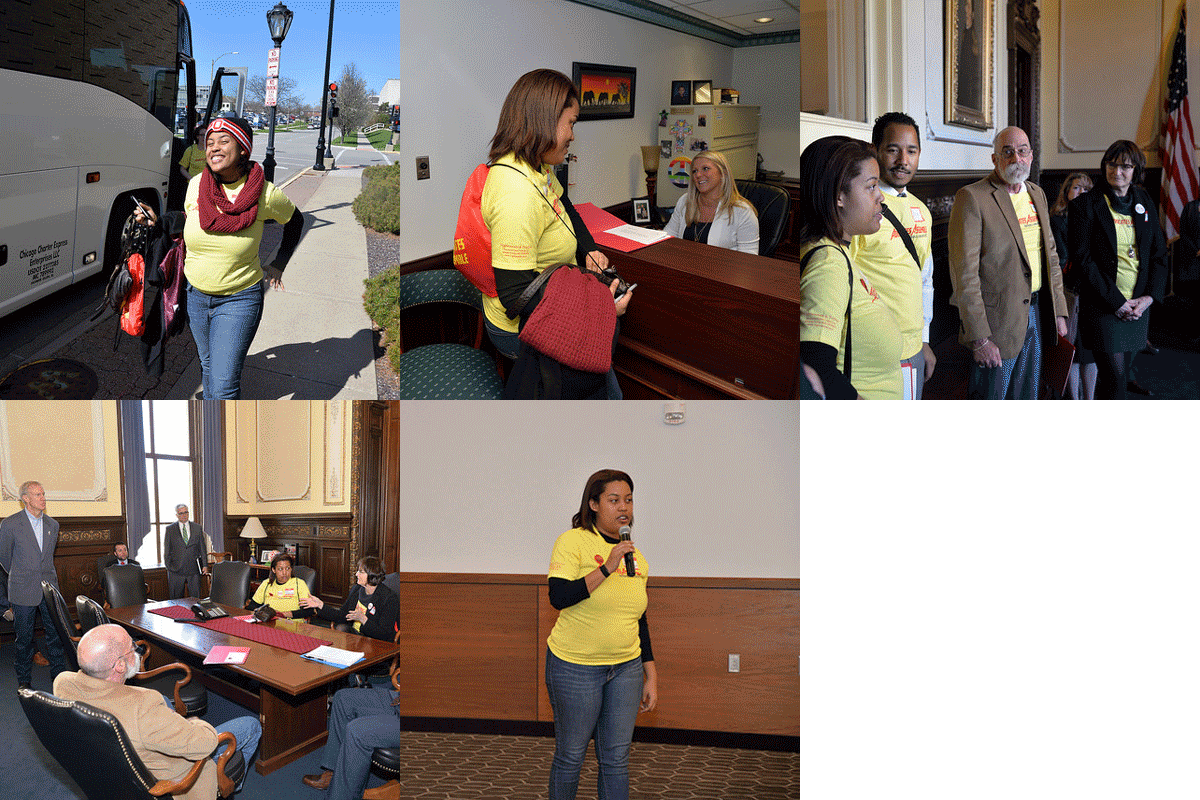
We are AIDS advocates. We FIGHT BACK. We fight for women to be treated with respect. We fight for Black lives, trans lives, Latinx lives, and Black gay men’s lives. We fight to support immigrants. We fight for the National AIDS Strategy. We fight for the Affordable Care Act. The AIDS Foundation of Chicago is committed like never before for fighting for equity and justice for people living with and vulnerable to HIV and related chronic diseases.
John Peller
President/CEO
For one day (AFC’s Advocacy Day in May 2016), I was advocating for the people in my community who don’t have a voice, and I encourage everyone to do the same. Advocacy Day was powerful, and you can still e-mail, call or tweet your legislator and express your views. One of my fellow advocates said, “When we speak up for an issue, we have the power because we voted in our elected officials.”
Jasmine Tucker
Associate Board Co-chair
As the co-chair of AIDS United’s non-partisan Public Policy, Elections Sub-Committee, and working in partnership with a coalition of nearly 70 organizations, I traveled across the country to meet with the presidential candidates to influence inclusion of HIV/AIDS policy language within each party’s platform and campaign policy planks. You can read more about the challenges and triumphs of one of those meetings here. Plus, as a result for the first time in DNC history, HIV/AIDS was intentionally included in the Democratic National Committee (DNC) platform, which delegates voted on approved in July 2016.
Ramon Gardenhire
Vice President of Policy and Advocacy
This year, 73 people working towards health equity and justice shared their stories with AFC and our supporters. The people who share their stories are often the most silenced and ignored by the institutions and individuals supposedly working on their behalf. By using our resources to bring those important stories to a wider audience, we’re moving the people who matter most to us from the margins to the center so they can be the bold voices for change.
Ashley Slupski
Digital Communications Coordinator
In 2016, AFC drafted and pushed the Illinois General Assembly to pass the first in the nation bill mandating that the state’s Medicaid program cover Pre-Exposure Prophylaxis (PrEP) and its corresponding program. This bill was signed by Governor Bruce Rauner and now ensures that those in the Medicaid program can access this ground-breaking preventive treatment.
Dan Frey
Director of Government Relations

Pride Action Tank (PAT) is all about collaborative efforts that improve outcomes for LGBTQ people. In 2016, PAT boldly led successful efforts to make the Chicago Human Rights Ordinance more inclusive of transgender and gender-nonconforming individuals. PAT also began a campaign to expand the menu of affordable housing options through the Tiny Home Summit.
Kim Hunt
Executive Director, Pride Action Tank (a project of the AIDS Foundation of Chicago)
My team is working to increase PrEP awareness and uptake among HIV-vulnerable women through its provider training program, the Midwest HIV Prevention & Pregnancy Planning Initiative (MHPPPI). Through engaging and leveraging existing networks, MHPPPI facilitated exchanges of experiences, practices, and strategies for implementing PrEP in family planning and family medicine contexts and enabled synergies between state and national PrEP for women efforts.
Jessica Terlikowski
Director of Advocacy and Community Mobilization
This article highlights the successes the AIDS Foundation of Chicago achieved in 2016. Read more about our work in our Annual Report.
On a brisk January evening, the leaders of several Chicago-area HIV organizations arrive, after a long day of work, at the AIDS Foundation of Chicago’s conference room to tackle some of the questions that will determine the fate of their organizations.
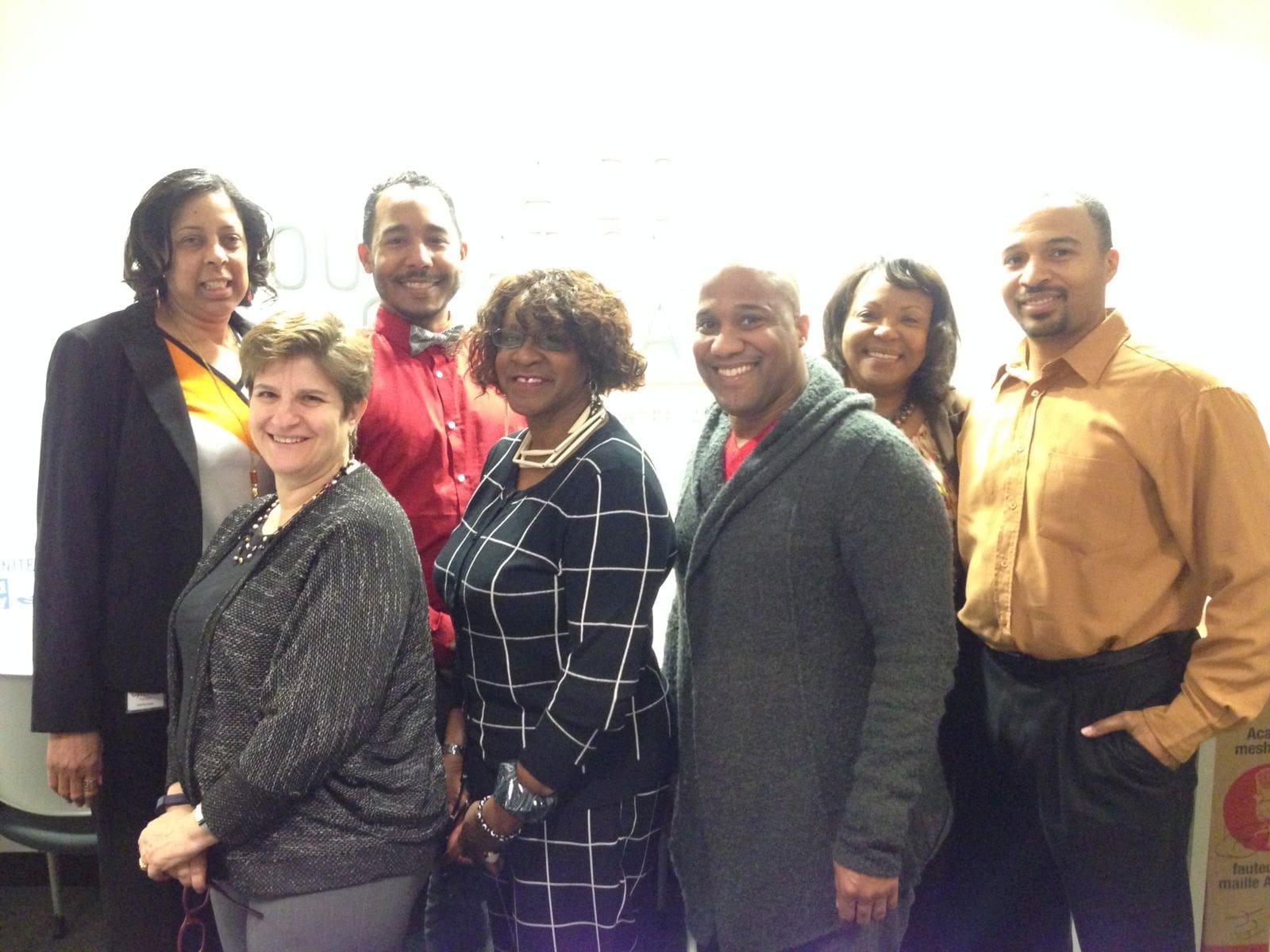 For the last year, executive directors from three organizations, the Chicago Gay Black Men’s Caucus, Project Vida, and Taskforce Prevention and Community Services, have been meeting monthly and with individual consultants to strengthen their organizations together — and with targeted help from consultants who can pinpoint opportunity areas and build capacity for them. Two other organizations, Legal Assistance Foundation and Chicago Women’s AIDS Project, have benefited from micro-grants and other forms of support through a new AFC effort called the Capacity Building and Technical Assistance Program.
This program is the brainchild of Cynthia Tucker, AFC’s vice president of prevention and community partnerships; she has long seen AFC’s potential in being a convener of ideas and group-led efforts to make some of Chicago’s most vital organizations stronger. “It was important to the AIDS Foundation of Chicago to work with small, mid-level organizations specifically on the south and west side of Chicago where there is a gap in services and where those organizations really provide that one-on-one face-to-face service with priority populations that are impacted or highly vulnerable to HIV and AIDS.”
These organizations are, relatively speaking, small — led by part-time or first-time executive directors, making big successes happen with few or no paid staff, and sometimes struggling without the administrative and leadership support that makes a good organization great. AFC’s program provides support and training around marketing, finance, strategic planning and more — including grant application support and networking.
Smaller is oftentimes better. “It’s those small organizations that are really innovative and get out and actually have avenues and mechanisms to link to hard-to-reach populations, which are the ones that are highly impacted by HIV, and connect them to services,” said Tucker.
One opportunity stands out in Tucker’s mind as an example of the potential of a program like this: at the end of 2016, the Chicago Department of Public Health released a grant for PrEP expansion across Chicago. While each organization had strong qualifications for pursuing the grant, they needed backup from bigger organizations to fill in some gaps. “We brought in consultants to work with them one-on-one to do mentoring, coaching, training, help them with logic models, evaluations and more,” recalled Tucker.
 Each of the five Capacity Building and Technical Assistance Program participants were ultimately funded directly or indirectly by the grant, able to bring their newly refined leadership and expertise to expand the most important HIV prevention tool on the scene. It’s successes like this that make Tucker certain that she and AFC are mobilizing communities in a way that is uniquely, vitally part of AFC’s mission.
“AFC has proven itself as a knowledge and collaboration center,” said Tucker. “AFC is a leader, a convener, a collaborator, a policy maker. We are bold and making sure that these alliances and partnerships come alive.”
This article highlights the successes the AIDS Foundation of Chicago achieved in 2016. Read more about our work in our Annual Report.
Glenn Baker is a 44-year-old Chicago native who currently works doing food prep for a catering company. He has a very calm demeanor, tends to keep to himself and is even self-described as anti-social. However, Baker’s magnetic personality emerged when he visited the AIDS Foundation of Chicago offices early this year to share his story.
 Baker grew up in Chicago’s west side neighborhood, Pilsen, and lived in his grandmother’s apartment with his mom, brothers and sisters. This crowded bunch lived together until Baker’s grandmother passed away and a dispute with the apartment’s management led to the family receiving an eviction notice. They were all forced to separate in search of housing, but a lack of support left Baker to fend for himself. He made multiple attempts to reach out to family members, but they all ended the same.
“[My family] didn’t [allow] me to stay as long as I wanted to. I was staying with my auntie for a while … [but] me and her had an altercation, which led up to her placing me back out into the street. So, I walked the streets at night.”
Baker spent years in search of relief from the daily struggles he faced living on the streets, while also managing the effects that the harsh Chicago winters had on his battle with asthma. He would often work odd jobs to make a few dollars or work to have a place to sleep at night. Eventually, Baker got creative and took advantage of his severe asthma to purposefully admit himself into emergency rooms throughout the city.
“I would play the same sickness, illness with my asthma … just so I could have a warm place to stay that night or [get] admitted in a hospital where they would keep me for maybe a week, or two or three days.”
Although unconventional, this method allowed Baker to access to a safe place to sleep and have a regular check-up on his asthma. Upon one of his many monthly visits to the ER, Baker’s luck took a turn for the better when he met a case manager at the hospital. As he recalls, “She told me about the [program] that was being launched and that they were trying something new.”
This new programming was a strategy implemented at the University of Illinois Hospital & Health Sciences System through a partnership with the Center for Housing and Health (a supporting organization of the AIDS Foundation of Chicago). This strategy emerges from the “housing first” model and allows hospitals to identify patients who are both chronically homeless and frequent visitors of emergency rooms to be moved into permanent housing with no strings attached. The goal of this strategy is to achieve better health outcomes that are linked with reductions of unnecessary ER and inpatient hospital use. In turn, medical expenses for hospitals go down, primary care use increases and patients’ health improves. Baker was one of the first of 25 clients that this new program took on in Chicago, and it has already proven to be effective.
Baker moved to his new home in the Auburn Gresham neighborhood on June 1, 2016 with support from AFC partner North Side Housing. He says that he used to visit the ER up to 5 times a month, but has now reduced that to less than five times a year. With this new apartment, Baker is able to better manage his health and eliminate the stress of finding a place to sleep at night. When he first moved in, he recalls being overwhelmed with emotion:
“I went and took a nice long shower and then just sat around and just prayed because I couldn’t believe it. I went back and forth between the rooms. I was astonished that this was mine, and these were my keys!”
Baker loves sharing his story with others, and wants everyone to know about the success he has had in order to encourage others to find the support they need.
“One of the things is that if [you]’re looking for support, looking to try to get some help,… they are willing to help others. There are programs that can help place you. I just want people to [not] give up hope for things getting better … That’s one of the one things that I want people to know about this program; it’s a great stepping stone.”
Written by Raven Feagins
This article highlights the successes the AIDS Foundation of Chicago achieved in 2016. Read more about our work in our Annual Report.

In the heart of the near South Side, The Village – University of Chicago Medicine, is poised to end the HIV epidemic, one call, tingle and appointment at a time. The Village, a project of the Chicago Center for HIV Elimination, is home to one of Chicago’s best links to HIV prevention education and access: the Chicago PrEP Line, a unique service woven into the vibrant, body-positive and love-fueled PrEP4Love campaign.
The staff working on the Chicago PrEP Line are well-versed in the ways of PrEP: a groundbreaking pill-a-day HIV prevention regimen that is up to 99% effective when taken consistently and correctly. But their job is to mobilize and educate Chicagoans everywhere who are curious, interested or just plain astonished by PrEP.
 “It’s just one more place to get questions about PrEP answered, and to be pointed to PrEP services in locations that fit their needs,” said Jim Pickett, the AIDS Foundation of Chicago (AFC)’s director of prevention advocacy and gay men’s health. He mobilized the Chicago PrEP Working Group community, currently made up of 227 HIV professionals across the city whose work centers around PrEP, to produce the groundbreaking PrEP4Love campaign which highlights the Chicago PrEP Line. In 2016, 239 people called this line, which has led many of them to clinics across the metropolitan area to learn more and get prescribed PrEP.
“I teach them about PrEP, connect them to PrEP, tell them how they can connect others to PrEP … it’s like a one-woman operation,” mused Leigh Alon, a research coordinator with the University of Chicago who works on the frontlines of the Chicago PrEP Line. She fields calls, tallies completed caller connections to PrEP appointments and supports the other operators who respond to questions about the HIV treatment regimen. “It’s allowed people to go on with their lives and not make people spend a lot of time and energy pursuing PrEP.”
“I get all kinds of vibes from people who call … some people know exactly what they need, some people are hesitant and ask a lot of questions; there’s a lot of distrust of the medical community from some communities we serve,” said Alon.
The Chicago PrEP Line’s origin story is a humble one: When the PrEP4Love campaign was being developed, The Village had a volunteer-staffed line for answering questions about PrEP as part of their PrEP Chicago program. It was a leap to commit them to being the first voice people spoke to after seeing PrEP4Love ads on the CTA, online and in print. But they did it.
“In those discussions, Dr. John Schneider [of the University of Chicago], who’s a member of the CPWG, mentioned, ‘Hey, we have a PrEP line, and there could be an opportunity for us to make it citywide and provide that service,’” recalled Pickett. “That’s how it got featured on every PrEP4Love marketing piece.”
 From the start of the PrEP4Love campaign in February 2016, the Chicago PrEP Line operators were already doing important work connecting people to PrEP, but they knew they needed more resources to sustain the service. That’s why, in the summer of 2016, the University of Chicago and AFC collaborated on a proposal to pitch the PrEP Line as a permanent fixture in Chicago’s array of HIV prevention strategies. The Chicago Community Trust’s LGBT Fund made for an ideal partner in this work; ultimately, they provided funding for the next chapter of the Chicago PrEP Line. “It moved from having no money to having much better support; it solidifies the commitment to the Chicago PrEP Line,” observed Pickett.
Today, the PrEP4Love campaign continues to reach communities vulnerable to HIV through a variety of ways, including live events, online outreach, and a host of collaborations, and the Chicago PrEP Line is there, open for business, supporting people through sometimes difficult conversations. “Some of my best experiences are among people who are positive themselves; they’d been worried about putting their partners at risk, and then they find out about PrEP and it helps them get to this really relaxed phase of their relationship,” said Alon. “It’s really been great when people have called in and handed the phone over to their partners and said, ‘yeah, you should get on PrEP.’”
 This year ushers in significant changes in political leadership on the national level. The Trump administration and the Republican-controlled Congress have pledged to alter the future of health care in America. The effects of this could have drastic impacts on people around the country, and in Illinois specifically. At the same time, Illinois is now in its second year without a state budget, which is devastating vulnerable Illinoisans, including people living with or vulnerable to HIV, and the organizations that serve them.
With this backdrop, the AIDS Foundation of Chicago (AFC) has developed its policy priorities for the coming two years. During the summer and fall of 2016, AFC staff created and disseminated our Community Engagement Survey, seeking input from community members throughout the state on various policy initiatives. AFC received 132 responses from all over Illinois, and AFC staff then compiled these results to identify the most critical items to take action on. With these responses and in light of the political climate in Illinois and the United States, AFC will work to address issues that most affect those living with or vulnerable to HIV.
Our policy priorities include:
- Prevention and Services: Protect and preserve vital HIV/AIDS prevention, education and treatment services, including access to Pre-exposure prophylaxis (PrEP) and male and female condoms.
- Linkage to care and retention: Promote and support policies that increase linkage to care and retention to improve the health of people living with HIV and reduce the number of new HIV infections.
- Treatment and supportive services: As linkage and retention to care become more important, we must improve or develop legislation and/or policies related to increasing treatment and supportive services so people in care can take full advantage of these services.
- Structural barriers: Because individual and structural barriers such as poverty, incarceration, and unemployment can keep people from fully engaging in care, we must aim to remove them.
Click here to review our full list of policy priorities.
Former AFC graphic design intern Briana Shields and SSI/SSDI Outreach, Access and Recovery Specialist Aaron Voldman reflected on their experiences in last month’s Women’s Marches in Chicago and Washington, D.C.
|
|
|