Events like AIDS Run & Walk Chicago don’t come together by themselves; they happen because talented volunteers come together and make it happen! Do you have what it takes to be a volunteer for this year’s event on Saturday, Oct. 1 at Soldier Field? Click here to learn more.
Still on the fence? Read seven reasons other volunteers come back year after year to support the HIV community and #bandtogether.
|
1. I started volunteering for AFC because I want to give back and provide a voice for those living with HIV and other chronic diseases. AFC is all about advocacy, awareness, mobilization and promoting responsibility within our community. I love the work of AFC! Jasmine |
 |
|
2. I started volunteering with AFC because I had such a blast as a participant in the AIDS Walk every year, and I also wanted to find another way to give back to the many organizations that have helped me so much since my HIV+ diagnosis in 2009. Chris |
 |
|
3. I started volunteering because helping others and giving back is what I do! Plus, I’m working to break down barriers of fear and misunderstanding around HIV and AIDS. Mara |
 |
|
4. I started volunteering for AFC over 10 years ago, not just to provide music for both runners and walkers but to be a face for those whom I’ve lost and bring awareness. I continue to do it because it’s needed and necessary in our communities — especially to the youth coming out. Harry |
 |
|
5. I volunteer with AFC because this is an organization that strives to create systemic change to empower and improve the lives of those affected by HIV/AIDS. I continue to volunteer with them because they continuously evolve and adapt their programming to fit the needs of their communities. Ashley |
 |
|
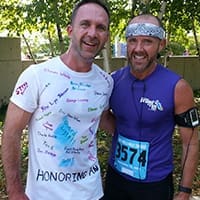
6. I have seen firsthand the impact this disease has had on people’s lives. I am HIV-positive and have lost a partner to AIDS, and I have many friends who have lost loved ones and/or are living with the virus themselves. I volunteer to help remove stigma, to keep people aware that HIV still threatens people’s lives, and to build toward a world where no one again contracts or gets sick from or dies from HIV. Vinny (left) |
 |
|
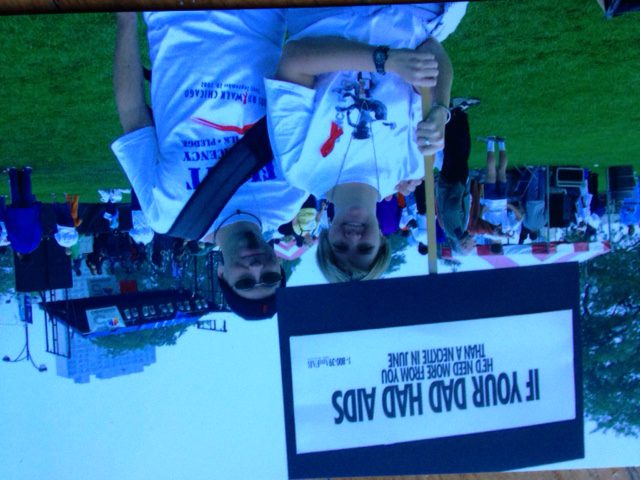
7. I started volunteering with AFC as a way to honor my father who lost his battle with AIDS over 20 years ago. I continue to volunteer because I enjoy working with the people in the organization as we band together to spread awareness about this epidemic and provide solutions. Lauryn |
 |
Chicagoan Lindsay Mitchell recounts her connection to the HIV cause and to AIDS Run & Walk Chicago, which she has participated in for more than a decade. Mitchell also celebrates that which she has gained as a result of her volunteer work at Bonaventure House: a life-long love.
 I run in the AIDS Run & Walk Chicago every year in memory of my father-in-law, who died of AIDS-related complications in 2001. The tattoo on my wrist, the one that says “memory,” is my reminder to make memories every day, to remember the little gems, especially when things are challenging and sad.
I started volunteering at Bonaventure House, a residence for people living with HIV and AIDS, in 1997. It was there that I met Joe (and so many other wonderful people). Soon after I started there, I became so close to Joe and his son, Christopher, that I resigned as a volunteer and became an honorary member of their family. Christopher and I took care of Joe for the last four years of his life. It was a wonderful, sad, hard, amazing time. I was a junior in college, a kid from Nebraska who had never been through anything this intense, but I wouldn’t have traded that time with Joe for the world. He was an incredible man — an avid reader, a lover of social justice, a comedian, a man of faith and family.
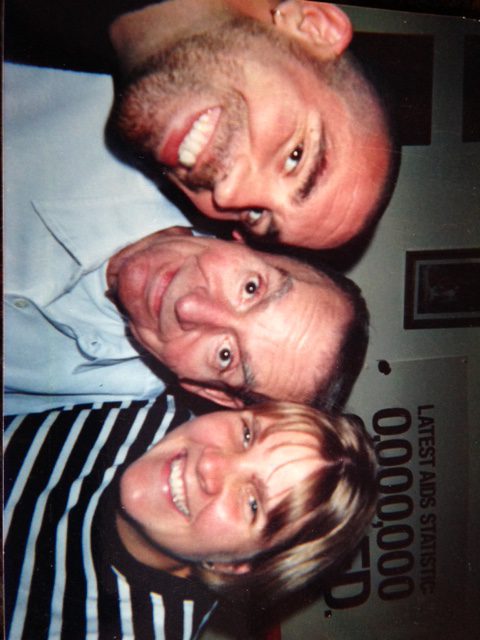
 Christopher and I were at his bedside when he died on June 6, 2001. It feels like a million years ago and just yesterday, all at the same time. We had a memorial service at Diversey Harbor, one of his favorite places, with friends and family, and scattered his ashes in the National AIDS Memorial Grove in San Francisco five years later. We had his name engraved in The Circle of Friends in The Grove in 2011 on the 10-year anniversary of his death. That same year, Christopher and I got married, and we cherish the fact that our relationship, something so beautiful and good, came out of the darkness that was his father living with and dying of AIDS-related complications. Joe was with us that day, and has been with us every day since he left us in 2001.
Every year when I arrive at AIDS Run & Walk Chicago to run in Team Loverix and see the panels of the Names Project AIDS Memorial Quilt, I am immediately overcome with emotion. I cry tears of sadness and joy for Joe (and so many others). I sit alone at the quilt and remember.
Chicago needs this event — to make sure that HIV and AIDS are not gone from peoples’ minds. And we need this event — to remember Joe and so many other people like him.
By Jennifer Moreno, CADC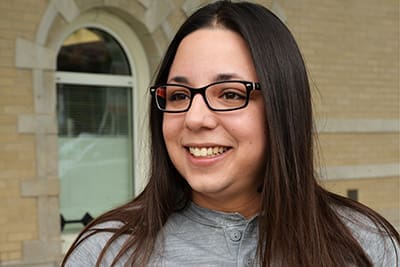
To honor National Recovery Month, we asked AFC’s Certified Alcohol and Other Drug Abuse Counselor (CADC) to reflect on the difficult road to recovery. Since July 2015, Moreno has conducted health assessments for 42 of AFC’s housing clients who are regular or recovering users of drugs and alcohol, and she has developed treatment plans with 23 clients.
The public’s understanding of substance use is better than it once was, but there is still a long way to go. Working in the field, one of the things that I hear often is why can’t people just stop using drugs? Why would you continue to use if you lose your children, get arrested, become a victim of violence or any of the other atrocities that can come with substance use?
The answer is this: recovery is a process.
Substance use is but a symptom of a deeper problem. In order to change, one must go through the process of forgiving themselves, healing childhood trauma and taking ownership of one’s life. This process can take years to work through.
I’m here to help our clients work through those traumas. As a counselor, you get to hear stories. The counseling relationship can be an intimate journey. When rapport is strong, you get to walk alongside your client and hear about their life. You get to bear witness to healing from the grief that comes from broken dreams and old wounds. Sometimes, you even get to see a new person emerge. You get to see children coming back home, healing, forgiveness and lives restored. These times of metamorphosis are why I continue doing this work.
* * * * *
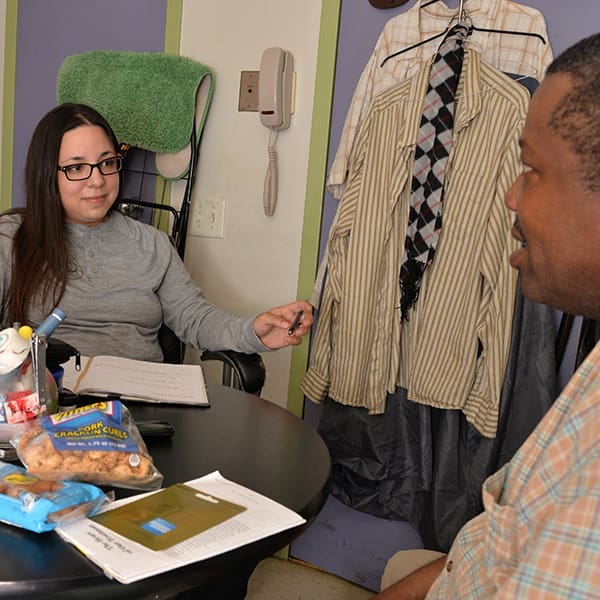 Metamorphosis. I love that word! By definition, it refers to the process of transformation.
Some time ago, I was working with a woman who presented with several dependencies. One of our early encounters was her yelling various colorful words at me because she had been up for a few days and was not in the best mood. Over the course of several years, she able to talk, layer by layer, about one of the most profound abuse stories I had ever heard up until that point. She did not stop using right away. Remember, the substance is a comfort until you learn new coping skills, but eventually she healed.
Fast-forward a few years, and the woman who had so colorfully yelled at me was but a distant memory to the woman, the employee, the wife and mother who now stood before me. She had a transformation process- a metamorphosis. It is moments like these that remind me that no matter how difficult the case, this be may THE time of transformation for the client. It reminds me to continue trying to chip away and process with the client all of the things that have held them down. What a profound experience!
* * * * *
I often get asked the questions, “Why do you do this work?” “What is your personal stake in this work?” “Are you in recovery?” I don’t normally go into detail about my journey, because sharing my stories will turn the focus on me.
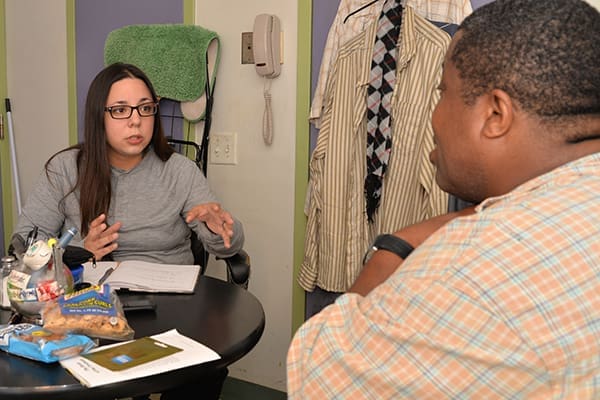 But yes — I do have a personal stake in this work. Substance use and tragedy were pretty normal themes for me growing up. My birthparents were both dependent on heroin, among other things, both were living with HIV, and both had tragic ends to their lives when I was a teenager. I really cannot sugar-coat it; it was a terrible time in my life. There were several periods of constant and consistent tragedies. We lost a relative to AIDS-related complications as other relatives were learning that they too were living with the virus. My birthmother was a victim of homicide, and my birthfather very likely was, too.
Meanwhile, I was experiencing my own traumas: I was homeless by the time I was 16 years old, living at the Neon Lighthouse for a little while. This has been my own journey — my own metamorphosis.
Fast forward to today: I have been honored to have worked in this field for close to a decade. I have been fortunate to hear so many stories, and witness so much change. I have had the privilege of sitting at bedsides and hospices to share empathy and hope. From where I came from, there really is no greater reward.
I work diligently because I have personally and professionally seen how substance use and recovery is a life-or-death battle. I believe that if we all work together to offer understanding and empathy, do our best to advocate and listen, then we will truly have done this work. Whether it is planting the seed of recovery, working with someone through their past or being therapeutically present with someone in their final days, it is all an important part of the fight.
AFC partners with Center for Health Law and Policy Innovation of Harvard Law School launching groundbreaking campaign to enforce health care rights for people living with HIV in Illinois
Click here to read the full Complaint.
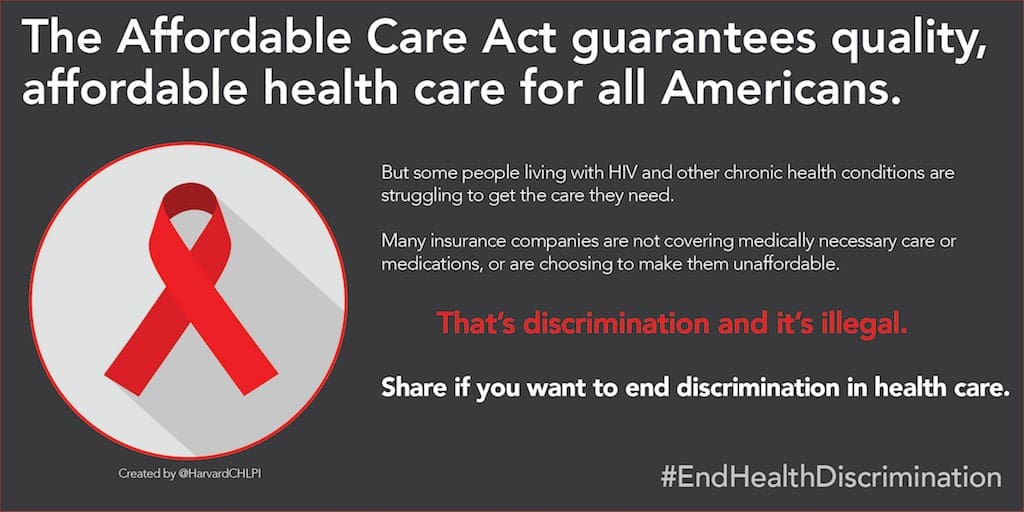
In the face of highly restrictive and discriminatory health insurance plans within the Affordable Care Act (ACA) marketplaces, the AIDS Foundation of Chicago (AFC) and the Center for Health Law and Policy Innovation of Harvard Law School (CHLPI) are undertaking a new advocacy campaign to enforce the health care rights guaranteed by the ACA for people living with HIV and other chronic conditions. Drawing upon AFC’s reputation in Illinois, CHLPI’s extensive research, and new avenues for civil rights enforcement under the ACA, the campaign aims to strengthen protections in the health insurance marketplaces and eliminate insurer practices that prevent vulnerable patients from receiving the care and treatment they need. These discriminatory practices include refusing to cover lifesaving medications and requiring high cost sharing for all medications used to address certain health conditions.
AFC has collaborated with CHLPI and filed formal administrative Complaint with the U.S. Department of Health and Human Services’ Office for Civil Rights (OCR). OCR is charged with the enforcement of the ACA’s new anti-discrimination regulations in state ACA health insurance marketplaces.
“CHLPI and AFC are using the OCR process to shine a light on discrimination occurring under the cloak of supposedly neutral insurance plan benefit design. When an insurer requires chronically ill patients to pay a disproportionate share of the cost of medication it violates federal law,” says Robert Greenwald, CHLPI’s Faculty Director and Clinical Professor of Law at Harvard Law School.
“These are landmark Complaints that will benefit everyone looking to receive equitable, comprehensive health care through the marketplaces by helping to define anti-discrimination law at a time when insurers are covering less and less.”
The campaign is designed to effectuate the major new civil rights framework created by the regulations implementing the anti-discrimination provisions of Section 1557 of the ACA. AFC hopes that the OCR Complaints will help define and set the standard for how these new civil rights protections are applied in health insurance markets. Each year, AFC and CHLPI collect and review information on HIV and HCV medication coverage for plans in the Illinois insurance marketplace, in order to help people living with HIV and HCV determine which plans are best for their health care needs. Through its work monitoring the health insurance marketplaces across the country, AFC and CHLPI have increasingly seen insurers who offer reasonable patient cost sharing leave the marketplaces, arguing that they cannot afford to compete with insurers practicing discriminatory plan design. This leaves individuals at the mercy of insurers charging high copayments or coinsurance for life-saving medications.
While recent news of insurers departing from the marketplaces may make regulators feel reluctant to push the remaining insurers toward offering more equitable, non-discriminatory coverage, failure to enforce the non-discrimination regulations could have serious long-term implications on the success of the ACA. Greenwald says, “Ultimately, our hope is to work to help stabilize the marketplace — encouraging more insurers who have experience with Medicaid managed care or community hospitals to provide coverage, and ensuring that strong regulations are in place that provide a level playing field to people relying on the marketplaces.”
“We’re calling for change because we cannot codify discriminatory practices by insurers,” said Ramon Gardenhire, Vice President of Policy and Advocacy at AFC. “This landmark effort will protect insurers who offer reasonable access to HIV medications, promote more consistent coverage patterns by insurers, and support efforts to ensure that people living with HIV and other chronic diseases can thrive.”
AFC, CHLPI highlight discrimination in Humana formulary design
The Illinois Complaint identifies Humana’s formulary design for HIV medication as failing to provide “appropriate access to drugs,” as required under ACA legislation. The complaint points out that a Humana individual plan enrollee on a Triumeq treatment regimen would pay more for their medication in three months ($4,574.31) than an enrollee with diabetes would pay in an entire year for all prescriptions and medical services ($3,970).
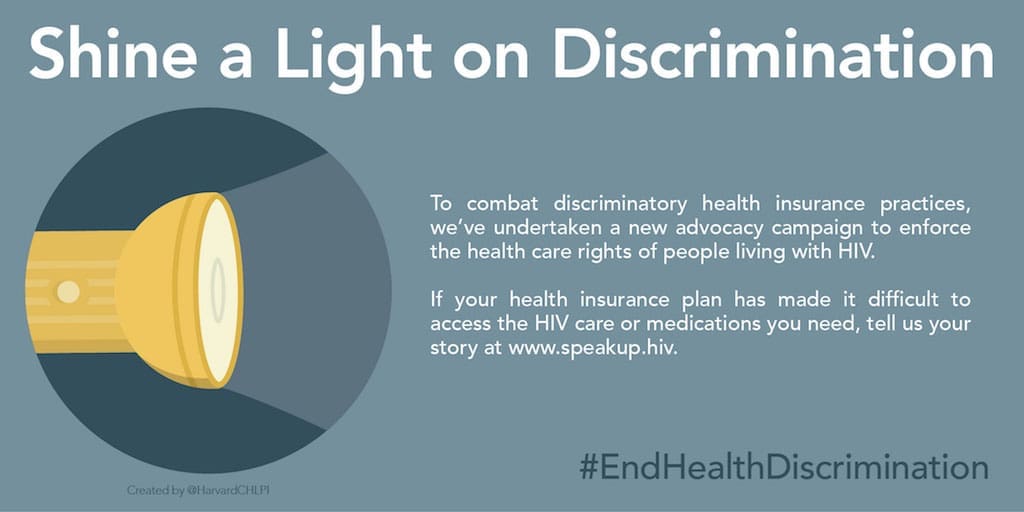
In addition to the Complaint filed by AFC in Illinois, CHLPI has partnered with other state partners, including AIDS Alabama, AIDS Research Consortium in Georgia, CrescentCare (formerly the NO/AIDS Task Force in Louisiana), and AIDS Law Project of Pennsylvania. CHLPI and its state partners have filed complaints against the following insurers:
- Humana: Complaints filed in Alabama, Georgia, Illinois, Louisiana, and Texas
- Cigna: Complaints filed in Georgia and Texas
- Highmark: a Complaint filed in Pennsylvania
- Independence Blue Cross: a Complaint filed in Pennsylvania
- UPMC Health Plan: a Complaint filed in Pennsylvania
- Community Health Choice: a Complaint filed in Texas
- Anthem Blue Cross Blue Shield: a Complaint filed in Wisconsin
The insurers flagged by CHLPI and its state partners have routinely denied coverage for HIV medications or limited access to needed medications through prohibitively high cost sharing.
“Health care that people cannot afford is about as useful as no health care at all,” said Gardenhire. “Left unchecked, these practices will drive people living with HIV out of the health insurance market, essentially returning them to a pre-Obamacare coverage gap.”
In addition to filing the OCR Complaints, the campaign includes an education and media initiative to increase public pressure on federal and state government regulators and insurers via social media, traditional press, and additional outreach activities. CHLPI and its state partners are working to ensure that people living with HIV and their allies understand the patterns of discrimination found in their local insurance markets and how to advocate for an end to health insurance discrimination.
Andrea Weddle, Executive Director of the HIV Medicine Association, supports the campaign, adding “Health and social services providers, advocates, and individuals living with HIV should be proactive about raising their voices, and using tools like complaint letters to challenge health plan policies that discriminate against individuals living with HIV. These actions are critical to ensure the enforcement of the ACA’s non-discrimination protections.”
“Filing this complaint is a step toward making the ACA work better,” notes John Peller, AFC’s President/CEO. “We’re taking this action to ensure that the Affordable Care Act remains affordable. The vast majority of health care plans in Illinois provide good and affordable coverage for people living with HIV. Unfortunately, there are some bad actors that need to be addressed and returned to compliance for the sake of health equity across the U.S.”
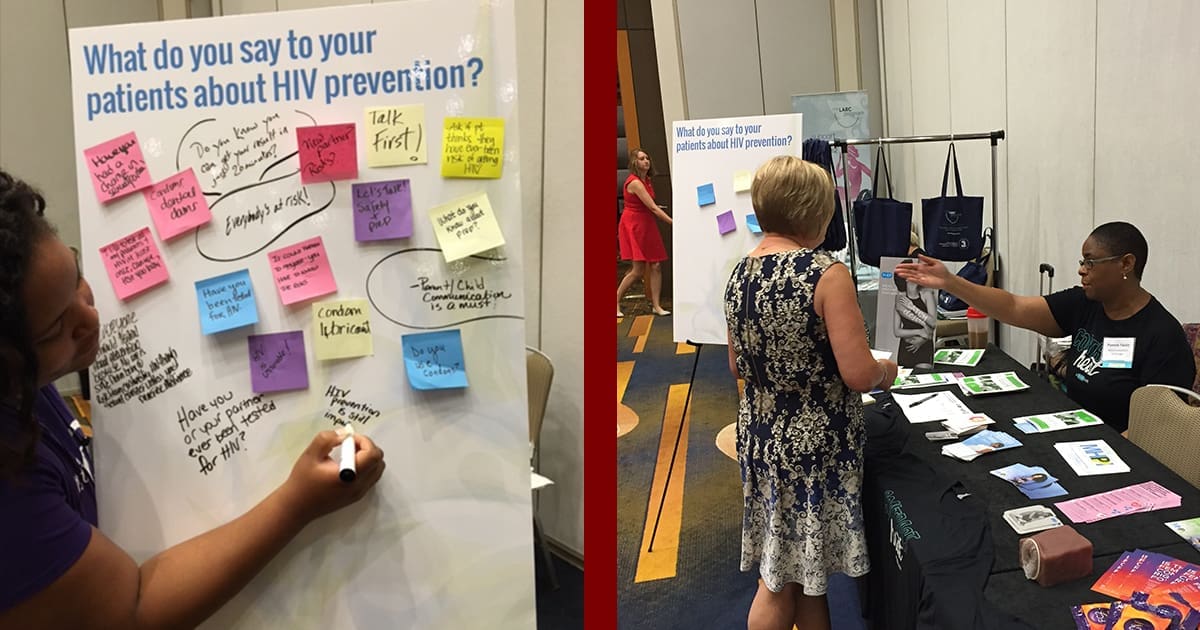
Continuing its legacy as a collaboration and knowledge center in Chicago, thought leaders from the AIDS Foundation of Chicago (AFC) will be representing dynamic programs from across the organizations at state, national and international conferences this autumn. To learn more about abstracts and presenters, email us.
Conference |
Date of Meeting |
Abstract title |
Co-authors |
| National Ryan White Conference on HIV Care and Treatment, Washington, DC | August 23-26, 2016 | Designing a Transnational Intervention to Link and Retain Mexican Men who have sex with Men in HIV Care | Amy Johnson, presenter, and Roman Buenrostro |
| Quality Management Strategies to Improve Tracking of Health Outcomes for Ryan White Case Management | Charlotte Detournay, presenter, and Amy Johnson | ||
| Transnational Practices and Linkage to Care: Lessons from the SPNS Latino Access Initiative | Amy Johnson, presenter, and Jeff Bailey, Manisha Maskay and Janet Myers | ||
| Illinois Public Health Annual Meeting, Springfield, IL | September 13-15, 2016 | Promoting Culturally Competent Health Services and Equity through Social Marketing and Web-based Engagement | Adam Conway, presenter, and Roman Buenrostro and Kelly Nowicki |
| Developing and Evaluating a Youth-Led Social Marketing Campaign to Increase Awareness about Sexually Transmitted Infections among Young Cis and Transgender Women of Color | L’Oreal Bailey, presenter, with Cynthia Tucker and Amy Johnson | ||
| The impact of issues regarding program data and reliability on the HIV Continuum of Care in Cook and Collar Counties | Alanna Berdanier, presenter, and Joel Ritsema | ||
| Public Health Research Collaborations: Strategies to Enhance Community- Academic Partnerships | Amanda Peters, presenter, and Kelly Nowicki and Julia Dickson-Gomez | ||
| The implications of improving data quality to better monitor viral load suppression in Cook and Collar Counties | Charlotte Detournay, presenter, and Joel Ritsema | ||
| United States Conference on AIDS, Hollywood, FL | September 15-18, 2016 | Identifying newly-diagnosed and lost-to-care Latinos: Implementing cullturally appropraite strategies | Roman Buenrostro, presenter, and Amy Johnson, Jeff Bailey and Manisha Maskay |
| How to get your Medicaid program to work for you | Ramon Gardenhire, presenter, and Amy Killelea, National Alliance of State and Territorial AIDS Directors, and Carolyn McAllaster, Southern HIV/AIDS Strategy Initiative | ||
| Plenary on voter engagement | Maxx Boykin | ||
| National STD Prevention Conference, Atlanta, GA | September 20-23, 2016 | Youth-led participatory evaluation of a community engagement project designed to lower rates of sexually transmitted infections among young women and transgender women of color | Amy Johnson, presenter, and Cynthia Tucker, Alan Johnson, Kelly Nowicki and L’Oreal Bailey |
| Family Medicine Midwest Conference, Indianapolis, IN | October 7-9, 2016 | Breaking the Ice: Talking about Sex, PrEP and HIV Prevention | Pamela Tassin, presenter, and Evelyn Figureo |
| Supporting Reproductive Needs and Desires of People Living with HIV | Pamela Tassin, presenter, and Evelyn Figureo | ||
| HIV Research for Prevention, Chicago, IL | October 17-21, 2016 | Prepping 4 Love: Engaging Focus Communities in the Development of a Citywide Social Marketing Campaign | Amy Johnson, presenter, and Ramona Bhatia and Jim Pickett |
| The Midwest HIV Prevention and Pregnancy Planning Initiative: An Internet based study of medical providers’ attitudes, knowledge and behavior about pregnancy planning for HIV impacted women | Amy Johnson, presenter, and Jessica Terlikowski, Kelly Nowicki, Pamela Tassin and Sara Semelka | ||
| Illinois HIV/STD Conference, Springfield, IL | October 25-27, 2016 | Project Elevate: Using Digital Storytelling to decrease STI, Stigma and create Public Health Policy | Alan Johnson, presenter, and Brooke, Cynthia Tucker and Beverly Ross |
| American Evaluation Association, Atlanta, GA | October 24-29, 2016 | Mixed methods evaluation of multi-state initiative aimed at increasing reproductive health options for women living with HIV | Kelly Nowicki, presenter, and Amy Johnson, Jessica Terlikowski, Pamela Tassin and Sara Semelka |
| Building Evaluation Capcity at Diverse HIV Prevention and Care Organizations in Chicago | Mallory Edgar, presenter, and Amy Johnson, George Greene, Gregory Phillips and Hendricks Brown | ||
| American Public Health Association, Denver, CO | October 29-Nov 2, 2016 | Using community engagement and mobilization to decrease rates of sexually transmitted infections among young women of color in Chicago | Kelly Nowicki, presenter, and Cynthia Tucker, Alan Johnson, Amy Johnson and L’Oreal Bailey |
| Multi-level Interventions to Improve access to screening, treatment and care for Sexually transmitted Infections for Young Cis- and Transgender Women of Color | Cynthia Tucker, presenter, and Kelly Nowicki, Amy Johnson, Alan Johnson and L’Oreal Bailey | ||
| Public Health Implications of Networks of HIV prevention programs in Chicago | Gregory Phillips, presenter, and Amy Johnson, George Greene and Hendricks Brown |
by Eryn MacNeil
“I was only 22 when I was diagnosed. I was young and I felt it. But everyone’s just trying to learn how to live, and now I’m just learning how to live a little differently.”
Jessica was diagnosed with HIV at the age of 22 when she visited the doctor to have her lymph nodes examined. What seemed like a mundane check-up quickly turned into a life-changing event.
Even more difficult than learning her status, however, was breaking the news to her family. Jessica recalls the uneasy silence her parents responded with compared to the brash reaction from her siblings. “My mom was really quiet. My dad, too. But my siblings — they freaked out. I had to hang up the phone because they were so upset.”
It was not until much later that Jessica learned a romantic partner intentionally withheld his status from her. Perhaps he acted out of fear of judgment, she now wonders. The stigma and shame that shadows the disease inspired Jessica to take action. “The first HIV awareness event I put on was at Sunset Bowl in Waukegan, and it was a simple Q-and-A. I invited my family and friends to ask me whatever they wanted about HIV and AIDS.”
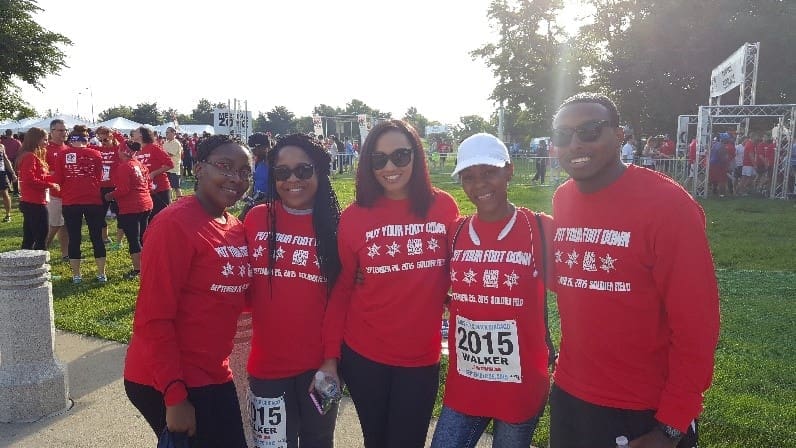
Upon returning to Chicago after several years outside the city, Jessica found herself constantly answering questions about her status. “When I moved back, I ran into many people from my past that didn’t know I was now HIV-positive. I wanted to get family, friends and people I grew up with involved in the cause.” Last year, Jessica created her very own team to participate in AIDS Run & Walk Chicago. She and some of her closest friends and family joined hands to raise awareness and funds aimed at raising awareness about HIV.
Jessica recalls feeling uplifted while at Soldier Field for AIDS Run & Walk Chicago for last year’s event. “I felt secure and supported by so many people.” This year, #TeamJessica will once again #BandTogether on Saturday, Oct. 1, in support of an AIDS-free generation.
Register now for AIDS Run & Walk Chicago on Saturday, Oct. 1 at Soldier Field.
For Harrison McEldowney, a 35-year veteran of the dance scene, there is no feeling quite like dance. “It gives you an elevated sense of your being,” said McEldowney, his voice increasing in speed and energy as he recalled the sensation. “It’s an incredible feeling — a natural high.”
He has been fueled by that natural high as a dancer in New York, Chicago and around the world, and he has fueled other dancers through his choreography, including several world premieres for Dance for Life, a benefit for supporting people living with HIV and other critical health issues. Dance for Life will be celebrating its 25th year on Saturday, Aug. 20, and will be raising funds for the AIDS Foundation of Chicago and The Dancers’ Fund.
McEldowney discovered Dance for Life — an annual dance production featuring original and seasoned works by Chicago area-based dance companies — first as a dancer with River North Dance Company (now River North Dance Chicago) in the 90s. “The energy [among the dancers from various participating companies] was incredible,” recalls McEldowney. “As working dancers, we rarely have an opportunity to hang out, but at Dance for Life, everyone is together for the dress rehearsal and performance. Everyone sits in the wings and cheers.”
As a young man, McEldowney found his place in the wings and on the stage as a therapeutic vehicle, rather than a creative one. “I was hyperactive,” he remembers, growing up in San Antonio, “and my parents put me in the theater to get rid of all my excess energy.”
He sang and danced through high school, but he never gave dance much thought — until he saw a production of the musical Applause (the original starred Lauren Bacall) that featured a blissfully energetic dance scene. At 17, he knew that dance was what he needed to pursue, and he followed that yearning to New York, where he moved in 1980 at age 18 with $100 in his pocket and a small handful of acquaintances to turn to if his dancing dreams didn’t come true.
“I started to audition right away. Work came quite quickly for men in dance back then,” said McEldowney. While New York’s vibrant dance and theater scenes kept him employed and engaged throughout the 80s, he was cast in a production at the Marriott Lincolnshire Theater outside of Chicago in 1989. The trip to Chicago cast a spell on McEldowney. “Chicago was so focused on fringe dance companies, and everyone was so different. There was just so much dance in the city.” He moved to Chicago shortly thereafter and became a member of River North Dance Company, from which he retired 16 years ago.
 Today, McEldowney’s art takes on a different form: he’s a creative director at Wilson Dow Group, a high-end creative production and performance development company that has worked with Andrea Bocelli, Kate Middleton and many other celebrities and high-end brands. When his work isn’t taking him around the globe, he still finds time to choreograph, often alongside his longtime friend, roommate and collaborator Jeremy Plummer, who is the executive director and choreographer for C5. This year’s Dance for Life event will feature one of their world-premiere choreographed works.
Supporting Dance for Life is as much about the creativity as it is the cause. “I have deep feelings about helping people with HIV/AIDS and in the community,” stated McEldowney. “I am incredibly proud of the advances that have been made in the HIV epidemic,” he said, recalling that, when he joined the dance scene in New York in the early 80s, he worked with many gay men who would later die of AIDS-related illnesses.
He has seen Dance for Life and its beneficiaries carrying out that work firsthand. In addition to two friends who were financially supported through their battles with cancer thanks to The Dancers’ Fund, McEldowney remembered a difficult time for a friend who was diagnosed with late-stage HIV. “He was really sick when he came in for his test. The doctor even said that he wasn’t sure what would have happened if [McEldowney’s friend] came in a week later. The Dancers’ Fund reached out and provided help … they really saved that person’s life.”
Photos by Cheryl Mann.
The AIDS Foundation of Chicago (AFC) and Howard Brown Health commend the recent decision by Felicia Norwood, Director of the Illinois Department of Healthcare and Family Services (HFS), on conducting a comprehensive review of HIV medications covered on the fee-for-service formulary, and adding new HIV treatments to the preferred drug list (PDL). Specially, HFS added an antiretroviral class to the PDL. Included in that class and chosen for the formulary are the preferred agents Desovy and Genvoya.
The latest additions result from a series of meetings between AFC and Howard Brown Health officials and Director Norwood and HFS. The meetings addressed advocates’ and providers’ concerns regarding new proposed restrictions placed on Medicaid beneficiaries’ access to single tablet regimens (STR) prescribed for HIV treatment.
AFC and Howard Brown Health support the department’s decision to add an antiretroviral class to the PDL and inclusion of Desovy and Genvoya as preferred agents. However, other first line STR’s were not included on the state’s PDL formulary, including Triumeq and Stribild. Both are once-daily, life-saving first line STRs. Since they are non-preferred, providers will have to undertake cumbersome prior approval before prescribing the medications.
Both organizations urge the state to follow the U.S. Department of Health and Human Services (DHHS) HIV Treatment Guidelines, which are assembled by a national panel of expert HIV clinicians and advocates and represent the best medical evidence to treat HIV. Furthermore, advocates urge the state to ensure access to all FDA-approved STRs without prior-authorization restrictions. Research indicates STRs improve treatment adherence toward maximum viral suppression and are proven to be effective at reducing treatment failures, resistance and new transmissions.
“Howard Brown Health and AFC and applaud HFS for this significant step forward by inclusion of an antiretroviral class and meeting with advocates and providers to address our concerns,” says Howard Brown Health’s President and CEO David Ernesto Munar. “We will continue to work with HFS to develop guidelines and policies that make HIV treatment accessible and affordable to as many people as possible.”
“However,” said John Peller, President and CEO of AFC, “as providers and advocates working with vast numbers of Medicaid clients living with HIV who are highly vulnerable, we believe STRs are essential to improving the health of people living with HIV and lowering costs to the state. We urge the Illinois’ Medicaid program to allow access to all STRs without prior authorization, and most importantly, two STRs that are listed as ‘recommended’ by the DHHS HIV treatment guidelines, Stribild and Triumeq,” said Peller.
“We continue to have conversations with HIV drug treatment makers, such as ViiV, about the need for stronger partnerships with state Medicaid programs that will result in expanded access to HIV medications without prior authorization,” noted Peller.
Lastly, although HFS also reviewed coverage for medication that cure Hepatitis C, the agency did not make any changes to that medication class. Most problematically, HFS did not change the existing prior authorization criteria that severely limited access to the Hepatitis C cure. AFC and Howard Brown Health believes Illinois’ hepatitis cure medication criteria are overly restrictive and violate federal law.
About the AIDS Foundation of Chicago
AFC mobilizes communities to create equity and justice for people living with and vulnerable to HIV and related chronic diseases. AFC aspires to create a world in which people living with HIV and related chronic diseases will thrive and new HIV infections will be rare. More at: aidschicago.org.
About Howard Brown Health
Howard Brown Health exists to eliminate the disparities in health care experienced by lesbian, gay, bisexual and transgender people through research, education and the provision of services that promote health and wellness. More at: howardbrown.org.

This year’s AIDS Run & Walk Chicago, emphasizing the importance of unity and partnership in responding to health crises, will be held on the morning of Saturday, Oct. 1, at Chicago’s Soldier Field.
Inspired by the kaleidoscopic effect of last year’s athletes donning COLORbands (elastic bands that can be worn by participants in a number of ways), this year’s 5K walk, 5K run and 10K run will center around the estimated 2,500 participants banding together to end new HIV infections and support those living with HIV and other chronic illnesses.
“Chicago has seen huge strides in reducing the number of HIV infections in the past few years, thanks to increased awareness, access to health care and PrEP, a pill that prevents HIV,” said AFC President/CEO John Peller.
“This year’s AIDS Run & Walk Chicago will be a time to celebrate our communities’ successes as we strive for health equity, as well as gather around those who are living with the virus and remember those we have lost due to AIDS-related causes.”
AIDS Run & Walk Chicago supports a broad array of CommunityDirect partners, Chicago-area organizations that build their own running or walking teams and fundraise collaboratively; those organizations will receive 90% of all money raised by their teams. Last year, 35 CommunityDirect teams raised a combined $250,000.
“AIDS Run & Walk Chicago is a critical fundraising event for many of our CommunityDirect partners,” said Simone Koehlinger, AFC’s senior vice president of Programs. “We’re thrilled to support those organizations as they raise essential funds — it’s incredibly inspiring to see so many teams walking and running to raise awareness and support each other in this fight.”
Event registration is $30 in advance for 5K walkers and $40 for 5K or 10K runners. To register as an individual or as a team, or to donate, visit aidsrunwalk.org or call 312-334-0946. Online registration ends Sunday, Sept. 25. Event day registration will be $60 for walkers and runners.
CommunityDirect partners support Illinoisans from across the state
This year’s CommunityDirect partners will raise funds through AIDS Run & Walk Chicago — more important than ever after many service agencies endured significant budget shortfalls due to Illinois’ state budget crisis. Many teams are returning, including Season of Concern, which earned more than $26,000 through its robust donation drive that supports those in Chicago’s theater community who experience chronic health issues including HIV/AIDS.
This year, 33 organizations that serve communities across Chicago’s South, West and North sides, as well as surrounding counties, will receive 90% of the funds they raise through AIDS Run & Walk Chicago.
|
AIDS Foundation of Chicago |
Alexian Brothers Housing and Health Alliance |
|
Austin CBC |
CALOR |
|
Catholic Charities of the Archdiocese of Chicago |
Center on Halsted |
|
Chicago Black Gay Men’s Caucus |
Chicago Center for HIV Elimination |
|
Chicago House & Social Service Agency |
Chicago Recovery Alliance |
|
Chicago Women’s AIDS Project |
Community Outreach Intervention Projects (COIP)/UIC School of Public Health |
|
Erie Family Health |
Families’ and Children’s AIDS Network (FCAN) |
|
Greater Full Gospel Pentecostal Church |
Heartland Alliance |
|
Howard Brown Health |
Illinois Caucus for Adolescent Health |
|
Legal Council for Health Justice |
Men & Women In Prison Ministries |
|
Michael Reese Research & Education Foundation |
Midwest AIDS Training & Education Center (MATEC) |
|
New Age Services |
Open Door Clinic |
|
Pediatric AIDS Chicago Prevention Initiative (PACPI) |
Project VIDA |
|
Puerto Rican Cultural Center – Vida/SIDA |
Ruth M. Rothstein CORE Center |
|
Season of Concern |
Sinai Health System |
|
South Suburban HIV/AIDS Regional Clinics (SSHARC) |
The Night Ministry |
|
Youth Outlook |
|
By Ramon Gardenhire, Vice President of Policy and Advocacy
As the co-chair of AIDS United’s non-partisan Public Policy, Elections Sub-Committee, and working in partnership with a coalition of nearly 70 organizations, I traveled across the country to meet with the presidential candidates to influence inclusion of HIV/AIDS policy language within each party’s platform and campaign policy planks. You can read more about the challenges and triumphs of one of those meetings here.
I wanted to share some exciting news with you: For the first time in DNC history, action on HIV/AIDS will be intentionally included in the Democratic National Committee (DNC) platform, which delegates will vote on at their convention this week. The convention will also feature an HIV-positive speaker on Wednesday; a voice from the HIV community has not been amplified from either party’s convention floor since 2000.
Excerpt of the DNC platform section on HIV/AIDS |
|---|
|
Democrats believe an AIDS-free generation is within our grasp. But today far too many Americans living with HIV are without access to quality care and too many new infections occur each year. That is why we will implement the National HIV and AIDS Strategy; increase research funding for the National Institutes of Health; cap pharmaceutical expenses for people living with HIV and AIDS; reform HIV criminalization laws; and expand access for harm reduction programs and HIV prevention medications, particularly for the populations most at risk of infection. Abroad, we will continue our commitment to the President’s Emergency Plan for AIDS Relief and increase global funding for HIV and AIDS prevention and treatment. Democrats will always protect those living with HIV and AIDS from stigma and discrimination. |
We are very excited to see the fruits of this hard work coming together! HIV/AIDS was part of past DNC platforms, but usually just as a line or two in the health care or LGBT sections of the platform. It’s also important to note that HIV/AIDS is the only specific disease with its own section in that party’s platform.
The coalition working on this effort also attempted to influence the Republican National Committee (RNC) platform as well — but with no luck. This is especially concerning because turning the tide on HIV and ending new AIDS cases in the U.S. is of national importance. It’s imperative that both national parties articulate their commitment to helping end the epidemic here in the U.S. and around the world.
We will continue to ensure that HIV/AIDS remains a visible part of the national narrative throughout this election cycle. For example, we published a presidential questionnaire that several candidates answered. We are also working to ensure that HIV/AIDS questions are included in presidential debates, writing policy briefs and recommendations to sway elected officials’ prioritization of HIV and drafting an HIV/AIDS transition document for the incoming administration.
To stay informed on how the presidential candidates and their campaigns seek to end the HIV epidemic and advance sound HIV policy this election cycle, please sign up for AIDS United policy updates and AIDS Foundation of Chicago alerts.