
Thousands are expected to attend this year’s Pride at Montrose event on Sunday, June 26 from 10 a.m. – 7 p.m. on Cricket Hill near Montrose Harbor.
This year, Chicago Black Gay Men’s Caucus, Brother’s Health Collective, Affinity Community Services, and Black Treatment Advocates Network, in partnership with AIDS Foundation of Chicago (AFC)’s PrEP4Love and Project Elevate, will ensure the continuation of this legendary festival held annually on Chicago Pride Parade Day.
“We’re here to continue this important celebration for our community,” said Cynthia Tucker, vice president of prevention and community partnerships at AFC. Tucker and AFC have led this year’s event operations.
The day will feature curated DJ sets and performances from Ruff N Stuff, Otis Mack, Trina TruLuv, Gemini Jones, Slo ‘Mo Party, Chances Dances, GUCCIROXX, Kaycee Ortiz and Derrick Carter.
“Chicago Black Gay Men’s Caucus is proud to be part of Pride at Montrose, the historic Black same-gender loving festival, as a supporter and community advisor,” said Erik Glenn, executive director, Chicago Black Gay Men’s Caucus.
“Every event this pride season is an opportunity for us to celebrate the strength in our lives and hold space for Black, same gender-loving people to be unapologetically who we are,” Glenn added.
An offshoot of the Black Pride celebration held annually since the 1990s, Pride at Montrose celebrates Black LGBTQ history through entertainment and powers the community’s future through a robust health village. Meningitis vaccinations provided by the Chicago Department of Public Health, HIV/STI testing from the Ruth M. Rothstein CORE Center, and information on the Red Ribbon Cash Instant lottery ticket will be available. AFC’s PrEP4Love and Project Elevate campaigns will be on hand to negate the impact of HIV and AIDS among Chicago’s Black, same-gender loving community with new technology and strategies.
In the wake of the horrific massacre in Orlando against an LGBTQ club on the morning of June 12, security efforts will be ramped up for this year’s event. “We have met with Alderman James Cappleman’s office (46th Ward) to continue the partnership established last year, and we have hired McCaster Security Services to provide more than 20 officers at the gates and within the fence on-premise,” said Tucker. “The Chicago Police Department is also providing added officers around the perimeter. We want to ensure a safe and celebratory environment.”
For more information, visit pride.prep4love.com.
HIV/AIDS in the African-American Community and in Chicago
Although African-Americans make up only 12% of the population, they account for an estimated 44% of all new HIV infections among adults and adolescents ages 13 years or older. According to the CDC’s last census in 2010, 36% of an estimated 29,800 new HIV infections were among African-American gay, bisexual and same-gender loving men, and African-American women accounted for 6,100 (29%) of the estimated new HIV infections among all adults and adolescents, with most new HIV infections among heterosexual African-American women (87% or 5,300).

On May 31, the Illinois General Assembly adjourned its regular session without passing a state budget. Today marks 11 months without a budget, further threatening HIV testing and prevention services, care for people with HIV, supportive housing for formerly homeless people and other vital services. The AIDS Foundation of Chicago (AFC) is dismayed that in those 11 months, the legislature and Governor Bruce Rauner have failed to enact a budget for the current fiscal year or the next fiscal year, which starts July 1.
For 11 months, the human service and public health sectors have struggled without state funding to provide life-saving services to the neediest of Illinoisans. In January 2015, a temporary income tax increase expired. As a result, about $5 billion in revenue disappeared overnight from the state budget. HIV testing and prevention, supportive housing and mental health treatment are just a few of the many programs that have been held hostage while Springfield has failed to act. Although Rauner proposed an FY 17 budget, it contains a devastating $8 million cut to the HIV funding line, representing a 28% cut from the FY 15 budget and a reduction in funding for the African-American HIV/AIDS Response Act by 66% in FY 15 to $500,000.
“The General Assembly and governor have failed at their most basic responsibility,” said John Peller, president/CEO of AFC. “What business could operate for a nearly year without a budget in place? It’s time for the legislature and governor to pass a responsible spending plan that chooses revenue over cuts. We urge the state to enact a tax increase and other sustainable revenue as part of a comprehensive budget solution.”
This historic budget impasse has forced AFC to pursue litigation against the state. AFC and 81 other organizations joined the Pay Now Illinois coalition of human and social service organizations in a lawsuit against the governor and directors of various state agencies. AFC and the Center for Housing and Health (CHH), its supporting agency, are owed $630,414 this fiscal year for supportive housing programs. These contracts had already experienced a 50% cut by the state from FY15 levels.
Stopgap measures fail to garner support from Gov. Rauner
Last week, the House passed SB 2048 (Sen. John Cullerton, D-Chicago, Rep. Barbara Currie, D-Chicago), an FY17 appropriations bill that funded all state programs at the same levels as the spending plan passed by Democrats last May (and vetoed by Rauner, besides the K-12 budget, last June). The bill did not include funding for any programs that are mandated by court order, such as Medicaid. The General Assembly funded key budget lines that AFC monitors at the following levels:
- HIV Lump Sum: $23 million
- African American HIV/AIDS Response Act: $1.25 million (from General Revenue Fund)
- Supportive Housing: $11 million
In addition to not signing a budget, Rauner has not yet approved a stopgap appropriation to give some funding to human services for FY16. The bill would throw a lifeline to agencies throughout the state that have been fighting to keep their doors open, like local health departments and Pediatric AIDS Chicago Prevention Initiative (PACPI). This bill, SB 2038 (Sen. John Cullerton, D-Chicago; Rep. Michael Madigan, D-Chicago) is sitting on the governor’s desk waiting to be signed.
“SB 2038 is not a solution to the overall problem in Springfield, but it may be the only support for the current fiscal year that social service providers receive,” said Daniel Frey, director of government relations for AFC. “Hundreds of agencies across the state have held up their end of their contracts and provided services without reimbursement. It’s time for the state to pay up.”
Although this has been a difficult and frustrating year for the budget, the legislature passed three bills championed by AFC and our partners:
- HB 4554 (Rep. Mary Flowers, D- Chicago, Rep. Terry Link, D-Waukegan): On Sunday, May 29, the Senate voted unanimously, 50-0-0, to approve this legislation that requires Illinois Medicaid to cover pre-exposure prophylaxis (or PrEP) and its corresponding clinical program. This is first-of-its-kind legislation in the nation and is a great development that was passed with the support of the Department of Healthcare and Family Services.
- SB 2397 (Sen. Jacqueline Collins, D-Chicago, Rep. Thaddeus Jones, D-Calumet City): On Monday, May 30, the House voted 90-27-0 to extend to 2025 the Quality of Life Lottery ticket, which funds HIV prevention programs in the community. AFC thanks the Quality of Life Coalition for championing this bill.
- HB 6213 (Rep. Carol Ammons, D-Champaign, Sen. Daniel Biss, D-Evanston): Also on Monday, the House voted 117-0-0 on final passage of this bill, which seeks to improve health literacy of Medicaid managed care enrollees and make provider directories and prescription drug lists reliable, useful and accurate.
AFC expects the governor to sign all three bills later this summer. AFC is grateful to the sponsors for their hard work passing the bills.
AFC thanks the thousands of advocates from across Illinois who have contacted their legislators to support the above bills and to urge them to oppose funding cuts for HIV and other vital services. AFC estimates that 2,863 advocates took part in our direct advocacy actions, legislative education and community engagement including Virtual Advocacy Day, an HIV budget town hall, two daylong trips down to Springfield, and other actions during the session to speak out to legislators and the governor.
Although we have made some progress this session, we still have a long way to go. AFC demands that Gov. Rauner and the General Assembly do their job and pass a budget that adequately funds HIV and other critical programs. Please continue to make your voice heard and demand that Springfield pass a positive budget!
Stay tuned: The General Assembly has announced they will be working over the summer to resolve the budget stalemate. AFC will keep you informed of developments and how to ensure Illinois passes a positive budget. It remains to be seen when or if the legislature will address the budget now that May has ended. Any budget now requires a three-fifths majority to pass both houses and reach the governor’s desk.
For the latest information about HIV funding in Illinois, sign up to receive email notifications via AFC’s Online Action Bulletin: aidschicago.org/advocate. Read more about AFC’s state budget advocacy at aidschicago.org/positivebudget.

by Dan Frey, Director of Government Relations
Good afternoon everyone, just a quick update on the situation occurring down here in Springfield. Today is the last day this year that legislation can be passed with a simple majority. Starting tomorrow, a super majority, meaning 3/5 of representatives and senators, will be needed to approve any substantive or appropriative legislation. First, we’ll look at our substantive legislation and how those have fared before moving onto the more convoluting budget news.
Substantive Legislation
- On Sunday, the Senate voted unanimously, 50-0-0, to approve HB 4554, our legislation that requires Illinois Medicaid to cover PrEP and its corresponding program. This is a great development that was passed with the support of the Department of Healthcare & Family Services. It will now be sent to the Governor, who I expect will sign it.
- On Monday, the House voted 90-27-0 on SB 2397, which extends to 2025 the Quality of Life Lottery fund that fund HIV prevention programs in the community. The bill will now be sent to the Governor.
- Also on Monday, the House Human Services Committee voted to concur with two amendments that came over from the Senate with HB 6213, which seeks to Improve health literacy of Medicaid managed care enrollees and make provider directories and prescription drug lists reliable, useful and accurate. The concurrence motion will be voted upon today in the full House, where it is expected to pass. It will then be sent to the Governor, whom is expected to sign it.
Budget News
The budget situation here is unfortunately a bit of a mess. So let’s start from the beginning:
A few weeks ago the General Assembly passed SB 2038 which is a stopgap measure for human services in FY 16 (the current fiscal year). Line items were appropriated at roughly 40% of their FY 15 levels. Late last week that bill was sent to the Governor for his signature or veto. He has yet to take action upon it, though has made indications that he will not sign it.
Last week, the House passed SB 2048, an appropriations budget that funded all state programs at the same levels as the spending plan passed by Democrats last May (and vetoed by Governor Rauner, besides the K-12 budget, last June). The bill DID NOT include funding for any program or line item that is being mandated by court order, such as Medicaid. In terms of HIV our favorite budget lines, they were funded at the following levels:
- HIV Lump Sum: $23 million;
- African American HIV/AIDS Response Act: $1.25 million (from General Revenue Fund); and
- Supportive Housing: $11 million.
This budget bill passed the House 60-53-1. The bill has been sent to the Senate, who have yet to take it up for a vote, and it is unclear whether they will do so before adjourning today. The Governor has pledged to veto it entirely should it reach his desk.
Now things get a little more confusing. Late last week, Senate President Cullerton floated an idea to the press he said he had in the shower that morning that perhaps the General Assembly should work on and pass a short term budget to get some money out for FY 17 (which begins on July 1) while a more comprehensive solution could be negotiated. Governor Rauner came out vehemently against such an idea, saying it was more of kicking the can down the road. Speaker Madigan later also said that he would be against such a measure.
And then last night, the Governor’s Budget Director leaked to the media a plan for a short term budget that would get the state through the end of the calendar year. The plan contained no specifics in terms of presenting line items, but it was stated it would cover all appropriations, would not include cuts to Chicago Public Schools, and would not include any Turnaround Agenda items. It also included stop/gap funding for FY 16. This complete reversal of opinion on a short term budget was then presented to the four legislative leaders (Speaker Madigan, President Cullerton, and Minority leaders Durkin and Radogno) at a meeting with the Governor this morning. At a press conference afterwards, the Democratic leaders said they were open to negotiating such a measure, and said it would be referred to the Governor’s budget working groups. Speaker Madigan made it clear that such a budget would not be heard on the floor today.
Up Next
Perhaps the Senate will take up SB 2048 today, though perhaps not. What is becoming clear is that there will likely not be a grand bargain in place today for FY 16, FY 17, or even part of FY 17. The Speaker has stated that the House will again be in continuous session through the summer, and has so far scheduled session days for every Wednesday for the month of June. The Senate has yet to indicate when or if they will be in session moving forward, though it is expected they will also convening throughout the summer.
About the blog
BudgetWatch is a weekly update from the AIDS Foundation of Chicago’s on-the-ground team in Springfield about the state’s longstanding budget impasse. Follow along at aidschicago.org/budgetwatch.
by Eryn MacNeil
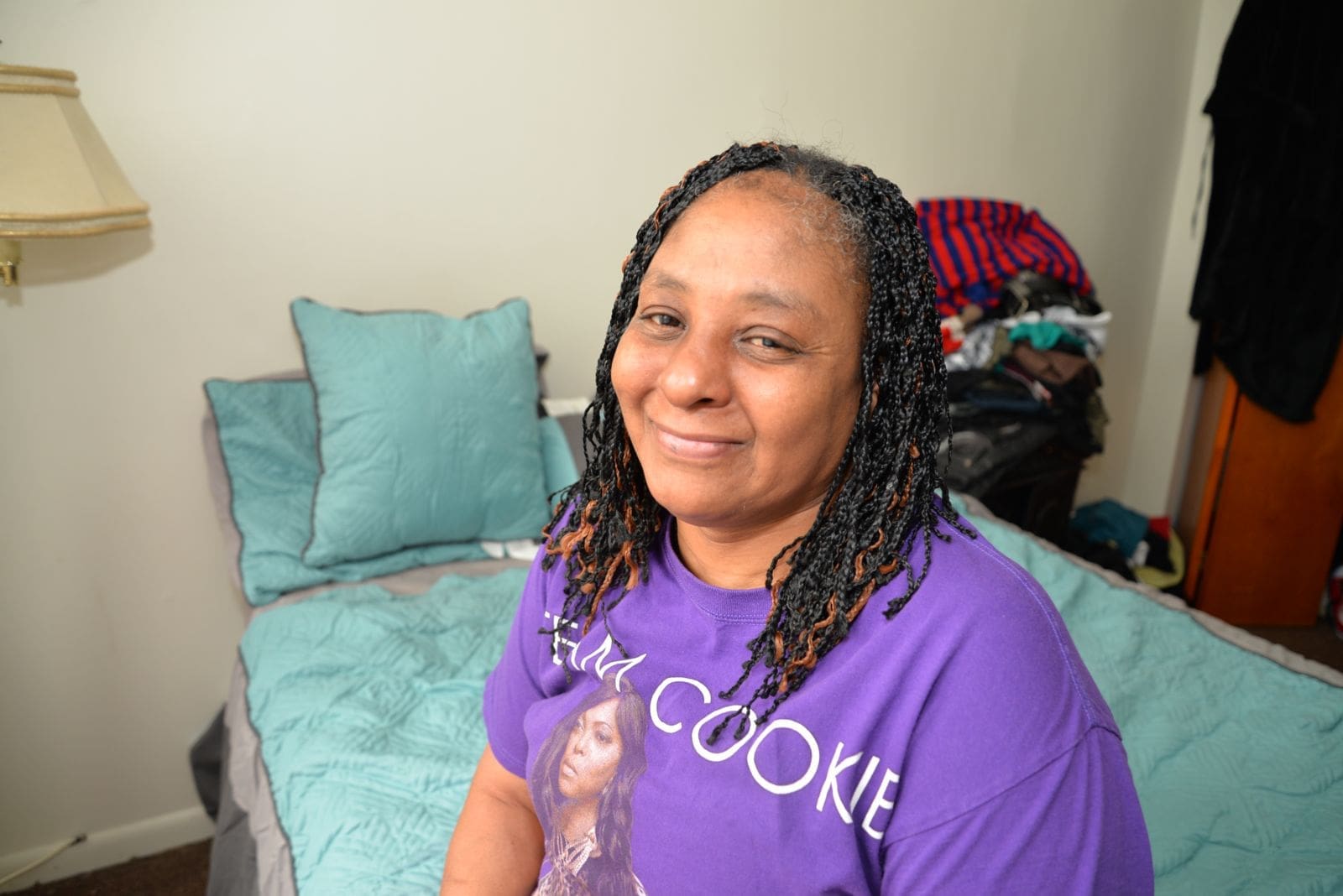 The apartment is dimly lit, but spacious. There isn’t much decoration, but it’s well-kept. It’s a short walk up in a neat brick building on a tree-lined street. Today, the shades are drawn, but on the weekends the apartment is filled with children. Jeanette Thomas spent several years being homeless, battling addiction, and was recently diagnosed with breast cancer, but she is now in stable housing and in treatment.
Despite all this, she is able to look towards the future and concentrate on the small things that make her happy, like visits from her cousins’ children – all of whom call her Grandma – or spending time with her best friend, Amber. Jeanette is one of around 500 formerly homeless people with chronic diseases living in AFC-supported housing. Numerous studies over the past two decades have shown the importance of stable housing in overall health and life outcomes. Permanent supportive housing for highly challenged homeless populations has proven to be a cost-effective intervention that significantly reduces more expensive alternatives (that is, emergency rooms, hospitals and jails).
Where Jeanette has been
Jeanette, 48, had been sober for 14 years when she relapsed. When she got back into drugs in 2012, she started drinking, too. Before long, she found herself jobless and living on the street.
“It was terrible,” she says. “I didn’t know where my next meal would come from, where I would sleep that night…it was really bad.”
It was an arrest for drug use that caused her to enter a shelter. She was placed on house arrest, but didn’t have anywhere to go. She entered Safe Haven, a homeless shelter, and entered recovery again. When her house arrest was completed, she decided to stay and pursue getting housing and help.
Just when it seemed like things were turning around, another setback: Jeanette was diagnosed with breast cancer. The diagnosis caused her new outlook to waver. “I was diagnosed in November, and in surgery by February. But I was still in a homeless shelter. I couldn’t walk, couldn’t move, and it was depressing. I started going to counseling, and one of my therapists asked me to write an essay on what I would do if I had three days to live. I couldn’t do it. I had just been diagnosed with cancer.”
 Jeanette knew from personal experience what the outcome looked like for her. Her mother passed away from breast cancer in 1999. “When I was in the hospital, and they told me I had breast cancer, my first thought was that this was what my mom died of. When my mom died, I was still pretty deep in my addiction. I didn’t take care of her.” Jeanette had been close with her mom, and this was still hard on her. In addition, her aunt was recently diagnosed with breast cancer as well. “She’s had one of her legs removed. She’s had a stroke as well. On my worst days, I look at her and I see my future.”
Soon, though, Jeanette had a ray of hope that allowed her to feel more positively about her future – she was able to move into an apartment, thanks to assistance from AFC. She joined AFC’s Access to Care program, an in-home substance use counseling program, because with recent stresses she was feeling tempted to drink again. “I never faltered,” she says. “But it was on my mind a lot, that if I had a drink I would feel better.”
Since Jeanette was in the Samaritan program (a housing program for chronically homeless people with an HIV diagnosis or a disability), she qualified for Access to Care counseling. Barriers that could otherwise prevent Jeanette from seeking substance use treatment, like her physical exhaustion from cancer treatments, are not an issue, because ATC clients are able to meet with their case managers in locations they are comfortable with, like a McDonalds, or their case managers can even come to their homes if necessary. Entering therapy and case management gave Jeanette another new outlook.
“That’s one thing I’ve been trying to fight – not thinking about dying, thinking about living.”
Now, Jeanette is able to reflect on how far she’s come, and how far she could still go. “Every time I put my key in this door, I feel grateful, because I still remember the times when I wasn’t sure where I was going to sleep at night. I had friends that would let me sleep in their basement, or I would sneak into their apartment buildings. Sleep was the hardest thing, especially when I was cold. It’s hard when you don’t have anywhere to go. It’s amazing, the difference that can come from having somewhere to stay.”
 Where Jeanette is going
When asked how many pills she has to take each day, Jeanette dumps an armful of bottles of medication onto the table. In addition to her cancer medications, of which there are ten or twelve, she takes a number of medications for the side effects of cancer treatment ranging from folic acid to muscle relaxants. She was recently diagnosed with high blood pressure, which is another daily pill. She has been diagnosed with depression, which is another pill, and so on. The medications are better than suffering from the full effects of the cancer, but don’t provide a great quality of life. She can’t work, and is often too tired to take advantage of opportunities. “I used to work all the time,” Thomas says. “When I relapsed, I had two jobs. I was a manager at Jimmy John’s and I worked at Pepe’s Tacos. I started working transporting cars, too. I love working. That’s why I feel so hindered now. I’m too tired to work, and too sick. I’m the type of person who would be working all the time if I could. The pills make my eyes too blurry to drive, which is what I really like to do. A big goal of mine is to eventually be able to go back to work.”
While being able to go back to work is one of her big goals, another is to be able to spend more time with her nephew’s and cousins’ children. “I relapsed, and I didn’t know the babies. Now I’m getting to know them again. They were here this weekend, and I made myself get up and do things with the kids. They make me happy. As long as they’re around, I’ll be okay.” Most weekends, Jeanette has a full house of children running around. It’s often loud, and she’s often tired, but she doesn’t mind.
She shared some of the lessons she’s learned since she has gone through her struggles, and throughout the struggles she is still enduring: “Don’t give up. There’s a better life out here for you. Addiction is a disease; it’s not your fault, and it’s not permanent. It’s a disease you’ll have for the rest of your life, but you don’t have to let it rule you. Call people when you feel down. Don’t push people out of your life, because you need support. You can’t do it alone. You need someone to do this with you.” Jeanette has friends who aren’t as far along in their journeys as she is, and they routinely call her for advice and help. She says they call her to check up on her as well, now that she’s sick. Some of her best friends have come from the days she spent on the streets and at Safe Haven. “I’m an outgoing person, I’m goofy, I like to have fun. I love my family, and I love to love. I love to share what I have with people who have less than me, because I know what it feels like to be there. At the end of the day, all I want is to be happy. I’m tired of not having dreams. I’m going to make myself happy, but I know it’ll still take a lot of help.”
These days, Jeanette is taking small steps towards having the kind of life she always wanted. She is surrounded by children, family and friends, and has recently started volunteering at Deborah’s Place, the organization that oversees the Safe Haven shelter and is a partner of AFC’s Access to Care program.
by Ramon Gardenhire, Vice President of Policy and Advocacy
I knew my meeting last week with Secretary of State Hillary Clinton was going to be a smashing success when I and 19 other representatives of more than 70 HIV organizations introduced ourselves as a bunch of policy wonks and Secretary Clinton replied, “Well, you know that’s a term of endearment to me.”

For nearly an hour, Secretary Clinton outlined her commitment to addressing the epidemic if elected president. She plans to invest more in HIV prevention and care services and programs, combat stigma and HIV criminalization laws, work to expand PrEP awareness and usage, and ensure full implementation of the Affordable Care Act by working to expand Medicaid in the South, where HIV infection rates mirror that of some countries in Africa. We also discussed limiting high out-of-pocket HIV medication costs due to discriminatory plan designs by insurance companies. Secretary Clinton promised to cap drug prices to no more than $250 per prescription and force the pharmaceutical companies to examine high costs.
While Secretary Clinton laid out her ambitious plan to tackle the epidemic through national leadership and uplift the consensus policies we brought to her and all other presidential candidates, all I could concentrate on was our state-level inability to live out her ambitious goals. I recognized at that moment that even if Clinton were elected president and made good on her promises, Illinois would be ill prepared to truly harness and embrace those advances in public health because of our 11-month budget crisis.
Since taking office in 2015, Governor Bruce Rauner has decimated the HIV public health infrastructure in our state. His latest proposed budget contains a whopping $8 million slash to HIV funding line, representing a 28% cut from the FY15 budget and a reduction in funding for the African-American HIV/AIDS Response Act (which funds many vital prevention services for communities most vulnerable to HIV) by 66% in FY15 to $500,000. The governor’s budget also proposes other devastating cuts to critical services that affect people living with HIV, including supportive housing, mental health, substance use and child care.
These absent dollars represent real lives that are struggling to thrive. Consider these examples:
- Pediatric AIDS Chicago Prevention Initiative (PACPI), which prevented a single baby from being born with HIV in 2015, is owed nearly $850,000. This program that is recognized as a successful model of prevention for mother-to-child HIV transmission by the Centers for Disease Control and Prevention is in danger of closing. Of the approximately 120 women PACPI served in 2015, no HIV positive baby has yet been found.
- Sisters and Brothers Helping Each Other provides syringe exchange, HIV prevention services and harm reduction services across downstate Illinois. They have gotten only a fraction of promised funding from the state this year. Now, all of their staff are working as volunteers, and they have been using their actual state funding for basic operating expenses.
- Local health departments have suffered, too. In Will County, for example, the local health department announced that it will lay off 53 full-time staff due to a $2.1 million budget shortfall caused by the state’s budget impasse.
I fear that Illinois’ continued budget saga will hamper its ability to capitalize on the jolt of resources and supports that Secretary Clinton has promised if she becomes President. We are jeopardizing and crippling our public health infrastructure beyond the point of repair, and lives will be its collateral damage.
It’s time, Illinois. Pass a positive budget!
UPDATE: Read the letter AFC and Chicago-area clinicians submitted to Illinois Medicaid urging unrestricted access to HIV medications.
The AIDS Foundation of Chicago (AFC) and Howard Brown Health commend the recent announcement by Felicia Norwood, director of the Illinois Department of Healthcare and Family Services (HFS), that the department will conduct a comprehensive review of HIV medications covered on the fee-for-service formulary.
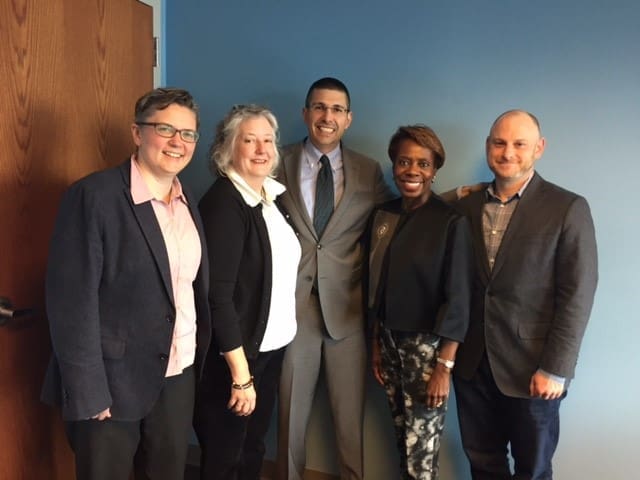 The announcement was the direct result of a productive meeting between AFC and Howard Brown officials and Director Norwood. Norwood’s announcement and the meeting were called to address advocates’ concerns regarding new restrictions placed on Medicaid beneficiaries’ access to the lifesaving drug Atripla, a once-daily single tablet regimen (STR) prescribed for HIV treatment.
The state’s Committee on Drugs and Therapeutics (D and T Committee) will conduct the review of all anti-HIV agents on the fee-for-service formulary at a June meeting, according to Norwood. The Medicaid program makes prior approval and Preferred Drug List (PDL) decisions in consultation with the Illinois State Medical Society Committee on D and T. The committee, comprised of practicing physicians in various specialties who actively participate in the Illinois Medicaid Program, forms recommendations based upon evidence-based clinical factors including safety, effectiveness and outcomes, according to a state website.
AFC and Howard Brown Health support the department’s decision to consider all HIV treatment agents as a class rather than set policy just for STRs. Both organizations urge the state to follow the U.S. Department of Health and Human Services (DHHS) HIV Treatment Guidelines, which are assembled by a national panel of expert HIV clinicians and advocates and represent the best medical evidence to treat HIV. Furthermore, advocates urge the state to ensure access to all FDA-approved STRs without prior-authorization restriction. Research indicates STRs improve treatment adherence toward maximum viral suppression and are proven to be effective at reducing treatment failures, resistance and new transmissions.
“The AIDS Foundation of Chicago and Howard Brown Health thank Director Norwood and her team for meeting with us right away to address our mutual concerns,” shared Howard Brown Health’s President and CEO David Ernesto Munar. “In addition to our appreciation of Director Norwood’s leadership, we’re also grateful that AFC and HBH have the opportunity to properly advise the D and T Committee in this crucial decision making process, ensuring the outcome will have a beneficial impact on this vulnerable demographic. We hope this will result in more STRs and the newest HIV drugs being included on the Medicaid Fee-For-Service system’s preferred drug list.”
AFC and Howard Brown also commend HFS for placing HIV patients’ care front and center in the Illinois Medicaid program. “The results produced by the May 6 meeting are welcomed by AFC and Howard Brown and we hope that it is a foundation from which future progress can be built,” said John Peller, AFC’s president/CEO. “We’re also pleased that the state is grandfathering existing patients prescribed Atripla and won’t require them to undergo prior authorization. We thank HFS for their continued pledge to follow the DHHS HIV/AIDS Treatment Guidelines, which support the therapeutic benefits of STRs.”
“AFC has had extensive conversations with the drug manufacturers, including Bristol-Myers Squibb, Gilead, Janssen and ViiV,” continued Peller. “We agree with them that STRs have become the standard of care. Over the next few weeks, our organizations will lead advocates to weigh in with Illinois Medicaid to inform the development of the preferred drug list.”
AFC’s Medical Advisory Group, chaired by Norma Rolfsen, RN, FNP, who attended the May 6 meeting with HFS, will play a key advisory role in the process.
There are currently six approved STRs from which providers may choose in customizing individual patient care for people living with HIV, including Atripla, Complera, Genvoya, Odefsey, Stribild and Triumeq. Atripla, the oldest STR, was the only one covered without prior authorization until late April, when Illinois Medicaid instituted prior authorization. The move came in response to a change in the DHHS HIV treatment guidelines, which now list Atripla as an “alternative” or second-line treatment; previously, it was “recommended” or first-line.
Meeting attendees in above photo include:
-
Magda Houlberg, MD, Chief Clinical Officer, Howard Brown Health
-
Norma Rolfsen, RN, Project Director HIV Care Program, Michael Reese Research and Educational Foundation and Chair of AFC Medical Advisory Group
-
David Ernesto Munar, President & CEO, Howard Brown Health
-
Felicia Norwood, Director of the Illinois Department of Healthcare and Family Services
-
John Peller, President & CEO, AIDS Foundation of Chicago
Updated on May 31, 2016:
The Pay Now Illinois coalition has grown to 82 human and social service agencies and companies suing Illinois Governor Bruce Rauner, Illinois Comptroller Leslie Munger and seven state agency department heads for breach of contract. On May 25, they filed a motion seeking a preliminary injunction for emergency relief that would require the state to begin immediate payment on contracts that are more than 60 days in arrears, an amount estimated to be more than $100 million. The total owed to the plaintiffs for 11 months of unpaid work exceeds $130 million. Read more.
Original release:
This morning, the AIDS Foundation of Chicago (AFC) joined Pay Now Illinois, a coalition of 64 Illinois-based human and social service agencies and companies, in a lawsuit against Illinois Governor Bruce Rauner and the directors of six statewide agencies.
 The suit seeks immediate payment in full of more than $100 million owed for work performed under contracts that date back to July 1, 2015, the beginning of the state’s current fiscal year. AFC and the Center for Housing and Health (CHH), its supporting agency, has experienced a combined total of $630,414 in unpaid contracts in FY 2016 for their supportive housing programs. These contracts had already experienced a 50% cut by the state from FY 15 levels.
“For AFC and CHH alone, the state is threatening the lives of 136 people and four families who have very little income, face significant health challenges and rely on these crucial resources to have a roof over their heads,” said John Peller, President/CEO.
Instead of allowing clients to go unserved, AFC has been using cash reserves to fill the gap in supportive housing funding for FY 2016.
“AFC is working hard to maintain stability for our clients, because that will keep people in care,” Peller said. “The state has let us and our clients down. The current situation is unsustainable, which is why we have to take the unprecedented action of joining this lawsuit.”
AFC and CHH’s contracts from the state pay for case managers who help people who are formerly homeless and living with HIV and serious chronic diseases live stably in the community. Despite not getting paid by the state, AFC and CHH have continued to reimburse partner agencies who are providing direct services, including Alexian Brothers Housing & Health Alliance, Christian Community Health Center, the Boulevard, Northside Supportive Housing and Center on Halsted.
Coalition claims illegalities in enforcing unfunded contracts
In seeking a permanent injunction and declaratory judgment, the suit, filed in Cook County Circuit Court, charges that the Governor and other state officials have acted illegally by failing to make payments on contracts while continuing to enforce them. The suit also claims that the Governor’s veto of certain appropriation bills on June 25, 2015 was an unlawful impairment, or interference, with the agencies’ constitutional right to a legal remedy for the non-payment of these contracts. State agencies signed contracts with the social services providers, in some cases even after the Governor’s veto of the budget. The value of unpaid contracts for the members of the coalition exceeds $100 million.
The coalition members, who provide services including housing for the homeless, healthcare, services for senior citizens, sexual abuse counseling, and programs for at-risk youth, face “acute financial hardship.” Many have reduced staff and programs, and the viability of some of the organizations is threatened.
“This suit is about upholding a contract and paying your bills, basic good business practices,” said Andrea Durbin, of Pay Now Illinois. “We have delivered services under binding contracts, and now the state needs to pay us. We have delivered – and we continue to deliver – essential services to Illinois’ most vulnerable population of men, women and children as required under our contracts with the state. We are doing our part. We expect the state to do the same.”
In addition to Governor Rauner, other defendants in the suit include: John Baldwin, Acting Director of the Illinois Department of Corrections; Jean Bohnhoff, Director of the Illinois Department of Aging; James Dimas, Secretary of the Illinois Department of Human Services; Michael Hoffman, Acting Director of the Illinois Department of Central Management Services; Felicia Norwood, Director of the Department of Health and Family Services; and, Nirav Shah, Director of the Illinois Department of Public Health. In a detailed timeline of activities surrounding the Illinois budget approval process, the suit makes the case that funds were appropriated to pay the contracts, but the Governor’s action to veto appropriation bills blocked payment to service providers who had signed contracts.
“The Governor vetoed appropriation bills, and then his Administration entered into contracts for those same services,” said Durbin, who is also chief executive officer of Illinois Collaboration on Youth (ICOY), a statewide network of organizations providing services to at-risk youth and their families. “The state agencies have enforced these contracts, and have never suggested suspending or terminating them. They can’t simultaneously have us enter into a contract and perform services and then say there isn’t money to pay for them. The state has been having its cake and eating it too. That is just not good business.”
For more information, please visit paynowillinois.org.

by Dan Frey, Director of Government Relations
Good afternoon everyone, I wanted to update you all on some of the developments that occurred during the week of April 18, in Springfield. It was Third Reading deadline week, meaning all bills that originated in either house needed to be passed out by the end of the day Friday in order to be considered in the opposite house moving forward. That and the continuing budget crisis made for an exciting and hectic week. Let’s dive right in.
Substantive Bills
Two of our priority bills, HB 4554 (mandated Medicaid coverage of PrEP and its corresponding program) and HB 6213 (Medicaid Manage Care Organization quality reforms) passed unanimously out of the House on Friday. Both of those bills now move to the Senate.
Our bill that extends the Quality of Life Lottery fund, SB 2397, passed unanimously out of the Senate. It now moves to the House for a vote.
Other pieces of legislation that AFC has been working on include the Fair Tax Constitutional Amendment, HJRCA 59, and HB 6073, the Vital Records Modernization Act, did not come up for a vote. Both of those pieces of legislation received an extension and will likely be heard in May.
Budget Update
There was no movement this week legislatively on an FY 17 budget nor on a comprehensive solution to FY 16’s budget. There have been behind the scenes meetings this week of rank and file legislators to come to an agreement on a fix for the FY 16 human services and higher education budgets. An amendment was filed Thursday, April 21, that contained human services appropriations from both the General Revenue Fund (GRF) and the Commitment to Human Services Fund. Following a two-hour caucus, however, a different amendment was filed that removed the human services appropriations and only funded the higher education stop/gap appropriation (not from GRF, and at about a 70% cut from their FY 15 appropriation). After an overnight delay on the vote, it passed both the House and the Senate on Friday, April 22, and has been sent to the Governor, who is expected to sign it.
Human services funding was addressed in a bill, SB 2047, that unanimously passed the Senate as well on Friday, April 22. The House cannot hear that bill until they return to session next week. It contains no appropriations from GRF, and has decreased funding levels from their FY 15 appropriations, even from their proposed FY 16 and 17 levels. It is intended to be a stop/gap measure, however, that gets some revenue into the field, and not a solution to the budget crisis. The lines AFC is most concerned with are as follows:
- HIV Lump Sum: $8,050,000
- African American HIV/AIDS Response Act (AAARA): $490,000
- Supportive Housing: $3,850,000
These amounts are well below levels that will adequately fund these lines, but it is promising that at least some funds seem to be on their way to help the human services sector until a more comprehensive solution can be found. The AAARA, for instance, will actually receive some funding, which has not been the case for years.
Up Next
The House and Senate both reconvene after an off week on Tuesday, May 3. The House is holding an Appropriations – Human Services committee on Wednesday, April 27, to discuss the Department of Human Services budget at the Billandic Building in Chicago.
As always, if you have any questions, comments or concerns, please email me at [email protected].
About the blog
BudgetWatch is a weekly update from the AIDS Foundation of Chicago’s on-the-ground team in Springfield about the state’s longstanding budget impasse. Follow along at aidschicago.org/budgetwatch.
The AIDS Foundation of Chicago (AFC) and Howard Brown Health (HBH) have confirmed that the Illinois Department of Healthcare and Family Services (HFS) will remove Atripla from the preferred drug list beginning Monday, April 25, in an effort to reduce costs.

Atripla was the only single-tablet regimen (STR) HIV medication covered under the Illinois Medicaid program’s preferred drug list. New patients enrolling in Fee-For-Service, administrated by the Medicaid program within HFS, will be denied access to any STR without undergoing the onerous prior authorization process.
 This complex approval method, which does not always guarantee coverage, unnecessarily restricts access to these life-saving medications and is inconsistent with federal HIV treatment standards. Additionally, recent studies have confirmed that early and continuous HIV treatment produces viral suppression, which is critical to keeping patients healthy, mitigates long-term complications and reduces new transmissions. Verification released by the National Institute of Health (NIH) demonstrates that consistent access to HIV medications reduces the chance HIV will be transmitted to others by 96 percent. AFC and HBH call on Gilead and ViiV Healthcare, who manufacture other first-line HIV treatments, to provide substantial discounts for Medicaid to ensure patients’ continued access to life-saving treatment.
“Not covering the newest HIV drugs under Medicaid, and restricting access to Atripla, denies highly vulnerable, low-income people with HIV access to the newest and most effective treatments,” explained Ramon Gardenhire, AIDS Foundation of Chicago’s vice president of policy and advocacy. “Increasing access to single-pill HIV medications will save Illinois money by reducing hospitalizations and improving overall health outcomes. It will also drastically improve the lives and productivity of people living with HIV, as well as reduce additional transmissions. We urge Medicaid to immediately cover HIV medications without bureaucratic prior authorization requirements.”
Other than the immediate ramifications the recent HFS decision will have on the patients they serve, additional, long-term costs to the state have been projected as a result.
“The state’s move to require prior authorization of Atripla, and not cover newer one-pill drugs, will actually raise overall health care costs,” explained Magda Houlberg, M.D., Howard Brown Health’s chief clinical officer. “One study showed that people with HIV taking a single pill were 24 percent less likely to be hospitalized than patients receiving three or more pills per day. Another found that single-pill HIV medications cut hospitalizations by 23 percent and overall healthcare costs by 17 percent.”
Significant advances have led to highly effective HIV treatment, including single-pill medications that revolutionized care a decade ago. STRs are among the best options for HIV medications when treatment is started and when medication adherence is a particular concern, as it is with many highly vulnerable Medicaid recipients.
There are currently six approved STRs from which providers may choose in customizing individual patient care for people living with HIV, including Atripla, Complera, Genvoya, Odefsey, Stribild and Triumeq. Atripla, the oldest STR, is only listed as an “Alternative Regimen Option” in the guideline. However, refusing patient access to any STR on the Fee-For-Service preferred drug list will result in denying people living with HIV access to the approved life-saving therapies.
In addition to urging Gilead and Viiv to provide the suggested discounts to Medicaid subscribers, AFC and HBH urge advocates to contact Governor Bruce Rauner and demand that this decision be reconsidered.
by Jasmine Tucker, AFC Associate Board Co-chair and HIV advocate
 As I was riding the Pink Line to 200 W. Jackson Blvd at 5 a.m., I had no clue what HIV Advocacy Day was going to bring. I was nervous, because this was my first time having a chance to potentially meet face-to-face with my legislators, Representative (and Majority Leader) Barbara Flynn Currie and Senator Kwame Raoul. I knew that I had a lot on my heart to share; I knew that this would be my chance to exercise my civic duty and use my voice as an advocate.
Little did I know that the voices of my fellow advocates were the ones who would have an impact on my spirit.
I knew as soon as I got to the AIDS Foundation of Chicago (AFC) that it was going to be a powerful day filled with laughter, tears and smiles. On the way to Springfield, I shared stories with AFC Director of Communications Brian Solem about being co-chair of the AFC Associate Board as well as my experiences outside of AFC. I even had an early chat about our Congressman, Danny K. Davis, with fellow advocate Corey. Once we got fueled with bagels and fruit from Josh Oaks, AFC Digital Communication Manager and got training with free-flowing laughs from AFC Community Organizer Maxx Boykin, I knew that I was ready for Springfield.
When we arrived in Springfield, we joined crowds of advocates from across the state. Our bright yellow Advocates Assemble t-shirts were just one of the many colors that brightened the state building. Legislators, staffers and constituents were shuffling around us, and we all had high hopes to be able to meet our elected officials. Our group chanted “Advocates Assemble” to give us all the boost of energy that we would need to perform our best!
Our group leaders organized us, and we all had a game plan to meet our legislators either in their offices or on “the rail,” which is a brass partition around the grand doors to the House and Senate chambers. There, constituents and lobbyists alike send “slips” into the chamber to beckon a legislator out of session to briefly meet with them. Although I wasn’t able to catch Senator Raoul and Leader Currie, I was able to leave my personalized information and as accept the business cards for their legislative aides.
While I wasn’t able to meet with my legislators, I was blessed to be in a small group of advocates from AFC, Equality Illinois and ACLU Illinois that had been invited to meet with Governor Bruce Rauner. I figured that Bruce Rauner didn’t want to hear us or have any concern about our issues, but he listened! A transgender college student shared their amazing testimony; one of our AFC Board members, Terri Friel, shared her experience of her brother passing away from AIDS-related complications; one of our seasoned advocates Roy spoke on behalf of veterans who are living with HIV. Both Terri and Roy spoke passionately about the need to pass a positive budget and adequately fund HIV/AIDS programs and services.
In fact, Terri and Roy articulated directly to Governor Rauner, “Soon people could die if this impasse persists, as agencies will be forced to stop serving and close their doors.” I was awed by the courage and strength of my brothers and sisters in the movement. Even though the governor chose to fight us with ammunition and rebuttals, I believe we really struck a nerve in his heart!
My first reaction when Maxx picked me to be in the group to meet with Governor Rauner was, “Why would they pick me?” However, after thinking about it, I figured, why not! I live on the South Side of Chicago, where we’re not just home to the White Sox and Harold’s Chicken. We’re also home to some of the greatest health inequities in Chicago — and some outstanding resources for people who need help, including a new Howard Brown Health center on 63rd Street, the Alexian Brothers’ Bettendorf Place on 84th and Saginaw for HIV-positive Chicagoans needing shelter, Teen Living’s Belfort House in Bronzeville for homeless LGBT youth, and the South Side Help Center for education and resources in the Roseland community.
For one day I was advocating for the people in my community who don’t have a voice, and I encourage everyone to do the same. Advocacy Day was powerful, and you can still e-mail, call or tweet your legislator and express your views. One of my fellow advocates said, “When we speak up for an issue, we have the power because we voted in our elected officials.” Please continue to speak up and speak out for what you’re passionate about!
Please consider registering for the next AFC Advocacy Day on Tuesday, May 10. Trust me, your voice is powerful and matters, so use it!