by Eryn MacNeil
If you’re a young woman who has experienced hiring discrimination and a lack of resources, it would be easy to give up. Instead, Meghan Williams has turned her past experiences into a way to help others.
As a 21-year-old transgender woman, she works with AFC’s Project Elevate, a peer-led STI prevention campaign, on its Youth Expert Advisory Board, which leads the direction for the messaging and outreach behind the campaign.
Her passion for working with young cisgender (people whose sexes at birth match their gender) and trans women of color is based in personal experience. “I want to be the same kind of mentor to young, questioning kids that I was lucky to have,” Williams said. She hopes to someday turn her volunteering and passion for mentoring into a full-time career.
Williams came out as gay at the early age of 12. Her mother, who was originally wary, eventually came to be one of her biggest supporters. “She said, ‘I’m glad you told me, because a lot of people suffer with coming out. They resort to drugs and drinking, and don’t feel supported.’ So, I’m glad I told her,” Williams reflected. “Ever since that day, I didn’t care who knew.” Now, she lives on her own but says they’re extremely close. She’s moving closer to her mother next month.
When she was 18, Williams came out again — this time as a transgender woman. “I finally looked at myself in the mirror and decided this was something I needed to do. I’m not the type to say I was born in the wrong body, but I know I wasn’t comfortable in the body I was in. I didn’t look at myself as being pretty or beautiful, and I feel much more complete now.”

Now that she’s older, Williams enjoys helping others who are currently questioning their identity or looking for a place where they belong. “I have gay friends, and sometimes I help them with their problems. Hey, I’ve been there, and so I mentor them. I’m 21 but I already have a lot of experience, even though I’m pretty young myself.”
Despite being comfortable with who she is, Williams still faces discrimination because of her gender, especially when trying to find a job. “It’s not too easy for transgender women right now. It’s pretty hard. Nine times out of ten, the saying goes, the only way you can get a job while being trans is if the employer doesn’t know you’re trans or you’re working in a specifically trans environment,” she says. This can be limiting to trans people who can only find jobs in certain fields, or in low-level positions. Although she has attended career trainings where she learned interview and professional skills, she has had five unsuccessful job interviews in the past year. “I go in and I do my best, and I’ve been trained to do well in interviews, but I just don’t get the job, especially after in-person interviews. I work hard, I research, I prepare for every interview, but it doesn’t work out.” Williams intends to keep at it and find a job soon so she can prepare for further education, but she theorizes that this discrimination discourages trans people from even applying for jobs and is a cause of low rates of employment among transgender women in particular. “I know a lot of my trans brothers and sisters feel the same way. It’s very discouraging, and a lot of trans unemployment stems from this prejudice and then discouragement,” she says.
Ultimately, Williams aspires to be a high school guidance counselor, driven by the positive mentors that she had in her own high school experience. Of the several high schools she attended, her first high school had a teacher she still considers a great mentor. “She was really a mentor to the LGBT students. She saw us almost as her children. She made sure no one called us names or messed with us. She didn’t coddle us — she pushed us harder because she wanted us to be successful.”
In the meantime, Williams keeps busy working with Project Elevate. She came up with a quote for a recent campaign, and was even featured on the poster. “I love Project Elevate because our voices mean something, and I love being part of a group like that, where my opinion can actually change things. It makes me feel like I’m doing something.” She noted that, especially for transgender and even cisgender women of color, this experience can be very powerful because, as a group, they tend to be dismissed and looked down on. “The facilitators from AFC and others really make sure that our voices are heard and our ideas are valued.” Educating young women on HIV and STI prevention is something that she hopes to always be involved in, and to continue throughout her career.
When she’s not working with Project Elevate, she likes to spend time with friends. Meghan is the kind of person who is almost constantly surrounded by people. For her interview, she arrived with several friends in tow and asked for someone to talk to them about PrEP. They waited for her in the lobby while we talked. She also often strikes up conversations with people on the subway or in her neighborhood in Woodlawn. “I’ve met some of my best friends that way,” she laughs.

The Youth Expert Advisory Board also lent their input to the development of a new smartphone app, a collaboration with the Chicago Department of Public Health, Greater Good Studio and other partners. The app was designed to appeal to young people, aged 14-24 or even younger, who are looking for sexual health resources. The app is especially relevant for LGBT youth who might be afraid to ask their parents or other adults for help, and for whom there just aren’t as many resources available online. Williams hopes that more resources like this will be available to young people soon. “I certainly could have used more sexual health resources when I was younger, and sometimes still could. Especially for people living in small towns or unsupportive environments, who might not meet another LGBT person until they move out on their own, we need a way to get information to them.” The app has no release date yet, but information will be available online soon.
Until then, Williams advises questioning youth to reach out to any supportive adults they might have, and try to get plugged in to a community. “If you’re in high school and you’re coming out or questioning, be safe and know what you’re doing. Go to your school counselor.”
The Youth Expert Advisory Board is currently looking for cis and trans women of color, ages 14-24. Williams thinks it’s a great place for young women of color to make their voices heard and get linked up with peers who support each other. “It’s hard to feel like you’re the only one going through your situation, especially if you don’t have a support system,” says Williams. “The resources are available, but you might have to look a little bit harder. No one should have to feel like they’re alone in their struggle.”
by Mirhanda Alewine
CommunityLinks, a program of the AIDS Foundation of Chicago (AFC), contracts with managed care health insurance plans to offer a variety of services to their members. One of the services CommunityLinks offers is Reach and Locate, which aims to find and engage members in their health care plans, ultimately offering them services intended to improve care and health outcomes.
Meghan Peterson, Terrence Clark and Andre Shaw spend their days scouring through Google search results, calling hospitals and correctional facilities, and knocking on the doors of houses and apartments across Chicago and the city’s suburbs. No, Peterson, Clark and Shaw are not secret agents; instead, they are part of AFC’s Mobile Engagement Team through which they seek to help the people they locate.
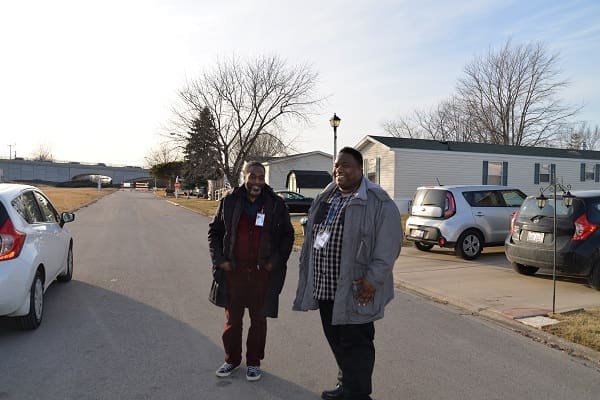 The Mobile Engagement Team is part of CommunityLinks, and Karen Kowal, the director of the program, believes it is “an innovative solution to the changes in the health care environment. CommunityLinks contracts with managed care organizations (MCOs), which are health insurance plans, to provide services to their members.” AFC uses its decades of experience providing holistic care to clients through case management, housing and mental health services to save MCOs money and provide more effective services for their members.
CommunityLinks was created as a response to the changing landscape of health care after the Affordable Care Act was passed and health reform changes started. Kathye Gorosh, AFC’s senior vice president of strategy and business development, knew things were going to change in terms of how services were delivered to people on Medicaid and for how they were paid. “AFC took a very progressive stance in trying to adapt sooner rather than later; we asked how we could take the work we do through our Care, Housing and Prevention programs and use this expertise to work with health insurance plans.”
Moreover, explained Gorosh, “Illinois Medicaid is enrolling most recipients in managed care, including the over 600,000 who are newly covered thanks to health care reform. That means tens of thousands of people every month are assigned to new health plans, and the health plans have to find and engage their new members .” This engagement is especially critical when a health plan knows of a member who has been hospitalized and has multiple chronic diseases, but can’t get in touch with them because they don’t have a working phone.
That’s where CommunityLinks comes in. Currently, CommunityLinks has contracts with two MCOs and sub-contracts with two community-based organizations and provides different services based on each company’s needs. Kowal explained, “We have eight different services that we can provide to clients, including services like reach, assessment, testing and HIV-Connect.” She paused before continuing, “That’s a lot of jargon-y lingo, though, isn’t it?”
Kowal is right: the vocabulary of CommunityLinks can be confusing to someone who is unfamiliar with the language of the health insurance industry. The premise of the program, however, is simple: to help MCOs better serve their members by lending 30 years worth of expertise in providing holistic and coordinated care to highly vulnerable individuals.
“In reality,” Kowal stated, “the services we provide are versions of AFC services offered in other capacities, such as testing and case management.” It is this expertise that allows CommunityLinks to effectively serve members, “delivering services, helping them know who to call, getting them more engaged in their plan.”
Reach and Locate services in practice
The goal of CommunityLinks is easy, but the process of achieving that goal is more complicated. Kowal noted, “We’ve had to find almost every single person in the program,” and this task requires much time and patience. So how does this small team actually go about providing reach and locate services, engaging hard-to-reach clients in their plans? The group employs a go-get-’em attitude and a divide-and-conquer technique to achieve their goals.
For instance, Peterson works primarily from the office, and her days are filled with phone calls and internet searches to find accurate contact information for each member. Because phone numbers and addresses provided by plans are often unreliable, Peterson must be creative to fill in the gaps. Peterson follows every lead she finds, even if that lead comes in the form of a wedding registry or social media page, and her positive attitude propels her forward.
“The most important thing,” Peterson said, “is that we use a wide variety of searches at different times in the month. For example, we might search for all of our monthly members in federal, state and county correctional systems at different points in the month and only find one member, but I’d still say all of those searches are worthwhile if we can find even the one person.”
When Peterson’s searches are successful, she has the opportunity to learn more about members through a Health Risk Questionnaire (HRQ). The HRQ serves to assess a health plan member’s overall health, as well as a way to allow the partner health insurance agency to learn more about their members. More importantly for CommunityLinks, though, making contact with a member means introducing them to additional services included in their plan. Peterson said, “Many of the members aren’t aware of the benefits that they receive from their insurance coverage, so it’s always rewarding to feel like we have a role in linking them to services that will help them better manage their health.”
But what happens when internal searches don’t lead to contact with a member? Four days a week, Terrence Clark and Andre Shaw travel to communities within and surrounding Chicago to knock on doors and attempt to make in-person contact. “Some days we won’t find anyone, which is frustrating, and sometimes it can be kind of scary not knowing what you’re walking into,” Shaw noted, “but it’s rewarding when you do find a member and reconnect them with their medical insurance.”
When they do locate members, Clark and Shaw sometimes have the opportunity to offer immediate HIV and hepatitis C testing, but even then, it can be hard to get members plugged into care. One such instance sticks out in Shaw’s mind: “There was a woman who tested positive for hepatitis C, but unfortunately we don’t know what happened to her. We worked really hard to find her help. We went to a few places that used to treat people with hepatitis, and each place would transfer us to a different facility. When we finally got her to the right place, she disappeared. We still try to call her every now and then, but we always get disconnected numbers.”
As frustrating as instances such as this can be for the team, they try to focus on celebrating the successes. “A lot of people are really grateful when we call. Our outreach creates a personal connection between the plan and the member that wasn’t there before. Often, no one from their insurance plan has been able to contact them, so there is a general sense of gratitude when they’re able to talk to us about their health,” said Kowal.
“Our health plan customers are happy too,” Kowal continued. “We’re helping them find and engage some of their sickest and highest-cost members. If the plan can connect them with the right specialists and educate them to see a doctor instead of just going to the ER, they have a chance to cut unnecessary spending and improve their members’ health.”
Indeed, it is these personal connections to both members and health plans that has garnered CommunityLinks praise for its innovative approach to health care engagement, with the National Alliance of State and Territorial AIDS Directors (NASTAD) calling the program an “example of a promising model bridging public health and health care systems and payers.”
Kowal and Gorosh agreed, and they consider the program’s first year a success. “We really worked together as a team to figure out the best method for reaching members. We know there has been success in linking people back to their plan and empowering them to engage in their health care. Our work is really about those individual successes.”
And ultimately, it’s those individual successes that emerge from programs like CommunityLinks that may make health care reform a success.

by Dan Frey, Director of Government Relations
Good morning everyone, I just wanted to take a few minutes to update you all on a busy week in Springfield. It was committee deadline week, and as such many pieces of legislation came up for an initial vote. This was a week of movement on substantive bills, but there is also a little budget news. Let’s dive right in to it!
Substantive Legislation
Three of AFC’s legislative priorities were voted out of committee last week in the House:
- Representative Greg Harris’ bill, HB 6073, the Vital Records Modernization Act, which allows transgender Illinoisans to update their birth certificate to reflect their lived gender identity prior to undergoing surgery, passed out of House Human Services Committee on a vote of 8-6-0, with Yes votes coming from Democrats and all No votes from Republicans. The bill now moves to the House floor.
- Representative Carol Ammons’ bill, HB 6213, also passed out of House Human Services committee on a unanimous vote with the promise that we would continue to work with Medicaid providers and the Illinois Department of Health & Family Services (HFS) to reach a compromise agreement. This legislation aims to improve health literacy of Medicaid managed care enrollees and make provider directories and prescription drug lists reliable, useful and accurate. The bill now moves to the House floor.
- Lastly, Representative Mary Flower’ bill, HB 4554, which mandates that Medicaid providers include PrEP and the associated program in their coverage packages passed out of the House Insurance Committee 21-1-0.
Budget Update
On Friday, April 8, Republican Senate Leader Christine Radogno filed legislation to fund human services in Illinois for FY 16 with SB 3418. This bill appears to be between Governor Rauner’s FY 16 proposal and Governor Rauner’s FY 17 proposal. The HIV Lump Sum, in this proposal, is allocated $20 million. Supportive Housing is appropriated $4 million. The proposal does not include any funding for the African American HIV/AIDS Response Act, which is simply unacceptable.
MCO Hearing
On Wednesday, April 6, the Senate conducted a subject matter hearing on the state of the Illinois’ Medicaid Managed Care industry from a fee-for-service model. The hearing heard testimony from the MCO industry, hospitals, HFS, nursing homes, FQHCs, and others. The overarching take-away was that while there continue to be issues with billing, payment, and credentialing, care coordination with the MCOs has been very successful. Senators seemed to feel that HFS needed to do more and there needed to be more oversight within this transition.
Up Next
The House and Senate both reconvene on Tuesday, April 12. Both are scheduled to be in Springfield through Friday this week.
As always, if you have any questions, comments, or concerns, please feel free to reach out to me directly. Have a great week!
About the blog
BudgetWatch is a weekly update from the AIDS Foundation of Chicago’s on-the-ground team in Springfield about the state’s longstanding budget impasse. Follow along at aidschicago.org/budgetwatch.
by Mirhanda Alewine and Eryn MacNeil
In Plain Sight, from Chicago’s History Moves “mobile museum” project, aims to engage communities in conversation about the history of women living with HIV in Chicago by highlighting the stories of participants in the Women’s Interagency HIV Study (WIHS). Eryn MacNeil and Mirhanda Alewine, two AFC staff members, had the opportunity to attend the opening reception for the exhibit, and they share their reactions below.
 Mirhanda: I’ve got to say, when I first heard about the In Plain Sight exhibit, I was really excited to see what approach they had taken. Since I started working at AFC, it has become pretty clear to me that HIV-focused art is often centered on men, so it was really cool to me that someone had taken the time to focus on female long-term survivors!
Eryn: I definitely agree. All we really knew going in to the exhibit was that it was focused on women living with HIV, but that’s relatively broad. After spending some time exploring, I began to understand that the approach of the project, at least as it came across to me, was to coalesce the similarities between each woman’s individual story into one overarching narrative of what it was like for a woman to be diagnosed with HIV in the 1990s.
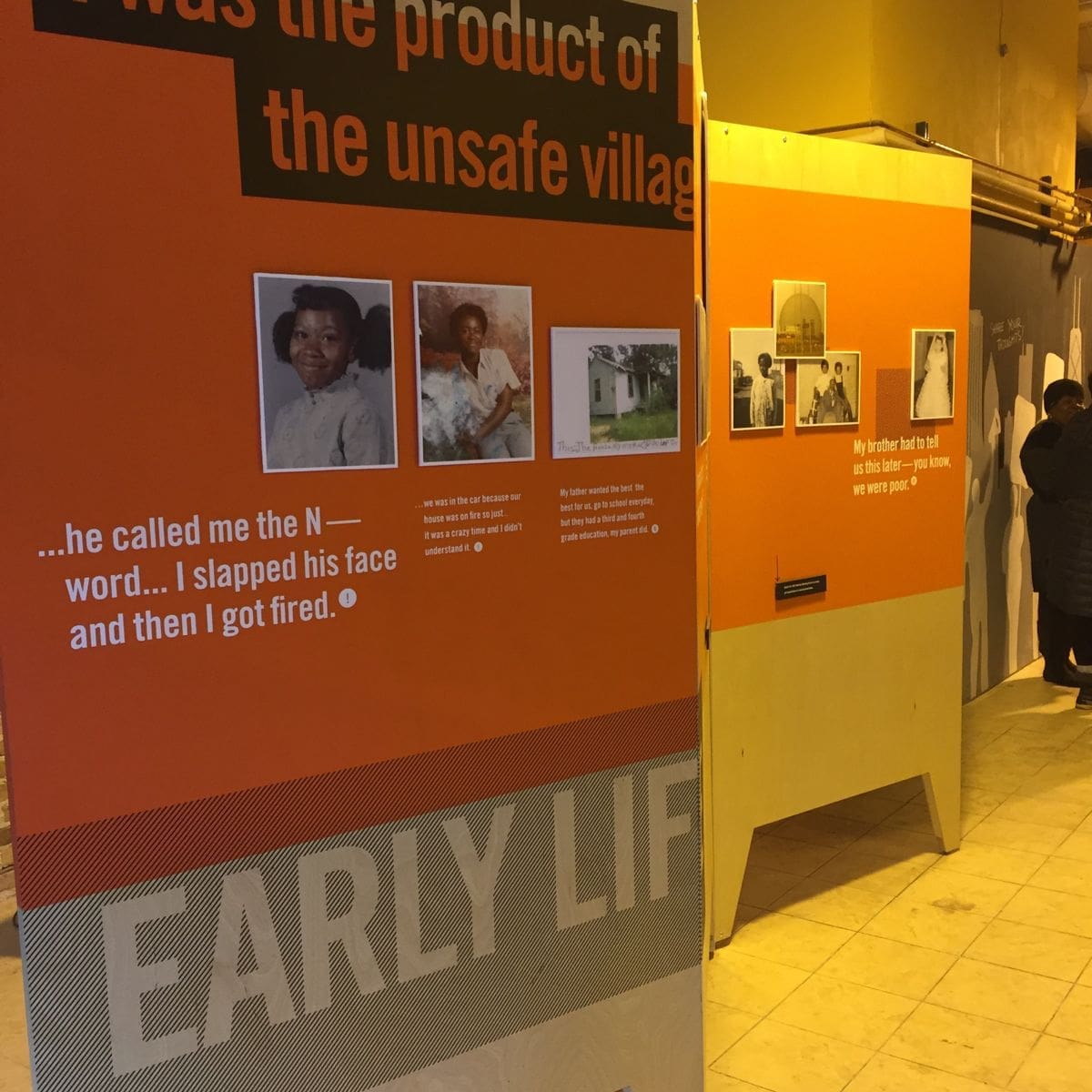
M: It took me a while to understand that, too. To give some visual context, the exhibit was set up as a sort of physical storybook that attendees got to walk through and experience at their own pace. The installation used four sets of bright orange, door-sized panels to serve as the bones of the exhibit, and each set represented a different “chapter” of the collective experience that the curators were presenting. I found the layout a little confusing at first, but after I gained my bearings, I really enjoyed the more free-form experience of gravitating toward whichever section I was most interested in.
E: I agree, I think we were both a little lost at first, but embracing that feeling and jumping in feet first actually made for a pretty cool experience! We also had the opportunity to speak with Dr. Jennifer Brier and Matt Wizinsky, the curators of the exhibit, to learn more about the reasoning behind some of the design and content decisions. Wizinsky mentioned that the exhibit was less about providing any sort of concrete timeline and more about the narrative arcs that are shared among the women.
M: And the four themes on which the exhibit focused really allowed that vision to shine through. The sections were Early Life, Crisis, Diagnosis and Still Surviving, and no matter which section you were looking at, the collection of quotes printed on the panels made it easy to recognize the similarities between the women and their stories. The common thread of their optimism really stood out, with the exhibit highlighting quotes like, “I did not let my HIV status stop me nor did I let people stop me.” That quote could have belonged to any of the women. Also, can we talk for a minute about how the quotes were chosen?
E: Yes! I was so interested to learn that the women were involved in every step of the process, including choosing the quotes. While we were at the exhibit, I remember you wondering out loud how the women felt when they saw the exhibit for the first time.
M: You’re right—I had so many questions! Do the women feel that their stories are represented accurately? How much was their input taken into account? To learn that they received a transcript of their interview and were given the opportunity to decide which quotes should be included in the installation was incredible. I am definitely impressed by the consideration given to the women and their opinions throughout the process.
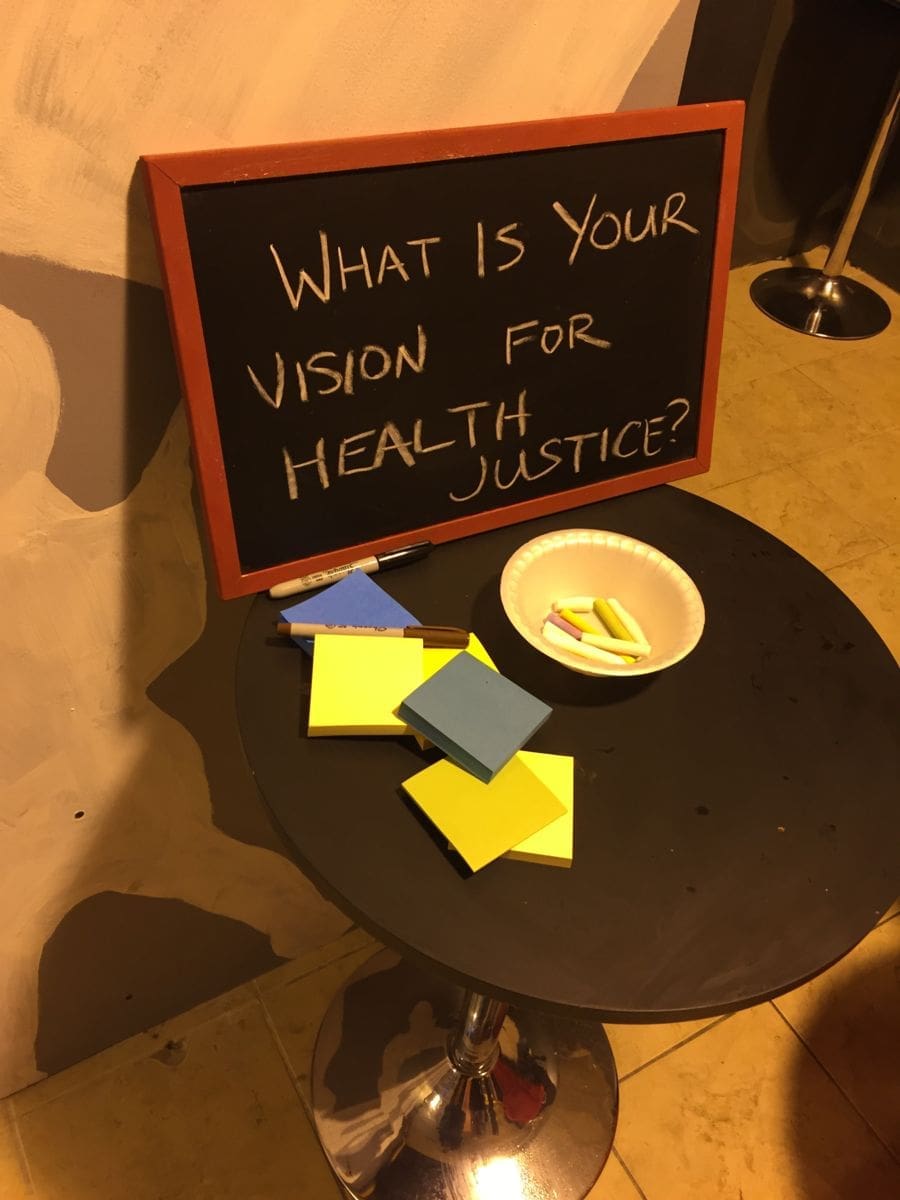 E: They really were involved in every step! The design was done by Wizinsky and some of his students, and we learned that he coordinated Skype and web conferences between the participants and the students during which the women were given the opportunity to provide feedback. It really makes the final product feel more sincere, knowing that the participants got to help shape the project into something that they felt represented their experience.
M: And it led to some really great ideas that may not have happened had the design been less collaborative …
E: Like the orange cards! The installation included one panel that featured vast rows of orange ID cards, and we learned that every woman received one of these cards when they joined the WIHS program, which was a study started in 1993 to learn about the impact of HIV on women. The cards allowed them to access the WIHS building.
M: It was even cooler when we learned about the origination of that idea! At one of the meetings of the exhibition’s creators with the WIHS participants, one woman pulled out her orange card, and suddenly all of the other women were pulling their orange cards out, too! Even though they don’t actually use the cards to access care anymore, they still keep them in their wallets and purses, which goes to show how important that detail is to their stories.
E: It was those little touches that really made the exhibit successful, that made the content stick in your mind as actual people’s stories instead of a museum exhibit or a retrospective. While the exhibit is only at the Pop Up JUST Art Center until April 8, the creators are looking to install it in other places around Chicago; keep an eye on historymoves.org for upcoming information!

by Dan Frey, Director of Government Relations
Good afternoon everyone! Though the legislature has not been in session for a few weeks now, AFC has been busy in preparing for their return to Springfield on Monday, April 5.
Virtual Advocacy Days
AFC held its second Virtual Advocacy Day on Wednesday, March 23. Over 100 individuals and organizations took to social media to advocate for Springfield to pass a positive budget. We demanded the full restoration of the HIV funding line and the African American AIDS Response Act, as well as stopping cuts to critical services that affect people living with HIV, including supportive housing, mental health, substance abuse and child care. Advocates sent over 1,000 tweets/posts and reaching over 150,000 social media users.
The day consisted of a Twibbon campaign where advocates changed their social media profile pictures; a Periscope Q&A with Rep. Greg Harris; a Twitter chat; and digital outreach to elected officials via social media.
Click here for the whole story!
Southside Town Hall
Last night at West Point Missionary Baptist Church, AFC facilitated a conversation about how Governor Rauner’s proposed budget will impact prevention, care, treatment, housing, and other services for the HIV community. Attendees heard from community leaders working on the budget crisis and were able to share their stories.
Up Next
The House reconvenes on Monday, April 4 and the Senate is back on Tuesday, April 5. It is Committee Deadline week in the House, so we are expecting the following bills to be up for a hearing this week. Please click on their link and submit a witness slip in support!
- HB 4554 (Flowers): House Insurance Committee, Thursday, April 6, 11 a.m.
- HB 6213 (Ammons): House Human Services Committee, Tuesday, April 5, 8 a.m.
- HB 5559 (Wallace): House Human Services Committee, Tuesday, April 5, 8 a.m.
- HB 6073 (Harris): House Human Services Committee, Tuesday, April 5, 8 a.m.
About the blog
BudgetWatch is a weekly update from the AIDS Foundation of Chicago’s on-the-ground team in Springfield about the state’s longstanding budget impasse. Follow along at aidschicago.org/budgetwatch.
by Josh Boegner, AIDS United Team Chicago AmeriCorps fellow
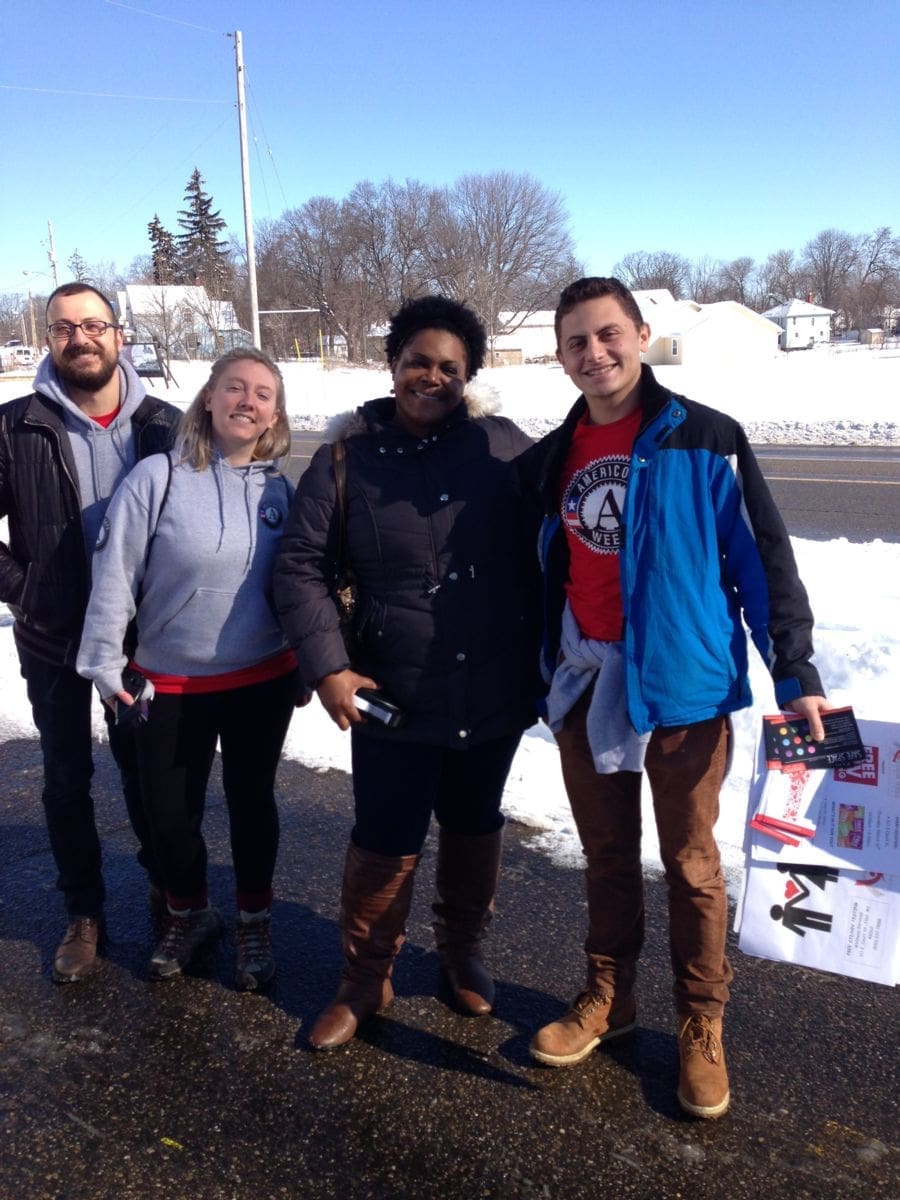
Every week, the AIDS United Team Chicago participates in a Fifth Day, where the entire team comes together to complete a service project in the community. Recently, we had the opportunity to partner with AIDS United’s Team Cleveland and Team Indianapolis on a “Super” Fifth Day in support of the community in Flint, Michigan.
Over the course of two days during the first weekend of March, we were able to serve in a variety of capacities that allowed us to increase our awareness regarding the water crisis and alleviate the burden the crisis is placing on the Flint community. We started our service with Wellness Services, one of the only HIV/AIDS service organizations serving the Flint community. We assisted them with outreach, and in cleaning and revitalizing their office space.
Later that day, we met with a group of AmeriCorps NCCC members, who have been on the ground in Flint for the past month serving with the American Red Cross’s door to door water distribution. We wrapped up the day processing food donations at the Food Bank of Eastern Michigan, who has seen a tremendous increase in water donations that has begun to impact their food distribution efforts. On our last day of service in Flint, we served at Greater Holy Temple, one of the few church-based water distribution sites that hands out water multiple days of the week.
While the impact of our time in Flint was limited, it allowed the team to reflect on the factors that lead to the Water Crisis, and the ongoing challenges that Flint will continue to face, such as: access to healthy and nutritious food, lack of economic opportunities, and how to repair a crumbling infrastructure, to name a few.
Click here to view more photos of AmeriCorps teams serving communities in Flint, MI on Facebook.

by Dan Frey, Director of Government Relations
Good afternoon, everyone! I just wanted to take a quick moment to update you on the March 24 Illinois Supreme Court ruling on AFSCME back pay, and how that might affect the budget process moving forward.
The ruling dealt with an issue that arose back in 2011, in which former Governor Pat Quinn refused to give AFSCME workers a wage increase that had been contained within their contract. He stated that the General Assembly had not appropriated enough funds for that wage increase, and thus he simply could not give them those funds. AFSCME believed that their contract with the state was binding, and thus, regardless of appropriation, they were owed those funds.
The Supreme Court ruled on March 24 that Governor Quinn was correct: there is no back pay owed to AFSCME workers because, regardless of a contract signed, the General Assembly holds the power of the purse, and thus without sufficient appropriations, the Governor’s hands were tied.
Why is this significant to us and the current budget fiasco? Last spring, Governor Rauner’s administration sent out contracts to agencies (AFC included) for services that stated we would be paid, subject to appropriation, for services rendered once a budget was passed. Putting aside whether or not we will have a budget to fund those contracts soon, the Supreme Court’s ruling seems to suggest that they view any and all contracts entered into by the Executive Branch, without the Legislative Branch’s appropriations to match, as moot. AFC and other key human service providers are assessing what this ruling could mean for our FY16 contracts and moving forward for FY17; we are developing a coordinated strategy. Stay tuned.
About the blog
BudgetWatch is a weekly update from the AIDS Foundation of Chicago’s on-the-ground team in Springfield about the state’s longstanding budget impasse. Follow along at aidschicago.org/budgetwatch.

by Ramon Gardenhire, Vice President of Policy and Advocacy
Yesterday, the Illinois Senate passed a bill designed to get billions of dollars to universities, college students and a variety of human-services programs. The Democrat-dominated Senate approved the bill SB2059 on a 39-18 vote, with Democrats in favor and Republicans opposed. Two Republicans did not vote.
The bill authorizes more than $3.8 billion in spending, including $1.8 billion for university operations and grants to needy students under the Monetary Award Program (MAP grants), and another $472 million for various human services dealing with things like HIV/AIDS, autism, sexual assault, addiction services, mental health and after-school programs.
HIV/AIDS and related critical services and programs include the following:
- HIV Lump Sum — $23 million
- African-American AIDS Response Act (AAARA) — $1.25 million
- Supportive Housing — $11 million
For reference, Governor Bruce Rauner’s proposed FY17 budget allocated only $18 million for the HIV lump sum (28% cut from FY15), reduction in the AAARA by 66% to $500,000 (from FY15) and just $4 million in supportive housing funds (from $13.7 million in FY15).
The bill now moves to the Illinois House, and it is expected to pass. The House previously passed a similar measure. Unfortunately, the governor has indicated he plans to veto the bill upon its arrival on his desk.
Both the House and Senate are now off for the next two weeks for their usual Easter break. They are scheduled to return the first week of April.
As you can see, we remain in a constant state of uncertainty related to the budget. To help bring more certainty and ensure we adequately fund essential public services and programs, please join us for one of our upcoming advocacy events. Your voice is needed and impactful — more than you know!
Please register for virtual advocacy days on March 23 , the March 31 South Side Budget Town Hall (6-8 p.m.), or Advocacy Days in Springfield on April 13 or May 10.
About the blog
BudgetWatch is a weekly update from the AIDS Foundation of Chicago’s on-the-ground team in Springfield about the state’s longstanding budget impasse. Follow along at aidschicago.org/budgetwatch.
CHICAGO – The AIDS Foundation of Chicago and The AIDS Institute are pleased to report that through their joint advocacy, national health insurance provider Ambetter Health has agreed to expand the list of medications it covers to include life-saving daily treatments for people living with HIV. This change is effective immediately and benefits Ambetter Qualified Health Plan (QHP) enrollees in Illinois, Florida and 10 other states in which the insurance provider operates (AR, GA, IN, MA, MS, NH, OH, TX, WA, WI).
Over the past two years, the AIDS Foundation of Chicago and The AIDS Institute assessed the various health insurance plans for people living with HIV in Illinois, Florida and other states. The groups found that Ambetter only covered one single-tablet regimen (STR), Atripla. There are currently six approved STRs from which providers may choose in tailoring individual patient care for people living with HIV – Atripla, Complera, Stribild, Triumeq, Genvoya, and Odefsey. Ambetter’s previous coverage policy denied people living with HIV access to the newer approved life-saving therapies, such as Stribild, Triumeq, and Genvoya, which are three of the U.S. Department of Health and Human Services (HHS) “Recommended Regimen Options.” Atripla, the oldest STR, is listed only as an “Alternative Regimen Option” and is less effective and has more serious side effects than the newer medications.
“After our plan review, we sent a letter to Ambetter stating that excluding these life-saving treatments from coverage constitutes discrimination under the Affordable Care Act, which sets clear standards for essential health benefits,” said Carl Schmid, Deputy Executive Director of The AIDS Institute. “Furthermore, the federal government has instructed that plans cannot deny beneficiaries acceptable clinical treatments, such as STRs, because it may discourage enrollment by those who need the medications.”
In recent weeks, AIDS Foundation of Chicago officials met with Ambetter representatives. As a result, Ambetter plans will now offer four of the currently approved STRs in all their plans in the twelve states in which they operate. The two they are not covering at this time were more recently approved by the FDA, although one of them is a “Recommended Regimen Option.”
“The AIDS Foundation of Chicago strongly believes that single-tablet regimens are some of the best options for HIV medications when treatment is started and when medication adherence is a particular concern,” explained Ramon Gardenhire, vice president of policy at the AIDS Foundation of Chicago. “While this is still a work in progress, this victory does mark a significant change and a good development forward to ensure quality care for people living with HIV.”
While Ambetter has agreed to cover additional HIV medications, beneficiaries’ access is still severely hampered due to the lack of affordability. For example, in some Silver plans offered in Illinois and Florida, a beneficiary must pay the full cost of the drug – at an average wholesale cost of between $2,753 and $3,244 per month, depending on the drug – until the $6,500 deductible is reached. In two Sliver plans in Illinois a 20% co-insurance is required to obtain the prescription, after a $4,500 deductible for one plan and a $5,500 deductible for the other.
The two organizations will continue to urge Ambetter to expand their coverage and affordability of HIV medications in order to meet the needs of people living with HIV.
The changes are now reflected on Ambetter’s online formulary. Coverage of STRs and tiering placement by state can be accessed here along with links to each state’s formulary.
About the AIDS Foundation of Chicago
AFC mobilizes communities to create equity and justice for people living with and vulnerable to HIV and related chronic diseases. We aspire to create a world in which people living with HIV and related chronic diseases will thrive, and new HIV infections will be rare. More at: aidschicago.org.
About The AIDS Institute
The AIDS Institute is a national bipartisan, nonprofit organization that promotes action for social change through public policy, research, advocacy, and education. More at: theaidsinstitute.org
by Mirhanda Alewine
Hilda Richards, Ed.D., RN, FAAN, an AIDS Foundation of Chicago (AFC) Board member for 15 years, discusses her experience on the Board and what she hopes for the future of AFC.
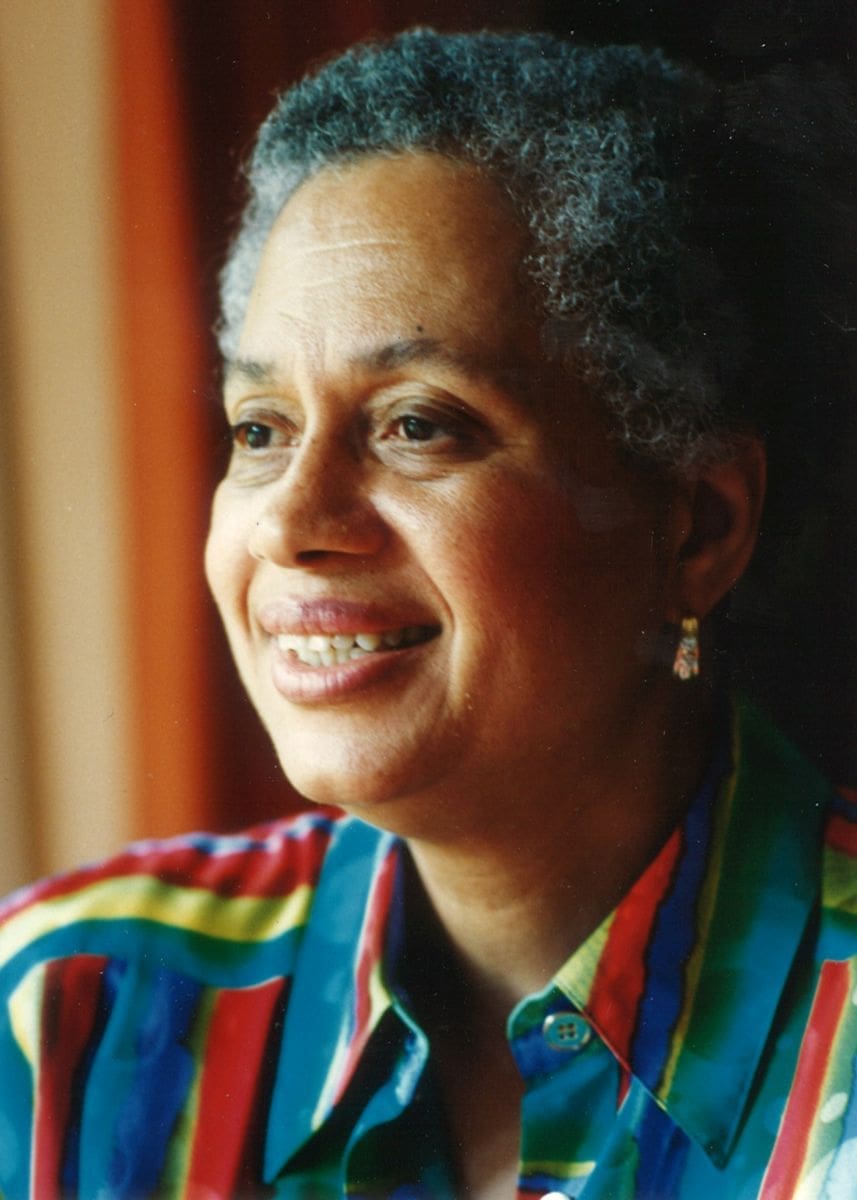 When Dr. Hilda Richards moved to Chicago in 2000 at the age of 64, she arrived with a lifetime’s worth of credentials and accomplishments — including several “firsts” for Black women in health care and academia. This was not an easy path: Richards fought to overcome incredible barriers to reach her position.
As the first Black student at St. John’s School of Nursing, Richards faced rampant racism, and she was later subject to harsh criticism of her work in graduate school—criticism that came, she believes, simply because she was a Black woman. Even when those around her urged her to quit, Richards persevered. Her husband at the time encouraged her to end her graduate pursuits, failing to understand why higher education was so important to her. Rather than accepting his advice, Richards called her mother, who encouraged her to persevere. This is only one of many moments in Richards’ life when having a supportive community helped keep her strong in her convictions.
Richards’ experiences as a nurse served to strengthen this belief in community. Richards began her career in psychiatric nursing, and she worked with both adult and adolescent patients in New York City, where she lived for 23 years. Richards was passionate about psychiatry, and she was a witness to the mental health movement in the 1960s, during which state hospitals were closed. Because of this, she helped found Harlem Rehabilitation Center, which served as a resource for holistic mental health treatment.
“If you’ve been in a hospital for ten years, a lot of things have changed, and these people needed help to get themselves back into the community,” Richards said. “That was our goal. We had mental health treatment with group therapy and such, but we also had a vocational part to try to help people get jobs.”
Richards went on to earn her Doctorate of Education, and she pursued a career in higher education. Not only did she help found Medgar Evers College, a college of the City University of New York, she also served as Dean of Ohio University in Athens and Chancellor of Indiana University Northwest. Additionally, Richards served as the editor of a refereed journal for the National Black Nurse’s Association, an organization that promotes high quality health care for people of color, before becoming the organization’s president. When Richards made the move to Chicago, she had no intention of slowing down.
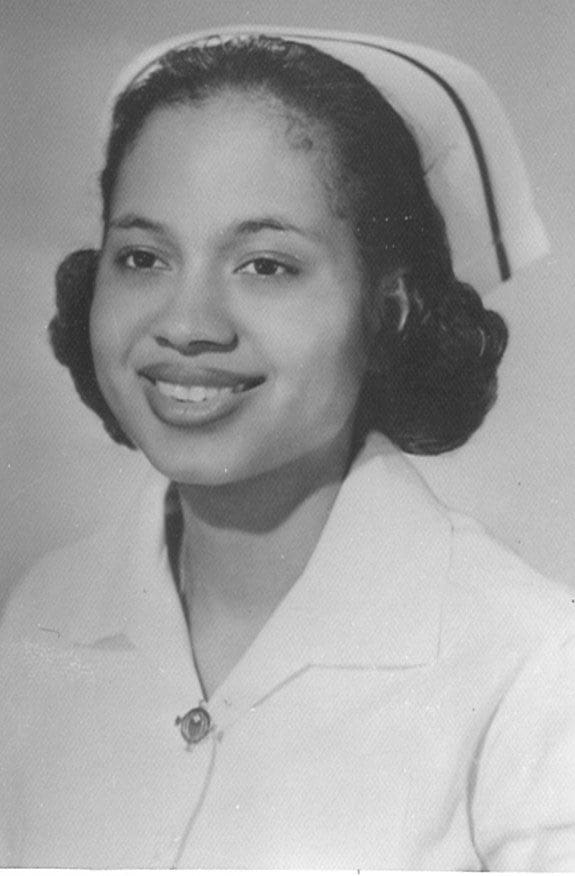 Richards was connected to AFC in 2000 by a friend who was on the Board; she began to consider the opportunity because of various people who had impacted her life. “There are things in my life that made me feel connected to AFC. AIDS didn’t come out until the 1980s, but I was born a long time before that. I knew people very close to me who, had they lived that long, [may] have had AIDS. I’m just so close to the issue.”
Becoming an AFC Board member not only allowed Richards to honor these people from her past, but it also created the opportunity to see and get to know the various communities of Chicago, particularly with her involvement on the grant-making committee, which assists in awarding Challenge Grants to community-based organizations. As a member, she helped conduct site visits, an experience she thoroughly enjoyed.
“I’m not from Chicago, and I had never worked in Chicago, so I really liked going into the community and seeing what people were doing about HIV and what their struggles and issues were,” said Richards. “It helped me expand my understanding and appreciation for the city.” Richards’ history of leadership and her understanding of what makes an organization effective allowed her to assist in making informed and compassionate decisions, taking the needs and impact of each organization into account.
Richards’ tenure as an AFC Board member came to an end in January 2016. “AFC is incredibly grateful for the 16 years Hilda served as a Board member and contributed to our work in creating justice and equity for people living with or vulnerable to HIV,” said John Peller, AFC’s president/CEO.
Richards remains active in the broader Chicago community. She devotes much of her time to volunteering at the Art Institute of Chicago as a guide and with a hospice organization making bereavement calls, and she is continuing her education through the University of Chicago, where she is enrolled in a sequence of history courses.
As she looks toward her future, she also considers her dreams for the future of AFC.
“The biggest expansion of AIDS is into the Black community,” said Richards. “Black gay men and Black women are highly impacted. To have more people with these experiences on the Board, who really appreciate what life is like for people in these communities, would be helpful when looking at these issues.” Richards hopes that AFC’s Board will continue to increase the representation of people from many different communities in order to also increase their impact in Chicago and beyond.