The AIDS Foundation of Chicago (AFC) celebrates the bold goals outlined by President Barack Obama’s updated National HIV/AIDS Strategy 2020 (NHAS), which was released on Dec. 1.
In 2010, President Obama became the first President to release the nation’s first comprehensive National HIV/AIDS Strategy, and in July, the NHAS to 2020. The updated implementation plan denotes key steps various federal agencies will undertake in addressing the domestic HIV epidemic.
The NHAS federal action plan outlines a comprehensive and coordinated approach to addressing domestic HIV/AIDS and advances many critical components the AIDS Foundation of Chicago (AFC) and other advocates have embraced, including the following:
-
Support for people living with HIV to remain linked and retained into comprehensive care
-
Increased access to pre-exposure prophylaxis (PrEP) and services associated with the program
-
Universal viral suppression
-
Inclusion of behavioral health and supportive services
-
Enforcement activities like prioritizing complaints of discrimination against people living with HIV in health care and insurance coverage
-
Efforts to ensure health equity
“AFC is committed to advocating for implementation of the NHAS in Chicago and Illinois. We will share lessons learned with advocates in other states and cities to build capacity and advocate for implementation,” said John Peller, President/CEO of AFC.
“We are heartened to see the new plan keenly address structural barriers,” said Ramon Gardenhire, vice president of Policy and Advocacy for AFC. “This aligns with AFC’S new strategic plan. Thirty years into the epidemic, we understand from both quantitative and qualitative data that we will never reach universal viral suppression if we don’t address structural barriers such as poverty, incarceration, homophobia and unemployment, which disproportionately impact those hardest hit or affected by HIV.”
While structural barriers are addressed by the NHAS, the plan does not offer sufficient attention to key communities most vulnerable to HIV, such as sex workers, transgender individuals and immigrant populations.
“We laud the Obama Administration’s ambitious and courageous plan; it is a testament to their commitment and vision for helping the U.S. achieve an AIDS–free generation,” said Suraj Madoori, manager of HIV Prevention Justice Alliance federal policy for AFC. “However, the plan doesn’t sufficiently address some critical communities such as sex workers, transgender individuals, and only focuses on testing and treatment for immigrant populations in the context of detention facilities.”
Nationally, over 1.2 million people are living with HIV, and an estimated 50,000 new infections occur each year, with Black gay and bisexual men bearing the greatest burden of new HIV infections. Locally, an estimated 43,500 people live with HIV in Illinois, and in Chicago, approximately 25,500 people live with the disease. Nearly 60% of those living with HIV in Illinois have not yet achieved viral suppression, which is the benchmark for living with HIV in a healthy, low-transmission-risk way.
AFC understands that the federal plan is not just a federal plan, but a community framework. AFC looks forward to working with federal and local partners to fully implement the exceptional plan.
The AIDS Foundation of Chicago (AFC) has prepared a report on the estimated monthly out‐of‐pocket cost a person can expect to pay for Truvada as PrEP under each of the plans on the Illinois health insurance marketplace offered in Cook County. When taken consistently and correctly, PrEP can reduce one’s risk of contracting HIV by close to 100%.
For more information on insurance company coverage of Truvada as PrEP, as well as personal stories of people using insurance to access PrEP, visit myprepexperience.org.
Premiums are shown as an example only for a single adult age 30. Deductibles and maximum out-of-pocket cost limits shown are for a single person. This is not a comprehensive guide to choosing a health care plan. For more information, visit healthcare.gov or Greater Than AIDS.
Need help choosing a plan?
For help applying for coverage — either marketplace plans or Medicaid — visit Get Covered Illinois or call 866-311-1119.
The AIDS Foundation of Chicago (AFC) and the Pride Action Tank stand in solidarity with the family of Laquan McDonald and the protesters who are sacrificing their bodies to ensure that we do not return to business as usual after seeing the horrific video of McDonald being killed by Chicago Police Officer Jason Van Dyke.
The slow journey to justice for Laquan McDonald and his family is disgraceful and has its underpinnings in institutionalized racism — the same societal ill that accounts for the overrepresentation of blacks in various disease categories, including HIV. Blacks make up 50% of new HIV infections. Nearly all of the more than 20,000 Chicago Public School students who experienced homelessness last year were youth of color. A national response must be implemented to address the intersectionality of these issues and help eradicate the racism that fosters them.
AFC and the Pride Action Tank work with some of the most ignored people in society — people living with and vulnerable to HIV and related chronic diseases and LGBTQ people. Our work requires an intersectional approach that embraces the impact of race, gender identity, economic level, and more. We recognize that real reforms in policing, education, health care access, housing, jobs and so much more are critical to improving health outcomes and creating thriving communities.
AFC and the Pride Action Tank call on Mayor Rahm Emanuel and the Chicago City Council to improve training for police, review all police records for patterns of abuse, and take stronger action against the small number of police who are accountable for the most alleged abuses. We are committed to transforming systems, policies and resources so that there is no doubt that #BlackLivesMatter.
We encourage people to join efforts to ensure that “the arc of the moral universe is long, but it bends towards justice.” Join the protests, raise your voices on social media and find other ways to stand in solidarity with McDonald’s family. We also encourage you to attend the #BlackLivesMatter Conference: HIV, Stigma and Violence organized by AFC and partners on World AIDS Day, Tuesday, Dec. 1, in Chicago. Learn more and register at www.aidschicago.org/blacklivesmatter.
by Eryn MacNeil, Fundraising Associate
World AIDS Day is approaching fast, and what better way to spend it than seeing one of the pop culture events that helped make many people aware of HIV in 1996? Artists Giving Back is putting on a production of RENT on Tuesday, Dec. 1, in honor of World AIDS Day, and to benefit the AIDS Foundation of Chicago (AFC).
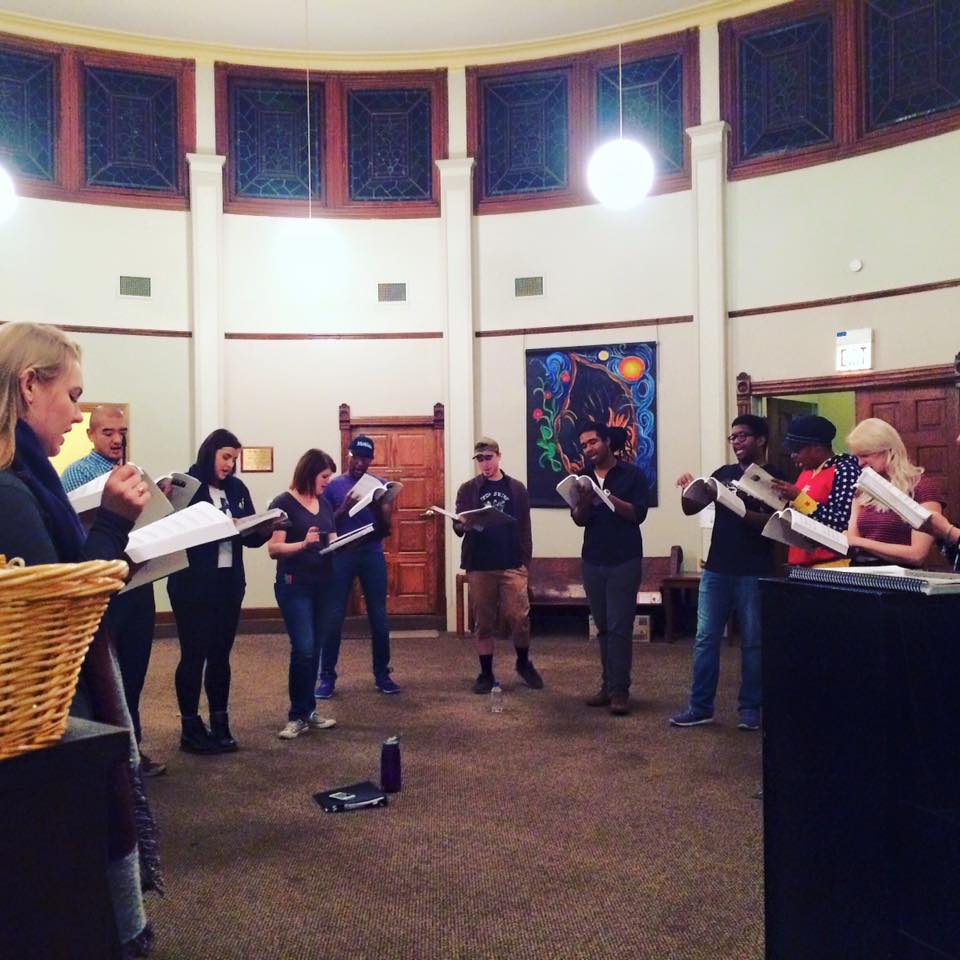 Artists Giving Back was started by Peter Ruger and Justin Callis, and this production of RENT is their first major production. Ruger has been involved with AFC for several years as a TEAM TO END AIDS marathon runner, which influenced his decision to use RENT to benefit AFC. “It’s great because it’s three things I really believe in: art, giving young performers a chance to perform, and raising money for AFC,” said Ruger. “When people donate to us, they’re donating to all these things. They’re supporting young artists getting a chance to share this awesome show with an audience on World AIDS Day.”
Callis explained that part of the reasoning behind the founding of Artists Giving Back was that the Chicago theatre community has supported so many performers, and what it was missing was an opportunity for artists to give back to the community that helped them.
“RENT is such a beautiful, meaningful show for so many people that we thought it was a fantastic place to start our company,” he said. “RENT was my first exposure to the AIDS epidemic, and listening to the way that Jonathan Larson transforms pain into such beautiful, soaring memories has really been so influential in both the AIDS community and the theatre community.”
 In addition to helping raise awareness of HIV among the estimated 950 audience members, this show has also informed the way some of the cast members think about HIV. Says Katelyn Renze, who is a junior at Columbia College Chicago and plays Mrs. Cohen and other ensemble parts in the show, “I actually sit there now and think about AIDS, and how many people it affects. We were told how many people in Chicago alone have AIDS, and it blew my mind.”
Larry Trice, who also plays multiple ensemble roles in the show, has been more involved in the Chicago HIV community as a member of the community advisory board for Chicago House, but becoming involved in this show has inspired him to take action in other ways. “I’ve always been pretty invested in the cause, but doing this show has really brought to my attention how many people don’t know things. So it’s just inspired me to get other people started with learning about the HIV/AIDS epidemic.”
Overall, both Ruger and Callis hope that audience members will find the show moving, and that it will inspire them to take action on World AIDS Day in the future. Says Callis, “We think it’s a fantastic match for the AIDS Foundation of Chicago and Artists Giving Back to work together for World AIDS Day 2015. One of the things I think is so important and beautiful about RENT is how it presents a community of artists, and it really shows you a pantheon of people from all walks of life, from all communities, and it shows you that when you bring these people together in a place like New York City, or in a place like Chicago, you end up with a community and a family and a bond that can be truly deep and meaningful. And we want this production to be a celebration of the communities that we are interacting with.”
Tickets for this one-night-only production of RENT are now on sale at artistsgivingback.org.
On Friday, Nov. 20, nearly 400 people — about half of whom camped overnight — showed up at Chicago’s Cricket Hill at Montrose and Lake Michigan to brave the season’s first snowfall at the Out in the Open Sleep Out.
Out in the Open is the first project of Pride Action Tank, a new, results-driven group that addresses challenges facing individuals and groups within LGBTQ communities through a collaborative process of inquiry, advocacy and action. This event was created to increase awareness and raise funds to support Chicago’s most vulnerable youth — those who are homeless or experiencing housing instability.
The event has so far raised over $40,000 from over 700 donors for over 18 Chicago-area charities that work on issues relating to LGBT youth homelessness. Donations will continue to be accepted through Dec. 31, 2015! Take a peek at 10 tweets that capture the community’s dedication to supporting the estimated 22,000 young adults who are impacted by homelessness at #SleepOutCHI.
Over 375 Chicagoans sleep outside in this snowstorm 2 raise money 2 fight Youth Homelessness. #sleepoutCHI pic.twitter.com/5aK6hl592O
— Tim Carroll (@TimJoeC)
November 21, 2015
Daniel Gaytan, 34, has been homeless for 13 years and faces discrimination for it every day. #sleepoutchi pic.twitter.com/wSGXsZsinQ
— Rebekah Frumkin (@jeansvaljeans)
November 21, 2015
We are at Out In The Open Sleep Out. We ain’t playin’. #sleepoutCHI @PrideActionTank pic.twitter.com/YdMoBVa3eG
— Kim L. Hunt (@chikimhunt62)
November 21, 2015
A little snow for one night is much easier than experiencing it many nights on the streets. #SleepOutChi pic.twitter.com/yTNAIoQFkV
— Ald. James Cappleman (@JamesCappleman)
November 21, 2015
What’s it like to be homeless during Chicago snowstorm? 200 people in #sleepoutchi found out https://t.co/ylvUrp1gMM pic.twitter.com/htmWf3NyCp
— DNAinfo.com Chicago (@DNAinfoCHI)
November 22, 2015
SleepOut for Chicago’s homeless youth (40% LGBT) & transgender remembrance. #SleepOutChi #TDOR pic.twitter.com/agZraZH9XR
— Sam Abeysekera (@SamAbeysekera)
November 21, 2015
The Firebelly Design team raised the most money for Homeless Youth, #sleepoutCHI pic.twitter.com/411UMFiLTB
— Tim Carroll (@TimJoeC)
November 21, 2015
Snow falling at #sleepoutchi — raising awareness for teen homelessness in Chicago !! Sleep out with the brave few! pic.twitter.com/5AwZF5arDi
— Noël (@noelleharri)
November 21, 2015
Nice snowy night to #sleepOutChi against youth #lgbt homelessness @LambdaLegal @SleepOutCh… https://t.co/Pk7s1qrDQj pic.twitter.com/8puIYwSJzS
— Lambda Legal (@LambdaLegal)
November 21, 2015
Last night At the #outintheopensleepout for homeless youth in Chicago #sleepoutchi #homeless #charity #awareness pic.twitter.com/ddEIFLXdJw
— Lyric Harris (@piscescollege)
November 21, 2015
Serving breakfast to the brave souls that slept over night in the snow w/ #sleepoutchi supporting youth homelessness pic.twitter.com/LkiPWUQtYM
— Fight2Feed (@Fight2Feed)
November 21, 2015
“The time to act is now.” This year’s White House-issued theme for World AIDS Day, the annual global day of recognition each Dec. 1, closely aligns with the positive energy being embraced by the AIDS Foundation of Chicago (AFC) and its partner organizations.
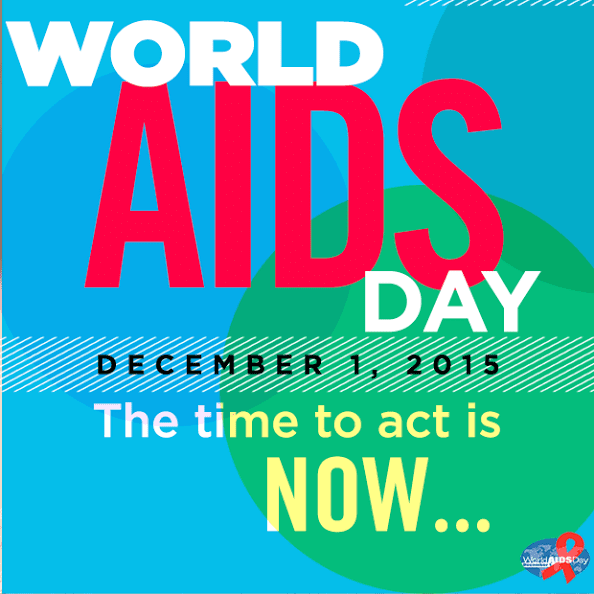 AFC urges Chicagoans to recognize the reality of today — that each year, 1,100 of their fellow Chicagoans get the news that they’re HIV-positive — and the promise of a new tomorrow, thanks to powerful medications that can make HIV undetectable for people living with the virus and can also prevent new infections.
AFC and its partner organizations will host several World AIDS Day-related events throughout the month of December. For more information, contact AFC.
Monday, Nov. 30, 11:30 a.m.
2015 World AIDS Day Honorary Luncheon, Jones Foundation
The Jones Foundation will honor AFC President/CEO John Peller, Loni Swain and Magic Johnson at a luncheon featuring speakers including Mayor Rahm Emanuel. Contact Deanne Jaffrey at 312-300-2290 for more information.
Tuesday, Dec. 1 – Wednesday, Dec. 30
Then and Now: 35 Years of HIV/AIDS
The International Museum of Surgical Science has assembled a large-scale timeline of HIV/AIDS that charts the intersections of medicine and the social from the first appearance of the disease in 1981 to the present day. Learn more here.
Tuesday, Dec. 1 –
When Dogs Heal exhibition at FLATS Studio Uptown Gallery
When Dogs Heal is a photographic project that tells the stories of people living with HIV and other illnesses who believe that the best medicine may not always be found at a pharmacy or in a doctor’s office; sometimes it comes in the form of a four-legged friend.
Tuesday, Dec. 1, all day
#GivingTuesday for #PrEP
All day long, AFC will be inviting the community to make donations toward its citywide PrEP campaign, scheduled to launch in 2016. Make a donation on #GivingTuesday! Click here.
Tuesday, Dec. 1, all day
Thunderclap for #FutureFC
Take action on Facebook and Twitter as an individual or organization by joining the National Female Condom Coalition’s Thunderclap encouraging people to sign their petition to the FDA seeking greater access to female condoms. Sign up here.
Tuesday, Dec. 1, all day
Volunteer with CAHISC to raise World AIDS Day awareness
The Chicago Area HIV Integrated Services Council is seeking volunteers to be at CTA stations and other public spaces to raise awareness about HIV and AIDS. Contact Hannah Anderson for more information.
Tuesday, Dec. 1, 8:30 a.m.
#BlackLivesMatter: HIV, Stigma and Violence
A full-day, free conference to develop local action plans to decrease stigma and violence and increase HIV prevention strategies in Black communities in Chicago. Learn more and register.
Tuesday, Dec. 1, 4 p.m.
World AIDS Day commemoration, Vida/SIDA
The Puerto Rican Cultural Center-Vida/SIDA will commemorate World AIDS Day with a candlelight vigil, ceremony, Latino MSM forum and more. Learn more and RSVP here.
Tuesday, Dec. 1, 7 p.m.
Voices for Change: World AIDS Day Showcase
Join Chicagoans at the Kennedy King Black Box Theater for a night of hip-hop, R&B, gospel, mime dancers, spoken-word performers and more! Learn more here.
Tuesday, Dec. 1, 7:30 p.m.
RENT, produced by Artists Giving Back
All proceeds from the production of Jonathan Larson’s 1996 musical will be donated to the AIDS Foundation of Chicago. Purchase tickets here.
Thursday, Dec. 3, 6 p.m.
World of Chocolate
Join AFC and 1,200 chocolate-lovers for a hotsy-totsy trip back to the roaring twenties. This annual gala will allow guests to eat decadent chocolate desserts, drink and dance at Chicago Union Station’s Great Hall. Get tickets and information here.
Friday, Dec. 4, 7 p.m.
10th Annual People’s Gala: Educating Minds, Transforming Lives
The People’s Gala is an extension of the Men and Women in Prison Ministries’ mission to uplift their clients and their families. This gala is a way for them to step out of the stigma of incarceration, find fellowship and learn about vital resources. Contact Sista Yaa Simpson at 312-961-6189 or [email protected] for more information.
Saturday, Dec. 5, 8:30 a.m.
A Way Forward: Overcoming Stigma and Statistics with Stories
The 11th annual Clergy and Lay Leadership Summit for the faith-based response to the HIV/AIDS epidemic will host a daylong conference with breakout sessions for teens, young adults and all other attendees. Learn more here.
Saturday, Dec. 5, 10 a.m.
World AIDS Day Commemoration, Center on Halsted
Center on Halsted will bring together individuals to commemorate strides made in HIV/AIDS research, prevention, and outreach work while inspiring a generation to live in supportive communities and advocate for their own health and well-being. Learn more here.
Tuesday, Dec. 8 6:30 p.m.
“Then and now: 35 years of HIV/AIDS,” International Museum of Surgical Science
The International Museum of Surgical Science has assembled a large-scale timeline of HIV/AIDS that charts the intersections of medicine and the social from the first appearance of the disease in 1981 to the present day. Email [email protected] to RSVP for the exhibit reception.
The AIDS Foundation of Chicago (AFC) is pleased to announce the 30 organizations selected to receive an estimated $7 million in Ryan White HIV/AIDS Program grants to serve the HIV community throughout the Chicago metropolitan area.
Funding through the federal Ryan White program, which distributes $2.3 billion nationwide to support people living with HIV, allows AFC to create a system of collaborative partnerships between Chicago-based organizations, establishing holistic and quality care for clients in Cook and the surrounding nine counties.
According to Simone Koehlinger, AFC’s senior vice president of programs, “The Ryan White program and the coordinated system of care that AFC leads is vital. This safety net ensures that people living with HIV —specifically those who do not have insurance or who have inadequate insurance — can get the care they need.”
“Funding for these services comes from the Chicago and Illinois Departments of Public Health. We are grateful for these funders for providing outstanding leadership for HIV services in the Chicago metro area and beyond,” said Koehlinger.
In August, AFC released its first Ryan White request for proposals (RFP) in over five years, inviting Chicago-area organizations to submit applications for funding their support programs for people living with HIV. The majority of funding supports organizations that work to keep HIV-positive clients connected to care through the largest coordinated HIV case management system in the country, led by AFC.
“Over the past several years, the case management system has been adjusting to the changes that have come with the Affordable Care Act. Our increased understanding of this new system has highlighted opportunities to continue to serve our clients in new and increasingly better ways,” says Iliana Gilliland, AFC’s director of care.
To make selections that would generate the greatest impact for clients, AFC coordinated proposal review panels consisting of AFC staff, Board members and public health professionals. Each panel scored proposals collaboratively based on their wide range of perspectives. AFC used the scores of these panels, as well as information about communities hardest hit by the epidemic and the experience of the applying organizations, to make its final assessments.
Bashirat Osunmakinde, AFC’s director of Ryan White client services, says, “We selected applicants who demonstrated an understanding of client needs and the new health care landscape.” Roman Buenrostro, AFC’s director of special projects, adds, “The shift in the larger health care system presented AFC with the opportunity to work with funders and partner agencies to build an even more impactful and responsive model of service delivery.”
The announcement of the Ryan White award recipients closely follows the release of Positive Momentum, AFC’s new strategic plan, in which the organization commits to improving health equity and mobilizing communities to serve the HIV community in Illinois. The organization plans to reach these goals by refocusing its efforts on populations highly impacted by or vulnerable to the virus. The award recipients reflect this commitment, as a significant portion of the selected agencies serve communities of color and transgender women.
Ultimately, AFC President/CEO John Peller says, “AFC and its partner agencies have a greater focus on performance–driven outcomes and proof of high quality services. We are holding ourselves and each other accountable to continually monitor and improve how we serve people with HIV. AFC is delighted to work collaboratively with a strong network of agencies who are innovative and deeply committed to co-develop a new model of care for people living with HIV.”
Note: This map only shows agencies funded by AFC for Parts A and B of the Ryan White Program. AFC funds other organizations through other funding that is not shown on this map. The Chicago Department of Public Health and federal government directly fund organizations that are not shown on this map. AFC will make additional awards for Part B ambulatory care in the collar counties in 2016.
|
Agencies |
|
|---|---|
|
Ambulatory / Outpatient Medical Care |
Core Center Erie Family Health Center |
|
Food Bank / Home Delivered Meals |
Catholic Charities of Chicago Heartland Health Outreach |
|
Legal Assistance |
Legal Council for Health Justice |
|
Mental Health |
AlexianBrothers Housing & Health Alliance Catholic Charities of Chicago Children’s Place Association Christian Community Health Center Core Center Erie Family Health Center |
|
Oral Health |
Athena Dental Group, PC Christian Community Health Center Howard Area Community Center Open Door Clinic Provident Hospital |
|
Psychosocial |
AlexianBrothers Housing & Health Alliance Haymarket Center Test Positive Aware Network Universal Family Connection,Inc |
|
Substance Abuse Outpatient |
Haymarket Center Healthcare Alternative Systems |
|
Transitional Housing |
AlexianBrothers Housing & Health Alliance Children’s Place Association Haymarket Center Healthcare Alternative Systems |
|
Medical Case Management
|
Agape Missions Austin CBC Catholic Charities of Chicago Chicago House Children’s Place Association Christian Community Health Center Core Center Erie Family Health Center Heartland Health Outreach Howard Brown Health Lake County Health Department Michael Reese Open Door Clinic Project Vida Inc. Provident Hospital Sinai Health System South Side Help Center South Suburban HIV / AIDS Regional Clinics Test Positive Aware Network UIC-Community Outreach Intervention Project University of Chicago |
|
Non-medical Case Management
|
Catholic Charities of Chicago Heartland Health Outreach LR Anixter Center – CALOR Open Door Clinic Puerto Rican Cultural Center Southside Help Center Test Positive Aware Network University of Chicago |
by Mirhanda Alewine, communications coordinator
Caprice Carthans, a trans woman of color and one of the co-chairs of the AIDS Foundation of Chicago’s Integrated Community Advisory Board (CAB), has made healthcare advocacy for Chicago’s community of trans women her mission.
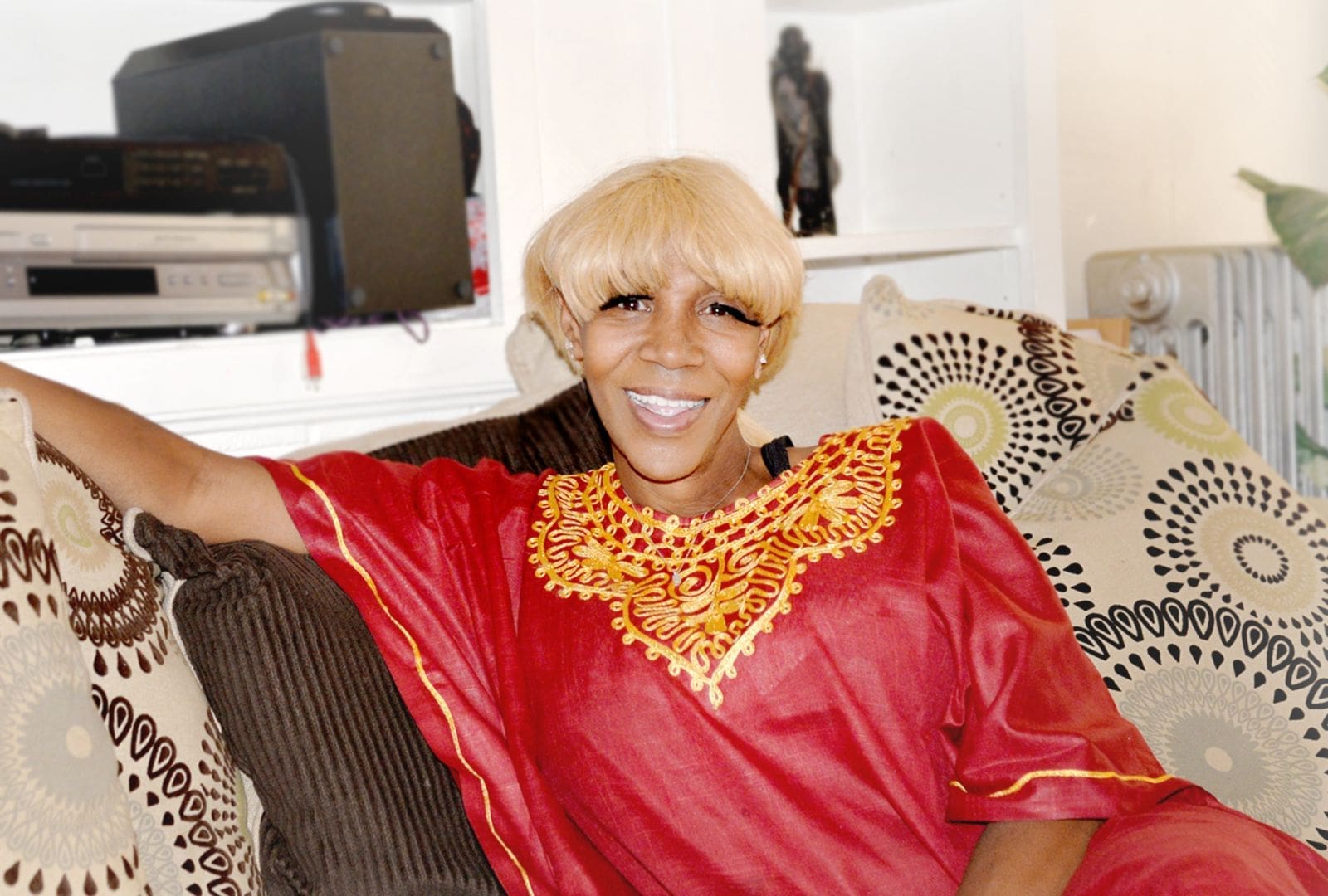
When I finally set foot on Carthans’ block in Chicago’s Marquette Park neighborhood, I feel as if I have been wandering toward her apartment building for far longer than the fifteen minutes that have actually passed. She greets me with a sweeping smile, waving her arm back and forth broadly from the doorframe of her brick apartment building; her voice, simultaneously gravelly and sincere, shouts my name loudly down the street, beckoning me down the sidewalk. The sunshine highlights both her blond ponytail and the decorative golden thread along the neckline of her dress, and the bright morning light covers her in what seems to be her own personal spotlight.
The bottom hem of her garnet muumuu grazes her ankles as the door allows the wind to sneak in behind us. Gracefully leading me up the stairs to her unit, my host asks hurriedly if I’ve had my morning coffee; the speed of her language indicates that she has perhaps already had a cup or two. She ushers me quickly into her home, shooing me into a comfortable beige chair adorned with a leopard-print throw pillow. She treats me, a near-stranger, with an immediate familiarity typically reserved for close friends.
“My mother was my first advocate.”
Carthans’ penchant for hospitality is a sort of family heirloom, passed directly to her from her mother, and it remains her secret ingredient for successful grassroots advocacy. Her mother, the person she readily admits to admiring most, was Carthans’ first and greatest supporter.
“When I finally came out to [my mom, at age 11], she said, ‘Well it’s about time you told me!'” Carthans contends that the moment was simultaneously an incredible turning point and a non-event. “Parents always know their children,” Carthans posits, and her mother’s thoughtful actions and reactions made her transition, at least with her large immediate family, seamless.
“Everybody came to the dining table and [my mother] said, ‘Pat has an announcement! She is no longer to be called Pat. Her name is now Caprice. It is no longer he or him, it’s she or her.’ And [my brothers and sisters] were able to practice that at home. So advocacy started for me a long time ago.”
Carthans sits on her soft couch, crossing her legs easily and adjusting her blond bangs with perfectly manicured red nails. She is so comfortable in her own skin. She recognizes, however, that the message of acceptance she received is not the one that so many young trans women experience. “My mom did a good job, [and] I’m fortunate to have that. Often trans folks don’t get that [support].”
“I’m a mover and a shaker.”
A Chicago native, Carthans grew restless while attending Chicago State University and moved to New York City. Throughout her thirty years in the bustling city, she learned to navigate the often difficult and ever-changing healthcare system. “New York [City] has a [broad] resource line,” Carthans admits, and, particularly after she was diagnosed with HIV in 1998, she developed the persistence necessary to traverse the frequently muddled paper-trail leading to these incredible resources. “I’m resourceful. I made it my business to make [receiving services] convenient for me. I’m aggressive in terms of support. I don’t take no for an answer.”
Despite the city’s abundant resources, however, Carthans eventually reached a point at which she was financially unable to continue living in one of the most expensive cities in the world. “It was time to come home,” she acknowledges. Packing up the experiences and knowledge granted to her from her thirty-year relationship with NYC, Carthans moved back to Chicago, the place she calls home.
“My job as an advocate, as a navigator, as a person of color, is to connect the dots.”
When she returned from New York City, Carthans immediately sought out medical case management from AFC, and she was connected with Christian Community Health Center (CCHC). “I made sure to take care of me first, because it’s impossible to take care of other people if you’re not taking care of yourself,” Carthans comments.
CCHC nurtured and developed her passion for giving back to the community, and as soon as she was plugged into appropriate care, Carthans decided it was time to “to roll up [her] sleeves and dig in.” She became a navigator for the Affordable Care Act (ACA) through Heartland Alliance, working to enroll trans women and sex workers in health care. Serving as an essential liaison between providers and new clients, she provided the requisite time and space for trans women of color to talk about health care through small, intimate gatherings.
Carthans felt that the best and most secure place to host these meetings was in her own home, where she could foster a welcoming and stigma-free environment for conversation. “There was no time limit for them to stay here. When the providers were gone, the girls would still be sitting here, talking about things they want to do, reminiscing, relationship building.”
She recalls what it was like for her when she was challenged by providers and her HIV-positive status; she remembers feeling an aversion to receiving medical care from providers well-known for serving the trans or HIV-positive community due to the accompanying side-dish of stigma. “Someone took a risk with me and told me, ‘Look, this is where I go [for health care services]. I know that you don’t want to go where everybody else goes.'”
Many of the young women with whom Carthans works feel similarly, and her unique perspective and experiences, as well as her abundant knowledge of Chicago resources, allow her to provide these women with the discreet health care options they crave.
“Go where they go.”
Carthans is aware, though, that reaching communities involves making herself readily accessible to them. The key to connecting young trans women of color to resources, Carthans argues, is to meet them where they are, and this is the spirit that she brings to AFC’s Integrated CAB. The board consists of current and former AFC clients; according to Carthans, “[their] job as CAB members is to go deeper into communities [to] bring [neighborhood opinions] back to the complete body [of the organization].”
Cathans’ experiences taught her to connect with trans women about health care options where they are and when they’re there. She articulates, “[I] may have to go to the club to make myself available and accessible to them, [and that means] my shift doesn’t start until 5 [or after].”
Ultimately, though, she believes “if you’re willing to take the risk and go into [places that may be unfriendly], you can start the dialogue and open the conversation.” Her experience engaging with her community on an incredibly genuine level allows her to bring a unique perspective to the Integrated CAB, truly creating an opportunity for AFC to continue improving the services it offers and the ways in which it interacts with the diverse population of Chicago.
“I have a vast group of people that I know genuinely love me, that authentically love me.”
As our conversation comes to a close, Carthans slowly reclines further into her seat, and she unveils her vision for the world in her characteristically exaggerated fashion. “I know where my passion lies, what my goal is, and that’s to pass the mantle of all [my] hard work to that baby girl coming up who has the passion to give back to the community.”
Her clear understanding that the fight for accessible health care is long from over pushes Carthans to instill the same passion for advocacy in the young women she connects to care. Her attempt to “always [place herself] in a position to keep people engaged and connect people to the best parts of care possible” fuels her hope that her advocacy will ultimately empower the next generation of trans women to take charge of their health with a similar gusto.
 This week, Congress is maneuvering a federal budget deal that includes proposed cuts to important HIV/AIDS programs. We are finally close to a bipartisan budget deal, but the fight is not over yet.
We desperately need you to urge your members of Congress to restore cuts and maintain funding for vital HIV/AIDS programs and services. Along with restoring cuts, advocates are asking for action on a couple of key budget-related issues. Here’s what we are asking:
- Restore proposed cuts, including cuts to Minority HIV/AIDS Initiative and the Ryan White HIV/AIDS Program Special Projects of National Significance and the STD Prevention Program.
- Modernize the Housing Opportunities for Persons Living with AIDS (HOPWA) formula and increase funding for the HOPWA program to minimize loss of funds as a result of the revised formula.
- Include language to end the ban on the use of federal funds for syringe exchange programs (SEPs) and to maintain language that allows the use of local funds for SEPs in the District of Columbia (because it’s not a state it needs congressional approval).
- Increase funding for U.S. HIV programs.
- Asking the National Institutes of Health (NIH) to defend a robust and well-funded HIV research range of work.
Here’s how you can take action!
- Tell Congress to protect and invest in the lives of Americans living with HIV now! Our friends at AIDS United have set up an action page where you can message and urge Congress to protect and increase HIV/AIDS funding, including restoring proposed cuts to the HIV/AIDS budget. Click here to make your voice heard!
- Join the #NoHIVcuts Week of Action: Today through Friday on social media! The AIDS Budget and Appropriations Coalition have created a social media toolkit to ensure there are #NoHIVcuts in the bipartisan budget. Use the sample Facebook and Twitter posts to send messages to Congress!
- Sign on your organization to a HOPWA community letter! Deadline: Tuesday, Nov. 17 by 3 p.m. ET. The National AIDS Housing Coalition is asking for organizations to sign on to a letter putting pressure on U.S. House and Senate Appropriations Committees to ensure the HOPWA formula is updated. Sign on by sending your organization’s name, city and state to: [email protected].
- HIV research funding remains at risk – Sign on now! Deadline: Monday, Nov. 23. The Federal AIDS Policy Partnership (FAPP) Research Working Group is sending a letter calling on NIH leadership to support and defend a robust HIV research budget as the government prioritizes funding. With 417 organizations signed on to the previous letter, the FAPP Research Working Group is asking for organizations to sign on to a new letter to NIH. Click here to sign the letter.
The AIDS Foundation of Chicago (AFC) is pleased to announce its plan to provide Taskforce Prevention and Community Services (Taskforce) and Chicago Black Gay Men’s Caucus (CBGMC) with development grants and support in long-term strategic planning.
As a result of these Capacity Building Assistance (CBA) partnerships, both Taskforce and CBGMC will be able to continue their daily operations while also increasing their capacity to serve the HIV community. The organizations serve Black gay and bisexual men and transgender women, populations that are highly vulnerable to HIV. Of new HIV cases in Chicago, 1 in 2 are among African Americans and 3 in 4 are among gay and bisexual men.
Erik Glenn, executive director of CBGMC, noted, “Through this [assistance], the Caucus will be able to connect greater numbers of Black gay, bisexual and same–gender–loving men to accessible, high-impact health services.“
“Taskforce and CBGMC have been disproportionately impacted by the budget stalemate in Springfield,” said Ramon Gardenhire, AFC’s vice president of Policy and Advocacy. “If we plan on making inroads into reducing new HIV infections and linking people to care, it is essential that vital local organizations addressing community challenges continue to thrive.”
Primarily, these CBA partnerships will give both Taskforce and CBGMC the necessary tools to find crucial funding opportunities and build new partnerships with other community organizations in order to expand their ability to serve their respective communities. “Partnering with Taskforce and CBGMC will allow AFC staff to work closely with both organizations to ensure that every effort is made to increase the success of their work for the Chicago HIV community,” said AFC President/CEO John Peller.
“Taskforce is proud to partner with AFC to sustain key services for Chicago’s African-American LGBTQ youth and transgender population,” said Alonzo Brown, interim executive director of Taskforce Prevention and Community Services. “Our collaboration with AFC positions us for the long term and continues much-needed services and resources, including our drop-in center, which vulnerable African-American LGBTQ youth on Chicago’s West Side depend on each day.”
AFC’s mission is to lead the fight against HIV/AIDS, and the organization continues to do this through the support of two organizations that break down barriers to care, prevention and education. Ultimately, Cynthia Tucker, AFC’s vice president of Prevention and Community Partnerships, believes these partnerships are vital. “The two strategic partnerships represent an alliance to expand the overall quality of life in the organization’s communities, while decreasing gaps in services and building their infrastructure.”
AFC’s partnership with Taskforce will be from June 1, 2015 through Dec. 31 2015 and with CBGMC from Sept. 1, 2015 through Aug. 31, 2016.
About the organizations
Taskforce Prevention and Community Services is located in Chicago’s Austin neighborhood, and the agency provides vital services to youth who are vulnerable to HIV. Taskforce works to ensure that communities with otherwise limited resources have access to HIV testing, care and prevention education. The organization operates a drop-in youth center that remains an essential asset for their community’s youth.
Chicago Black Gay Men’s Caucus works within greater Chicago to help gay and bisexual Black men find and access support resources. CBGMC works to diminish barriers between traditional and non-traditional health care providers to prevent new HIV infections among Black men who have sex with men. CBGMC continues to provide essential services through their work to empower Black gay men to take advantage of health care resources.