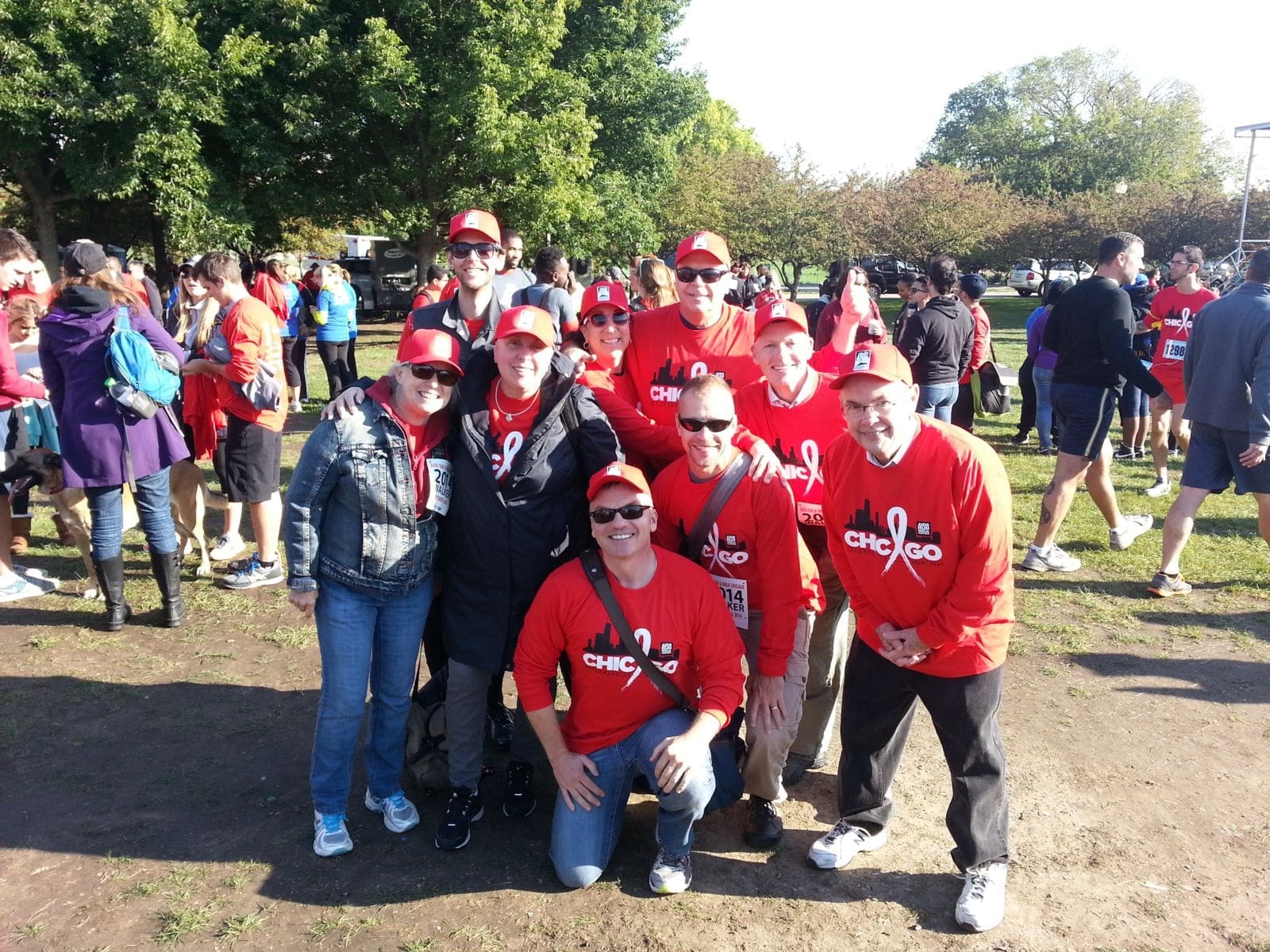
In last year’s AIDS Run & Walk Chicago, a team of only 11 fun-loving people raised more than $15,000 for Season of Concern, an organization that supports people in Chicago who are experiencing a chronic illness like HIV and AIDS.
 That success comes largely because of the work of Mike Checuga, a Season of Concern board member and their AIDS Run & Walk Chicago team co-captain (along with fellow board member Marcey McVay). By day, he works in real estate, but in his free time, he focuses on encouraging his team to put their feet down, raise money and make a difference in the HIV epidemic.
It’s not about big contributions, Checuga said. “Nickels and dimes really make a difference in people’s lives.” Season of Concern has shown this is true; through donations theater patrons make at the door leaving theaters across Chicago, those nickels and dimes have resulted in distributions of over $2.5 million from Season of Concern to 35 HIV/AIDS organizations since 1987.
And the same is true for contributions made to their AIDS Run & Walk Chicago team. But they’re hoping to recruit a larger team for the event, taking place this year on Sept. 26 at Soldier Field, to get more than just nickels and dimes.
“I learned from my mom that guilt and fear are effective tools to get people to do stuff,” joked Checuga.
Che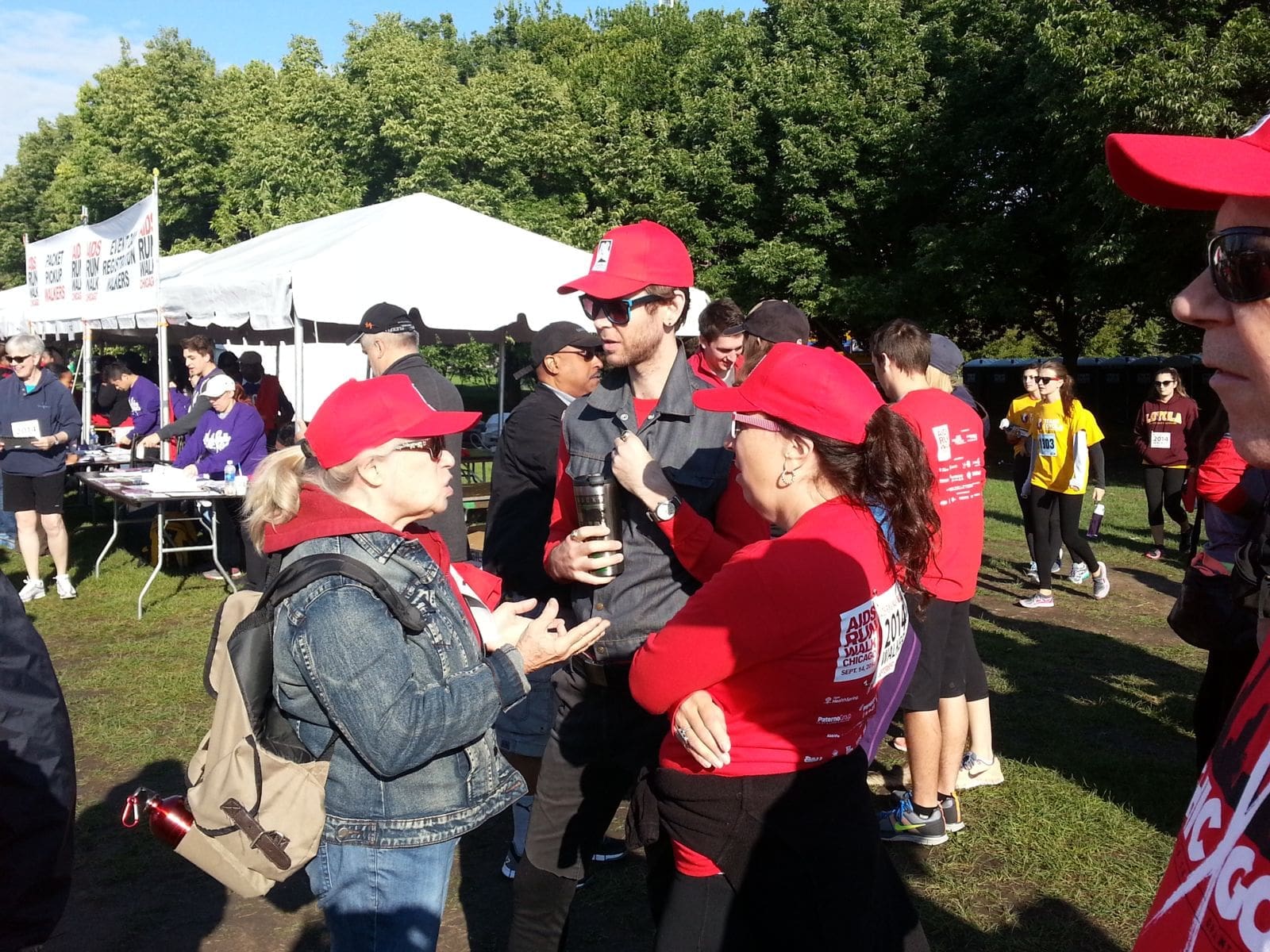 cuga has been associated with Season of Concern for five years — his good friend, actress Alexandra Billings, connected him to the organization. “It’s been a blast.”
“I was so impressed with people who had all this pride about being gay, and after I came out as gay a few years ago, I wanted to have that same pride in something,” said Checuga. He chose to have that pride in himself by helping people through Season of Concern. “I wanted to do whatever I could do to make a difference by supporting an organization that helps people living with HIV and other chronic illnesses.”
He knows the impact that a large-scale event like AIDS Run & Walk Chicago can have on the epidemic, especially among young people. “They haven’t seen anyone sick,” worried Checuga. “They just don’t think HIV is a big deal.” He hopes that the Season of Concern team can make huge strides toward ending new HIV infections.

|
|---|
|
Pay it forward. Grow your team by encouraging your veteran teammates to recruit new members among their donors from last year. That turns strong givers into strong fundraisers. |
|
Host a kickoff party. Strengthen team bonds and recruit by hosting a kick-off mixer for your AIDS Run & Walk Chicago team. Mike is hosting an Air & Water Show party to boost his Season of Concern team morale. |
|
Connect, connect, connect! Reach out to your team on a regular basis — and not always in a mass email. Make sure everyone’s doing their part to fundraise by giving ideas, one-liners, suggested social media posts and encouragement. |
|
Make your uniform. Last year’s Season of Concern team made hats identifying their group and uniting them around a fun incentive. Armbands, capes, a banner are also great ways to increase visibility and pump up your team. |
|
Inspire competition. Pit your teammates against one another — in a fun and civil way, of course. Let the group know when someone has taken the lead in fundraising or reached a goal. |
 CHICAGO — “Put your foot down.” That’s the message behind this year’s AIDS Run & Walk Chicago, hosted by the AIDS Foundation of Chicago (AFC) and benefiting 35 other community organizations — known as CommunityDirect partners — on Saturday, Sept. 26 at Chicago’s Soldier Field.
“We want supporters to put their foot down and make a difference in this epidemic, especially among communities most impacted by HIV,” said AFC President/CEO John Peller.
“At the biggest annual HIV awareness event in Chicago, we want to make it clear that new HIV infections can be a thing of the past if we put the right resources in the right places — including AFC and our 35 CommunityDirect partners.”
The 35 CommunityDirect partners that will raise funds through this year’s event will receive 90% of all money raised by their teams. Last year, the 32 CommunityDirect teams raised a combined $270,000.
The aim of the event — and the CommunityDirect program — is to support HIV/AIDS programs and services across Chicago, particularly in neighborhoods most affected by the epidemic.
Event registration is $40 in advance for 5k walkers and $50 for 5k or 10k runners. To register as an individual or as a team, or to donate to a CommunityDirect team, visit aidsrunwalk.org or call 312-334-0946. Online registration ends Sunday, Sept. 20.
“There are uncertain times ahead for many human services providers in Illinois,” said Simone Koehlinger, Senior Vice President of Programming. “AIDS Run & Walk Chicago brings funds and awareness to organizations having a significant impact on the HIV community — organizations that are making communities healthier and stronger.”
CommunityDirect partners from across the city and state
The CommunityDirect partners serving the South Side are Black Methodists for Church Renewal, COIP/UIC School of Public Health, Greater Full Gospel Pentecostal Church, Men & Women in Prison Ministries, Michael Reese Research & Education Foundation and the University of Chicago (Care2Prevent).
Those serving the North Side are Asian Human Services, Center on Halsted, Chicago House and Social Service Agency, Howard Brown Health Center and Test Positive Aware Network (TPAN).
CommunityDirect partners on the West Side include the Austin CBC Initiative, CALOR, Children’s Place Association, Erie Family Health Center, Mount Sinai Hospital, New Age Services, Project Vida, Puerto Rican Cultural Center (Vida/SIDA) and Taskforce Prevention and Community Services.
Organizations that provide citywide services are the AIDS Foundation of Chicago, AIDS Legal Council of Chicago, Alexian Brothers Housing and Health Alliance, Catholic Charities of the Archdiocese of Chicago, Chicago Black Gay Men’s Caucus, Chicago Recovery Alliance, Chicago Women’s AIDS Project, FCAN, Heartland Health Outreach, Illinois Caucus for Adolescent Health (ICAH), The Night Ministry, Pediatric AIDS Chicago Prevention Initiative, Ruth M. Rothstein CORE Center and Season of Concern.
And finally, AFC is proud to partner with organizations that serve people outside of Chicago: Canticle Ministries, Open Door Clinic and Youth Outlook.
 Put your foot down to end new HIV infections
To give both AIDS Run & Walk Chicago participants and HIV advocates a way to express their demand for better support for HIV prevention and services, AFC is leading a social media campaign from now through Saturday, Sept. 26 that invites people to “put their feet down” for the cause. Participants are invited to print a template and write the reason they “put their foot down” to change the epidemic. They can then take a photo of the template with their foot, post to their social media platforms with the hashtag #aidsrunwalkchicago and share it with their communities. More information about the campaign can be found at aidsrunwalk.org.
In its sixth year, Chicago’s Public Health Boot Camp will provide 12 future HIV public health leaders with core public health concepts for impacting HIV prevention and care activities through a week of training, presentations and collaborative opportunities from July 12-16.
Presented by the AIDS Foundation of Chicago (AFC) and DePaul University’s Master of Public Health program, the Public Health Boot Camp aims to provide a robust foundation of knowledge and skills around public health principles and policy, epidemiology, social and behavioral science theories and financial management.
“We’re committed to supporting the next generation of public health leaders in Chicago through this affordable educational opportunity,” said John Peller, president/CEO of AFC and an alumnus of the program. “These participants are getting a forward-thinking, HIV-focused mini-MPH that they can use right away in the field.”
Participants in this year’s Public Health Boot Camp include John Brady from South Suburban HIV/AIDS Regional Clinics; Abigail Parks Dunlap from Center on Halsted; Erik Glenn from Chicago Black Gay Men’s Caucus; Patricia Johnson from Lawndale Christian Community Health Center; Carlos Orengo and Gilberto Soberanis from Howard Brown Health Center; Tabitha Pederson from Alexian Brothers Bonaventure House; Greg Sanchez; Nikki Zaleski from Illinois Caucus for Adolescent Health; and Adam Conway, Kimberly Vaughn and William Minshall from AFC.
This year’s array of presenters includes two alumnus, who will explore communications and legal issues related to HIV and public health. Johnathon Briggs, Vice President of Public Communications Inc. and a former AFC staff member, will present a seminar titled “Social Marketing and the Diffusion of Innovations.” Scott Schoettes, Senior Attorney and HIV Project National Director at Lambda Legal’s Midwest regional office, will lead a session on efforts to protect the legal rights of people living with HIV.
In addition to a full schedule of lectures, panel-led discussions and networking opportunities, the program culminates in individual presentations from each fellow that are supported by one-on-one consultations with public health leaders.
For more information about the Public Health Boot Camp, visit aidschicago.org/PHBC.
Today, the United States Supreme Court ruled to allow the continuation of federal subsidies through the Affordable Care Act (ACA) to help people across the U.S. afford health insurance. The landmark case of King v. Burwell was decided on a vote of 6-3, with Chief Justice John Roberts writing the majority opinion. The AIDS Foundation of Chicago (AFC) is elated that the court has ruled to continue these subsidies that have allowed millions of Americans to afford health insurance — many for the first time.
“This ruling is an enormous victory for people in Illinois who rely on these subsidies to access health insurance, including thousands of people living with HIV or who are vulnerable to HIV,” says John Peller, president/CEO of AFC.
“The ACA’s core assertion that health care is a right and not a privilege was put to test before the court, and I join in with the millions of Americans who today can breathe easy knowing that that right has not been diminished.”
“This ruling ensures that health insurance subsidies provided to low- and middle-income people in 34 states will continue,” says Daniel Frey, AFC’s director of government relations. “Thanks to subsidies, thousands of people with HIV in Illinois and tens of thousands across the country will be able to continue to access more affordable, comprehensive health care to better manage their HIV and other conditions. There is no question that the Affordable Care Act has been a once-in-a-lifetime game-changer for the fight against HIV. Thanks to the Supreme Court’s ruling, that fight can continue uninterrupted.”
by Megan Moran, development assistant
Not many people have sat face-to-face with Governor Bruce Rauner since his January 2015 inauguration and been offered the chance to represent their community in conversation with him. But Roy Ballesteros did — and he has done so much more on behalf of the HIV community in Springfield this spring.
Ten years ago, Ballesteros wouldn’t have guessed he would be having a conversation with the governor of Illinois. In his lifetime, he has faced no shortage of struggle: abusive family life, incarceration, drug use, broken relationships and severe health complications. For years, Ballesteros lived a transient lifestyle, moving from city to city in the Midwest and the South, arriving in each new place with hope for a better life — but the downward spiral of drug use pulled him down time and again.
“Though I had good times there [Boystown in Chicago], it was all centered around the wrong things …The very minimal good times I had led to maximized hardship, heartaches, broken relationships,” says Ballesteros. “[It was] a drug-fueled rollercoaster of a life.”
After several false starts, discovering his HIV-positive status and experiencing a life-threatening heart infection, Ballesteros describes “the true break in his life” toward recovery occurred when he moved back to Chicago in late 2014. Initially homeless on his return, a friend referred him to the Salvation Army’s North Side Adult Rehabilitation Center (ARC).
“Eight months later, I am here with a life worth living and an inner peace that I haven’t had since I was really young,” says Ballesteros. “The tools I’ve gained here are the foundation to a life of honesty, faith, mended relationships and self-respect!”
The work therapy program at the Salvation Army has helped tremendously to rebuild his confidence, personal responsibility and employment skills. Through counseling, Ballesteros has brought to light deeply buried emotional burdens, allowing him to break free of them and walk the path to healing his broken relationships. Today, for the first time in five years, he is both sober and has an undetectable viral load. All of these positive life changes he credits to a newfound relationship with God that inspires him to stay healthy and motivated.
As Ballesteros was rapidly rebuilding his life at the Salvation Army, he got connected to the HIV advocacy work of the AIDS Foundation of Chicago (AFC) and its partners. Ballesteros speaks with a gripping passion and down-to-earth, no-nonsense attitude about the realities of living with HIV. Right away, his natural storytelling ability got him noticed at a community forum at the Center on Halsted regarding the Illinois state budget cuts facing HIV and other social services.
“Roy is a testament to the notion that you become remarkable when you start believing you can do things,” says Ramon Gardenhire, vice president of Policy and Advocacy for AFC. “Roy has turned into an amazing advocate for ensuring that the state budget adequately funds HIV and other critical services.”
“We can say ‘budget cut’ — but what in the budget are we cutting?” Ballesteros asks this question to get at the heart of the matter: human lives are ultimately at stake with the life-threatening budget cuts that will impact thousands of Illinois’ most vulnerable citizens.
His primary strategy to connect with legislators is to seek common ground on which to humanize the issue, bringing the conversation back to an emotional, tangible level. This strategy led to his attendance at Advocacy Day in April, a daylong event in Springfield to mobilize the HIV community, connect participants to their legislators and lift up the needs of people living with and vulnerable to HIV. Ballesteros not only used this tactic when he spoke face-to-face with Governor Rauner at that event alongside representatives from Equality Illinois and the Phoenix Center, but he also taught it to his fellow advocates in a debriefing session with the 50 advocates who attended.
“Everybody’s story is just as powerful as mine,” he says, making a comparison to the recovery process. “Just because someone was only an addict for two years and I was for 10 doesn’t make their story any less powerful than mine.”
The bottom line for Ballesteros is that these budget cuts simply cannot happen because people will die without the services that are currently on the chopping block. He believes that the best way to make change is to educate others about HIV and emphasize the necessity of public support for prevention and treatment. He calls on the HIV community to share stories and knowledge — not only with the general public, but also with those who have the power to influence policy.
Looking ahead for Ballesteros, he has graduated from the Salvation Army’s program and taken next steps toward employment and independent, healthful living. His most adamant goal now is to pay it forward, helping connect others to the same quality treatment and care that he received. Wherever his journey takes him next, he will continue to take care of his health, speak up ardently for the HIV community and tell his story, motivating others to do the same.
The fight against the state budget cuts is not over, and Illinois legislators need to hear your story! The new fiscal year begins on July 1, 2015 – if a budget solution is not reached by then, numerous programs, including those available to people living with HIV, may be forced to decrease the services they offer or even shutter their doors altogether.
Use our contact form to send your elected officials a message that we need a revenue solution!
Sign our petition to declare the AIDS Drug Assistance Program (ADAP) an essential service, which would allow the program to continue during a government shut-down.
On July 1, Illinois state government will shut down if the General Assembly and Governor Bruce Rauner cannot come to an agreement on a budget.
This could mean a grim future for people with HIV in Illinois, as programs like the AIDS Drug Assistance Program (ADAP) might shut down.
 ADAP provides lifesaving HIV medications to low-income people living with HIV. The number of people needing the program has spiked in recent years because of an increased focus on diagnosing people with HIV and linking them to care. Without a budget passed by the General Assembly and signed by the governor, the state will be unable to provide vital HIV medications to those in need of this essential service.
If there is no deal on a budget by July 1, people living with HIV could be forced to go without their antiretroviral medications. Hundreds of people in Illinois will become sick and unable to work. Some could even die. There are 1,800 new cases of HIV diagnosed in Illinois every year; that number could spike even further if those in need do not receive the medications they rely on.
Take action right now. Pressure the governor and legislators to declare ADAP an essential service, which would allow the program to continue without during a shutdown. Sign this petition to show your support for declaring ADAP an essential service. Share this information with everyone you know — co-workers, clients, friends, faith community members — and ask them to fight for people who rely upon the ADAP program.
by Lawrence Turner
 Imagine: You are an 18-year-old transgender woman in America today. Your parents no longer take care of you; you need housing, a job, a community, medical care and so much more, but discrimination and ignorance is keeping you from accessing these basic human needs.
Or imagine this: You are a young woman who is sexually active, and you do not feel safe talking to anyone in your family about it, which leads to fear, shame and guilt.
These are both likely scenarios among today’s young women of color — scenarios that Project Elevate, a new peer-led sexually transmitted infection (STI) prevention program led by a board of young women of color, aims to eliminate. For years now, young women of color and transgender women of color have carried the weight of Chicago’s HIV epidemic, but that pattern stops here.
Bringing an end to that pattern takes the courage of women like Beverly Ross. Along with being the first African-American transgender woman to work for the AIDS Foundation of Chicago (AFC), Ross is honored to accept the responsibility to serve Chicagoland’s young cisgender and transgender women of color as facilitator of the Youth Expert Advisory Board for AFC’s Project Elevate. The Board is composed of 10 to 15 young women of color who are charged with developing programming and messaging, targeting their peers.
“Our young women need support,” said Ross in an interview at AFC’s offices. “We have girls who are growing up with a variety of challenges and complex situations; they are going through a lot and need support and resources!”
Project Elevate aims to prevent and reduce the spread of STIs through a youth-led, citywide social marketing campaign. Like Ms. Ross, young transgender women and young women of color have not always felt safe discussing their sexuality and sexual health or getting testing and treatment for STIs. Often, this group is isolated, discriminated against and misunderstood.
The Project Elevate team will partner with health care providers and schools to provide testing and treatment, while training Chicago’s health care providers to empower Chicago’s young women to stay STI-negative and treat those who are STI-positive.
“It’s important that we meet the youth where they are and allow them to lead this movement,” said Alan D. Johnson, Project Elevate program manager. Cynthia Tucker, vice president of prevention and community partnerships for AFC, agrees. “What makes this initiative unique is that we work closely with the young women we are trying to reach to create a campaign that resonates with the women themselves, as well as develop outreach and testing initiatives that will be successful.”
This community partnership among AFC, Chicago Public Schools, the Chicago Department of Public Health, Planned Parenthood, Lurie Children’s Memorial Hospital, Affinity, and a host of other community partners, is funded as a part of the United States Centers for Disease Control and Prevention (CDC)’s community approaches to reducing sexually transmitted diseases (CARS).
Building a new connection between young women and good health
At age 23, Ross has already dedicated most of her professional experience to outreach and prevention services. Two years ago, Ross worked at Cook County Hospital doing outreach and prevention in their pediatric and adolescent health division, under the guidance of Dr. Margo Bell.
Ross remembers growing up as a gay, transwoman of color and not having access to what she needed to be her best self. “With me being a transwoman of color, growing up gay, even before transitioning, I did not have a lot of the things that I have now,” said Ross. “I grew up not having resources to get tested or access to information on things that I know about now.”
Ross’ passion for these young women of color is personal to her, and she looks forward to being a voice for them all. She has already begun planning great works for the young women, including lectures like STI and HIV one-on-ones, which will enhance the girls’ sexual knowledge, increase their sexual safety and prevent the spread of STIs. She and Johnson are also collaborating with the Chicago Department of Public Health, Greater Good Studio and other partner organizations to the develop a smartphone application that will link people to resources and show them where they can go to get tested and have access to free condoms.
For too long, health disparities have been on the rise among Chicago’s youth and young women of color. The Chicago Department of Public Health’s 2014 HIV/STI Surveillance Report identified adolescents and young adults as being disproportionately affected by STIs such as chlamydia, gonorrhea, HIV and syphilis. Project Elevate is one of the first tailored efforts to reverse this epidemic — and with women like Ross at the forefront of efforts like Project Elevate, positive change is possible.
The regular legislative session has ended. The session is going into overtime, due to our elected officials’ inability to compromise and pass a fair budget or seriously consider new sources of revenue for the state. Despite this partisan gridlock, the AIDS Foundation of Chicago (AFC) and HIV advocates from all over the state have accomplished some amazing work this session! We celebrate the community’s hard work on making five victories happen so far this year:
1. Record number of advocates stand against budget cuts
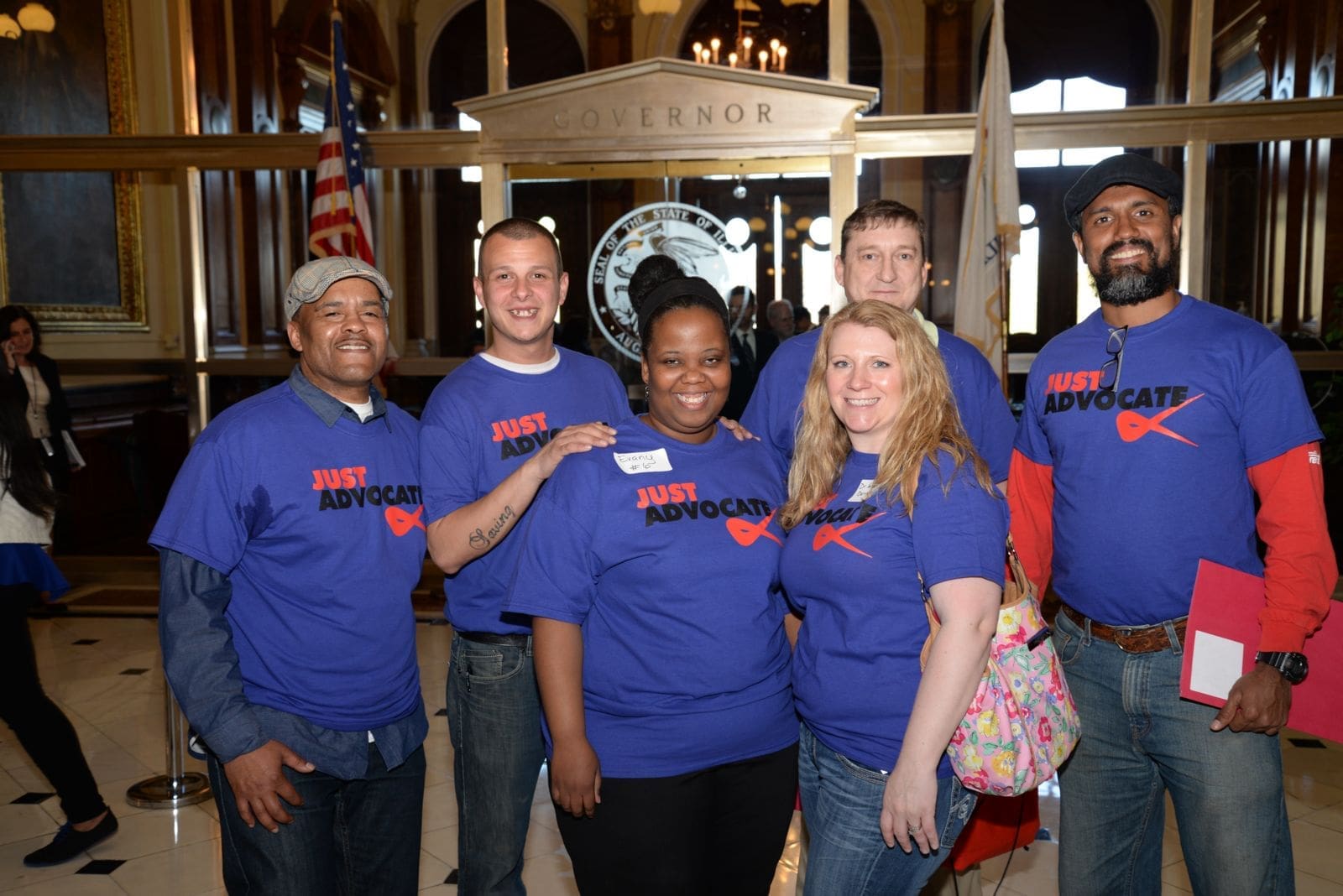
Nearly 700 individuals and 50+ organizations took part in direct advocacy efforts around passing a positive budget. This includes two Advocacy Day events in Springfield, a Virtual Advocacy Day, a budget community forum and an advocacy workshop. Check out our Flickr page to see their hard work and some great advocacy selfies! Read the full story about their virtual advocacy on the Virtual Advocacy Day’s Storify page.
2. Advocates meet with Governor Rauner
AFC, along with Equality Illinois, met with Governor Bruce Rauner to advocate against cuts to HIV funding, for the Conversion Therapy Ban (HB217) and to relaunch of Illinois’ PrEP drug assistance program (PrEP4IL).
3. Legislators pass bill extending landmark HIV testing and prevention law
Passed HB 1004, championed by Rep. LaShawn K. Ford, which extends the African American HIV/AIDS Response Act (AAARA) to 2026 and makes it easier for healthcare providers to conduct routine HIV screening in healthcare facilities. This bill passed both Houses unanimously on May 13, 2015. Click here to view the HB 1004 fact sheet.
4. AFC testifies on the Medicaid Redetermination process
On March 3, AFC’s Director of Government Relations Daniel Frey testified before the House Human Services Committee on the Medicaid Redetermination process. Redeterminations are when the state asks those enrolled in Medicaid for information to determine whether they still qualify for the program. Often, individuals miss the deadline and are then removed from Medicaid even though they still qualify. AFC made recommendations on how better conduct this process so that those who still qualify are not unduly removed from the rolls.
5. Several key pieces of legislation pass out of both Houses
AFC and HIV advocates aided in the passage of key pieces of legislation this session, including:
- HB 217 – Bans the use of debunked conversion therapy techniques. Passed both Houses on May 29.
- HB 2731 – Managed Care Organizations (MCO) Transparency Bill requires Healthcare and Family Services to report statistics of MCO enrollment. Passed both Houses unanimously on May 21.
- HB 2812 – Limits Medicaid from sending Explanation of Benefits on sensitive services, including HIV testing, without permission from the patient. Passed both Houses unanimously on May 21.
- SB 661 – Mandates hepatitis C testing for those born between 1945 and 1965. Passed both Houses on May 26.
Check out the Bill Tracker to see what legislation we advocated for this session and the status of the bills.
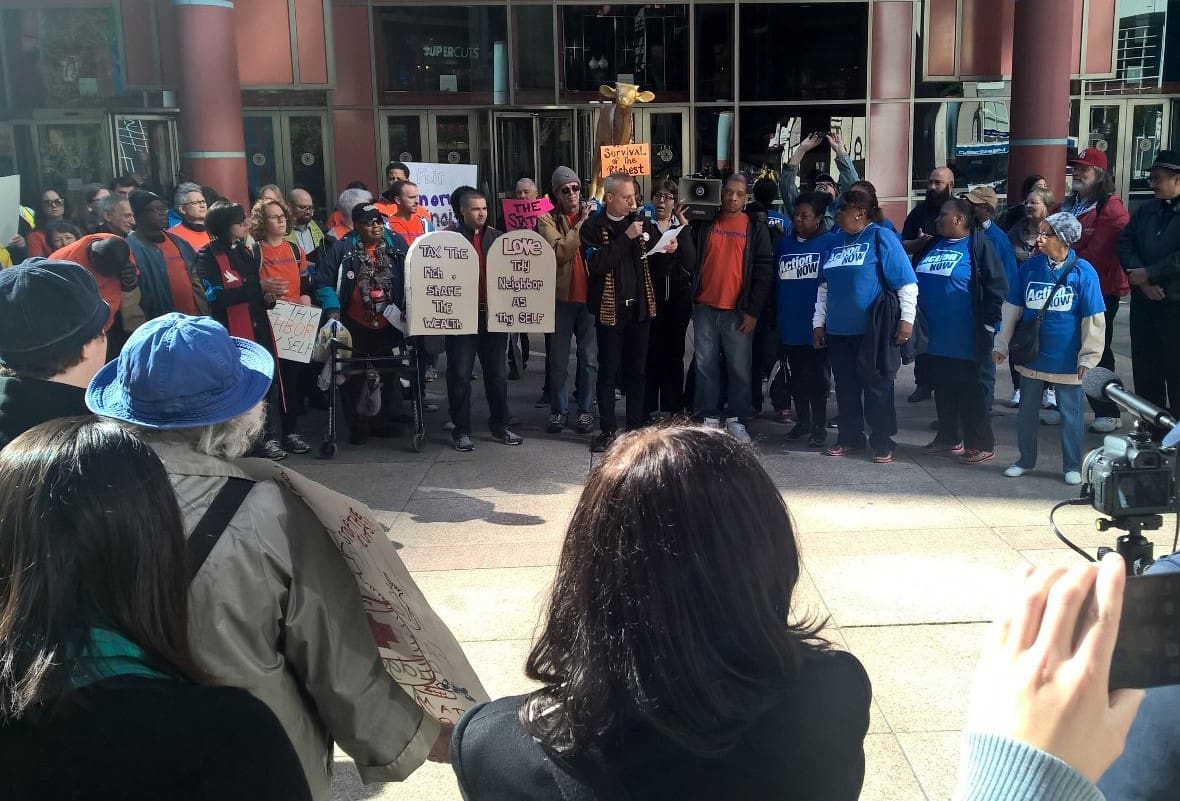 The AIDS Foundation of Chicago (AFC) calls Illinoisans to stand together as one voice to demand that Illinois Pass a Positive Budget and find new sources of revenue to fix our state budget shortfall. Join the AFC, IIRON and other community organizations who are a part of the Responsible Budget Coalition as we gather in downtown Chicago every other Monday for Chicago’s Moral Mondays demonstrations.
Moral Mondays began in North Carolina in response to governmental actions the people felt hurt their communities. Now Moral Mondays have come to CHICAGO!
As of the beginning of the month, legislators in Springfield missed their deadline to pass a budget that is fair and equitable for all Illinoisans. Due to their failure to compromise and a refusal to consider new revenue as an answer to our state’s fiscal woes, numerous programs and services all over the state are now in jeopardy. This means that the state’s most vulnerable, including those communities at highest risk for HIV infection, may find it harder to continue to receive the care they need or access prevention services in the state.
Don’t let this happen! Take action at next week’s Moral Mondays demonstration, Monday, June 15, 10:30 a.m. at the James R. Thompson Center, 100 W. Randolph St. You can RSVP on the Facebook event page. Also, check out the Moral Mondays Illinois website for more information or follow the movement on Facebook.
Stigma: In and Out is a monthly series profiling the clients, providers and leaders of AFC’s Corrections Case Management program, which helps HIV-positive people emerging from prison or jail get the support they need upon reentry.
 Gaining freedom from jail or prison can be a bittersweet experience for people who were formerly in prison or jail. For most, life is not much better when returning to society — reengaging with family, finding a place to live, a job, and other resources can be a lifelong challenge.
This challenge is especially burdensome for individuals emerging from incarceration who are HIV-positive. In addition to securing the most basic of resources, people with HIV who are returning to the community must also navigate the health care system to ensure that their HIV treatment is uninterrupted. And then there’s the stigma — the stigma of being HIV-positive combined with the stigma of having been to prison or jail. How do individuals from this community overcome the hardships of re-entering society after being in prison or jail while living with HIV?
The AIDS Foundation of Chicago (AFC) and one of its corrections case management partners, the CBC Initiative of the Austin Health Center of Cook County, have been working together since 2000 to ease these hardships within their Corrections Case Management program, which provides strengths-based case management to people with HIV who have emerged from jail or prison.
This type of counseling focuses on developing a client’s strengths rather than correcting their perceived weaknesses — a stark contrast to many of their clients’ experiences while behind bars. The program also helps participants maintain a link to medical care, substance abuse treatment and mental health services, and provides assistance for housing, job readiness support and family unification services, all of which can be a challenge to maintain for an HIV-positive person leaving the corrections system.
“Helping people take ownership of their mistakes, and rebuilding,” is what one of the Corrections Case Management program’s champions, Brian Drummond, is excited about. Drummond has 13 years of experience in case management, and believes that “people can rehabilitate, people can change.”
Drummond started his career working with the Sheridan Program, a substance-abuse prison that operates on a therapeutic model, meaning clients receive counseling and other rehabilitative services while incarcerated. From an early point in his career, Drummond had to develop strategies for working with community partners that, for the most part, had a negative perception of the returning citizen.
Drummond plays his part in educating impacted individuals and empowering them, but also educating service providers. Working with the Parole Division of the Illinois Department of Corrections, Drummond conducts sessions that educate parole officers on HIV and the challenges of re-entry during their monthly team meetings. He believes that putting an educational spin on HIV is important in minimizing the stigma attached to HIV and helps to show people that this is not an individual’s disease — it is the community’s disease.
“When I come to the clients, I let them know that HIV doesn’t discriminate,” said Drummond. “HIV doesn’t care how many weights you lifted; it doesn’t care how tough you are; it doesn’t care what gang you are a part of; it doesn’t care how well you sold drugs. The reality is that we all are at risk.”
Started by Drummond himself, the Returning Citizen’s Circle is a re-entry support group specific to HIV-affected people. One of only two projects like it in the country, Drummond and his team are only helping a small fraction of those re-entering society while living with HIV in the U.S. But each individual who has gained a firm footing on life outside of jail or prison thanks to the Corrections Case Management program is a testament to the strength of this approach and the safety net of services provided by the program.