CHICAGO — AIDS Foundation of Chicago (AFC) and its allies in the public health field arena urge Illinois legislators to prevent major program cuts — including a massive $4 million cut to critical HIV/AIDS services for people in Illinois — by extending a temporary state income tax rate.
This month, Illinois state legislators are faced with the question of whether to make permanent a 5% state income tax rate, which was increased temporarily from 3.75% in 2011. Not doing so would decrease Illinois state revenue by approximately $1.5 billion in 2015, forcing sweeping and devastating cuts to vital services, including access to HIV/AIDS medication, support for mental health and developmental disabilities, housing, senior citizen care and more.
“Cutting $4 million from Illinois’ HIV/AIDS services budget means that hundreds of people will lose access to the medications that keeps them alive,” said John Peller, interim president/CEO of AFC. “Legislators need to know that without extending the current tax rates, we will most certainly see more people with HIV in the hospital as well as higher rates of new HIV cases in the community.”
HIV/AIDS medication support through the AIDS Drug Assistance Program isn’t the only essential service that would be cut without this extension — funding for HIV testing, prevention services, linked care programs, and outreach to young people in Illinois (where increases in HIV transmission are highest) would be significantly impacted by the $4 million cut.
If the current tax rates are not extended, state funding for HIV services will be cut from $25 million to nearly $21 million, according to an outline released by Illinois Governor Pat Quinn. That would amount to a nearly 30% funding cut since 2011. Governor Quinn has strongly supported extending current tax rates to avert this and other devastating funding cuts.
“We need supporters of equal access to health care to reach out to their Illinois state representatives and tell them that cutting services to people living with HIV/AIDS is unjust and unnecessary,” said Peller.
Through its innovative CommunityDirect beneficiary program, the AIDS Foundation of Chicago (AFC) invites HIV/AIDS organizations to raise funds for their own programs and services at AIDS Run & Walk Chicago.
Last year, the 34 CommunityDirect partner organizations raised a combined $280,000.
“AIDS Run & Walk is a tremendous opportunity for HIV/AIDS organizations to increase private donations and build awareness,” said John Peller, interim president/CEO for AFC.
CommunityDirect partners will gain exposure through AFC’s website, news releases and other means of promotion. Those organizations are encouraged to raise funds using the event’s peer-to-peer fundraising platform to recruit team members, rally their existing donor base and expand their network of supporters.
AFC requests application materials be submitted no later than 4 p.m. CDT on Monday, June 9, 2014. An overview of the program can be found here, and application materials can be found here. Agencies selected for CommunityDirect partnership will be notified no later than Monday, June 16, 2014.
This year’s AIDS Run & Walk Chicago event is scheduled for Sunday, Sept. 14, 2014, at Arvey Field in Grant Park. Registration for the event will open in early June.
Questions should be directed to Simone Koehlinger, Senior Vice President of Programming, at [email protected].
Written testimony released April 29, 2014
SB2670 creates the Hepatitis C Screening Act, which provides that individuals born from 1945 to 1965 be offered a hepatitis C test when accessing other health care services.
The AIDS Foundation of Chicago (AFC) testifies in support of SB 2670 — The Hepatitis Screening Bill. We thank Senator John Mulroe along with many advocates and organizations in the health and health disparities fields for their dedicated work on this bill.
AFC fully supports broad screening for the hepatitis C virus (HCV) in populations most likely to be infected. Expanding hepatitis C testing in Illinois moves our state closer to aligning with the national recommendations issued by the U.S. Preventative Services Task Force, as HCV testing is considered critical to early detection and preventing disability.
According to the Institutes of Medicine, 75% of people with chronic hepatitis C are unaware of their status. Additionally, approximately 30% of people living with HIV in the U.S. are co-infected with hepatitis C. HCV is a leading cause of death of individuals who are HIV-positive and disproportionately impacts African Americans and Latinos.
We can turn the tide on these numbers and save lives. The advent of new, highly effective, and well-tolerated treatment options now makes it possible to treat and cure people of this deadly virus. However, we cannot treat people if we do not know that they are carrying the virus, and this is why HCV screening is so important.
There is a recognized connection between HIV and hepatitis C, as the two viruses can be transmitted in the same ways. Infection with one virus indicates a higher possibility that a person also carries the other. When a person is found to have hepatitis C, we have an opportunity to also identify a new case of HIV, since medical providers are well aware of this connection.
The CDC estimates that 20% of people with HIV do not know that they have been infected with the virus. We also know that those unaware of their infection are most likely to unintentionally transmit the virus to others. Because HIV and HCV share modes of transmission, medical providers know to offer an HIV test to a person who tests positive for HCV. Expanding testing of HCV can facilitate increased testing and ultimately treatment and care for both HIV and HCV. Such expansion gives us the unique and critical opportunity to significantly impact not one but two epidemics, saving countless lives as well as public health dollars.
Contact: Chez Ordonez, [email protected]
Media contact: Edward Wagner FOR IMMEDIATE RELEASE
Tel. 312-334-0922
Email: [email protected]
Governor Quinn’s Budget Supports Vital HIV/AIDS Services
AFC Applauds Governor Quinn’s Proposed Budget
SPRINGFIELD –Illinois Governor Pat Quinn proposed a $34.4 billion state budget on Wednesday, March 26 that would continue current funding HIV/AIDS services at $25 million for state fiscal year (FY) 2015.
“We applaud Governor Quinn’s budget decision to allocate $25 million for HIV/AIDS services as a targeted investment that will help lower the burden and cost of HIV in Illinois. The Governor’s budget makes the right choices for generations to come,” said John Peller, Interim President/CEO of the AIDS Foundation of Chicago.
Governor Quinn’s proposed funding amount relies on the extension of the state income tax increase that was enacted in 2011. If the income tax increase is not extended by the General Assembly, HIV funding will be cut by $4 million, a 14% cut from FY 14, according to the Governor’s projection. This potential $4 million cut would amount to a 30% funding cut to HIV/AIDS services since FY 11, when total funding was $30.88 million. Governor Quinn has proposed extending the tax increase, which will help sustain critical HIV/AIDS services.
“The AIDS Foundation of Chicago calls on the General Assembly to act immediately to identify increased revenue for the state,” continued Peller. “The Governor’s proposal to extend the state income tax increase is one of several proposals that would stabilize funding for public health and social services that help vulnerable populations, including people with HIV. A $4 million decrease to HIV/AIDS funding would result in unacceptable cuts to services that affect people with HIV and at risk of HIV.”
AFC is a member of the A Better Illinois coalition, which is proposing a graduated income tax, also called a “Fair Tax”, as a revenue solution. A Fair Tax would cut income taxes for 94% of Illinoisans, while increasing the amount the wealthiest residents would have to pay.
The $25 million recommended by the Governor for the state’s largest HIV funding line would continue to support HIV housing, prevention, supportive service, and health care programs for people with HIV. This funding also supports the AIDS Drug Assistance Program (ADAP), which provides life-saving medication to people with HIV.
While many people with HIV have and will continue to gain new health insurance coverage through the Affordable Care Act (ACA), many current ADAP clients are transitioning slowly to those new programs, despite continuous enrollment efforts by case managers, providers and community members. According to an Illinois Department of Public Health (IDPH) budget briefing, a little more than 25% of clients have moved to new health care reform programs, leaving an estimated 5,400 relying on ADAP for access to health coverage.
“The ACA provides partial relief to ADAP, but as predicted it will take time for people living with HIV to transition to new coverage. If HIV/AIDS services continue to be funded at $25 million, we are confident that ADAP will have adequate support to ensure that people with HIV can switch to new programs without interrupting their health care services.” said Lucy Baglin, Policy Coordinator, AIDS Foundation of Chicago.
In addition to supporting clients as they transition, ADAP continues to remain as crucial as ever for people with HIV, offering wrap-around services that cover gaps in Medicaid health coverage and subsidizing Market place plans to make them affordable.
AFC’s health insurance marketplace drug coverage guide shows that without help from ADAP many people with HIV would be unable to obtain life-saving medications. While two insurance companies have affordable medication co-pays, the remaining four companies feature out-of-pocket costs of as much as $2,000 a month for an HIV medication regimen. ADAP can help people with HIV by covering these out-of-pocket costs.
“HIV is a communicable disease,” continued Peller. “The scientific evidence is clear that when people with HIV receive clinical care, treatment, and other essential services, the risk for further HIV transmission is substantially decreased,” said Peller.
Budget cuts would also reduce support for vital HIV prevention programs. Every HIV case prevented averts at least $380,000 in lifetime medical care costs for someone with HIV. The state would pay much of that cost.
HIV/AIDS advocates are encouraged to join AFC in Springfield to advocate for critical HIV/AIDS issues on Wednesday, April 9 and Wednesday, May 14, 2014. Contact Lucy Baglin at [email protected] for more information or visit www.aidschicago.org/HIVad.
Stay tuned for additional information and action alerts on the state budget.
Resources:
Governor Quinn’s full FY15 state budget proposal
FY15 Department of Public Health budget section
####
Founded in 1985 by community activists and physicians, the AIDS Foundation of Chicago is a catalyst for local, national, and international action against HIV/AIDS.
Check out the HIV/AIDS statistics in your legislative district.
District Fact Sheets provide vital facts and information on the status of each senate district with regards to the HIV/AIDS incidence and prevalence rate, along with the services that are provided for people living with HIV/AIDS. It is up to you to ensure that your senators and legislators are aware of these figures in order to bring about positive change for people living with HIV/AIDS.
Fact sheets are listed by state senator. Find your state senator here!
Senate District 1: Senator Antonio Munoz District 1 Fact Sheet
Senate District 2: Senator William Delgado District 2 Fact Sheet
Senate District 3: Senator Mattie Hunter District 3 Fact Sheet
Senate District 4: Senator Kimberly A. Lightford District 4 Fact Sheet
Senate District 5: Senator Patricia Van Pelt District 5 Fact Sheet
Senate District 6: Senator John J. Cullerton District 6 Fact Sheet
Senate District 7: Senator Heather A. Steans District 7 Fact Sheet
Senate District 8: Senator Ira L. Silverstein District 8 Fact Sheet
Senate District 9: Senator Daniel Biss District 9 Fact Sheet
Senate District 10: Senator John G. Mulroe District 10 Fact Sheet
Senate District 11: Senator Martin A. Sandoval District 11 Fact Sheet
Senate District 12: Senator Steven M. Landek District 12 Fact Sheet
Senate District 13: Senator Kwame Raoul District 13 Fact Sheet
Senate District 14: Senator Emil Jones, III District 14 Fact Sheet
Senate District 15: Senator Napolean Harris, III District 15 Fact Sheet
Senate District 16: Senator Jacqueline Y. Collins District 16 Fact Sheet
Senate District 17: Senator Donne E. Trotter District 17 Fact Sheet
Senate District 18: Senator Bill Cunningham District 18 Fact Sheet
Senate District 19: Senator Michael E. Hastings District 19 Fact Sheet
Senate District 20: Senator Iris Y. Martinez District 20 Fact Sheet
Senate District 21: Senator Michael Connelly District 21 Fact Sheet
Senate District 22: Senator Michael Noland District 22 Fact Sheet
Senate District 23: Senator Thomas Cullerton District 23 Fact Sheet
Senate District 24: Senator Kirk W. Dillard District 24 Fact Sheet
Senate District 25: Senator Jim Oberwies District 25 Fact Sheet
Senate District 26: Senator Dan Duffy District 26 Fact Sheet
Senate District 27: Senator Matt Murphy District 27 Fact Sheet
Senate District 28: Senator Dan Kotowski District 28 Fact Sheet
Senate District 29: Senator Julie A. Morrison District 29 Fact Sheet
Senate District 30: Senator Terry Link District 30 Fact Sheet
Senate District 31: Senator Melinda Bush District 31 Fact Sheet
Senate District 32: Senator Pamela J. Althoff District 32 Fact Sheet
Senate District 33: Senator Karen McConnaughay District 33 Fact Sheet
Senate District 34: Senator Steve Stadelman District 34 Fact Sheet
Senate District 35: Senator Dave Syverson District 35 Fact Sheet
Senate District 36: Senator Mike Jacobs District 36 Fact Sheet
Senate District 37: Senator Darin M. LaHood District 37 Fact Sheet
Senate District 38: Senator Sue Rezin District 38 Fact Sheet
Senate District 39: Senator Don Harmon District 39 Fact Sheet
Senate District 40: Senator Toi W. Hutchinson District 40 Fact Sheet
Senate District 41: Senator Christine Radogno District 41 Fact Sheet
Senate District 42: Senator Linda Holmes District 42 Fact Sheet
Senate District 43: Senator Pat McGuire District 43 Fact Sheet
Senate District 44: Senator William E. Brady District 44 Fact Sheet
Senate District 45: Senator Tim Bivins District 45 Fact Sheet
Senate District 46: Senator David Koehler District 46 Fact Sheet
Senate District 47: Senator John M. Sullivan District 47 Fact Sheet
Senate District 48: Senator Andy Manar District 48 Fact Sheet
Senate District 49: Senator Jennifer Bertino-Tarrant District 49 Fact Sheet
Senate District 50: Senator Wm. Sam McCann District 50 Fact Sheet
Senate District 51: Senator Chapin Rose District 51 Fact Sheet
Senate District 52: Senator Michael W. Frerichs District 52 Fact Sheet
Senate District 53: Senator Jason A. Barickman District 53 Fact Sheet
Senate District 54: Senator Kyle McCarter District 54 Fact Sheet
Senate District 55: Senator Dale A. Righter District 55 Fact Sheet
Senate District 56: Senator William R. Haine District 56 Fact Sheet
Senate District 57: Senator James F. Clayborne, Jr. District 57 Fact Sheet
Senate District 58: Senator David S. Luechtefeld District 58 Fact Sheet
Senate District 59: Senator Gary Forby District 59 Fact Sheet
At the Illinois HIV Planning Group meeting held December 2013, the Illinois Department of Public Heath’s Dr. Fangchao Ma presented data about Illinois and the HIV continuum of care. Information includes percentages of people living with HIV who know their status, are engaged in care, and have a suppressed viral load. The presentation also offers a comparison to national rates.
View the presentation (PDF)
AIDS Foundation of Chicago President and CEO David Ernesto Munar testified on Wednesday, December 18, 2013 before the Illinois House Human Services Appropriations Committee on the state’s proposed Medicaid 1115 waiver. The proposal – outlined in this concept paper released in November 2013  – would allow the state to obtain federal Medicaid matching funds for a wider range of health care activities than allowed under the existing program.
Munar said in his testimony that to turn the tide on the AIDS epidemic, the state must harness the existing HIV service infrastructure built over the last three decades with an over $1 billion investment in state and federal funds. By 2017, thanks to the Affordable Care Act Medicaid expansion, over half the people with HIV in Illinois will be covered by Medicaid, making it the largest single payer of HIV care in the state.
AFC Celebrates Legislation, Remembers HIV/AIDS Champion
FOR IMMEDIATE RELEASE MEDIA CONTACT
November 13, 2013 Ryan Singleton, (312) 334-0913
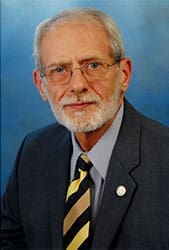 CHICAGO – The AIDS Foundation of Chicago (AFC) applauds the passage of the HOPE Act in the U.S. House of Representatives, lifting the federal ban on HIV-positive organs being donated to HIV-positive recipients. The measure cleared the Senate earlier this year. It now awaits President Obama’s signature before it can become law.
“This is a tremendous victory,” said David Ernesto Munar, AFC’s CEO/President. “We’d like to thank the bipartisan sponsors in both chambers. Their decision today will improve the quality of life for thousands of people.”
Munar also took time to remember the late Rep. Larry McKeon, a member of the Illinois House from 1997 to 2008. “Larry, with AFC’s help, championed this issue in Illinois years ago, bringing large-scale attention to organ donations from people with HIV. This is, in some ways, his work coming full circle.”
McKeon spearheaded the issue on a state level and helped pass House Bill 3857 in both the House and Senate in 2004, making Illinois the first state to expand access to organs for people living with HIV/AIDS. Then-Gov. Rod Blagojevich signed the measure in to law, but it was never implemented because of federal regulations.
“The HOPE Act validates Larry’s work and shows that he was a true visionary,” Munar said. “Even though he has passed, his legacy continues to positively affect people nationwide.”
There are currently more than 100,000 people actively waiting to receive vital organs, and roughly 50,000 more are added to the list annually. By allowing people with HIV to donate organs to other individuals with HIV, doctors could save upwards of 1,000 people per year.
McKeon died from a stroke in 2008 while working in Springfield. He was Illinois’ first openly gay, openly HIV-positive representative.
Download this press release as a PDF.
Photo by Hal Baim/Windy City Times
####
Founded in 1985 by community activists and physicians, the AIDS Foundation of Chicago is a catalyst for local, national, and international action against HIV/AIDS.
FOR IMMEDIATE RELEASE MEDIA CONTACT
November 12, 2013 Ryan Singleton, (312) 334-0913
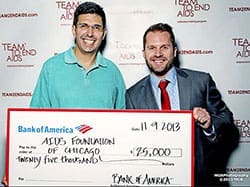 CHICAGO – The AIDS Foundation of Chicago (AFC) hosted its 2013 TEAM TO END AIDS (T2) Year-End Celebration on November 9 at Sidetrack, where Chad Thompson, Vice President and Senior Client Manager Analyst at Bank of America and AFC Board member, presented a $25,000 grant award to AFC on behalf of the Bank of America Foundation.
“AFC is thrilled and honored to receive this grant,” said David Ernesto Munar, AFC’s CEO/President. “It will support our case management programs, which link people living with HIV to lifesaving services and benefits. We are proud to work with the Bank of America Foundation to expand our reach in the community and are so grateful to the Bank of America Chicago Marathon for its years of partnering with charity runners in the Team to End AIDS.”
Sandhya Krishnan, Bank of America’s Charity, Community, and International Program Manager, also welcomed and congratulated T2 participants for their athletic and fundraising accomplishments.
The event helped T2 cap off a strong year of endurance sports. Through four events—the Bank of American Chicago Marathon, Chicago Half Marathon, Life Time Tri Chicago Triathlon, and Ironman 70.3 Steelhead—T2 raised over $516,000 for AFC.
The top fundraisers were Brooke Skinner, Munar, Matthew Goines, Curt Hupe, and Sally Stresnak, who combined to raise $33,775. Athletes’ fundraising pages are open until the end of the year.
T2 staff also encouraged participants to join them for the 2014 ASICS LA Marathon, Sunday, March 9. Training starts November 16 at Columbia Yacht Club, 111 North Lake Shore Drive, and will be led by T2’s USATF certified staff. Funds generated through this event will also benefit AFC.
For more information about T2, visit the program on Facebook and like the page.
Download this press release as a PDF. 
####
Founded in 1985 by community activists and physicians, the AIDS Foundation of Chicago is a catalyst for local, national, and international action against HIV/AIDS.