Thousands Descend on Lakeshore to Walk, Run and Raise Money Toward Ending the AIDS Epidemic and Helping HIV-Positive People Live With Dignity
Annual event raises $375,000 for life-saving HIV/AIDS care, prevention and housing programs.
CHICAGO – More than 4,500 Chicago-area residents laced up their running shoes for the 11th annual AIDS Run & Walk Chicago on Sunday, Sept. 30. The event raised $375,000 for the AIDS Foundation of Chicago and 35 other Chicago-area organizations that provide life-saving services for people living with HIV/AIDS.
“We are so grateful to everyone who participated in this year’s AIDS Run & Walk Chicago and helped take action against HIV/AIDS,” said David Ernesto Munar, president/CEO of the AIDS Foundation of Chicago (AFC). “It’s a testament to the strength and heart of this city that so many people came here today to make a difference in the lives of others. Chicago walked with us today.”
The opening ceremony at Soldier Field featured remarks by Illinois Lt. Gov. Sheila Simon; LaMar Hasbrouck, director of the Illinois Department of Public Health; and Bechara Choucair, commissioner of the Chicago Department of Public Health.
Following the ceremony, comedian/actress Wanda Sykes and entertainer Michael Feinstein sounded the starting horns as thousands of excited walkers and runners began the 5K and 10K courses along Chicago’s beautiful lakeshore.
“It’s so much fun. …To see all these people out here for the same cause,” said participant Mae Smith, 85, of Glendale Heights. Smith walked in this year’s AIDS Run & Walk Chicago in honor of her son Ron, who died of AIDS 20 years ago.
“There is no cure for AIDS,” said Smith. “But there’s hope.”
Post-race entertainment included electric, inspired performances by Jamar Rogers of NBC’s The Voice and B.E.T.’s YA HEARD new artist competition winner, Adam Emil.
For the first time ever, the AIDS Run & Walk featured “Memory Lane,” the route’s final stretch honoring those lost to AIDS and featuring panels from the AIDS Memorial Quilt.
The AIDS Run & Walk is about raising HIV awareness. AFC offered free rapid HIV testing — made possible by a Chicago Department of Public Health grant — and safer sex kits. AFC’s advocacy team was also working hard, encouraging participants to register to vote and educating them on the significance of health care reform for those with chronic illnesses.
And of course, the AIDS Run & Walk is about raising money for lifesaving HIV services. Since it was established in 2001, the event has netted more than $1.3 million to battle the epidemic. Money raised from this year’s event will benefit AFC and its CommunityDirect partner organizations, which offer HIV services and programs throughout Chicago.
The CommunityDirect partners serving the South Side are Greater Full Gospel Pentecostal Church, Jackson Park Hospital, Making A Daily Effort (M.A.D.E.), Men & Women in Prison Ministries, Project VIDA, South Side Help Center, Christian Community Health Center and the Michael Reese HIV Program.
Those serving the North Side are Asian Human Services, Young Women’s Empowerment Project (YWEP), Chicago Women’s AIDS Projects (CWAP), Chicago House, Test Positive Aware Network (TPAN) and Howard Brown Health Center.
CommunityDirect partners on the West Side include New Age Services, Austin Health Center, Erie Family Health Center, Puerto Rican Cultural Center, Vida/SIDA and The Children’s Place Association.
CommunityDirect organizations providing citywide services are Legal Assistance Foundation, Chicago Recovery Alliance (CRA), AIDS Legal Council of Chicago, Alexian Brothers AIDS Ministry, HHO/Vital Bridges, The Night Ministry, FCAN, Heartland Human Care Services, Illinois Caucus for Adolescent Health, PACPI and University of Illinois at Chicago – COIP.
And finally, AFC is proud to also partner with organizations that serve people in towns and suburbs outside of Chicago: Canticle Ministries, Youth Outlook, Agape Ministries, Catholic Charities of Lake County and Open Door Clinic.
Sponsors of this year’s AIDS Run & Walk Chicago include: Abbott, Exelon, Gilead, Illinois Lottery, Chicago Department of Public Health, Illinois Department of Public Health, Janssen Therapeutics, ViiV Healthcare, American Airlines, Bell Litho, Dunkin Donuts, Marathon Sportswear, O.N.E Coconut Water, OraSure Technologies, PepsiCo, Public Communications Inc., Best Gay Chicago, ChicagoPride.com, GRAB Magazine, Viral PR Agency, WGN-TV, Windy City Media Group, 97.1 FM The Drive, 100.3 FM Chicago’s Rewind, 104.3 FM K-Hits, Vonage and XFINITY.
For more information on how you can support HIV/AIDS research, awareness and support programs in your community visit www.aidschicago.org.
##
View photos of the event on our Flickr & Facebook.
We’d love to see your photos of the event as well – share your footage on Facebook.
The race results are listed online under “2012 AIDS Run”.
 The 2012 AIDS Run & Walk Chicago isn’t just about raising money.
It’s also about raising awareness.
To that end, the AIDS Foundation of Chicago (AFC) will provide HIV testing, education and safer sex kits at the annual event at Soldier Field on Sunday, Sept. 30. It wouldn’t be possible without funding from the Chicago Department of Public Health (CDPH), said Joe Hollendoner, AFC’s senior vice president of programs. CDPH awarded AFC a grant of $3,550 for testing and education at the AIDS Run & Walk.
“Raising HIV awareness begins with knowing your own status,” Hollendoner said. “We’re extremely grateful to the city for helping us educate thousands of people on Sunday.”
Free rapid testing will be available from 8:30 to 11:30 a.m.
AFC’s advocacy team will also have a strong presence at the AIDS Run & Walk. Walkers and runners will be encouraged to participate in an online photo campaign for health care reform and provided with information on how they can make a difference. AFC is a nonpartisan organization but is committed to health care reform as one of the necessary measures in ending the AIDS epidemic.
To follow the online conversation on the day of the event – or to post your own AIDS Run & Walk photos and thoughts – follow @AIDSChicago on Twitter and join us at the hashtag #AIDSRunWalk .
See you there!
###
Media contact: Greg Trotter, 312-334-0913 or [email protected]
The Quinn administration recently announced that the benchmark plan for Illinois’ Essential Health Benefits (EHB) package will be chosen by September 30, 2012 in order to meet the Federal deadline for selecting a plan.
The EHB package defines the baseline of services covered by health insurance plans offered to individuals and small businesses in the state. The plan will have far-reaching implications for people with chronic diseases like HIV and for every Illinoisan purchasing health insurance through the health insurance exchange.
Read AFC’s comments on state’s essential health benefits plan. 
UPDATE: AFC will be live tweeting the discussion with Dr. Hasbrouck. To follow the conversation, follow @AIDSChicago on Twitter and pose your own questions for Dr. Hasbrouck using the hashtag #hasbrouck . See you there!
On Public Health and HIV: Dr. LaMar Hasbrouck Joins HIV/AIDS Advocates and Community Leaders for Breakfast Talk on the Future of HIV Services in Illinois
The newly-appointed director of the Illinois Department of Public Health will discuss changes in state HIV programs after recent budget cuts and how health care reform will make a difference.
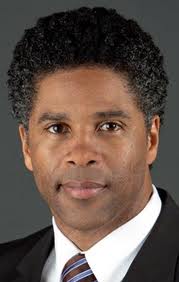
The AIDS Foundation of Chicago (AFC) is hosting a breakfast discussion with Dr. LaMar Hasbrouck (at right), newly-appointed director for the Illinois Department of Public Health, on Thursday, Sept. 27, from 9:30 to 11:30 a.m.
Hasbrouck will speak on the future of public health programs in Illinois and share his views on HIV/AIDS issues relevant to programs, services and prevention systems. The discussion, moderated by David Ernesto Munar, AFC’s president/CEO, will convene at 200 West Jackson in the large conference room on the 13th floor.
“The Illinois HIV system of prevention and services is facing significant change – with a 42 percent reduction in state HIV funding for community services, implementation of health care reform and the Illinois HIV/AIDS Strategy,” said Ramon Gardenhire, AFC’s director of government relations. “This breakfast reception provides an opportunity to hear firsthand what role IDPH will play in these important discussions and the impact it will have on individuals living with HIV.”
To RSVP, please contact Jasmine Jenkins at (312) 922-2322 or [email protected].
Founded in 1985 by community activists and physicians, the AIDS Foundation of Chicago is a catalyst for local, national, and international action against HIV/AIDS.
aidschicago.org
####
 We are excited to report victory in our efforts to fight back attempts to restrict access to lifesaving HIV medications for Medicaid recipients. Earlier this year, the Governor and state lawmakers proposed restricting access to the most effective, one-pill a day HIV medications such as Atripla, Truvada, or Kaletra by imposing a cumbersome, arbitrary prior authorization requirement.
In late June, after consulting with HIV advocates, the state Medicaid agency announced that only two additional medications will be subject to prior authorization: Selzentry and Fuzeon. Both have clear medical criteria for their use, and we believe small numbers of patients will be impacted by this requirement. In addition, Complera will continue to require prior authorization.
This is an important policy victory that preserves access to care for people living with HIV/AIDS across Illinois. This victory was possible thanks to language added at the request of AFC and partners that required the state to consult with people with HIV, health care providers, and others before instituting prior authorization. As a result, advocates had the opportunity to explain the critical role access and adherence plays in controlling HIV drug costs.
AFC thanks Governor Quinn, Illinois Department of Healthcare and Family Services Director Julie Hamos, Representatives Greg Harris and Sara Feigenholtz, State Senator Heather Steans (D-Chicago), and other members of the General Assembly for their work preserving access to lifesaving HIV medications through Medicaid. We also thank the AFC Medical Advisory Committee members for their assistance developing recommendations for the state.
Additional Information
Medicaid’s Selzentry prior approval criteria
Medicaid’s Fuzeon prior approval criteria
List of Drugs for Prior Authorization
Medical Advisory Group Recommendations on HIV Drug Cost in SMART Act
By John Peller 
Although summer is in full swing, Illinois health care providers have an unprecedented opportunity to re-examine their routine HIV testing practices, thanks to new regulations and information provided by the state of Illinois.
First, the Illinois Department of Public Health released after a nearly four-year delay final regulations implementing updates to the state’s HIV testing law passed in 2007. The regulations are the final piece needed to align state HIV testing policies with the U.S. Centers for Disease Control and Prevention’s recommendations that providers routinely offer HIV testing to all patients ages 13-64.
The new regulations make clear that providers can make sweeping changes to the way they conduct HIV testing. Patients can give informed consent for HIV testing verbally or in writing, and consent can be obtained as part of a general consent for HIV testing. Opt-out testing is explicitly permitted. Providers can provide common-sense pre-test information verbally, in writing, by showing a video, or through electronic means. The law maintains strong protections against testing without a patient’s consent, including steep fines for providers who test patients for HIV without their permission.
Of course, providers need more than clear state procedures to conduct HIV testing; they also need to get reimbursed for the service. Thanks to a letter from the Illinois Department of Healthcare and Family Services issued on National HIV Testing Day (June 27), there’s finally some clarity about when Medicaid will pay for routine HIV testing. Routine testing advocates – including the AIDS Foundation of Chicago, MATEC, and Public Health Institute of Metropolitan Chicago – asked the state to release the letter.
Sent to all Medicaid providers in the state, the letter raised awareness about the importance of routine HIV testing, the high number of undiagnosed people with HIV in Illinois, and the CDC’s 2006 routine testing recommendation.
So, when will Medicaid pay for routine HIV testing? The short answer is “almost always.” Just as importantly, the letter clarified that the state will pay for HIV screening for children under the Early Periodic Screening, Diagnosis, and Treatment Program (EPSTD) and women as part of routine preventive testing. The state will pay for HIV testing if the provider believes is it is “medically necessary”, a broad coverage definition that will cover nearly all situations. Of course, you should consult the relevant sections of the Medicaid manuals to determine the exact testing rules.
Although these two policy announcements provide greater clarity about the state’s HIV testing policies, anecdotal evidence shows that many health care providers remain hesitant to routinely offer HIV testing to patients. More education and technical assistance is needed to help providers understand current policies and determine how to best integrate testing into their practice flow.
Additional Information:
New IDPH HIV testing rules (77 Ill. Adm. Code 697):
–PDF showing changes from old rules
-2006 CDC routine HIV testing recommendations
-Illinois HIV testing law (AIDS Confidentiality Act, 410 ILCS 305)
 This Saturday’s Dance for Life event will premiere a new producer and feature more dancing than ever before.
The largest dance performance-based fundraising event in the Midwest benefiting the AIDS Foundation of Chicago and the Dancers’ Fund, has said goodbye to Keith Elliott, co-founder and producer, after 20 years. Elliott has decided to step away from the Chicago event to expand Dance for Life into other cities like Palm Springs, but still oversees the event as the Managing Director.
Wanting to make a difference, Elliott, along with HIV/AIDS activist Danny Kopelson, founded Dance for Life twenty years ago. Bringing together Chicago’s dance community to fight HIV/AIDS, Dance for Life has raised nearly $4 million dollars.
Taking over the role of producer is Anthony Guerrero, who began his career with Dance for Life as an associate producer intern at the AIDS Foundation of Chicago (AFC) in 2011.
“Keith was a great teacher and I must have been a pretty good student as he chose me to produce. … I am continuously honored and proud to be producing Dance for Life Chicago this year. Dance for Life has changed my life and I will be forever grateful to Keith for this experience,” Guerrero said.
The Ambassador Committee and loyal Dance for Life fans called out for more dance at the event. Dance for Life listened and has made this year’s event the biggest to date. Six dance companies have signed on and each are performing a piece.
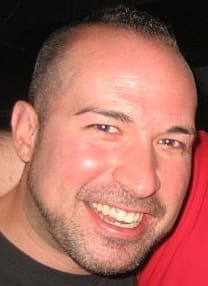
“This year, the focus is on the dancer and how they truly are the essence of Dance for Life. This year there will be less talking and more dancing,” Guerrero said (at right).
Participating dance companies include The Joffrey Ballet, Giordano Jazz Dance Chicago, Hubbard Street Dance Chicago, Ron de Jesus Dance, and River North Dance Chicago. Two world-premiere performances choreographed by Randy Duncan and Harrison McEldowney will also be featured.
In previous years, the pre-performance Gala Reception has been held at the Auditorium Theater of Roosevelt University. To better accommodate the growing number of attendees, the Gala Reception has been relocated to the Hilton Chicago Grand Ballroom and will include a dinner buffet along with complimentary Absolut martinis. A shuttle bus will provide transportation to the Auditorium Theater, from the Hilton, from 4:30 p.m. to 8 p.m.
If you haven’t checked out Dance for Life, this year is the perfect time. The changes promise an exciting, inspiring and entertaining evening.
“It is truly an amazing and beautiful experience. [You] can give to an important cause while enjoying a wonderful evening. And dance is fun!” Guerrero said.
Dance for Life is on Saturday, Aug. 18, 2012 at 8 p.m. at the Auditorium Theater of Roosevelt University, 430 South Michigan Ave. The pre-performance Gala Reception begins at 5 p.m. at the Hilton Chicago Grand Ballroom at 720 South Michigan Ave.
For more information and to buy tickets, visit http://www.danceforlifechicago.com/ .
Starting this week, $3 can win you $40,000 while you support the effort to end HIV/AIDS in Illinois! The Illinois Lottery on August 7th re-launched the popular Red Ribbon Cash game, a $3 instant scratch-off lottery ticket. One hundred percent of the proceeds from this lottery game will go toward HIV prevention and care.
The Red Ribbon lottery was first enacted in 2007 and had been set to sunset this December. Through the hard work of community advocates including West Side HIV/AIDS providers, AIDS Foundation of Chicago, and the bill’s sponsors Sen. Jacqueline Collins (D-Chicago) and Rep. Karen Yarbrough (D-Maywood), this program has been extended until 2017.
This year the General Assembly passed a devastating state budget that slashes funding for community-based HIV prevention, care and housing programs by 42%. This game provides an independent funding stream generated by the community for HIV/AIDS prevention and care in areas hardest hit by this epidemic.
Treatment is vital to preventing new HIV infections. New evidence demonstrates people with HIV who are receiving treatment reduce transmission to others by 96%. As U.S. Secretary of State Hillary Clinton recently noted, an AIDS-free generation is a possibility.
Last year alone, the Red Ribbon lottery generated $1.4 million for HIV/AIDS treatment, prevention and care. You can help to surpass that amount this year by spreading the word about the Red Ribbon lottery in your community.
For only $3, purchase Illinois’ ticket to an AIDS-free state with the Red Ribbon Cash instant scratch-off game. Tickets are currently available at all participating retailers.
 By David Ernesto Munar,
CEO/President of the AIDS Foundation of Chicago
With a dizzying array of talks, sessions and activities for 24,000 participants, the 19th International AIDS Conference offered participants new information, analyses and research findings to fortify effective global and domestic responses to the HIV/AIDS epidemic.
Keeping up with it all was downright impossible (though both fun and inspiring to attempt.)
Here are my “ah-ha” moments gleaned from what I could attend of the nearly 500 concurrent sessions and additional cultural activities during the conference.
This list is by no means exhaustive or comprehensive:
1. National HIV/AIDS Strategy – It is still epidemiologically possible to reach the targets of the National HIV/AIDS Strategy by 2015 — but just barely, said Dr. David Holtgrave of Johns Hopkins University.
In a new research paper, Holtgrave argues that a sizable investment is needed to boost the number of HIV-positive people who are diagnosed and linked to clinical care in order to achieve a 25 percent reduction in annual HIV transmissions. His analysis shows that a $13 billion to $17 billion increase is needed from now until 2015 to reach the Strategy’s targets. While the health reform law is likely to finance the greatest portion of these costs, an estimated $1.2 billion annually (for at least three years) must be raised by public and/or private resources (new or redirected) for HIV prevention services, including testing and prevention-with-positive interventions. With an average lifetime cost of HIV clinical care of $300,000, any increased investment to avert new infections is cost-effective. The most cost-effective mix of strategies, however, would focus on expanded HIV testing, clinical care linkage and retention, housing and prevention-with-positive services.
Time is of the essence. Federal appropriations for fiscal year 2013 will determine levels of HIV funding for the following two years, Holtgrave said. We need to ramp up investment in HIV services through new or re-programmed monies or we won’t make the goals outlined in the National HIV/AIDS Strategy, he said.
In short, greater public/private investment is needed to meet the goals of the National HIV/AIDS Strategy, which of course, will save taxpayer money in the long run. Unfortunately, the outlook does not look rosy in terms of new investments given the looming cuts and political climate of austerity in the U.S. (more on this further down).
2. Come Out! – In a rousing plenary address, Phill Wilson of the Black AIDS Institute made a unique call for more effective results in the AIDS fight in the U.S.: He urged HIV-positive people to come out of the closet about their status.
Wilson acknowledged that not everyone can afford to do so nor is everyone emotionally equipped for public disclosure. However, the more people with HIV are known and recognized as whole human beings, stigmatizing attitudes and beliefs are more likely to diminish. Given the longstanding need to safeguard HIV confidentiality, Wilson’s call was significant and noteworthy. It also reflects my own belief that openness about my HIV-positive status — wherever feasible — will empower others in the community.
3. HIV in Black Gay/Bi Men: During the conference, an illuminating, if disturbing, study was presented that gives us a deeper understanding of the HIV crisis among African-American gay men and other men who have sex with men (MSM). The study, known as HPTN 061, found that the rate of new HIV transmission among African-American MSM is 50 percent higher than white gay and other MSM. In young black gay and other MSM, the rate was three times the rate for white MSM of the same age. This doesn’t mean that black men are engaging in riskier behavior, the study said. In fact, the study found the disparity to be a result of social determinants such community viral load, poverty, education and access to health care.
In other words, we can talk about treatment as prevention as much as we want, but until we address the social roots of the HIV/AIDS epidemic, we will not prevail in this fight.
4. Syndemics – At an AFC-sponsored satellite session, Dr. Ron Stall, of University of Pittsburgh presented data showing that multiple epidemics among gay men — including childhood sexual abuse, homophobic violence and related trauma — correlate with increased rates of depression, substance use, sexual compulsive behavior and intimate partner violence. Gay men affected by two or more psychosocial health problems experience statistically significant increases in sexual risk-taking and HIV acquisition. Conversely, resolving internalized homophobia over time can reduce the number of psychosocial health problems and help individuals’ build health- promoting behaviors. Remarking on the data, Dr. Keith Rawling noted that many of his patients who are now medically stabilized as a result of antiretroviral therapy experience a resurgence of challenges related to childhood trauma that might have been temporarily eclipsed as they prepared to die of HIV/AIDS. These unresolved issues may also help explain the increased infection among MSM of all ages.
Two members of AFC’s Research and Evaluation Data Services team – Tomas Soto and Goldie Komaie – also presented scientific posters on how traumatic events and harassment affect people linking to and staying in care.
5. Criminalization – Hundreds of Americans have been arraigned on charges of alleged nondisclosure of HIV status or transmission of HIV and many have served time in jail – most often in cases where HIV was not transmitted. Though laws vary by state, there are currently 33 states that criminalize HIV exposure, according to the Centers for Disease Control and Prevention. Twelve states have HIV statutes that include biting and spitting – even though it has been proven those rude behaviors present no risk in HIV transmission. HIV advocates and legal experts are trying to get these laws off the books, saying they do far more harm than good. The laws deliberately discriminate against a specific group of people, they lead to innocent people serving jail time, and are often based on an outdated understanding of how HIV is transmitted.
Learn more about the national movement to repeal the laws at the Positive Justice Project website. And read up on how the AIDS Foundation of Chicago worked to amend Illinois’ HIV criminalization law in the last legislative session.
6. Blueprint for an AIDS-free generation – In her plenary address, Secretary of State Hillary Clinton reaffirmed the U.S. commitment to achieve an AIDS-free generation, which she characterized as virtually no new mother-to-child HIV transmissions by 2015. Where they do occur, infants and their family members would have access to high quality care and treatment to better manage the disease. Clinton committed the Department of State to develop a “roadmap for an AIDS-free generation” by World AIDS Day 2012. It will further illuminate the measures of success and steps to attain them. The experience of federal officials leading efforts to draft and implement the National HIV/AIDS Strategy clearly influenced its commitment on a more intentional and targeted blueprint for an AIDS-free generation. For advocates, such a blueprint is a chance to ensure the government learns from areas where the Strategy has not been as successful as originally hoped.
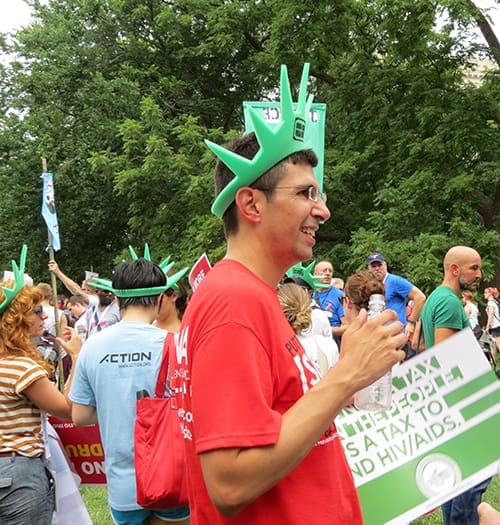
David Ernesto Munar, AFC’s president/CEO, participates in the We Can End AIDS rally in Washington, D.C., during the International AIDS Conference.
7. Hiding within our midst: Researchers from around the world dared to say the “c” word. Though long forbidden from such meetings, a “cure” has re-emerged as a topic of serious scientific inquiry and debate. Experts readily admit that the road ahead is difficult. Nonetheless, new exciting lines of investigation are making it possible to dream of controlling the AIDS crisis at its core. Virologists are researching two potential paths: eradication strategies (also known as “sterilizing cure”) that could safely flush all stains of the virus from a person’s body, and a “functional cure” or remission, which would achieve long-term viral suppression.
Confounding the hunt for a cure is HIV’s ability to “hide in a resting state, not replicating and therefore impervious to traditional ARVs, in reservoirs such as genitals or gut tissue,” POZ.com reports. These sleeper cells reawaken in the absence of ARV therapy and renew replication, which is why lifetime therapy remains the standard of care. Investigators are researching ways to make therapy more effective in stopping viral replication, by activating and eliminating these sleeper cells with ARVs, and exploring vaccines or gene-therapy to strengthen the body’s immune response to effectively control HIV on its own.
8. Ongoing funding challenges: On the policy front, another lurking threat poses grave harm to the global and domestic HIV services infrastructure. Draconian across-the-board federal funding cuts, known as sequestration, loom on the horizon in 2013 unless Congress takes act to stop them. In January 2013, tens of billions of dollars in across-the-board federal funding cuts are scheduled to occur as a result of the 10-year deficit reduction agreement President Obama and Congress brokered in 2011. That law put in place a deficit reduction “supercommittee,” empowered to negotiate federal spending reductions in the decade ahead. The law triggers the “sequestration” or reduction of funds to virtually every branch of the federal government (exempting Social Security and Medicare/Medicaid but not defense) if the committee failed to reach agreement, as it did in November.
Destabilizing cuts to HIV prevention, care, research, housing and other vital domestic and global HIV/AIDS programs will be hard to avoid if federal departments and agencies are forced to relinquish up to 10 percent of their budgets. Not only are bold plans toward an AIDS-free generation on the line, but other aspirational goals such as full implementation of health care reform, and even nationwide economic stabilization (and recovery to our struggling states and localities), may be jeopardized. Indeed, many economists warn the nation may spiral back into recession from deep reductions in federal spending coupled by scheduled tax increases and unemployment subsidies due to expire. This perfect storm is another reminder that the fight against HIV/AIDS occurs in the context of many other societal problems and challenges.
9. Required reading and viewing:
– The Lancet series “HIV in Men Who Have Sex with Men”
– Science magazine – special HIV issue
– Plenaries from the conference
– Extra credit: See a more rigorous daily assessment of conference proceedings by track here.
On a personal note, the week’s events reminded me that the aspiration for an AIDS-free generation is not the same as an HIV-free generation. While we have sufficient technological know-how to dramatically curb new HIV infections and improve the lives and longevity of those affected, ending the epidemic is a much bolder and more difficult enterprise. As described above, the research agenda towards a cure is making gains but much work remains to be done. Maximizing results in the AIDS fight will require tremendous fortitude, leadership and investment. Of course the rewards — measured as lives saved, productivity gained and health expenditures averted — warrant a more robust, dedicated response. In a world with many competing demands for our time, attention and resources, it will not be an easy sell. This is why our collective responses must be augmented by well-honed and tested persuasion strategies. Without broader public support, the needed political and financial leadership is unlikely to materialize.
But not all hope is lost. The week’s events put on display the many brilliant, diverse individuals from an array of disciplines, nations and backgrounds, all dedicated to championing the cause.
In fact, for a weary AIDS activist such as myself, it was downright rejuvenating to be among such an inspirational group of people. If any group can get the work done, or shake things up trying, it’s this motley crew of change agents.
 TEAM TO ENDS AIDS and Fleet Feet Sports Present the 15TH Annual Elvis Is Alive 5K Event
Event will benefit the TEAM TO ENDS AIDS and AIDS Foundation of Chicago, helping to fund lifesaving services for the 25,000 Chicagoans living with HIV.
Don’t be cruel — lace up those running shoes and join us at The 15th Annual Elvis Is Alive 5K. We promise you’ll feel more like young Elvis than old Elvis once it’s done.
Join the TEAM TO ENDS AIDS (T2) and Fleet Feet Sports on Thursday, August 16, 2012 in Chicago’s Grant Park. The non-competitive race starts at 6:45 p.m. across from the Columbia Yacht Club (near Randolph and Lake Shore Drive) in Chicago. There will be an “all-Elvis” start corral — meaning all participants dressed as Elvis or Priscilla are invited to start the race in the front of the pack. It will be a “rockin’ good time for a good cause,” said Dan Lakin, T2 Director.
“The Elvis is Alive race is fully in the spirit of all T2 events,” Lakin said. “We come together to have a good time, to laugh and to enjoy that feeling of community. And all the while, we’re making a difference in the lives of others.”
The event concludes with a live Elvis tribute band performance and beer (for participants ages 21 and over). Registration is $30 per participant. Visit www.ElvisisAlive5K.com for more information on registration and race day details.
This will be the first year that T2 and the AIDS Foundation of Chicago will benefit from the Elvis is Alive 5K event.
“Fleet Feet Sports is proud to partner with T2 and the AIDS Foundation of Chicago for this year’s Elvis is Alive 5K,” said Dave Zimmer, owner of Fleet Feet Sports – Chicago. “T2 and the AIDS Foundation of Chicago prove through their training and effort to create awareness what we tell our customers every day: Running Changes Everything”.
T2 is the official endurance training program for the AIDS Foundation of Chicago. The mission of T2 is to improve the lives of those who are affected and infected by HIV/AIDS. Through endurance sport and social activities, T2 celebrates not only participants’ accomplishments, but also honors the lives of the men, women and children lost to the AIDS epidemic and supports those who live with HIV today.
Participants will receive a race shirt, and a ticket for one Goose Island 312 beer at the post-race party with their entry.
Groups of 10 or more friends or co-workers are encouraged to register as a group and can do so by contacting Fleet Feet Sports Chicago at [email protected]. Visit www.FleetFeetChicago.com for more information.