 UPDATE, December 2019: Click here to learn more about AFC’s community mobilization work to reform HIV criminalization laws in Illinois.
UPDATE, May 2018: There have been no outward changes to Illinois’ legislation regarding HIV criminalization. However, AFC is part of a coalition working hard to eradicate the criminalization of HIV. Also, the HIV Criminalization Working Group and the HIV is Not a Crime III conference will be happening in June 2018 to further discuss action.
By Ramon Gardenhire
In my role as director of government relations for the AIDS Foundation of Chicago (AFC), I have to come to terms with the reality that the legislative process often means having to make ugly compromises.
This sentiment hit home this past legislative session, when the Illinois General Assembly passed a bill that would amend the state’s law that makes exposing someone to HIV a crime.
The Illinois criminal transmission of HIV law, on the books since 1989, has no basis in science, discriminates against people with HIV, and stigmatizes HIV.
AFC strongly opposes the law and fights for its repeal. However, when it became abundantly clear that SB 3673 was going to pass with overwhelming support, we made a strategic decision to work the bill’s sponsor to minimize the legislation’s harm as much as possible.
We decided to make a bad law better.
SB 3673, introduced by Sen. Dale Righter (R – Mattoon) and sponsored in the House by Rep. Jim Sacia (R – Freeport) unanimously passed both chambers in the Illinois General Assembly. It amends the current HIV criminal transmission law to allow prosecutors to access medical records to learn if someone knew their HIV status, a fact that has to be established before an individual can be prosecuted.
This bill was a response to a tragic case in Whiteside County, Ill., in 2009, involving a man who allegedly knowingly exposed several women to HIV. The state’s strong HIV confidentiality law prevented police from accessing the suspect’s medical records to determine if he knew he had HIV. After charging him with 13 counts of criminally transmitting HIV to another person, the man was only sentenced with one count. There was no way to prove that he had knowingly exposed his partners to HIV.
We fear that the amendment to the law would deter individuals from testing for HIV because they could be prosecuted for criminal HIV transmission if they learn their status. Earlier versions of the bill would have allowed access to social service agency and counseling records; AFC and allies were able to remove this provision, which would have had a chilling impact on testing and risk-reduction counseling.
AFC and our partners, ACLU of Illinois and AIDS Legal Council of Chicago, were able to negotiate significant changes to the underlying law in return for not working against the provision that allowed access to medical records. The changes we made are below. This bill:
1. Requires that prosecutors prove that an individual specifically intended to transmit HIV to another individual – This is an increased legal standard that prosecutors must meet and consider before bringing criminal charges.
2. Limits acts of transmission to only “sexual activity without the use of a condom” – Prosecutors cannot charge individuals for activities that will not transmit HIV, such as biting or spitting.
3. Defines the term “sexual activity” to include only sexual acts that include insertive vaginal or anal intercourse – This means no more criminal transmission cases for oral sex or kissing.
4. Exemption from prosecution if a condom is wore during sexual activity – No more criminal charges if a person uses a condom.
Although the amended law significantly narrows the situations that could result in prosecution for criminal transmission, these cases are likely to always involve “he said he said” or “she said” cases that happen between the sheets with no witnesses.
It will be one person’s word against the other to determine if the couple used a condom and which sex acts they engaged in. Cases will hinge on whether the infected partner disclosed his or her HIV status before having sex. Too often, former partners press charges for criminal transmission as retaliation when a relationship has soured.
The bill does include an important protection against prosecutorial abuse. Judges must approve all requests for medical records, and the judge reviews records and determines if they are before they are turned over to prosecutors. However, AFC and other advocates will remain vigilant to ensure that abuses do not occur.
The bill has been sent to Gov. Pat Quinn who will likely sign the bill into law. According to the Center for HIV Law and Policy, 32 states and two U.S. territories have HIV criminal transmission laws. The bill strikes an apprehensive compromise between HIV advocates and law enforcement. While the bill is an improvement, it still contains problematic sections. AFC will continue to monitor the law once it is enacted, and look for opportunities to repeal it altogether.
Additional Information on HIV Criminalization
The PJP is the first coordinated national effort to address HIV criminalization in the United States. For more information on the PJP and HIV criminalization, visit http://hivlawandpolicy.org/public/initiatives/positivejusticeproject.
To view the Positive Justice Project Consensus Statement on the Criminalization of HIV in the United States, go to: http://hivlawandpolicy.org/resources/view/768. To endorse the statement, email [email protected]
The Affordable Care Act (ACA) requires state health care exchanges to establish a “navigator” program that will help people who are eligible to purchase coverage through the exchange learn about their new coverage options and enroll. States will award grants to entities that will provide these services.
Navigators will play a critical role in ensuring that Illinois residents have every available opportunity to benefit from the full implementation of the ACA in Illinois. Currently, thousands of uninsured or under-insured people with HIV obtain healthcare from the Ryan White Program and the AIDS Drug Assistance Program (ADAP) in Illinois.
As a result of health care implementation the health care landscape for people living with HIV will change in Illinois, it’s estimated that nearly 20% of current ADAP clients will be eligible for insurance subsidies to buy health care coverage on the exchange and 70% will be eligible for Medicaid under its expansion.

Federal investment will reduce impact of state budget cuts, continue access to life-saving HIV medications
CHICAGO, IL – The AIDS Foundation of Chicago (AFC) applauds the U.S. Department of Health and Human Services for releasing $7.7 million in AIDS Drug Assistance Program (ADAP) emergency relief funding for Illinois. The money is part of an $80 million federal package announced in December 2011 that aims to increase access to HIV/AIDS medical care and medications across the nation.
“We thank President Obama for prioritizing the fight against HIV with this emergency funding,” said David Ernesto Munar, President/CEO of AFC. “State budget cuts have stretched Illinois ADAP to the brink. Thanks to this new infusion of federal funding, ADAP will stay strong for everyone who needs it in the state.”
Thanks to this new funding, Illinois will receive $6,995,832 in new federal ADAP funding and an additional $722,935 in renewed funding. The total state ADAP budget is nearly $50 million in state and federal funding.
Nearly 4,200 people access their HIV medications through Illinois ADAP each month, and the program has faced significant fiscal pressures from the recently enacted state budget. Effective July 1, 2012 the General Assembly and Governor completely eliminated Illinois Cares Rx, a critical program that helped 160,000 Illinois seniors and people with disabilities afford the prescription drugs they need to stay healthy.
“Eliminating Illinois Cares Rx is forcing as many as 1,000 people with HIV to enroll in ADAP,” said Ramon Gardenhire, AFC’s Director of Government Relations. “The new funds will help address the growing need for services, including those from Illinois Cares Rx.”
In 2011, inadequate funding forced Illinois to reduce eligibility for new ADAP applicants from about $54,000 a year for a single person to $32,000 a year.
“This additional funding comes at a key time for Illinois as it struggles to balance its budget,” continued Gardenhire. “This year, the state delivered a devastating blow to efforts to curb the AIDS epidemic by enacting a state budget that slashes funding for community-based HIV prevention, care and housing programs by 42%.”
“Next week, the International AIDS Conference begins in Washington D.C., focusing renewed attention on the domestic HIV epidemic,” said Munar. “Over and over, we will hear that access to HIV medications improves the individual health of people with HIV and the communities they live in by reducing the likelihood of HIV transmission. President Obama has taken a giant step forward in the fight against HIV with this new funding.”
AIDS Foundation of Chicago at AIDS 2012
During the conference: HIV Prevention Justice Alliance (with another organization) is coordinating a Global Village Human Rights networking zone. AFC Staff: Julie Davids and Jim Merrell
| SATURDAY, JULY 21 | |
| 9 a.m.- 6 p.m. | Satellite: AIDS 2012 Leadership summit (July 21, 9 a.m. -6 pm, http://www.hivhousingsummit.org/2012/frmHome.aspx). AFC Staff: Arturo Valdivia Bendixen |
| SUNDAY, JULY 22 | |
| 11:15 a.m.-1:15pm | From Revolution to Reality: How Will New Science Impact the U.S. National HIV/AIDS Strategy? AFC Staff: Keith Green Location: Mini Room 4 |
| 1:30 p.m. | Positive Charge satellite session AFC Staff: Roman Buenrostro Location: Session Room 3 |
| 1:30-3:30 p.m. | Achieving the Goals of the United States National HIV/AIDS Strategy: Next Steps, AFC Staff: David Munar Location: Session room 9 |
| 3:45-5:45 p.m. | Rectal Microbicides: Making HIV Prevention Gel, (IRMA) AFC Staff: Jim Pickett Location: Mini Room 8 |
| 7 p.m. | Opening session w/dignitary speeches AFC: Rev. Charles Straight to give convocation Location: Session room |
| MONDAY, JULY 23 | |
| 7:30-9:00 a.m. | Equity for YMSM of Color: Ensuring Quality Cultural, Structural and Optimal Care & Research for Gay and Bisexual Men of Color. AFC Sponsored Location: Mini Room 6 |
| 9:15-10:15 a.m. | From Life Support to Larger than Life: Maximizing U.S. Female Condom Advocacy AFC Staff: Jessica Terlikowski Location: Main stage |
| 11 a.m.-12:15 p.m. | Global Village Opening Ceremony AFC Staff: David Munar speaking as one of three Community Programme Committee co-chairs, Hall B |
| 12:30-2:30 p.m. |
Poster exhibitions:
|
| 3 – 4:30 p.m. | Communicating Complex Science in 140 Characters: Social Media and HIV Prevention Research AFC Staff: Jim Pickett Location: Global Village Session Room 2 (and online anytime with #newmedia and #HIVpx |
| Tuesday, July 24 | |
| 10:30 a.m. – 12 p.m. | On the Map: Ensuring Africa’s Place in Rectal Microbicide Research and Advocacy, (IRMA) AFC Staff: Jim Pickett Location: MSM Networking Zone, Global Village |
| 11-11:30 a.m. | We Can End AIDS! Mobilization, Convening at Meet at the Global Village: Human Rights/Social, Economic & Prevention Justice Zone, the march is from 11:45-2:30, ending at the White House. |
| 12:30-2:30 p.m. |
Poster exhibitions
|
| 2:30–4 p.m. | Holding Government Accountable: Lessons from the Field for the Next Era of the AIDS Response AFC Staff: David Munar Location: Global Village Session Room 1 |
| 2-4 p.m. | Global Lube Access Mobilization networking session, Global Village Booth #637 (IRMA) AFC Staff: Jim Pickett |
| 6:30-8:30 p.m. | Microbicides: The Road Ahead, satellite session, (IRMA) Location: Mini Room 2 AFC Staff: Jim Pickett |
| Wednesday, July 25 | |
| 10:30 a.m. -12 p.m. | Is it “celebration time?” What needs to happen for MSM to make the most of ARV-based prevention (PrEP, rectal microbicides and treatment as prevention) around the world. IRMA/Mapping Pathways AFC Staff: Jim Pickett Location: MSM Networking Zone, Global Village |
| 2:30-4 p.m. | Strategy Session on High Impact Prevention, Structural Interventions and Prevention Justice Worldwide (HIV PJA) Location: The networking zone |
| 2:30 -4 p.m. | Regional Session on U.S. and Canada, AFC Staff: David co-moderating, introducing Secretary Sebelius Location: Session Room 5 |
| 6:30-8:30 p.m. | Paving the Way to an AIDS-Free Generation: The Role of Female Condoms in Comprehensive HIV Prevention. Reception starts at 6:30. Panel begins at 7 p.m. AFC Staff: Jim Pickett Location: Mini room 5 |
| 7-8:30 p.m. | Interchange on Global Economic Justice and HIV (HIV PJA) Location: The networking zone. |
| Thursday, July 26 | |
| 11-12:30 p.m. | Justice Across the Generations: US Campaigns for Structural Changes for Youth, Workers and Elders (HIV PJA) Location: The Networking zone |
| 11-12:30 a.m. | From “No Way” to “Yay” – Community Engagement in Female Condom Programming AFC Staff: Jessica Terlikowski Location: Global Village, Youth Pavilion |
| 2-3:30 p.m. | A Female Condom First: Help Plan and Launch Global Female Condom Day! AFC Staff: Jessica Terlikowski Location: Female Condom Space |
| 4:30-6 p.m. | Dialogue on Gender, Sexuality and Reproductive Justice (HIV PJA) Location: The Networking zone. |
| 6:30 – 8p.m | Activist Report-Back and Strategy Session (HIV PJA) Location: The Networking zone |
Join us online:
Countdown AIDS 2012: www.countdownAIDS2012.org
AIDS Foundation of Chicago: www.aidschicago.org/
Mapping Pathways: http://mappingpathways.blogspot.com/
International Rectal Microbicide Advocates: http://www.rectalmicrobicides.org/
For the first time in more than 20 years, the International AIDS Conference is being hosted on American soil — and the AIDS Foundation of Chicago (AFC) will be front and center next week when it happens.
We invite you to be there with us, even if you’re sitting at your desk or at home.
The 2012 International AIDS Conference (AIDS 2012) convenes in the nation’s Capital from July 22-27, attracting more than 20,000 scientists, policy makers, people living with HIV, and others from nearly 200 countries to share research and to develop strategies for ending the AIDS epidemic. The theme of this year’s conference is “Turning the Tide Together.”
 More than a dozen of our staff will be in attendance — thanks largely to scholarships and sponsorship — advocating for the needs of people living with or at risk for HIV in Chicago and beyond. In fact, the Rev. Charles Straight (at right), who serves on AFC’s Board of Directors, was tapped to give the conference convocation. He will literally open the conference with his words of prayer.
Straight’s convocation and the rest of the opening session will be streamed live online here on Sunday, July 22, beginning at 6:00 p.m. CST.
AFC’s presence will be felt throughout the week. David Ernesto Munar, AFC’s president/CEO, co-chairs the conference’s Community Programme Committee, and has worked closely with community leaders from across the globe to create a robust program with presenters and participants.
As part of his co-chair duties, Munar will speak at the opening of the conference’s Global Village on Monday, July 23. He will join Dr. Grant Colfax, Director of the White House Office of National AIDS Policy, and other federal officials for a panel discussion on the US National HIV/AIDS Strategy (July 22).
 Munar (at left) will also address effective advocacy strategies as part of a global activist panel (July 24) and co-moderate a session on Canada and the U.S. alongside Health and Human Services Secretary Kathleen Sebelius among others (July 25, 3:30 p.m. CST, streamed online here).
AFC leadership extends to housing people living with HIV. Arturo V. Bendixen, AFC’s Vice President for Housing Partnerships, will play a lead role in the AIDS 2012 International Leadership Summit on Housing.
On the social justice side, HIV Prevention Justice Alliance (HIV PJA), a national advocacy coalition led by AFC, is partnering with other major organizations to coordinate the conference’s Global Village Human Rights networking zone. The HIV PJA is also facilitating the We Can End AIDS mobilization on July 24, when thousands of HIV advocates will march the streets of D.C.
Other AFC staff will give poster presentations on a wide range of topics, including:
• The impact of U.S. healthcare reform on access to HIV treatment
• The critical role of housing on HIV treatment and prevention
• Expanding new prevention strategies in the U.S. and abroad
• The impact of stigma on access to HIV health care.
AFC was instrumental in helping craft the WASHINGTON, DC DECLARATION – an international statement of purpose by endorsing individuals and organizations for rapid scale-up of nine principles to an effective global response to the HIV/AIDS crisis. Endorse the declaration at: www.2endaids.org.
Attendees of the opening session on July 22 will be among the first to see a video on the HIV/AIDS epidemic in the U.S. produced by the Levi Strauss Foundation and highlighting AFC’s housing programs across Chicago.
POZ.com will also feature video interviews with Munar and other national leaders reflecting on the significance of AIDS advocacy at this juncture in the history of the epidemic.
We want you to be part of this exciting week, whether you’re in D.C. or right at home. Join AFC at our up-to-the-minute website, www.countdownaids2012.org for updates and announcements throughout the week of AIDS 2012.
During the conference, we’ll also have a new one-stop landing page for AFC’s various blogs/websites: Inside Story, Mapping Pathways, International Rectal Microbicide Advocates and Countdown AIDS 2012.
You can find that landing page at aidschicago.org/aids2012

7/24: THOUSANDS TO OCCUPY D.C. DURING INTERNATIONAL AIDS CONFERENCE, CONVERGING ON WHITE HOUSE TO DEMAND AN END TO THE AIDS EPIDEMIC
AIDS Foundation of Chicago is helping to facilitate march of more than 30,000 — DC residents, US activists from across the country & global delegates alike – calling for the resources, rights and policies to end AIDS
Washington, DC: In a time in which science has shown the path to end the AIDS epidemic, and the Occupy movement has spotlighted the inequitable use of resources that constrain these and other efforts, more than 30,000 people living with HIV and other AIDS activists from hundreds of organizations worldwide will join to demand rights and resources to cure HIV/AIDS.
The mobilization, entitled We Can End AIDS, will begin Tuesday, July 24, 2012 at 12 p.m. as five distinct branches flood downtown Washington with a range of creative and powerful actions. The marches, scheduled to occur during the International AIDS Conference, will snake through the streets of the District, including K Street, New York Avenue and Pennsylvania Avenue, meeting Lafayette Park at 1 pm to deliver a powerful collective message to the White House and the world: To end the AIDS pandemic, we demand the political will necessary to ensure economic justice for all and to defend and protect the human rights of our marginalized communities, including people living with HIV & AIDS.
“We already know that the ‘big story’ of the conference is that we could end the epidemic as we know it,” said Julie Davids, of the HIV Prevention Justice Alliance, one of the coordinators of the Human Rights and Harm Reduction branch of the mobilization.
“But will we?” said Davids, who is also director of national advocacy and mobilization for the AIDS Foundation of Chicago. “These marches draw together the necessary elements of what it will take to reap the benefits of new research pointing the way towards the end – resources, political will, and an end to discrimination and criminalization.”
We Can End AIDS was created to draw attention to evidence showing that, with only modest increases in funding and appropriate policies, the world could see the end of the AIDS pandemic within 30 years. We Can End AIDS is demanding the economic justice and human rights to make this a reality.
Bolstered by HPTN 052, the study that proved treatment is an effective form of HIV prevention, and which indicated that widespread treatment could thus end the epidemic in a generation, each of the five branches of the mobilization represent what is needed to achieve this outcome:
• Demand an end to pharmaceutical greed
• Demand a Robin Hood Tax on Wall Street to end AIDS
• Stop the war on women
• Demand sound public policies and full funding
• Protect human rights: end mass imprisonment and criminalization, and support harm reduction.
The International AIDS Conference will be held in Washington, DC from July 22-28th in Washington DC, a city with HIV rates higher than 32 African countries.
Follow: #endAIDS, www.wecanendaids.org
Federal and state implementation must proceed at full speed; Medicaid expansion is priority.
For immediate release: June 28, 2012
Media contact: John Peller, 312-334-0921
CHICAGO, IL — The U.S. Supreme Court took a massive step toward ending the HIV/AIDS epidemic today when it found nearly all provisions of the Affordable Care Act to be constitutional. Federal, state and local implementation efforts must continue in order to guarantee hundreds of thousands of uninsured Americans with HIV receive needed high-quality clinical care and treatment.
 “Today’s Supreme Court decision will be remembered as a historic victory for the AIDS community and, in particular, for low-income, marginalized people with HIV who struggle to gain access to the very health care and medicine that could save their lives,” said David Ernesto Munar (at right), President/CEO of the AIDS Foundation of Chicago (AFC).
“If fully implemented, national health care reform will put us on the road to an AIDS-free generation by dramatically expanding access to medical care, life-saving HIV treatment and screening,” Munar said.
Today, an estimated 1.2 million people are living with HIV in the U.S. They need access to high-quality, uninterrupted health care to stay healthy, reduce new HIV infections and cut long-term health care costs. Recognizing the Affordable Care Act as the law of the land gives people with HIV access to the reliable health coverage that they need to maintain continuous medical care, without worry of interruptions caused by inadequate coverage or an inability to pay.
“New science has provided the tools to effectively treat HIV and to make significant headway against the AIDS epidemic in the United States,” continued Munar. “Research clearly shows that, with early access to treatment, people with HIV stay healthier and are significantly less likely to transmit HIV to others in the community.”
Unfortunately, the ruling came with a significant setback as well. The Court ruled that states cannot be financially penalized for refusing to expand Medicaid to all low-income people. The law requires the federal government to pay 90% percent of the cost of expanding Medicaid, and the states just 10%.
“The Medicaid ruling is a dark shadow on the horizon and significant bad news for people with HIV,” Munar noted. “States now have an opening to drop the Medicaid expansion, one of the most significant provisions for people with HIV. Geographic disparities in access to care in the U.S. South may persist and could worsen the epidemic in some regions of the country that forgo Medicaid expansion. The fight will now shift to the states to ensure that all low-income people benefit from healthcare reform.”
The Supreme Court’s finding that the individual mandate is constitutional is a victory for people with HIV and countless others who have been shut out of the current health insurance market. This provision, which many observers considered to be at great risk of being stuck down, requires all individuals to have health coverage. National health care reform will level the playing field for people with pre-existing conditions to obtain health insurance coverage, as health insurance companies will be required to sell them coverage under the new law.
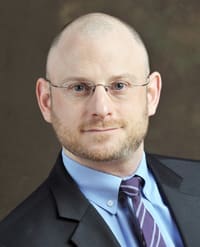 “Health reform implementation must now proceed full steam ahead,” said John Peller (at right), AFC’s Vice President of Policy. “We know there will be more lawsuits and attempts to repeal the law. Congress should acknowledge that the Affordable Care Act is the law of the land by fully funding health reform and ending efforts to repeal it. Progress must not be held hostage by politics.”
“We also call on Governor Quinn and the Illinois General Assembly to act swiftly to prepare the state for January 1, 2014,” Peller continued. “There’s no time to waste. Governor Quinn should immediately enact an executive order to establish the state’s health insurance exchange.”
To learn more about the ways health reform will benefit people with HIV, visit www.HIVHealthReform.org, a partnership between AFC and a number of national organizations to educate the community.
Founded in 1985 by community activists and physicians, the AIDS Foundation of Chicago is a catalyst for local, national, and international action against HIV/AIDS.
####
aidschicago.org
Illinois General Assembly Guts HIV Funding, Enacts 42% Cut
Largest HIV funding cut in Illinois history is likely to result in new HIV cases, fuel AIDS epidemic
SPRINGFIELD, IL – In a devastating blow to statewide efforts to curb the AIDS epidemic, the Illinois General Assembly enacted a state budget yesterday that slashes funding for community-based HIV prevention, care and housing programs by 42%.
The $3.3 million funding cut will take effect with the state budget that begins July 1, 2012. Despite the best efforts of HIV advocates and some legislators, more than 100 people are likely to be newly infected with HIV in the coming year because of the funding cuts, according to projections by the AIDS Foundation of Chicago (AFC). The lifetime medical costs for those individuals will exceed $40 million, a financial burden that casts a pall on the few bright spots of the past legislative session, said David Ernesto Munar, AFC President/CEO.
“The General Assembly set back the progress against AIDS by a decade,” Munar said. “Just when we are starting to see new HIV cases decline, Illinois has turned its back on people with HIV and people at risk of HIV.”
“If the state wants to save money,” continued Munar, “cutting HIV services is the absolute worst strategy. HIV funding cuts are a bad deal for the taxpayers of Illinois and a tragedy for people who will have to live with a still-deadly infectious disease that could have been prevented.”
If not for last-minutes efforts by supportive legislators, the cuts could have been much worse. Late on May 30, the House Human Services Appropriations Committee, led by State Rep. Sara Feigenholtz (D-Chicago) restored $623,000, reducing the HIV funding cuts to $3.3 million.
“We are thankful that Rep. Feigenholtz and members of the committee were able to partially restore some HIV funding,” said Ramon Gardenhire, AFC Director of Government Relations.
Gardenhire also applauded the leadership of State Rep. Rita Mayfield (D-Waukegan) who spearheaded efforts by the Black Caucus to reject cuts to HIV programs.
“African Americans will be disproportionately affected by these cuts,” he said.
Gov. Pat Quinn proposed a $4 million reduction in HIV funding when he released his budget proposal in February. Since then, AFC has led vigorous community advocacy to reverse the proposed cuts.
“We applaud everyone who answered the call and who pushed back against these devastating cuts, by sending emails, visiting legislators in person, and signing petitions,” Gardenhire noted. “However to see a budget that reflects the needs of most Illinoisans, we need the entire community to stand up and push back against these harmful cuts in the future.”
Advocacy efforts saw mixed results. The Illinois Senate rejected the Governor’s proposed cut and funded HIV services at 2012 levels, thanks to leadership from State Sen. Heather Steans (D-Chicago), who chairs the Senate Appropriations I Committee. However, the Senate-passed budget was dead on arrival in the opposite chamber.
In a significant bright note for HIV funding, the General Assembly approved legislation that would allow Cook County to implement a proposed Medicaid 1115 waiver. The waiver would expand Medicaid coverage to at least 100,000 low-income, uninsured Cook County residents, including people with HIV.
“If the federal government approves the waiver, over 1,000 people with HIV will gain Medicaid coverage and won’t need state assistance to obtain HIV medications,” said John Peller, AFC Vice President of Policy. “This savings must be directed to community-based HIV prevention, care and housing programs.”
“Rep. Feigenholtz established a special account in the state treasury to protect savings from the waiver and preserve it for HIV prevention programs,” Peller said. “We don’t yet know how quickly the savings will materialize, and the General Assembly will have to pass legislation to redirect the savings. We will work vigorously to make sure money is directed to AIDS-affected communities as quickly as possible.”
However, in an attempt to force the House to raise funding levels, the Senate late on May 31 refused to approve the bill that included the special waiver savings account. This must-pass legislation includes provisions needed to implement the budget. The Senate’s move pushes the General Assembly into overtime, when a bipartisan super-majority is required to advance legislation. Around the Capitol, lawmakers and state workers remained unclear how the standoff will be resolved.
The General Assembly could have avoided HIV funding cuts by reducing corporate tax loopholes and taking other steps to increase revenue, but failed to act, Munar said.
“At a time when Medicaid, healthcare programs and HIV services are being dramatically reduced, the General Assembly made sweetheart deals to Fortune 500 companies in the form of sizeable tax breaks. It’s a shameful reality and sign of misplaced priorities,” Munar said.
To learn more about the state budget and Medicaid changes and how it will impact you and AIDS organizations , click here to register for our End of Session webinar on Friday, June 8th at 12:00 pm with Rep. Greg Harris (D-Chicago) and Ann Fisher, Executive Director, AIDS Legal Council of Chicago.
Founded in 1985 by community activists and physicians, the AIDS Foundation of Chicago is a catalyst for local, national, and international action against HIV/AIDS.
####
aidschicago.org

High-profile fundraiser to combat HIV/AIDS now scheduled for Sept. 30
Important Announcement: The date for the 2012 AIDS Run & Walk Chicago has been changed to Sunday, Sept. 30.
The new date is one day later than previously communicated. We need your help to pass this update on to your readers, community partners, clients, friends and family.
On the bright side, this means you have one more day to prepare (or sleep in)!
Nothing else about the AIDS Run & Walk Chicago has changed. It will still start from Soldier Field and offer a 5K and 10K route, both featuring beautiful views of the lakefront. And it is still an immensely important fundraiser for the AIDS Foundation of Chicago and 36 other city organizations that provide life-saving services for people living with HIV/AIDS.
Event registration is $30 in advance; $50 on-site. To register as a fundraising individual or as a team, visit aidsrunwalk.org or call (312) 334-0946.
Please help us get the word out. The 2012 AIDS Run & Walk Chicago will take place on Sunday, Sept. 30.
Founded in 1985 by community activists and physicians, the AIDS Foundation of Chicago is a catalyst for local, national, and international action against HIV/AIDS.
####
Quinn Medicaid Plan Will Limit Access to Life-Saving Medication, Raise Costs for the State, and Increase HIV Cases
Today, Gov. Pat Quinn released a litany of proposed Medicaid service cuts designed to reduce the budget by $1.3 billion. One of these proposals would make it far more difficult for people with HIV to access once-a-day combination pills that have simplified and vastly improved HIV treatment.
The AIDS Foundation of Chicago (AFC) strongly opposes this recommendation, which likely will create a barrier to continuous adherence to lifesaving HIV medications that can also prevent HIV transmission. In other words, the once-a-day pills save lives and money in the long run.
“The $3 million in projected savings from this policy change, in a $2.7 billion Medicaid budget deficit, will be far eclipsed by the cost of additional hospitalizations, worse health outcomes, and more people living with HIV in the community,” said David Ernesto Munar, AFC’s President/CEO. “The cost will far outweigh the initial savings.”
Research shows that people with HIV who take one-pill-a-day combination therapy are far more likely to take their HIV medications than individuals who take the components separately, resulting in fewer hospitalizations[i] and healthier patients. Quinn’s proposal would require cumbersome prior approval before patients could access combination therapy.
In fact, studies show that people with HIV taking one HIV pill a day were 1.6 times more likely to take all their medication as directed and had a 24% lower risk of hospitalization than individuals taking the component pills separately.[ii] Just as importantly, people adhering to combination therapy who achieve viral suppression have a reduced risk of HIV transmission to others.
In addition, the governor’s proposal to institute prior authorization for combination HIV medications will put people with HIV and their health care providers at the mercy of the state’s broken prior-approval system. Doctors often have to wait as long as 20 minutes to speak with prior-authorization staff, and requests can take up to three days to be reviewed. Multiplied by thousands of patients, time required to obtain HIV medication prior approval will drive even more providers away from Medicaid and worsen access.
AFC urges Gov. Quinn and the General Assembly to discard this proposal. In recognition of the significant public health interest in controlling the HIV/AIDS epidemic, the state should also continue the current policy of exempting HIV medications from Medicaid’s monthly limits on the number of prescriptions an individual can receive. AFC also opposes any efforts to institute a preferred list for HIV-related medications in Medicaid, which will infringe upon the best judgment of HIV physicians and their patients.
“HIV-affected communities and healthcare in Illinois could also be adversely affected by many of the other proposed service cuts in Medicaid,” said Daliah Mehdi, RN, AFC’s Chief Clinical Officer. “The proposed reduction in community-based services for home-bound disabled individuals, including those with HIV/AIDS, the elimination of coverage for working families and their children, including undocumented children, and the elimination of Illinois Cares Rx — all of these measures would affect the lives and health of tens of thousands of vulnerable Illinoisans.”
While we understand the need for Medicaid savings, we urge the governor and General Assembly to identify new revenue for Medicaid, explore a multi-year solution to balancing the Medicaid budget, avoid program cuts that will simply increase costs elsewhere in the budget, and give reforms that were passed in 2011 time to work.
“The governor’s proposal to generate additional tax revenue from cigarette sales is a great start,” said John Peller, AFC Vice President for Policy. “We look forward to working with the governor’s office and legislature to bring Medicaid to fiscal stability without worsening the health of seniors, children, working families, and people with disabilities who count on the program every day to maintain their lives and dignity.”
Media contact: John Peller, 312-719-6208
####
[i] Airoldi M et al. Patient Preference Adherence 2010; 4:115-125.
[ii] Sax P, et al. Oral presentation 113, 10th International Congress on Drug Therapy in HIV Infection, 7–11 November 2010, Glasgow, Scotland.