 Lobby Days 2010 was a huge success! The AIDS Foundation of Chicago (AFC) thanks the more than 230 AIDS advocates from around the state who came to Springfield by bus, car, and train to urge the Illinois General Assembly to fund the AIDS Drug Assistance Program, HIV prevention, care, and housing programs, and to raise taxes to protect these and other vital services. The event was the largest in our community’s ten year history. Read more….
State Sen. Heather Steans (D- Chicago), Reps. Harry Osterman (D-Chicago), Sara Feigenholtz (D-Chicago), Deborah Graham (D-Chicago), Lisa Hernandez (D-Cicero), Will Burns (D-Chicago) and Greg Harris (D-Chicago) joined HIV/AIDS advocates from around the state today calling for a fair and balanced budget to protect programs that are essential to the lives of people living with and at risk for HIV/AIDS. Read more….
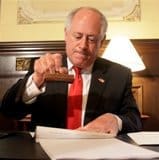 Facing a grim state financial situation, Illinois Governor Pat Quinn Wednesday proposed a fiscal year 2011 state budget that underfunds HIV prevention and care services by nearly $22 million. The budget plan relies on a mix of cuts to programs, borrowing, and federal funding. Gov. Quinn also proposed a 1% tax increase to maintain education programs. Read more...
Today, 66 organizations and over 400 individuals called on Illinois Governor Pat Quinn to fairly fund HIV services in the FY 11 state budget, to be introduced March 10. READ MORE.
 Governor Quinn released a preliminary budget outline on February 24 that highlights the consequences of the state budget disaster: $2 billion more in cuts to programs, a massive budget deficit, and $11 billion in unpaid bills. Taken together, the budget problems predict massive harm for vulnerable people, and particularly people with and at risk of HIV. READ MORE.
Illinois AIDS advocates expect to have difficult conversations with lawmakers in Springfield this week. Unless immediate actions are taken to remedy the state’s spiraling budget crisis, vital HIV/AIDS services — along with the state’s educational, healthcare, and human service systems assisting millions of vulnerable children, families, disabled, elderly, and chronically ill individuals — will be put in serious jeopardy. READ MORE.
Five Illinois State Representatives today sent a letter to Governor Pat Quinn requesting $44.06 million in HIV funding in the FY 2011 state budget, an increase of $18 million. Reps. Harry Osterman (D-Chicago), Sara Feigenholtz (D-Chicago), Deborah Graham (D-Chicago), Lisa Hernandez (D-Cicero) and Greg Harris (D-Chicago) are leading the funding request. READ MORE.
Long-time AIDS advocate State Rep. Sara Feigenholtz (D-Chicago) convened on January 22, 2010 an Illinois House panel on the state’s HIV funding crisis. The AIDS Foundation of Chicago and Illinois Public Health Association coordinated testimony.
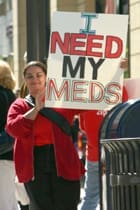 If additional state funding is not identified next fiscal year, advocates told the panel, hundreds of low-income people with HIV may be denied HIV medications through the AIDS Drug Assistance Program (ADAP) services or face a waiting list, hastening disability or death.
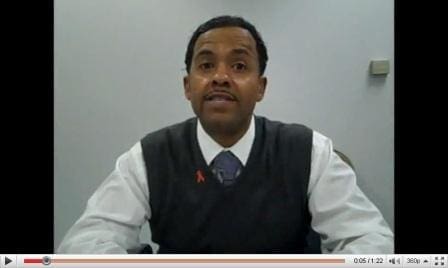 In addition, HIV prevention providers from around the state spoke out about the impact of recent HIV prevention funding cuts. AFC estimates that a minimum $18 million state appropriations increase will be needed in FY11 to restore HIV prevention and care funding redirected to ADAP and meet the medication assistance needs of new ADAP enrollees.”
ADAP Funding Testimony and Resources
Illinois ADAP Fact Sheet
Illinois ADAP background
AIDS Foundation of Chicago Testimony
Medical importance of ADAP by Dr. Dave Barker, Ruth M. Rothstein CORE Center
Written testimony from advocates, services providers, and people with HIV/AIDS
Testimony from the Strength in Unity Coalition (English, Spanish)
Testimony from Mildred Williamson, State AIDS Director, Illinois Department of Public Health
Read the letter to Representative Feigenholtz from the HIV Care Connect Cook Collar Consortia.
HIV Prevention Funding Testimony and Resources
Illinois Public Health Association, Jim Nelson
Chicago Department of Public Health
AIDS Project Quad Cities
Bethany Place, Belleville
Total Health Awareness Team, Rockford
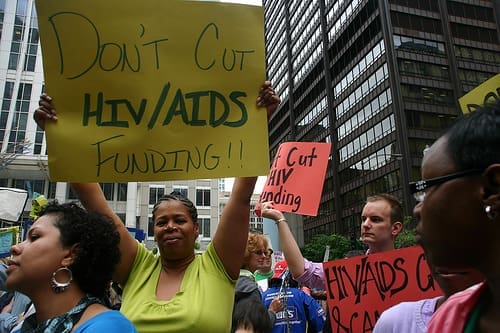 It’s this simple: State operations cost $26 billion per year, but the state is projected to collect revenue totaling just $13 billion in the fiscal year that begins July 1, 2010. Unless lawmakers identify new revenue to close this colossal deficit, hundreds of people will lose life-saving HIV medications, thousands will be denied essential services, and tens of thousands will go without prevention services. This will undoubtedly result in more HIV and STD infections and more preventable deaths.
 Fundamental revenue reform is a tall order for state lawmakers in an election year, but there is no other acceptable solution to this crisis. Without fundamental revenue reform, the future of HIV services will be jeopardized along with other basic services such as Medicaid, transportation, education, public health, housing, and other vital services needed by vulnerable children, disabled, elderly, unemployed, and chronically ill Illinoisans.
Quite simply, a fair and balanced income tax increase is needed in Illinois to sustain vital public services. Combined with measures such as an expanded Earned Income Tax Credit, revenue reform will benefit most residents, particularly low-income families.
At risk this year is funding for critical state programs, including the AIDS Drug Assistance Program AIDS Drug Assitance Program, HIV prevention, and housing and care programs.
CHICAGO (October 21, 2009)—Chicago Mayor Richard M. Daley proposed today a 12 percent reduction in city-funded public health services in Chicago’s 2010 budget. While HIV programs were largely spared, the Mayor’s plan recommends a 4 percent funding reduction for HIV services.
“Communities under siege because of the recession need public health services now more than ever,” said David Ernesto Munar, vice president of the AIDS Foundation of Chicago (AFC). “Without a sustained HIV and public health investment, more low-income Chicagoans will acquire preventable conditions that will only escalate their housing, support service, and medical needs.”
The Daley Administration proposal reduces HIV/AIDS spending from $4.47 million to $4.30 million, a $175,000 or 4 percent cut. City HIV/AIDS funding supports grant awards to community-based organizations for HIV-related housing, education, and prevention services, including access to condoms and sterile syringes. The overall proposed budget averts massive staff and service cuts by tapping reserve funds and reducing expenses.
Daley’s proposal would reduce overall funding for the Chicago Department of Public Health (CDPH) by 12.3 percent, from $37.8 million to $33.2 million. This level of reduced spending reflects the elimination of 19 staff positions. CDPH administers the city’s HIV programs, including grants for community services.
AFC applauds efforts by City Hall to limit funding reductions for HIV services in a very difficult budget year and urges Mayor Daley and City Council to restore Chicago’s HIV and public health budgets.
The Chicago City Council Budget Committee will hold a hearing on the proposed CDPH budget on the morning of Thursday, November 2, at 121 N. LaSalle, Room 200, Chicago. A full City Council public budget hearing is scheduled for Wednesday, November 18. The new budget year begins on January 1, 2010.
Stay tuned to AFC’s Statewide Advocacy Network and AIDS Connect for breaking news about Chicago’s budget and other important HIV/AIDS news.
View the proposed budget.
Detailed agency budget (CDPH begins on page 146 of the PDF).
By Jim Pickett, Director of Public Policy
 |
|
Hector fundraising on Michigan Ave. to attend the Campaign to End AIDS event in Washington, DC |
In the time I have been doing HIV/AIDS advocacy work, I can honestly say I have never come across someone quite like Hector Hernandez. He popped on the scene about a year and a half ago, having just tested positive, and meteorically became a legendary advocate/activist here in Illinois and across the country. His natural abilities, energy, and passion; his ability to connect were stunning.
I was especially close to Hector and as I write this, two days after his death, I am feeling shocked, angry and sad, very, very sad. An insulating numbness is protecting me from truly feeling the impact of his loss. It will hurt. It will hurt.
And there are many he touched who will feel this pain as well.
You were only 35, dude. I had plans for you. You had plans for you. Why did you leave us this way?
 |
|
Hector with (from left) AFC’s Rev. Doris Green and State Rep. Sara Feigenholtz at 2006 Lobby Days |
I’d like to share some story snapshots now. Before I curl into a ball and weep, I want to celebrate this beautiful, crazy character with you.
My first encounter with Hector was on the 5:00 p.m. train back from Springfield last year, having just attended our annual Lobby Days which had been his very first advocacy stint. He was sitting in the café car eating a bowl of cereal and going through a stack of business cards about four inches high. Earlier that day, Hector had not only lobbied his own state representative and senator, he had lobbied EVERYBODY. Every single person he could talk to – other representatives and senators, groups touring the Capitol building, secretaries, other lobbyists, random passersby – Hector talked to them ALL about HIV and AIDS and what needed to be done. And he requested a business card from each. He even marched himself right into the governor’s office and requested a meeting with Mr. Blagojevich. While the state’s chief executive was unavailable, Hector didn’t miss the opportunity to lobby every single person in the office at that time. Four inches of business cards and a bowl of cereal, traveling home from Springfield – I think that’s my favorite picture of Hector.
 |
|
Hector with State Rep. Jaime Delgado at 2006 Lobby Days |
This next snapshot is of Hector standing on State Street in downtown Chicago on a chilly April afternoon. He’s wearing a big handmade sign, handing out brochures and condoms, and asking for donations to help him get to AIDSWatch in Washington, DC. He never had much money or material things, and he never let that get in the way of something he wanted. Determined and creative – that was Hector.
 |
|
Hector in the Springfield Capitol rotunda at 2006 Lobby Days |
Here’s one of Hector wearing an eensy, weensy red bikini, feathers, and body paint across his torso spelling out “Condoms Save Lives” at the Gay Pride Parade last year. He was the wildest, most outrageous thing anyone had ever seen, and was undoubtedly the most photographed attraction. A week later when people picked up their film, not only did they see at least one picture of a wild man in feathers, they got a fantastic prevention message as part of the deal. Genius, really!
The final image I want to share with you is of Hector at AIDSWatch 2006 – his third time in Washington in less than two years. There was a congressional hearing on the reauthorization of the Ryan White CARE Act. Decked out in a cream-colored suit, Hector got up and marched right up to the front of the room and testified to the phalanx of high-level staffers on the critical importance of the services the CARE Act delivers to people living with HIV and AIDS, people like him. Eloquent, confident, and fearless – that was Hector.
I had plans for you, Hector. You had plans, so many plans. There is so much work to do, we have such a long way to go, and you were supposed to help us get there. You were going to motivate and inspire and talk to strangers on the subway. You were going to ROCK THE WORLD. Why did you leave us this way?
I am feeling very frustrated with the higher power that decided there was a different agenda than the one we had. As I just begin to confront the outer edges of what this loss means to me and the community of people living with HIV/AIDS, as the hurt begins to manifest itself, I refuse to accept any “bigger picture.” I refuse to see the forest for the trees. One day perhaps my tune will change.
Hector was really going places. He was in the very process of becoming legendary. And he left right at the second chapter. This will hurt. Oh yes, this will hurt.
We will miss you, baby.
 |
|
Hector at 2006 Lobby Days |