 By Livvie Avrick
Life is Work, a non-profit organization that serves the Black transgender and non-binary community in Chicago, goes beyond providing tangible services; it provides hope, liberation, encouragement. Life is Work creates visibility and changes the narrative for trans people.
For Dymond Haynes, program coordinator at Life is Work, having visibility is hope for the future. “Seeing my CEO, Zahara Bassett in the position that she’s in, and seeing other women like Janet Mock, Reyna Ortiz, Caprice Carthans, Channyn Parker, those are pillars of our community,” said Dymond. “The Trans movement would not be as strong without them, so seeing women like that gives me hope.”
Two years ago, Dymond participated in Vision, a workforce development program of Life is Work, that led to her current position as program coordinator.
“Building Vision and building Life is Work is for us to change the narrative – you can be an actress, you can be a model, you can literally be a mom, you can be whatever you desire; you can come to us, and we can make it work,” said Dymond.
To commemorate Trans Day of Visibility on March 31st, Life is Work is hosting its second annual Chicago Trans Visibility Pageant, of which AFC is proud to be a sponsor. The pageant celebrates the frontline workers and advocates that make this work possible. It brings awareness to the community beyond the deaths and struggles that dominate the media. Through paying homage to the ones actively changing the narrative and making trans people visible, it makes sure they are not overlooked.
“Liberation comes from us first. I have to live this every day,” said Dymond. Life is Work, a Black transgender led organization, is setting the example of the importance of coming together and uniting as one to do the work for your community, by your community.
“I want people to understand that I would not be in this position if it wasn’t for another trans woman,” said Dymond Haynes. “As a young trans woman, I want to take what she gave me and pass it on to the next woman and the next woman and the next woman until we’re all across the world.”
Support Life is Work – attend the 2nd annual Chicago Trans Visibility Pageant on March 31st at 7pm.

AIDS Foundation Chicago is excited to welcome five new individuals to our Board of Directors. Our 29-member Board of Directors contributes to the vision and leadership of AFC, comprised of individuals with unique perspectives and lived experiences, working towards helping us achieve our goals of equity and justice.

Nnenna Okeke’s professional public health and healthcare experience spans nearly 15 years and various research, strategy-focused, implementation, and advocacy roles. Currently, she is the Head of Research and Insights at Homeward – a technology-enabled healthcare provider that addresses care access and quality gaps among rural populations. At Homeward, her work ensures that strategic decisions about how they serve rural populations are grounded in evidence about patient needs, desired health outcomes, and environmental context. Before joining Homeward, she held positions at Meta, American Medical Association, and NORC at the University of Chicago.
 Keith McQueen Bishop Keith McQueen is the Overseer and Founder of Powerhouse Church Global. Powerhouse Church is one of the fastest-growing LGBTQ affirming churches. Powerhouse Church is a dynamic multicultural Church throughout the United States and Brazil with various community outreach and engagement programs including: a food pantry, STI Testing & linkage to care, and an after-school program.
In July of 2017, Powerhouse Church expanded to the City of Chicago and has developed programs to promote Violence prevention, HIV prevention and education. Powerhouse Church has launched four more campuses in Jacksonville, FL, Boston, MA, Greensboro, NC and Los Angeles, CA. Bishop Keith McQueen lives life according to a very simple message , “God doesn’t need your excuses, HE only wants your YES”.

Rina Shah is the Group Vice President of Pharmacy of the Future and Segment Strategy at Walgreens. She began her career at Walgreens in 1998 in stores where she held various pharmacy roles. In 2007, Rina joined the corporate support center where she held multiple leadership positions in which she was responsible for launching innovative healthcare initiatives, leading market access sales operations and client services. Most recently, she was responsible for pharmacy operations, services and specialty across 9,000+ Walgreens community pharmacies. Rina was critical in the COVID-19 pandemic response with the enablement of vaccinations, testing and treatment services across the Walgreens enterprise. In her current role, she leads a team that is responsible for pharmacy strategy across the Walgreens portfolio, which includes prescription delivery and pharmacy services. Rina received her Doctorate in Pharmacy from the University of Illinois at Chicago in 2005.
 Patrick Strieck currently serves as the U.S. P&BB Distribution Integration Lead for BMO Harris Bank. His current role is responsible for driving decisions and the support of change pertaining to the acquisition of Bank of the West by BMO for the Distribution network. This includes all touch points that impact employees, customers and processes that interact and engage in branches as well as numerous specialty customer facing teams.
Patrick attended the University of Nevada, Reno Bachelor of Fine Arts program. He is a certified Six Sigma Green Belt and previously held his securities licenses. Patrick takes pride in having led national employee diversity work initiatives and championing employee affinity groups. He has previously served on non-profit boards which have included the San Francisco LGBT Community Center and the United Way of Capitol Counties.

Sean Radford is the Executive Vice President and Chief HR Officer at HALO, a $1B branded merchandise, corporal apparel and recognition and incentives company headquarter in Chicagoland. Prior to HALO he served in various human resources roles at CNA Insurance, a multibillion-dollar global leader in the insurance industry. His roles at CNA included senior vice president of organizational effectiveness and transformation, senior vice president and HR business partner, and director of talent management and leadership development. Prior to entering the human resources field at CNA, he served in sales and operations leadership roles at two other Fortune 500 companies. He holds a BA in Law and Society from the University of California, Santa Barbara and a MS in Learning & Organizational Change from Northwestern University.
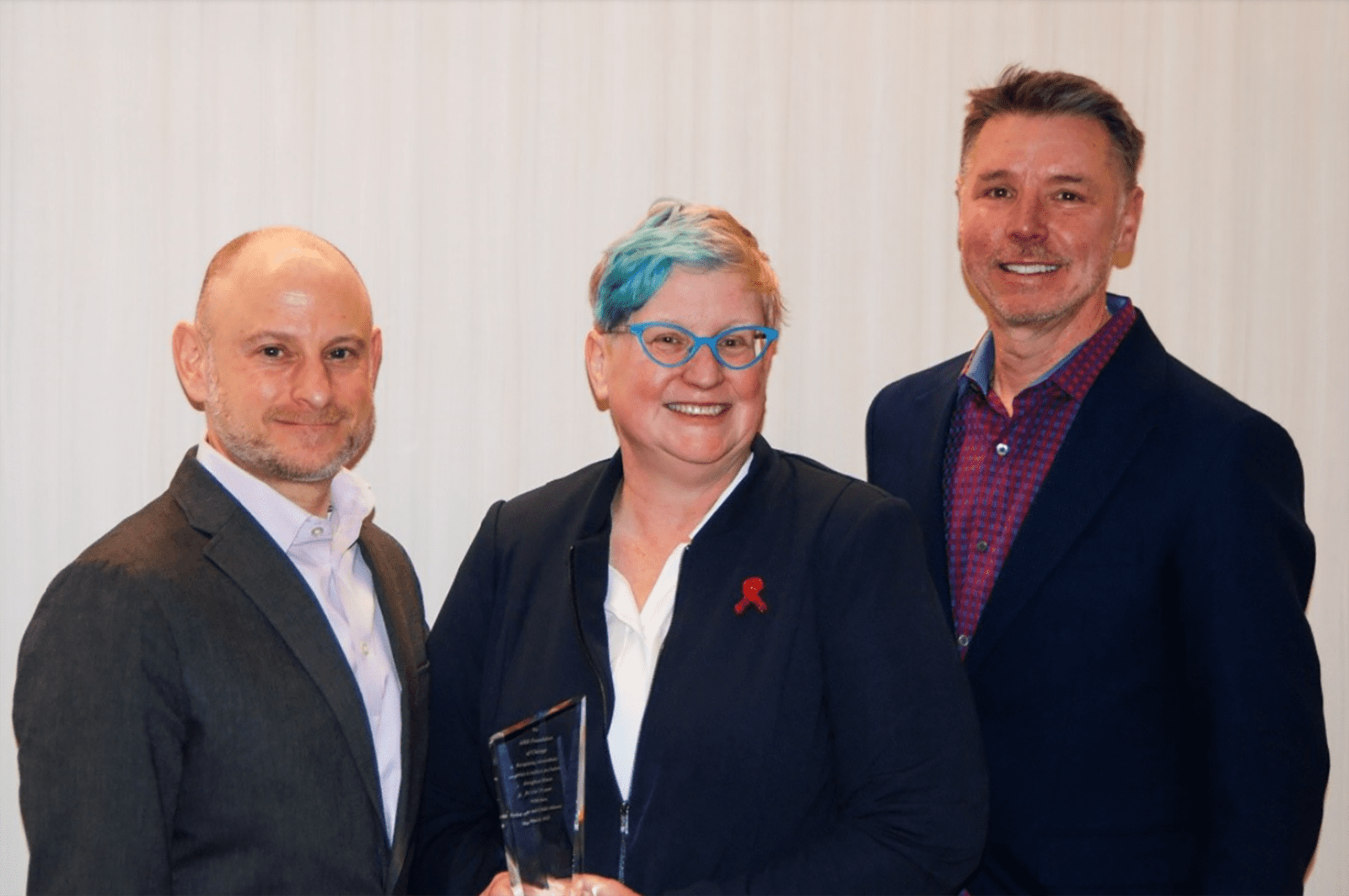 Pictured L to R: John Peller, Anne Statton, Mark Ishaug
On March 2nd, Mother and Child Alliance presented AIDS Foundation Chicago with an award recognizing their 20+ years of partnership helping mothers living with HIV deliver healthy babies.
Mother and Child Alliance (MACA), formerly known as Pediatric AIDS Chicago Prevention Initiative (PACPI), helps bolster the systems of care in Illinois for mothers and their babies during and after pregnancy to prevent HIV and other infections in newborns. AFC is proud of our partnership and collaboration in getting to zero new HIV diagnoses in Illinois by 2030.
“I remember when I first came to AIDS Foundation Chicago 18 years ago sitting in the office next to you, Anne, and learning so much about the critical and important needs of moms living with HIV. The impact that MACA has had over the decades has just been incredible,” said John Peller, President and CEO of AFC.
“I am grateful for the opportunity to partner with AFC over the many years. I believe we both learned a lot from our partnership and together we have made a tremendous impact on getting to zero in Illinois among women,” said Anne Statton, Executive Director of MACA.
Mark Ishaug, former President & CEO of AIDS Foundation Chicago, joined Anne and John for the award presentation. Mark was instrumental in deepening the partnership between AFC and MACA as CEO. Mark now leads Thresholds.

To realize the priorities and goals of the Getting to Zero Illinois (GTZ-IL) plan to end the HIV epidemic by 2030, AIDS Foundation Chicago (AFC) is proud to advocate and prioritize the following state legislative agenda in partnership with and through the leadership of community organizations and coalitions across Illinois. For more specific information about the legislation highlighted below, please review our completed 2023 Illinois State Legislative Agenda here.
HB1349/SB209: Strengthening and Protecting Illinois’ HIV Funding Infrastructure
(Representative Lakesia Collins, Senator Mike Simmons)
AFC is proud to advocate for an $8 million increase in state funding for HIV & sexually transmitted infections (STI) education, prevention, testing, and treatment and the PrEP4Illinois program in the FY2024 State Budget. AFC is also proud to advocate for the protection of funding for the Getting to Zero Illinois (GTZ-IL) initiative and the African American HIV/AIDS Response Fund (AAHARF).
HB2481/SB2241: Housing Funding Omnibus
(Representative Michelle Mussman, Senator Adriane Johnson)
Without question, housing is healthcare, especially to people living with or vulnerable to HIV. AFC and the Center for Housing and Health (CHH) are proud to work alongside community partners Housing Action Illinois, Chicago Coalition for the Homeless and the Supportive Housing Providers Association (SHPA) to advocate for $78.9 million in investments to the housing funding infrastructure in the state’s FY2024 budget.
HB1570/SB122: Healthy Illinois for All
(Representative Elizabeth “Lisa” Hernandez, Senator Omar Aquino)
AFC is pleased to support legislation that seeks to extend Medicaid-like eligibility to all low-income Illinois residents ages 19 through 41 with household incomes of up to 138% Federal Poverty Level ($17,236/year for an individual) regardless of their immigration status. In addition, AFC supports additional funding to cover Long Term Services and Supports (both facility-based care and Home and Community-Based Services) in the Health Benefits for Immigrant Adults (HBIA) and Health Benefits for Immigrant Seniors (HBIS) programs.
SB1912: Health Insurance Rate Review & Affordability
(Senator Laura Fine, Representative Bob Morgan)
No one should have to worry that they can’t afford the healthcare they need or have to choose between filling a prescription and paying rent. AFC supports legislation that seeks to make health insurance premiums more affordable by allowing the Illinois Department of Insurance to disqualify health insurance rates that are excessive, inadequate, or unfairly discriminatory, which is standard practice in 36 states and Washington, D.C.
HB2280/SB2427: Healthcare Provider Cultural Competency
(Representative Dagmara “Dee” Avelar, Senator Ram Villivalam)
Cultural humility and competency centers on being open to differences and prioritizes space for celebrating that which is most important to the other person. AFC is proud to support legislation that would require health care professionals with continuing education requirements to undergo cultural competency training relating to providing affirming care to people in the person’s preferred language, people with disabilities, people living with HIV, and people of diverse sexual orientations and gender identities.
HB2/SB78: Overdose Prevention Sites Pilot
(Representative LaShawn Ford, Senator Sara Feigenholtz)
Overdose prevention sites have been shown to save lives, reduce the spread of infectious diseases, such as HIV and Hepatitis C, and link those with substance use disorders to behavioral and physical health care. AFC is proud to support legislation that would create a harm reduction services license for OPS pilot sites and connect folks to community support or other existing medical care, treatment, recovery programs and harm reduction services.
HB1286/SB126: Gender-Inclusive Multiple-Occupancy Restrooms
(Representative Katie Stuart, Senator Celina Villanueva)
AFC and Pride Action Tank are proud to support legislation that would allow but not require public and private entities to install gender-inclusive multiple-occupancy restrooms in their buildings if they choose to do so. Passing this measure would create inclusive spaces for transgender, nonbinary, and gender-expansive communities while also allowing businesses to better serve their customers.
This list of priorities is by no means an exhaustive list and does not encompass all the policy work that AFC’s Policy & Advocacy team is currently doing on the state level. As the legislative session progresses, AFC will monitor and engage with emerging issues that arise when they align with our mission, vision, and values. We will also continue to support legislation that meaningfully addresses racial health equity and impacts people living with or vulnerable to HIV and people experiencing homelessness or housing instability.
To contact your elected officials about these bills, you can use our Advocacy Day Action Center here: Nothing About Us Without Us! (p2a.co) You can join us in Springfield on April 19th for Advocacy Day by registering here: Register for Advocacy Day 2023! (p2a.co)
For more information, please contact AFC’s Director of Government Relations
Timothy Jackson via email at [email protected] or via phone at (256) 200-8878.
 Speaking before a joint session of the Illinois General Assembly for the first time since the beginning of the COVID-19 pandemic, Governor JB Pritzker delivered his annual State of the State and Budget address on February 15, 2023. With an outlook for “better outcomes and better futures for Illinoisans,” Governor Pritzker outlined his $49.6 billion Fiscal Year 2024 (FY24) budget that includes substantial investments in early childhood education, behavioral health care and workforce development.
While AIDS Foundation Chicago (AFC) supports these needed investments, we are disappointed that the Governor’s FY24 proposed budget does not prioritize increased funding to address the racial health disparities experienced by people living with or vulnerable to HIV including our Black, Latine, and LGBTQ+ communities. Specific to health and human services, the Governor’s FY24 proposed budget flat-funds most HIV-related programs when compared to FY23 and even cuts the Getting to Zero-Illinois funding by $5 million.
AFC’s President/CEO John Peller shared his frustration and disappointment that the Governor’s proposed FY24 budget is a barrier to ending the HIV epidemic in Illinois. “Cutting funding to the state’s Getting to Zero plan to end the HIV epidemic by 2030 is an absolute non-starter. Black and Latine Illinoisans comprise 73% of those newly diagnosed with HIV in 2019 with 50% and 23% respectively. Without question, ending the HIV epidemic in Illinois is a racial justice and health equity issue. We should be doing more, not less to address these alarming racial disparities and invest appropriate resources in the communities where the need is greatest. AFC looks forward to working with the governor’s staff and members of the General Assembly to prioritize increased investments in HIV testing, prevention, and treatment.”
In December 2022, AFC was proud to organize a letter sent to Governor Pritzker from fifty-three Illinois organizations representing housing, healthcare and human service providers supporting $8 million in additional FY2024 investments to HIV and sexually transmitted infection (STI) education, prevention, testing, housing, and treatment. In addition, AFC is proud to work alongside state legislators on House Bill 1349 and Senate Bill 209, legislation that includes $8 million of new critical investments, in addition to protecting existing funding of $15 million in state funding for the African American HIV/AIDS Response Fund and $10 million for the GTZ-IL initiative.
AFC calls on HIV advocates and activists across the state to join us in Springfield for 2023 Advocacy Day on Wednesday, April 19th, and demand Governor Pritzker and the IL General Assembly prioritize the critical investments in House Bill 1349/Senate Bill 209 within the final FY24 budget. Learn more and register here.
For more than thirty-five years, AIDS Foundation Chicago (AFC) has led the fight for HIV prevention and treatment services across Illinois. Our continued advocacy is rooted in our collective responsibility to protect the most vulnerable in our communities and amplify the voices, stories and lived experiences of people living with or vulnerable to HIV. With community as our North Star, we can reach those that have too often been left out and left behind in our fight to end the HIV epidemic in Illinois.
By Livvie Avrick
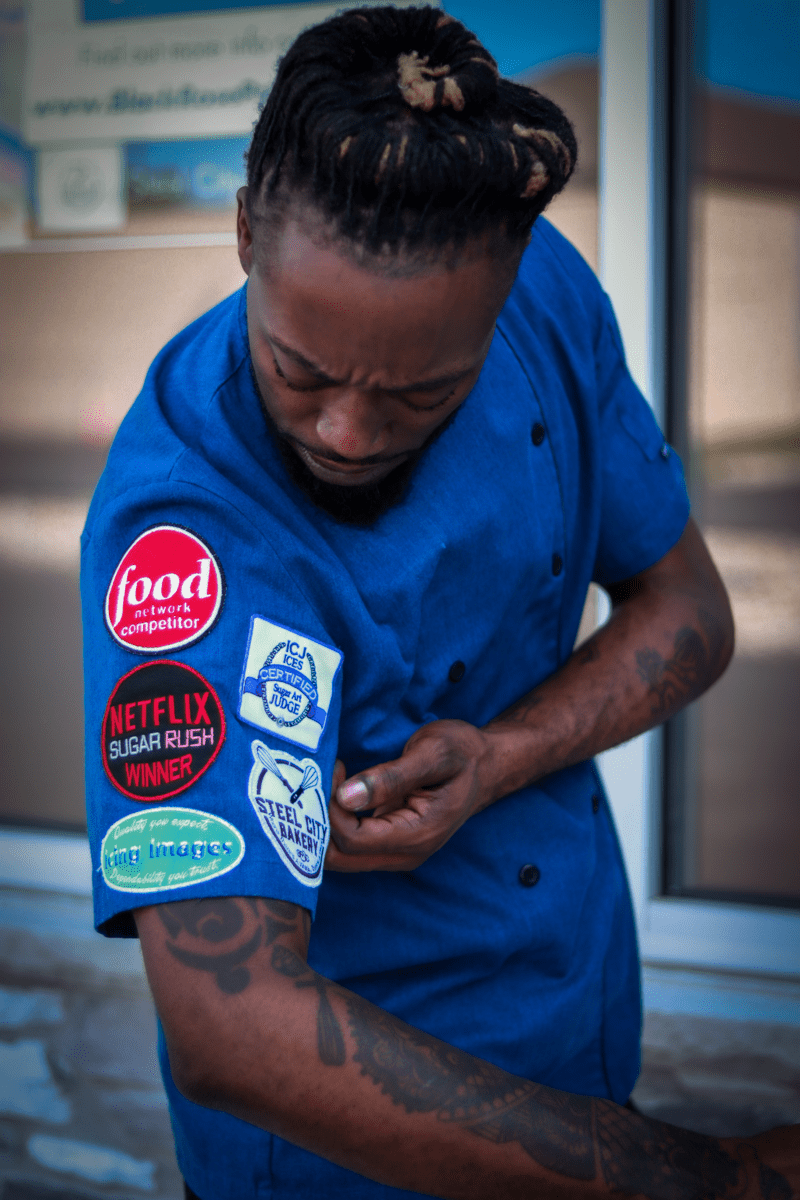
Meet Chef Blāque, award-winning sugar artist and founder of Black Rose Pastries — and one of the chocolatiers for this year’s World of Chocolate on February 17th. He is the winner of Netflix’s “Sugar Rush” and participant and judge on Food Network and other baking competition shows. We talked with Chef Blāque about why he enjoys participating in community events like World of Chocolate and what it means to him. “I’m the kid who was sitting in front of the TV saying, ‘I want to do that someday.’ While I was inspired by a lot of different things, I didn’t see a lot of people who may have looked like me. I want to be that representation for people of all ages, backgrounds, and colors.” – Chef Blāque.
Watch the interview here: Meet Chef Blāque and find him at World of Chocolate 2023
Check out Chef Blāque’s bakery: www.BlackRosePastries.com
Follow him on Instagram: Maurice Shelton (@chefblaque) • Instagram photos and videos
Stay up to date on his latest projects:
Racism is a public health crisis. This is evident in the decades of public health data that show disproportionate levels of morbidity and mortality among people of color, and in particular Black and Latino/a/e/x people. These trends are rooted in the legacy of racism and the extent to which it has permeated into public health, health care, and other systems. Beyond health care, we have understood for over two decades the profound impact that non-medical factors—so-called social determinants—have on health and life expectancy outcomes.[1] Housing inequality, environmental pollution, and lack of community investment diminish quality of life and lead to chronic disease. Until we address racism in public health and other support systems, Black and Latino/a/e/x people will continue to be left behind. Therefore, AIDS Foundation Chicago calls on Illinois and the city of Chicago to take a bold stance on behalf of Black and Latino/a/e/x people by declaring racism a public health crisis, as other jurisdictions in the United States have done,[2] and to mobilize vital resources to eliminate racist structures and policies that continue to threaten our communities.
On the shortcomings of the public health system
The failure of the public health system to work for Black and Latino/a/e/x people is readily apparent in the HIV epidemic in the United States. According to the Centers for Disease Control and Prevention (CDC), there were an estimated 1.2 million adults and adolescents living with HIV in the United States at the end of 2020,[3] of which 30,692 people were newly diagnosed that year.[4] Of these new diagnoses, Black people accounted for 42% despite Black people making up only 13% of the entire U.S. population, and Latino/a/e/x people accounted for 27% despite Latino/a/e/x people making up only 18% of the population.[5] Of the 1,286 new HIV diagnoses in the state of Illinois in 2019, 50% of these were among Black people and 23% among Latino/a/e/x people.[6] Meanwhile, Black people made up just 14% and Latino/a/e/x people just 18.2% of the entire population in Illinois in the 2020 census.[7]
When we look at access to Pre-Exposure Prophylaxis (PrEP), first approved by the Food and Drug Administration (FDA) to prevent HIV in 2012,[8] we see the same disparities. Of the 18,131 PrEP users in Illinois in 2021, only 12.5% were Black and only 16.8% were Latino/a/e/x.[9] Not only do these two groups bear the brunt of the HIV epidemic, but they also have less access to powerful and proven prevention options that have been available for over a decade. Notwithstanding, Illinois’s rate of PrEP uptake is twice that of neighboring states thanks to Illinois’ bold commitment to end HIV by 2030 through the implementation of the Getting to Zero plan. By laying out a clear and actionable roadmap, the state has been able to dedicate resources to achieve this bold goal and has a means of holding itself accountable.
On health care disparities
A report by the Chicago Department of Public Health found that, in 2017, there was an 8.8-year gap in life expectancy between Black people and white people, driven primarily by disparities in chronic disease incidence, gun-related homicide, infant mortality, HIV and other infectious disease, and opioid overdose.[10] As a direct result of the COVID-19 pandemic, we also saw the life-expectancy gap widen to 10 years between Black and white people, and Latino/a/e/x people saw a drop in life expectancy of three years, the largest of any group.[11] Despite the launch of the Initiative to Eliminate Racial and Ethnic Disparities in Health by the Year 2010 in the late 90s,[12] generally seen as the U.S. government’s first major attempt to address health disparities, these persist. While clinicians, public health, and elected officials have recognized the implications of systemic, interpersonal and internal racism on racial disparities in health and quality of life outcomes for decades,[13] we have largely failed to explicitly call out the legacy of racism in our public institutions and to mobilize resources to dismantle it.
Localities that have declared racism as a public health crisis have proposed as remedies: the creation of an office or taskforce to gather data on racial inequities in their respective communities, the allocation of new or repurposed funding for racial justice work, increased funding to public health entities, the promotion of an “equity in all policies” principle to ensure old and new programs are analyzed through the lens of racial equity, and more.[14] These are just some of the ways that such a declaration can foster intentionality and accountability.
The role of racism in medical mistrust
Distrust in the medical establishment is deeply ingrained in Black and Latino/a/e/x communities and has impeded even the best-intentioned initiatives from success. Historical examples of medical abuse on Black and Latino/a/e/x people are abundant, such as the experimentation on enslaved Black women by John Marion Sims, lauded as the “Father of American Gynecology” (and who gave rise to the racist myth that Black women experience pain less severely than white women),[15] the exploitation of Henrietta Lack’s cancer cells for scientific research which has generated billions of dollars in profits for private companies,[16] and the targeted, forced, and government-sanctioned sterilization of Black, Mexican, Puerto Rican, and Indigenous women from the 1910s to the 1960s.[17]
Yet people of color experience these injuries daily in the present day. In September of 2020, there were reports of a whistleblower complaint that immigrant detainees at the Irwin County Detention Center (ICDC) in Ocilla, Georgia, a subcontractor of the Department of Homeland Security (DHS), were being denied COVID-19 testing, medical records were being fabricated, and COVID-19 cases were being underreported.[18] Most shockingly, the complaint alleged that female detainees were being given unnecessary hysterectomies and without a full knowledge and understanding of the procedure they were undergoing. Members of Congress immediately called on DHS to investigate these allegations, specifically citing the United States’ history of forced sterilization and medical racism,[19] and on May 20, 2021, DHS under the Biden administration announced the closure of that facility along with another detention facility in Massachusetts with a history of civil rights abuse.[20]
In December 2020, Dr. Susan Moore’s story resonated with Black people—particularly with Black women—when her white attending physician refused to manage her pain while she was hospitalized with COVID-19.[21] In a series of social media posts, she documented the failure of her clinician, not only to take her complaints of pain seriously, but of his refusal to treat her with Remdesivir, one of the first treatments approved by the FDA to manage COVID-19 infection.[22] A physician herself, Dr. Moore was able to advocate for herself to get the care she needed before being discharged. Tragically, she was readmitted to a different hospital and died of COVID-19 complications just over two weeks after her initial hospital admission. The disproportionate impact of the COVID-19 pandemic on Black, Latino/a/e/x and Indigenous people was so evident and the quality of treatment so disparate,[23] that the Centers for Disease Control and Prevention (CDC) issued guidance to clinicians alerting them of the detrimental effects of implicit bias on communities of color.[24]
Racism as a housing barrier
Housing is health care, a notion that is evident among people living with HIV, for whom housing continues to be the biggest unmet need.[25] When people are experiencing unstable housing, it is nearly impossible to prioritize taking daily medication to stay healthy or attending regular medical appointments. This of course extends beyond HIV. Housing inequities between people of color and white people have their roots in the racist, post-Civil War Jim Crow laws,[26] and the redlining policies of the federal government.[27] Simply taking a ride in Chicago’s public transit from the generally more white and affluent north side of the city to the primarily Black south side or Latino/a/e/x west side is enough to witness the legacy of these harmful and decades-old policies. While the Fair Housing Act of the 1960s criminalized inequitable treatment based on race and ethnicity, we know that these practices continue to occur today, albeit indirectly through such measures as crime-free housing ordinances which prevent people with criminal records from accessing certain housing opportunities.[28] Black and Latino/a/e/x people are disproportionately impacted by the criminal justice system and thus many are locked out of affordable housing, which presents yet another barrier to accessing quality and stable care, and which contributes to the health disparities we see.
On perpetuating racist structures through the criminal justice system
According to the National Institute of Justice, Black people account for 28% of all arrests in the U.S., and almost 40% of the incarcerated population.[29] However, incarceration statistics only paint part of the picture. In 2013, Black people accounted for 30% of probationers and 38% of parolees despite making up a minority of the entire U.S. population.[30] A criminal record can make it harder for people of color, and especially Black people, to find and maintain gainful employment, with some studies showing that it can lower the likelihood of a job call-back or offer by as much as 50%.[31] This undoubtedly impacts housing stability, and locks individuals out of employer-based health insurance among other benefits that adversely impact health and wellness. One study on reentry in New Haven, Connecticut, found that a history of incarceration impacted people’s ability to finish their formal education, and confirmed the adverse impact on finding a job and maintaining housing[32] The same study found that white individuals were more likely than Black individuals to report being caught doing something illegal by police and being let go. Until we address the racial inequities of the criminal justice system, we will continue to see these racial disparities persist.
On environmental racism
Air pollution not only leads to greater incidence of chronic obstructive pulmonary disease and asthma, but it also impacts cardiovascular, neural and digestive health.[33] It is unsurprising then that, since 2019, primarily Black and Latino/a/e/x communities in Chicago’s southeast side have banded together in opposition to the relocation of a metal scrap business to their community from the primarily white Lincoln Park neighborhood on the city’s north side.[34] The metal scrap business has been cited 11 separate times for pollution and noise violations, and this was part of the reason the City Council voted to deny their relocation permit.[35] What is striking is the city’s involvement in fast-tracking the permit process until residents voiced their concerns. This prompted the federal Housing and Urban Development (HUD) agency to open a multi-year investigation into the practices of the city in approving the relocation of polluting entities into Black and Latino/a/e/x neighborhoods, which culminated in 2022 in a reprimand from HUD, accusing the city of outright discrimination.[36] HUD has given the city an ultimatum—voluntarily agree to address disparities in environmental impacts on Black and Latino/a/e/x communities or lose hundreds of millions in federal housing dollars.
Call to action
If Illinois is serious about improving health outcomes for Black and Latino/a/e/x communities, it must declare racism a public health crisis, and outline specific actions for change across multiple systems—including public health, health care, housing, criminal justice, and environmental protection—modeled after those proposed in other localities that have declared racism a public health crisis,[37] which includes the City of Chicago.[38] The COVID-19 Public Health Emergency taught us that where there is a will to get ahead of a crisis, there is a way to make it happen through robust investment of resources and policy changes. It is long overdue for the state of Illinois and localities throughout it to declare racism a public health crisis, to invest dedicated funding for, and to take specific, measurable actions to address this 400+ year old crisis.
[1] Paula Braveman and Laura Gottlieb. The Social Determinants of Health: It’s Time to Consider the Causes of the Causes (San Francisco: University of California, San Francisco, School of Medicine, 2014), 19-31. https://journals.sagepub.com/doi/pdf/10.1177/00333549141291S206
[2] American Public Health Association. “Analysis: Declarations of Racism as a Public Health Crisis.” APHA, October 2021. https://www.apha.org/-/media/Files/PDF/topics/racism/Racism_Declarations_Analysis.ashx
[3] Centers for Disease Control and Prevention. “HIV Surveillance Report, 2020; vol. 33”. CDC, May 2022. https://www.cdc.gov/hiv/library/reports/hiv-surveillance.html
[4] Centers for Disease Control and Prevention. “HIV Surveillance Report, 2020; vol.33”. Table 1b. CDC, May 2022. http://www.cdc.gov/hiv/library/reports/hiv-surveillance.html
[5] See 4.
[6] Illinois Department of Public Health. “Enhanced HIV/AIDS Reporting System”. IDPH, September 2021. https://dashboard.gtzillinois.hiv/
[7] United States Census Bureau. “United States: Illinois.” Census, Accessed February 6, 2023. https://data.census.gov/profile/Illinois?g=0400000US17
[8] Fenton, Kevin. “CDC Statement on FDA Approval of Drug for HIV Prevention.” CDC, July 16, 2012. https://www.cdc.gov/nchhstp/newsroom/2012/FDA-ApprovesDrugStatement.html
[9] AIDSVu. “Local Data: Illinois.” AIDSVu. Accessed September 14, 2022. https://aidsvu.org/local-data/united-states/midwest/illinois/
[10] Chicago Department of Public Health. “Healthy Chicago 2025: Closing Our Life Expectancy Gap 2020-2025.” CDPH, Accessed February 6, 2023. https://www.chicago.gov/content/dam/city/depts/cdph/statistics_and_reports/HC2025_917_FINAL.pdf
[11] City of Chicago. “COVID-19 Impacts on Life Expectancy in Chicago, 2019-2020.” Chicago, Accessed February 7, 2023. https://www.chicago.gov/city/en/sites/covid-19/home/impact-on-chicago-2020.html
[12] David Satcher. The Initiative to Eliminate Racial and Ethnic Health Disparities is Moving Forward (Washington, D.C.: Public Health Reports, 1974), 283-287. https://www.ncbi.nlm.nih.gov/pmc/articles/PMC1308482/pdf/pubhealthrep00027-0085.pdf
[13] Camara P. Jones. Levels of Racism: A Theoretical Framework and a Gardener’s Tale (Atlanta: American Journal of Public Health, 2000), 1212-1215. https://www.ncbi.nlm.nih.gov/pmc/articles/PMC1446334/pdf/10936998.pdf
[14] See 2.
[15] Manke, Kara. ”Historian uncovers gynecology’s brutal roots in slavery.“ Berkeley News, February 17, 2020. https://news.berkeley.edu/2020/02/17/historian-uncovers-gynecologys-brutal-roots-in-slavery/
[16] Miller, Ryan W. ”Henrietta Lacks’ cells led to medical breakthroughs despite her lack of consent. Now her family is suing a pharmaceutical company.” USA Today, October 4, 2021. https://www.usatoday.com/story/news/nation/2021/10/04/henrietta-lacks-family-sues-thermo-fisher-over-hela-cells-products/5987038001/
[17] Manjeshwar, Sanjana. ”America’s Forgotten History of Forced Sterilization.” Berkeley Political Review, November 4, 2020. https://bpr.berkeley.edu/2020/11/04/americas-forgotten-history-of-forced-sterilization/
[18] Treisman, Rachel. “Whistleblower Alleges ‘Medical Neglect,‘ Questionable Hysterectomies of ICE Detainees.“ NPR, September 16, 2020. https://www.npr.org/2020/09/16/913398383/whistleblower-alleges-medical-neglect-questionable-hysterectomies-of-ice-detaine
[19] Jayapal, Pramila. ”DHS IG Letter 9.15.” jayapal.house.gov, Accessed February 6, 2023. http://jayapal.house.gov/wp-content/uploads/2020/09/DHS-IG-Letter-9.15.pdf
[20] U.S. Department of Homeland Security. ”ICE to Close Two Detention Centers.” DHS, May 20, 2021. https://www.dhs.gov/news/2021/05/20/ice-close-two-detention-centers
[21] Eligon, John. “Black Doctor Dies of Covid-19 After Complaining of Racist Treatment.” The New York Times, December 23, 2020. https://www.nytimes.com/2020/12/23/us/susan-moore-black-doctor-indiana.html
[22] National Institutes of Health. “Remdesivir.” NIH COVID-19 Treatment Guidelines, December 1, 2022. https://www.covid19treatmentguidelines.nih.gov/therapies/antiviral-therapy/remdesivir/
[23] Eligon, John and Burch, Audra D.S. ”Questions of Bias in Covid-19 Treatment Add to the Mourning for Black Families.” The New York Times, Last Modified May 20, 2020. https://www.nytimes.com/2020/05/10/us/coronavirus-african-americans-bias.html
[24] Centers for Disease Control and Prevention. ”COVID-19 in Racial and Ethnic Minority Groups.” CDC, Last Modified June 25, 2020. https://stacks.cdc.gov/view/cdc/89820/cdc_89820_DS1.pdf?
[25] Thurka Sangaramoorthy, Meredith Haddix, Anya Agopian, Hannah Yellin, Farah Mouhanna, Hibo Abdi, Kerri Dorsey, James Peterson, Michael Kharfen, and Amanda D. Castel. Measuring Unmet Needs among Persons Living with HIV at Different Stages of the Care Continuum (AIDS and Behavior, 2021), 1954-1967. https://www.ncbi.nlm.nih.gov/pmc/articles/PMC8085070/pdf/nihms-1685383.pdf
[26] African American Intellectual History Society. “Housing Discrimination in the Jim Crow US and The Case for Reparations.” AAIHS Black Perspectives, February 4, 2020. https://www.aaihs.org/housing-discrimination-in-the-jim-crow-us/
[27] Jackson, Candace. “What Is Redlining?” The New York Times, August 17, 2021. https://www.nytimes.com/2021/08/17/realestate/what-is-redlining.html
[28] McClain, Jade. “Remnants of Jim Crow Found in Modern Housing Policy.” NYU, January 23, 2020. https://www.nyu.edu/about/news-publications/news/2020/january/modern-housing-segregation-in-america.html
[29] Amy L. Solomon. In Search of a Job: Criminal Records as Barriers to Employment (Washington, D.C.: National Institute of Justice Journal, 2012), 42-51. https://www.ojp.gov/pdffiles1/nij/238488.pdf
[30] Erinn J. Herberman and Thomas P. Bonczar. Probation and Parole in the United States, 2013 (Washington, D.C.: U.S. Department of Justice Bureau of Justice Statistics, 2015), 1-23. https://bjs.ojp.gov/content/pub/pdf/ppus13.pdf
[31] See 29.
[32] Kim M. Blankenship, Ana Maria del Rio Gonzalez, Danya E. Keene, Allison K. Groves, and Alana P. Rosenberg. Mass Incarceration, Race Inequality, and Health: Expanding Concepts and Assessing Impacts on Well-Being (Social Science & Medicine, 2018), 45-52. https://www.ncbi.nlm.nih.gov/pmc/articles/PMC6324558/pdf/nihms-1506188.pdf
[33] Jiang Xu-Qin, Mei Xiao-Dong, and Feng Di. Air pollution and chronic airway disease: what should people know and do? (Journal of Thoracic Disease, 2016), E31-40. https://www.ncbi.nlm.nih.gov/pmc/articles/PMC4740163/
[34] Horng, Eric. ”City denies permit for scrapyard planning move to SE Side over pollution concerns.” ABC 7 Chicago, February 18, 2022. https://abc7chicago.com/general-iron-chicago-permit-news-update/11578179/
[35] Ortiz, Erik and Ali, Safia Samee. ”Chicago violated residents’ civil rights by relocating polluting business to Latino and Black neighborhood, federal agency finds.” NBC News, July 20, 2022. https://www.nbcnews.com/news/us-news/chicago-violated-residents-civil-rights-relocating-polluting-business-rcna39097
[36] See 35.
[37] The American Public Health Association. “Racism as a Public Health Crisis: From Declaration to Action.“ APHA, October 2021. https://www.apha.org/-/media/Files/PDF/topics/racism/From_Declaration_to_Action.ashx
[38] City of Chicago. “Mayor Lightfoot and Chicago Department of Public Health Jointly Declare Racism A Public Health Crisis in Chicago.” Office of the Mayor, June 17, 2021. https://www.chicago.gov/city/en/depts/mayor/press_room/press_releases/2021/june/RacismPublicHealthCrisis.html
The Center for Housing and Health (CHH) is proud to report that the Flexible Housing Pool (FHP) has housed its 1,000th person this month!
Since the first participant reached home in April 2019, the Flexible Housing Pool has been committed to serving people experiencing homelessness who live with chronic health conditions, and those who cycle through crisis settings such as hospitals, emergency shelter and jail. FHP achieves this by teaming up with a network of fifteen community-based organizations across Cook County providing services such as mobile street outreach, case management, landlord engagement and housing placement, tenant-based rental subsidies, income and employment support, and linkage to care coordination to those in need.
The City of Chicago, the public sector, hospitals, managed care entities and private philanthropy all have committed funding to support the FHP. Since inception, these investors have committed over $45 million. These combined efforts have resulted in successfully housing 1,002 individuals in 620 different households. Among the housed individuals are over 350 children, most of whom are part of youth-led households.
One of the many families served by FHP are Robin Petites and her son. Robin, after months struggling to find a consistent place to sleep, was connected with a housing specialists who helped her locate an apartment for she and her son. “I love that my son is able to have his own room. I love that he can run around and be free without anyone yelling or screaming at him,” she exclaimed. FHP then went on to help her to acquire the necessary appliances and furnishings needed to make her apartment feel more like home. These changes helped Robin and her son feel safe and secure throughout the COVID-19 pandemic. FHP also supported Robin in scheduling and keeping her doctor’s appointments. “It’s a really great program, especially for people who are trying to find a way to get on their feet,” Robin said. “It’s a very good steppingstone.”
CHH follows a Housing First philosophy that links people experiencing homelessness to safe and affordable permanent housing quickly and with minimal barriers, so they can start their journey to a healthier life sooner, much like Robin. As a result of putting this Housing First philosophy into practice, 97% of all individuals housed by the Flexible Housing Pool maintained stable housing for at least a year.
Executive Director of CHH, Peter Toepfer shared: “This incredible feat couldn’t be possible without the support of our incredible partnerships at CHH. Through a collaborative effort built off relationships, conversations, and trust, we have been able to help and support so many people and families. Change never happens alone. Only through the help of others can we continue to move forward toward ending homelessness and improving the health of our communities.”
CHH is dedicated to help end homelessness in the Chicagoland region and aims to serve 5,000 people in the Flexible House Pool over the next ten years. FHP will continue to increase housing stability, incomes and self-sufficiency while also improving health outcomes for program participants.
For more information regarding Flexible Housing Pool or Center for Housing and Health, visit our website at HousingForHealth.org or contact us at [email protected]
CHICAGO, IL – AIDS Foundation Chicago applauds the move by the Food and Drug Administration (FDA) to update its blood donation guidelines to move away from a blanket ban on donations from same gender-loving men to a more individualized risk assessment model. However, AFC urges the FDA to continue to review blood donation requirements to allow PrEP users and others to donate while maintaining a safe blood supply.
The ban on blood donations from same gender-loving men has been in place since 1985 as a result of the AIDS crisis of the 80’s, despite scientific advances in HIV testing, treatment and prevention. In 2015, the FDA relaxed these restrictions for the first time to allow same gender-loving men to donate if they had not had anal sex in the previous 12 months. In 2020, that threshold was lowered to the last 3 months when we saw a dangerous decline in the nation’s blood supply due to the COVID-19 pandemic.
Under the new guidelines:
- Sexually active, same gender-loving men in a monogamous relationship would be allowed to donate blood for the first time since 1985
- Anyone, regardless of gender, who has had anal sex with a new or multiple partners in the last three months would be barred from donating blood
These updates are in line with similar changes implemented in Canada and the United Kingdom in recent years, and while they are important and necessary improvements, much remains to be done to eliminate barriers that exclude perfectly safe donors. For example, the proposed updates do not include exceptions for individuals who take pre-exposure prophylaxis (PrEP) to prevent HIV, who consistently wear condoms, or who can present a negative HIV test.
PrEP is medication that reduces the chance of contracting HIV by 99% when taken daily. PrEP, approved by the FDA to prevent HIV in 2012, has greatly reduced new HIV transmissions among those who take it for over a decade. Under the new guidelines, individuals who are long-term PrEP users, regardless of whether they also use condoms and consistently test negative for HIV, would be excluded from donating if they have engaged in anal sex with a new or multiple partners in the last three months prior to donating. The new guidelines ignore over a decade of data on the efficacy of PrEP to prevent HIV transmission.
AFC is committed to the safety of the nation’s blood supply while also ensuring that policies do not ignore our most current understanding of HIV prevention and ostracize the LGBTQ+ community.
By: Tyline T. Burgess
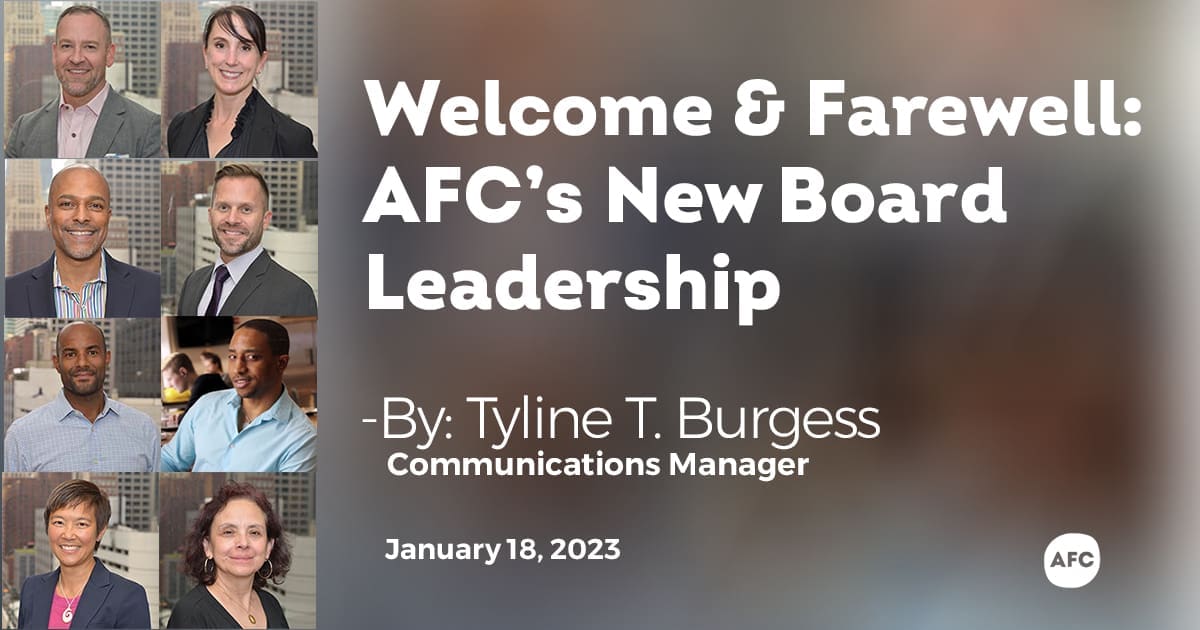
January 2023 marks not only the beginning of a new year, but it also marks a change in leadership here at AIDS Foundation Chicago as board member’s leadership terms end. Three of our long-serving board members, Craig Johnson, Paula D. Friedman and J. Ben Stringfellow, will be stepping down from their position after many years of service and leadership. While a departure is always tough, we are grateful for the contributions of these former board members in the growth and evolution of AFC.
Departing Board Members

Craig Johnson joined AFC’s board in 2017 and has served most recently as chair of the board of directors. He is a past chair of the Policy & Advocacy Committee. Craig leads the Minority Affairs Section for the American Medical Association. As a very hands on board member, his knowledge and connection to the community have been pivotal in the development of strategies to achieve racial equity here at AFC.
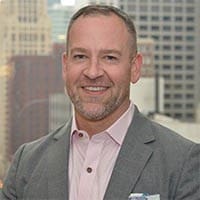
Ben Stringfellow joined AFC’s Board in 2009 and is a Managing Director in Strategic Communication Practice at CRA. During Ben’s 13 years as a board member, he’s seen our board grow from a collection of individuals into a team with members directly involved in the organization’s development of structured committees with a unified strategy. As former board chair he played a major role in hiring AFC’s current CEO, John Peller as well serving as a great mentor to John during the transition of the former CEO David Ernesto Munar.

Paula D. Friedman has been on AFC’s Board since 2012. A former dancer, Paula is a founding board member for Chicago Dancer’s United, which produces the annual Dance For Life (DFL) benefit performance. Her experience as a board member for DFL was the perfect catalyst for her transition to being a board member here at AFC where she served for 10 years.
AFC’s New Board Leaders
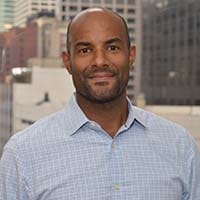
Stepping into the role of board chair is Geof Brown who joined AFC’s board in 2018. He is the chief executive officer of the Illinois CPA Society. In this role, he is responsible for the association’s strategic direction, external relations, and ensuring its operational success. He has worked in the association management industry since 2000. He is also a member of the Association Forum of Chicagoland and the Association of Fraternal Leadership and Values.
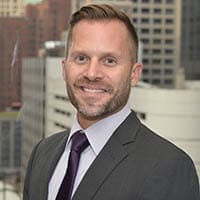
Rounding out the board’s transition is Chad Thompson who will be stepping down as board secretary after reaching the end of his three-year term. Chad will continue to serve as an AFC board member.

Cecil Dearborne will be AFC’s new board secretary. Cecil joined AFC’s board in 2020. He currently leads the Chicago office of Pariveda Solutions, an IT consulting firm. Although he is a tech guy at heart, as a gay Black man who grew up witnessing inequities in Houston, Cecil also has a passion for social and economic justice. He has proudly served on the executive board for the Chicago Roundup, a not-for-profit organization that hosts an annual global conference and thought-provoking workshops, engaging speakers, pure entertainment and fellowship opportunities throughout the year.
AFC celebrates that AFC’s board leadership consists entirely people of color (Geof Brown, Chair; Nan Silva, Vice Chair; Cecil Dearborne, Secretary; and Janet Lin, Treasurer), a milestone in AFC’s journey to be a more racially equitable organization.
We thank Craig Johnson, Ben Stringfellow and Paula Friedman for their years of dedicated service as board members as well as Chad Thompson for his service as board secretary. AFC welcomes and congratulates Geof Brown and Cecil Dearborne as they embark on their new roles as board chair and Secretary respectively. As we begin this new year of 2023, we enter it grateful to those who have made a mark at our organization as board members and excited for those who step into their new roles as we continue to grow and improve as an organization.