This month, Getting to Zero Illinois (GTZ-IL) and AIDS Foundation Chicago (AFC) awarded $200,000 to community-based organizations implementing strategies to end the HIV epidemic by 2030. The pool of grants will support goals and alignment with the statewide plan. Each organization will receive an award from $20,000-$40,000 in addition to workforce training and technical assistance. Six of the seven organizations that received funding are Black- or Latino/a/e/x-led, which demonstrates GTZ-IL and AFC’s commitment to racial equity.
“Through the GTZ-IL Community Grants, we are supporting the leadership of Black and Latinx individuals at the helm of these vital organizations,” said Christian Castro, Senior Manager of Getting to Zero Illinois. “Technical assistance will be implemented in community settings while working in coalition to ensure we meet the goals of eliminating new HIV transmissions, increasing access to PrEP and quality care for people living with HIV.”
In May 2022, GTZ-IL and AFC issued its second RFP based on strategies outlined in the Getting to Zero plan. Community-based organizations and coalition partners were invited to apply for a pool of grants ranging from $20,000 to $40,000. The review panel, composed of members from GTZ-IL community advisory boards and AFC leaders, reviewed a competitive round of applications while centering racial equity in its selection process.
“We made it our priority to continue the support of Black and Latinx-led organizations in addition to the organization that serves the most vulnerable communities,” said Dr. Cynthia Tucker, Senior Vice of Community Partnerships and Special Projects. “These programs have historically seen limited resource funding, so cycle 2 is an investment in organizations that need it the most as we look toward the future of HIV.”
Seven organizations were selected with strategies that address PrEP uptake, wrap-around services implementation, and continued partnerships that address health and race equity. Seven of the 14 organizations awarded in cycle 1, like the Lighthouse Foundation, were amongst the awarded proposals.
“Lighthouse Foundation is proud to receive support from GTZ-IL cycle 2 to build upon the progress supported by Cycle 1 GTZ IL funding of the Black Queer Equity Index (BQEI) – our signature racial equity initiative in consultation with the Northwestern EDIT Program,” said Jamie Frazier, Executive Director of Lighthouse Foundation.“The BQEI improves the health of Black LGBTQ+ communities in Chicago through employer-based assessment and intervention. We target the workplace marginalization of Black LGBTQ+ people in the nonprofit sector as a social determinant of health, positioning employment as a key predictor of healthcare access and engagement.”
When the GTZ-IL grantmaking program launched in Spring 2021, AFC and GTZ-IL undertook the responsibility to bring visibility and resources to communities outside Chicago region. Of the 2022 grantees, five of the seven organizations operate in underserved communities like Far Southside of Chicago, East St. Louis and Southern Cook Country.
“The GTZ funding is important for Corazón Community Services because this grant will give us resources to overcome some of the challenges we face in reaching our goal to getting to zero by expanding our outreach strategies to educate and raise awareness of the testing resources and education opportunities offered in the community,” said Vanessa Melgoza, Executive Director of Corazón Community Services. “Cicero has one of the highest rates of STIs in all of Cook County for people between the ages of 15 and 25, and we will be addressing a critical public health risk. This project will thus better equip us to reach individuals who are not aware of their status and link them with the care they need.”
Join us in celebrating the 2022 recipients of the GTZ-IL Community Grants Cycle 2 and their program listed below.
“As we continue to make critical steps and investments in the future of HIV, thank you for the generous support from Pritzker Community Health Initiative, Alphawood Foundation, Walgreens, Comer Family Foundation, and individual donors who fuel our path to zero,” said John Peller, AFC President/CEO. “We are grateful to the AFC staff and community members who offered their time and expertise in selecting cycle two grantees Thank you to GTZ-IL Community Advisory board member Lee Gonzalez, AFC Senior Vice President Dr Cynthia Tucker, Vice President of Care, Bashirat Olayanju, and Michelle Blau, Director for Program Development for continuing our commitment to racial equity.”
2022 Cycle 2 Getting to Zero Illinois Grant Recipients
|
Organizations |
Location |
Project |
|
Far Southside Chicago |
Continuation of Medical Legal Partnership with Legal Council for Health Justice for people living with HIV/AIDS (PLWHA), CCHC housing clients, and paroled behavioral health clients. |
|
|
East St. Louis |
Black/African American transgender women will be recruited for participation in CWPs Superheroes Program/TWIST Intervention and Black/African American cisgender women will be recruited to participate in the CWPs Brown Girls Brunch Sex Education and HIV 101 Education series. |
|
|
Southside Chicago |
Expand the Peer Mentorship Program for PLWHA and continue with individuals who are on PrEP. |
|
|
Cicero/Berwyn |
Expand the HIV counseling, treatment, and referral services such as linkage to PrEP, partner services, housing, insurance and more provided to the Latinx MSM and High-Risk Heterosexuals (HRH). |
|
|
Southern Cook County |
Continue their Thursday Night Talks via webinars for those serving vulnerable populations (MSM/SGL) and host a two-day conference on Collaboration, Advocacy and Networking. |
|
|
Northside Chicago |
Collaboration with the Northwestern EDIT Program to evaluate the processes used to create and administer the 2021 Black Queer Equity Index (BQEI) protocols, interviews, and focus groups. |
|
|
Chicago |
Create a robust and comprehensive mentorship curriculum, which combines both El Nido and the Mentorship programs for medical and community health professionals. |
About Getting to Zero Illinois: Getting to Zero Illinois is a statewide initiative to end the HIV epidemic in the state by 2030. Through partnerships with people living with HIV, community-based organizations, health care providers, government agencies and others, we can dramatically shift HIV transmissions and access to care in Illinois. AIDS Foundation Chicago and the Illinois and Chicago Departments of Public Health coordinate the Getting to Zero Illinois project. To read the full Getting to Zero Illinois plan, click here. To sign up for AFC and Getting to Zero Illinois updates, click here.
By Indigo Quashie
Caprice Carthans is a member of AIDS Foundation of Chicago’s Board of Directors and Community Advisory Board (CAB) and fierce advocate for competent transgender health care across the city. As a Black transgender woman herself, Caprice centers her advocacy work around supporting, inspiring, and protecting her communities and the physical spaces they inhabit. The CAB is a group of eight advocates, healthcare workers, community leaders and more who get together to discuss ways in which AFC’s supportive services, such as case management, can be improved from the lenses of those receiving these services. However, to Caprice, the term “community” rather than “consumer” is more appropriate as it recognizes individuals as people instead of company targets. An organization or health care center implementing practices and spaces like the CAB, which prioritize the communities they are helping, truly allows people seeking care to feel like their voice is heard.
Within LGBTQ+ communities, and especially transgender individuals, it is common for the lack of confidence and security in one’s voice to begin in the household. For example, in many traditional Black families, transgender youth run the risk of being rejected by parents due to personal beliefs, stigma, or lack of education about their experience. Fortunately, Caprice had a supportive mother who not only recognized, but prioritized her identity as early as age four by buying her dolls for Christmas. When she officially came out at 13, Caprice’s mother shared that while she may have lost a son, she gained a wonderful daughter in return. This is a sentiment that Caprice holds dearly and uses to create an empathetic and supportive environment for the younger generations in her family.
When a person grows up without being surrounded by a supportive community, it can be a major challenge to advocate for their needs when seeking health care. And this desire is only stifled more when health care centers are not adequately trained to provide resources to transgender individuals. Caprice currently hosts 101 trainings with health care centers around the city around competent transgender care. From her observations, she explained that some providers tend to fall flat in three areas:
- Outright refusing to provide care due to a patient’s lack of resources rather than supporting them in accessing said resources;
- Staff holding their own prejudices against transgender identities, primarily due to stagnant religious beliefs and lack of education; and
- Care practices being developed around old data instead of learning from the reality that transgender individuals are living on a day-to-day basis.
“When we get an invitation to the table, even just to have the conversation, we have a responsibility to educate them about what the reality is. A lot of them folks look at data that’s two and three-years-old. I live in the real world, so what you see on paper don’t actually exist on my side of town. We don’t talk like that, and we don’t act like that. We don’t do that. Don’t try to shape me into something just so you can flow with what you got on paper!”
While looking at data is useful when comparing long-term trends and practices, balancing that with being receptive of current transgender experiences is important for health care centers to create a foundation of trust, vulnerability, and transparency with their patients. The constant battle with stigma, miseducation, and even physical safety should not enter the doors of a space where one is seeking support for their livelihood.
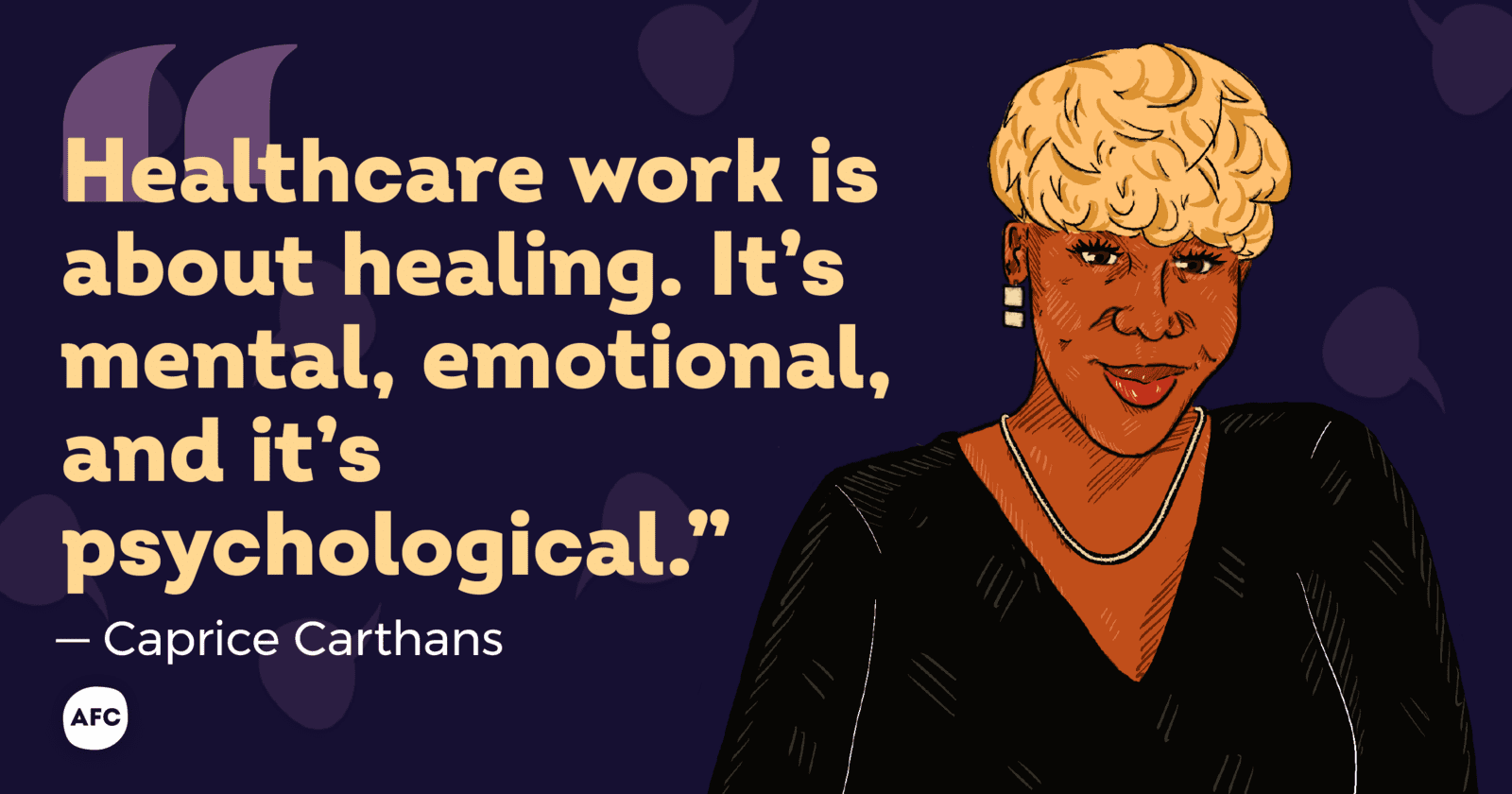
“Folks have been harmed for so long by systems in place, so how do we heal? Public health is about healthy living. Quality care of living, publicly. That’s an inclusive piece where we shouldn’t discriminate on people’s resources. Prejudice is a taught behavior, but breaking stigma is also a taught behavior. Healthcare work is about healing. It’s mental, emotional, and it’s psychological.”
If you would like to share your story and be featured on AFC’s blog, join our storytelling campaign here.
By Indigo Quashie
Dominique Hayes is the Lead Care Coordination Specialist (CCS) at AIDS Foundation of Chicago (AFC). She began her work in the field as an intern with Pediatric AIDS Chicago Prevention Initiative (PACPI). Now rebranded as the Mother and Child Alliance (MACA), this initiative provides prenatal and postpartum comprehensive services to pregnant women and their families. Over the course of the following four years, Dominique supported clients living with HIV who were navigating Illinois AIDS Drug Assistance Program (IL ADAP) medication resources, and now has a caseload of over 60 people through AFC’s Ryan White case management service. In this current role, she aids her clients in receiving dental support, housing assistance, food cards, and HIV-related health care. Outside of working with clients, Dominique’s role also allows her to assist fellow CCS’s with their clients, conduct monthly check-ins, and train new staff hires.
AFC’s Ryan White case management program is a product of the Ryan White CARE Act, signed into law on August 18, 1990, which is the largest federal program that focuses on providing treatment and care exclusively to people living with HIV/AIDS. The Act was named in honor of Ryan White, an Indiana teen who became HIV-positive through a tainted blood transfusion, resulting in him being unjustly expelled from school. He then became a passionate, well-known advocate for HIV research leading up to his passing in 1990 at the age of 18.
As the Lead Care Coordination Specialist for this program, Dominique Hayes shared that while having a large caseload of people experiencing a range of hardships can be exhausting, she enjoys going above and beyond for her clients, seeing them as family. For example, Dominique helps her clients with Christmas gifts during the holiday time, and bookbags for their children during back-to-school time. Currently, AFC case managers are required to connect with clients quarterly by phone or email, and every 6 months in-person, but Dominique recognizes the value in flexing with a person’s individual needs in order to make them feel truly supported.
“I have a client who is going through chemo right now, so I don’t wait the three months. I call him every time he has an infusion or an appointment, or send a text message with a picture saying, ‘You’re a blessing, keep fighting.’ Anything to be encouraging. You really have to base your contact on the needs of your clients—that kind of breaks you up from the rest because anyone can do this job. But who is going above and beyond? My clients are more than the requirement and I’m okay with that!”
This is a standard that Dominique Hayes establishes with all her clients. They require assistance with very taxing experiences like housing instability, accessing life-saving medications, or even disclosing their HIV status to someone for the very first time. Working with vulnerable communities takes more than paperwork and data entry—it takes establishing long-term relationships and a foundation of trust. And this trust shows through how Dominique’s clients interact with her. When one of her clients unfortunately passed away, Dominique received an invite to his funeral service because he ensured that his family had her contact information. Being given such a high level of faith is something Dominique never takes for granted.
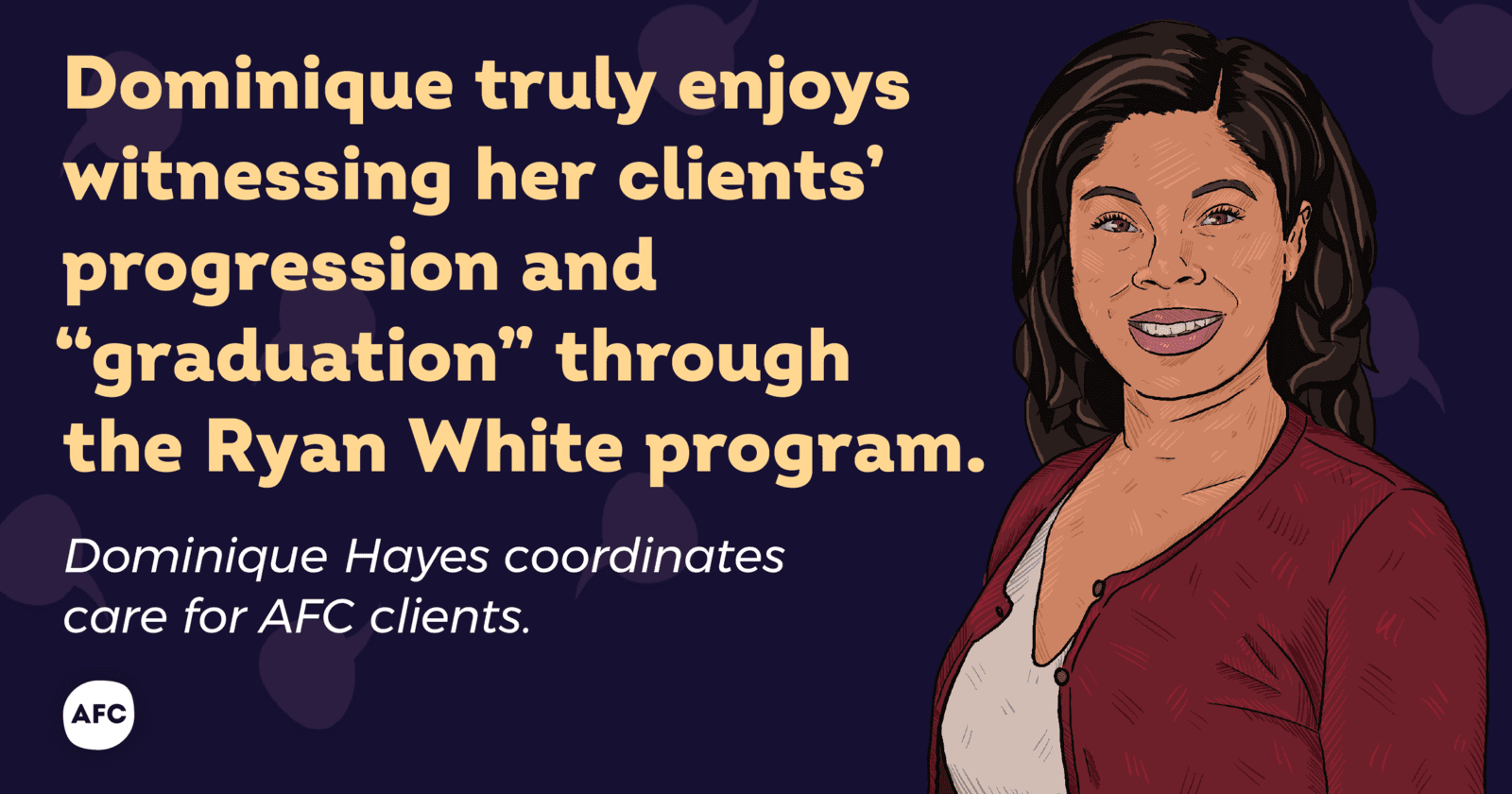
Dominique truly enjoys witnessing her clients’ progression and “graduation” through the Ryan White program. Going from experiencing homelessness to finding a home to support one’s family is a feat, and Dominique does what she can to continue supporting her clients after the fact. The Ryan White Program does an amazing job at getting people living with HIV the resources they need, but there is still room for more aid.
“One of the services that I really feel could be challenging is sometimes people have requests that we don’t offer. For example, we’ve filled out your housing application and they pay your security deposit, but now you have to come up with $250 because we don’t have any funding to furnish your apartment through Chicago Furniture Bank. Or we want to give you a full card for food, but you don’t have pots! I wish that we could offer Walmart cards—just something to help connect the dots.”
AFC’s Ryan White case management program is a monumental step towards ending the HIV epidemic in Illinois because reducing transmissions is not simply a medical concern, but a social and economic one as well. For this program to cover resources like HIV-related healthcare, transportation, housing, and food and gas presents its commitment to supporting the communities we serve at this organization.
August 18th marks the anniversary of the Ryan White CARE Act. If you are someone who would benefit from AFC’s Ryan White case management service, visit our page for more information here.
AIDS Foundation Chicago (AFC)’s Associate Board includes emerging leaders who are passionate in the fight for HIV/AIDS services and prevention in the Chicagoland area. Members of the Associate Board act as ambassadors for AFC by taking part in fundraising, community service and advocacy activities that create health equity and justice for people living with and vulnerable to HIV and other related chronic conditions. Learn more about their newest members here.
|
|
Michael Andry is an experienced Litigator – involved in dozens of jury trials as either first or second chair; hundreds of motions; and federal, state, and specialty court experience. Michael is trained in corporate legal practice and in business-oriented legal analysis across privacy, compliance, fraud, and risk assessment areas of responsibility. He is efficiency and innovation focused, creating business solutions to reduce litigation and company-wide compliance policies and systems. We are thrilled to have Michael join the team and utilize his skill set to drive equitable change for people living with HIV (PLWH) in Chicagoland. |
|
|
James Drake is currently a clinical therapist that specializes in working with people living with chronic pain and illness. His primary work is in the mental health field, where he supports and encourages adults to take an active role in the management of their chronic pain and illness, as well as their mental health symptoms. James has a Master’s degree in Clinical Psychology. Originally from the Chicago suburbs, James enjoys traveling, meditation, walking along the lake, and camping. He is excited to work alongside other people who are deeply passionate about raising awareness of the HIV epidemic, improving people’s lives living with HIV, removing barriers and increasing access to healthcare/housing, and help eliminate HIV stigma. |
|
|
Kalob Gossett is an HIV educator and advocate, with his work on HIV initiatives spanning over 8 years. Currently, he is a Regional Project and Research Coordinator at the Midwest AIDS Training and Education Center. Kalob’s goal is to bring awareness and create a passion for HIV as the older, queer generations once did. He strives to meet people where they are, mentally and physically, to empower our communities to join the fight against HIV. |
|
|
Sergio Rodriguez is a Senior Manager in Deloitte’s Global Employer Services (GES) practice with over 10 years of experience in Talent Mobility and Tax. He is leading Deloitte’s Diversity, Equity, and Inclusion market efforts within his Tax practice (GES) to drive broader societal and economic change within organizations, the marketplace, and society. His work in this space was recently recognized by the Illinois CPA Society with the Lester H. McKeever Jr. Emerging Leader in Advancing Diversity in the Accounting Profession Award. Sergio has also worked closely with AFC for the last 8 years, helping fundraise over $40,000 during this time. Outside of work, you can find him skiing the slopes of Lake Tahoe or watching the newest Broadway show to arrive in Chicago. |



By Omar Martínez González, Sr. Manager, Policy & Advocacy
CHICAGO, IL — AIDS Foundation Chicago (AFC) celebrates Friday’s passage of the Inflation Reduction Act of 2022 in the U.S. House of Representatives. The bill cleared the Senate last week and is headed to President Biden for his signature. AFC cheers the provisions that will allow the federal government to negotiate drug prices and reign in the pharmaceutical industry, which has for decades indiscriminately raised the price of drugs that people living with HIV and millions of Americans rely on to stay healthy. The bill also includes robust funding for combating climate change, changes to the tax code to make it more equitable, and the most consequential changes to health care policy since the passage of the Affordable Care Act.
On the health care front, this bill tackles the high cost of prescription drugs and makes health care more affordable for Americans, particularly Medicare recipients. Medicare is the federal health insurance program for people 65 and older and younger adults with permanent disabilities—including people living with HIV. Medicare alone accounts for over 50% of all federal funding dedicated to HIV care and services. Specifically, the bill:
- Allows Health and Human Services (HHS) to negotiate Medicare drug prices for the first time, beginning with 10 high-cost drugs starting in 2026, and then expanding to include other drugs.
- Imposes a rebate on drug companies for drugs covered under Medicare whose cost rises faster than inflation. This would apply to certain Part B drugs, and all Part D drugs with exceptions for those drugs that, on average, cost less than $100 annually.
- Imposes a $2,000/year cap on out-of-pocket spending on prescription drugs for Medicare Part D recipients starting in 2025. Currently, there’s no cap on spending.
- Imposes a $35/month cap on out-of-pocket spending on insulin for Medicare recipients.
- Eliminates cost-sharing for vaccines under Medicare Part D and for people on Medicaid and CHIP.
- Extends the Affordable Care Act (ACA) enhanced subsidies approved during the COVID-19 pandemic—which lowered premiums or made some plans free for low-income Americans and extended subsidies to higher-income Americans who previously did not receive support—for three years
This is a huge win for Americans as it lowers the cost of health care and paves the way for the government to negotiate lower prices on more medications. It is not yet clear whether HIV medications will make the list of high-cost drugs subject to negotiation. However, it is estimated that the drug price negotiations will save the federal government $288 billion over a decade, which is taxpayer money that can be reinvested into other priorities that affect people living with HIV. AIDS Foundation Chicago will continue to support any measure that makes health care accessible and affordable for more people.
The bill imposes a new 15% corporate minimum tax on the profits companies report to shareholders. AFC strongly supports provisions that will raise new revenue, and which hold large corporations accountable in paying their fair share of taxes.
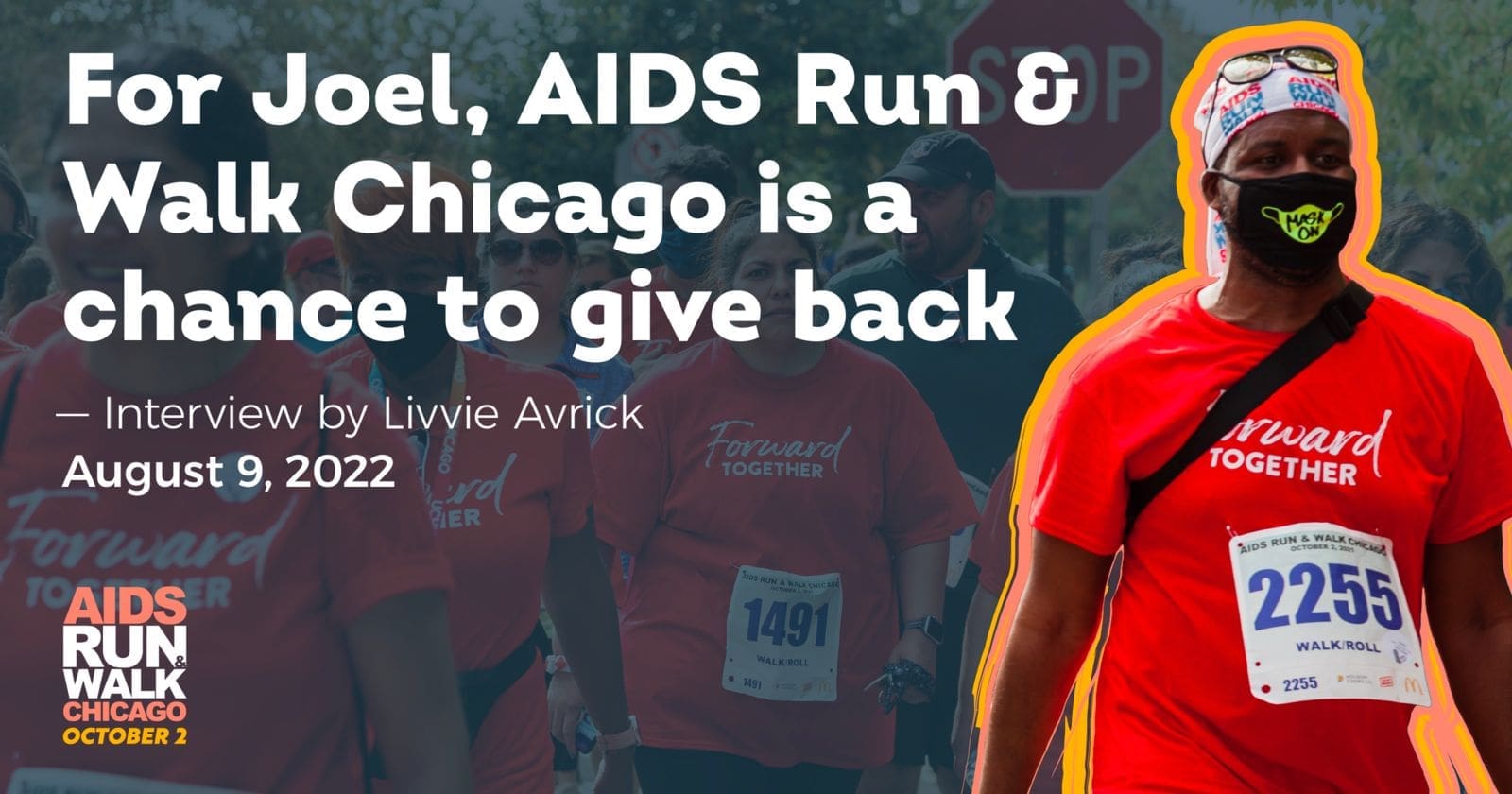
Story and interview by Livvie Avrick
For Joel Jackson, Director of Inclusion and Equity Strategies for the Urban Health Initiative at the University of Chicago Medicine (UCM), participating in AIDS Run & Walk Chicago is an opportunity to contribute to a healthier society – and when a community is healthy, everyone benefits. Joel is part of a fundraising team for the Chicago Center for HIV Elimination (CCHE) through UCM, raising funds to support CCHE’s programming which includes youth drop-in and social support services , programs that Joel helped with.
This type of work is not new to Joel, as he has been working in HIV care and prevention since he was 21 and living in St. Louis, MO. There, he attended one of the first meetings of a support group called Tuesday Night Crew (TNC) a program at Project ARK (AIDS Resources and Knowledge) through Washington University in St. Louis.
“I attended the very second support group that they had and remembered feeling, for the first time in my life, that I was home,” said Joel. “I remember feeling so gracious, feeling happy, feeling filled, because I finally found the space where I felt comfortable and safe being all of who I am.”
This group was specifically for Black and Latino gay men.
“There were times I would go into gay spaces but feel the need to check my Blackness at the door; or I would go to Black spaces and feel the need to check my gayness at the door—but this was one space where I didn’t feel I needed to check anything at the door, I could just be myself,” said Joel.
Since this introduction to the field of HIV care and prevention work, Joel has not left. Through the Chicago Center for HIV Elimination, Chicago’s Ballroom community, and the AIDS Run & Walk Chicago, Joel has found his home in this city.
Some of Joel’s favorite memories of participating in AIDS Run & Walk have been the creative fundraising events he comes up with, like a wine tasting event where friends and colleagues attended, made donations and enjoyed tasting different wines.
Aside from the excitement of reuniting with community at Soldier Field, Joel participates in Run & Walk to remind his peers of the urgency of the HIV epidemic. “It perhaps lost the call to action that it once had; at the same time HIV is still a disease that impacts so many lives, in so many ways,” said Joel.
As HIV care services have expanded today to be a lot more holistic, investing in HIV care and prevention is not only helping to provide care for HIV management. It also means helping manage one’s mental health and other chronic illnesses, providing transgender individuals with transition services, and providing housing and food support to those who need it.
“It helps to meet the minimum basic needs of an individual and not just individuals living with HIV –everyone benefits from a healthy society,” said Joel.
To learn more about AIDS Run & Walk Chicago and donate to Joel’s AIDS Run & Walk Chicago fundraiser click here.
Are you interested in creating equity and justice for people living with and vulnerable to HIV or chronic conditions? If the answer is yes, we have just the volunteer opportunity for you!
AIDS Foundation Chicago (AFC) is looking for individuals who can help us achieve our goals of equity and justice by serving on our Board of Directors.
AFC is particularly seeking board members with expertise in fundraising, strategic planning, social marketing and communications, finance and investments, human resources, and experience in the corporate sector. Previous board experience is helpful, but not necessary.
What does it mean to be a board member?
Board membership goes beyond traditional volunteering and into the highest level of visionary leadership for the organization, assuming legal and financial responsibilities while serving as a community ambassador for AFC’s mission. Serving as a board member provides a unique opportunity to put your passion for a social cause into action by applying your experience and expertise to advance an organization’s impact. It’s a rewarding way to serve your community, while learning new skills that can enhance your own career and grow your own personal and professional networks.
More about AFC
AFC mobilizes communities to create equity and justice for people living with and vulnerable to HIV or chronic conditions. Our work is guided by the vision that people living with HIV or chronic conditions will thrive, and there will be no new HIV cases.
For over 35 years, AFC has brought together service providers and funders to develop systems that meet the needs of those living with HIV/AIDS and to maximize the use of scarce resources. AFC manages more than $17 million in local, state, and federal funds for an array of HIV-related services, provides expertise and leads high- quality delivery across the region, as well as housing and other services for people who are formerly homeless and living with chronic conditions.
AFC is committed to diversity and ensuring an appropriate balance of skills and experience on our Board and committees. Our Board is comprised of people of different experiences, backgrounds, and opinions. We believe creating an inclusive and diverse culture improves the effectiveness of our Board and better reflects the diverse populations that we serve. We especially encourage people of color (i.e. Black, Latinx, Asian, Native American), cis and trans women, those who identify as LGBTQ+, and individuals living with HIV to apply for a position on the Board.
If you are interested, please email John Peller, [email protected] with your resume and a brief letter of interest by Friday, Sept. 16, 2022.
By Omar Martínez González
CHICAGO, IL — On Monday the U.S. House of Representatives, led by New York Congressman Jerry Nadler (NY-10), delivered a letter to President Biden, Secretary of the U.S. Department of Health and Human Services Xavier Becerra, and Director of the Centers for Disease Control and Prevention Dr. Rochelle Walensky requesting $100 million in funding, including at least $30 million for the STI field funded through the CDC’s Division of STD Prevention, to ensure frontline clinicians and providers have the resources and infrastructure to implement the federal monkeypox response.
Priorities for the requested funding include:
-
Ramping up outreach efforts to priority populations, including but not limited to same-gender loving men, to ensure they have the necessary information to stay healthy;
-
Support clinical education to ensure clinicians and other health care professionals can identify and properly diagnose monkeypox virus infection and differentiate it from other STIs, connect clients to treatment, pre- and post-exposure prophylaxis, social services and other health care services;
-
Develop more efficient diagnostic tools;
-
Scale up real-time surveillance and outbreak detection;
-
Bolster the public health workforce to ensure an adequate response to monkeypox to prevent the current outbreak from further exacerbating rising STI rates; and
-
Administering vaccines to communities and health care workers to bolster the response as needs arise.
Ten of the 18 House of Representatives Members of the Illinois Delegation co-signed this important letter. We want to thank the following Members for their leadership in the face of this growing outbreak:
-
Congressman Bobby Rush (IL-01)
-
Congresswoman Marie Newman (IL-03)
-
Congressman Jesús “Chuy” García (IL-04)
-
Congressman Mike Quigley (IL-05)
-
Congressman Sean Casten (IL-06)
-
Congressman Danny K. Davis (IL-07)
-
Congressman Raja Krishnamoorthi (IL-08)
-
Congresswoman Jan Schakowsky (IL-09)
-
Congressman Brad Schneider (IL-10)
-
Congressman Bill Foster (IL-11)
The World Health Organization (WHO) recently declared monkeypox virus a global public health threat, warning that monkeypox may spread beyond specific communities, and the U.S. is considering a national designation. Illinoisans are being turned away from vaccination sites due to lack of resources and there is confusion about where people can access testing. This funding will help to ensure Illinoisans can access the necessary information and resources to stay healthy, and to ensure monkeypox does not become endemic in the U.S. and our state.
For more information about the monkeypox virus, testing, and the vaccine, reach out to AFC’s Resource Hub at 1-844-HUB-4040.
By Indigo Quashie
Getting to Zero Illinois (GTZ-IL) is Illinois’s state-wide initiative to end the HIV epidemic by 2030. In coalition with people living with HIV, community-based organizations, health care providers, government agencies and others, we are working together toward a day where HIV transmissions are rare. To create a future where all people living with HIV can thrive, GTZ-IL is working hard to increase access to preventative medications like PrEP & PEP, decrease HIV stigma and miseducation, and combat inequalities experienced by LGBTQ+ and BIPOC (Black, Indigenous, and People of Color) communities.
This robust agenda cannot be done alone! Some new and familiar faces have joined the GTZ-IL table. Meet the full Getting to Zero Illinois team who will be working hard to connect with and mobilize you, our community members, so that together we can get to zero by 2030.

Christian F. Castro (He/Him/Él) Senior Manager, GTZ-IL
“I’m excited to get to work more closely with an impressive community of folks from northern, central, and southern Illinois, who are advocating and providing essential, life-saving services that include HIV testing, linkage to care, PrEP and other supportive services to those who are living and vulnerable to HIV. I have several ideas that enhance community mobilization, but an important first step is to build relationships.” – Christian Castro
Getting to Zero Illinois (GTZ-IL) welcomes Christian to the team as the newest senior manager and leader of the campaign. Christian has a long history of training, inspiring, and championing volunteers, students, and community leaders. Most recently, he served as a Research Project Manager at the Institute of Sexual Gender Minority Health and Wellbeing (ISGMH) at Northwestern University. In that capacity, he coordinated the RADAR project, which you can learn more about here. While working with the GTZ-IL community, Christian is looking forward to centering the voices, experiences, and expertise of people living with or vulnerable to HIV.
Beyond work, he can be found enjoying quality time with his partner Keith and their beautiful dachshund, Trevor, traveling, watching sci-fi shows, and playing online tennis video games.
Learn more about Christian and his passion for GTZ-IL by reading his previous Q&A here.

Dominique Chew (she/her) Manager, Community Mobilization, GTZ-IL.
“Working with the Community Advisory Board (CAB) and engaging with our GTZ-IL network is both exciting to me and crucial to the work of GTZ. This plan is a huge undertaking and as the Manager of Community Mobilization, a goal of mine is for people across the state (not just Chicago) to know that they can play a role in Getting to Zero Illinois. There’s a place for everyone in this work!” – Dominique Chew
Getting to Zero Illinois brings Dominique to the team as the new manager of community mobilization. She has extensive experience in training and facilitation, education, and advocacy. Prior to this role, Dominique worked at AIDS Foundation of Chicago (AFC) in a different capacity—with the Ryan White training team, organizing and facilitating trainings for AFC’s case management cohort. In her new role, Dominique is most excited to be doing exactly what her title says: mobilizing!
Outside of work, you can find Dominique baking delicious pastries, breads, and cookies; exploring Chicago’s many bars and restaurants; and spending time with her partner, Jibran, and their dog, Kedzie.

Aces Lira (he/him) Manager, Policy & Advocacy
“I’m most excited about the level of creativity we can expect with our project partners. There is an innate human element to our work and with HIV advocacy we want to expand beyond clinical diagnosis, providing medication, etc. The bigger picture is clear when you look at the Getting to Zero Plan and that’s thanks to the many contributions of community members throughout the state.” – Aces Lira
While working closely with the GTZ-IL campaign, Aces serves as a new project manager to Policy & Advocacy legislative and strategic responses to the HIV/AIDS epidemic. He focuses on the efforts to implement rapid start interventions for treatment and PrEP across the state. As a social worker by training, Aces has direct service experience in education, child welfare, and migrant aid which informs his policy advocacy work. Aces previously worked as the Economic Security Policy Fellow at Heartland Alliance, where he advocated for legislative and administrative intervention regarding the TANF and SNAP program.
After work, you might find Aces toggling through film cameras, cutting together collages, and sweating to make it onto a volleyball team.
The new GTZ-IL team is very excited to build valuable and impactful relationships with our advocates, so this will not be the last time you hear from them!
Learn more about GTZ-IL and their plan to get to zero by 2030 on their site here.
Want to meet the rest of our Policy & Advocacy team members? Visit our staff page.
By John Peller, AFC President/CEO
Nothing is more American than a 4th of July parade. And tragically, nothing is more American than a mass shooting with a high-powered rifle.
Our hearts go out to the families of the seven victims of the Highland Park 4th of July parade shooting. We hope the dozens of people injured have a speedy physical and emotional recovery. But in the wake of yet another horrific, high-profile mass shooting, we can’t turn a blind eye to the grinding violence that Chicagoans – mostly Black and Latinx Chicagoans – see daily in their neighborhoods. As of Monday morning, at least 57 people were shot in Chicago over the weekend, including nine who were killed.
As AFC stated in our 2016 position statement on gun violence and community violence, “gun violence is a public health crisis and social driver of new HIV infections, and therefore requires a comprehensive public health response and solution.” Shootings in Chicago disproportionately impact young Black and Latinx people, the population most-impacted by HIV. Gun violence is intersectional, like poverty, mass incarceration, gender-based violence, and homelessness. What we noted in 2016 is still true today: the neighborhoods with the highest rates of HIV in Chicago are also the ones most impacted by gun violence.
AFC has supported and will continue to support legislation in Springfield and Washington that will put in place common-sense gun control measures. Assault rifles and high-capacity magazines are weapons of war and should be banned. We will also support whole-heartedly efforts that increase funding for mental health services and community violence reduction programs. We urge EVERYONE to register to vote for the November 8, 2022 election.
Read AFC’s 2016 statement here: AFC releases position statement on gun violence and community violence: AIDS Foundation of Chicago (aidschicago.org)