By Timothy Jackson, Director of Government Relations
With the reckoning of historic racial injustices and the devastating effects of a global pandemic gripping the state and the nation as a backdrop, the Illinois General Assembly gaveled into a lame duck session beginning Friday, January 8, 2021 and ending minutes before the members of the 102nd Illinois General Assembly took their oath of office on Wednesday, January 13, 2021. At the heart of this session was the Illinois Legislative Black Caucus’ four pillared policy agenda to address systemic racism across Illinois. Those four pillars — criminal justice reform, violence reduction and police accountability; education and workforce development; economic access, equity and opportunity; and health care and human services — seek to remedy the racial inequities imbedded in various government and social systems.
Over the course of the lame duck session, the Illinois Legislative Black Caucus (ILBC) was able to get comprehensive bills for three of the four pillars across the finish line before the end of the special session — criminal justice reform, violence reduction and police accountability; education and workforce development; and economic access, equity and opportunity. Although the bill related to health care and human services was not passed by the legislature, AIDS Foundation Chicago (AFC) is committed to working alongside the ILBC, members of the Illinois General Assembly, the Pritzker administration and our community partners to bring about the necessary transformations to the state’s health and human services system, ensuring a more fair and just system that achieves true racial health equity for all Illinoisans and centers Black and Latinx communities most disproportionally impacted by both the HIV epidemic and the COVID-19 pandemic.
While the reforms gained through these legislative measures will have a tremendous impact in addressing racial injustices and inequities, we know that they are only first steps in righting the systemic wrongs that have directly or indirectly impacted Black and other communities of color for generations. AFC congratulates the Illinois Legislative Black Caucus for passing the following measures:
- Criminal justice reform, violence reduction and police accountability, HB3653, Senate Amendment #3 (Bill Sponsors: Senator Elgie Sims & Representative Justin Slaughter): This landmark legislation addresses the need for ending mass incarceration, enacting police reform and strategically investing in the reduction of violence in Illinois communities. AFC wholeheartedly supported this bill. Specifically, this legislation accomplishes the following, among others:
- Abolishes Illinois’ cash bail system.
- Institutes pre-trial fairness where pre-trial detention is imposed only when determined that a defendant poses a specific, real and present threat. Also, all persons charged with an offense are eligible for pre-trial release, with some exceptions.
- Eliminates driver’s license suspensions due to non-payment of outstanding fines.
- Mandates that all law enforcement officers must wear body cameras.
- Places limitations on law enforcement agency participation in the U.S. Department of Defense’s 1033 program that has led to the militarization of police.
- Mandates training for law enforcement officers on use of force, crisis intervention and de-escalation, implicit bias and sensitivity to racial/ethnic minority communities.
- Education and workforce development, HB2170, Senate Amendment #3 (Bill Sponsors: Senator Kimberly Lightford & Representative Carol Ammons): This sweeping legislation responds to longstanding racial inequities and disparities found in our state’s education apparatus including early childhood education, K-12 education, higher education and other forms of workforce training. Specifically, this legislation accomplishes the following, among others:
- Provides access to early intervention services.
- Creates two-year lab science and foreign language — or sign language — high school graduation requirement (beginning 2024-2025 school year).
- Creates math and English placement requirements at the state’s community colleges.
- Creates initiatives to address the teacher shortage and increase educator diversity.
- Automatically enrolls eligible high school students in advanced courses like dual credit and Advanced Placement.
- Considers goals to address the digital divide and impact of school closures on students.
- Creates a requirement for districts to provide computer literacy programs.
- Economic access, equity and opportunity, SB 1480 House Amendment #2, SB1608 House Amendment #2, SB1792 House Amendment #3, & SB1980 House Amendment #2 (Bill Sponsors: Senator Christopher Belt & Representative Sonya Harper): This package of four bills seeks to remedy ongoing concerns of workplace inequities and unfair practices, wage equity, workers’ rights and consumer protection. Specifically, this legislation accomplishes the following, among others:
- Caps the annual percentage rate payday loan and car title loan lenders can place on unpaid balances at 36% instead of the astounding current rates, some as high as 400%.
- Creates a state commission to study reparations for the descendants of African American slaves.
- Prevents employers and landlords from discriminating against people with criminal records.
- Expands access to state contracts for businesses owned by people of color, women and people with disabilities.
- Includes additional racial diversity requirements in state purchasing policies.
Next, the bills will go to Governor Pritzker — who has indicated his support — for his signature.
Although final legislation related to health care and human services was not passed by the legislature, AFC was proud to submit written testimony in support of HB3840 Senate Amendment #1 and HB5548 House Amendment #1. This legislation, sponsored by Senator Mattie Hunter and Representative Camille Lilly, sought to address systemic racial injustices and improve health outcomes for Illinoisans by dramatically reforming the state’s health and human services system. The reforms outlined in legislation sought to remedy several issues AFC is supportive of including but not limited to community health worker certification, addressing maternal and infant mortality, improving access and systems for mental health and substance use treatment, requiring medical implicit bias training, and the creation of an Anti-Racism Commission.
The 2021 lame duck session of the 101st General Assembly was a flurry of activity that produced comprehensive reforms to address systemic racism in our schools, on the job and in our criminal justice system. As stated previously, AFC looks forward to working with members of the General Assembly in the 102nd session to complete the fourth pillar of the Illinois Legislative Black Caucus’ policy agenda related to health care and human services reform, in addition to crucial policy priorities related to telehealth, the high costs of prescription drugs, HIV decriminalization, increasing access to Pre-exposure Prophylaxis (PrEP) and expanded funding for HIV/STI prevention, testing and treatment.
Moving forward, AFC remains committed to protecting the most marginalized in our communities, including people living with or vulnerable to HIV. To stay engaged in AFC’s advocacy work throughout the year, please be sure to sign up for our Mobile Action Network here.
By Ashley Brown
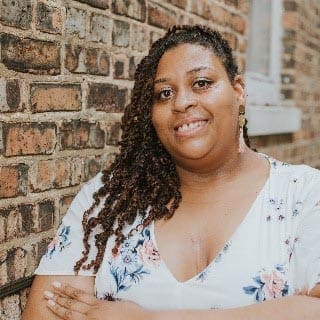 Patricia Braboy (she, her, hers) is a Project Assistant at The Center of HIV Elimination and Community Engagement Coordinator at Third Coast Center for AIDS Research. She is a proud graduate of Jackson State University and is currently enrolled in the University of Michigan’s Sexual Health Educator Certification program. She has been educating youth about sexual health for four years and believes that providing an open and safe space to talk about sex and sexuality will eliminate the taboo around STIs and sex. A lifelong South Side resident, one of her life goals is to make South Shore an area where generations of her family can live, thrive and grow. She enjoys extreme couponing for her friends and family and parenting twin boys.
 Mara Goldman (she, her, human) is a lifestyle and parts model. She always brings a sense of humor and dedication to her craft. Though she joined AFC’s Associate Board in 2020, Mara has been involved with AFC for almost two decades, as a volunteer, participant and ambassador. Each year, she makes fundraising for AFC a top priority through her involvement with AIDS Run & Walk Chicago and just finished her 11th Run & Walk in 2020. Beyond her tenacious annual fundraising, Mara works tirelessly and passionately in whatever capacity AFC needs her. In addition to her work with AFC, she volunteers her time fighting for justice and equality at numerous events. She serves as a volunteer leader for adults with developmental disabilities and is a passionate advocate for people living with epilepsy, brain injuries and mental health conditions. If you ever see a blur of purple run past you at an event, just know Mara is working hard to make it memorable and successful.
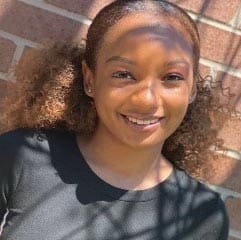 Jade Greear (she, her, hers) is the Manager of Outreach and Testing at Heartland Alliance Health’s shelter-based care project. She received her Master’s in Health and Risk Communication from Michigan State University. She is also a certified HIV prevention specialist and test counselor. She previously worked with the Michigan Organization on Adolescent Sexual Health, where she coordinated their HIV Education Review Panel and planned programs and projects to promote adolescent sexual health. Her vision for public health is to advance health equity by empowering and engaging communities with the health information and education they need, in ways that work best for them. She is passionate about sexual health and wellness and is excited to contribute her time to AFC through the Associate Board. Through her work, she plans to engage more minorities and adolescents in sexual health services, education and advocacy, a critical piece of the work that is often missing.
 Tamesha Morris (she, her, hers) is a Lead Project Coordinator for Sinai Health Systems and Infectious Disease Center. She received her Doctorate in Chiropractic Medicine from National University of Health Sciences and is also a proud alumnus of Eastern Illinois University where she received her Bachelors in Biological Sciences and Minor in Health Studies. Born and raised on the South Side of Chicago, Tamesha is passionate about helping others affected by various heath conditions, including HIV/AIDS, especially after seeing patients without adequate health care, housing or family support. She is excited to help reach the goal of ending new HIV transmissions in Illinois by 2030 through the Getting to Zero Illinois initiative and encourages others to donate their time and financial resources to make a difference in the lives of clients and their families. Beyond her work with AFC, Tamesha volunteers with the Lupus Foundation and is a member of the First Ladies Health Initiative, which strives to educate communities across Chicago about health care. She loves home décor, spending time with her family and traveling.
 Rashad Reed (he, him, his) is a Certified Pharmacy Technician in the Inpatient Pharmacy at Rush University Medical Center. He has worked in both retail and hospital pharmacies for the past 8 years and is currently completing his Bachelor’s in Health Science Administration at Roosevelt University. In addition to his work with AFC, Rashad volunteers at CommunityHealth, an organization that serves low-income uninsured and underserved communities in Chicago through comprehensive, high quality health care at low or no cost. Rashad hopes to pursue his passion for public health through a PharmD/MPH program with the goal of providing quality care to individuals with diverse conditions.
 Lauryn Scott (she, her, hers) is the Assistant Director of Marketing and Communications at the Discovery Partners Institute – University of Illinois Systems. Originally from Michigan, Lauryn is a proud two-time alumna of Michigan State University, where she received a Bachelor’s in Advertising and Master’s in Public Relations. After relocating to Chicago 6 years ago, she began volunteering with AFC to honor her father’s legacy, who died of complications of AIDS in 1993. As a community advocate and AIDS Run & Walk Ambassador, Lauryn shares her story of dealing with the loss of a loved one and encourages others in her situation to know that they are not alone and can use their story to inspire others. Beyond her involvement with AFC, Lauryn is also the Co-chair of Programming for ColorComm Chicago, an organization supporting women of color in communications careers, owner of The Hubris Life, L.L.C. and a member of Delta Sigma Theta Sorority, Inc. She enjoys crafting, traveling and being a dog mom to an adorable three-year-old Maltese-Yorkie mix named Duchess.
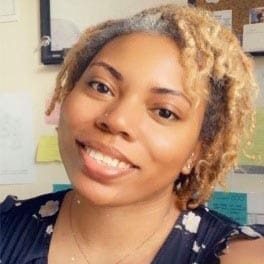 Jacina (Juh-see-nuh) Sims (she, her, hers) is a Program Manager for Sinai Infectious Disease Center. She previously worked at Sinai as a Ryan White Medical Case Manager after receiving her Master’s of Public Heath-Community Health from DePaul University. Jacina first became involved with AFC while completing her practicum with AFC’s Prevention Team and greatly enjoyed working with their Youth Expert Advisory Board, comprised of young cisgender and transgender women of color. She has continued her relationship with AFC as a volunteer and attendee at various events and is an active member of the Women’s Connection, which works to improve access to care for cisgender and transgender women of color. Her interest in health equity started in adolescence with an interest in sex education, which turned into a love for public health. Her passion for women’s health includes HIV prevention and care, reproductive, maternal and mental health. She is excited to continue this passion as a new member of the Associate Board. A Leo through and through, Jacina enjoys music, dancing, working out, bingeing her favorite shows, cooking, traveling and spending time with friends and family.
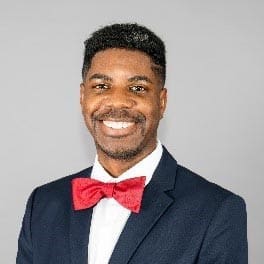 Terrance Weeden (he, him, his) is a first-year medical fellow in adolescent medicine at Ann & Robert H. Lurie Children’s Hospital of Chicago. Originally from Alabama, he recently moved to Chicago and is excited to join AFC’s Associate Board. As a pediatrician, he is excited to work with like-mind professionals who are also interested in serving underrepresented and marginalized communities, especially those who are in the LGBTQ community or individuals of color. His goal is to make a profound impact on youth from ethnic, racial and sexual minority backgrounds.
At AIDS Foundation Chicago (AFC) and Center for Health and Housing (CHH), we believe that mental health is a vital part of your life that impacts things like your productivity, emotions, work, school and more. Mental health is just as essential as physical health considering that mental disorders can also raise a risk for physical health problems down the line. In order to improve emotional health, management of mental illness or substance use, and reduce the barriers to medical treatment, AFC and CHH provide behavioral health services that are more accessible for clients.
Read to learn more about our program and our coordinators that offer all our amazing options! Please feel free to contact any behavioral health staff member for support, guidance and consultation. Discuss these options with your clients and refer them to programs as necessary.
 SOAR Program
Hello, I am Chiayu McGill, the SOAR program coordinator! Having a regular income is one of the most important predictors of health, and we can help your clients get an income. The SOAR (SSI/SSDI Outreach, Access, and Recovery) program helps individuals apply for disability benefits who are not able to work due to a physical or mental health disorder. . The SOAR case managers work with medical providers to help individuals apply for Social Security disability benefits and navigate the overwhelming process. Please feel free to contact me at [email protected] or 312-989-6535 with any questions and/or for a referral form.
 Connection to Recovery (C2R)
Hi, my name is Carolyn Bloom and I work as a counselor on the Connection to Recovery (C2R) program. C2R is a harm reduction-based program created to support your participant in any positive change they want to make to their relationship to drugs and/or alcohol. Our program offers any or all of the options below:
- Treatment Navigation: We will assist your participant in connecting to treatment that he/she/they believe best supports their needs, whether that’s an inpatient, outpatient or a medication-assisted treatment program. Going to treatment is a personal decision and NOT required or coerced at any time.
- Support Groups: Peer support can be a great source of connection. C2R can help your participant find a peer support group that is convenient for them, or that’s accessible online or by phone.
- In-Home Counseling: A C2R counselor will meet regularly with your participant in-person or via telephone. A counselor is available to listen and support your participant in any areas of their life that they feel will help support a desire for change.
Complete our referral form or, for more information, call me at 312.439.0046.
 In-Home Behavioral Health
Hi! My name is Jamie Hock. I am the program manager for Behavioral Health and a Licensed Clinical Social Worker. The in-home behavioral health program meets your clients where they are at on their mental health journey. A behavioral health specialist will meet with your client in their home (or over the phone) once a week to listen, support and talk about their many needs and goals. The behavioral health specialist can help with anxiety, depression, grief, addiction and many more areas. Behavioral health specialists will listen without judgment.
Please feel free to reach out with any needs. You can now easily refer clients to the program through CaseWorthy. For more information, please complete contact me at 312.508.9768 or [email protected].
Seasonal Affective Disorder
Each year, around 10 million Americans experience Seasonal Affective Disorder (SAD). Due to COVID-19 and restrictions on gathering and traveling, there is a possibility for an increase in seasonal depression. Pay attention to any signs and symptoms in clients (and yourself) and seek support as necessary. Please feel free to contact any behavioral health staff member for support, guidance and consultation.
Welcome to the first edition of Wellness Quarterly! Each quarter, the Behavioral Health Team at AFC/CHH will be releasing a newsletter with information and updates about our programs, mental health tips and tricks, relevant updates about behavioral health issues affecting clients, and much more. We would love to hear your feedback about what you would like to see or think would be beneficial to include in this newsletter. Please email Jamie Hock at [email protected] with any feedback and suggestions. We wish everyone a safe holiday season and a happy new year!
By Aisha N. Davis, Esq., Director of Policy
After centuries, after genocide, after chattel slavery. After civil war, after three-fifths, after fugitive slave acts. After reservations, after trails of tears, after residential schools. After railroads, after internment camps, after exclusion acts. After xenophobia, after forced deportation, after segregation. After sunset towns, after MOVE, after Flint.
After Breonna, after Eric, after Tony, after Michael, after Atatiana, after Trayvon, after Kathryn, after Tamir, after Alton, after Philando, after Miriam.
Yesterday was not a surprise – it was the latest manifestation of white supremacy in the United States. After four years under this administration – an administration that has blatantly sought to remove protections and policy that benefit the health and safety of our communities – we cannot afford to feign shock at the audacity of white supremacy. We cannot ignore the fact that yesterday was white supremacy’s response to Black, Indigenous, and Latinx communities voting in November and Black people in the South organizing and voting to turn Georgia blue the night before last. We cannot look away from the damage that was caused yesterday – not just to the Capitol building, but also to the communities who are shown how expendable we are if we dare to demand equity, question racism, or protest state-funded killings.
For communities that have faced systemic racism in all of its iterations, yesterday was a bitter reminder. It was one in a long list of days where we watched the double-standards of justice in the United States play out. It was another instance where we witnessed what it looks like to be afforded humanity by law enforcement, to be given the benefit of the doubt in the media, and to be privileged to the point of hypocrisy and violence. And now, we are watching to see what consequences, if any, white supremacists could possibly face in a nation built upon white supremacy.
Yesterday’s domestic terrorism was encouraged by the current president, was met with a fraction of the show of force used against the protests for Black lives this summer, and although not surprising, is still damning. Today is a day where you are being asked to reaffirm your support of justice and liberation. This is the moment where allyship must go beyond comfort and where denouncement must be brave and direct.
Today is the day to decide how you will prevent another yesterday.
By Bailey Williams
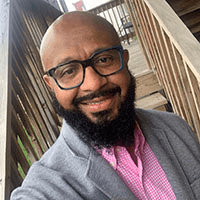 When Derrick Kimbrough was growing up on Chicago’s South and West Sides, he loved school so much that he’d often play school in his free time with his cousins. In each skit, Derrick insisted on acting out the role of the teacher by performing a lesson to his eager students. Decades later, Derrick transformed that early love of school into a career.
After having attended and graduated from Chicago Public Schools (CPS), Derrick now serves as an assistant principal at Skinner North Classical School. Derrick is also finishing up his fourth degree, a Doctorate of Education in Urban Education and Leadership at University of Illinois Chicago.
“What I’m proudest of is I consider myself a lifelong learner,” Derrick said. “I’m always thirsty for learning more and am always looking for something to grow into or learn more about.”
Derrick joined AIDS Foundation Chicago (AFC)’s Board of Directors this year after reflecting on what he could contribute to the organization as an educator, leader and HIV-positive gay Black man.
Diagnosed with HIV in 2010, Derrick said he was fortunate to have had access to adequate health care that enabled him to access medicine and treatment quickly. His late cousin, by contrast, lacked the same resources and later died of AIDS-related complications.
“I feel like I’m just indebted to AFC in making sure that we do all we can, to make sure we help those who do not have,” Derrick said.
Prior to serving as a school administrator, Derrick worked as an educator in CPS for nine years, a period he remembers as the best years of his life. A lover of kids, Derrick enjoyed making learning fun for his students, enabling them to learn in a fun, supportive environment.
He entered the field of education after working as a community relations coordinator for the U.S. Environmental Protection Agency (EPA). There, he used his Master of Public Administration from the University of Missouri-Columbia and Bachelor of Arts Minor in Communications from Rust College to keep communities in the Midwest informed about environmental matters in their neighborhoods. He developed fact sheets, set up public meetings and had conversations with community members.
After eight years with the EPA, Derrick began to think about what was next for him. He was curious about teaching, so he acquired a substitute teaching certificate and utilized his off days and vacation time to explore education. At the end of his first day substitute teaching, he knew he wanted to become an educator.
“It was the kids,” Derrick remembers. “They made my experience fun. At the end of the day, I was like ‘wow.’ Here, I was walking into an environment I knew nothing about, yet I felt so welcome and so comfortable. I felt at home with those students.”
Derrick went on to acquire a Master of Arts in Elementary Education and Teaching at National Louis University and began his professional journey at Chicago Public Schools.
Outside of work these days, Derrick enjoys enhancing his leadership and communications skills with Toastmasters International, a community that allows individuals to practice public speaking alongside other dedicated leaders at routine meetings. On a typical weekend, Derrick can be found at a virtual Toastmasters meeting, with his immediate family or just relaxing at home by himself.
When asked if there was one message he’d like to share with the AFC community, Derrick said: “One size does not fit all. When we learn that everyone is as unique and quirky as they are, we learn that we are not all alike. We have to really be able to come to the table and accept others for who they are. One size does not fit all.”
This story is a part of our ongoing series commemorating World AIDS Day 2020, a time to remember those lost to AIDS-related complications, celebrate how far we’ve come, look to the future, and celebrate those living with HIV. Learn more about some other members of AFC’s community here.
AFC is heartbroken to learn that long-time HIV advocate Ben Montgomery passed away. Ben was a campaigner from the West Side of Chicago and fought for health care access, HIV funding and equity and justice. Ben raised hell when he needed to — and got results. He was one of the driving forces behind the first-in-the-nation HIV/AIDS Quality of Life scratch-off lottery ticket, which has raised millions of dollars for HIV services in Illinois. He also led advocacy efforts for the Illinois African American HIV/AIDS Response Fund, which directed HIV funding to Black-led organizations. “Ben Montgomery was unapologetically Black and believed that Black people must be leaders when it came to tackling issues that affected Black people,” said Coleman Goode, Manager, Community Organizing. Ben was a true champion, continuing to rally, advocate and coordinate HIV service providers on Chicago’s West Side with the Westside Health Advocates Regional Planning Coalition (WHARP). Rest in power, Ben.
By Bailey Williams
Each year, several people living with HIV volunteer to serve on AIDS Foundation Chicago (AFC)’s Ryan White Community Advisory Board. Having received services and case management under the Ryan White Care Act, the Board members bring firsthand experience to their advocacy on the Board. Their feedback and insights on new AFC initiatives, programs and case management help better services for those served under the Ryan White Care Act. There are several dedicated members on the Board, and we’d like to introduce you to a few.
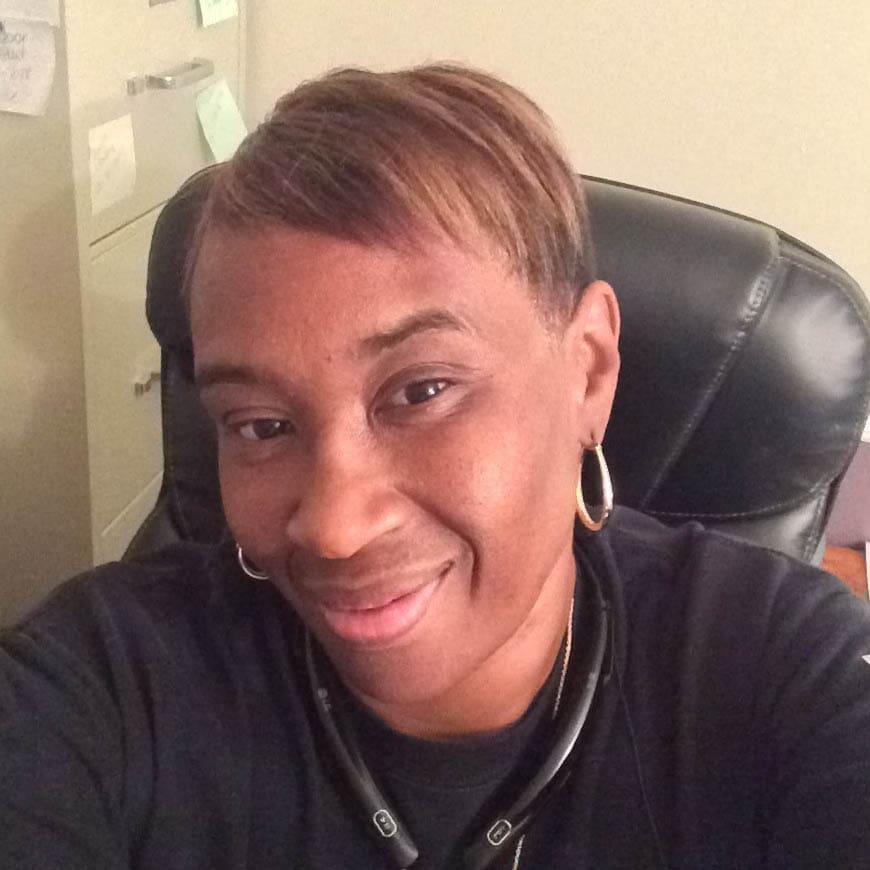
Carmen Earsery
She/Her/Hers
50 Years Old
How long have you served on the Board?
7 years.
What’s your favorite part of serving on the Board?
“Well, my favorite parts are always learning about policy procedures and meeting people from different walks of life with the same goal in common. That’s how we can help people like us with education and information. I also like the fact that I can be a voice for my peers.”
What’s one thing you’d like the community to know about you?
“I would like for them to know that I’m just as passionate today about what I do as the day I started. God has kept me alive, so I haven’t burnt out that love to see people have an understanding of HIV and that people living with HIV get the best quality care I received when I tested positive.”

Curtis Montgomery
He/Him/His
62 Years Old
How long have you served on the board?
Over 6 years.
What’s your favorite part of serving on the board?
“My favorite parts of serving on the Board include site visits to funded agencies, having the opportunity to give recommendations on various issues, and being a voice for my peers!”
What’s one thing you’d like the community to know about you?
“I would like the community to know that I’m a representative for all people affected by and living with HIV/AIDS.”

Lee Dewey
They, Them, Theirs
38 Years Old
How long have you served on the Board:
5 years
What’s your favorite part of serving on the Board?
“Sharing my own experiences, as a person at a few intersections of marginalization, and signal boosting the needs of my often-underrepresented communities.”
What’s one thing you’d like the community to know about you?
“These feet were made for queer dancefloors AND the streets.”
This story is a part of our ongoing series commemorating World AIDS Day 2020, a time to remember those lost to AIDS-related complications, celebrate how far we’ve come, look to the future, and celebrate those living with HIV. Learn more about another member of AFC’s community here.
By Bailey Williams
Darrow Alexander, 57, of Chicago, started having pain in his pancreas, breathing problems and occasional chest pain. He wasn’t sure what was going on and knew his options were limited because he was uninsured, but one day, he decided to go to Rush University Medical Center and inquire about his ailments.
While there, a staff member recommended he fill out an application for CountyCare, a Medicaid health plan that covers a variety of services including some vision and dental coverage. Darrow did so and was able to secure an appointment with a doctor. Soon, Darrow discovered that his pancreas pain was tied to diabetes and his breathing and chest struggles were related to anxiety.
“That’s the importance of health care,” Darrow said. “I could have died out there. That’s how high my sugars were, but I didn’t know. I was sick and didn’t even know it.”
Darrow’s not alone. In 2014, a study found that nearly 8 million Americans did not know they had diabetes. Though you can develop diabetes at any age, it most often occurs in middle-aged and older adults. Black Americans are also nearly twice as likely as white Americans to develop type 2 diabetes.
Still, many people lack access to the thing that could help them identify health issues like diabetes: health care. A study conducted in the first half of 2020 found about 40 million American adults lacked any form of health coverage, 30 million American adults were unable to maintain their health coverage for the entire year, and 70 million American adults who have insurance have insufficient coverage. Despite the COVID-19 pandemic, these rates have not changed statistically since 2018, according to the study.
If you’ve found yourself without coverage this year and want to enroll for next year, you can enroll through the healthcare marketplace today up until Tuesday, Dec.15.
The Ryan White HIV/AIDS Program offers people living with HIV in Illinois without employer-provided insurance, financial assistance to help you meet your monthly premiums. If you need assistance finding or enrolling in a plan or financial assistance, you can call AIDS Foundation Chicago (AFC)’s Hotline, 312-784-9060, and a staff member will guide you through the process.
Since enrolling in health care, Darrow’s been able to get his blood sugars under control and learn more about managing depression and anxiety. Beyond that, Darrow has learned so much that he often encourages neighbors to not only enroll, but understand just how helpful having insurance can be.
“I’ve learned so much about my health because I’m able to get taken care of,” Darrow said. “I feel better. I’m not where I want to be yet, but I’m not where I used to be.”
When asked what Darrow would say to someone on the fence about pursuing health care coverage, he said: “Don’t procrastinate. It’s real. It really helps you and it’s helpful to know that someone has your back out there. CountyCare had mine.”
The deadline for Open Enrollment is Dec. 15. You can enroll or change plans here. If you need help finding or enrolling in health insurance this year, call the AFC Insurance Hotline today to have a staff member walk you through the process: 312-784-9060.
AIDS Foundation Chicago (AFC) is heartened by the dramatic decrease in the number of Chicagoans newly diagnosed with HIV in 2019, as the city’s public health department announced on Dec. 1, World AIDS Day. 652 Chicagoans were diagnosed with HIV in 2019, down from 760 in 2018, a 14% decrease. This year’s numbers build on a 29% decrease in new HIV cases since 2015.
The new data released today suggest that the city and state’s overall strategies to reduce new HIV cases are working. However, while declines occurred among all genders, age groups and races, according to the Chicago Department of Public Health (CDPH), deep and persistent racial health disparities remain. Although just over 30% of Chicago’s population, Black Chicagoans represent 56% of people newly diagnosed with HIV and 57% of people diagnosed with AIDS. Young Black gay and bisexual men, transgender women of color, Black women living in high-incidence areas and Latinx gay and bisexual men are also disproportionately impacted by HIV. New funding that the City of Chicago received from the federal government’s initiative to end the HIV epidemic is an opportunity to intensify programs that reach Black and Latinx communities.
In 2019, AFC, the city and state health departments, organizations across Illinois, people living with HIV and advocates across the state launched Getting to Zero Illinois. This community-built plan, which is supported by Illinois Gov. JB Pritzker and Chicago Mayor Lori Lightfoot, aims to end the HIV epidemic by 2030 by connecting all Illinoisans living with HIV to comprehensive health care and ending new HIV cases. With continued progress toward fewer HIV diagnoses in Chicago and across Illinois, we can look ahead to achieving greater health equity and justice for people living with and impacted by HIV and AIDS.
In 2020, CDPH launched the HIV Resource HUB through partners AFC and Center on Halsted to provide a one-stop gateway to care for people living with HIV and people taking PrEP. Call the HIV Resource Hub at 1-844-HUB-4040.
 By Bailey Williams
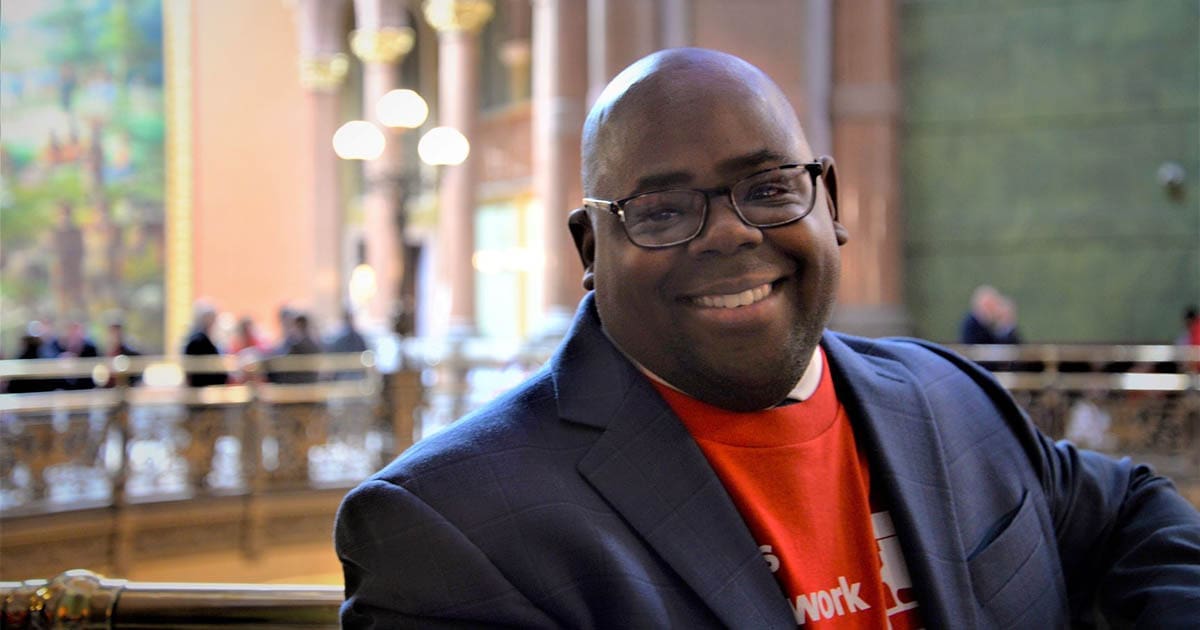
Tim Jackson vividly remembers the first political campaign he worked on at age 12 in Jackson, Mississippi.
Tim was at home with his mother when they both heard a knock on their door. His mother went to answer it, and Tim observed nearby, listening to the conversation taking place. Their alderman was running for re-election and wanted their vote. Hearing this, Tim approached his mom and asked if he could speak to his representative.
“I’ll never forget it,” Tim said. “I said, ‘Mr. Calhoun, there have been three potholes on our street for the past two and a half years. I have written to you and those potholes haven’t been fixed. Why should I vote for you?’”
Tim was very interested in politics at that age, so much so that he used to run home after school to watch the City Council meetings on television. Unlike some his age, he understood how his local government worked and was willing to contact his councilman to advocate for the needs of his community.
The councilman agreed with Tim, left their house and had the potholes fixed. The councilman later called Tim and asked him to join his campaign for re-election. Tim readily agreed and went door to door, canvassing for the councilman.
“I’ve always loved politics,” Tim remembers now. “I’ve always loved being engaged.”
Today, Tim is the Director of Government Relations at AIDS Foundation Chicago (AFC). He works directly with elected Illinois officials to advance legislation that supports people living with or vulnerable to HIV and other chronic conditions to thrive and live healthier lives. When the Illinois General Assembly is in session, Tim journeys down to Springfield to attend relevant committee meetings and speak directly with key lawmakers. Tim also supports various coalitions, especially amid the current public health crisis to make sure vulnerable populations have adequate resources such as free treatment for the new coronavirus (COVID-19).
“I am so excited to be here,” Tim said. “I have always had an interest in AFC.”
Tim brings a breadth of political experience to AFC that started in the Deep South, the national epicenter of the HIV epidemic. Born and raised in Jackson, Mississippi, Tim spent most of his life in the state. He attended Mississippi State University where he majored in political science and history. During college, Tim worked on several local campaigns and congressional races across the Southeast.
After college, Tim moved back to Jackson and took on a few non-political jobs to pay his student loans and other bills. He continued to work on political campaigns and provide political consulting on the side. As Tim worked to figure out what kind of political job he wanted to do full-time, he experienced a few hardships in his personal life.
During those post-college years, Tim’s aunt died from AIDS-related complications. In their last conversation together, Tim’s aunt made him promise to spend the rest of his life advocating for people living with HIV. She didn’t offer guidance on how to do that, so Tim just sat with those instructions for a few years.
Three years after his aunt’s death, Tim was also diagnosed with HIV, prompting a desire for a fresh start. Tim decided to move and take a job as a campaign field representative in Huntsville, Alabama. In this role, Tim built grassroots operations for a Congressional campaign and five state legislature races that integrated the efforts of volunteers, coalitions, and community activists to ensure election day victories.
Looking for more fulfillment, Tim also joined the Board of Directors for health care provider Thrive Alabama, formerly known as the AIDS Action Coalition. For the first time in his life, Tim’s political advocacy centered LGBTQ+ communities and people living with HIV, just as his aunt had asked.
“Prior to that time, my diagnosis as a person living with HIV was very private, but working for an AIDS service organization, it’s not so much private anymore, intentionally,” Tim said. “That’s where I found my voice.”
Tim began publicly sharing his story as a person living with HIV “to smash stigma in its face.” He also worked to equip other people living with HIV with the ability to share their own stories. Eventually, Tim became Board President and helped Thrive Alabama grow from a small AIDS service organization to a fully funded, federally qualified health center with four clinics.
During his volunteer service at Thrive Alabama, Tim also worked as a full-time staffer for Rep. Mo Brooks (R-AL). Though Brooks is a very conservative member, Tim was able to convince him to join the Congressional HIV/AIDS Caucus. Brooks is the only member from the state of Alabama and one of only five Republicans on that caucus.
In addition, Tim persuaded Brooks to ask the Centers for Disease Control and Prevention (CDC) to change how its HIV prevention funding was distributed to reflect diagnosis rates rather than population size. In Alabama, most new HIV diagnoses happen outside of its largest populated metropolitan area, which means adequate resources were not reaching the people who needed it the most. Although the effort was unsuccessful and Brooks received flack for it, the congressman led that attempt with Tim’s help.
After spending several years balancing HIV advocacy work and his full-time congressional job, Tim desired another change. He wanted a position where he could advocate for people living with HIV full-time, so when a position at AFC opened, he applied.
Although Tim had spent little time in Illinois prior to joining AFC, fighting the HIV epidemic in the South taught him several relevant lessons. First, regardless of whether you’re in Illinois or in the South, there still aren’t enough resources to adequately support people living with or vulnerable to HIV.
“If I have nowhere to lay my head at the end of the evening, I’m not worried about taking a pill,” Tim said. “Housing is health care. That doesn’t matter whether you’re here in Chicago or in the Deep South.”
Another relevant lesson Tim learned is that HIV disproportionately impacts certain communities, namely young Black and Latinx gay and bisexual men, cisgender Black women and transgender women of color. Because these populations are the most impacted by HIV, AFC prioritizes them in its work.
During his time at AFC, Tim wants to continue advancing AFC’s policy priorities, build lasting relationships with legislators and staffers and help people feel more comfortable talking about HIV.
“It is a bit nerve-racking to be in a new job where your job is to work with legislators in the General Assembly when session has already started,” Tim said. “You’re learning a completely different, new landscape and new players, but I couldn’t be happier.”
To support AFC’s political work, visit AFC’s policy and advocacy action center, which includes information about policy priorities and efforts to adequately support people living with HIV and other chronic conditions.