Update, Dec. 3: An amicus brief was filed by the City of Seattle and 20 other local governments in support of our motion for preliminary injunction, including Chicago, Illinois.
The full list of amici includes Austin, Texas; Boulder, Colorado; Bucks County, Pennsylvania; Chicago, Illinois; Cincinnati, Ohio; Columbus, Ohio; Cook County, Illinois; Dayton, Ohio; Iowa City, Iowa; King County, Washington; Milwaukee County, Wisconsin; Oakland, California; Philadelphia, Pennsylvania; Pittsburgh, Pennsylvania; Portland, Oregon; Sacramento, California; Saint Paul, Minnesota; Seattle, Washington; Somerville, Massachusetts; Tempe, Arizona; and West Hollywood, California.
Update, Nov. 17: Lambda Legal last night urged a federal district court to bar the Trump administration from implementing its recent executive order that prohibits federal contractors and grantees from conducting workplace diversity trainings or engaging in grant-funded work that explicitly acknowledges and confronts the existence of structural racism and sexism in our society.
“The LGBT community knows all too well that silence equals death.”
(San Francisco, CA, November 3, 2020) – Lambda Legal last night filed a federal lawsuit challenging the Trump administration’s recent executive order that prohibits federal contractors and grantees from conducting workplace diversity trainings or engaging in grant-funded work that explicitly acknowledges and confronts the existence of structural racism and sexism in our society. The order describes trainings that cover topics such as implicit bias or critical race theory as divisive and un-American, and directs agencies to suspend or deny funding to contractors and grantees whose trainings or grant-funded activities cover these topics.
“We are fighting three epidemics—COVID-19, HIV/AIDS, and an epidemic of violence perpetrated against Black people by law enforcement,” said Camilla Taylor, Director of Constitutional Litigation, Lambda Legal. “Communities of color face shocking health disparities with respect to both COVID-19 and HIV/AIDS. Black and Brown people are more likely to get sick, and more likely to die as a result of systemic racism and sexism, structural inequities, and the role of explicit and implicit bias on the part of health care providers.
“Our plaintiffs – LGBT community centers, health care providers, HIV/AIDS service organizations, advocates for LGBT seniors, and a consultancy working in the juvenile and criminal justice systems – are committed to ending these epidemics,” Taylor added. “The work they do saves lives. But to do it, and do it effectively, they have to train people about the role of implicit bias in contributing to disparities, and explicitly acknowledge and confront systemic racism, sexism, and anti-LGBT bias. President Trump wants to silence them, but they refuse to be silenced. The LGBT community knows all too well that silence equals death.”
The Executive Order, issued September 22, 2020, and later Trump administration guidance labels the discussion of intersectionality, critical race theory, white privilege, systemic racism, or implicit or unconscious bias in diversity training as “race and sex scapegoating” and forbids agencies from “promot[ing]” these “divisive concepts.” It directs agency heads to audit internal training curricula and discontinue these trainings, and to conduct a similar audit of federal contractors, putting those contracts at risk.
“Acknowledging the truth of our nation’s history — one in which slavery, segregation, and systemic racism are an inherent part — is not ‘un-American’: it’s simply telling the truth,” said Lambda Legal CEO Kevin Jennings. “We must confront our history, and its continued present-day manifestations, honestly and squarely if we are ever to resolve the pernicious effects of our troubled history of systemic racism. The Trump Administration cannot be allowed to rewrite history and punish agencies that are attempting to train their staffs to be able to move our nation closer to the American ideal of liberty and justice for all its citizens, regardless of who they are.”
Lambda Legal filed the lawsuit in the U.S. District Court for the Northern District of California on behalf of six organizational plaintiffs, a consulting company, and an individual plaintiff. The organizational plaintiffs include LGBT Centers, an advocacy and service organization for LGBT seniors, and HIV/AIDS health and advocacy organizations from across the country.
The organizational plaintiffs include: the Los Angeles LGBT Center; The Diversity Center in Santa Cruz, CA; AIDS Foundation of Chicago; CrescentCare in New Orleans, LA; Bradbury-Sullivan LGBT Community Center in Allentown, PA; and, SAGE: Service & Advocacy for GLBT Elders based in New York City. The consultancy is B. Brown Consulting, a Michigan-based business with a federal contract to train correctional facility staff, governmental agencies, and nonprofits. The individual plaintiff is Dr. Ward Carpenter, co-director of Health Services at LA LGBT Center.
AIDS Foundation Chicago (AFC) works to mobilize communities to create equity and justice for people living with and vulnerable to HIV or other chronic conditions. AFC’s work focuses on ensuring equitable access to healthcare for people living with or vulnerable to HIV. This work includes the Getting to Zero Illinois initiative, which is working to end the HIV epidemic in the state by 2030. Critical funding for AFC’s programs including federal grants through the Ryan White and the Housing Opportunities for Persons With AIDS (HOPWA) programs.
“AFC is committed to centering the most marginalized in our community – which necessarily centers dismantling the systemic anti-Black racism that has led to the significant, negative health outcomes for Black communities in Illinois and across the nation,” said Aisha N. Davis, Director of Policy, AFC. “As an organization that has been doing this work for 35 years, AFC has seen the ebb and flow of policies that permit bigotry to the detriment of Black, Indigenous, and Latinx communities. This recent executive order is another move to prevent the progress necessary to not only end the HIV epidemic, but address the disproportionate harm that communities of color have experienced during the COVID-19 pandemic. We know that systemic racism has led to a public health crisis for Black, Indigenous, and Latinx communities, and our commitment to care means that we must denounce and oppose this executive order.”
The lawsuit is The Diversity Center v. Trump. Read the complaint here: https://www.lambdalegal.org/in-court/legal-docs/diversity_ca_20201103_complaint
More about the clients is available here: https://www.lambdalegal.org/the-diversity-center-v-trump_plaintiffs
Lambda Legal lawyers working on the case include: Camilla Taylor; Karen Loewy; Scott Schoettes; Currey Cook; Omar Gonzalez-Pagan; and, Avatara A. Smith-Carrington. They are joined by pro-bono co-counsel from Ropes & Gray, including: Douglas Hallward-Driemeier; Kirsten Mayer; Nathalia Sosa; Jessica Soto; Thanithia Billing; Annie Monjar; Jennifer Cullinane; and Ethan Weinberg.
###
Contact: Tom Warnke; (c): 213-841-4503; Email [email protected]
Lambda Legal is a national organization committed to achieving full recognition of the civil rights of lesbians, gay men, bisexuals, transgender people and everyone living with HIV through impact litigation, education and policy work. www.lambdalegal.org
 By Bailey Williams
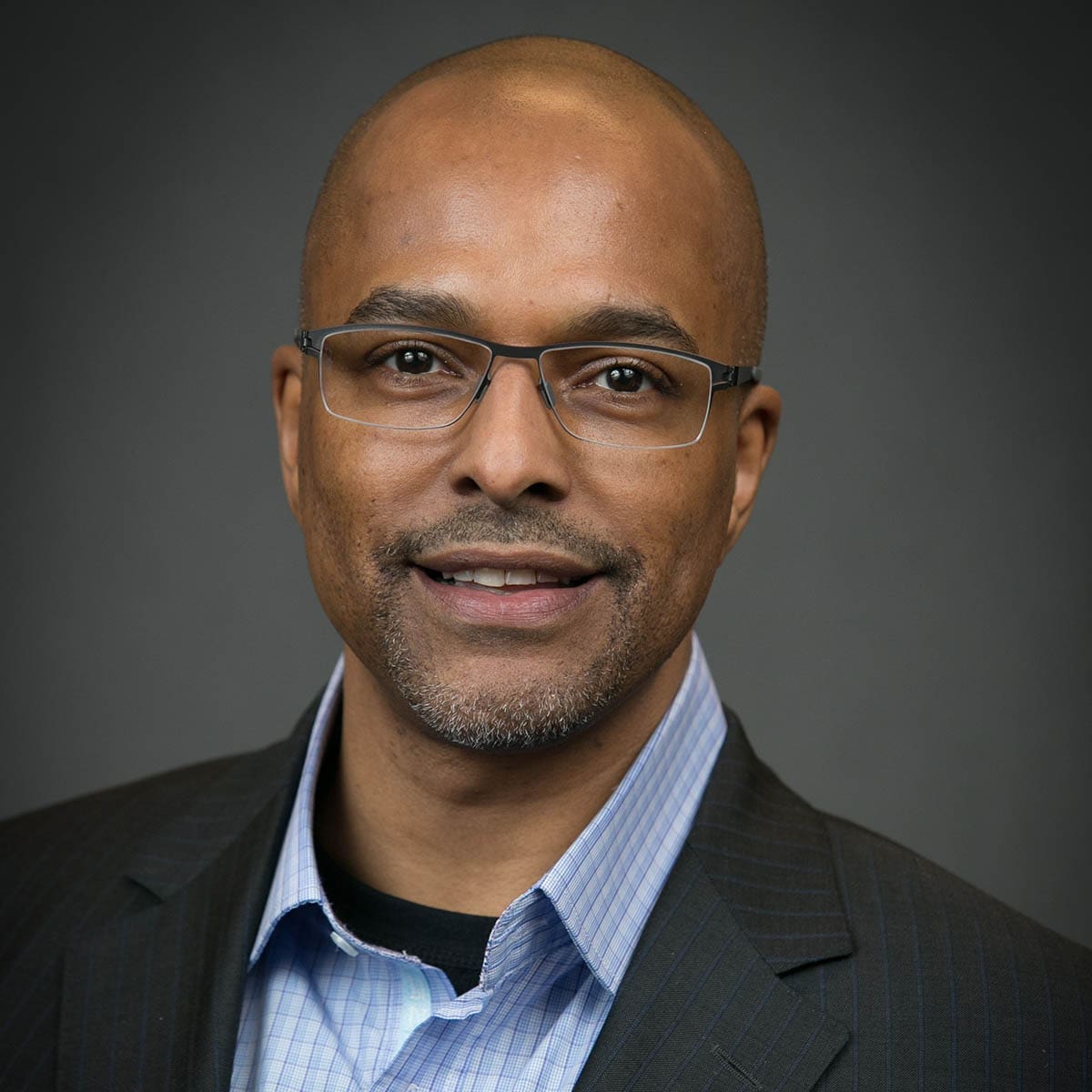
This month, AIDS Foundation Chicago (AFC)’s Board of Directors voted Craig W. Johnson as the next AFC Board Chair. Craig has served on AFC’s Board since 2017, and most recently worked as Board Vice Chair and Chair of the Policy and Advocacy Committee.
“I have so much respect for AFC as an organization and the team of dedicated individuals who have consistently been leaders regarding client services, programming, as well as policy and advocacy from the beginning of the HIV epidemic,” Craig said.
Diagnosed in 2004 with HIV, Craig’s professional career in the HIV sector began as a research assistant and community health promoter in the Infectious Diseases Unit at Rush University Medical Center. There, Craig developed communications strategies to counteract health disparities and encourage more underrepresented populations to participate in HIV clinical trials.
Craig also acted as a liaison between the health sector, community organizations and advocacy groups focused on HIV prevention, care and research. Internally, Craig worked alongside renowned HIV research physician Dr. Kimberly Smith MD, MPH, whose intentional research on the HIV epidemic’s impact on communities of color deeply inspired him.
Still, Craig’s connection to the HIV community began much earlier as a young Black gay cisgender man with Mexican ancestry who lived through the early days of the HIV epidemic. Craig remembers losing a lot of friends and attending numerous funerals during the late 80s through the 2000s. Although he knows many more survivors, Craig said he cannot help but think of those lost prematurely in his ongoing service to the community.
“As a chronic disease snuffs out so many people’s lives in their 20’s, 30’s and 40’s among your friends, your extended family, it certainly has tremendous meaning and influence for me and my desire to continue to be involved in the work that AFC does,” Craig said.
Raised on Chicago’s South Side, Craig attended Whitney M. Young Magnet High School and went on to graduate from Antioch College in Yellow Springs, Ohio with a B.A. in Social & Management Studies. Following graduation, Craig started his wide-ranging career, which has touched on various industries while maintaining a common purpose to do intentional work around community building, helping others and promoting fairness and equity, especially for underrepresented people of color and LGBTQ+ communities.
For instance, in his role as the Director of the Office of Diversity Affairs at the University of Chicago’s Graduate School of Business, Craig curated a calendar of events to improve student experiences, secured two full fellowships for students of color and recruited and advised marginalized MBA students including LGBTQ+ students, women and underrepresented people of color. And now, at the American Medical Association, he manages a constituency group comprised of Black, Latinx and Native American physicians. They advocate for professional issues on behalf of physicians of color who represent 10% of the physician workforce in the US, and who address unique health issues which disproportionately affect Black, Latinx and Indigenous patient populations.
As a volunteer, Craig has served on various committees focused on LGBTQ+ health at Northwestern University, Howard Brown Health and Advocate Illinois Masonic Medical Center. He was also a member of Chicago’s HIV Prevention Planning Group, which worked in partnership with the city’s Department of Public Health. Craig also served the Chicago Black Gay Men’s Caucus in a variety of leadership roles, including Board Chair. He is a recipient of PrideIndex.com’s Esteem Award for Outstanding Service in support of African-American and LGBTQ+ communities. Most recently, Craig was appointed to Mayor Lori Lightfoot’s newly formed Advisory Council on LGBTQ+ Issues.
As AFC Board Chair, Craig said some of his initial priorities include elevating the organization’s ongoing work and impact on people of color, the development of AFC’s racial equity strategy, fostering external partnerships, and enhancing the synergistic relationships between the young professional leaders on AFC’s Associate Board and the governing Board of Directors.
“I’m truly looking forward to working with Craig over the year ahead and beyond,” said AFC’s President/CEO John Peller. “Craig brings to AFC a deep knowledge of the HIV sector in Chicago. The expertise he’s developed at AMA in health disparities impacting BIPOC and social determinants of health will advance AFC’s work to end the epidemic. But above all, Craig’s spirit, sense of humor and strong leadership style will help AFC to build a stronger and better-working Board of Directors.”
Craig is taking over from Terri Friel, who stepped down as Board Chair to continue her service in another capacity. Terri has served on the Board since 2012 and has brought strategic insights and planning to AFC that proved particularly instrumental amid the new coronavirus (COVID-19).
“I’m grateful for Terri’s leadership over an incredibly challenging year and glad she’ll continue to be engaged in the board as past chair,” John said. “Most notably over the past year, Terri guided AFC to build a COVID response plan that wove in various scenarios. This plan helped AFC to be nimble and responsive to the shifting conditions of the pandemic.”
Help us celebrate Craig by sharing this post on social media. Learn more about the rest of AFC’s Board of Directors here.
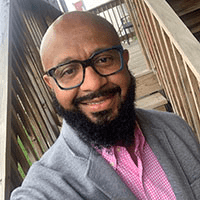 Derrick Kimbrough joined AFC’s Board in 2020. He has worked as a teacher and an administrator in public education for the past 17 years. In his current role, he is responsible for the successful implementation of daily activities, including teacher coaching, program evaluation and school-wide professional learning. He previously worked for a government agency leading community and media relations around environmental issues. He is a member of Toastmasters International and is a doctoral student in the Urban Education Leadership program at the University of Illinois at Chicago.
 Rick Gutierrez joined AFC’s Board in 2020. He is an IT professional with notable success directing a broad range of corporate IT information security initiatives, including strategic planning, analysis and implementing solutions in support of business objectives. For the last 15 years, he has worked in information security with various companies in the Chicagoland area. He previously served as a management consultant in the health care sector. He is a graduate of DePaul University and recently served as Vice President of its Alumni Association. He also volunteers with Make-a-Wish as a grantor and has spent time on several nonprofit boards, including the Chicago Youth Symphony Orchestra and Esperanza Health Centers. He loves to travel and spend time with his family and friends.
 Roy Ferguson joined AFC’s Board in 2020. He installed Quality Control Inspection Systems on high-speed production lines before retiring in 2011 and served in the U.S. Army before being discharged in 1972. He has been living with HIV for 25 years and is an advocate for those living with HIV and aging. Roy was featured in a Chicago Tribune article about HIV and aging in 2015, and he has also shared his expertise for numerous other publications including PA Magazine and HIV Plus. In addition to his advocacy, he is a dedicated volunteer. He has coordinated a self-help group for HIV-positive veterans at the Hines VA for nearly a decade and assisted the Chicago Department of Public Health in overseeing Ryan White CARES Act spending. He also played an active role in the launch of the Getting to Zero Illinois plan, a state-wide initiative to end the HIV epidemic in the state by 2030. His AFC-related advocacy started with Lobby Days, AIDS Watch, and USCA and he is proud to now be continuing his relationship with AFC as a board member.
Want to learn more? Discover the stories of AFC’s full Board of Directors here.
By Mike Ziri, (he/him), Director of Public Policy at Equality Illinois
“2020 is the most important election of our lifetime.”
You’ve probably heard that a lot this year, and it’s true. And not just because of the presidential election.
The 2020 election should matter to LGBTQ+ Illinoisans for 3 big reasons that you may not realize: shoring up majorities, representation and redistricting.
Shoring up majorities: We can grow the ranks of state legislators who support LGBTQ+ affirming policies. Remember: in 2019, the Inclusive Curriculum Law passed the Illinois House with only 60 votes – the bare minimum needed for final passage. In 2020, we can add more pro-LGBTQ+ members to the Illinois House and Senate, thereby strengthening the support for legislation that affirms LGBTQ+ people.
Representation: Being at tables of power matters when it comes to passing inclusive policies and changing hearts and minds by sharing our stories. We have the opportunity to ensure the queerest delegation in the history of the Illinois House of Representatives. In fact, 11 LGBTQ+ people are running for state representative — from Effingham County in east central Illinois to McHenry County in northern Illinois. They prove that LGBTQ+ people live, work and pay taxes everywhere across our state.
Redistricting: Following the U.S. Census every ten years, state legislators in Illinois draw the boundaries for each district that has representation in the U.S. House of Representatives and Illinois General Assembly. The maps drawn in 2021 will be in place for the next decade.
In November, LGBTQ+ voters and our allies must send the strongest pro-equality majorities to Springfield. This means electing legislative candidates who share Illinois’ long-standing values of equality, justice and inclusion.
Ensuring that legislative districts unite rather than divide voters from marginalized communities is critical to making state and federal government look like and be responsive to the people they serve, including LGBTQ+ communities. Also, redistricting by pro-equality legislative majorities will impact our policy wins for the next decade.
We could continue to make tremendous progress — or risk losing it all. That’s not hyperbole. Look at Wisconsin: In 2010, a majority of state legislative candidates opposed to equality, choice and the rights of working people were elected and took power in Madison. They were in charge in 2011 when redistricting occurred. Wisconsin’s new maps for state legislative and U.S. House districts were crafted to increase the voting power of Wisconsinites hostile to LGBTQ+ equality, reproductive justice and the rights of working people. Wisconsin has a proud history as the first state to enact statewide non-discrimination protections for lesbian, gay and bisexual people. It’s frustrating and sad that Wisconsin’s progress toward inclusion and equality has stalled because of the established anti-LGBTQ+ majorities protected by the 2011 redistricting process.
Redistricting also impacts federal policy. Illinois state legislators will draw Illinois’ district boundaries for the U.S. House. Pro-equality representation in Washington, D.C. is critical to advancing justice and equality for LGBTQ+ people everywhere in America. We can ensure the strongest pro-equality U.S. House delegation from Illinois for the next decade by voting for the strongest pro-equality Illinois General Assembly in November.
LGBTQ+ equality is on the ballot in 2020. Let’s join together and vote. Learn more at VoteNakedIllinois.org. Together, we must protect and advance equality and justice into the next decade.
By Colleen Connell, Executive Director of ACLU Illinois
The news of Justice Ruth Bader Ginsburg’s death just weeks before the 2020 General Election solidified for many the role that Supreme Court of the United States will play – likely with an expanded conservative majority – in addressing numerous civil rights and civil liberties issues that affect our lives.
Women’s rights under attack by a conservative Supreme Court
Because of Justice Ginsburg’s long association with protecting and advancing women’s rights, attention turned almost immediately to the future of Roe v. Wade, the landmark 1973 decision that recognized the constitutional right of a woman to decide whether and when to become a parent.
The concern about Roe is legitimate. President Donald Trump ran in 2016 by suggesting that there needed to be some form of “punishment” for women who seek abortions and the physicians who treat those patients. Moreover, Trump promised only to appoint Justices who would overturn the rights under Roe.
While legislators and advocates in Illinois have taken significant steps – through the enactment of the Reproductive Health Act last year – to assure that people in our state will be able to continue to access reproductive health care, the Supreme Court might soon ensure that residents in other states might not be able to access abortion care. We know how this will play out. The rich and privileged in these states will continue to access abortion care – even if they have to travel to states like Illinois where the procedure will remain legal. But those with less financial and other resources will be forced to carry their pregnancy to term – whether they are emotionally or economically prepared to raise children or not.
Attacks on Roe, if successful, threaten to unravel the fabric of the broad fundamental rights previously established by the Court – including precedents that protect the right to use birth control, the right to abortion, the right to raise children consistent with one’s own values, and the right to marry, including the right of same sex couples to marry. A new conservative majority on the Court may serve as an invitation for other ultra-conservative advocates to bring renewed challenges in a number of areas, from immigration and LGBTQ+ rights, to criminal justice and policing.
A looming threat to expanding equal protections under the law
But perhaps no area presents a challenge to those of us seeking equality and to expand the protections of our constitution than the Court’s increasing willingness to prioritize religious freedom over other constitutionally protected rights.
The First Amendment to the Constitution recognizes the right of each person to worship – or not – as they see fit. The First Amendment also protects against government establishment of an official religion or giving preference to one faith over others. Taken together, the religious protections in the First Amendment have been understood to protect the right of each person to believe whatever they want, while at the same requiring each person to abide by laws that neutrally apply to all people regardless of their religion.
Increasingly, however, the expanding conservative majority on the Court has skewed this traditional understanding of religious liberty. Recent conservative rulings argue that non-discrimination laws cannot be applied to those who claim that their religious beliefs demand that they engage in the prohibited discrimination.
Justices Thomas and Alito recently fired another loud warning shot in this dispute. Concurring in the Court’s decision not to hear the case of Kim Davis, a Kentucky county clerk who had been sued for refusing to issue marriage licenses to same-sex couples, the two justices issued a four-page statement denouncing the harm done to religious freedom in the 2015 decision, Obergefell v. Hodges, which recognized constitutional protection for same-sex couples to marry.
“Due to Obergefell, those with sincerely held religious beliefs concerning marriage will find it increasingly difficult to participate in society,” Justice Thomas wrote, adding that he felt the decision had stigmatized people of faith. “Obergefell enables courts and governments to brand religious adherents who believe that marriage is between one man and one woman as bigots, making their religious liberty concerns that much easier to dismiss,” Justice Thomas continued, adding, “In other words, Obergefell was read to suggest that being a public official with traditional Christian values was legally tantamount to invidious discrimination toward homosexuals.”
Using religion as a justification for discrimination
An upcoming case also raises the specter that an expanded conservative majority will privilege religion and allow religious belief to justify discrimination. On the day after the election, and perhaps with a new Associate Justice sitting on the case, the Court will hear arguments in Fulton v. City of Philadelphia. In that case, the Court will decide whether faith-based adoption agencies using public monies can deny adoption opportunities to same-sex couples, among others. These agencies have been forced to comply with human rights laws barring discrimination against couples on the basis of their sexual orientation. But these adoption agencies suggest that it is they who are suffering discrimination – by being denied public funds because they refuse to place children with LGBTQ+ couples.
This case closely follows action two terms ago by the Court in a Colorado case where a baker denied a gay couple service for their wedding cake. Although the Court did not make a final decision on the merits in that case, it is likely that the new Court might find that a business owner could use their religious views as a reason to discriminate against gay couples. It also is possible that the Court might extend religious protections – or, more precisely, the ability to use religion to discriminate — to employers, businesses and health care providers. This could mean that LGBTQ+ people in the U.S. could be fired, refused service or health care services because of their sexuality.
In short, this new Court might rule that religiously-based discrimination is lawful and protected.
Requiring all people to respect the basic rights of others — for example, their right to marry while complying with generally applicable laws — upholds the fundamental constitutional value of equal protection of the law and the right to make your own decision about religious belief.
Legislatures and voters across the country have shown support for the protection of these basic constitutional rights. They have voted increasingly for non-discrimination and against using religion, race, gender, sexual orientation, or gender identity as a justification for discrimination. The Supreme Court should heed these developments and recognize that its highest obligation is to the first command of the Constitution – to “do justice” for all. If the Court does not, it is incumbent on the rest of us to continue our advocacy in the legislatures, city councils, and courts of public opinion to reinforce the command that the Constitution must protect all of us and that taxpayer funds – raised from all of us – should not be awarded to those who discriminate. Make your voice heard this election and vote.
In the coming weeks, Illinois residents will vote on an amendment to the state Constitution that seeks to transform for the better how the state taxes each resident’s income.
Currently, all residents are taxed on a non-graduated or flat rate of 4.95%. For example, a person making $35,000 per year is taxed the same percentage of their income—4.95%—as a person making $35 million. The proposed amendment would change that rate to a graduated rate in which higher incomes are taxed a higher percentage than lower incomes. Only people who make $250,000 a year or more will see their taxes increase, while 97% of Illinoisans will no change in their current taxes or a tax cut.
To help you understand this issue ahead of voting, AIDS Foundation Chicago (AFC) compiled seven things to know about the proposed change.
#1 Illinois residents must approve changes to the Constitution, which is why you’re being asked to vote on this issue. If the amendment passes, the graduated tax rate will go into effect Jan. 1, 2021.
#2 This amendment would alter Article IX of the state Constitution.
Section 3 part a currently reads: “A tax on or measured by income shall be at a non-graduated rate. At any one time there may be no more than one such tax imposed by the State for State purposes on individuals and one such tax imposed on corporations. In any such tax imposed upon corporations the highest rate shall not exceed the rate imposed on individuals by more than a ratio of 8 to 5.”
In accordance with this section, Illinois imposes the same income tax rate on all residents, regardless of your income. The amended version would strike out the first two sentences, which includes language that states income is taxed on a non-graduated rate. If this amendment passes, Illinois can tax individual residents’ income on a graduated rate, meaning different rates based on each resident’s income bracket. It will look like this on your ballot:

#3 People making more than $250,000 each year are expected to see a tax increase, while those making less than that are expected to see no change or a tax cut. (To see how the Fair Tax would affect you use this tool.)
As we noted above, most Illinoisans will pay less taxes if the Fair Tax is approved. Your first $10,000 of income would be taxed at 4.75%, then income up to $100,000 would be taxed at 4.9% – lower than the current rate of 4.95%. People with incomes up to $250,000 would pay the current rate.
#4 Some arguments in favor of the amendment say the current tax structure is unfair, while pointing to the potential uses for generated revenue.
If you’ve come across this issue, you might have come across the phrase “fair tax.” That’s because those in favor of the amendment say it’s unfair to tax lower-income residents the same rate as those with higher incomes. A graduated tax moves Illinois closer towards an equitable structure that better supports lower- and middle-class families, some argue.
There’s no guarantee for what the funds generated from an altered tax structure will be used for, but those in favor have pointed to the needs for state investment in things like HIV prevention and care, affordable housing, public schools, mental health treatment and transportation.
#5 Some arguments against the amendment say the state’s spending is out of control; the pandemic makes it an unideal time to implement a change; and the State can use the revenue generated however it wanted.
Opponents argue the State should first get its spending under control before acquiring the additional revenue a graduated income tax could generate. Other opponents of the amendment say the pandemic has created a financial burden that would be exacerbated by a change in tax structure. At odds with those in favor of the amendment, some against the amendment also underscore that there’s no guarantee how the revenue generated will be spent. It’s up to the State legislature and governor to decide how the revenue will be used.
#6 AFC strongly supports the amendment because we believe it will benefit the community we serve.
AFC believes that the graduated tax is one of the many steps needed to achieve economic justice in Illinois. AFC serves a community that is disproportionately made up of folks who have experienced homelessness, job loss and instability, and economic hardship heightened by systems rooted in racism, transphobia and other discriminatory views and practices. If a graduated tax could prevent someone from slipping into poverty, we believe that’s a step in the right direction. And fundamentally, we believe that people who can afford to pay more, should, while people who earn less should pay lower taxes.
#7 Illinois would not be the first nor only state to implement a graduated income tax. The federal government and more than 30 other states already tax residents’ income on a graduated rate rather than a non-graduated rate.
To learn more about the facts of a proposed graduated income tax, read this Chicago Sun-Times article or this WBEZ article. To request a vote by mail ballot, you can request one from your local election authority or here. To register to vote or check your registration status, click here.
Correction: A previous version of this post said that 97% of Illinoisans will see a tax cut, when 97% of Illinoisans were expected to see no change or a tax cut. This post has been updated accordingly.
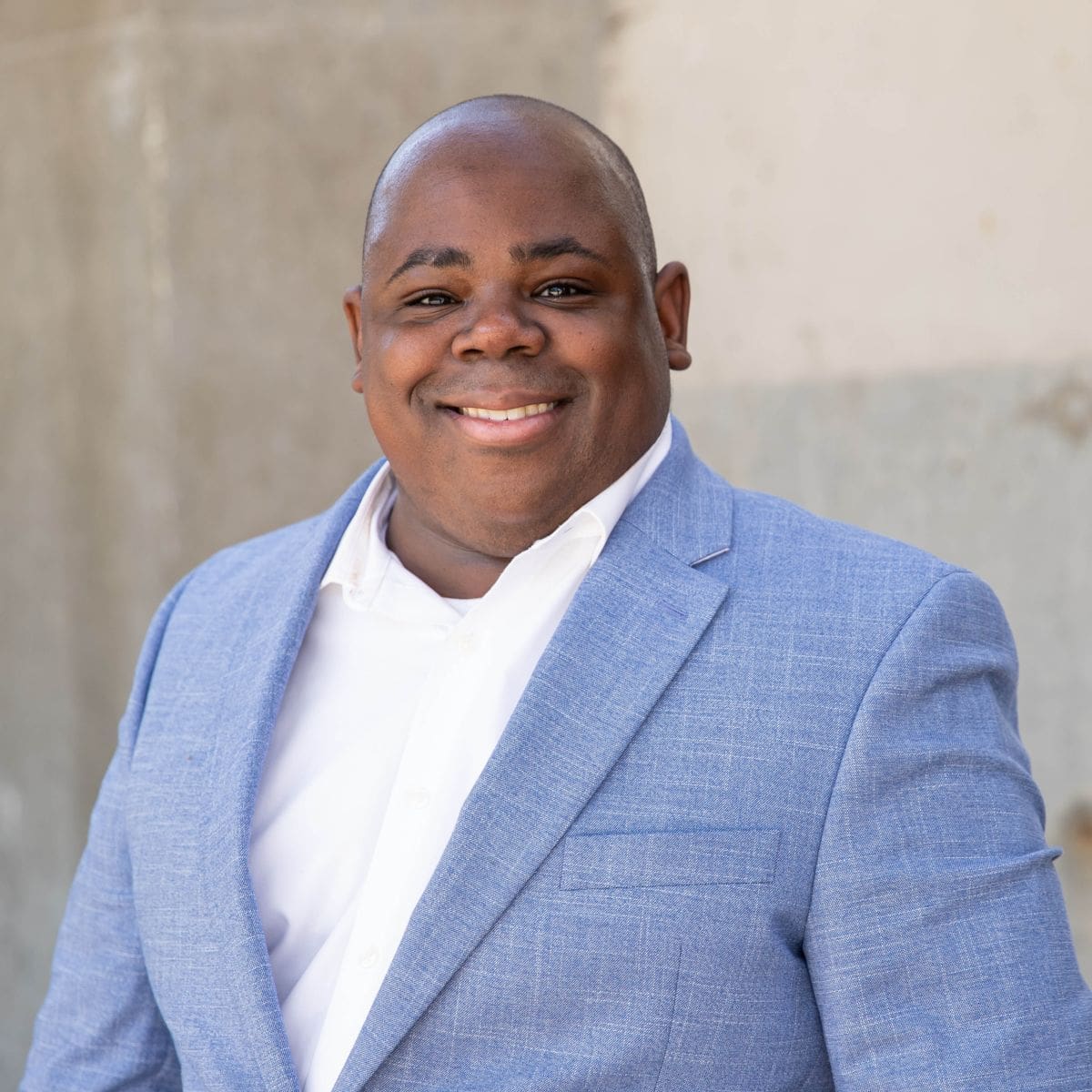 By Timothy Jackson, AFC’s Director of Government Relations
What’s at stake is a question that many political pundits are opining and asking as the nation approaches the Nov. 3, 2020, general election. From the volatility of the economy and the civil unrest surrounding police brutality and racial injustice to the nation’s lack of coordinated response to the COVID-19 pandemic, all these issues will play a tremendous role in the days leading up to the election and thereafter. However, there is one issue that I believe trumps all of these — access to health care and specifically, the protection of the Affordable Care Act (ACA).
On Nov. 10, 2020 — exactly one week after the election — the U.S. Supreme Court will hear arguments brought by the Trump administration and others seeking to overturn the ACA and declare the signature health care legislation of former President Barack Obama unconstitutional. While there have been repeated attempts to invalidate the ACA over the past few years, stripping health care from over 23 million individuals and families during a global pandemic is inhumane.
We know that access to comprehensive health care is vital to keeping people safe and healthy, especially given the alarming health disparities laid bare from the pandemic among our Black, Latinx, Indigenous, LGBTQ and disabled communities. Instead of expanding access to health care, President Trump and Republicans have imposed roadblock after roadblock that endangers the very health of Americans and our ability to recover from COVID-19 and other chronic health conditions. Instead of trusting the very institutions put in place to safeguard our nation’s public health response, President Trump and his administration have played to the lowest common denominator of our society by choosing to traffic in fear, sowing seeds of misinformation and distrust.
Reforms included in the landmark health care law affect almost every American in some way. While we don’t know how the Supreme Court will rule on this issue, we do know the detrimental consequences that would ensue should the justices decide to overturn the ACA. In Illinois, 1.1 million people would lose their health insurance, raising the number of the uninsured in the state by an astounding 128% according to the Economic Policy Institute.[1]
What’s also troubling is that the popular pre-existing coverage protections guaranteed by the ACA would vanish if the law is deemed unconstitutional. If this were to occur, people living with pre-existing conditions such as HIV, cancer, diabetes and chronic obstructive pulmonary disease (COPD) — some 135 million people — could be denied coverage. It is also worth noting that the 7.2 million people who have contracted COVID-19 in the United States now have a pre-existing condition that could prohibit them from gaining health care coverage if the ACA is overturned. With the ACA gone, protections for people living with pre-existing conditions — including people with employer-based health insurance — would be no longer.
Unfortunately, the far-reaching impacts of invalidating the ACA doesn’t stop there. If the Supreme Court rules against the ACA, more than 600,000 low-income Illinoisans receiving their health care coverage under expanded Medicaid could see it taken away. This would be catastrophic for several marginalized communities in Illinois — especially people living with HIV. Three in five people living with HIV in Illinois rely heavily on Medicaid for their health care.
The essential health benefits that all health insurance plans must cover (i.e. inpatient and outpatient hospital care, prescription drug coverage, mental health services, and pregnancy and childbirth coverage) could become extinct should the ACA fall by the wayside.
And still, there are even more key provisions of the ACA that would end if the law is overturned including the popular health insurance coverage for young adults under the age of 26, the protection of seniors caught in the Medicare “donut hole” of high out-of-pocket prescription drug expenses, and the banning of lifetime caps on how much an insurance company will pay for care.
Finally, if the ACA is overturned, the wealthy stand to gain a $198,000 yearly tax break, while everyday Americans stand to lose everything.
So what can you do to stop this? VOTE! Encourage your friends and family members to vote. We’ve all seen firsthand when elected officials are more interested in pushing conspiracy theories and “miracle” home remedies instead of meeting the moment and working to quell the spread of a deadly pandemic. We’ve seen up close and personal what happens when elected officials abdicate the duties of their office by not promoting the general health and welfare of this nation and its people first.
We can’t afford to go back to the pre-ACA health care system that failed so many Americans and our communities. We are fighting for the health care of this nation — for every child, senior and those disabled, including people living with HIV. The Affordable Care Act continues to provide critical access to health care to Americans and has been a tremendous lifeline during the COVID-19 pandemic. We must vote, advocate and organize like never before because the lives of over 210,000 Americans lost due to COVID-19 and millions more impacted are on the line. Simply put, that’s what’s at stake.
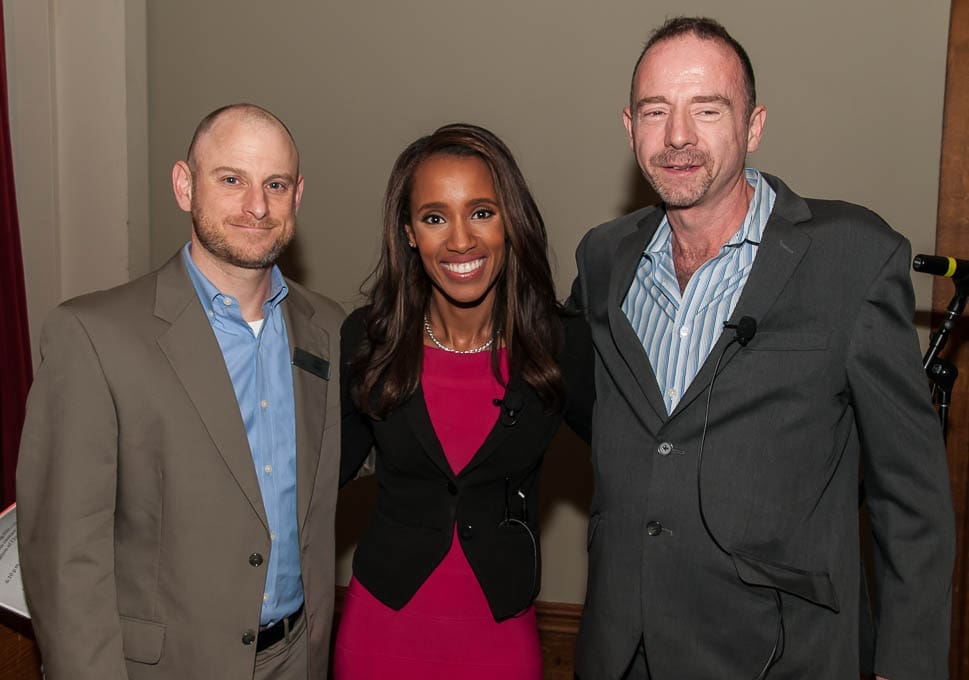 “I met Tim in 2014 at an HIV cure workshop in Chicago. He talked extensively of how he suffered from cancer and the bone marrow transplant he received – which treated the cancer and almost incidentally cured him of HIV. Tim was a trailblazer, plain and simple, and he taught me and the world how challenging it is to cure HIV. But there’s good news – with powerful HIV medications and comprehensive support for people living with and vulnerable to HIV, we have what it takes today to end the HIV epidemic.”
– John Peller, AFC President and CEO
AIDS Foundation Chicago (AFC) is saddened to hear about the passing of Timothy Ray Brown. While the treatment that led to him being the first person cured of HIV was nothing short of miraculous, the fact that he was cured provided hope that someday, a cure would be available to all. We are thankful for his significant contributions to expanding our understanding of HIV and speaking publicly about his experience as he did with AFC and other organizations throughout the world. HIV treatment today possesses cure-level effectiveness in helping people living with HIV and AIDS thrive, but yet, Timothy Ray Brown’s remarkable story still inspires us.
 By Gary B. Beringer,
Dr. P. H.
Co-Chair, Policy & Advocacy Committee, AFC Board of Directors
I am an epidemiologist. Today, due to the COVID-19 pandemic, my profession now is understood by many people who inquire about it. This is the backstory of an important occurrence in my rehabilitation from a stroke.
In October 2003, I had the first of my four strokes over the past 17 years. In a brief moment, I suddenly became a person with major disabilities. I entirely lost functioning of my arm and leg on my right side. I spent the next 90 days in the hospital. Nevertheless, I got back to work in February 2004. Each time I had a stroke, I had to struggle to be considered a disabled professional.
Upon my return home after my first stroke, my wife had an idea: I should become an election judge. Her rationale was that it was my civic duty. But her real purpose was to teach me that I still was the same person as before. It was a brilliant idea. Whenever I encountered a roadblock, it was easy to give up. She would not let me quit. Although I didn’t initially see how it could help, it did turn out to be one of her better ideas.
My next challenge, however, was to convince the Chicago Board of Elections that a disabled person could serve. After some very long discussions, I succeeded. I was appointed for the next election, a primary to be held soon.
I was thrown into being a team member for 16 hours on Election Day doing hands-on tasks taking these voters’ decisions. I had to deal with my partners. None of them cut me any slack. Right or wrong, they wanted me to pull my full weight. Not only did I have to do all of the many secretarial tasks associated with being an election judge like entering names on voter forms, but I also had to do the many physical tasks setting up the polling location. Initially, both types were hard, but I stuck them out.
For the next ten years, I worked every election – Primary, State/City, and Presidential.
Usually a five-person team is appointed for each polling site in the City of Chicago. An odd number of judges is appointed representing the two major parties (Democrat/Republican). Although all judges appointed are considered equal, there is a learning curve that is affected by experience. As time goes on, more experienced judges have encountered all strange situations that occur in a polling place. It requires a cool head and tact. Ultimately, I became a well-respected leader of teams that often were very new each time.
Regardless of your political philosophy or party, this election is absolutely critical to everyone in the U.S. There simply are too many divisive issues now that face us. Every person entitled to vote MUST VOTE.
Civic responsibility has never meant more than it does today. 2020 started off as a difficult year on two fronts: the health front and the racial justice front. Every individual has a different view about our society and the critical issues that give existence to their lives. For people living with HIV and AIDS as well as those who want to support the community, your civic responsibility – and the consequences of the coming election – have ultimate importance. Vote and make sure your vote counts this year.
As a veteran election judge, I encourage everyone take advantage of an early voting option that feels safest to you and exercise your civic responsibility. Vote now!
To check your voting registration status, use this tool. To find your in-person polling place, use this tool. To apply for a mail-in ballot, click here. To serve as an election judge in Chicago, click here. For more information on this upcoming election, click here.
By Bailey Williams
When the new coronavirus (COVID-19) sent most AIDS Foundation Chicago (AFC) staff home to work remotely, many members of our finance and contracts team continued to come to the office. A lot of the work this team does cannot be done remotely. Though this work often happens behind the scenes, it is essential to the many services AFC provides to help people living with HIV and other chronic conditions thrive.
When AFC receives funding from our private, public and government donors to provide care, housing and other services to people living with HIV and people experiencing homelessness, the funding comes with rules and requirements. Our finance team, composed of 12 hardworking staff, handle this work, which involves processing paperwork for funding that’s reimbursed, printing and sending out thousands of checks to landlords for housing clients, scanning those payments, creating required reports, and so much more.
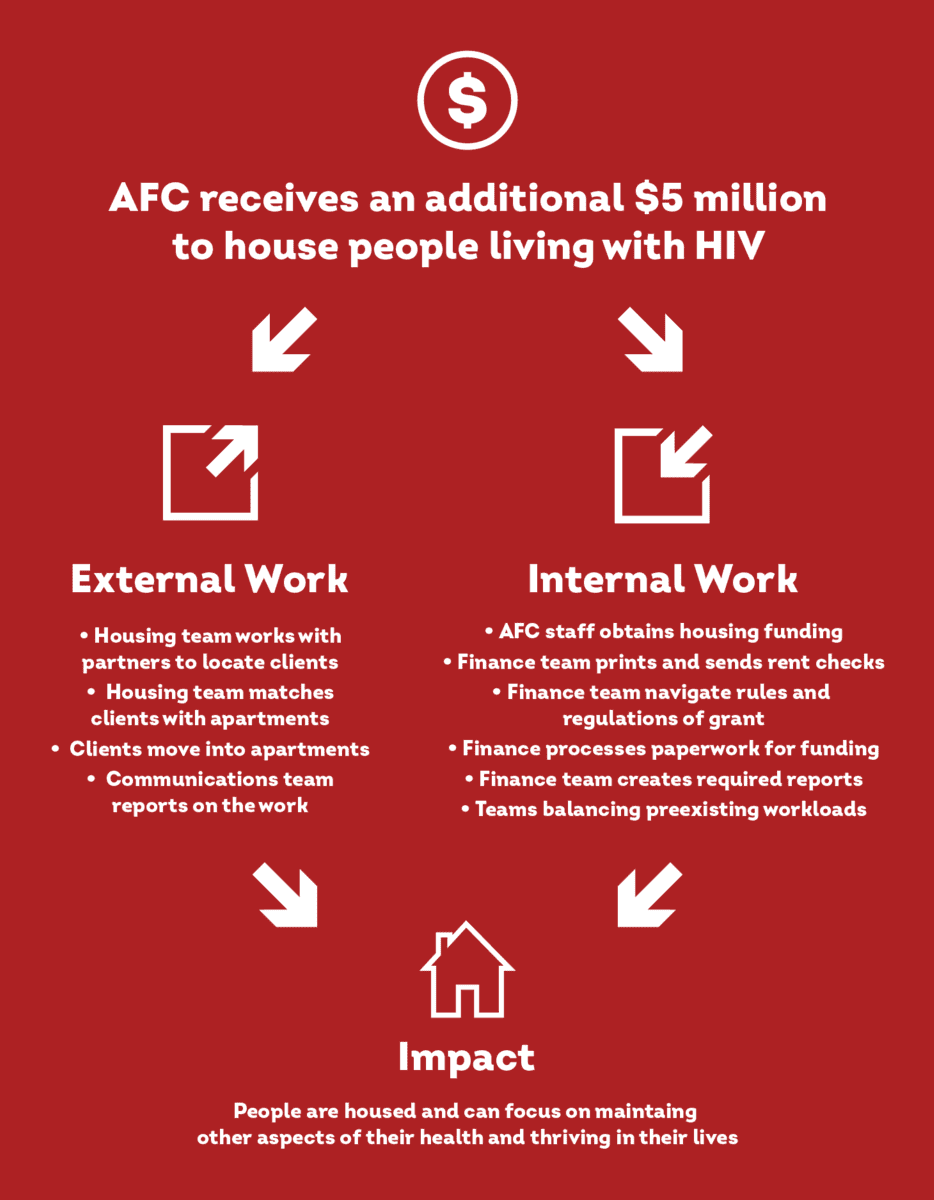
Amid COVID, AFC sought and received an additional $3.5 million from multiple funders to help people living with HIV stay safe and housed and meet other COVID-related needs. Many on the finance team logged extra hours to fulfill the new funding requirements while balancing pre-existing work, family and safety. Though this period has been challenging, the team remains dedicated to the work because of its importance in supporting better health outcomes for people living with HIV.
“One of the reasons we’ve been able to keep going is because we do realize how much it helps people,” said AFC’s Chief Financial Officer Laurie Wettstead. “It’s a lot, but right now, the community needs it. We really need to do this work.”
Even with an increased workload, Laurie said the team has had several successes during the pandemic, including securing a Paycheck Protection Program (PPP) loan for $1.6 million that helped AFC retain nearly 120 staff, pay rent for AFC’s office space and cover other important costs. The team has also learned new virtual meeting tools like Microsoft Teams and continues to send out thousands of monthly rent checks that keep clients safely housed.
Talia Clay, AFC’s accounting associate, has been the person responsible for ensuring about 1,200 housing clients’ monthly rent checks are printed and sent to landlords on time. Her job was already hectic before the pandemic and got even busier during the crisis, as she took on additional work related to the new COVID-related funding. She tackled this work while juggling new parenting responsibilities, including supporting her child with e-learning. In an extremely busy time, she’s found a sense of self-accomplishment keeping up with her work and responsibilities.
“During this time, it’s just rewarding knowing I can get it all done,” Talia said.
Although some staff’s workload increased, it could only increase by so much. Laurie said one challenge that’s emerged during this time is the balance between seeking additional funding to further support the community and the team’s capacity to carry out the requirements and logistics funders require.
Think about it like this: imagine you are a child who wants a dog. You can see vividly the joy a dog could bring you. But your parents see the annual costs of food, veterinary care, potential emergencies and dog walkers. All of this would have to be balanced with pre-existing household expenses and responsibilities.
AFC’s finance team handles the requirements of existing and new funding that benefit the community through care support, housing services and more. Because the team has become experts on fulfilling those funding requirements, they know when they have capacity to take on additional funding, just like a parent would know whether the family could afford a dog. Laurie has had to use that knowledge to not overburden staff.
Still, not everyone on the finance team has encountered an increased workload during COVID. Fonstella Ross, AFC’s manager of donor services, processes online and offline donations tied to events including AIDS Run & Walk Chicago. She ensures the money people raise for AFC is processed and reaches the community. Despite changes to some annual events, donors continue to donate and fundraise, she said. As a result, her workload hasn’t changed that much.
“Our donors still have faith in AFC,” Fonstella said. “They still want to participate in these events even if they have to do something virtual.”
As the pandemic continues, the finance and contracts team will continue to work diligently behind the scenes to meet funder requirements, process donations and get clients’ rent checks out. Some of that work will continue in-person at the office, and sometimes it will happen at home. Regardless, the work is essential to AFC and our ability to provide necessary programs and support for people living with HIV and people experiencing homelessness.