AIDS Foundation Chicago (AFC) applauds the HIV Prevention Trials Network (HPTN), the National Institute of Allergy and Infectious Diseases, and ViiV Healthcare for demonstrating that injections of long-acting cabotegravir (CAB-LA), delivered every other month, appear to be safe and highly effective in preventing HIV in gay and bisexual cisgender men and transgender women who have sex with men. This exciting news paves the way for the first-ever injection to prevent HIV transmission.
The data come from a large-scale efficacy trial, HPTN 083, which is ongoing with 4,570 participants at sites in the Americas, Asia and South Africa. Over 50% of trial participants at the U.S. sites are Black, and 12% are transgender women – the highest proportion of trans women so far in a biomedical HIV prevention study.
Following a regularly scheduled review by its data and safety monitoring board (DSMB), researchers found that CAB-LA provided significant protection against HIV. The protection achieved is “non-inferior” to the protection offered by daily Truvada (a pill taken orally), which means they are essentially equally effective.
As reported, the DSMB recommended that all HPTN 083 trial participants be told which active drug (CAB-LA or oral Truvada) they were receiving and that placebos be dropped from the study. The study will continue to completion with all participants receiving one of the two active products.
A sister study called HPTN 084, which is being conducted among cisgender women in Africa, remains active and has not yet reported any data with regard to safety or efficacy among cisgender women.
“Adding a new item to our buffet of HIV prevention options expands people’s choices and will result in more protected sex among disproportionately impacted populations — which is fantastic, and why today is a wonderful day,” said Jim Pickett, Senior Director of Prevention Advocacy at AIDS Foundation Chicago. “We look forward to data on efficacy among cisgender women, who bear the largest burden of the HIV epidemic in sub-Saharan Africa and comprise nearly 20% of new HIV diagnoses in the United States. The Food and Drug Administration should look at data from cisgender men, transgender women, and cisgender women before considering this drug as an approved means of HIV prevention.”
AFC expects to see more complete data from HPTN-083 published in the next few months.
If CAB-LA is also shown to be safe and effective among cisgender women in the HPTN-084 study, Getting to Zero Illinois will have an important new tool to deploy to end new cases of HIV in the state by 2030. Robust implementation of CAB-LA will need to address cost, the country’s frayed health systems infrastructure, and the burden individuals will face going to the clinic for their shots six times a year.
The timeline for approval of CAB-LA for HIV prevention is unknown.
By Luricela Arguello
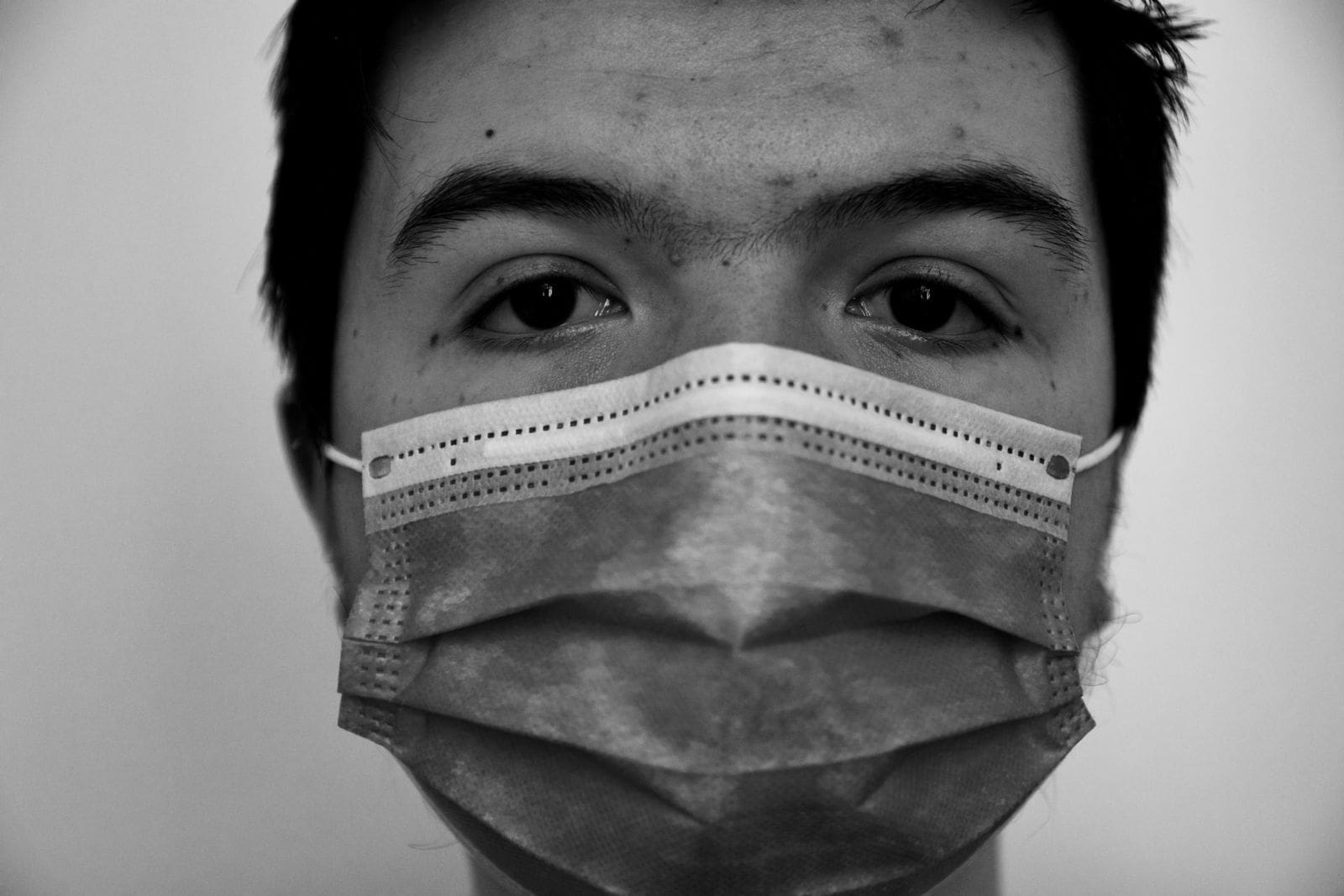
Many have uttered phrases expressing the vast differences in our lives during this new coronavirus (COVID-19) pandemic. Even in this world of significant challenges due to stay-at-home orders, one thing remains the same: Black and Latino/Latinx people continue to face disproportionate discrimination. Even in this health crisis, racism and bigotry still flourish and, in many cases, have even been further nurtured. We have seen instances of increased racist views toward individuals of Asian culture as if they were to blame for the new virus’ existence. More and more, we’re seeing examples of Black and Latino/Latinx people caught in a difficult bind: do I wear a face mask and face persecution, or do I reject the face mask and risk contracting COVID-19?
Several articles, posts, and comments on social media highlight people of color’s lived experiences of feeling unsafe when wearing personal protective equipment over the risk contracting coronavirus. One situation exemplifying the worries expressed by Aaron Thomas is Illinois State Rep. Kam Buckner’s recent experience of being questioned by police after exiting a retail store while wearing everyday attire with a mask and gloves. Rep. Buckner was told by the officer that he was questioned since he “looked like he was up to something.” He tweeted that the situation reminded him of the “be a prospect not a suspect” talks that minority youth often receive to ensure that they safely navigate a world in which racism still exists today. Rep. Buckner also goes on to state that even his political status did not absolve him from that type of interaction with law enforcement; therefore, if even someone of high status who is a person of color cannot avoid these, then what chance do we as everyday people have of going about our day without harassment for simply trying to protect ourselves from COVID-19?
I have visited several local retailers on the northwest side of Chicago and witnessed some shoppers of color being discriminated against while wearing masks. In one instance before masks were required to be worn in public in Illinois, I witnessed a situation in which a Black mother and her son entered a store wearing masks, and a Black employee quickly told the mother that her son could not come into the store with his face covered. This is a clear example of how fear can trigger many individuals to internalize systematic oppressions and then reflect them onto others. The mother and son were not the only ones in the store at the time who were wearing masks; however, this Black man was targeted and could not be in the store while wearing the mask. Only he was perceived as a possible threat by the store’s employee. I have spoken to other people of color whose family members do not feel comfortable wearing any face coverings, particularly, while shopping or working in more affluent or predominantly white neighborhoods.
As a Latinx woman, I have experienced my partner, father and brother’s reservations about wearing face coverings, whether they were bandanas, or homemade masks. I have seen increased anxiety from my partner when attempting to do basic things like going to the grocery store. He is struggling with the idea of going out in public, not just for fear of contracting the virus without a mask, but also for fear for his safety if he were to wear one. My own anxiety is heightened when he does go to the store fueling fears that he will be harassed not only by the store employees or community members, but by the many police I have seen parked in shopping centers and parking lots in recent weeks. The issue of wearing masks is, therefore, not only an issue of physical health (from the virus or actual physical harm), but also an issue of mental health as individuals worry for the safety of themselves and their families.
Many individuals may not think about this if they or someone in their life has not experienced or witnessed harassment. There are already many situations in which people of color experience disparities in health, employment, and every other aspect of life, but we should not make people choose between avoiding COVID-19 and risking persecution or physical harm from those that perceive us as threatening when we are only trying to protect ourselves by wearing a mask.
I ask that more of our local and federal government officials step up and follow Gov. JB Pritzker’s example of condemning the harassment being experienced by people of color. Officials can update the public during their daily briefings so that those not directly affected will see that those discriminatory behaviors are NOT acceptable. To publicly denounce this discrimination would show people of color that our concerns are valid. To publicly denounce this discrimination would give us the courage we need to be able to report these occurrences to entities such as the Chicago Commission on Human Relations. To publicly denounce this would aid in alleviating some fear and anxiety related to COVID-19, which is only one of the many barriers and disparities experienced by people of color in our everyday lives.
Luricela Arguello has been a bilingual Medical Benefits Specialist at AFC for over 1 year and has over 5 years of experience working directly with underprivileged communities. As a means of continuing to support the struggles of the communities she works with, Luricela is a member of the Racial and Social Justice Committee at AFC, which strives to address individuals’ struggles with within the agency and externally. Luricela is a first-generation Mexican American and the first in her family to graduate from college with a Bachelor of Arts (Magna Cum Laude) with a focus in psychology and a minor in cultural anthropology from the University of Illinois at Chicago. Luricela has previously participated in multiple house-building projects for impoverished families in the Tecate and Tijuana regions of Mexico. Luricela has also participated in various community homeless outreach efforts as part of her previous work as a Housing Specialist in the San Diego region.
Read more experiences of race-based discrimination related to mask use:
https://twitter.com/Aaron_TheThomas/status/1246493711032356866
https://twitter.com/RepKamBuckner/status/1257339336779055107
A black man’s viral commentary on face masks shows why it’s not an easy choice for everyone
Why I don’t feel safe wearing a face mask
For Black Men, Fear That Masks Will Invite Racial Profiling
Why some people of color say they won’t wear homemade masks
I’m a black man in America. Entering a shop with a face mask might get me killed
Even before the new coronavirus (COVID-19) changed our way of life and the course of our future, AIDS Foundation Chicago (AFC) already knew that members of the Latino/Latina/Latinx community in the U.S. were not treated equitably when compared to their white counterparts in many facets of life. Decades of discrimination, state-sanctioned violence, targeted and cruel immigration policies, and health care and economic disparities have disproportionately impacted our Latinx allies. Our systems have failed vital members of our nation’s fabric.
On Wednesday, May 6, we learned about a new reason to stand alongside Latinx folks in the face of systemic racism: COVID-19 has ravaged Illinois’ Latinx community. Of the 26,000 Latinx people who have been tested for COVID-19, nearly 16,000 — or roughly 60% — have tested positive for the virus. Among the general population, only 20% of total confirmed cases have been positive, according to state health officials and Gov. JB Pritzker. That means that 3 in 5 Latinxs who have been tested for COVID-19 have been confirmed positive, compared with 1 in 5 Illinoisans overall.
We already knew that COVID-19 was impacting Black and Latinx communities harder. First and foremost, the number of deaths and new cases in Black and Latinx communities was already higher than the general population. But COVID-19 is also hitting the financial wellness of communities of color, who are largely unable to fully shelter and work remotely compared to white counterparts. On top of that, strict recommendations to wear face masks in public were accompanied by stigma and discrimination for Black and Latinx men in particular.
We must do better. AFC must also do better, and we are committed to supporting Latinx Illinoisans in the face of COVID-19. The intersection between COVID-19 and HIV is clear; Latinx people represent 23% of new HIV cases in Illinois compared to 17% of the general state population. We strongly support city and state efforts to ramp up testing and prevention efforts for Illinois’ Latinx community so that we can protect their wellbeing and help them thrive. In addition, we call on the city, state and federal government to take the following steps:
- Expand state-funded Medicaid for all Illinoisans in or near poverty, regardless of documentation/immigration status.
- Cover the cost of COVIID-19 testing and treatment, regardless of insurance or immigration status.
- Provide paid sick leave to every worker in America, regardless of the size of the business or immigration status.
- Pass legislation that forbids employers from any form of retaliation against all workers, including undocumented workers, because of the impact on these workers and their families from COVID-19.
- Pay unemployment insurance to undocumented workers who otherwise would qualify for regular or pandemic unemployment but for their immigration status. Ensure that these payments are not subject to taxation.
- Provide cash assistance given to all who file taxes, including those using Individual Taxpayer Identification Numbers.
- Continue common-sense protections against eviction to ensure that all working families can stay housed.
- The Trump administration should immediately repeal the public charge rule that deters Latinx people from using life-saving public benefits, including critical health care services.
- Release all detainees suspected of immigration violations from jails and detention centers.
- Ensure contact tracing is done with a strong human rights framework and not tied in any way to the criminal justice system or ICE.
By Bailey Williams
Imagine: you have been recently living at Cook County Jail, one of the epicenters for the new coronavirus (COVID-19). Despite still having time left in your sentence, you are notified you’ll be one of the hundreds of people released to decrease crowding in the jail.
Despite the jail‘s efforts to curb the spread of COVID-19, as of May 4, more than 500 detainees and 350 correctional officers and employees have tested positive for COVID-19 since the onset of the outbreak. You’ve witnessed the situation escalate before your eyes at a time with diminished social support tied to the jail’s new restrictions limiting outside visitors to clergy and attorneys. Although you’ve grown to fear catching the new coronavirus, you also fear being suddenly thrown into a new environment years after you left it.
Upon release, you receive $10 and your medicine but no masks or vital resources to navigate a changed society shaped by COVID-19. You feel anxious and cannot figure out: How will you feed yourself? Can this $10 last until you find employment? Will you be able to find employment given the coverage of the jail and limited resources? Where can you reside? How can you shelter in place, if you don’t have anywhere safe to go?
Even before COVID-19, people recently released from jail or prison faced economic and social challenges as they re-entered their communities. Those obstacles are compounded if you are also a person living with HIV who needs to maintain a treatment plan. That’s why AIDS Foundation Chicago (AFC) and our partners have stepped up to support previously incarcerated people living with HIV, connecting them to vital services including housing, employment and mental health care upon release.
These services ensure people living with HIV stay connected to care and maintain an undetectable viral load, which helps people live healthier lives and reduce HIV transmissions in their communities. A 2010 study found that this support, funded by the Illinois Department of Public Health (IDPH), increased positive health outcomes, decreased death rates and reduced the likelihood that clients returned to jail or prison.
AFC’s corrections case management program continues in the thick of COVID-19, but now is serving double duty: facilitating positive health outcomes of recently released people living with HIV and giving people resources to shelter in place during the COVID-19 pandemic.
“It’s easy to practice social distancing when you have resources,” said Dr. Cynthia Tucker, AFC’s Vice President of Prevention and Community Partnerships. “When you’re resource-poor, it’s not.”
AFC locates and houses five recently released individuals amid COVID-19
AFC’s corrections team is made up of seven case managers who work at the partner agencies Agape Missions, Austin Health Center, CORE Center, Haymarket Center, South Side Help Center and Transforming Reentry Services/MWIPM. Though small, the team managed a caseload of 175 clients prior to the outbreak. Most of the clients are Black men, though the program also serves cisgender and transgender women.

In response to COVID-19, AFC’s corrections program is increasing its caseload as more people are released from Cook County Jail. Thanks to a partnership with IDPH, AFC receives contact information (though minimal) for people living with HIV who might need reentry support. AFC then attempts to locate and connect those individuals with medical services, housing and food support that enable them to shelter in place, improve their health and reduce HIV transmissions outside of jail.
So far, AFC has received the names of more than 24 recently incarcerated people living with HIV. The team has been working diligently to locate these individuals with minimal contact information. Fortunately, some of that detective work has already paid off. Five recently released people living with HIV have been located, provided food support and housed short-term at a hotel.
AFC and our partners help recently released people living with HIV shelter in place at a time when new housing barriers prevent them from doing so. Due in part to the recent coverage of how the new coronavirus is impacting the jail, some recently incarcerated individuals are returning to families that are scared to take them in, leaving them without a place to stay.
Cynthia reported that many clients indicated that because of news reports, families are more reluctant to take clients into their homes “because (they) think you have COVID-19 and might (impact) the entire household.”
Studies have shown that unstable housing can lead to inconsistent, unregimented health care. By providing housing, medical and food support, AFC and our partners help people living with HIV not only shelter in place but also maintain their overall health, treatment plans and an undetectable viral load.
AFC clients face additional challenges during COVID-19 pandemic
Despite AFC’s housing, food and medical support, clients in AFC’s corrections program still face new safety and employment obstacles amid the current public health crisis.
People living with HIV who come out of jail already faced societal stigma, and now with COVID-19, that stigma is compounded, especially for Black men, Cynthia said. Historically, most of AFC’s corrections clients have been Black men.
Because of the racist stereotype that all Black men are inherently threatening, some recently released Black men are afraid to wear the protective masks the Centers for Disease Control and Prevention (CDC) has recommended everyone wear in public settings where social distancing is hard to practice. Some clients fear the mask might make them seem even more threatening, even if it prevents the spread of COVID-19.
Though there are increased job opportunities at Amazon, hardware and grocery stores, some clients are also afraid to go on job interviews. Before COVID-19, AFC’s case managers would accompany clients to interviews to provide support and encouragement. Now, due to social distancing, case managers cannot ensure they attend scheduled meetings.
“Normally, we say that our clients face three main issues: HIV, mental health and substance use,” Cynthia said. “Now with COVID-19, there’s another big challenge.”
AFC remains committed to serving recently released people living with HIV
As COVID-19 continues to wreak havoc on Black communities especially, AFC’s corrections case management team will continue to provide services to people living with HIV as they are released from the jail. Although there is increased remote work, case managers also spend a few days in-person at their agency’s office to meet any referred clients.
Our case managers continue to do everything they can, Cynthia said.
To support AFC’s corrections case management work amid COVID-19, donate today to help meet the increased need for support. If you know someone who is living with HIV and has recently been released from jail, call 1-866-628-6678.
To learn more about AFC’s correction case management program, check out AFC’s blog Stigma: Inside and Out.
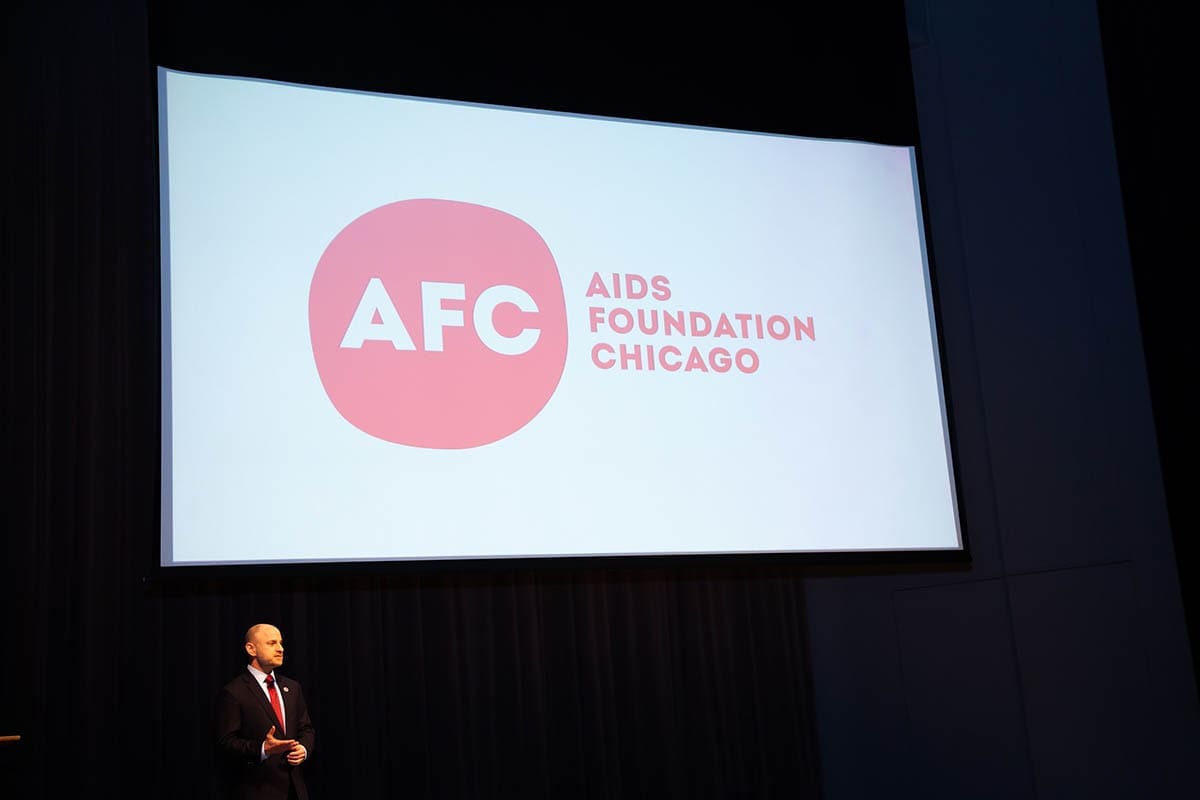 After a year of research and development, AIDS Foundation Chicago (AFC) is proud to launch its new brand and identity. In early 2019, AFC engaged People Who Care, a Chicago-based consultancy comprised of all Black, LGBTQ+ identified designers, strategists and directors, to lead the rebranding effort. AFC and People Who Care consulted with a wide array of stakeholders, including nonprofit partners, community members, Board members, staff and advocates through focus groups, interviews and surveys. This process engaged the community in a meaningful way and ultimately inspired AFC’s new brand direction.
“From start to finish, we at People Who Care (PWC) worked hard to capture the feelings, needs, and dreams of AFC’s core community. Instead of focusing primarily on the future, we allowed the organization’s legacy to guide our design process. We wanted to develop an identity that was accessible, brave and pioneering,” said Elijah McKinnon, Creative Director at People Who Care.
Surveys and focus groups revealed a strong affection and belief in AFC’s work and drove PWC to a concept that would balance the strong legacy and bold future of the organization. Upon concepting the new direction, AFC and PWC brought together a diverse group of stakeholders in a branding taskforce that ultimately led to the new design.
AFC initially revealed the new logo to its community at its Annual Meeting on March 5, 2020, but then put a full rollout on hold as the organization transitioned to remote work and providing new and continued services to help those impacted by the new coronavirus (COVID-19).
“We’re at a turning point – we now know that we can end the HIV epidemic in Illinois in ten years,” said John Peller, AFC President/CEO, at the Annual Meeting. “We needed a new look that better reflects who we are today. The new identity’s foundation is the imperfect circle. We’re embracing the beauty of imperfection through this circle. Imperfection is humanity – it’s our greatest strength. Perfectionism is unachievable and drives discontentment. It is a product of white supremacy culture, which must be dismantled before we can truly embrace racial equity and achieve our mission. AFC represents the coming together of people – this process is imperfect; all people are imperfect; this is where our power lies.”
“We knew from the beginning for our new brand to truly advance AFC’s mission that the communities most impacted by HIV, Black and Latino/Latinx communities, must be leading and centered throughout the rebranding process. Having the leadership of People Who Care, an all-Black LGBTQ+ owned and operated agency, was pivotal,” said Edward Wagner, AFC’s Chief Officer of External Relations.
You can find the logo and branding elements here.
About AFC:
AFC mobilizes communities to create equity and justice for people living with and vulnerable to HIV or chronic conditions. AFC aspires to create a world in which people living with HIV or chronic conditions will thrive, and there will be no new HIV cases. More at: aidschicago.org.
About People Who Care, Inc.
People Who Care is the Chicago-based consultancy and creative studio of Elijah McKinnon. Specializing in campaign development & management, brand strategy & identity and cultural productions exclusively for non-profits and grassroots initiatives, People Who Care has over 5 years of experience creating internationally recognized initiatives fueled by compassion, community and care.
AFC’s 2019 Annual Report: Turning Point
Review photos from the event
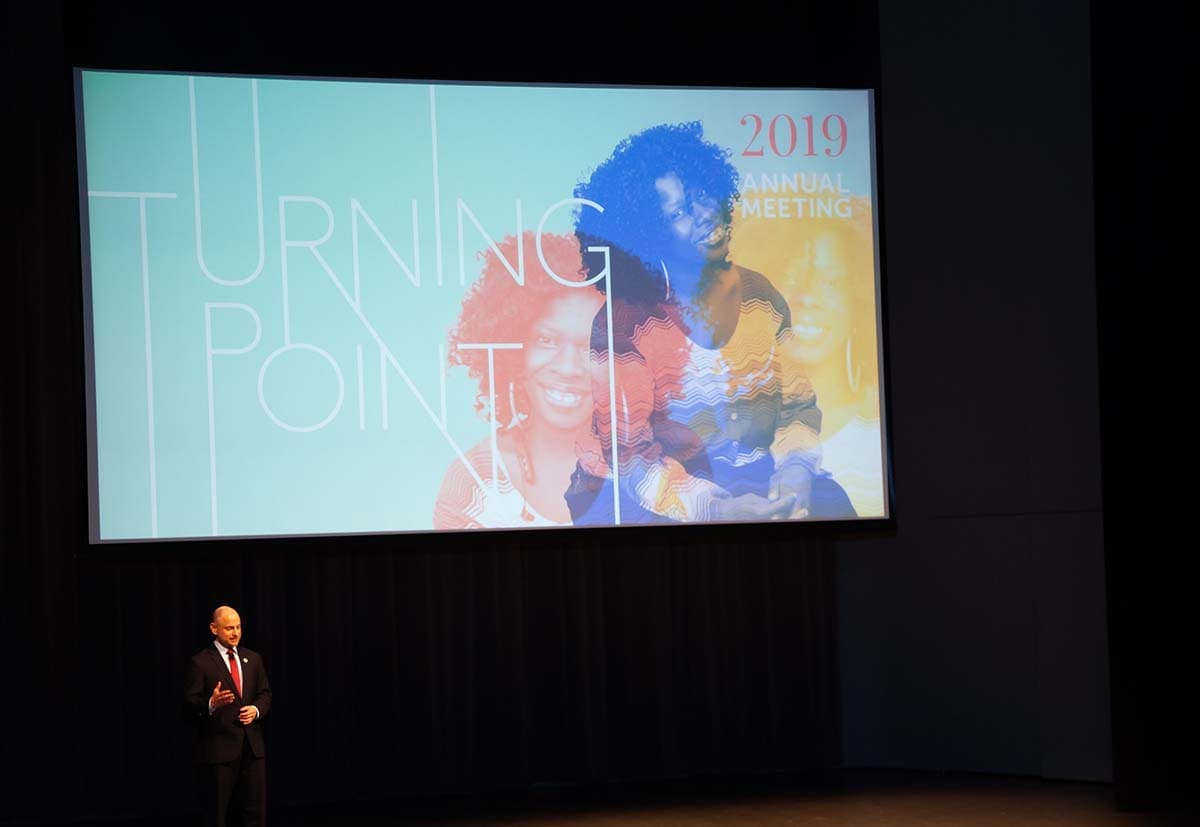 Hi, everyone! Thank you all so much for coming out tonight, and thank you, Terri, for introducing me and for stepping up to lead our Board. You and I have run, swum and biked together through our endurance event program TEAM TO END AIDS so many times, and I’m glad to be alongside you on this new journey. I also want to thank the entire Board of Directors for guiding us into the place we are today, and especially thank Anna for being a great leader and mentor as Board chair.
Before we dive in to our 2019 successes, I want to acknowledge the existence of COVID-19. Please, let’s take care of ourselves and one another tonight and throughout this epidemic by washing our hands regularly, fist-bumping instead of shaking hands, doing the “Dracula cough and sneeze” or sneezing into a tissue, taking care of ourselves when we’re not feeling well, and the hardest part: not hugging.
Thank you
We are at a turning point today because of you — all of you, and many more people who are not in the room. Our mission is to mobilize communities so we can end the HIV epidemic and homelessness in Illinois. We couldn’t achieve this without partnerships with so many communities and individuals.
AFC’s Board of Directors, Associate Board and Honorary board are each made up of smart, insightful folks who have given time and talent to advance AFC’s mission.
The Service Providers’ Council, led by Simone Koehlinger, Erie Crawford and Norma Rolfson, is a group of all the leaders in our HIV service network who come together to achieve excellence in HIV care and prevention. We want to thank this group, as well as our subcontracting partner organizations, for serving almost seven thousand clients in AFC’s network last year.
Thanks also to the clients on our Ryan White community advisory board and our new housing community advisory board. These groups of people with lived experience provide essential feedback and new ideas on how we can improve our programs.
Our donors, from corporations to individuals, make sure that we can keep powering the movement. We know how passionate you are to help us achieve our vision of making sure everyone living with HIV can thrive and preventing new cases of HIV! I want to recognize some key groups of donors:
First, companies who share our mission donated more than nine hundred thousand dollars in support of AFC in the last fiscal year. Thank you!
We’re especially thankful for the 13 companies that each gave more than twenty-five thousand dollars in support to AFC. They’re part of our Corporate Partnership Program, with Gilead, ViiV and Janssen leading the way.
Foundations have entrusted AFC with the responsibility of supporting the HIV/AIDS community – thank you for sharing our priorities. Thanks especially to the Alphawood Foundation and Pritzker Community Health Initiative for their significant contributions.
Thank you to our government partners, including the Chicago and Illinois Departments of Public Health and the U.S. Department of Housing and Urban Development, for entrusting us with the duty of leading the HIV service sector.
Now I want to recognize the people who dug deep and made gifts to advance us toward zero. We experienced another strong year of fundraising with individuals donating more  than four hundred and thirty thousand dollars in non-event related gifts in the last fiscal year. That’s incredible!
I especially want to thank our Founder’s Circle, made up of individual donors who gave ten thousand dollars or more.
Thanks to Our Sable Sherer Legacy Society members, who have pledged to include us in their wills or estate plans. Let us know if you’re interested in joining this committed group of people!
We are grateful for attendees at Dance for Life, the annual dance extravaganza that raises critical funds for AFC and other organizations. Save the date for the next event on Saturday, August 15!
Thanks to our incredible AIDS Run & Walk Chicago, Tee Up to End AIDS – our golf outing — and TEAM TO END AIDS participants. They walked, rolled, swam, biked, ran, golfed, or cheered along the sidelines. Run/Walk earned a record five hundred thousand dollars in donations last year, and T2 has already sold out their 2020 Chicago marathon spots — amazing! But don’t worry – there’s still spots left for other T2 events, so sign up today.
And, most recently, thanks to our World of Chocolate guests, who raised money and their blood-sugar levels at AFC’s annual World AIDS Day commemoration. We couldn’t do it without the incredible chocolatiers who tickle our palates.
We hope to see you at our events this year, including Gala35, a big celebration of our 35th year and our countdown to zero on Saturday, May 16. Please also join us at AIDS Run & Walk Chicago, which will take place on — you heard it here first — Saturday, October 3!
Thank you all so much, and thanks to Edward Wagner and the development, special events, and communications teams for building relationships with donors, hosting events, and exciting our community! Thanks also to the Shared Program Services Team, led by Andrea Dakin, for supporting the grants that power our organization in so many ways. Joel Rietsema and the Data Services team do an incredible job measuring the impact of our work. Big thanks to Laurie Wettstead and the Finance team for managing donations and the rest of our complex thirty million dollar budget.
Finally, and very importantly, I need to give a big shout-out to AFC and the Center for Housing and Health’s 115-person team. We have innovated in ways this past year that are going to leave an important mark on our organization and help us better serve our mission, our clients, and one another. Thank you for holding me accountable, for working so hard day in and out, and for supporting one another with love, chili, hugs and listening ears. I really do appreciate you all.
Turning point
But now, I want to talk more about 2019, the year marking a major turning point for us. In December, the Chicago health department announced yet another record low number of new HIV cases in Chicago – they’re down 60% since 2001. That’s huge! Our turning point is also about the science of HIV medications today, which help people living with HIV thrive. HIV meds can help many people living with HIV have an undetectable viral load, which improves their lives and health AND it means they can’t transmit HIV sexually. We call this U=U or undetectable equals untransmittable. Plus, those same HIV drugs can be used to help people who are HIV-negative stay that way through PrEP and PEP. And let’s not forget that we have the Affordable Care Act, which turns 10 years old this month. It provides comprehensive, more affordable health care coverage to people living with and vulnerable to HIV. Since we have all these tools to use – we can finally achieve a plan like Getting to Zero Illinois, which aims to end new HIV cases and connect all Illinoisans living with HIV and AIDS to care by 2030. And we can finally end homelessness in Chicago thanks to the Flexible Housing Pool, an innovative program that spans so many sectors to fund permanent supportive housing. AFC can really turn toward a better future, thanks to our successes in 2019 as well as the 35 years of progress we’ve made as an organization!
Despite being at a turning point, we still have many challenges in our future. One big roadblock is President Donald Trump, who has spent every moment in office chipping away at the rights and dignity of communities we prioritize, including LGBTQ+ people, Black and Latinx people immigrants, women — and let’s be honest, anyone who’s not a cis- white man. Sure, he has created a plan to end the HIV epidemic in the U.S. that will direct funds to key communities, including Cook County. But until he ends his reign of terror over communities most impacted by HIV and AIDS, it’s a hollow plan. We can do better.
New look
Now, for this turning point moment, we really need a new look that better reflects who we are today. AFC’s Communications team, especially Edward Wagner and Ashley Brown, a Branding Task Force made up of staff and community members, and People Who Care, a Chicago-based creative agency led by a team of LGBTQ+ people of color, worked to engage a committee of representatives from across AFC’s many communities to choose just the right outfit for the occasion of ending the HIV epidemic. And here it is:
I’m so excited to share our new look with you. Let’s be honest. Our old logo was stogy but the new one is strong and bold. And you’ll notice that there’s a circle, but it’s a little irregular. We’re embracing the beauty of imperfection through this circle. Imperfection is humanity – it’s our greatest strength. Perfectionism is unachievable and drives discontentment. It is a product of white supremacy culture, which must be dismantled before we can truly embrace racial equity and achieve our mission.
AFC represents the coming together of people – this process is imperfect; all people are imperfect; this is where our power lies. What do you think?
How we got here
But how did AFC get to this turning point? Largely thanks to our strategic plan, called Positive Momentum. This three-year plan is led by Kathye Gorosh and supported by so many team leads across AFC. It’s a road map toward achieving our five key priorities: Advancing health equity, preventing new cases of HIV, serving as a collaboration and knowledge center, being a bold voice for change, and strengthening our organizational excellence.
Nine steps in 2019
Now, I want to talk about 9 significant steps we took in 2019 to achieve these priorities and grow in new ways toward the end of the epidemic.
1. Launch Getting to Zero Illinois
First and foremost, after 3 years, 9 town hall meetings, 8 focus groups, a statewide survey, more than 700 public comments and countless edits, we have it: a plan for ending new HIV transmissions in our state and getting all people living with HIV and AIDS connected to care by 2030! We’re going to achieve our 20-plus-20 Target, which is to boost PrEP use and viral suppression by 20 percentage points each. We’ll achieve this by working with partners across Illinois to move levers in 6 key areas. Huge thanks to so many partners on this journey, especially CDPH, IDPH and hundreds of volunteers who have got us where we are today. Thanks too to Sara Semelka, Meg McElroy, and Simone Koehlinger at AFC for leading the plan.
2. Move to 200 W. Monroe
This year, we moved offices, transforming the way we work with clients, community partners and each other. We’re now at 200 W Monroe and in state-of-the-art workspaces, thanks to a very generous arrangement we painstakingly negotiated with our landlord. Major thanks to Tom Menard, Heather Remack, Brian Dibblee and the entire Operations and IT team for making the move seamless. We’re so glad to have a lunch room where we can sit down and eat and connect with one another!
3. Achieve policy priorities
Our third top nine highlight of 2019 is in policy, where AFC saw some of its biggest policy wins. That’s thanks to our many champions in the state legislature, our advocacy partners and many of YOU who spoke out to your legislators. And the biggest thanks go to Gov. JB Pritzker, who shifted the dynamics in our state toward true health equity. Governor Pritzker lead the charge for the fair tax, an income tax in which families with lower income pay lower rates and families with higher income pay more. It’s just common sense and it’s time we have a fair tax in Illinois – and it will be on the ballot in November, so vote yes for the fair tax! Some of our key legislative wins include expanding PrEP access to youth, banning a practice around copays that prevented some people from accessing PrEP, and making sure the best HIV drugs are available to all Illinoisans on Medicaid. Pride Action Tank also achieved some key victories for the rights of LGBTQ+ people. Huge props to Nadeen Israel, Kim Hunt, and the whole policy team.
Now, help us achieve our priorities in 2020: Join us at Springfield Advocacy Day on Wednesday, April 29, or just stay in touch with our policy progress by texting A-F-C to 40649.
4. Grow knowledge and collaboration
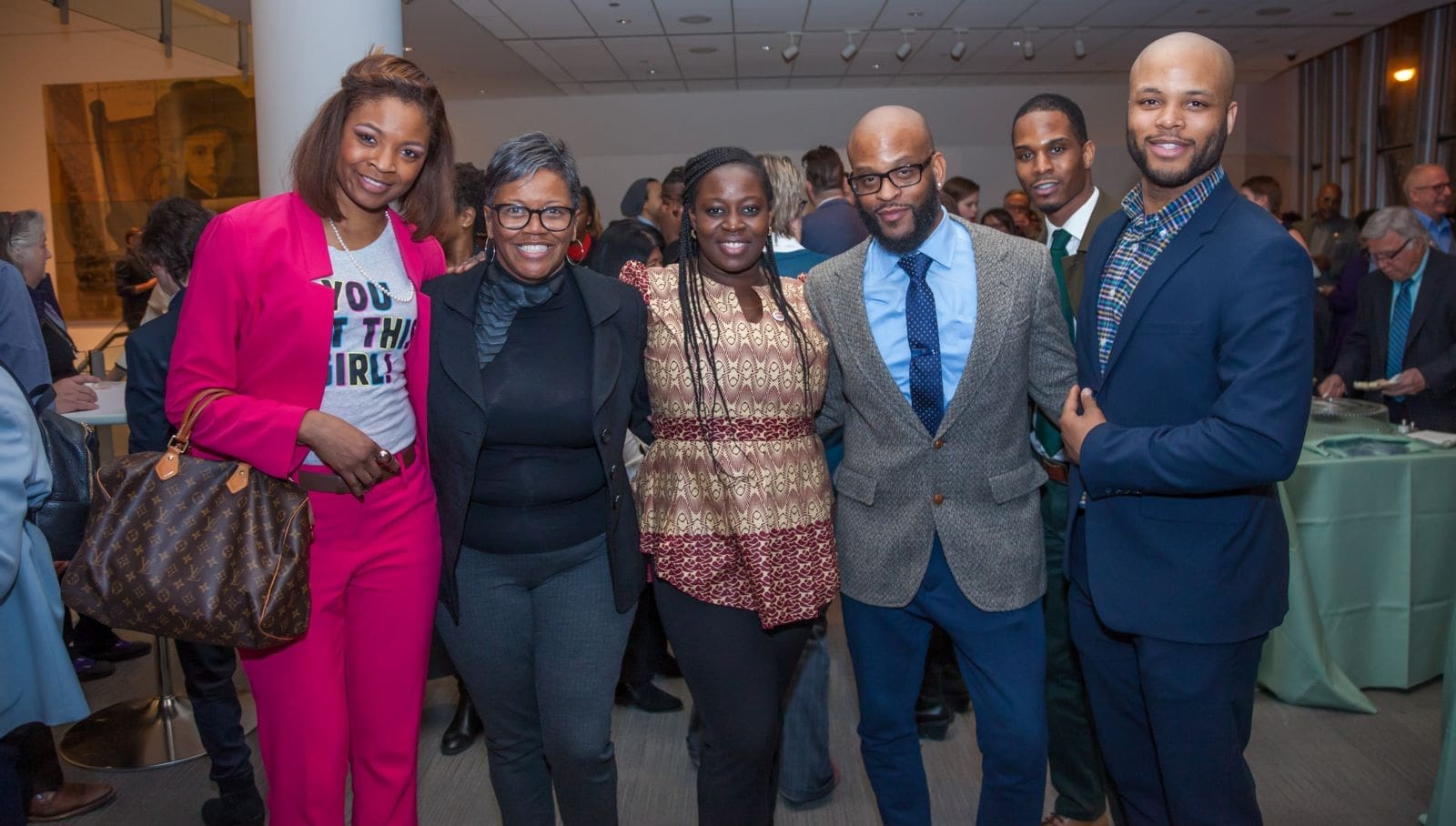
We leaned way in to being a Collaboration and Knowledge Center in 2019. Not only did we offer 67 trainings to our case managers to help them be the best care providers on the planet, but we also created space for dialog around Hepatitis C, HIV, PrEP, and more. Our PrEP and U=U education program Project RSP expanded its scope to provide the latest and greatest wisdom in HIV care and prevention to providers across the Midwest. Big ups to Cynthia Tucker, Jim Pickett, Mara Williamson and so many more folks who supported this work!
5. Explore new ways of serving clients
Number five in our top nine of 2019 is a two-for-one. Two projects thrived this year that are dramatically changing the way we support people living with HIV. First is the Safe and Sound Return Partnership, which focuses on finding jobs and housing for Chicagoans leaving jail or prison who are living with HIV. Last year, the program enrolled 108 people; got permanent homes for 15 of them; and, as a first for AFC, trained 25 of them for new jobs in fields like security, construction, automotive assembly and more. Amazing! On more of a systems level, we also convene the Women’s Connection, an assembly of cis- and trans- women of color who come up with new ways of supporting women living with HIV. Huge thanks to Cynthia Tucker and her team for leading these initiatives!
6. Strengthen HIV case management
In 2019, we improved the nation’s largest HIV case management system in big ways. First, we conducted a thorough reapplication process for nearly seven point four million dollars worth of HIV care services. This process awarded grants to 31 organizations and 125 case managers. We worked hard to award funding to agencies that are the best at serving the communities most impacted by the HIV epidemic: young gay and bisexual Latino, Latinx and Black men, transgender women of color, and Black cisgender women living in high-incidence areas.
There are so many ways of measuring our success in our case management program, but we focus on the percentage of our clients whose HIV is virally suppressed. Among AFC’s HIV case management clients, 85% of them have achieved viral suppression. That’s incredible testimony to the power of case management — and it’s a big difference compared with the Illinois average of 54%. Ultimately, knowing who has achieved viral suppression helps us better support those clients who aren’t there yet. Huge thanks to Bashirat Olayanju and the rest of the Care team for always innovating and taking good care of our clients and case managers, and thank you again to our amazing partner agencies and Illinois and Chicago health departments for entrusting us with this work.
7. End HIV criminalization
Another thing I’m proud of is the Policy and Advocacy team’s commitment to ending HIV criminalization in the state. In case you didn’t know, there are laws in Illinois and most other states that can put a person living with HIV at risk of arrest and prosecution if they don’t disclose their status to their sexual partners. This law creates HIV stigma, prevents folks from getting tested, and discriminates against our community. And let’s be clear about who is getting arrested and prosecuted – it’s not people who look like me. It’s Black, Latino and Latinx women and gay men, trans women of all races, sex workers, and other people who are already the most marginalized in our society. This harmful law underscores everything that’s wrong with America’s racist criminal justice system. Coleman Goode and the rest of the Policy team leads IHAA, the Illinois HIV Action Alliance, which is convening our incredible partners and advocates and gathering information from Illinoisans across the state to decide the best approach to reforming this law. More to come on this in 2020.
8. Foster employee wellness
Our eighth top nine in 2019 demonstrates how we have come together as a staff to make the workplace more equitable and more inclusive, particularly when it comes to race. Our 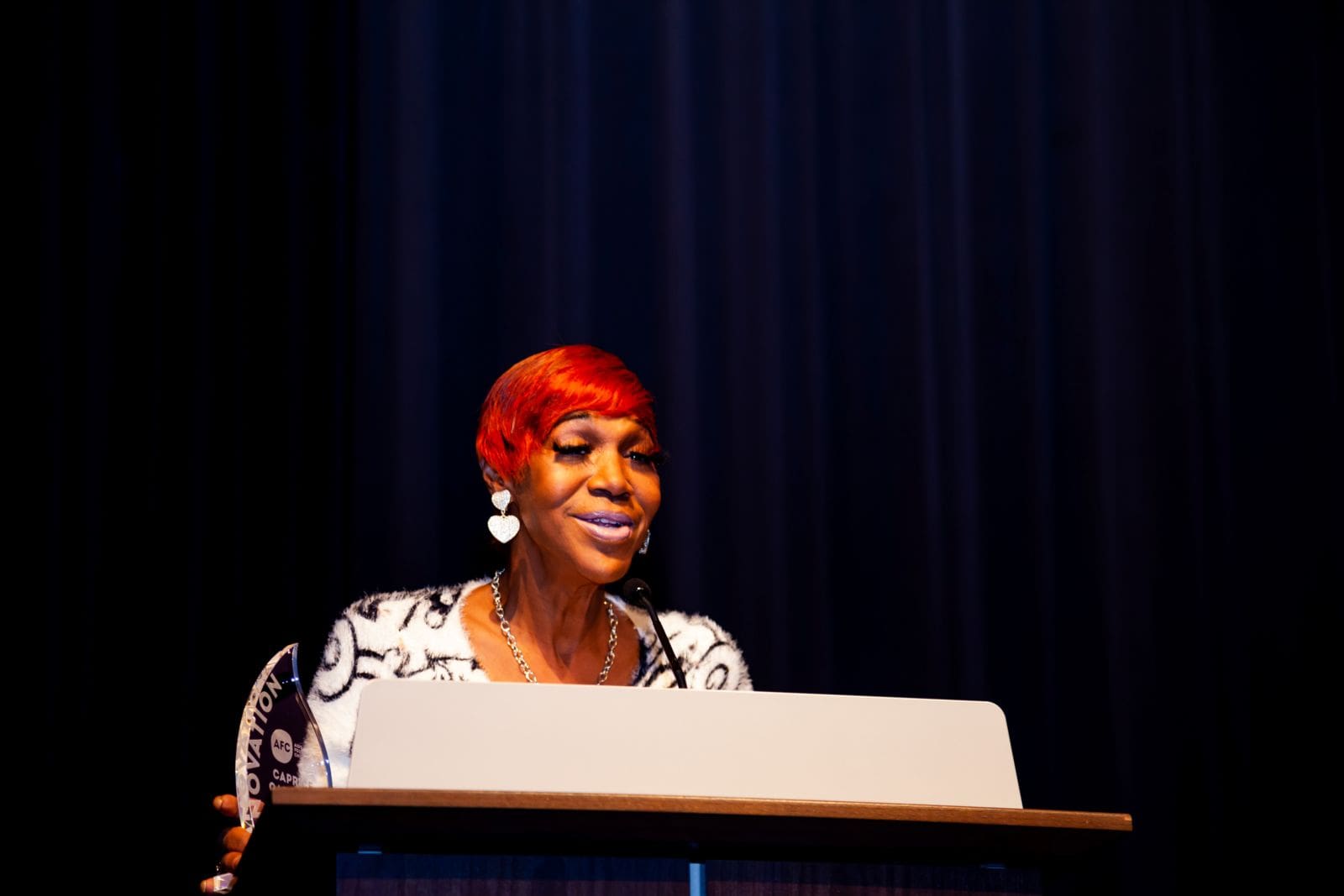 Race and Social Justice committee convened an all-day conference called Positive Change that explored the ways race impacts the HIV workforce. Our HR and talent management team, along with the Diversity Equity and Inclusion Committee, fostered trainings around unconscious bias, racial justice, and leadership. Thanks to Maritza Ruano and the HR and talent management team for their tireless support, as well as our Race and Social Justice and DEI Committees.
9. Innovate Chicago’s housing system
And last but not least, AFC helped provide homes to almost 1,600 people in 2019. Our supporting organization, the Center for Housing and Health, has led the charge in Chicago to improve the way public, private, and government entities come together to guarantee that every Chicagoan has access to a good home. Huge props to our housing team for all your amazing work!
Thank you all again for being with us tonight to see our new logo, our new direction, and our many accomplishments in 2019. I also want to thank Ashley Brown, Brian Solem, and Dustin Erikstrup for producing tonight’s event. Please pick up a copy of our 2019 Annual Report and a couple goodies with our new logo on your way out the door. Now, join us for conversation, fist bumps, hand sanitizer, non-hugs, drinks and snacks in the lobby. Good night!
 |
| Photo by Tobias Rehbein |
By Aisha N. Davis, Esq.
On Wednesday, April 15, Illinois State Representative John M. Cabello (Machesney Park) released the names of formerly incarcerated people whose sentences were commuted in the past month by Governor JB Pritzker. Rep. Cabello defended publicizing the names of these individuals by stating that he is doing so “in an effort to let the public know whose sentences were commuted and advise victims and witnesses that these people are no longer in prison.”
Rep. Cabello’s actions cannot and should not be commended or seen as beneficial for anyone.
One thing must be clearly stated: the deadly novel coronavirus (COVID-19) is impacting the lives of every person on this planet. The effects of COVID-19 are unprecedented – requiring quick, responsive action to slow the loss of life and limit new transmissions. As the highest ranking official in our state, Governor JB Pritzker has mobilized his administration and made decisions to protect the lives of as many Illinoisans as possible. This includes incarcerated Illinoisans.
What Rep. Cabello did not mention were the other decisions and orders from the Pritzker administration that have benefited everyone in Illinois – including Rep. Cabello’s constituents. These steps include: orders for sheltering in place, support for first responders and front line workers, increasing access to distance health care options, building the capacity for unemployment claims, working to distribute more personal protective equipment, providing more resources for food for students and families, acquiring ventilators for people suffering from severe COVID-19 symptoms, and issuing guidance that limits discrimination in health care access and shores up the protections for our most vulnerable communities.
Rep. Cabello’s statement and action also ignore the grave fact that detention facilities across the state, and throughout the country, are ill-equipped to provide the space and infrastructure to prevent the spread of COVID-19 to detained and incarcerated people, facility staff, and any other service providers, family members, or loved ones that enter these facilities. Many facilities are overcrowded and under-resourced to provide the needed health care for incarcerated individuals or to permit them to practice the social distancing that has been recommended by the CDC and WHO. In many instances, incarcerated people fall into one or more of the groups of people who are more susceptible to severe cases of COVID-19 – including people living with HIV. And, due to generations of divestment and discrimination, Black and Latinx people are over-incarcerated here in Illinois and around the country. Plainly, the people most likely to be incarcerated are also the most likely to experience higher mortality rates as a result of COVID-19.
The lack of infrastructure and resources in detention facilities has the potential to cause devastating harm far beyond the walls of these spaces. The families, loved ones, and community members of the staff that enter these facilities daily will be affected. The essential workers they encounter in the community will be affected. Rep. Cabello’s own constituents will be affected. By decrying Governor Pritzker’s action, Rep. Cabello ignores the danger that every incarcerated person faces by remaining in facilities that are ill-equipped to respond to this pandemic.
Conviction and sentencing do not strip a person’s humanity. In fact, the U.S. Constitution protects incarcerated people from cruel and unusual punishment. There is nothing crueler in this moment than to turn our backs on those who have been incarcerated, nothing more unusual than to ignore their lives while we do everything in our power to save others. We did not live in a perfect society prior to the COVID-19 pandemic, and we cannot expect perfection and unanimous accord during this time. But what we can do in this moment is work together to protect every life that we can. We will not lose our friends, family members, neighbors, and community if we deem others unworthy of care and compassion at this moment in time – we will lose our very humanity.
The health and safeguarding of our community is our highest priority. In light of the novel coronavirus (COVID-19) pandemic, the AIDS Foundation of Chicago and Northwestern University have decided to cancel the 2020 Public Health Boot Camp (PHBC), scheduled for July 26 – 30.
Our decision was informed by advice from the Chicago Department of Public Health, the State of Illinois, World Health Organization, UNAIDS, and leading global and local health authorities. We also recognize that many who were presenting or attending are now working on the front lines in response to COVID-19 in our city, state and across the globe. Therefore, even with a return to work, there may be guidance for smaller crowds as well as social distancing practices.
Our commitment to the Public Health Boot Camp, a residential, adult-learning environment is stronger than ever. We look forward to communicating in the coming months about PHBC, our AFC-NU partnership and the plans for PHBC 2021.
We appreciate your ongoing support of the PHBC. We wish you, your families, organizations and communities all the very best during this pandemic.
Sincerely,
The PHBC Planning Team
Cynthia Tucker, Dr. P. H.
Vice President of Prevention and Community Partnerships
AIDS Foundationof Chicago
Leah C. Neubauer, EdD, MA
Assistant Professor, Department of Preventive Medicine, Division of Public Health Practice
Affiliated Faculty, Institute for Global Health, Program of African Studies
Director, Accreditation and Assessment, Program in Public Health
Northwestern University, Feinberg School of Medicine
Grisel M. Robles-Schrader, MPA
Director, ShARPs and Evaluation, Center for Community Health
MPH Applied Practice Experience Director, Program in Public Health
Northwestern University, Feinberg School of Medicine
 By Aisha N. Davis, Esq.
In the past month, the COVID-19 pandemic has led us into a new reality that we have never experienced, both here in Chicago and across the United States. However, one emerging trend is not novel – Black people and communities across the nation are being disproportionately impacted by pandemic hot spots and COVID-19 related deaths.
Systemic racism has led to poor health outcomes in Black communities in the United States since the inception of this nation. From the display and dismemberment of Saartje Baartman, to the Tuskegee syphilis experiments; from the exponentially disproportionate maternal mortality rates for Black women, to the discriminatory health care available in Black communities fighting to end the HIV epidemic, Black communities and Black bodies have borne the scars, diagnoses and pain of racism. And, with the reports of discrimination faced by Black celebrities, there is no option to buy your way out of this cycle of health disparities.
In Illinois, on April 7, there had been a total of 380 COVID-19 related deaths. Of those deaths, 163 were Black people. That means that Black people account for nearly 43 percent of COVID-19 related deaths in a state where we only make up about 15 percent of the total population. These numbers are not a coincidence, but the damning proof of the divestment in, discrimination towards, and disenfranchisement of Black communities.
This pandemic has forced those outside of our communities to come face-to-face with what we have known – when America catches a cold, Black people get pneumonia.
Responses and reactions from local, city, county and state agencies and actors that have begun and will continue in the coming days are welcome as we seek to slow the devastation ripping through our families, neighborhoods and communities. To be sure, we must all work together to address this pandemic. However, we cannot use this moment for temporary galvanization. For those that we have already lost, it is too late, but for the future generations of Black people in America, we will be charged with having continued the trend of ignoring the intentional suffering heaped upon Black communities if we fail to look beyond what is happening right now and address what has led to these statistics.
Yes, open hospitals to treat those currently suffering from COVID-19 – but do not shutter them when this pandemic ebbs. Track the numbers of diagnoses of the novel coronavirus – but also track the number of Black people experiencing homelessness who cannot shelter in place. Distribute information and resources about best practices – but remember those practices when we are not in the midst of a health care epidemic.
This call for resources, restructuring and respect is just the latest in a long refrain for Black advocates and other anti-racist advocates. In continuation of this tradition – and to vocalize the imperative need for expansive health equity – the AIDS Foundation of Chicago will be hosting Virtual Advocacy Day on April 29. That day, we will work with advocates, community members, and local and state representatives to not only communicate clear needs, but make direct asks for responsive action for Black communities and all people living with, and vulnerable to, HIV, both during and beyond the COVID-19 pandemic.
Black communities have always shown resiliency in the face of hatred, but we deserve a future where we are proven wrong about how much worse our health outcomes will be in relation to other communities. As we consider the best ways to address the effects of COVID-19 on Black Illinoisans, let us also plan for a future where these disparities do not exist.
 By Bailey Williams
Prior to March 13, Alex Delakis spent most of his day meeting with people living with HIV in their homes and at public establishments like McDonald’s. As a medical case manager for the AIDS Foundation of Chicago (AFC), Alex coordinated clients’ medical care and associated services such as financial assistance and transportation. In the last few weeks, the routine he’s built over the last two years has had to change, as the novel coronavirus (COVID-19) forces case managers like Alex to alter the way they provide services.
“I’m really used to a lot of face-to-face contact with my role here at AFC, however with COVID-19 going on, now that I’m working remotely, my way to connect with clients is really through the phone and through email,” Alex said. “I’m constantly on the phone now trying to work with people, not only to check in with them on their well-being, but making sure that they have access to the resources that they need. Thankfully, a lot of my clients have been incredibly collaborative and resilient during this time.”
Alex continues to help clients fill out applications for services like Medicaid, but instead of in-person meetings, he calls clients and walks them through the process. Alex still coordinates medical care, but he now advises some clients to delay routine, non-urgent appointments in order to remain home as much as possible. This advice is in accordance with recommendations from the Centers for Disease Control and Prevention.
The biggest change Alex has seen is an increased need for food support. In response, Alex directed some families to local public schools that distribute meals and other clients to apply for SNAP benefits and financial assistance to purchase healthy food and related supplies.
Other AFC staffers have also seen an increased need for food and related services. The higher demand has prompted new, innovative responses from AFC’s housing and care teams and partners.
Carolyn Bloom and Jamie Hock of the Center for Housing and Health (CHH), a supporting organization of AFC, made 50 bags of essential items that were hand-delivered to  formerly homeless individuals in CHH’s housing programs. Each bag contained snacks, paper products and gift cards that could be used to purchase food and other necessities. The following week, CHH purchased and distributed $50 Walgreens gift cards for the same 50 clients.
“It never feels like enough but at least it’s something,” Carolyn said. “As this pandemic continues, I’m hoping there will be more funds available for us to continue to provide this type of support.”
AFC’s partners are also responding to the increased need for food. Several Vital Bridges pantries are pre-bagging items, so residents can quickly visit, pick up essentials and return home. This move has enabled Vital Bridges to limit the number of customers in the pantry at any one time. Another partner, Top Box Foods, will deliver fresh produce, poultry and fish to the homes of CHH and AFC Housing program participants.
Even though food emerged as a top client concern, AFC and its partners also saw an increased need for rental and financial assistance. AFC remains dedicated to providing those services and additional ones that arise in response to the pandemic.
“I think we are all in this together, and we have to support one another during this time,” Alex said.
Looking to support vulnerable residents at a heightened risk because of COVID-19? Consider taking any of the following actions:
- Refer folks to call the HIV Resource Hub (844-HUB-4040), a collaboration with AFC and the Center on Halsted. Starting April 1, the Hub offers financial assistance for people living with HIV or who are on PrEP who have been impacted by COVID-19.
- Donate to a local food pantry such as Vital Bridges, Brave Space Alliance South Side Food Crisis Pantry, Catholic Charities and the Greater Food Depository of Chicago.
- Donate to AFC to support new and continued services for vulnerable populations.
- Call your legislator and make sure people who are marginalized are supported during this time.
- Check in with others, especially those who might be at a higher risk for contracting COVID-19.
Looking for additional resources related to COVID-19? Visit AFC’s resource hub here.