Are you on Medicaid? Do you have patients, friends or clients who are on Medicaid? If the answer is “yes,” keep reading the important information below!
On Jan. 1, 2020, prescription drug coverage is changing for Illinois Medicaid. Previously, Medicaid managed care plans covered whatever drugs they wanted. Starting in January, every plan in the state will have to cover the same drugs. This is called a “uniform preferred drug list (PDL).” The goal is to save the state money and simplify coverage. You can see the new drug list here.
However, the transition to a uniform preferred drug list means some medications might not be covered anymore. It’s critical for people living with HIV and hepatitis C to have uninterrupted access to their medications to maintain an undetectable viral load, cure hep C and to get to zero. Here’s what you should know:
- The new drug list covers nearly all of the most common single-tablet HIV medications and some hep C treatments. AFC thanks Illinois Medicaid for adding several HIV drugs to the formulary in the past year; we’re glad that Medicaid and drug manufacturers made sure coverage is more comprehensive, although there is still more work to do.
- If you’re taking an HIV or hep C medication now that is not covered on the new formulary, you can keep taking it for one year. Coverage may be renewed after that year. This is called “grandfathering.” Check the new drug list now to see which of your meds are covered. Medications for a number of different health conditions will be grandfathered.
- If you’re new to Medicaid, had a gap in coverage (maybe you missed your redetermination notice), or switch to a different managed care plan, you’ll have to take one of the HIV or hep C medications on the uniform preferred drug list. However, your health care provider may be able to get an exception if you have a special medical need.
- Managed care plans are allowed to have their own rules or procedures about how people can access medications, called utilization management policies. For example, plans might have different limits on the number of pills you can get each month. Plans might require that a provider get permission (also known as prior authorization) before the provider prescribes a specific prescription drug. If the health plan’s policy is less restrictive than the Illinois Medicaid fee-for-service policy, this is allowable.
Some tips important tips to make sure you don’t miss your meds:
- Get your medications refilled before the end of 2019. Pharmacies and plans are swamped in the beginning of January with changes.
- If you can’t get your meds at the pharmacy, don’t give up. Call your health care provider or AFC (312-690-8860) for help.
- ADAP is here for you. The AIDS Drug Assistance Program (ADAP) can cover HIV medications that Medicaid doesn’t cover. AFC can help you sign up if you call 312-690-8860 between 9 a.m. – 5 p.m. on weekdays.
Here are some important resources to help you navigate this change:
- Check out the new Medicaid uniform preferred drug list
- Learn about the AIDS Drug Assistance Program
- To learn about AFC’s case management services, call 312-690-8860 between 9 a.m. – 5 p.m. on weekdays or check our website for more information.
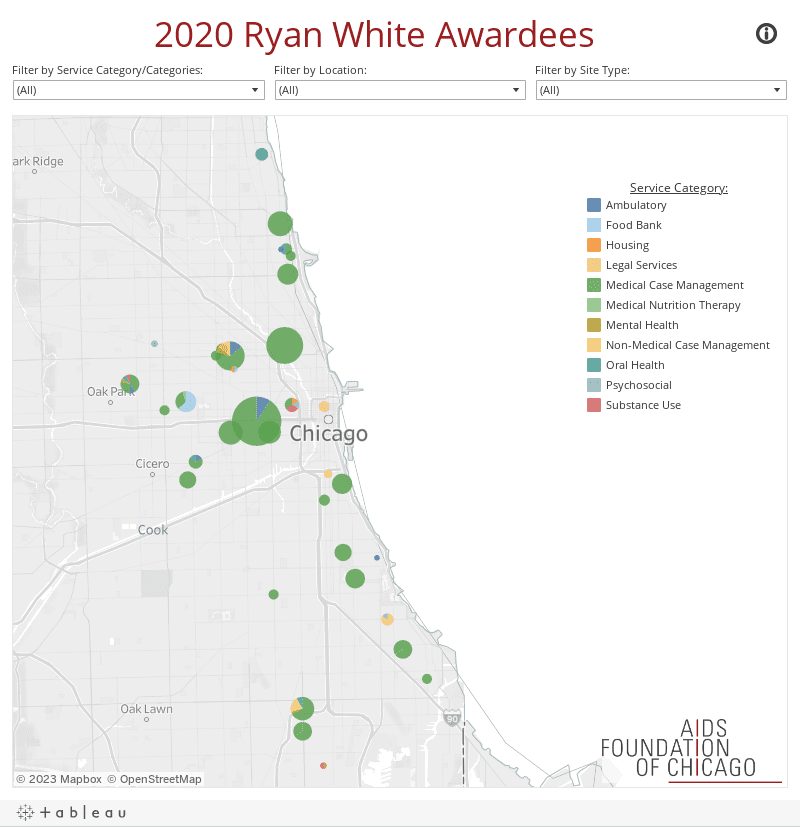
The AIDS Foundation of Chicago (AFC) has awarded 31 organizations a combined $7.35 million to connect thousands of people in the Chicagoland area living with HIV and AIDS to health care, housing services, transportation and other supportive services. These organizations were selected based on a spectrum of criteria, including their ability to serve Chicagoans most impacted by HIV: Black and Latino/Latinx gay and bisexual men, transgender women of color, and Black women living in high-incidence areas.
“We are confident that the organizations selected will provide our community with outstanding HIV care and support services to improve lives and contribute to the evolving the HIV epidemic,” said Bashirat Olayanju, Senior Director of Care at AFC.
AFC evaluates and awards funding for a suite of HIV services in Cook and surrounding counties through the Ryan White HIV/AIDS program, which distributes $2.3 billion nationwide to fund services specifically for people living with HIV. This federal funding comes from the Illinois and Chicago Departments of Public Health. Awarded organizations were notified on Friday, Dec. 6, and funding will be available to organizations in March or April 2020. The awards are contingent on AFC receiving funding from the Illinois and Chicago Departments of Public Health.
This year, AFC provided funding to seven new organizations: AIDS Healthcare Foundation, Chicago Women’s AIDS Project, Human Resource Development Institute (HRDI), Lawndale Christian Health Center, Men and Women in Prison Ministries, Southshore Hospital and the Will County Health Department.
“Lawndale Christian Health Center is grateful at the opportunity to partner with AIDS Foundation of Chicago in providing the highest quality clinical services to persons on the West Side living with HIV/AIDS,” said Lawndale Christian Health Center’s Chief Clinical Officer of Operations Dr. Wayne Detmer. “Our patients can face significant barriers to accessing health care services, but this funding will allow us to continue offering comprehensive and affordable care within our medical home.”
Across the board, AFC prioritized funding for vital support services, such as mental and psychosocial care, substance use care, food access and non-medical case management, and supported an increase in some case manager salaries.
 New approach to evaluating services
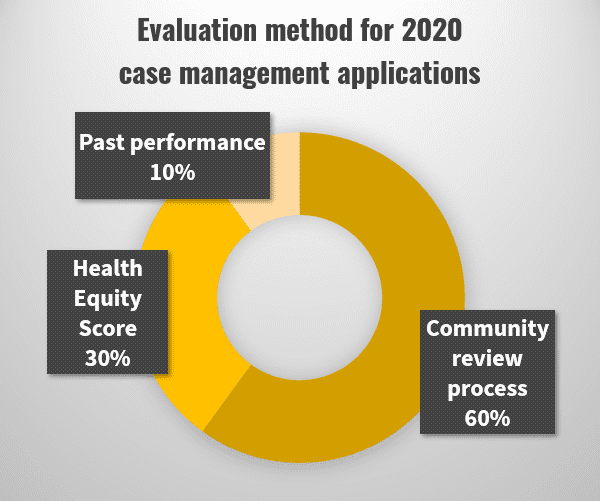
This year, AFC pursued a three-tier approach to reviewing applications from organizations seeking Ryan White funding. First, applications were evaluated by a panel of community members, who individually scored applications, then discussed those applications as a group, and reached consensus about scores. Second, AFC reviewed past performance of organizations who had previously provided HIV services. Finally, each application was given a Health Equity Score, which was based on key health indicators (including HIV prevalence, health disparities, availability of resources and support services, availability of medical care and more) for each neighborhood served by an organization.
“The Health Equity Score ensures that we’re funding organizations who are providing services to neighborhoods that have been historically under-served by medical services, especially HIV care services,” said Olayanju. The ten neighborhoods whose Health Equity Scores inicated the need for most support are the following:
- West Garfield Park
- Riverdale
- Englewood
- Washington Park
- North Lawndale
- West Englewood
- East Garfield park
- Greater Grand Crossing
- Oakland
- Austin
“Over the course of the HIV epidemic, the face of people living with HIV and the communities most impacted by it has shifted,” said Román Buenrostro, AFC’s director of special projects and planning. “We feel very proud that the organizations selected to provide this new level of care reflect the diversity of the communities currently impacted by HIV in Chicago.”
While multiple agencies will be providing these lifesaving services across the Chicago area, it is impossible to fill all gaps and serve all people in the region who need HIV care. In the coming year, AFC will be working with funders and partner agencies to identify additional opportunities to strengthen the sector and fund additional services for communities hardest hit by the HIV epidemic.
2020 Ryan White awardees
|
Ambulatory Outpatient Medical Care AIDS Healthcare Foundation |
|
Food Bank Catholic Charities |
|
Housing Alexian Brothers Housing and Health Alliance |
|
Legal services Legal Council for Health Justice |
|
Medical Case Management Agape Mission Inc. |
|
Medical Nutrition Therapy Heartland Alliance Health |
|
Mental Health Alexian Brothers Housing and Health Alliance |
|
Non-Medical Case Management Brothers Health Collective |
|
Oral Health Christian Community Health Center |
|
Psychosocial AIDS Healthcare Foundation – CALOR |
|
Substance Use Alexian Brothers Housing and Health Alliance |
 By Raven Feagins
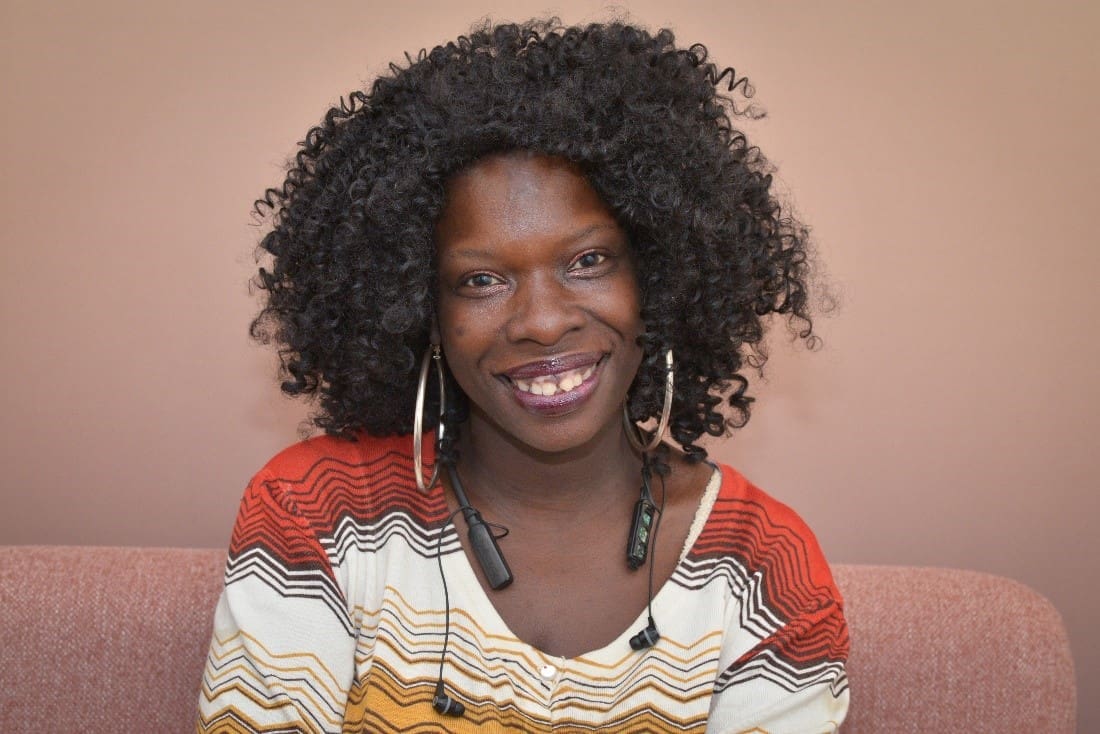
“I used to wonder, like, ‘What am I here for? What is my purpose in life?’ And I have a purpose now,” said Valerie Linzy, an upbeat, big-hearted mother of six. “There are some young ladies who are going to come behind me from doing sex work that are going to come up HIV-positive that are going to need to know how to live … Here I am. You don’t have to kill yourself. You don’t have to die. You don’t have to isolate yourself because somebody, somewhere still loves you for exactly who you are. It doesn’t take you to have to do sexual favors for them for them to care about you. So, yeah, now I know what I’m here for.”
Valerie was born and raised in the city and is a Chicagoan through and through. She has been proudly sober for 4 years and credits her success to both her determination and the people who have supported her every step of the way. Nonetheless, it is safe to say that Valerie’s journey to get to where she is now has not been an easy one.
Overcoming obstacles
Starting from a young age, Valerie was sexually assaulted, had a fractured relationship with her parents and later developed a substance addiction. At 16, she began engaging in sex work for money and continued for years thereafter as a form of survival. In 2007, Valerie hit a huge low when she was arrested, charged and given a prison sentence.
“I was in a car with drug dealers and they were being set up. I didn’t snitch and say whose crack cocaine was in the car. By me not saying anything, they gave me a manufacturing delivery charge and possession with intent to deliver,” Valerie recalled. “I did 14 months off a 4-year sentence and came home in 2009. I have not been arrested or near any handcuffs since and I don’t plan on it … it’s not for me.”
Once she was out, Valerie had her youngest son back in her life, and the two lived at Cornerstone Community Shelter for 10 months. In May of 2010, Valerie was connected to housing and moved into her first apartment at the age of 34. She was now in her first home and it felt like things were starting to look up. This was all until Valerie went to the doctor for a routine check- up and later got a call that she never expected.
“I had a careless doctor who had no type of charisma or class that just called me on the phone and was like, ‘Oh, there’s nothing wrong with you Ms. Linzy, you’re just HIV-positive.’ That’s not something you just tell somebody over the phone,” said Valerie. “I definitely put holes in the walls, and I slammed myself into all types of doors. I just knew that my life had ended.”
So many thoughts ran through Valerie’s head when she found out about her status. Valerie had been screened for HIV several times before while she was engaged in sex work and was always aware of her status.
“You have [outreach workers] that would come talk to us women on the street. They would give us [incentives] to prick our fingers … I would prick my finger every time,” said Valerie.
She was still on parole when she found out that she was living with HIV, but because she thought she was going to die anyway she said she “went on a drug spree.” Valerie was spiraling for months until March of 2011 when she went back into substance use treatment. Thankfully, Valerie was able to reconnect with her sister and mom and started gaining back the support system she desired.
Finding stability
Valerie experienced homelessness again for years after, but at the end of December 2017, she was connected to housing through one of Christian Community Health Center’s (CCHC) supportive housing programs. She moved into her new apartment at the end of December 2017, and later into a bigger home in the Roseland neighborhood where there is not only space for her children to live with her but also space for additional family to visit.
“I love my apartment! I don’t like the neighborhood, but I love my apartment and where it’s located,” said Valerie.
While everything may not be perfect in her life right now, Valerie says that she is in a much better place than she was when she was just a few years ago. To help her stay on this path toward having the life that she wants, Valerie regularly meets with her CCHC housing case manager, Penny Brown.
“I wanted to do counseling and she got me connected with my counselor, Jazz. I worked with my Jazz for a year, and I talked to him about everything,” said Valerie. “So yeah, I go to Ms. Penny for all those types of things. I love that lady! She goes to bat for me.”
Penny connects Valerie to the resources she needs in order to get her closer to meeting the goals she has set out for herself. In particular, Penny utilizes the resources provided through the AIDS Foundation of Chicago (AFC), such as the behavioral health specialists.
“AFC helps pay for housing and things like bus cards, food cards, those all come from AFC. AFC is a great help for the clients because they’re really the source for everything, besides the case manager,” said Penny. “They are like the biggest help for our program.”
“Me and Valerie have been working together since February of 2018. The work that I do for Valerie, it consists of me providing her with supportive housing, medical, and, of course, help with her medications … The work that I do with her is intense and it’s hands on, but working with her is a walk in the park because we have a relationship now. We kind of understand each other and she knows that I’m here to help her.”
Valerie repeatedly says she is grateful to be where she is today. She spends a lot of her time reflecting on her experiences and expresses herself through poetry as an outlet. Valerie is also extremely adamant about giving back to her community by supporting younger girls engaged in sex work, who work in the same spots where she used to get clients.
 By Raven Feagins
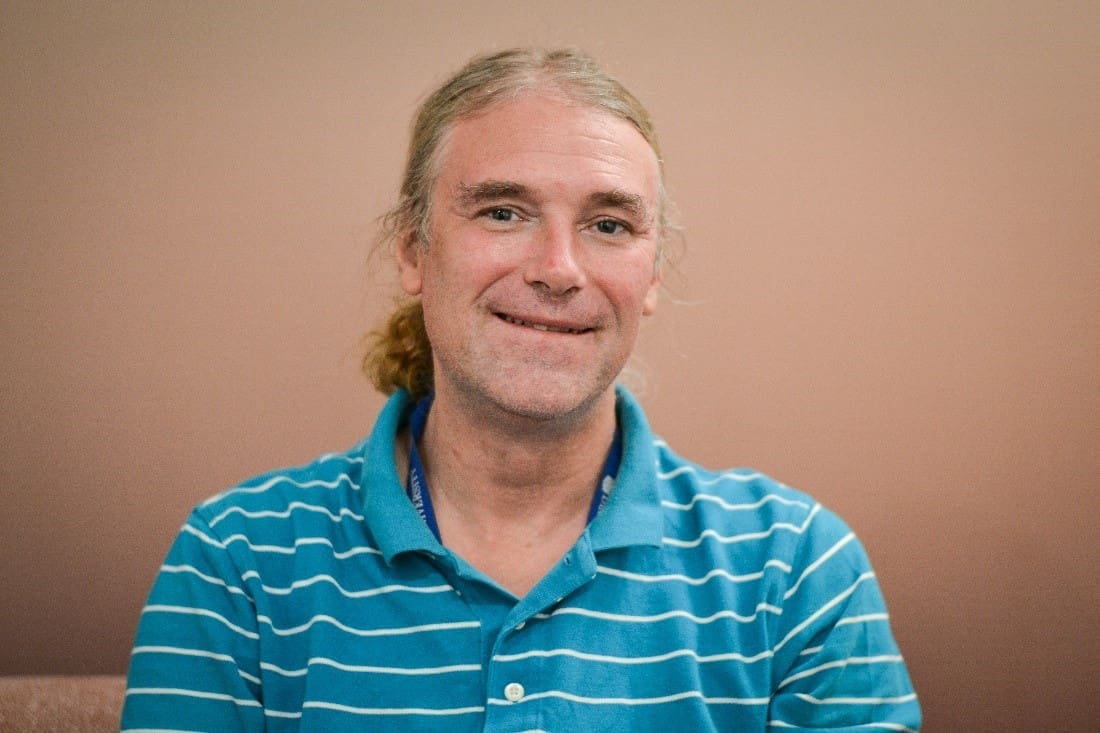
Bruce Pelletier was born and raised on Chicago’s Northwest side in the Old Irving Park neighborhood. His Chicago roots are noticeable not only because of his accent. He also has that outgoing, Midwestern charm that you would expect from any life-long resident of the city.
Bruce has had his share of obstacles and challenges in life, but one of the biggest struggles he faces is his battle for stable mental health. On top of this, Bruce also experienced housing instability on and off for years, making it nearly impossible to fully focus on bettering his mental state. He now resides in Uptown, a Northside Chicago neighborhood, where he has lived for just over a year due to the support he received from the Better Health through Housing (BHH) program. BHH is a housing-first program coordinated by the AIDS Foundation of Chicago’s subsidiary organization, the Center for Housing and Health. The program focuses on connecting people directly to stable housing and supportive services in order to improve participants’ health outcomes.
However, before BHH came into his life, Bruce came up with a creative solution to ward off homelessness – he became a truck driver.
“That’s why I got into trucking. I was homeless then and I thought I would eliminate that problem by driving … I would always have a place to sleep,” said Bruce.
He remained a truck driver for 20 years and loved the freedom that came with being on the road. The long days and nights kept Bruce on the go and gave him a steady income to support himself and meet some of his basic needs. He was even able to pursue his passion for journalism by writing for websites like CDLlife.com, where he could write about all things trucking. However, his solution abruptly came to an end in 2013 when Bruce lost his license after receiving a DUI. Thankfully, he was able to stay at his girlfriend’s place at the time while he figured out his next steps. For years, Bruce looked for new work and handled all his court dates from his DUI case all while managing to take classes at a community college to further pursue his career in journalism.
“I didn’t have a car, so I would bike or walk everywhere,” said Bruce. “I had to walk to court, then I had to walk to school. My feet were always on fire … I couldn’t let transportation be a factor for me. If I can walk, I’m going to get there.”
Things for Bruce were stable until one day in 2017 when Bruce and his girlfriend’s son got into an argument that resulted in Bruce being kicked out of the house. This ultimately ended his relationship with his girlfriend and, again, Bruce was out on his own.
“Because her son used violence on me and I protected myself, they were not having it. So, I said, ‘I’ll just leave,’” Bruce recalled. “We made an agreement and I left out of there and I went to my sister’s house. Then, they started with their shit and I said, ‘No I’m trying to finish school. You all are not sabotaging this,’ so I left.”
Bruce was out of places to stay, so he resorted to different shelters throughout the city. However, because of the high traffic, strict curfews and lack of privacy that comes along with staying at a typical shelter, it was challenging for Bruce to keep up with school. Bruce figured he would be better off living on the street for a while.
“I got me a tent and I pitched it over there by the lake,” said Bruce. “Luckily, I had a good therapist over there at Wright College because I was about to lose it. It was April, so it was raining a lot and I just … I was getting these dark thoughts and I kept thinking, ‘No man, you can’t do this. You’re almost done graduating.’ Lo and behold, I talked to my therapist at Wright College and she had told me about Swedish Covenant.”
Swedish Covenant Hospital is located on Chicago’s Northwest side, not too far from where Bruce is originally from. He visited the hospital up to twice a month while he was experiencing chronic homelessness to address his suicidal thoughts and have a warm place to sleep when he was admitted into their psychiatric ward.
“I didn’t have a place to stay and I was in a really bad place [mentally]. I just wanted to die … I had all of these suicidal thoughts all the time,” said Bruce.
After two months of living on the street, things started to look up for Bruce. He finally heard back from an interim living program that he had applied to and learned that he was accepted.
“Every Sunday, I would check in to see what my status was. Then, one Sunday they said ‘You’ve been selected. Congratulations, come on, Bruce!’ … it was like getting into heaven,” he said. “It was such a blessing and it couldn’t have happened at a better time because right when I got in, I had signed up for a summer class and I just thought ‘Oh great! I have a bed to sleep in now, I got a hot shower, warm meal, cold breakfast. Life is good.’”
Because he was in school, Bruce had special permission to leave the shelter early in the morning to make it to his classes and maintain his enrollment. However, even with those special permissions, Bruce was written up several times for missing curfew.
“I wanted to get up out of there because I didn’t want to be in the shelter, I wanted to be on my campus. That was my support system. [The shelter] was just there for me to sleep,” 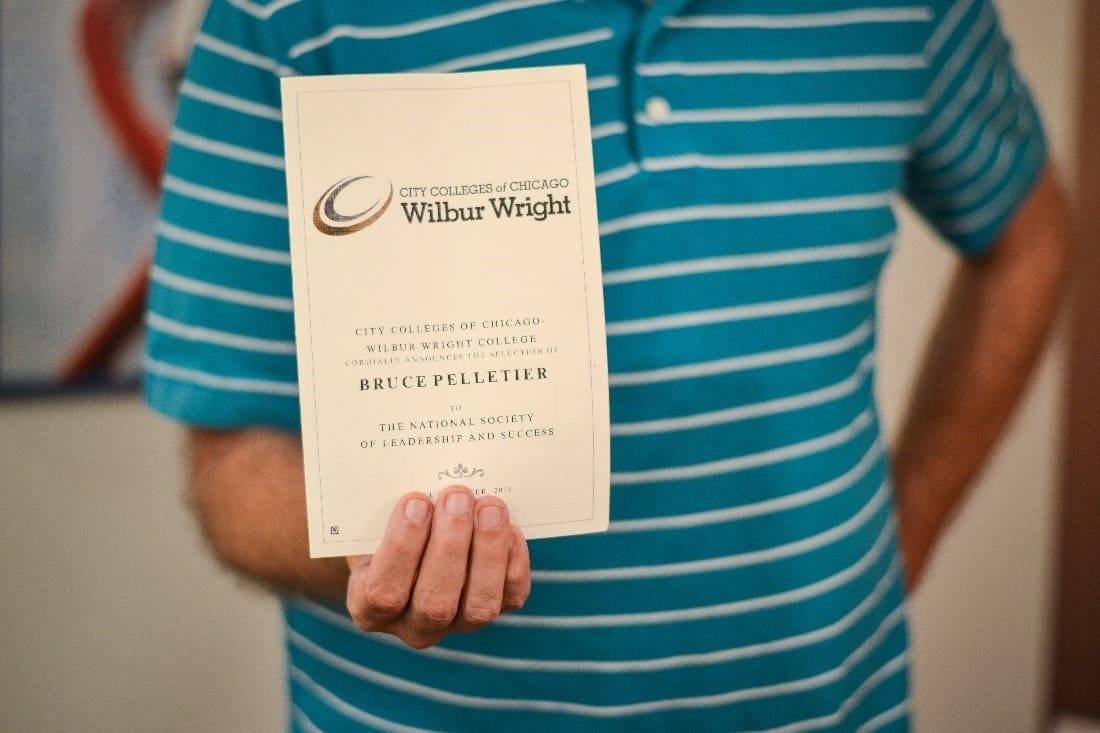 said Bruce. “I love Wright College. It’s such a great community … They saved my life. They helped me break out of that arrested development of that fear and loathing. It’s good knowing that I can pursue my dreams.”
By the time Bruce was on his third strike for missing curfew, he received even better news and a call that changed his life forever.
“A case manager was getting ready to make me sign a contract because I had missed curfew again. They were getting ready to throw me out of there,” said Bruce. “Lo and behold, I got a call and someone said ‘Bruce, come on in. We got an SRO [single room occupancy] for you.’ The timing could not have been better.”
Little did Bruce know, his regular visits to the Swedish Covenant Hospital’s emergency department flagged him as a patient who was both experiencing chronic homelessness and living with a chronic health condition. Swedish Covenant Hospital was one of a handful of hospitals in the Chicago area that was part of the innovative BHH program, which provides supportive housing for Chicago’s most vulnerable individuals.
Bruce wrapped up his stay at the interim shelter by graduating from their program and then moved straight into the SRO in Fall of 2017.
“When I got the SRO, I just thought, ‘Yay! Now I’ve got my own place to study!,’” said Bruce. “I loved it and hated it at the same time. At least it was better than living in the tent.”
During Bruce’s stay in the SRO, he worked with his case manager to find a more permanent housing solution. This venture lasted for 2 months until he finally landed his current apartment.
“I love my place now. It’s so beautiful,” said Bruce. “It was such a blessing. I pray to God every day in the morning and say, ‘Thank you Lord for this house, thank you for this food, thank you for all the blessings.’ I consider it a miracle, not even a blessing because I’m not in the street no more. I’m not sleeping in a tent, in a friend’s car or sleeping on the train.”
Despite everything he has been through, Bruce still tries to keep a positive outlook on life.
“I’ve made a lot of mistakes,” said Bruce. “I fall on my face and know how to get back up, but when I get back up it’s kind of a roller coaster ride. With the support systems and the communities that I’m involved in now, I’m staying more focused now with the task at hand and what my prime directives are.”
One of Bruce’s favorite sayings is “Nothing is permanent,” which got him through some of his darkest times. Now, things are looking better than ever. Bruce just re-signed the lease to his apartment for another year and is wrapping up his studies at Wright College. He has plans to continue pursuing his passion for journalism and hopes to be a full-time journalist in the near future.
World of Chocolate 2019 is in just a few days! Check out our interview with Journey Shannon of Noir d’Ébène Chocolat et Patisserie, who is one of 20 amazing chocolatiers who will be featured on Thursday, Dec. 5 at Revel Fulton Market. Click here to buy your tickets and get ready to indulge at our premiere World AIDS Day event!
As you’ll learn in the video, Noir d’Ebène is one of three Black-owned businesses participating in this year’s event. Here are the other Black-owned businesses you can experience at World of Chocolate:
Do you have Medicaid coverage? Do you have a loved one that has Medicaid coverage? Do you serve Medicaid patients? Then we need your help…
Protect Our Care Illinois is a statewide coalition of health care advocates, providers, consumers, and workers, joining together to improve the Illinois health care system, especially Medicaid and the Affordable Care Act (ACA).
We are working together to improve Illinois’ Medicaid application and renewal system so that people can get Medicaid health coverage and keep that coverage if they remain eligible. We are also educating the public and important stakeholders on the critical role Medicaid plays in supporting healthy families and communities.
To do this, we are asking individuals, parents, health care providers, educators and others to get involved in our campaign and share their first-hand experience with Medicaid. Specifically, we would like to connect with Illinoisans who:
- Experienced an unexpected lapse in Medicaid coverage due to trouble renewing coverage
- Experienced challenges treating a patient because of lost Medicaid coverage
- Spent hours in the local human service office working out Medicaid coverage problems
- Needed to reschedule appointments due to an unexpected loss of Medicaid coverage
- Received an unexpected bill due to an unexpected loss of Medicaid coverage
- Received good care to treat an illness or injury thanks to Medicaid
- Got back to work thanks to services covered by Medicaid
- Kept their family healthy thanks to Medicaid health coverage
The most important thing is an interest in helping us in our work to improve the Medicaid application and renewal system!
We want to help more people get the health care they deserve and we need your help!
Interested in working with us to tell your story and engage in our campaign? Have questions? Please contact [email protected]
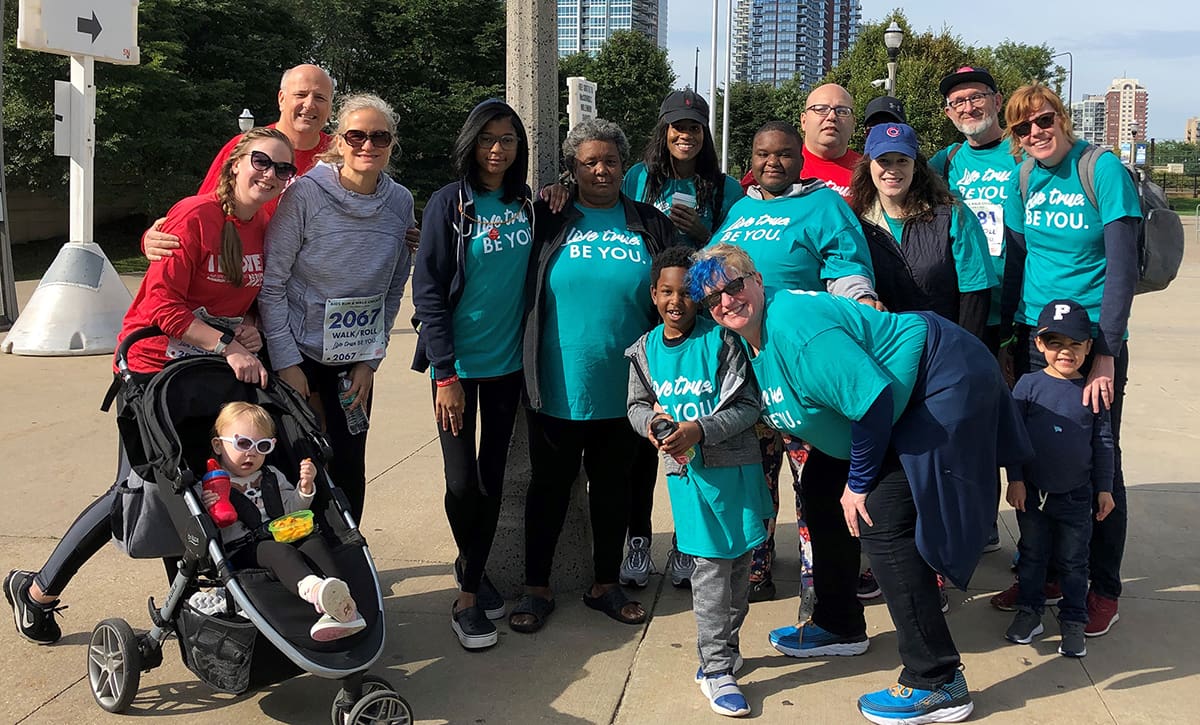 Thirteen years ago, the Pediatric AIDS Chicago Prevention Initiative (PACPI) and the AIDS Foundation of Chicago (AFC) joined forces to share an office and administrative support while collaborating on projects that prioritize pregnant people living with HIV. The partnership also aimed to eliminate vertical HIV transmission, which means transmission of the virus from parent to child. At the end of 2019, PACPI will relocate to new offices in Chicago’s Uptown neighborhood and embark on new initiatives, including a name change.
“This longstanding relationship has strengthened AFC’s ability to support parent-to-child HIV transmission in Illinois,” said John Peller, AFC’s president/CEO. “We have had a productive, close relationship with PACPI over the years, and we are excited to continue collaborating in the next chapter of our relationship.”
PACPI’s mission is to eliminate vertical transmission of HIV and other infectious diseases and to provide services to uplift and create equity for families in Illinois. PACPI has been a vital gamechanger in Illinois, successfully helping pregnant people living with HIV have babies born without HIV. Their work has taken on this mission through providing case management, housing advocacy and other vital services to parents living with HIV who are pregnant or have recently given birth.
“AFC has been a tremendous asset for helping us to grow programs and services, which has helped Illinois get to ZERO babies born with HIV last year,” said Anne Statton, Executive Director of PACPI.
Alone, PACPI has achieved great things, but with a partner in AFC, the synergy has resulted in new programs and initiatives supporting women. PACPI supported AFC’s 2015-17 project the Midwest HIV Prevention and Pregnancy Planning Initiative, for example, as well as offered necessary training to Chicago-area case managers about perinatal health for people living with HIV. The organizations worked together to create 13 permanent housing units for pregnant people living with HIV to establish stability in their home and family lives. There have also been numerous campaigns developed by AFC and PACPI to increase the awareness of the experiences people have who are pregnant or parenting while living with HIV.
On the systems level, PACPI and AFC have partnered to advance legislation to ensure appropriate HIV screening occurs during the prenatal period, both at the beginning of the pregnancy experience and again in the third trimester. This legislation has almost eliminated the possibility of babies in Illinois being born living with HIV. PACPI has supported advocacy initiatives like the Chicago and national female condom coalitions, Getting to Zero Illinois and annual Advocacy Days events.
Anne and her board and coworkers have also participated regularly in both AIDS Run & Walk Chicago and the TEAM TO END AIDS (T2); Anne herself has completed over 14 endurance events with T2 to raise money for both organizations.
PACPI’s next steps take them to a new home and a new name
On Jan. 1, PACPI will open its new doors in Chicago’s Uptown neighborhood, and this time, they’ll be occupying their own space near many other serv
ice providers in the Broadway and Lawrence area.
“We are excited about our new partnership with Human Citizen, owned by T2 veteran Anthony Mendiola. We have room to grow and a collaborative environment for new ideas,” said Anne.
They’ll also be launching a brand-new name on Jan. 1: the Mother and Child Alliance. This new name will better capture the true spectrum of services the organization offers through its nineteen-person staff, housed across three agencies.
Stay up-to-date with PACPI by following its Facebook page.
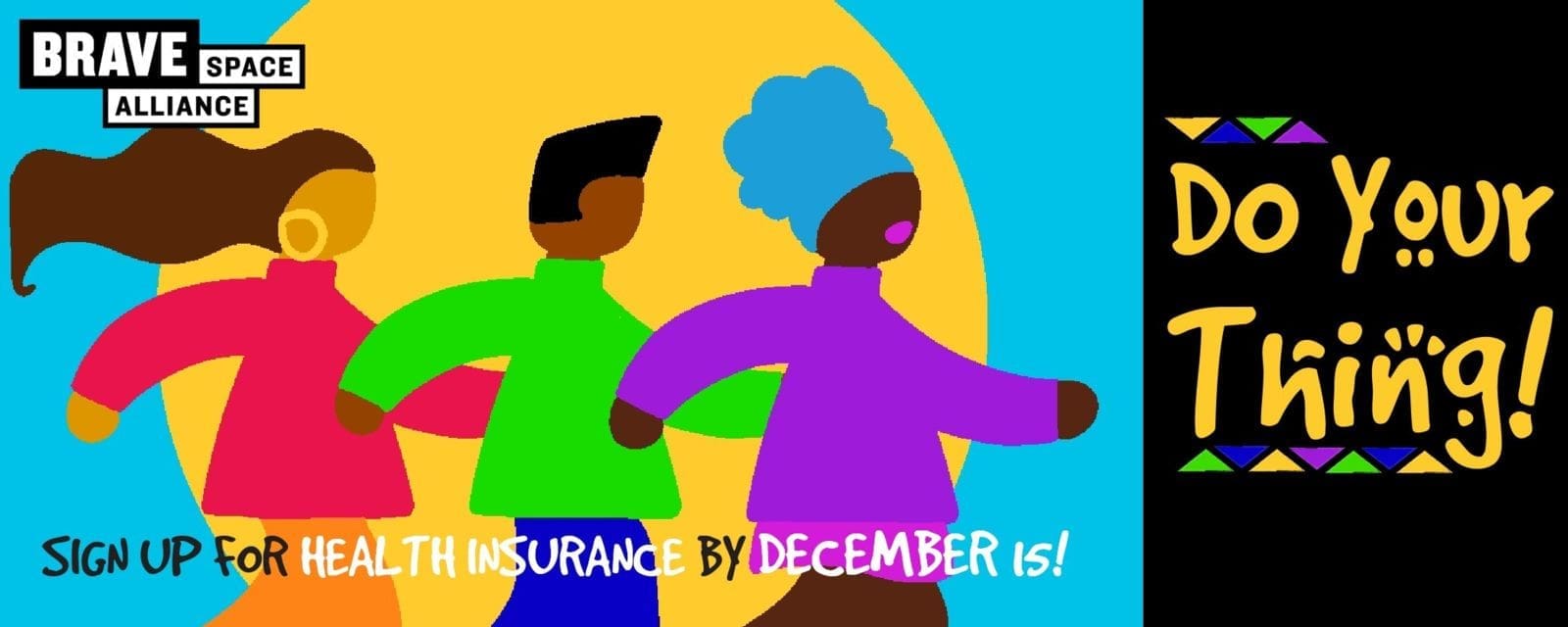 Marketplace Open Enrollment begins Friday, Nov. 1, 2019 and ends Sunday, Dec. 15, 2019.
Plan begins Jan. 1, 2020
To make sure you have health insurance for 2020, you have to enroll between Nov. 1, 2019 and Dec. 15, 2019. If you miss the Dec. 15 deadline, you could be locked out of health insurance until 2021 AND forced to pay 100% of your medical bills. It’s not worth the risk, especially when financial help is available (so most people can find a plan for $50 to $100 a month).
In past years, the enrollment period was much longer. But the Trump administration is taking every effort to sabotage the Affordable Care Act and has cut this time in half. That means it’s more important than ever for you, your family and your friends to know about the shortened deadline and your rights when it comes to health insurance and health care.
What is Marketplace Open Enrollment?
Marketplace Open Enrollment is the yearly period when you can enroll in a health insurance plan. People have the option to either stay with their existing health insurance plan, shop for new plan that better meets their needs or, if you don’t already have insurance, find a plan that works best for you!
Who is Marketplace Open Enrollment for?
Marketplace Open Enrollment is for people who want to buy their health insurance on their own — not through an employer. If your employer offers health insurance (or if your spouse’s employer offers health insurance), they will have a separate open enrollment period for you. If you are on Medicaid or Medicare, those programs will reach out to you to let you know when you can re-enroll.
Why should you care about Open Enrollment?
Because we all need to stay healthy, and access to professional health care providers can do just that! If you miss the Dec. 15 deadline for Marketplace Open Enrollment, you could be locked out of health insurance until 2021 and have to pay for 100% of your medical bills. That can get very expensive if you become seriously ill or suffer a major injury that requires you to go to the hospital for something other than your regular checkups. Additionally, if you are living with a chronic health condition like HIV and need to see health care providers more regularly or have multiple prescriptions, these visits and medications are significantly cheaper when you are covered by health insurance.
Need help? Have questions?
If you are living with HIV, call AFC’s informational hotline at 312-784-9060 to speak with a certified in-person counselor who can answer your questions and help facilitate your enrollment into a health care plan. The phone line is open Monday through Friday, 9 a.m. to 5 p.m.
If you are looking for health care coverage and providers who are transgender and gender-nonconforming-affirming, contact Brendon Tero ([email protected], 773-220-3930) or Devin Nicolai ([email protected], 773-225-2845) at Chicago House and Social Service Agency’s TransLife program to help navigate you through the enrollment process and find your best options. Also, ask them about their study on insurance enrollment!
Additional resources:
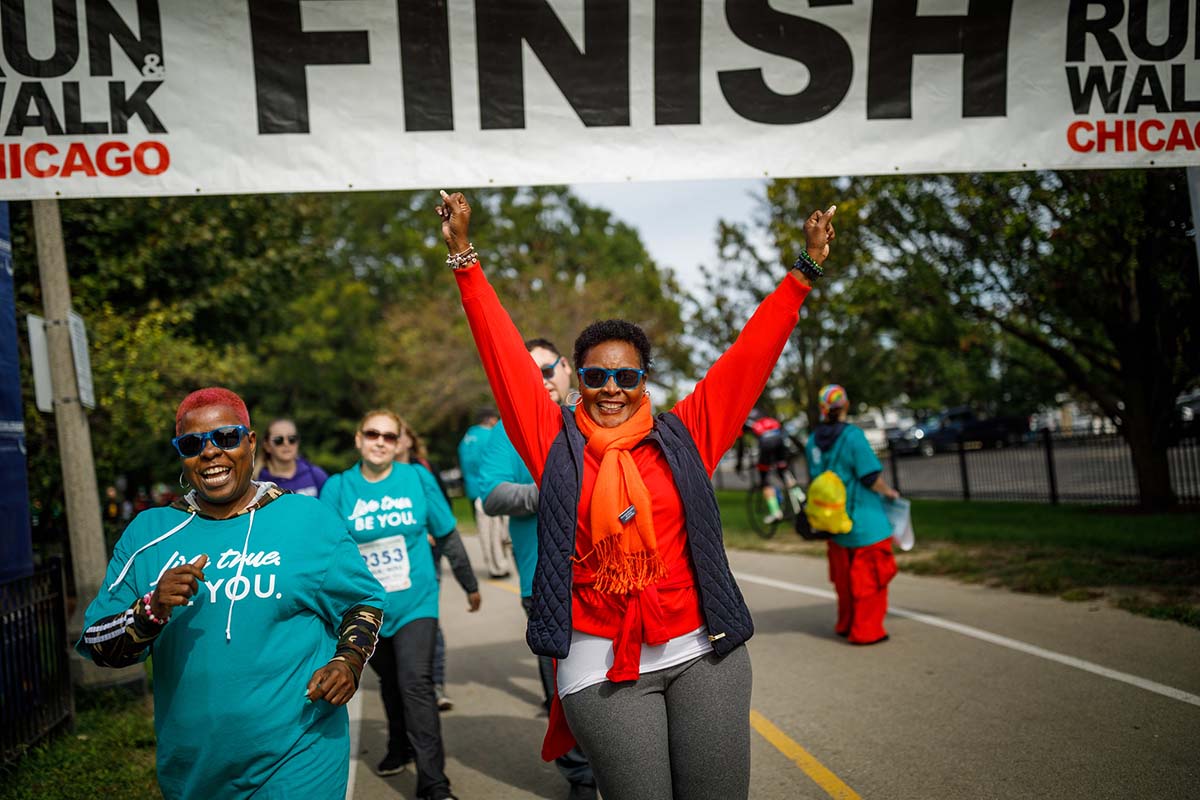 “We want to make sure that the HIV epidemic is no longer able to sustain itself by achieving both HIV prevention and access to care goals,” said AIDS Foundation of Chicago (AFC) President/CEO John Peller in his opening remarks to a crowd of over 2,000 runners, rollers, walkers and volunteers. “We don’t make these advancements toward getting to zero on our own — we do it when people like you participate, speak up, raise money and take action by speaking out to your elected officials.”
At press time, the event had raised over $440,000 (gross), which will be distributed among 31 organizations that support people living with and vulnerable to HIV and AIDS in the Chicago metropolitan area.
WGN-TV’s entertainment reporter Dean Richards hosted the festivities on the sunny Chicago morning. 5k and 10k runners along with 5k walkers and rollers were welcomed to the festival grounds on Soldier Field’s south lawn with an opening ceremony that included performances by the Chicago Gay Men’s Chorus and Donica Lynn, inspirational remarks by Peller, AFC Board member Craig Johnson, AIDS activist Chris Pazdernik, AFC’s digital communications manager D’Ontace Keyes, IDPH Director Ngozi Ezike, Sen. Robert Peters, Rep. Thaddeus Jones and his wife Saprina Jones, and an energetic warm up led by Joy Miles from Fitness Formula Clubs.
Hundreds of attendees participated in the 5K and 10K runner competition: 5k first place winners (in women’s, men’s and non-binary categories, respectively) were Carly Schuyler, Duane Castaldi and Kody Keckler, and the 10k winners were Noreen Andersen, Ivan Arenas and KT Hawbaker. A full list of participant finish times is available at aidsrunwalk.org.
Funds raised through AIDS Run & Walk Chicago will benefit programs and services for the AIDS Foundation of Chicago and 30 other metropolitan organizations that provide life-saving services to people living with and vulnerable to HIV and AIDS. Since it was established in 2001, AIDS Run & Walk Chicago has netted over $5 million to battle the epidemic.
Fundraising totals for AIDS Run & Walk Chicago will continue to grow as donations will be accepted through Nov. 15. To donate or learn more, visit AIDS Run & Walk on Facebook, aidsrunwalk.org or email [email protected].
Photos: flickr.com/aidschicago
By Coleman Goode
The term “HIV criminalization” refers to criminal prosecution of people living with HIV/AIDS including for non-disclosure of their HIV status, potential or perceived HIV exposure or HIV transmission.
These laws were put into effect during the early years of the HIV epidemic when there was little to no understanding about how HIV was transmitted. However, advancements in science have brought us a long way away from where we were. It is beyond time that our laws in Illinois and across the country catch up with the times.
What does HIV criminalization currently look like in Illinois?
In Illinois, people living with HIV and AIDS may be prosecuted for engaging in condomless anal or vaginal sexual intercourse without first disclosing their HIV status to their partner.
- It is a Class 2 felony, punishable by 3 – 7 years in prison and a $25,000 fine, for a person living with HIV who knows their HIV status to engage in “sexual activity” with another person without the use of a condom. The definition of “sexual activity” is limited to insertive vaginal and anal intercourse.
- The person living with HIV must prove that their sexual partner knew of their HIV positive partners status, knew that the activity could result in HIV transmission and consented to the activity with that knowledge.
- Current Illinois law also states that a person may be prosecuted for selling, exchanging or transferring non-sterile injection equipment, even if the recipient does not use it.
Why is this law problematic?
Illinois’ HIV-specific criminal law is harmful and unjust for several reasons.
- People living with HIV who harbor no ill will and have no intent to harm anyone are prosecuted and often convicted under these laws. Sometimes they plead guilty as part of a plea deal to avoid trial and a potentially longer sentence. Rather than protect the public, this law may actually harm public health by discouraging individuals from getting tested for HIV. Fearing prosecution, as well as stigma, some people living with HIV may avoid learning their HIV status. The law could also reduce the likelihood of disclosure of HIV status to sexual or needle-sharing partners. Laws like Illinois’ increase stigma towards people living with HIV by leading to inflammatory or ill-informed media coverage that may perpetuate misinformation regarding modes of HIV transmission, reveal a person’s sexual orientation or HIV status against their will, or play on harmful stereotypes.
- Enforcement of HIV-specific criminal laws also foster race- and sex-based disparities.
HIV-specific criminal laws in IL were created in 1989, a time where fear and misinformation on how HIV is transmitted was being used to push public policy. We now have new science-based opportunities for HIV prevention and care that have changed the way we look at HIV:
- Pre-exposure prophylaxis (PrEP), is a daily pill regimen that prevents a person from contracting the HIV virus.
- Antiretroviral therapy (ART) are powerful medications that help people living with HIV live longer and healthier lives.
- U=U (Undetectable equals Untransmittable) is the science driven public health campaign that a person living with HIV whose viral load is under a low threshold cannot transmit HIV to a negative partner.
It is beyond time for these stigma inducing laws to catch up with the science of today if we are ever going to achieve the reality of Getting to Zero in Illinois.
Science is based on facts. Law is based on precedent. In Illinois, legal precedent is still based on science from the 1980s, reinforcing stigma against people living with HIV.
To learn more about the HIV criminalization law in Illinois, share how this law has affected you or someone you care about, and/or get involved in the AIDS Foundation of Chicago’s policy advocacy work on this issue, contact Coleman Goode, Manager of Community Organizing, at [email protected].