
UPDATE 9/7/2018: The response we received from both departments failed to directly answer the questions presented to them, calling the request “overly time consuming and unduly burdensome”.
In response to this, AFC has made a request to the Illinois attorney general’s Office of Public Access Counselor to determine whether DHS and HFS violated FOIA in their responses to AFC’s recent FOIA request. The responses were, in our opinion, incomplete and the public’s interest in the agencies’ responses is of grave importance. We hope the public access counselor will compel the agencies to respond to our FOIA fully and promptly.
Since the expansion of eligibility in 2013, Medicaid has become the number one provider of health insurance for people living with HIV (PLWH) in Illinois.
If PLWH and those living with other chronic illnesses are being kicked off of Medicaid by this process, we need to know why, and how large of an impact this creates in the state.
____________________________________________________________________________________________________________________________________________
Thousands of low-income, vulnerable Illinoisans are being incorrectly and wrongfully terminated from Medicaid because of computer glitches, but Gov. Bruce Rauner’s administration refuses to share accurate and comprehensive data on how big the problem is.
In June, AFC and nearly 100 organizations sent a letter to HFS and DHS asking them to suspend their auto-termination process. This letter was due to a significant increase of inappropriate terminations by IES of eligible individuals and families. Unfortunately, since the rollout of the new computer system, AFC and our partners have collectively seen thousands of cases where individuals lose benefits at redetermination through error. These erroneous terminations of eligible people who have followed reapplication guidelines are causing life-threatening disruption in their health coverage.
“Medicaid coverage is the foundation to the health and well-being of one in four Illinois residents. Nearly two out of three people living with HIV are covered by Medicaid, making it the largest payer of HIV care in Illinois,” says John Peller, CEO/President of AFC. “The services Medicaid provides are critical, and any loss of coverage can destabilize the health of those who depend on the program for care. We and our partners will fiercely safeguard the integrity of the program that millions rely on. They deserve a fully functional redetermination system.
By Raven Feagins
 Hataria James is an outgoing, loving mother of 6 with a passion for giving back to her community. While she is in an incredibly stable place in her life right now, 16 years ago she would have never imagined where she is at today.
Hataria currently works at Men & Women in Prison Ministries (MWIPM), an organization dedicated to supporting the health, wellness and rights of justice-involved individuals, where she has been on staff for 2 years and a volunteer for 4 years prior. She made her way to Illinois from Florida in March 2003 when she decided she needed a change after having a number of run-ins with the law and serving a 5 ½ year prison sentence.
“If I would have stayed down there, I would have continuously been absent in my kids’ lives and absent in my own life. I felt like I had no control over who I was until I got out of that situation,” said Hataria.
She connected with her aunt who lives in southern Illinois to move in with her until she was able to get a place of her own. Within the next few months, she was able to land a job at a factory, get a car and move in to her own apartment. Everything was looking up for Hataria and she felt like her life was on the right track — that is, until tragedy struck.
“What led me to Chicago was another prison sentence that I got for aggravated battery of a family member and a police officer,” Hataria recalls. “My cousin raped my 13-year-old … and I beat him. Before I knew it, the officer was hurt in that situation.”
She served 3 ½ years in prison before moving on to a recovery home on Chicago’s South Side where her life took another unexpected turn.
Once a week, an HIV tester from the CORE Center would stop by the house to offer free testing to residents. Getting tested was never something Hataria had considered before, but seeing these testers so frequently encouraged her to finally sit down with one of them.
“One day I was just like, ‘Okay, let me go ahead and get tested’… When he tested me, he told me my test came back positive, so he sent me to the CORE Center,” says Hataria. “Upon being sent to the CORE Center, I got tested again there and I started my antiretroviral medication. I’ve been on HIV meds since 2012.”
Hataria found out that her CD4 count was at 200, just above the threshold for AIDS. She didn’t have much time to process the new diagnosis, but she knew she had to do everything in her power to ensure that she was healthy for her kids. With this in mind, Hataria moved on to a different recovery home, Bonaventure House, located on Chicago’s North Side where she lived among other residents who were also HIV-positive. This home offered more specialized support and resources for people living with HIV and other chronic diseases, which gave Hataria the confidence and control she needed back in her life. Part of that growth was due to her introduction to Russell Jackson from MWIPM, who became Hataria’s case manager and eventually her mentor and friend.
“I got paired with the best case manager that I could possibly have,” says Hataria. “I can go to him if anything is bothering me without bottling it up … It’s good to have a good listening ear and a support team.”
Russell specializes in corrections case management where he utilizes his knowledge of the justice system to frame his approach to Ryan White case management. This program, which is coordinated by the AIDS Foundation of Chicago, along with Russell’s guidance helped Hataria thrive, reinvigorated her and gave her a fresh outlook on life.
Hataria’s connection to MWIPM allowed her to build up a new, supportive network of people who understand everything she’s been through. She has now settled down in Chicago and feels that she is able to focus her energy on the things that make her happiest in life while setting an example for her children to follow.
“That one little prick of the finger determined my life, and I’m happy where I’m at because I’m healthy, and I’m undetectable,” says Hataria. “It’s been a long journey, but I needed that change. I had to grow up for my kids … to show them that that was not the life that I wanted to live. If I hadn’t made that change, there’s no telling where I would have been today.”
Hataria is now living her life to the fullest and giving back to her community by providing resources for returning citizens looking to connect to housing, job leads and other basic needs. She also takes the time to connect with other Ryan White case managed clients to build a sense of community and let them know that they are not defined by their HIV status.
By Ashley Brown
 UPDATE: In November 2018, the Illinois Department of Health and Family Services (HFS) announced that a hepatitis C cure would be accessible for thousands more Illinoisans on Medicaid, many of whom were previously denied treatment until they reached end-stage disease. Learn more here.
If you are on Medicaid in Illinois and have hepatitis C, be prepared to wait — potentially decades — for treatment. Illinois has a D-minus rating from the Hepatitis C State of Medicaid Access, the fifth lowest in the nation. Why such a low score? For one, Illinois Medicaid will only treat patients once they reach stage three or four of liver disease (the most advanced, life-threatening levels), at which point organ damage can be irreversible. Combined with the fact that many plans bar patients with a history of substance use, require abstinence or participation in a substance use program and frequently require hard-to-find specialists to prescribe a cure, Illinois is leading many Medicaid enrollees with hepatitis C to a future of unnecessary harm and preventable death.
Hepatitis C (also known as HCV) is a viral infection that causes liver scarring and inflammation. As HCV often has few or no symptoms, it can take decades before it causes the end stages of liver disease; many patients sustain permanent damage before they even realize they are ill. Left untreated, it ravages the liver, often leading to liver failure, cancer and death and is the leading cause of death among those with liver problems. An estimated 150,000 people are living with HCV in Illinois alone, according to the Illinois Department of Public Health (IDPH) and nearly a quarter of people living with HIV also have HCV, which causes faster progression to liver damage than in those not living with HIV.
Yet despite these frightening statistics, there is hope — HCV can be cured! Daily antiviral medications can cure over 90% of people with HCV within 12 weeks, with little to no side effects. It makes sense to treat everyone to avoid the costly treatment of liver disease, while saving countless lives that would otherwise be lost. Both the American Association for the Study of Liver Diseases and the Infectious Diseases Society of America recommend the full treatment regimen for all patients with hepatitis C, regardless of disease progression.
But if there’s a cure for this potentially fatal disease, why isn’t treatment provided to everyone? As with many things in Illinois, it comes down to cost. Initially, the treatment regimen was prohibitively expensive, upwards of $100,000 for Gilead Science’s 12-week treatment plan and nearly $1,000 for a single pill. Yet as of August of last year, when Abbvie introduced Mavyret, this argument for refusing treatment began to fizzle when a newer version of treatment became available for about $14,000 for a three-month cure (though costs may vary, as the actual cost of treatment is usually confidential).
This painful denial of treatment, while knowing there is a cure just beyond reach, affects much more than the physical health of those living with HCV — it also weighs heavily on their mental well-being.
“When you see other people getting treated and you’re not being treated, it’s very hard on the spirit,” says Peter McLoyd, the consumer development and advocacy coordinator at the Ruth M. Rothstein CORE Center. “It’s difficult to give people hope when there’s no movement on easing the treatment criteria. Unless you are at stage three or stage four you’re basically out of luck.” McLoyd lived with HCV for years until he was able to get access to the cure — but that was through his employer-sponsored insurance, not Medicaid.
Studies confirm McLoyd’s perspective, showing that patients forced into deferring treatment have a high risk for anxiety and depression due to the uncertainties that come with a life-threatening illness. Patients cured of HCV report a tremendous improvement in mental well-being.
Dr. Oluwatoyin Adeyemi, an attending physician at Cook County Health and Hospital System, agrees that the state is failing Illinois residents morally, emotionally and fiscally by denying lifesaving treatment to those on Medicaid.
“It is effectively saying those who are poor do not deserve treatment until they have sustained severe liver damage,” says Dr. Adeyemi. “Restricting access to hepatitis C medications is not only a costlier approach, but an immoral policy that leads to unnecessary harm and preventable death among Medicaid enrollees.”
Thankfully, even today’s landscape of Medicaid HCV coverage is not as dire as it used to be. In 2016, the state backed off a policy to allow only the sickest of Medicaid recipients  with HCV (those at stage 4 liver scarring) to be treated. Since this policy reversal, Illinois residents on Medicaid can receive treatment at stage-three liver scarring.
Yet there is more work to do — work that the AIDS Foundation of Chicago (AFC) and its partner agencies are tackling head on. In January 2017, AFC collaborated with agencies from the medical, public policy and governmental sectors to form the Hepatitis C Elimination Task Force, which is dedicated to removing barriers to treatment and creating systemic intervention strategies. In particular, the task force hopes to end HCV transmissions and increase access to treatment by exploring medication and treatment updates, barriers to drug access, policy revisions and changes to medication coverage.
In addition, IDPH created an innovative project through the Ryan White AIDS Drug Assistance Program, which provides low-income people living with HIV access to medications, to include five hepatitis C medications in the program. The project was open to those enrolled in the Ryan White program who had access to approved medications and ensured that clinicians were able to work with their clients and confirm they were prepared for treatment, both emotionally and physically, at all stages of disease progression. Since 2016, the program has successfully treated 220 dually infected patients and dramatically improved their quality of life, both physically and mentally. The project has been so successful that it is now part of the HIV continuum of care in Illinois.
“We’re hoping that by sharing how cost-effective curative treatment for HCV is, that it will prompt other care sources to be less restrictive in how they treat their hepatitis patients,” says Eduardo Alvarado, HIV Section Chief at IDPH.
Mr. Alvarado also stressed the importance of working with clinicians to empower them and their patients to make informed decisions about treatment and to allow patients to advocate for their own care. Just as importantly, IDPH also drastically increased the volume of HCV testing and screening programs throughout the state and linked those diagnosed to care.
We must continue this forward progress. The time has come for Illinois to improve its near-failing grade in HCV treatment access to those on Medicaid. The state must remove its restrictive policy and allow all patients fair access to life-saving treatment at all stages of disease progression. Yes, this a fiscally sound policy to prevent the costly lifetime treatment of chronic liver disease, but on top of that, saving and improving lives is simply the right thing to do.
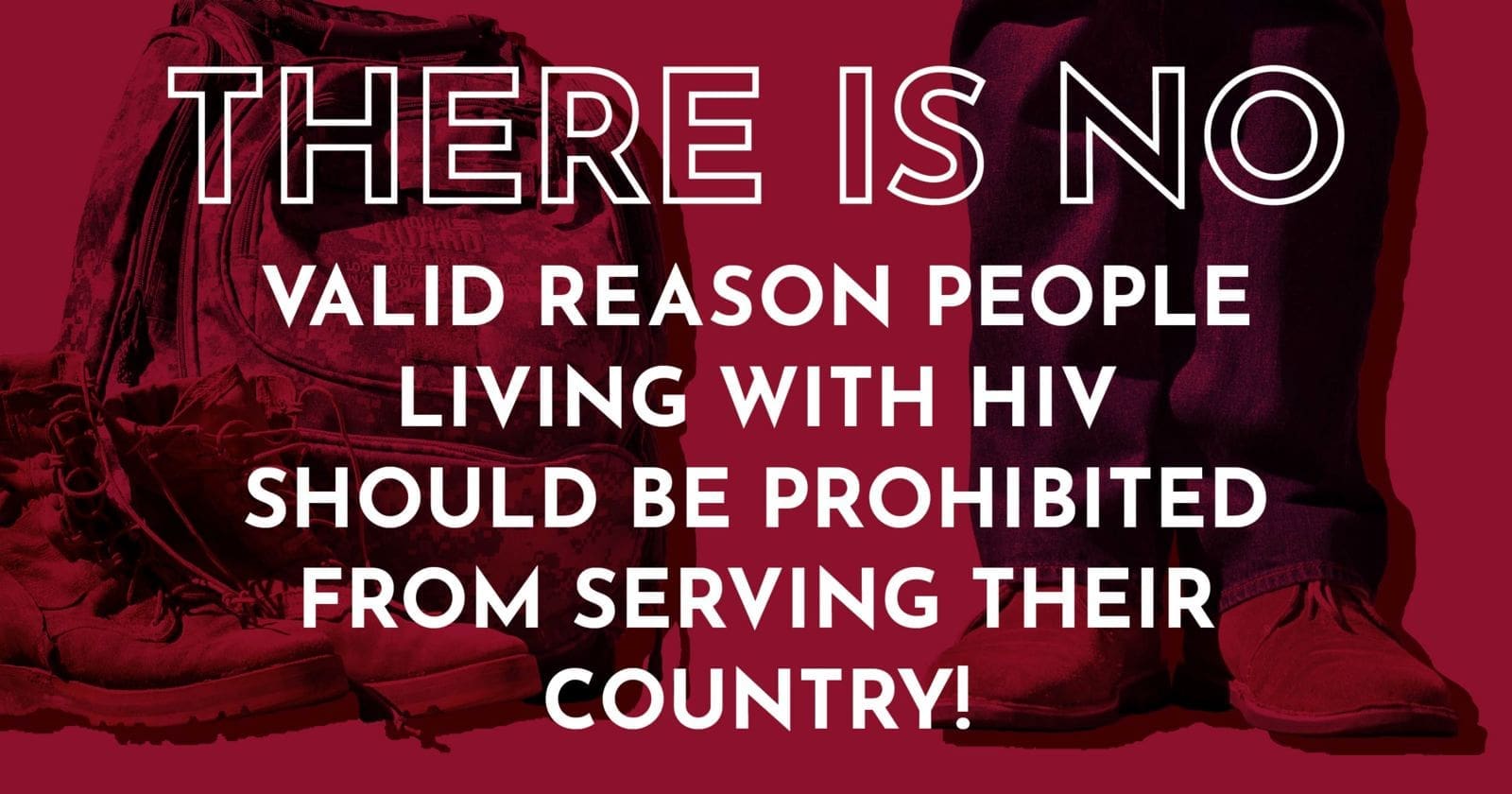 The Department of Defense released the “Deploy or Get Out!” policy, effective Oct. 1, which directs the Pentagon to discharge service members who can’t be deployed outside of the U.S. for more than 12 consecutive months. Due to an antiquated policy dating back to the early days of the epidemic, service members living with HIV are considered non-deployable. An estimated 1,200 people living with HIV currently serve in our military with honor and distinction, according to Lambda Legal. This decision follows the Administration’s transphobic attack manifesting in a military ban on trans-identified people. We, the AIDS Foundation of Chicago, are against the Administration’s discriminatory rulings under the guise of “military readiness” that perpetuate stigma against people and the communities we serve.
Current Pentagon policy considers service members living with HIV non-deployable and will not allow them to enlist or to be appointed as officers. To fight this stigmatizing and egregious policies against our service members Lambda Legal and OutServe-SLDN filed the lawsuit in the U.S. District Court for the Eastern District of Virginia on behalf of Sgt. Nick Harrison, a veteran of two overseas combat zones who was denied a position in the Judge Advocate General (JAG) Corps. In a companion lawsuit, Voe v. Mattis, Lambda Legal and OutServe-SLDN are representing an anonymous service member living with HIV who the Air Force refused to commission as an officer due to his HIV status.
There is no valid reason why people living with HIV should be prohibited from serving their country. The U.S. Centers for Disease Control and Prevention recognized that with proper treatment, a person living with HIV could suppress their viral load to undetectable levels, which results in effectively no risk of transmitting the disease. In solidarity and representation of these serving officers, we stand against the Pentagon’s current policies preventing enlistment, deployment or commissioning of any serving officer living with HIV.
 By Isabella Guzman
I was invited and inspired by my uncle, Armando Ramirez, whom I love very much, to participate in AIDS Run & Walk Chicago 6 years ago. He was diagnosed with HIV 14 years ago. All I knew at that time was that I was going to be supportive and have fun with my mom and uncles. I would get my own shirt and my own running number and that was exciting in itself!
My first experience participating was fun because I was able to enjoy the view of the downtown area and I was going to be with my family. When I was there, the atmosphere felt lively, incredible and fun! We met people participating in the little tents that were set up all over the field and I felt alive and free! When the event was over, I felt really good; like I was emotionally raised in joy and spirit. I felt like I did something good for others.
My favorite thing about this event is that I’m able to do something good for a family member and for others who need support from us. I will continue to attend AIDS Run & Walk Chicago because I love to share and volunteer my time for those who cannot get the help and support they actually need. I have invited others to participate in this event and, although I haven’t seen as many people as I’ve invited, that will not persuade me to stop the invitations! I will continue spreading the word in hopes that many people will join this great cause.
AIDS Run & Walk Chicago provides me with a platform to share the importance of this organization and how much more work we need to do together, as people. My uncle needs help and support, and so many others are in need of the togetherness that the AIDS Foundation of Chicago brings to individuals and families.
What I am looking for this year is to tell those that have HIV or AIDS that there are so many people out there just like them and they are not alone in this world. We are all here to help and getting help brings a sense of happiness. My goal for this year is to share awareness and spread the word! One way to help is to unite, fundraise and participate in AIDS Run & Walk Chicago. If there is someone out there who is “thinking” of going, DON’T THINK, just do it! Not only would it help in our fundraising goal but you would have so much fun in the process. From walking or running to meeting new people, it’s definitely a great time for all ages to enjoy. This day allows me to be there for others, which is something that my mom has instilled in me since I was much younger. I feel great humility in helping others, being supportive and being part of the foundation gives me more of an understanding as to how blessed I am. I feel very good about myself and I feel happy! I hope to see you this year at AIDS Run & Walk Chicago. If you see me, say, HI!
My name is Isabella and I’m empathetic and passionate.
Bio:
Isabella Guzman is 11 years old and will be 12 on July 16. She lives with her family, including her two teddy bear dogs Deisy and Lulu, near the Midway airport where she loves watching the airplanes pass by.
AFC joins the chorus of those speaking out against the Trump Administration’s Zero Tolerance and Family Separation policies. We are disgusted and angered by these clear, unapologetic efforts to tear families apart, and to criminalize and imprison immigrants and refugees.
We acknowledge our nation’s long history of dehumanizing people of color, and view the current administration’s actions as yet another horrific and shocking extension of this history.
As we plan a course of action to support our clients who risk losing access to life-saving medications, healthcare and housing through the Public Charge executive order, we are also keenly aware that many of these clients also face the real dangers of family separation and imprisonment.
Systematically breaking families apart – separating children from their parents – whether at our nation’s borders or in our city, is unspeakably evil. Denying human beings the basic necessities for survival due to their immigration status is a clear act of violence. Enacting zero tolerance policies and expanding the prison-industrial complex to detain immigrants indefinitely are clear violations of human dignity.
We call on the Trump administration to develop and execute a clear plan to immediately reunite all immigrant families who have been separated; place an immediate halt on the detention of immigrants; abolish ICE; prosecute its leadership for crimes against humanity; and pay reparations to those violated by these actions.
We stand with you against this state-sponsored violence. We commit to being unwavering in our support and advocacy for ALL people we serve, regardless of immigration status. We will march with you on June 30th.
 By Raven Feagins
“Imagine putting on multiple hats with each call you receive. Sometimes I’m the person that clients call to laugh and joke with, but oftentimes I’m the person they’re reaching out to because they’re in a crisis. Often, my team and I are the sole individuals that a caller has disclosed their HIV status to at the time of their call. Imagine what it must be like to answer the phone and it’s your loved one, friend, neighbor, etc. Yet, I place my feelings on the back burner and go on with the call because after all, this is my job.
Every day, I keep the fact that so many rely on my team and I in the forefront of my mind when I answer the phone. I can only begin to imagine what it must feel like to share such personal information to a faceless voice over the phone. Sometimes, the perception is I have ‘no clue’ what they must be experiencing. Some days I wish I could just meet the caller and share with them why this work is important to me.”
— Angela Jordan
Angela Jordan describes her team as “the gatekeepers of case management.” She works as the Intake and Referral Manager at the AIDS Foundation of Chicago (AFC), where she and her team take over 700 calls a year from people looking to connect to HIV-related services. A majority of the time, they refer potential clients to case managers who can help them obtain financial assistance, resources for obtaining medications, food assistance and more. Angela has served at AFC for almost 11 years and is passionate about her work due to her own personal connection to the HIV community.
“While it is my job, there’s a meaning behind it for me,” says Angela. “Every time I think about it, I want to tear up … My own personal experience with HIV and AIDS in my high school years was with a friend who was diagnosed … I just saw how she had to hide it. I saw how her family treated her differently and how the disease took her away really really quickly.”
Angela’s friend was diagnosed with HIV at the end of their first year of high school. However, by the end of their senior year, she passed away from AIDS-related complications. Angela remembers vividly how alienated her friend was during that time and often wonders how those years could have been different if Angela herself had more knowledge about HIV to combat the stigma her friend faced every day.
“I just really don’t want anyone to have to go through that by themselves because my friend went through this … not really by herself, but not with the support that she should have had from family and from friends,” says Angela.
The loss of her close friend motivated Angela to enter the world of social services later in life; she wanted to do her part to provide support to people experiencing trying times. Angela has since worked with a range of different communities, including people with mental health disorders, the sex working community and the elderly. However, her current role linking people living with HIV to services that can help them live long, healthy lives allows her to feel even more connected to her high school friend.
Connecting with Angela and her team is more than just a call. They are invested in ensuring that every caller feels cared for and is linked to the appropriate resources, such as housing case management or employment services that will help them receive the best care.
“We do care and we want to make sure that you are happy with the referral placement. It’s not just that we want you to get assigned to anyone, we want to make sure that it’s a good fit,” says Angela. “Sometimes I feel like people think that we’re just doing a job [but] really we think about these people when we hang up the phone – it affects us as well.”
“We do care and we want to make sure that you are happy with the referral placement. It’s not just that we want you to get assigned to anyone, we want to make sure that it’s a good fit,” says Angela. “Sometimes I feel like people think that we’re just doing a job [but] really we think about these people when we hang up the phone – it affects us as well.”
Angela and her team members are often so moved by the stories they hear from callers that they are brought to tears. It affects them even more knowing that they have no additional contact with clients after they are referred to services, so they are mostly left to wonder. However, sometimes clients take it upon themselves to call Angela and her team back to thank them for linking them to the resources they needed.
“The most rewarding part about my job is when someone calls, you link them to case management and they call you back and tell you that they love their case manager and that their immediate need(s) have been met,” says Angela. “That makes me think that what we’re doing is all worth it.”
If you or someone you know is looking to connect with a case manager or get other HIV-related services, give Angela and her team a call at 312-690-8860.
By Coleman Goode
On a dark May morning, I arrived at work before the sun was up fighting off nerves ahead of my first large Springfield Advocacy Day here at the AIDS Foundation of Chicago (AFC). Our mission: deliver over 100 advocates to the state capitol to advocate for a positive budget with their state legislators. Our message was clear: they need to fully fund HIV programs and services at the proposed $25 million mark, and fight to stop Governor Rauner’s $150 million proposed cut to Medicaid, the health care resource that covers more than half of people living with HIV in Illinois.
After a long bus trip from Chicago to Illinois’ capitol three hours away, some colleagues and I led a training to help our advocates — many of whom had never been to Springfield, much less met with and asked for something from their legislators. Before the advocates headed inside the capitol to advocate, we held a rally on the Capitol steps and were joined by Rep. Greg Harris (D – Chicago), who spoke about how important our advocates’ work was by just making the trip down and speaking up. It was especially nice to have Rep. Mary Flowers (D-Chicago), Rep. Rita Mayfield (D-Waukegan), Rep. Juliana Stratton (D-Chicago) and Rep. Ann Williams (D-Chicago) take time to snap photos with and discuss the need to adequately fund HIV services and programs and protect Medicaid.
I spoke with a couple of advocates to see if they were able to connect with their legislators; some got the chance and others didn’t. Many were surprised their lawmakers actually took the time to have real conversations that left them feeling heard and appreciated. I got the surprise of the day with a one-on-one conversation with Speaker of the House Mike Madigan (D – Chicago) about how important it was to make sure that HIV programs are fully funded in the budget. I also made it clear that the community we serve cannot handle the devastating cuts to Medicaid that Governor Rauner is pushing. Even more surprising was that a couple of our advocates were able to talk with Governor Bruce Rauner (R-IL) and deliver the same message. (Good news: our advocacy contributed to the passage of a budget that included a much-needed $25 million for HIV services in the next year! Learn more here.)
What I will take away from the day were some of the powerful testimonies the advocates gave in a luncheon and wrap-up session at the end of the day before returning to Chicago. One woman spoke about how this was the first time she “came out” as HIV-positive in over 30 years and how empowered she felt doing it. That’s what advocacy is about: empowering people by giving their voice a stage to be heard on. Another advocate shared that she made the trip down to Springfield because her uncle is living with HIV and she wanted to be his voice.
This incredible day of advocacy was just one of many engagement opportunities we have planned for 2018, including in-district legislator visits, AFC’s campaign to review and possibly revise laws that criminalize transmission of HIV, Getting to Zero Illinois and the IL ASAP program. This is the just the start of more amazing work to come! Sign up for our Online Action Bulletin to stay in touch with us.
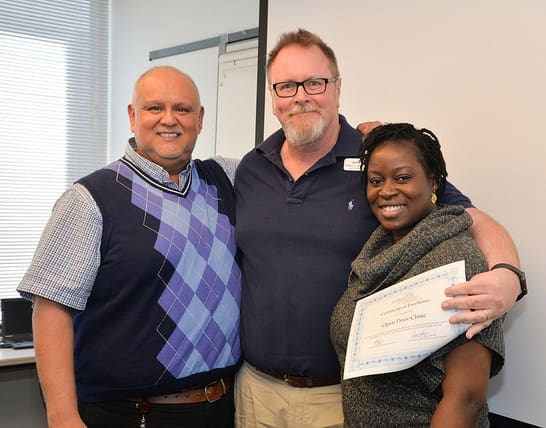 The AIDS Foundation of Chicago (AFC) is pleased to announce the top eight Chicago-area care organizations in its HIV medical and non-medical case management network for Dec. 1, 2016 – Nov. 30, 2017. By connecting people living with HIV to case managers who help them achieve their health goals, these eight organizations support more than 711 members of AFC’s 5,869 clients.
| Top HIV Medical Case Management Agencies | Top HIV non-medical case management agencies |
| Austin CBC | AHF/CALOR |
| Christian Community Health Center | Open Door Health Center |
| Lake County Health Department | Catholic Charities of Lake County |
| Erie Family Health Center | |
| Chicago House |
How are these top-performing organizations identified? AFC performs a site visit each year with all organizations in its case management network. Seven performance measures are taken into consideration: the number of face-to-face visits between case managers and clients, number of assessments and care plans created, client attendance at medical visits, adherence counseling sessions, viral load collection and provider case conferencing.
At a ceremony in April, these agencies (and the top three non-medical case management agencies) received awards and recognition to mark their achievement. View photos from the ceremony here.
AFC is grateful for the hard work of all 25 agencies in our case management network and all 112 Ryan White case managers. AFC also thanks the Illinois Department of Public Health and Chicago Department of Public Health for their programmatic leadership and funding of the case management system. Major financial support is provided by the Ryan White HIV/AIDS Program.