by Dan Frey, Director of Government Relations
It is my sincere pleasure to be able to say to you that as of last Thursday, July 6, 2017, Illinois has in place a budget for the current fiscal year. This means that the Illinois Budget Impasse, which had held our state hostage since 2015, has come to an end.
While this does not mean an end to the partisan fighting in Springfield or that there is not the possibility of further trouble ahead (and coming shortly, I’m afraid), it does mean that we as a state can start to focus on the work ahead, and that payments from the state to providers can now be made.
First, how we got here: In late June, 2017, Gov. Bruce Rauner called for a 10-day Special Session. During that time, legislative leaders met to hash out a budget and address other legislative demands made by the governor. Though that special session ended without a resolution, legislators in both houses stayed and worked in Springfield through the July 4 holiday and passed a balanced budget and revenue package to fund that budget. After vetoes from the governor on July 4, the Senate promptly overrode those vetoes the same day, with the House doing the same on July 6, finally bringing an end to the over two-year long budget impasse.
The passage of the budget and the revenue package, as well as the override of the governor’s vetoes, relied on both Democrats and Republicans, and in doing so showed that the hatred of this budget stalemate was indeed a bipartisan issue. As a result of the bi-partisan negotiations to pass revenue and a budget, the state’s individual income tax rate was increased from 3.75% to 4.95%. The tax rate that was passed in 2011 and expired in 2015, for comparison, was 5%.
In the budget, as it related to HIV services, the appropriations were as follows:
FY 17:
- HIV lump sum (General Revenue Fund – GRF): $14,688,200
- For grants and other expenses for the prevention and treatment of HIV/AIDS and the creation of an HIV/AIDS service delivery system to reduce the disparity of HIV infection and AIDS cases between African-Americans and other population groups (GRF): $975,000
- Supportive housing (GRF): $8,456,600
FY 18:
- HIV lump sum (GRF): $25,415,000
- For Expenses of Programs for Prevention of AIDS/HIV (Public Health Services Fund): $6,250,000
- Surveillance (Public Health Services Fund): $1,750,000
- Ryan White (Public Health Services Fund): $55,000,000
- For grants and other expenses for the prevention and treatment of HIV/AIDS and the creation of an HIV/AIDS service delivery system to reduce the disparity of HIV infection and AIDS cases between African-Americans and other population groups (GRF): $1,218,000
- African-American AIDS Response Act (AAARF): $200,000
- Quality of Life (Quality of Life Fund): $1,500,000
- Supportive housing (GRF): $13,429,400
- Supportive housing (Health & Human Services Medicaid Trust Fund): $3,382,500
So, where do we go from here? Things may be heading to rough waters, I’m afraid. While it is likely that the override of his vetoes was viewed, strangely as the best case for Gov. Rauner (he gets to both spend the money and rail against a tax increase), his administration has begun to reset for the next year and half as we approach the 2018 election. He has parted ways with his chief of staff and brought in a now-former president of the very conservative think tank Illinois Policy Institute, which railed against a tax increase and advocated a cuts-only approach to balancing the budget, to be his new chief of staff. Also, Republican Rep. Steve Anderson (Geneva), who was one of the GOP members who voted against the governor, has been removed from his leadership position as House Republican Spokesperson.
Also on the horizon is a fight over SB 1, the reform of Illinois’ school funding formula. This bill passed both Houses in May of 2017, and the governor has labeled it a “Chicago Bailout” and pledged to veto it. The education funding provisions found in the budget are dependent on this bill becoming law, so any veto of this legislation, if it were not overridden, could imperil schools’ chances of opening in the fall. The bill has yet to be sent to the governor for his signature or veto, but should he hold to his veto promise, as appears likely, another crisis could be in the making.
Lastly, though the bills passed did contain some funds to pay down the backlog of bills, it did not fund all of those, which currently stands at nearly $15 billion, and though the budget and revenue were viewed as positive developments by the bond houses, they have stated that they are still considering moving Illinois to junk bond status, which would be the first time in the history of the nation that a state was given that designation.
So, that’s where we are today. The good news is that services rendered to the state can now be paid for; we have a budget and the revenue to fund them. That is cause for a sigh of relief, a reset, and then preparing ourselves to ensure that this never happens to our state ever again.
About the blog
BudgetWatch is a weekly update from the AIDS Foundation of Chicago’s on-the-ground team in Springfield about the state’s longstanding budget impasse. Follow along at aidschicago.org/budgetwatch.
The Illinois budget impasse has finally come to an end.
Over the July 4th holiday weekend, the Illinois General Assembly passed bipartisan legislation for a full Fiscal Year (FY) 18 budget that supports health equity across the state. Legislators also passed a revenue bill (which increases the Illinois income tax from 3.75% to 4.95%) to actually fund that budget. The AIDS Foundation of Chicago (AFC) supports the much-needed, permanent revenue to stop the cuts, repair the damage that has already been done, and make smart investments in our state’s future.
“We have worked for three years to ensure that Illinois has a responsible budget that generates revenue and supports residents across the state,” said John Peller, AFC’s president/CEO. “Stop-gap spending plans or other Band-Aid solutions have been unacceptable. An untold number of Illinoisans have died or suffered preventable health crises in the meanwhile because of a lack of funding for essential services.”
The budget contains $25.4 million in appropriations for HIV services and support, including testing, treatment, and education – which is restored to FY 15 levels. The supportive housing budget has even seen a slight increase from FY 15, to $13.4 million, and the African American HIV/AIDS Response Fund has been fully funded at FY 15 levels to ensure that adequate funding goes to services and programs that serve communities hardest hit by the HIV epidemic, after proposals from Gov. Rauner sought to drastically cut the program. Though the backlog of bills (which today stands at $14.7 billion) will still make timely payments an ongoing issue, the budget and revenue bills will actually allow those payments to be made to providers.
The path to the FY 18 budget was not without drama: Governor Bruce Rauner promptly vetoed these pieces of legislation, and the Senate promptly voted to override those vetoes. Today, the House followed suit and overrode Gov. Rauner’s vetoes as well, and the budget and tax increase is now law.
The move to increase revenue in the state was a crucial ingredient in devising a responsible budget. “Since 2015, Illinois has been operating without a budget, spending more than it is taking in,” recalled Dan Frey, AFC’s director of government relations. “As a result, promised payments from the state have been delayed, programs have shut down, service providers have permanently closed their doors, and the state has accumulated nearly $15 billion in unpaid bills.”
AFC sends deep and profound thanks to the members of the General Assembly for finally putting aside politics and doing the right thing. “It is incredibly hard to vote to increase taxes, but it was the only responsible choice for moving our state forward,” said Ramon Gardenhire, vice president of Policy and Advocacy at AFC. “We thank them for this act of political courage.”
Please take a moment today to call or send a message to your legislators in both the House and Senate and thank them for finally passing a budget and revenue increase. Visit aidschicago.org/find to find your state legislator’s contact information and to share your gratitude for their work in passing a positive budget.
Each June 27, National HIV Testing Day (NHTD) encourages people of all ages to get tested for HIV. Chicago has a vibrant network of testing sites at which you can #KnowYourStatus; plus, many of them are also beneficaries of AIDS Run & Walk Chicago’s CommunityDirect program!
Here are two things you can do on National HIV Testing Day to build health equity in Chicago:
- Make an appointment to get tested at one of our CommunityDirect partner sites. HIV tests are quick and confidential and give you the peace of mind that comes from knowing your HIV status. Find your nearest testing site on the map above!
- Register for AIDS Run & Walk Chicago to help those CommunityDirect partners (and many more) raise funds to continue their vital work preventing new cases of HIV.
In Illinois, HIV testing sites need your support to keep doing their vital work. New data shows that the number of HIV tests performed in Illinois decreased by nearly 9% from 2014-2016, resulting in the identification of 245 fewer people with HIV, thanks to the devaststing state budget impasse.
One year ago today, the Pulse nightclub shooting brought immense grief to our nation and reminded us about the havoc guns can reap on America’s most vulnerable communities. The AIDS Foundation of Chicago (AFC) was deeply saddened by the death of 49 members of the broader LGBTQ and Latinx community. We were also deeply moved to end gun violence in Chicago and across the U.S., which most deeply affects the same Black and brown communities as health inequities like HIV.
We collaborated with our Board of Directors and the greater health equity community to find our place in this conversation about ending gun violence, and in October 2016 we released our position statement on gun violence and community violence. In short, it lays out the case that gun violence prevention in our nation’s most vulnerable communities is a public health imperative, and as a health equity-seeking organization, we must join our anti-violence community partners and end gun violence once and for all.
Our biggest step toward ending gun violence in Illinois in the past year was our partnership with the Illinois Gun Violence Prevention Coalition to support the Gun Dealer Licensing Act (SB 1657), which would curb the distribution of illegally trafficked firearms in Illinois. For the first time, AFC’s Director of Government Relations Dan Frey represented the organization on gun-related legislation; the bill has already passed the senate and is awaiting a hearing in the house now. We will continue to seek opportunities to collaborate with our community partners to fight for legislation that ultimately ends gun violence among communities most vulnerable to health inequities like HIV.
While we continue to grieve the Pulse nightclub shooting, we honor the memory of those who lost their lives in that horrific attack by fighting for safety for vulnerable communities working toward health equity and justice in Chicago and beyond.
by Ashley Brown
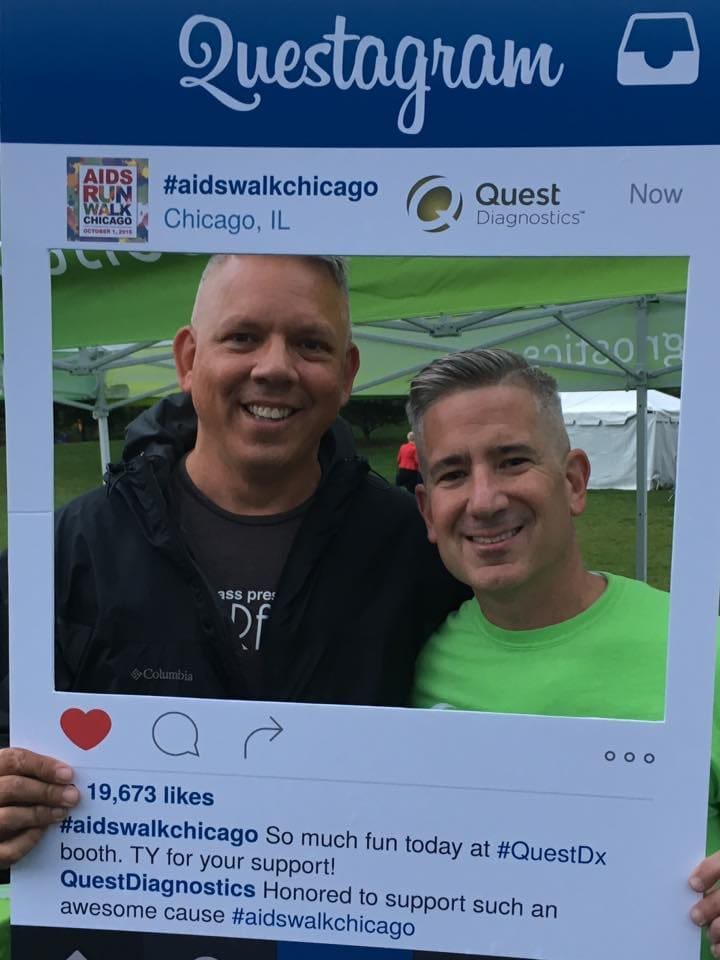
Each year, corporate teams and sponsors band together for AIDS Run & Walk Chicago to raise awareness and funds for HIV services across Chicagoland and Illinois. One of these generous partners is Quest Diagnostics, which provides clinical laboratory services across the country. We spoke to Regional Marketing Director Joe Huber on how their involvement with AIDS Run & Walk Chicago allows them to give back to the community, increase employee engagement, and improve Quest’s visibility as a diverse and inclusive company through their involvement.
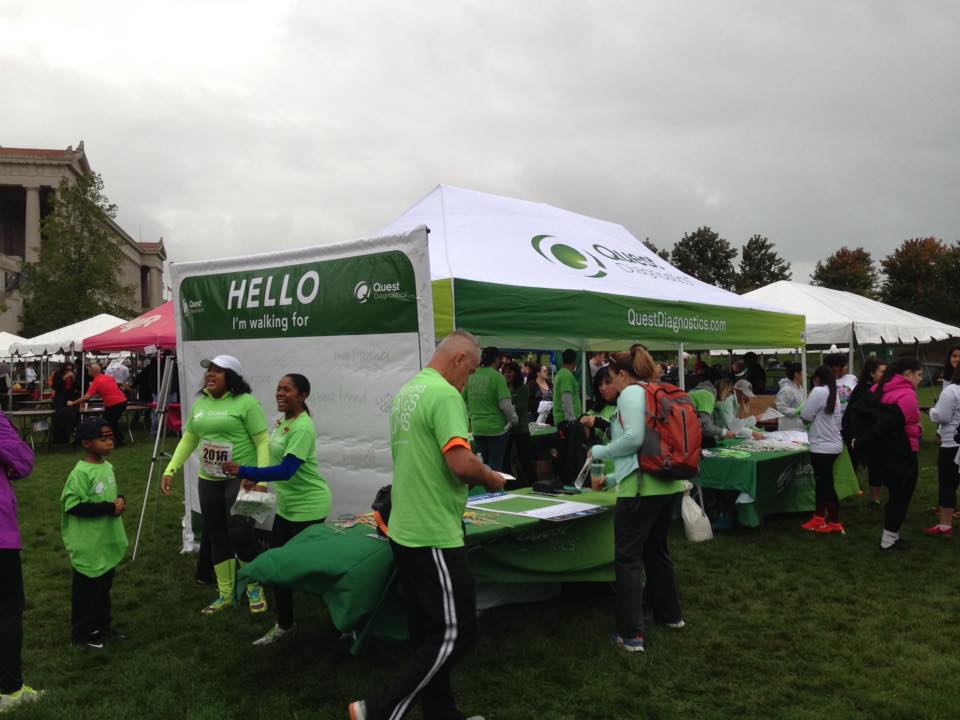
In 2016, Quest employees came out in droves to walk and run for HIV awareness, despite the stormy weather. The benefits of their involvement were immediately clear to Huber, who witnessed staff interactions with the community and as people recognized Quest Diagnostics’ work and leadership in the field. After the day was done, employees were already looking forward to being involved again and left with memories of an amazing day as a team. Huber also witnessed the importance of giving back to the community and being recognized as a company that gives back, both by their employees and the public.
“It’s really about our participation and giving back to the local community,” he says. “We live here and we’re part of it; we want to give back to communities that work with us.”
But beyond employee connection and visibility, many employees have a special connection to HIV; Quest Diagnostics processes HIV test results at their lab. Although tests are anonymous, staff members understand the impact these results will have on an individual’s life. This awareness creates an intimacy and personal connection to the cause for staff who recognize the importance of their work and its impact on the lives and health of those living with and vulnerable to HIV.
 “While HIV was once basically a death sentence, the testing that we do can let people know earlier, and also guide the physician for appropriate treatment immediately,” Huber explains. “It’s near and dear to the hearts of so many people in the laboratory; their involvement is very personal.”
Huber and the team at Quest have also been impressed by AFC’s impact and are confident that their sponsorship dollars and time have an immediate effect for the HIV community in Illinois.
“AIDS Run & Walk Chicago is a good investment of not only our sponsorship dollars but our time. Every dollar that comes to them is spent back in the community for a very good cause,” Huber explains.
In the future, Quest Diagnostics is looking forward to continuing their involvement with AIDS Run & Walk Chicago to benefit those living with and vulnerable to HIV, their employees, and their status as a company that cares about the communities they serve.
Hear from other AIDS Run & Walk Chicago team captains who are champions for the cause on our Corporate Team page.
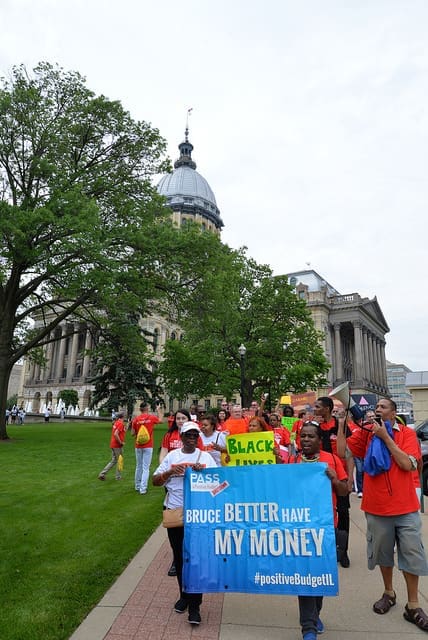
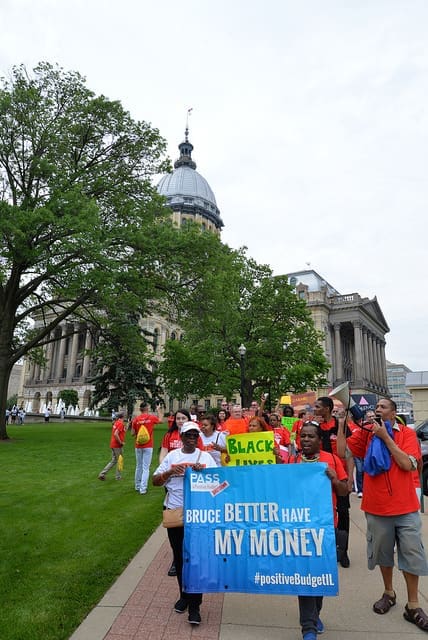 As the Illinois spring legislative session ends, the AIDS Foundation of Chicago (AFC) celebrates its legislative accomplishments, despite enduring a third year without passage of a state budget. Illinois has now gone 700 days and counting without passing a positive, people-first budget. As the state moves into another year without a responsible economic plan in place, the most vulnerable members of our community continue to feel these effects as numerous human services organizations are at risk of closure and vital programs, such as HIV testing and services, remain underfunded.
New evidence of the dangers of underfunding state health services recently emerged; new data from the Illinois Department of Public Health found that nearly 250 fewer people with HIV were identified during the budget impasse, exemplifying the necessity for a state budget and continued legislative action.
“As we end a third legislative session without a state budget, the AIDS Foundation of Chicago remains committed to defending the needs of Illinois’s most vulnerable populations,” declared AFC President and CEO John Peller. “Although we are disappointed in Gov. Bruce Rauner and the state legislature’s inability to pass a positive budget, AFC is still proud to have contributed to the passage of several pieces of impactful legislation in Springfield.”
Among those legislative wins include:
- HB 2800, Rep. Mary Flowers (D-Chicago) & Sen. Donne Trotter (D-Chicago) – Amending the Perinatal HIV Prevention Act, HB 2800 adds a third-trimester HIV test for pregnant women in addition to the first trimester test. The Centers for Disease Control and Prevention (CDC) recommends that women most vulnerable to HIV or living in an area of high prevalence of HIV should be given a repeat test in the third trimester of pregnancy. HB 2800 passed through the House and Senate and awaits Gov. Rauner’s signature.
- HB 1785, Rep. Greg Harris (D-Chicago) & Sen. Toi Hutchinson (D-Chicago Heights) – Amending the Vital Records Act, HB 1785 allows transgender individuals to change their gender on their birth certificate to reflect their gender identity without undergoing surgery. Many transgender individuals cannot afford or choose not to undergo gender reassignment, and this bill will allow them to live as their authentic selves. HB 1785 passed the House and Senate awaits Gov. Rauner’s signature.
- HB 40, Rep. Sara Feigenholtz (D-Chicago) & Sen. Heather Steans (D-Chicago) – HB 40 strikes a dangerous “trigger” provision in Illinois’ abortion law to affirm that the state will not revert to pre-Roe v. Wade illegal abortion. Regardless of what happens legally in the Supreme Court in a Trump administration, women’s health care in Illinois will remain protected. HB 40 also allows Illinois to use state funds to provide women with health assistance funds that cover the full range of pregnancy-related care. HB 40 passed through the House and Senate and awaits Gov. Rauner’s signature.
“AFC is grateful to everyone who continued fighting for Illinoisans in need during this session,” said Dan Frey, AFC’s director of government relations. “From legislative allies and coalition partners to our many advocates, we’re so grateful for everyone’s contributions to this progress.”
Looking ahead to the special summer session in June, AFC continues to urge state officials and Gov. Rauner to prioritize the passage of a budget, without which we cannot hope to address the needs of all Illinoisans.
For the latest information about HIV funding in Illinois, sign up to receive email notifications via AFC’s Online Action Bulletin: aidschicago.org/advocate. Read more about AFC’s state budget advocacy at aidschicago.org/positivebudget.
by Ashley Brown
Before the first morning light had struck Chicago’s streets, almost 100 HIV advocates from various backgrounds came together on May 17 to travel to Springfield to fight for HIV lives at the AIDS Foundation of Chicago (AFC)’s annual event Advocacy Day. Abuzz with excitement for the upcoming day, familiar faces shared greetings and hugs, like family members long separated. Yet the real uniting energy was not their similarities, but rather their diversity: across racial, gender, and generational lines, HIV advocates came together to demand action on issues affecting those living with and vulnerable to HIV.
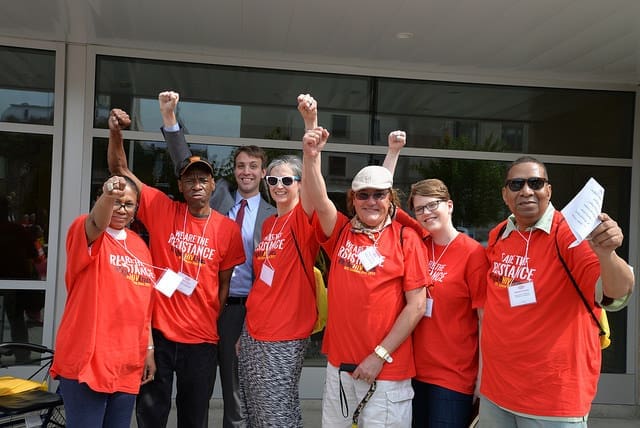 |
Click here for more photos from AFC’s May 2017 Advocacy Day. |
On the road to Springfield, people shared why they had come for the first time, or come back for the seventh time, to have their voices heard by their state legislators. Ira, a man from Chicago, hoped to serve as a voice for friends living with HIV who couldn’t come themselves. He knew firsthand the power of strong voices sharing their perspectives. In previous years, he had spoken to representatives and educated them about PrEP and other prevention technologies, of which the representatives had never heard. This year, he was excited to continue educating representatives on people’s experiences and needs throughout the state and to put a human face and voice to the current HIV epidemic.
On the ground in Springfield, community advocates immediately got to work, meeting with their representatives to ask for their support on a variety of issues facing the HIV community. “I’m looking forward to speaking to anybody and everybody who makes decisions about our lives,” said an advocate named David, after being asked what he hoped to accomplish.
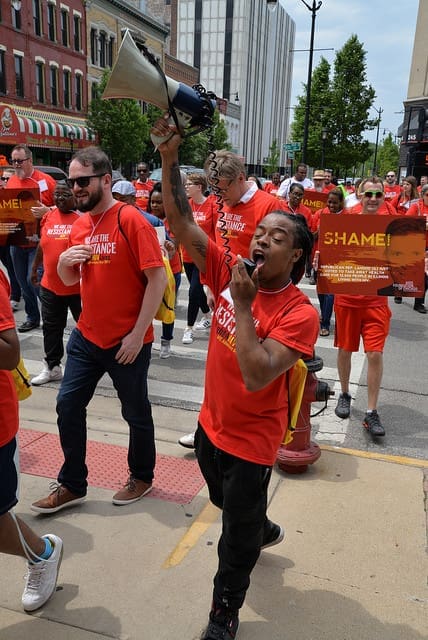
Throughout the day, a sense of history and accomplishment permeated the air. Older HIV advocates remembered the earliest days of the HIV epidemic and the devastating impact on families, communities, and lives. Ricardo, who has volunteered, advocated, and raised funds for AFC since 1989, shared stories of entire families being devastated by HIV and AIDS, from fathers and mothers to sons and daughters.
Sarah, a nurse practitioner who has been involved with HIV treatment for many years, echoed Ricardo’s experience. Her first patient as a young nurse was a woman, dying from an AIDS-related illness. She vividly remembers fellow medical personnel refusing to care for her in her last days. “All I could think is, ‘what is wrong with you?’” Sarah recounted, as she told her story and how she cared for the woman until her last breath. As a human, and as a medical professional, Sarah had taken a moral stance to care for those in need and felt a drive to advocate for those lost and those still living with HIV.
Yet Sarah also has been able to celebrate the advancement of care, which she has witnessed firsthand throughout her career. “When I started, HIV was a death sentence,” Sarah remembers. Now, thanks to medical advances, more awareness, prevention technologies and education, people can live long, healthy lives with HIV. “It is a joy to see,” she concluded.
As the day progressed, community advocates continued to remember the people that had come before, the lives that were lost, the victories that were won and the stigma that was lessened. Yet despite the progress, there is still much to be done. Services for those living with and vulnerable to HIV are lacking in some parts of the state, and stigma and racism still permeate HIV care in many places. Poverty, racism, sexism, homophobia, lack of education and access and other social troubles continue to pose challenges to those living with and vulnerable to HIV.
“In spite of our differences, we need to strive and fight together,” one HIV advocate noted later in the day. Another recounted the need for continued action in the face of a changing landscape and indifferent politicians. “We’re gonna stand up and fight, fight, fight!” one woman exclaimed.
As the conversation progressed, many noted the importance of youth leadership and voices to lead the continued fight against stigma, lack of knowledge and indifference. This brings us to Victoria, the youngest community advocate I encountered that day. At just 18, she remembered not learning much about HIV/AIDS in school, nor the devastating impact or the current realities facing those living with and vulnerable to HIV and the changing face of the HIV epidemic. From her own research, she learned about the cruel indifference to suffering in the earliest days of the epidemic, when families abandoned their children and medical staff refused to aid the dying — experiences older HIV advocates like Sarah and Ricardo had seen firsthand.
Thanks to the successes of earlier generations of advocates and medical advances that saved lives, many have packed the HIV epidemic away as a problem that had been solved, and few young people she knew thought of safer sex as much more than protecting from unwanted pregnancy. This lack of urgency and knowledge among younger generations is what Victoria hopes to change through work as a nurse and as a member of the LGBTQ community. In the future, she hopes to advocate for those living with HIV and the social justice issues surrounding it, as well as caring for individuals living with HIV through a medical career.
“It is my passion,” she concluded.
Besides their diversity, passion is what united community advocates from across the state. A passion for sharing their stories and the stories of others; a passion for dignity and justice; a passion for those living with and vulnerable to HIV. These united HIV advocates will continue the sustained march towards progress and to ensure continued access to resources and HIV/AIDS funding in the state. It is this passion has led to the advances of where we are today, inspired community advocates of the past and will continue to fuel the advocacy needed for the fight in the future.
The three organizations that coordinate HIV prevention services in Illinois outside Chicago – Champaign-Urbana Public Health District, Illinois Public Health Association, and Public Health Institute of Metropolitan Chicago – and the AIDS Foundation of Chicago are outraged to learn that new data from the Illinois Department of Public Health (IDPH) found the state budget impasse decreased the number of people newly identified as HIV-positive by nearly 250 people in 2014, 2015 and 2016.
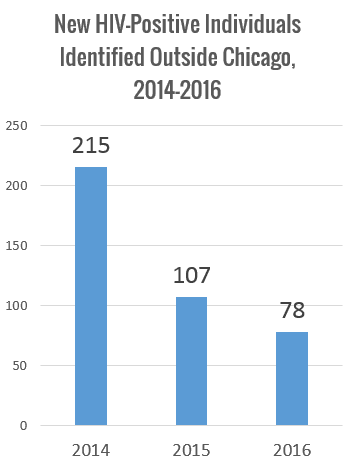
The new IDPH data shows that the number of HIV tests performed in Illinois decreased by nearly nine percent (to 189,273 in 2016 from 207,889 in 2014) resulting in the identification of 245 fewer people with HIV. In 2014, 215 people with HIV were identified outside Chicago. That number dropped to 107 in 2015 and a mere 78 in 2016.
Illinois last had a complete budget in 2014, and in 2015 operated without a budget for the first half of the calendar year under a Stop Gap appropriations bill from July through December. State general revenue funds, which have been most impacted by the lack of a state budget, support nearly all HIV testing conducted outside the city of Chicago. As a result, most of the undiagnosed people with HIV are living in cities and towns across Illinois, including the Cook County suburbs.
Illinois Gov. Bruce Rauner and the Illinois General Assembly must recognize this unprecedented stalemate is jeopardizing the lives of Illinoisans. A full-year state budget with adequate revenue is needed immediately to ensure individuals with HIV are identified and linked to care. With fewer resources dedicated for HIV testing, opportunities to identify and link individuals living with HIV to care have significantly decreased.
That 245 people with HIV have not been diagnosed has two major consequences for public health in the state of Illinois:
- These individuals are at greater risk of transmitting HIV to others as they cannot seek their own HIV treatment (which leads to viral suppression and a dramatically lower risk of sexual transmission) and cannot make informed decisions about their sexual behavior.
- Individuals who are diagnosed late are at risk of serious and costly AIDS-related illness, much of which will be paid for by Medicaid.
It costs over $350,000 to provide medical care to a person with HIV over their lifetime.
The IDPH data is especially appalling considering the disproportionate impact of HIV in communities of color, particularly African Americans. Black men are 6.4 times more likely to receive an HIV diagnosis in their lifetime compared to white men; Black women are 18.8 times more likely to contract the virus compared to white women.
It is inexcusable to endanger the lives of our most vulnerable citizens due to a political stalemate. There is no time to waste – we urge Illinois to invest in comprehensive HIV testing and treatment programs to prevent new cases of HIV and link those living with the virus to care.
The lives of Illinoisans are on the line.
About the AIDS Foundation of Chicago: AFC mobilizes communities to create equity and justice for people living with and vulnerable to HIV and related chronic diseases. AFC aspires to create a world in which people living with HIV and related chronic diseases will thrive, and new HIV infections will be rare. More at: aidschicago.org.
About Champaign-Urbana Public Health District: CUPHD) was formed by referendum in 1937 to establish public health services for the Cunningham Township and the City of Champaign Township. In 1996, CUPHD began providing services to all of Champaign County. Our mission is to “improve the health, safety, and well-being of the community through prevention, education, collaboration, and regulation”. More at: c-uphd.org. More at CUPHD is lead agent for the 17-county Region 6 in central eastern Illinois around Champaign-Urbana.
About the Illinois Public Health Association: IPHA is the oldest and largest public health association in the State of Illinois. As one of the largest affiliates of the American Public Health Association, IPHA is widely recognized as a leader in the field of public health advocacy, health education and promotion. More at IPHA.com. IPHA is the lead agent for IDPH-funded HIV prevention services in regions 1-5, covering the western half of Illinois from Rockford to Carbondale.
About Public Health Institute of Metropolitan Chicago: (PHIMC) enhances the capacity of public health and health care systems to promote health equity and expand access to services. Through organizational development, system transformation, fiscal management, and program implementation, PHIMC leads efforts to strengthen public health infrastructure in Illinois. More at PHIMC.org. IPHA is the HIV Prevention lead agent for Regions 7 and 8, covering the Collar Counties and suburban Cook County.
After launching a successful pilot program in 2016, Harmony Health Plan, Inc., a WellCare Health Plans, Inc. (NYSE: WCG) company, will continue to support the Knowledge and Collaboration Center for Capacity Building at the AIDS Foundation of Chicago (AFC).
 Launched last year with a $5,000 grant from Harmony, the Center works directly with community-based organizations to create and tailor trainings to support their unique organizational and development needs. Through the program, five groups received consultant time with a value of $1,500 to support capacity building, leadership development, financial management and strategic planning, which will help the organizations serve a larger number of community members. Harmony doubled its support this year with a $10,000 contribution.
Last year, the funds helped provide capacity building training for organizations such as the Chicago Black Gay Men’s Caucus who applied for and gained Chicago Department of Public Health funds. The program allowed the Chicago Women’s AIDS Project to improve marketing outreach and gave the Legal Assistance Foundation of Metropolitan Chicago tools it needed to increase availability of legal services for people living with HIV. Project VIDA also used the program to gain Chicago Department of Public Health funding.
“The organizations AFC selected last year used these funds to improve fundraising, marketing and other organizational skills to help them support those affected by HIV and AIDS,” said Miguel Torres, senior director, field sales and marketing at Harmony Health Plan. “Our 2017 sponsorship will allow AFC to expand both the number of organizations served and provide more intensive support to participating agencies, helping them to fill gaps in funding for infrastructure, which is difficult for small organizations to raise.”
“Now more than ever, as the Illinois budget impasse forces agencies to cut budgets and services, it is important to build partnerships with organizations that are working to make a difference in their communities and in the lives of the people we serve,” said David Reynolds, Harmony acting president and WellCare north division senior vice president. “Harmony’s grant to the AIDS Foundation of Chicago will have an impact on the city for years to come as community organizations become stronger through skills and development training.”
“Because of Harmony’s grant, AFC will, once again, provide hands-on support and comprehensive, one-on-one trainings to community-based organizations in structural improvements, organizational management, leadership training and grant applications,” said John Peller, president/CEO of AFC. “With a lack of state budget in Illinois and an ever-changing health care environment, these resources are critically important, and we are grateful for Harmony’s steadfast support of AFC and its capacity building initiatives.”
As of Dec. 31, 2016, WellCare and Harmony Health Plan serve approximately 209,000 members in Illinois, including 166,000 Medicaid members, 16,000 Medicare Advantage plan members and 27,000 Medicare Prescription Drug Plan members.
About WellCare Health Plans, Inc.
Headquartered in Tampa, Fla., WellCare Health Plans, Inc. (NYSE: WCG) focuses exclusively on providing government-sponsored managed care services, primarily through Medicaid, Medicare Advantage and Medicare Prescription Drug Plans, to families, children, seniors and individuals with complex medical needs. WellCare serves approximately 3.9 million members nationwide as of Dec. 31, 2016. For more information about WellCare, please visit the company’s website at www.wellcare.com or view the company’s videos at https://www.youtube.com/user/WellCareHealthPlan.
SOURCE WellCare Health Plans, Inc.
Ready to fight for health care for all? Take our quiz to find out the best way for you to resist the repeal of the Affordable Care Act. Support our fight at aidschicago.org/superhero.