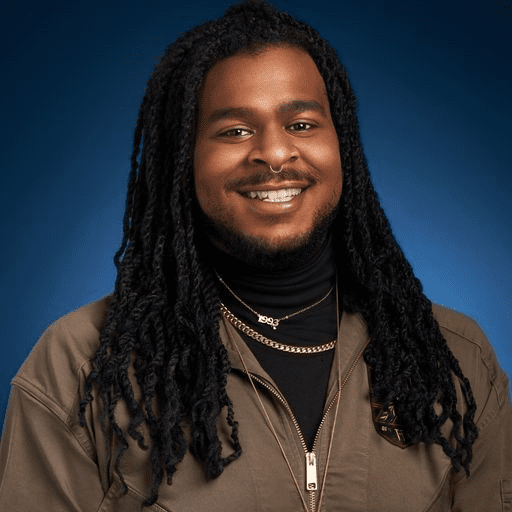
Rosa E. Martínez Colón, Vice President of Housing Strategy for AIDS Foundation Chicago (AFC) and the Center for Housing and Health (CHH), recently returned from a visit to the White House to attend the ¡Adelante! Summit. A founding member of CALOR (Comprensión y Apoyo a Latinos en Oposición al Retrovirus), a grassroots effort for Latinos impacted by HIV in Chicago, Rosa has been in the field of HIV prevention and advocacy for nearly 35 years. Longtime colleague and current Director of the White House Office of National AIDS Policy (ONAP) Francisco Ruiz invited Rosa to the summit. Francisco is the first Latine to hold this position in the White House.

“I was honored to be there,” said Rosa.

Convening over 100 leaders from across the country representing the healthcare sector and civic and social organizations, the summit aimed to strengthen the nation’s response to the HIV epidemic among Hispanic/Latine communities. “The rates of HIV diagnoses among Latines are rising,” said Rosa, “whereas nationwide it’s going down. The timing was right to have this summit.”

In 2022, people who identified as Hispanic made up 32% of new HIV diagnoses and 25.7% of people living with HIV despite being only 18.7% of the total population, according to AIDSVu. For most progress measures, such as PrEP usage, viral suppression, or progressing from HIV to AIDS, Hispanic and Latine Americans are falling behind.

October 15 marks the end of Hispanic Heritage Month and National Latinx HIV and AIDS Awareness Day. We talked with Rosa about her takeaways from the summit, including the need for more funding and to re-invest in community-based organizations, and the importance of going back to basics to improve HIV prevention, diagnosis, and treatment among Hispanic and Latine Americans.

How would you describe the atmosphere at the summit?

It was sort of powerful, to be honest with you. I love going to these events because it renews your energy. The name of the summit – Adelante – means moving forward. We all had the sense that we needed to come together. There's a lot that still needs to be done. The people that were present at the summit have that commitment and that desire to really do the work. How do we move forward? How can we collaborate? How can we come together to continue doing the work that is needed in our communities?

And it was also interesting to hear that the problems that we are facing here in Chicago are the same problems that are being faced in California or New Orleans, for example. How we address those problems is different; they must be adapted to fit your community.

What were some of the takeaways or things you learned?

After being in this field for so many years, the information is not surprising. What surprises me is that we still talk about all these issues without talking about the funding that is necessary to make this happen. That was one of the points that I brought up when I had the opportunity to talk. I said, ‘the National HIV/AIDS Strategy has lofty goals, but where's the money to support that? Especially with housing, we know that Housing First is a great approach, but there's no money for housing.’

It's alarming that we continue to have high statistics in the Latine community. It's incredible. Why, despite all the efforts, is it going down in other communities but not in the Latine community? What else can we do?

To me, it's important that we look back at what has been done and evaluate why this worked or didn't work and go from there as opposed to constantly coming up with new initiatives. Was it that the strategies were not really aimed at the Latine community? Was it an adaptation that loses context once you move it from one community to the other?

Again, sometimes it is not so much new information, but reaffirming the knowledge that you have. Yes, we need to do more. We need adequate funding. We need to hire more Latines in leadership positions at different levels of government, health care and nonprofit organizations.

It's validating to not be surprised by the information, but it must also feel frustrating that things have not changed. Why do you think there's no funding allocated or why haven't many Latine leaders been elected or put into these positions?

I think that having Francisco Ruiz as the first Latine Director of the White House Office of National AIDS Policy (ONAP) is a big step. He represents a population that is really being impacted by HIV and so having a person that looks like that community and belongs to that community is a great representation.

From my experience, moving away from community-based organizations, which are essential components, was a big mistake. These organizations are part of the fabric of the community already, and people trust them. When funding got scarce, we saw a lot of smaller community-based organizations close and larger organizations began to receive all that funding; they had the resources to write grants. To me it's not one or the other- we need both: community based-organizations and larger organizations.

We need these community-based organizations where people can come and receive services in their own communities, and then we need larger organizations that give the support and the extra services that these smaller community-based organizations don’t have. When we moved away from that model, I think that we lost a lot there.

Money has always been a problem. There's never enough money. When organizations must fight for the same funding instead of collaborating, especially Latine and Black organizations, who are the most impacted by HIV, that is not good formula.

There must be some allocations that are specific for certain communities, and I think that we also must move away from restrictive guidelines that don't allow organizations to do what they know works for their communities. I want to be clear that I'm not talking about accountability. I'm 100% about accountability because I think that whatever money comes to our communities, we need to know what the impact of that was. So, accountability 100%. But I know my community; I know what works in my community. Give me this money, give me some parameters and allow me to implement what I know works in the community, not a prescribed model that may have worked even in a Latine community, let's say in New York or in California, but doesn't work in Chicago because we have different people. And you know, sometimes we think of Latines as a bloc, and that's not the case. We are very different. We must tailor models and interventions to the different communities instead of using a “one-size fits all” model.

Do you have examples of intervention strategies or campaigns that have worked for your communities, or that CALOR has used?

Years ago, we had a very successful program with women. We modeled it after the Tupperware Parties, in which women used their social networks to sell products. In our case, they were sharing essential information. We worked with Local School Councils and trained them on HIV basics – modes of transmission, prevention strategies, etc. Then, the women would go to their communities and organize smaller groups in their houses, where HIV basics were also discussed.  Using this model, we were able to get into communities through people that were already there and were trusted by other community members. It's not somebody from the outside; it's their friend, cousin, or sister. That was very successful, and we were able to reach a large number of people in many different schools.

Anything that engages the community members is something that will likely be successful. Not only that, think about the economic impact too, because you're hiring people from the community, so not only are you bringing resources and knowledge and prevention of diseases and all that, but you're also bringing an economic component to the community which also makes the community better.

Do you feel like stigma is still a big issue within the Latine community around HIV and sex education?

Absolutely! I keep saying we must go back to basics. One of the things that came up in this summit at the White House was the lack of knowledge. A large number of people still don't know about HIV, still don't know how it is transmitted. Because we have all been in the field for such a long time, that's old news to us. So, we probably discarded those campaigns for information about PrEP. PrEP is important, but so is education. You need that basic education.

Because homosexuality and sex education are still taboo in our communities, it is essential that start with basic education. We need to go back to basics and teach HIV 101. That brings me back to what I mentioned: the Tupperware model. We need to go back to the schools, to the communities. Again, you're talking to mothers who are going to be relaying this information to their own children. You make the mother comfortable with this information. She's going to be able to relay that information to others.

Yes, I think stigma is still an issue, but we have ways to attack that through education, and we have abandoned that component. This is something that I also mentioned at the conference. When we let go of this small community-based organization model, we lose that component that larger organizations either don’t have the capacity for or it’s not in the services they provide. That's why you need community-based organizations; they are essential.

As Hispanic Heritage Month wraps up, do you have any messages for the community?

We have to be alert, and we have to be active. HIV is still with us. The ads that we see about people living healthier lives, yes, there's a lot of people doing that, but there's still a lot of people in our community at risk and a lot of new diagnoses - the numbers don't lie.

It's time for us to come back again. Not that we have ever stopped, but we must roll up our sleeves again and go back to basics. Go back to those essential interventions that were so successful years ago. We must take this national pride, this heritage pride and bring it to our communities. But bring it with everything else: our health, housing, our economic solvency. Let's address all of these things together to build healthier communities. They depend on us. We have the resources and the knowledge. Let's bring that back to our communities.

I'm grateful that that I have been put in these positions. It's going to be 35 years that I've been in the field, and I still think that there's so much to be done and I am glad that I'm still around and that I still have a lot of energy to continue doing this work.