“While we are happy with today’s ruling that grants temporary immigrant relief for DACA recipients, we are well aware that the Trump administration may attempt to rescind the program at a later date,” says Timothy Jackson, AIDS Foundation Chicago (AFC) Director of Government Relations.
Today, the United States Supreme Court ruled that the Trump administration wrongly ended the Deferred Action for Childhood Arrivals (DACA) program that granted immigration status to 700,000+ “Dreamers” who came to the United States as children.
“Knowing this, our advocacy to protect DACA recipients must continue forward by demanding that the U.S. Senate pass the DREAM Act, a bill already passed in the U.S. House. The DREAM Act is a bipartisan bill that would grant lawful permanent resident status to undocumented immigrants who were granted Deferred Action for Childhood Arrivals (DACA) status unless the person has engaged in conduct that would make the person ineligible for DACA. The time for action is now.”
By Aisha N. Davis, Esq., Director of Policy
Na’Kia Crawford. Riah Milton. Dominique Fells. Nina Pop. Breonna Taylor. Priscilla Slater. Regis Korchinski-Paquet. Tony McDade. Oluwatoyin Salau. Rayshard Brooks. George Floyd. David McAtee. Ahmaud Arbery.
These thirteen names represent thirteen stories abruptly ended. Thirteen futures stalled. Thirteen unique lives, unique laughs, facing unique fears. Unique experiences gone.
But there is one common thread. These thirteen people were Black.
They are the names I know and speak in this moment. They are the names that many of us call to memory when we are demanding respect for Black lives. They have become part of a narrative threaded with white supremacy, forged over centuries, from the time Black people were forced into chattel slavery on this continent. In the aftermath of slavery, Black people have suffered being considered a fraction, lynching, gerrymandering, gentrification, divestment, and disenfranchised — and the ongoing state-sponsored violence we experience to this day.
All of this orchestrated harm, enforced by a nation built with broken promises on stolen land, littered with broken treaties.
And now, here we are.
And now, there is a global conversation about anti-Blackness. This moment has been called a revolution, an uprising, a protest. It has coalesced around George Floyd. The pain on his face contrasted with the deliberate indifference in the posture of the officers. A pain that is not new, but is sharp every time. Like when we learned Ahmaud Arbery was killed. Like when we learned Rayshard Brooks was shot in the back. This old, sharp pain feels like being impaled, like having the earth fall away from you, but instead of floating, you are met with the cold, hard edge of anti-Blackness.
And now, there is a global pandemic happening because of COVID-19. This moment has been named as one where all the pre-existing conditions of systemic racism are flaring up, where the social determinants of health are being laid bare, where we are not surprised by the disproportionate deaths in Black communities. It feels like having the air forced out of your lungs. While already being impaled. Like drowning, and boiling, and unable to scream.
And now, there is a spiral of violent quiet where women in Black communities are not remembered as much, not shouted by every voice, not fought for with as much vigor. Black women are being murdered in their beds, brutalized, and targeted. Breonna Taylor’s killers have not been charged. Priscilla Slater died in police custody. It feels like everything that is happening – the drowning, the impaling – are happening, but no one will pay attention long enough to respond to it.
And now, there is a dangerous silence happening when the most marginalized in our Black communities are leading the charge, but are not being honored, respected, and rallied around in the same way. There are no suspects in Dominique Fell’s murder. Riah Milton has been misgendered and dead-named. Tony McDade’s killers have not been charged. It feels like no one is witnessing the harm – the drowning, the impaling. Not ignored – not even known.
Right now, there is no liberation if Black trans lives are not centered. Without a lens that centers our most marginalized, we cannot recognize and address the deepest harms facing our communities.
If we center the communities located at the intersection of all systems of oppression, we can build a future where everyone can meet their needs.
We must oppose policies that permit discrimination against trans and non-binary people – like those we saw handed down from the U.S. Departments of Health and Human Services (HHS) and Housing and Urban Development (HUD). Specifically, we must oppose HHS’ stripping of gender discrimination protections for trans and non-binary people, previously protected in Section 1557 of the Affordable Care Act, as well as leaving a pathway for providers to deny reproductive health care. We must oppose HUD’s policy permitting homeless shelters to deny services to trans and non-binary people.
We must recognize the bitter and the sweet that happen simultaneously. We should celebrate the protections in states like Illinois that cover the provisions of Section 1557, while we continue to fight for our trans and non-binary siblings in states that have not. We should celebrate the U.S. Supreme Court’s decision in Bostock v. Clayton County, holding that Title VII of the Civil Rights Act prohibits employers from firing someone based on their sexual orientation or gender identity.
We should also recognize that the same court still refuses to take up the question of qualified immunity, which shields state actors – like the police – from accountability if they are acting in their official capacity. By centering the most marginalized, we can recognize that we must continue to fight. Can job security be enjoyed if a cop can kill you on your way home? We cannot celebrate Pride without demanding equity for our Black trans siblings.
We cannot have justice for George Floyd without justice for Breonna Taylor. For Riah Milton. For Dominique Fells. For Tony McDade.
To paraphrase Audre Lorde – we cannot be free when Black trans women are not free. Black lives do not matter to us all when Black trans women’s lives do not matter to us all. Queer communities are not safe when Black trans women are not safe. Women do not have equity if Black trans women do not have equity. Immigrant communities can have no sanctuary if Black trans women have no sanctuary.
And we will keep working, and fighting, and protesting, and rising until we are all free.
 |
|
Photo by Zackary Drucker, The Gender Spectrum Collection |
Today, the United States Supreme Court ruled in three separate cases that LGBTQ+ people are protected from employment discrimination under Title VII of the Civil Rights Act of 1964.
One of the cases, Harris Funeral Homes v. Stephens, addresses gender identity while the remaining two cases — Bostock v. Clayton County, Georgia and Altitude Express Inc. v. Zarda — address sexual orientation. Writing the majority opinion for the Court, which handed down a 6-3 ruling, Associate Justice Neil Gorsuch wrote that “an employer who fires an individual merely for being gay or transgender defies [Title VII].”
AIDS Foundation Chicago (AFC) and Pride Action Tank (PAT) are elated that the Court agrees that every American — no matter their sexual orientation or gender identity — should be able to work without fear of being fired for who they are.
“This landmark ruling is an enormous victory for members of LGBTQ+ communities across Illinois and the nation,” says Timothy Jackson, AFC’s Director of Government Relations. “To be completely clear, discrimination based on someone’s sexual orientation, gender identity, or any other protected status should NEVER see the light of day. Thanks to today’s decision, millions of LGBTQ+ Americans will be able to live their best lives without fear of stigma, prejudice and intolerance. AFC would also like to extend our condolences to the family of Aimee Stephens — the plaintiff in the Harris case — who passed away in May 2020.”
“No government should be in the business of licensing discrimination and subjecting its citizens to stigma and fear,” says Kim L. Hunt, Executive Director of Pride Action Tank. “Today’s decision shows that the U.S. Supreme Court decided to choose fairness over fear, and decency over discrimination. Although today’s decision is certainly a great first step, PAT and AFC call on the U.S. Senate to pass the Equality Act, a bill already passed in the U.S. House. The Equality Act is a landmark bill that would expand the list of protected classes in the Civil Rights Act to include the LGBTQ community. And, even as we acknowledge the promise that the Equality Act holds, as a community, we cannot turn away from ongoing battles faced by our transgender and Black and Latinx kin.”
Proceeds Benefit Illinois Agencies Providing HIV/AIDS Prevention, Education, and Care Services
FOR IMMEDIATE RELEASE
June 9, 2020
Media Contacts: Amelia Dellos, (312) 898-8792
CHICAGO – The Illinois Lottery is bringing back its annual Red Ribbon Cash instant ticket, which has raised more than $8.6 million for HIV/AIDS prevention, education, and treatment in Illinois since 2008. All proceeds from the ticket are distributed through grants, from the Illinois Public Health Department (IDPH) to organizations across Illinois.
“This year’s ticket is launching during a time when public health is top of mind for everyone, and it is especially important to keep our most vulnerable communities safe,” said Illinois Lottery Acting Director Harold Mays. “We are proud to continue our partnership with the Illinois Department of Public Health to support the fight against HIV.”
While HIV transmissions have dropped 21% over the last decade (2009-2018) according to the IDPH, there is still work to be done. Funds generated from the Red Ribbon Cash ticket are a vital contribution to the state’s Getting to Zero initiative, aimed at ending the HIV epidemic in our state by 2030.
“Over the years, the Red Ribbon Cash Ticket has been hugely helpful in providing funding and awareness for HIV services in Chicago and across Illinois. This year, its financial impact will be felt so much more by our community, as COVID-19 has created huge challenges for the economic, physical and mental wellness of people living with and disproportionately impacted by HIV and AIDS,” said John Peller, President/CEO, AIDS Foundation Chicago (AFC). “We are grateful to the Illinois State Lottery for supporting AFC’s work to provide COVID-19 relief as well as a spectrum of other life-changing services that will help our community ride out this storm.”
The IDPH recently announced its latest grant cycle, for the Red Ribbon Cash/Quality of Life Grant, which is now accepting applications. Quality of Life grantees receive funds for HIV/AIDS research, treatment, and prevention programs across the state of Illinois. The Red Ribbon Cash Ticket costs $3, and players can win up to $50,000. The ticket is on sale now at more than 7,200 Illinois Lottery retailers across Illinois.
The specialty ticket is one of nine in the Illinois Lottery’s portfolio of instant tickets that support special causes. Since 2006, through the sales of specialty tickets, more than $50 million has been raised for special causes in Illinois through the Illinois Lottery.
For more information about the Red Ribbon Cash Ticket, please visit https://www.illinoislottery.com/giving-back/specialty-tickets
###
About the Illinois Lottery:
Founded in 1974, the Illinois Lottery has contributed over $21 billion (since 1985) to the state’s Common School Fund to assist K-12 public schools, as well as hundreds of millions of dollars to the Capital Projects Fund and to special causes like homelessness prevention, Illinois Veterans services, the fight against breast cancer, MS research, Special Olympics, police memorial funds and assistance for people living with HIV/AIDS. In addition to playing in-store, the Illinois Lottery offers online and mobile play for all draw-based Illinois Lottery games at illinoislottery.com. Players must be at least 18 years old.
 by Lindsey Arenberg
Policy and advocacy fellow, HIV PJA and AFC
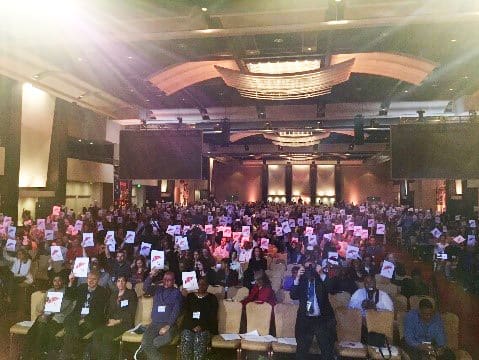
The sea of red umbrellas, the symbol of sex worker solidarity, could be seen from the stage of the National HIV Prevention Conference (NHPC)’s opening plenary featuring Douglas Brooks, Director of the Office of National AIDS Policy for the White House. The umbrellas were part of a protest organized by AFC Community Organizer Maxx Boykin and HIV Prevention Justice Alliance (HIV PJA) Associate Director Suraj Madoori, and supported by sex worker advocacy partner organizations. This protest was designed to bring attention to the omission of sex workers in the newly released National HIV/AIDS Strategy Updated to 2020 (NHAS). The protest also underlined NHAS’ failure to meaningfully involve networks of people living with HIV (PLHIV) in the development of the strategy.
The protest was just the beginning of The People’s Mobilization of the National HIV/AIDS Strategy Counter Conference (PMCC), held Dec. 7-8 in Atlanta, and running concurrently to the National HIV Prevention Conference (NHPC). Mirroring the need for intersectionality and inclusivity in the fight to end HIV/AIDS, HIV PJA planned PMCC to offer an alternative, strategic and accessible space for those who could not attend the larger NHPC, where leaders from CDC, NIH, HHS, and other federal agency leadership were in attendance. PMCC offered a community-built space where constituents most impacted by HIV were in control of the dialogue.
The LGBT Institute, housed within The Center for Civil and Human Rights, hosted the conference where the at-capacity crowd of activists and advocates discussed issues and communities absent from NHAS, planned collective advocacy work, prioritized policy issues and built power among communities ahead of changing federal leadership in 2016.
Anna Forbes, long-time HIV/AIDS consultant, remarked, “Advocates play a vitally important role in HIV/AIDS response and this conference provided a very focused way for advocates to be heard.” Forbes added, “[The Counter Conference was] small but mighty. This is the first effort of an event that I hope will be continued. PMCC provided an important space for people who have concerns that are not being addressed adequately from the National Conference to be heard.”
PMCC covered a wide variety of topics including reproductive justice and sexual health facing WLHIV, Southern policy and advocacy challenges, criminalization and stigma, and structural interventions for reducing HIV-related disparities, focusing on vulnerable populations, such as sex workers, incarcerated individuals, immigrants, and transgender and gender non-conforming people. Arneta Rogers, Reproductive Justice and HIV Fellow at Positive Women’s Network, said, “Suraj did an excellent job of bringing groups together to allow a more intersectional analysis of HIV and make a more accessible and productive space. We not only focused on the exclusions from NHAS, but also what policy asks we have, and what we could do to make HIV advocacy more inclusive. We focused on sex workers, Transgender folks and criminalization.”
One of the concrete outputs from this process was developed during the sex workers’ panel — a list of specific advocacy challenges that sex workers’ rights organizations and HIV-focused organizations could effectively address jointly.
Moving forward, HIV PJA will focus on the best way to galvanize the PMCC’s energy and ideas and identify significant federal HIV issues as the basis for a policy and advocacy agenda of winnable battles ahead for key communities to concentrate collective energy on in 2016. Forbes summarized, “Moving forward, the role of HIV PJA will be to cultivate and maintain momentum. The Counter Conference was one manifestation of that. The process has been going on for years, but has been becoming more articulate and powerful and we need to keep moving in that direction.” HIV PJA’s continuing efforts will help ensure the full involvement of communities in the future success of the strategy and in the final year under the Obama administration.
Early on Sunday, May 24, the Illinois General Assembly concluded its 2020 Spring Legislative Session — a session unlike any other.
Beginning January 28, legislators in both chambers convened for 14 days before being indefinitely paused on March 16 due to the new coronavirus (COVID-19) Shelter-In-Place Executive Order (EO). The state legislature convened a special session from May 20 to May 24, ensuring passage of a state budget and other essential legislation — including an expansion of vote-by-mail, Fair Tax ballot language for the November election, and COVID-19 relief package.
Originally scheduled to meet for a total of 53 days, this Spring Legislative Session was condensed into only 19. Though COVID-19 dramatically changed the 2020 state legislative session, AIDS Foundation Chicago (AFC)’s advocacy on behalf of people living with or disproportionately impacted by HIV and AIDS and other chronic conditions did not waver. Along with many of you, we are proud to have advocated for the following measures:
HIV AND STI FUNDING IN THE FISCAL YEAR 2021 (FY21) BUDGET
To meet the priorities of the Getting to Zero Illinois (GTZ-IL) plan, AFC advocated for a $2.1 million increase in state funding in FY21 for HIV treatment and prevention services, including HIV testing, PrEP (pre-exposure prophylaxis) and the African American HIV/AIDS Response Act. In addition to this increase in HIV funding, AFC requested $900,000 in new state funding to address the growing rates of STI diagnoses (i.e. chlamydia, gonorrhea and syphilis) across the state.
Status at the End of Session: Due to lower revenue projections and a projected budget deficit of up to $10 billion between FY20 and FY21, the Illinois General Assembly passed mostly level funding for the FY21 budget, when compared to the prior year. The $42.8 billion FY21 budget (Budget Bill – SB264 HA5 and the BIMP (Budget Implementation bill – HB357 SA2) includes:
- Level funding — when compared to FY20 — for HIV treatment and prevention services, at $25.5 million.
- A slight decrease in funding for HIV services meant to address the disproportionate impact of HIV/AIDS on African Americans and other communities of color, at $1 million.
- A slight increase in funding for supportive housing when compared to FY20, at $15.8 million.
These budget lines support primary care and HIV prevention, education, housing and treatment services for Illinoisans living with or vulnerable to HIV.
COVID-19 RELIEF FUNDING FOR BLACK AND LATINX ILLINOISANS LIVING WITH OR VULNERABLE TO HIV
To help address the disproportionate impact of COVID-19 on Black, Latinx and LGBTQ+ communities, AFC requested $57 million in additional state funding to meet essential housing and human needs of people living with HIV, people who use PrEP, and people vulnerable to HIV. Additionally, AFC requested a $1 million investment in Black-led and Latinx-led HIV community-based organizations in Illinois to help them weather the economic downturn caused by the COVID-19 pandemic.
Status at the End of Session: AFC is pleased that of the total $3.9 billion in COVID-19 relief funding, $1.1 billion is appropriated with communities of color in mind, though not specifically directed at Black and Latinx people living with or vulnerable to HIV. This relief funding came through Illinois’ share of the federal CARES Act passed by Congress in late March.
HB5012/SB3788: IL HEALTHY YOUTH ACT
The goal of this bill is to make sexual health education in Illinois inclusive and affirming, providing youth the full toolbox of knowledge to make informed decisions about their health. Specifically, the IL Healthy Youth Act removes outdated, stigmatizing language and builds on current standards for health and sexual health education courses.
Status at the End of Session: Unfortunately, due to COVID-19, this bill was not heard in the House Elementary and Secondary Education: School Curriculum & Policies Committee and did not advance in the legislative process.
HB3493 HA1: PRESCRIPTION DRUG AFFORDABILITY BOARD (PDAB) BILL
This bill would create the IL Prescription Drug Affordability Board (PDAB), an independent, nonpartisan body tasked with reviewing high-cost prescription drug prices and setting appropriate upper payment limits. AFC, a member and leading partner organization in the Protect Our Care Illinois (POC-IL) Coalition, has been thrilled to work with POC-IL on bringing Illinoisans one step closer to having high-quality, affordable health care.
Status at the of End of Session: Despite bringing together over 250 advocates for a successful lobby day in Springfield on March 3, this bill did not receive the minimum number of votes to move out of the House Committee on Prescription Drug Affordability and Accessibility. This bill did not advance further in the legislative process this session.
SB3243/HB4826: BRING CHICAGO HOME CAMPAIGN
To decrease Chicago’s budget deficit and address homelessness in the city, the projected revenue from this legislation would have generated $88 million to decrease Chicago’s budget deficit and $79 million to address homelessness in the city. AFC, Pride Action Tank (PAT) and the Center for Housing and Health (CHH) were pleased to partner with the Chicago Coalition for the Homeless and other organizations through the Bring Chicago Home Campaign to address these important issues.
Status at the End of Session: Unfortunately, this bill was not heard in the House Revenue & Finance Committee and did not advance any further in the state legislative process this session.
HB5442: HEALTH CARE AFFORDABILITY FEASIBILITY STUDY
A health care initiative from Governor Pritzker’s office, this bill requires the Department of Healthcare and Family Services (HFS) to conduct a feasibility study exploring options that make health insurance more affordable for Illinoisans. Once completed, a proposal would be submitted to the Illinois General Assembly and the Governor concerning the design, costs, benefits and implementation of a State Option for health insurance coverage.
Status at the End of Session: This language in this bill was included in the final health care package passed by the Illinois General Assembly. AFC is optimistic that Governor Pritzker will sign this bill into law.
HB4891/SB3703: HEALTHY ILLINOIS FOR ALL
This legislation extends Medicaid eligibility to all low-income Illinois residents aged 19 and older regardless of their immigration status, estimated to provide coverage to approximately 93,000 residents including 15,000 young adults and an estimated 500 seniors (aged 65 and older).
Status at the End of Session: Though it did not advance out of the House Human Services Appropriations Committee, amended language from this bill was included in the Budget Implementation Bill (BIMP), HB357 SA2. Specifically, this amended language provides medical coverage for all seniors, aged 65 and older with incomes at or below 100% Federal Poverty Line ($12,760/ year single person; $17,240/year for a couple). The BIMP bill was passed by the Illinois General Assembly, and AFC expects Governor Pritzker to sign this bill into law.
HIV DECRIMINILIZATION IN IL
Though we did not introduce a bill this state legislative session on HIV Decriminalization, AFC is actively working with the Illinois HIV Action Alliance (IHAA) to outreach, educate and engage priority populations, stakeholders and decision-makers on the need to repeal Illinois’ HIV Criminalization law. AFC and IHAA are laying the groundwork necessary to introduce an HIV Decriminalization bill in the future.
ANNUAL SPRINGFIELD ADVOCACY DAY (turned virtual this year)
Each year, AFC organizes a statewide Advocacy Day at the State Capitol in Springfield where advocates have the opportunity to speak with their legislators about the issues affecting people living with or vulnerable to HIV. Due to the COVID-19 pandemic, AFC quickly pivoted to organize a Virtual Advocacy Day, still on the original scheduled date of April 29. Though the ways we advocate may have to change, advocates across the state proved that our advocacy cannot, and will not, be postponed. To #ActivatePowerIL, advocates throughout Illinois:
- Called, emailed and tweeted their legislators demanding investment in equitable funding for HIV and STI services and COVID-19 relief funding for Black and Latinx Illinoisans living with or vulnerable to HIV.
- Shared how advocacy, HIV and COVID-19 have impacted their lives.
- Joined two powerful discussions between policymakers and community members exploring the disproportionate impact of COVID-19 on Black and Latinx communities, including people living with or vulnerable to HIV.
The 2020 Spring Legislative Session will certainly not be forgotten any time soon. We do, however, want to take this opportunity to thank you all for your advocacy. Your stories and voices have made a difference!
Although this legislative session has ended, please join us in continuing to protect those most vulnerable in our communities, including people living with or vulnerable to HIV.
Sign up for AFC’s Mobile Action Network to stay plugged in with our advocacy work throughout the year!
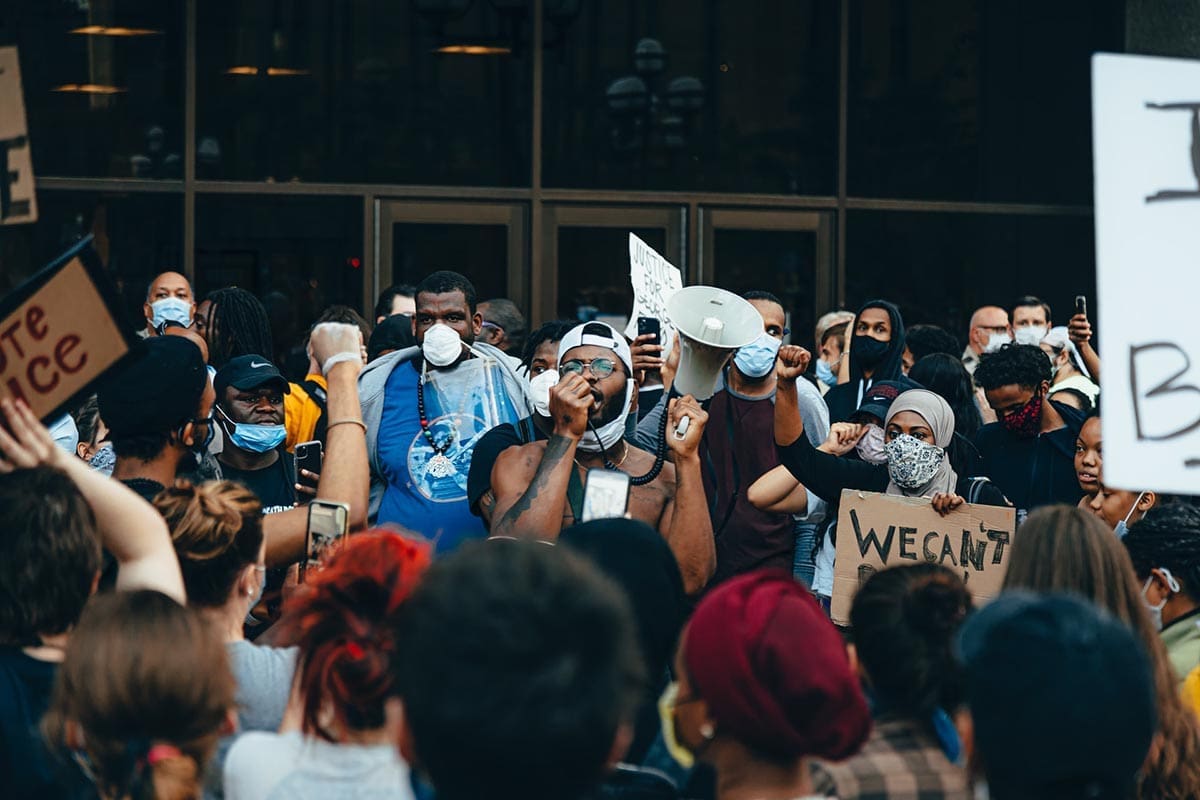
Like so many of you, I am reeling after the last week and this weekend. WE ARE NOT OK. Our country, our city and many of us are not OK. In fact, chances are great that Black colleagues and friends are traumatized and exhausted.
Due to instigation, provocation, and militarized law enforcement responses, many of this weekend’s peaceful protests meant to honor George Floyd’s life and demand an end to racist police murders turned violent in cities across America. AIDS Foundation Chicago (AFC) is in solidarity with those who protest and otherwise raise their voices against the racist systems that allowed George Floyd, Tony McDade, Breonna Taylor, Nina Pop, Sean Reed, Ahmaud Arbery, and so many other Black people to die at the hands of police officers and white supremacists.
Many have used the damage to property as a way to detract from the meaning of these protests and to distract themselves from the truth we must reckon with: Injustice has been committed against our Black neighbors for far too long. Even this weekend, too many decisions were made by police officers and city leadership to disrupt demands for justice – including physically assaulting protesters, attempting to disappear people who were arrested, and trapping people in the Loop while also setting a curfew. I urge Mayor Lightfoot to denounce the militarized and violent response of law enforcement, lift the restrictions on CTA transit, and ensure that any curfews or other restrictions are implemented throughout the city – not just on the South and West Sides. Black people shouldn’t be harassed, tazed, beaten, arrested or worse for speaking out against systemic racism, trying to get home, or for going about their daily lives. Chicago must not become a police state – especially in response to demonstrations condemning state-sanctioned violence at the hands of law enforcement. Doing so would throw gasoline onto an already incendiary situation.
And there is a reason why this situation is so contentious. The uprisings we are seeing are a result of the violence that Black people have faced on this continent since the Trans-Atlantic Slave Trade. This is a country where Black people must question if the people tasked with protecting them will do so. This is a nation where Black parents must question expanding their families, knowing that childhood is not a shield from anti-Black violence. This is a democracy that Black people built, though it does not seem to cover my Black siblings the same way it covers me.
As a white person, I am often at a loss for words when I see racism. I’m afraid I’ll say something wrong. But this is not a moment to ‘say nothing.’ White people, join with me in not only saying that Black Lives Matter, but also in examining our unconscious biases and actions that run counter to this statement. Tell your Black friends, loved ones, and family you know they are hurting, without demanding any particular response, and without condemning responses that you may think are “too” anything. Black people are not being too loud, too angry, or too demanding – they are responding to centuries of racism that is ingrained in every part of this nation. The distress, rage, sadness, and fear they bottle up every day is both visible and theirs to own and express. Acknowledge their pain without policing their tone or behavior.
This is also a moment for white-led nonprofit organizations to be vocal in our solidarity and intentional in our actions in support of Black communities. Especially when much of our work must center Black people to truly achieve our missions.
The protests of the last week have also reminded me of the privilege I have as a white person. I can walk down the street or, lie in my bed without being worried I’ll be shot. I can bird-watch, drive my car or go for a jog without fear – all things that Black people must consider. Every day.
I ask that we take time today and this week to grieve and care for one another. We are not OK, and we will not be OK for some time to come.
In compassion and solidarity,
John Peller
President/CEO
P.S.: If you are someone living with or vulnerable to HIV, and in need of mental health services, emergency food, assistance with paying rent, medical care and other needs, call 844-HUB-4040 or learn more here.
“We’re all in this together.” It’s a phrase that has been embraced by companies, friends over phone or video, and even organizations like AIDS Foundation Chicago (AFC) amid the new coronavirus (COVID-19) epidemic. It’s meant to spark the feeling that, even in these difficult times, we are all here for each other, supporting each other, as individuals and governments and families and organizations.
But the recent murders of George Floyd, Breonna Taylor, Nina Pop, Sean Reed, and Ahmaud Arbery by police officers and white supremacists remind us of the difficult truth under that candy coating: America isn’t built for togetherness, especially for Black Americans. America is a place built to keep whiteness at the top level of a hateful hierarchy, even in the midst of a national health crisis like COVID-19.
AFC can’t stand for this America anymore. To be in this together, we must do everything we can to toss a wrecking ball into the systems that preserve this racist hierarchy. We fight for racial justice and true equity across systems that were designed to keep us apart, not together.
We know the news this week isn’t the last time we will learn about a police officer murdering an unarmed Black man. The news this month won’t be the last time we hear that several white men killed a Black man and were protected from the justice they deserved for months. But we do know that action must be taken to do everything we can to stop the horrific crimes we have allowed to happen in our country.
Please call the governor of Minnesota, Tim Walz, today to demand that justice be brought to the police officer who killed George Floyd. Together, our voices can continue to reverberate against the walls of our racist systems until they shatter under our pressure.
Office of Gov. Tim Walz: 800-657-3717
Email Gov. Tim Walz here
 AIDS Foundation Chicago (AFC) commends Cook County Board President Toni Preckwinkle’s decision this morning to protect the privacy of people who have been diagnosed with the new coronavirus (COVID-19). President Preckwinkle vetoed the SAFE with First Responders resolution, which if enacted, would have permitted the Cook County Department of Public Health (CCDPH) to share the addresses of people diagnosed with COVID-19 with first responders. Although the resolution was titled “The Resolution to Share Addresses for Emergencies (SAFE) with First Responders,” the measure would not have created a safer environment for first responders. The decision from President Preckwinkle to veto this resolution protects the private health information of every Cook County resident.
Alongside other community members and organizations, AFC publicly opposed the SAFE with First Responders resolution. In a letter addressed to the Cook County Commissioners backing the resolution, AFC noted the resolution would result in harm to community in three ways: creating a false sense of security for first responders; deterring people from seeking care; and violating the civil liberties of Cook County residents. The resolution – which passed narrowly last week – would not have benefited the public and had the potential to create further disparities in care and the impact of the pandemic.
As longtime advocates of the HIV community, AFC has seen the tangible harm done when medical diagnoses are used as justification to encroach on civil liberties, including the criminalization of entire communities. People living with HIV are still combating the decades of stigma that have only been exacerbated by criminalization efforts. Furthermore, we have already seen the disproportionate effects of the COVID-19 pandemic in Black and Latinx communities locally and nationally. The resolution invited a new metric of fear, only serving to augment the deadly harm that Black and Latinx communities experience based on assumptions and stereotypes.
In a statement accompanying her first-ever veto, President Preckwinkle stated the resolution “violates the public health guidance provided by health experts, discredits the guidance provided by both [the Illinois Department of Public Health] and CCDPH, puts COVID-19 patients and county residents at risk and provides our first responders with a false sense of security.” She further expressed her disappointment in last week’s vote, stating that she “cannot support the release of this information.”
AFC appreciates President Preckwinkle’s stance in support of safe communities throughout Cook County and looks forward to ongoing efforts to maintain public trust while combating the COVID-19 pandemic.
By Bailey Williams
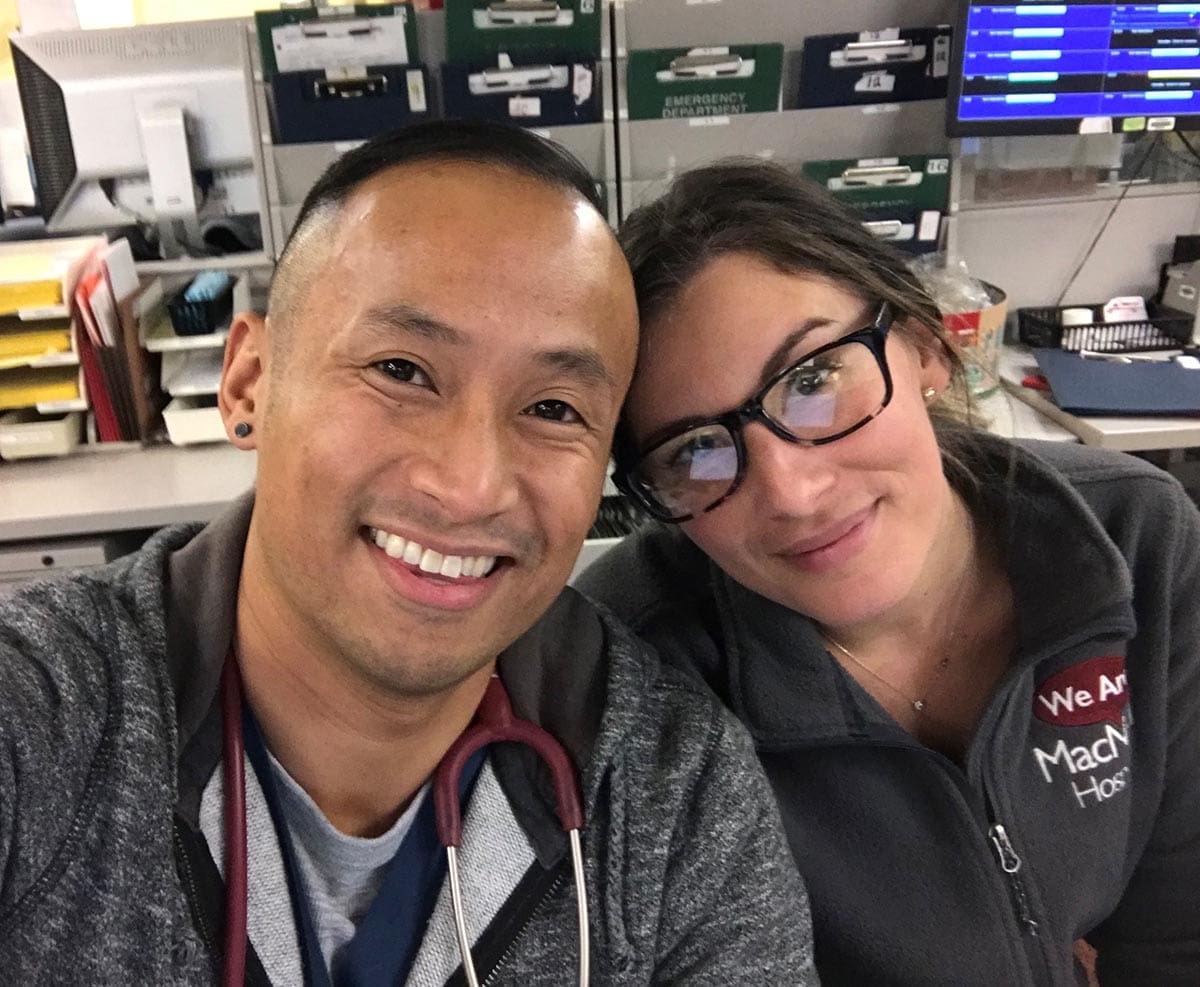
A 26-year-old pregnant woman started experiencing sinus-related symptoms and assumed it was pneumonia. Instead, she tested positive for the new coronavirus (COVID-19) and had to be intubated at MacNeal Hospital in Berwyn, Illinois. An older woman in the same hospital also tested positive for COVID-19 but begged to not receive a breathing tube. If it came to that, she wanted the intubation tube to be saved for someone younger.
“It can be very overwhelming when you see such a wide array of people coming in,” said Marc Querol, an emergency room (ER) trauma nurse at MacNeal Hospital and an athlete on TEAM TO END AIDS (T2), an endurance training charity team that has raised more than $12 million for AIDS Foundation Chicago (AFC) and other HIV-related charities.
Having worked as an ER trauma nurse for five years, Marc was used to seeing a variety of ailments amongst people of all age groups in a busy 12-hour shift. Despite that prior experience, Marc said COVID-19 has created a busier work environment with new protocols that many working in health care have never seen or experienced.
As the Centers for Disease Control and Prevention (CDC) announced new guidelines, Marc’s ER changed in accordance with the updated recommendations. Hospital attire adapted to include special masks, gowns and protective eyewear. Questionnaires are distributed to gauge the likelihood of someone’s exposure to the new coronavirus. Parts of the ER are also blocked off for different presentations of a person’s breathing. For example, if someone comes in with an asthma attack or shortness of breath, there are new guidelines to care for that individual in the allotted areas.
So far, during all of Marc’s shifts, the hospital has had enough gear and resources to protect staff and test people who come in with COVID-like symptoms. Still, the hospital continues to monitor its supply on a day-to-day basis.
“If we have the supplies for the day, we preemptively plan, ‘do we have enough tubes for intubation for the next day,’” Marc said. “‘If we run out of these supplies, what are our next steps? Can we re-sterilize something that used to be disposable, but now can’t be disposable?’ There’s a consistent process of adapting day-to-day.”
In this changing, hectic ER, there’s a sense of unease, as health care workers try to balance caring for patients and themselves, Marc said. Before patients are brought into a room, staff coordinate to limit contact between patients presenting COVID-like symptoms and nurses and doctors. The time spent in each room is carefully monitored.
Outside of those rooms, staff work to support and encourage each other. One of Marc’s coworkers is a single mom who’s pregnant and working the overnight shift. Being away from her children has been challenging, so colleagues like Marc make sure she’s able to take a break and FaceTime her kids.
“We’ve had such great support from each other, from the doctors, from our families,” Marc said. “We try our best to keep each other in a positive mindset so that we can be able to not only take care of the patients that are coming in but take care of each other, because for some of us these are the only interactions we have with other individuals outside of our family.”
Marc lives alone in Uptown, but has a strong relationship with his father, who lives nearby. Recently, his father, who works as a medical biller, tested positive for COVID-19.
“It’s a challenge to work and make sure I’m okay and to make sure my dad has the resources he needs to get through his own self-quarantine,” Marc said. “It’s a challenge to find a balance of being who I am professionally and personally.”
One of the coping strategies Marc has turned to is running. Marc goes on short runs around his neighborhood, which sometimes is just a loop around the block. He was training for three marathons this year: one was cancelled, and the others have switched to virtual events. The runs not only help him cope with COVID-19-induced stress but also raise funds through T2 that provide support and vital services for people living with HIV and AIDS.

Marc lives with asthma, so running long distances, like the 26.2 miles that comprises a marathon, posed a unique challenge for him at the start of his running journey. Still, he found adequate support and a family with T2, he said. Marc has run marathons and raised money with the team since 2017.
“Finding a group of people that have been encouraging and uplifting, you feel this, more than just camaraderie, you feel like they are more than just friends; they’re like your family,” Marc said. “T2 has been very helpful in that part of my life and my running journey.”
Early into Illinois’ stay-at-home order, T2’s Director Jonathan Harris reached out to Marc and another athlete who is also working on the front lines of the current public health disaster. Jonathan called to make sure both athletes were okay, given their jobs. Small check-ins like that mean a lot to health care workers like Marc.
“Sometimes it can be overwhelming, but if someone just sends a text and just checks on you, it goes so far,” Marc said.
Marc said some people have also sent food to the hospital to make sure nurses and doctors eat, but sometimes, the shifts are so hectic amid the current crisis, that nurses can’t stop to eat during a 12-hour shift. Still, the support from T2 and those who send food help nurses like Marc feel like “we are all working together.”
For those who aren’t working on the front lines, you can do your part by staying at home and taking care of your health, Marc said. If you are asymptomatic, you could contribute to the spread of COVID-19 without even knowing it. So, if you can, stay home, Marc said.
“You don’t have to work in health care to be part of this (fight to end COVID-19),” Marc said.
If you need resources to shelter-in-place, check out AFC’s comprehensive COVID-19 Resource Center. If you are a person living with HIV or are on PrEP and need financial assistance or other services, call the HIV Resource Hub (844-HUB-4040), a collaboration with AFC and the Center on Halsted.
To learn more about the endurance training charity team T2, visit its website here.