On Thursday, April 8, the U.S. Centers for Disease Control and Prevention (CDC) echoed a deep, unconscionable truth that Black, Indigenous, and people of color (BIPOC) have known and experienced all along: racism is a public health threat. CDC’s new agency-wide initiative called Racism and Health aims to “refocus the CDC’s public health efforts on recognizing, acknowledging, and, most importantly, taking action on the multitude of ways race impacts people’s health.” CDC Director Dr. Rochelle Walensky said that racial health equity access must be prioritized into every action the CDC takes. Find more information about this new CDC initiative here.
Naming the problem and committing publicly to act on racial inequities are critical first steps, and for that, AIDS Foundation Chicago (AFC) affirms the CDC and Director Walensky for doing so. But now that the CDC (and, by proxy, the Biden Administration) has kicked off this initiative, it is essential that timely, intentional and proactive positive action follows.
That means that this work should not only be external to the CDC, but also internal, especially listening to its own BIPOC staff. It also means that the CDC should deploy resources, person-power and attention that is equitable in magnitude to immediately address and turn the tide on this 400+ year-old threat to the public’s health.
It means transparency in all aspects of its work, including this new initiative, and centering and listening to its most important stakeholders – community members disproportionately impacted by racism.
Just like COVID-19 became priority number one for the CDC once it hit the U.S., AFC now calls on the CDC to put in action everything necessary to tackle a pervasive, rotten infestation of our country’s systems, policies and practices: racism.
By Bailey Williams
When racist ideas resound, denials that those ideas are racist typically follow…Denial is the heartbeat of racism, beating across ideologies, races and nations. -Ibram X. Kendi in How to Be An Antiracist
On Feb. 14, 2020, the New York Times profiled Black painter Jordan Casteel in recognition of her first solo museum show. When the article was completed, the Times included it in its morning email news briefing, which has an estimated audience of 1.7 million people. In that email, The Times published an inaccurate blurb that said Jordan painted this portrait of Michelle Obama, which was created by another Black female artist, Amy Sherald.
Jordan found out about this error after her mother called and informed her that people were phoning, texting and emailing to ask if her daughter’s artwork featured the former First Lady. Quickly, Jordan let both her gallery and Amy know what had happened. The gallery got in touch with The Times, prompting the outlet to issue a correction. Even though it was fixed, the event still caused harm.
“It was painful,” Jordan recalled in the podcast Hear to Slay. “It was a crowning moment—this thing that I was really anxious and excited about. I was going to have a full profile in the New York Times, and I had my first solo museum show in New York, and it said ‘Jordan Casteel, who painted the portrait of Michelle Obama.’”
Jordan’s story is an example of what some call subtle racism, rather than the in-your-face racism that includes slurs and physical violence like lynching and police brutality. In predominantly white spaces, Black, Indigenous and other people of color (BIPOC) are often treated as monoliths who are indistinguishable from one another against the larger white, normative space.
In Jordan’s case, she was a Black artist working in a landscape in which about 85% of artists included in our nation’s museum collections are white. The Times’ error erased her individual, unique accomplishments and rendered her interchangeable by combining her identity with another Black artist’s work.
As a Black female writer and artist myself, there are many things this story called to mind, but the thing I’d like to discuss is one solution that could have prevented this incident, and that’s including BIPOC like Jordan in the editing and review process of articles about their lives and work.
When tradition fosters harm, it’s time for new solutions
I graduated from journalism school, and have written for local, national and international publications. We’re trained to not show our articles to the sources we interview prior to publication in order to remain “objective.” The thinking is that if we shared our unpublished articles with sources, they would want to change elements in our writing, thereby preventing our ability to maintain some kind of third-party truth.
The traditional assumption is that journalists can ascertain the truth better than the people they interview. When it comes to BIPOC communities specifically though, we know that’s not true. Often, those who cover BIPOC are white. In 2018, Pew Research reported that BIPOC tend to be underrepresented in newsrooms, representing only 23% of newspaper and television reporters and editors nationwide.
In these predominantly white newsrooms, the exclusion of those with lived experiences from serving as reporters and fact-checkers has frequently resulted in the publishing of racist, stereotypical and inaccurate headlines, stories and recaps. Historically, this had led to mistrust between BIPOC communities and certain publications. It’s also led to the creation of outlets led by and dedicated to serving BIPOC.
To prevent future racist incidents and to tell more truthful and better stories, white-majority outlets should hire more BIPOC, especially those who live and are from the neighborhoods they cover. Further, all reporters should also undergo cultural competency training, especially as it pertains to the communities and neighborhoods they cover. And although this should go without saying, white-majority newsrooms ought to start explicitly naming racism in published stories when racist events occur and when racism serves as vital context to a story.
Outlets should also seriously consider bringing BIPOC sources into the review process where they can easily spot factual inaccuracies and contribute to the storytelling of their lives. Those who lived the experiences being reported on are ultimately some of the best fact-checkers you have.
A nonprofit case study for repairing and preventing harm
At AIDS Foundation Chicago (AFC), if we publish an article featuring an individual, we include them in our editing process, allowing them to review, make changes and halt the publication of a piece at any point. Because we are a nonprofit committed to serving our community over publishing articles, we’re able to do that in all instances. During my time at AFC, featured community members have rarely opted to change anything. If a change is recommended, it is usually because something was factually inaccurate.
Our practice has built trust with our community members and given them control over their own narratives. It’s been especially important because the community we serve—BIPOC, people living with HIV, LGBTQ+ people, people who use drugs and more— often face stigma and violence in part due to harmful reporting and media portrayals of these communities.
Because of this history, community members have told me outright that they would not have shared their story if they weren’t allowed to review what was written before publication. Those stories have direct, visceral consequences on their lives and others who look like them.
For instance, one community member told me it was important to review the post because they were attempting to find employment. A blog post that pathologized their humanity could add to existing barriers in finding a job, which would produce the necessary income to support their life. Including this individual in the review and editing process ensured that sharing their story did not also create harmful consequences in their life.
By including featured community members in our review process, we’ve lessened the chances of harm enacted during publication and distribution of blog posts and articles. For other nonprofits who serve historically marginalized communities, this practice could help your organization too.
When it comes to the larger media, I understand there are some situations, such as holding political figures accountable, where showing an article to a source in advance could complicate the truth from getting out. That’s not what I’m talking about here. Instead, I’m speaking specifically to coverage on BIPOC done largely by white reporters outside of BIPOC communities. As you work to build better newsrooms reflective of and equipped to report on the neighborhoods you serve, including interviewees in the editing process can be an essential tool you can implement immediately to begin the work of repairing harm, reporting accurately and ultimately stopping the publication of racist materials.
The Editor’s Desk is a new series, written by Bailey Williams (she/her/hers), AFC’s Communications Specialist, who manages and writes original content for AFC’s blog Inside Story. The series aims to share knowledge and reflections that come up while managing the blog with the hopes of creating a new dialogue, resource-sharing and added transparency behind our editorial decisions.
To listen to one of Bailey’s favorite podcasts Hear to Slay, a Black feminist podcast produced by Roxane Gay and Dr. Tressie McMillan Cottom, click here. To check out and support Jordan Casteel’s work, click here.
The jury in the murder trial of Derek Chauvin has returned guilty verdicts for the Minneapolis police officer who murdered George Floyd in May 2020. Chauvin was found guilty of second-degree murder, third-degree murder and second-degree manslaughter.
George Floyd’s death reignited a nationwide movement to reform policing and law enforcement practices, systems that were developed to uphold anti-Black racism. Despite today’s conviction of Derek Chauvin, we must recognize that these systems are not reformed by a verdict — they must be dismantled to eliminate systemic racism in this country. AIDS Foundation Chicago (AFC) will work with and support communities as they continue to take action to eliminate the racist practices of police departments, both in Chicago and beyond.
AFC fights for change that centers the needs and demands of BIPOC communities. We support deeply transformative approaches to achieving justice and equity. We look to BIPOC leadership to guide the work and listen to their voices to lead the conversations around dismantling white supremacy. We consistently advocate for system-level change, including championing Illinois’ landmark criminal justice bill earlier in 2021 and fighting to decriminalize HIV through a bill making its way through Illinois’ legislature right now. AFC also recognizes the harm of being in jail or prison for people living with HIV and works to connect them to vital services and resources through its Safe and Sound Return Partnership and Women Evolving programs.
May we continue to fight to preserve the memory and legacy of George Floyd and too many other Black Americans who have been killed by police. May our fight lead to true systemic changes in law enforcement and beyond.
A police shooting near Decatur, Georgia has led to the killing of yet another Black man.
Matthew Zadok Williams, the youngest of six children and the only son, was killed by Dekalb County Police in his own home on April 12, 2021. His mother and family were not notified until nearly 24 hours later.
In the words of Matthew’s sister, “Matthew was a son, brother, uncle, cousin, and a 35 year old responsible man who never had the opportunity to grow old. Matthew would not kill an insect, that’s how gentle he was. He was a home owner. An avid reader. An activist. A humanitarian. A pacifist. He was full of life and love so exuberant that he radiated. He was the only boy out of six children and we cherished every moment with him. My family is devastated by this loss. Our lives will never be the same.”
AIDS Foundation Chicago (AFC) fights for change that centers the needs and demands of BIPOC communities. We support deeply transformative approaches to achieving justice and equity. We look to BIPOC leadership to guide the work and listen to their voices to lead the conversations around dismantling white supremacy. We join Matthew’s family in demanding immediate answers from Dekalb County Police, including the immediate public release of the body camera video. Matthew’s family has set-up a go-fund-me page that can be accessed here.
By Coleman Goode
The dictionary definition of community is “a group of people living in the same place or having a particular characteristic in common.” I like to think of community as a social group with commonalities such as norms, religion, values, customs or identity — basically, you all want the same thing for yourselves. The term “community mobilization” is about bringing community together to build collective power around issues that lead to action!
For example, last summer we saw a movement that has been years in the making spread all the world. Black Lives Matter showed us that community mobilization can be done during a pandemic. Georgia advocates organized on levels that have never been done to mobilize communities to vote. Organizations in Chicago like Brave Space Alliance found innovative ways to continue servicing the needs of their community, such as their food bank donations.
Still, in a year of increased isolation and increased need for advocacy, many of us have been left trying to find new and effective ways to engage with our communities. Community engagement is only successful when we break down the barriers that keep many out of the process. Though we have not always been able to be in the same physical room, we were able to engage community virtually. Virtual technology gave many of us the ability to stay in contact with advocates from the comfort of their homes through educational workshops, talk backs, panel discussions, trainings, and Facebook lives.
These virtual changes reaffirmed something we already knew: advocacy does not require you to travel to DC or Springfield to be effective. People have been mobilizing for years by writing letters to their elected officials, developing a community phone bank through their church group or condo building, sending postcards from your knitting group, and by starting food and coat drives by emailing friends and neighbors.
In keeping with those lessons learned, AIDS Foundation Chicago (AFC) will be hosting a week of mobilization around the state policy issues we’ve been advancing during Virtual Advocacy Week, Monday, April 19 to Friday, April 23! This year we are giving advocates five days to #ActivatePowerIL! During this week, advocates will be able to engage with specific themes that represent some of the policy priorities that AFC is working on, such as Health Care Access, Racial Equity, Getting to Zero Illinois (GTZ-IL), Queer Liberation with Pride Action Tank and finally, Community. Advocates will also receive guidance through our tool kits to prepare you to email, tweet and make important phone calls with your elected officials. More importantly though, through the Advocacy Center, advocates will be able to take action anytime during this week.
It’s more important now than ever to get involved in the process of advocacy. One of my favorite sayings is, “if you are not at the table then YOU are on the menu!” This means it’s up to you to keep the momentum going. The issues that many of us have been fighting for have not gone away because of COVID. In fact, many of those issues have been exacerbated as communities contend with multiple crises at once.
I’m challenging you all to get involved any way you can. Mobilize in your community around the issues that are important to you. Discover the power that we all have inside us and act. I can’t wait to be in a room with all the amazing advocates, community partners and concerned community members, but it doesn’t mean that we have to let COVID stop us from being a part of the movement. It’s great to change your profile picture on Trans Visibility Day, National Black HIV Awareness Day or World AIDS Day, but it’s even more important that we understand that we can do the work every day. Let us continue to mobilize and demand that we are all worthy of living a more equitable society. Remember that meaningful involvement of people living with HIV is important in this work: “Nothing about us without us!” So, if you are ready to #ActivatePowerIL and join in the movement to bring an end to the HIV/AIDS epidemic, register today for Virtual Advocacy Week!!
Coleman Goode is originally from Texas where he studied Music Education at Texas Tech University before moving to Illinois in 2002. Prior to joining AFC, Coleman was the Chief of Staff for Illinois State Representative Greg Harris. He brings eight years of policy work experience and has developed a passion for helping marginalized communities, including but not limited to communities of color, LGBTQ+, sex workers and homeless youth, achieve full health equity. Coleman also brings to his work the shared experience of homelessness, living with mental illness and recovery from substance abuse. He has been living with HIV since 2006 and seeks to build institutions that not only recognize Black humanity but maximize the individual and collective liberties of Black people. One quote that drives Coleman in his community work is the idea that “Until all of us are free none of us are!!”
We are hurt and angered by Daunte Wright’s death at the hands of a police officer in Minnesota on Sunday, April 11. Daunte’s murder tells the same story of broken policing and law enforcement systems throughout our country that continue to ravage Black, Indigenous, and Latinx communities, and take the lives of the very individuals the police are sworn to protect.
The most recent documented and publicized police killings that have taken place in Chicago include a 13-year-old, a father and husband, and too many other Black and Latinx people. These deaths are one of the more painful reminders of the pervasive and insidious nature of systemic racism and the irrefutable proof of racism throughout our criminal justice system.
At least 213 people have been killed by police in 2021 alone — in less than four months, in the middle of a pandemic, 213 lives have been lost at the hands of systems whose stated mission is protection.
That is unjust, and until justice is served, we will continue to fight. We will mourn the untimely deaths of Black, Indigenous and people of color (BIPOC) over and over again. We will keep fighting against the cycle of inaction when it comes to Black lives, to trans lives, to Latinx lives, to disabled people’s lives. We will keep holding each other and turning our anger and rage into the fuel that fires us every time we hear about another life lost at the hands of white supremacy and racism.
AFC fights for change that centers the needs and demands of BIPOC communities. We support deeply transformative approaches to achieving justice and equity. We look to BIPOC leadership to guide the work and listen to their voices to lead the conversations around dismantling white supremacy. We encourage our network to support Daunte’s son and girlfriend through this difficult time.
By Ella Shapiro
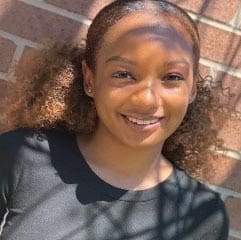 Jade Greear, a member of AIDS Foundation Chicago (AFC)’s associate board, is excited about this summer and the opportunity to go out more in the upcoming months. Jade’s optimism is something that many of us have not felt while enduring the COVID-19 pandemic, but Jade has good reason to feel optimistic. She’s fully vaccinated against COVID-19.
Jade is one of over 700,000 people of color who have been fully vaccinated against COVID-19 in Illinois as of early April. Jade, alongside other members of AFC’s Associate Board like Terrance Weeden and Matthew Estacio, is a health care worker and was included in the first phase of Chicago’s vaccine distribution plan. Like Jade, Terrance and Matthew are feeling a sense of relief and hopefulness after a year of anxiety caused by the pandemic.
“I felt great,” Terrance said, reflecting on getting the COVID-19 vaccine. “I felt like I took part in something that could be used for the greater good.”
Terrance is a medical fellow in adolescent medicine at Ann & Robert H. Lurie Children’s Hospital of Chicago and received both doses of the
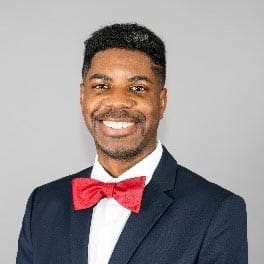 Pfizer/BioNTech vaccine in December and January.
Despite now feeling relieved, Terrance expressed uncertainty when first given the option to get vaccinated.
At first, Terrance was concerned about how quickly the vaccines were put on the market after being authorized for emergency use by the U.S. Food and Drug Administration (FDA). Despite his initial concerns, as Terrance watched his colleagues get vaccinated and not experience any alarming side effects, he grew more comfortable with the idea of getting vaccinated himself.
Matthew, who also works at Lurie Children’s Hospital as a clinical case manager in the Oncology/Hematology unit, shared similar concerns initially. Matthew’s hesitation grew after hearing about people experiencing a variety of different side effects after getting vaccinated, such as soreness and fatigue.
The Center for Disease Control and Prevention (CDC) has reported that these side effects, in addition to chills, fever and headaches, are common and more likely to appear after your second dose. These mild symptoms will appear within 24 hours of being vaccinated and should go away within a few days.
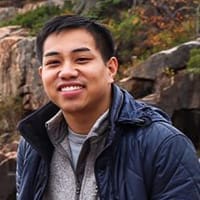 Despite his concerns, Matthew ultimately decided that the benefits of getting vaccinated outweighed his worries, and he got vaccinated in December. After his first dose of the Pfizer vaccine, Matthew did experience one of the side effects he had heard about: He had a sore arm that went away after he took some Advil. After his second dose of the vaccine, Matthew’s arm was sore again and he experienced some fatigue directly after receiving the shot.
Like Matthew, Terrance and Jade both experienced a sore arm. Terrance had no additional side effects, but Jade, who received the Moderna vaccine, also experienced mild flu-like symptoms that lasted for about 12 hours after receiving her second shot. Despite these mild symptoms, Jade was quick to say that getting vaccinated was worth it.
“It’s exciting knowing that I can protect myself,” said Jade, who is the Manager of Outreach and Testing at Heartland Alliance Health’s shelter-based care project, which works with homeless individuals. “I feel like it’s definitely been a weight off my chest right now.”
As the vaccines roll out and more Illinoisans become eligible to get vaccinated, Jade, Terrance and Matthew said that it is likely that many other people of color will share the same initial reluctance and eventual excitement that they experienced, due to mistrust towards the vaccines.
“In the Black and Brown communities there’s a lot of mistrust, and I felt like for me getting the vaccine was a step towards eradicating that mistrust,” Terrance said.
In addition to getting the vaccine and publicly sharing his personal experience, Terrance had additional suggestions for eliminating medical mistrust and supporting communities of color. Terrance suggested increasing communication about the vaccines within communities of color, setting up ample vaccination sites in the South and West Sides of Chicago that have been disproportionately affected by COVID-19, and having people of color who work in health care available to administer the vaccines to other people of color.
Jade and Matthew echoed Terrance’s ideas. All three said it is incredibly important for people to be able to ask the questions they have about the vaccines and receive honest answers. Doing so will ensure that everyone can make informed decisions about getting vaccinated and staying safe as we progress towards a better normal.
To learn more about COVID-19 vaccines and find additional resources to support your well-being during the pandemic click here.
To learn more about the work of AFC’s associate board click here.
 By Ella Shapiro
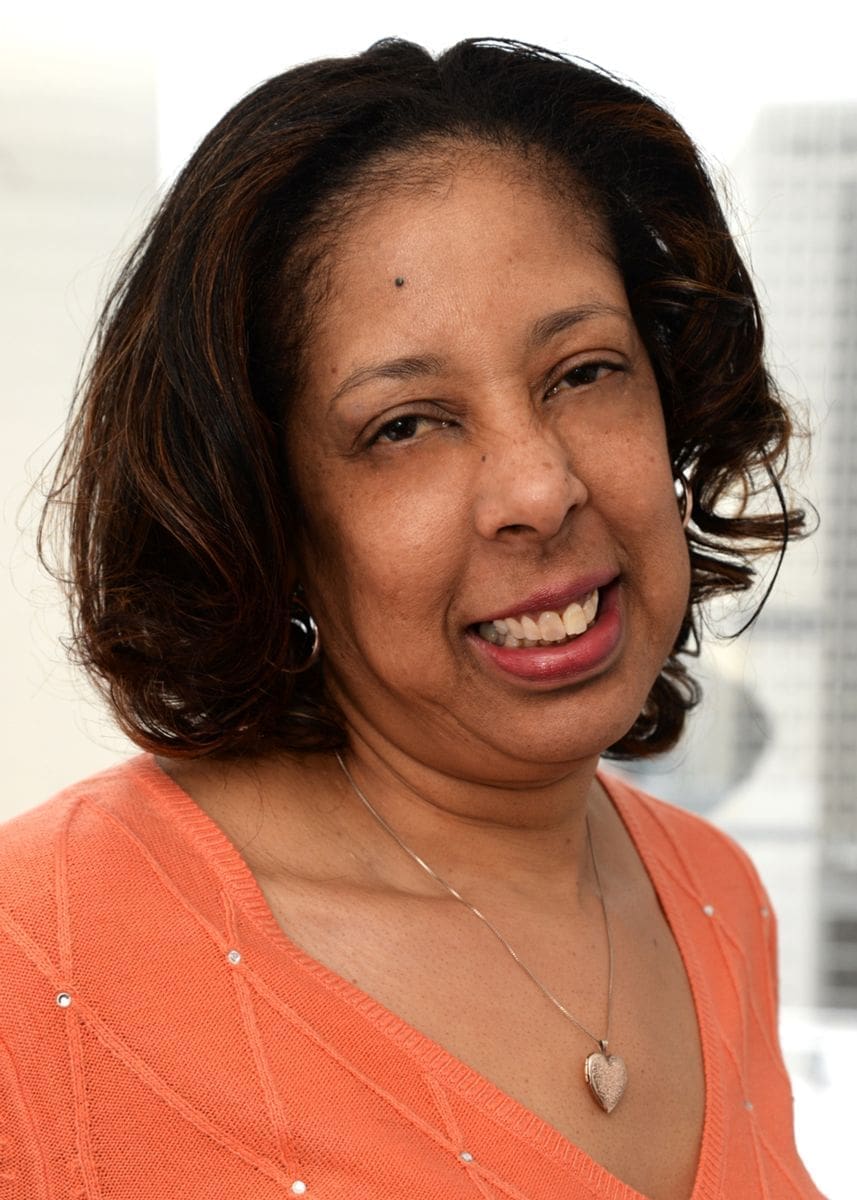
Even though Women’s History Month has come to an end, AIDS Foundation Chicago (AFC) wanted to continue the celebration of impactful women by recognizing a local advocate who has devoted herself to supporting other women for almost 30 years. Dr. Cynthia Tucker, AFC’s Vice President of Prevention and Community Partnerships, has spent decades helping cisgender and transgender women across Chicago thrive through community support systems, access to complete and affirming health care and innovative and responsive programming.
Early advocacy for women living with HIV
Cynthia started her career as a health educator at Planned Parenthood IL in 1995 where she educated young women about birth control and STI prevention.
While at Planned Parenthood, Cynthia began seeing a growing number of women come into the clinic with HIV. She quickly recognized that there were not adequate services in place to help them and took this issue to the board of directors. She explained there was an evidenced need to include HIV in the organization’s comprehensive approach to preventing STIs.
Following her conversation with the board, Cynthia began researching and advocating for women living with HIV and AIDS. In 1998, Cynthia left Planned Parenthood and started working at Chicago Women’s AIDS Project as the Director of Prevention, where she continued helping women living with HIV and AIDS. During this time, the health outcomes for women living with HIV and AIDS were very bleak, but the thing Cynthia remembers the most was the strength of the women she worked with.
“I have learned so much from so many women,” Cynthia said. “I have been blessed to really meet people who were just resilient.”
In 2005, Mark Ishaug, AFC’s then President/CEO, invited Cynthia to apply for the Director of Grantmaking role at AFC. This invitation surprised Cynthia, who until that point had focused her career on prevention, not grantmaking. However, Mark insisted that Cynthia apply, telling her that he wanted her at AFC and that they could talk about how she could contribute to AFC’s prevention efforts once she got there.
“Mark said, ‘If you want prevention programs here, you’ll have to build it,’ and so I began the task of really trying to build out prevention programs,” Cynthia said.
Innovation and Action at AFC
Cynthia took Mark’s words to heart and got to work. One of Cynthia’s first projects at AFC was the Southwest Women’s Collaborative, which brought health education into community spaces by using beauty salons as messaging centers to spread awareness about sexual health. The private-foundation supported program started just before Cynthia joined AFC, but once she was there, she took the program and ramped it up. Cynthia’s efforts expanded what started as a one-year project, to last for four years.
Cynthia extended the collaborative to lingerie shops, nail salons and barber shops and started offering testing services in addition to health education. The project initially focused on engaging Black women, but as it grew, it was able to reach Latinx communities and other priority populations such as same-gender loving men to have an even greater impact in Chicago. From this point on, Cynthia’s commitment to prevention and her creativity in developing new methods of supporting women living with and vulnerable to HIV was clear.
“I see a problem and I like to quickly pivot and address that problem,” Cynthia said.
Since the Southwest Women’s Collaborative, Cynthia has continued to create and implement innovative programs at AFC like the Safe and Sound Return Partnership, the Public Health Boot Camp, Learning Circle Collaborative, Women’s Connection and now Women Evolving. Each of these projects has illustrated Cynthia’s ability to think outside of the box and act quickly to make sure that people have access to the resources they need.
“I am what is known as a ‘doer,’ I think more so than a ‘processor,’” Cynthia said. “I like the idea of processing very quickly and saying this is what needs to be done and really trying to partner with people to get it done.”
Elevating her ability to serve cis and trans women
While Cynthia’s career has tackled HIV prevention and care from a variety of angles, women have always been at the heart of Cynthia’s practice. After working on Project Elevate, an AFC program where Cynthia worked intimately with young cis and trans women of color to expand awareness about HIV and STI disparities, she decided that she wanted to educate herself more deeply about the social determinants of health that were impacting these young women. She believed that by learning more about their experiences, she could improve her ability to help them.
“I can never be in their shoes,” Cynthia said. “But I can have a better understanding, more empathy about what they are going through.”
Cynthia’s desire to expand her ability to serve young cisgender and transgender women of color led her to pursue a doctorate in public health from Walden University, which she earned in 2020. Her dissertation focused on how strong social support systems are critical in establishing prevention for young women of color. Since completing her doctorate, Cynthia has focused on using her research to continue supporting young women and identifying the specific barriers that impact cisgender and transgender women of color’s wellbeing and health.
When asked what keeps her motivated after decades dedicating herself to uplifting women, Cynthia said: “Someone came up to me and said, ‘If you reach one woman and you have an impact and you change their lives, you have really done a lot.’ I always take joy in that and try to do that.”
To support the Safe & Sound Return Partnership or Women Evolving and Cynthia’s work supporting women living with HIV, donate here. To learn more about Cynthia’s work and one of her programs, the Safe & Sound Return Partnership, click here.
On March 29, 13-year-old Adam Toledo was fatally shot by a police officer during a foot pursuit in Chicago’s Little Village neighborhood. Despite outcry from both the community and his family, the City of Chicago has not released full details surrounding his death. AIDS Foundation Chicago stands with Enlace Chicago, ACLU-IL and other organizations in demanding a full and transparent investigation and reform of all policies that contributed to the police killing of Adam Toledo.
We echo Little Village community organization Enlace Chicago’s demand that “the City of Chicago prioritize and expedite the investigation, and not leave a stone unturned to find out the circumstances that led to this tragic outcome.” Additionally, we urge the Chicago Police Department to dramatically improve its policies around on-foot pursuits of suspects. As ACLU-IL Legal Director Nusrat Choudhury notes, “A Chicago Police Department policy on foot pursuits is long overdue.” A Chicago Tribune report from 2016 uncovered the large percentage of police shootings that start as foot pursuits, and even in the week of Adam’s murder, another foot pursuit by CPD officers resulted in the death of Portage Park father Anthony Alvarez on March 31.
AFC has seen too many times the results of unrestrained pursuits by police officers resulting in unjust injury and death, particularly among Black, Indigenous, and people of color (BIPOC). The bias-driven murder of BIPOC individuals at the hands of the state is a horrifying example of this. The number of Latinos/Latinx people shot to death by police over the past five years is only slightly behind the number of Black people whose lives were ended by police officers. This is only the most extreme example of a racist and biased criminal justice system that needs transformative changes to protect the health and lives of BIPOC Chicagoans.
Simply put, racism is a public health crisis. Systemic racism drives the disproportionate number of BIPOC individuals who are shot by the police in the same way it drives the disproportionate number of BIPOC individuals who are living with and vulnerable to HIV. AFC is committed to standing up against systemic racism wherever we see it.
 By Ella Shapiro
Working as a server can be incredibly stressful. During my shifts I am constantly multitasking: running food, taking orders and calming upset customers. I prepare each day by stocking extra plates and silverware, making sure I know the daily specials and fluffing the cushions on each chair. I prepare like this in the hopes my shift will run more smoothly. But being a server during a pandemic? That’s something I could never prepare for.
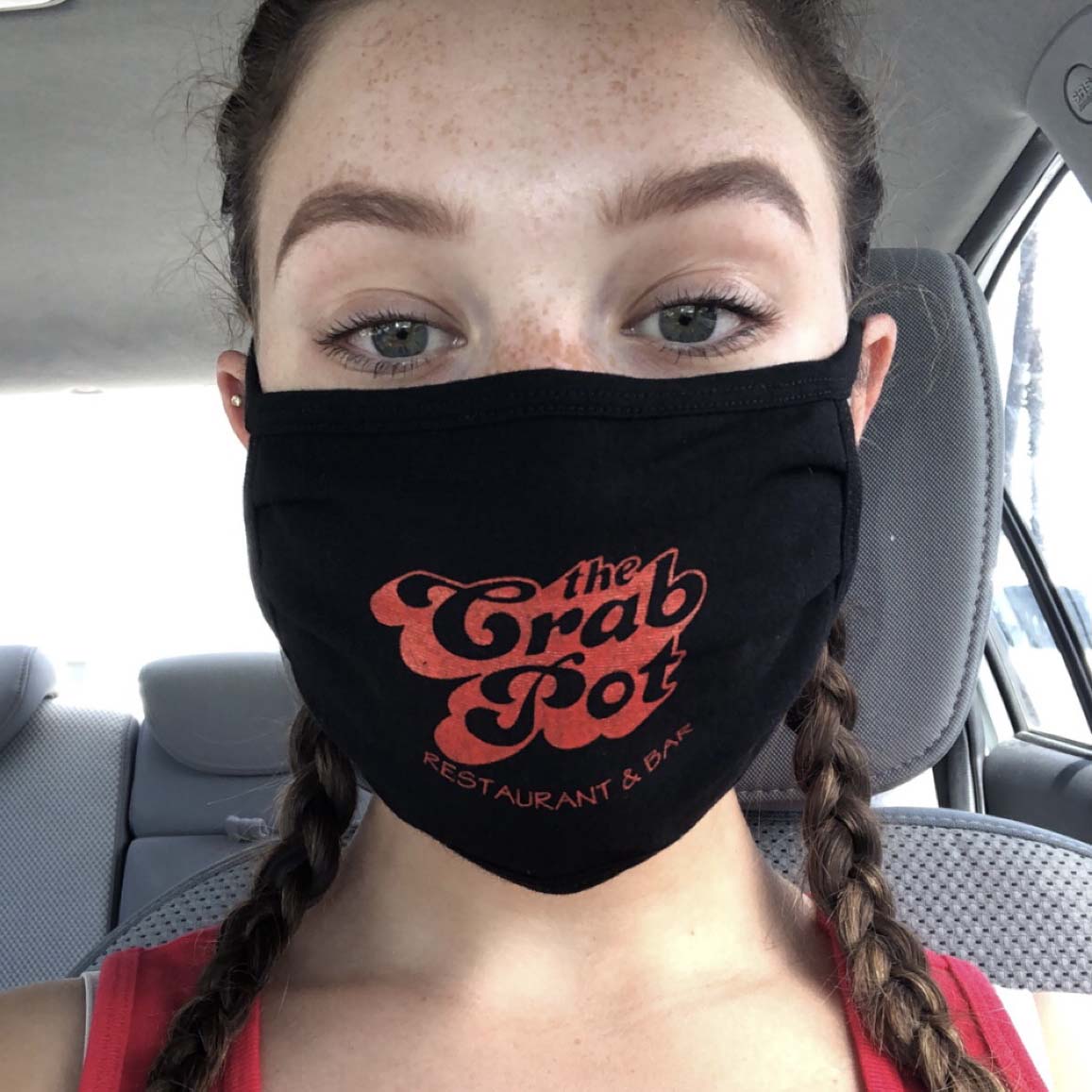
My name is Ella, and you might or might not already know me as AIDS Foundation Chicago (AFC)’s editorial intern. When I’m not writing stories for AFC’s blog or taking journalism classes at my school, California State University, Long Beach, I work as a server at a nearby seafood restaurant.
Like many people, I did not know what to expect when the pandemic started. In efforts to reduce the spread of COVID-19, restaurants in Southern California stopped allowing guests to dine-in and transitioned to delivery and take-out services. The closure of restaurants and other similar establishments left me, and almost 800,000 other people working in Los Angeles County’s hospitality sector, unemployed. I spent the next few months secluded in my apartment where I finished the spring semester of my junior year online and practiced social distancing. In June of 2020, I received the news that restaurants were reopening and that I would be going back to work.
I had mixed feelings when I heard this. On one hand, I was tired of spending every day in my apartment. I missed being outside and interacting with people. On the other hand, I was terrified of getting COVID-19, and even more scared of spreading it to others. I knew that as a server I would be exposed to many people during each shift, and that while they were dining, they would not be required to wear masks. Despite my conflicting feelings, I knew that I had to return to work because I could not afford to continue being unemployed.
Going back to work felt surreal at first. I had to wear a mask and a plastic face shield; guests were only allowed to eat outside; and nearly half of the restaurant’s tables had been removed to make it possible to keep an eight-foot distance between each party. This new environment did not resemble the one I was used to working in, but I quickly adjusted and did my best to stay positive.
This adjustment continued until winter, when restaurants in Southern California closed again due to a rapid increase in new COVID-19 cases.
Now, it is almost a year after the initial restaurant closures, and restaurants have reopened with limited indoor and outdoor dining. I no longer think twice about putting on my mask and face shield before each shift; it is simply part of my routine.
On March 1, people working in food and agriculture in Los Angeles County, including restaurant workers like me, became eligible to get vaccinated against COVID-19. A week later, I received my first dose of the Moderna vaccine. Like a lot of people who were initially hesitant to get vaccinated, I had my reservations, but ultimately chose to get vaccinated in order to protect myself while I am at work, where I cannot adequately socially distance from my coworkers and guests.
Once I receive my second dose of the vaccine in April and am fully vaccinated, I will not only be physically safer while serving, but I will also feel less anxious when interacting with people during my shifts, which is a huge benefit for my mental wellbeing.
In the past year, I have grown to be comfortable with the uncertainty that COVID-19 has created, but it has been difficult to accept that other service workers and I have had to put ourselves at risk of getting COVID-19 to support ourselves financially. Among other issues, the pandemic has highlighted the inequalities that exist for people working low-wage service jobs. Reports have indicated that in Los Angeles County, these jobs are more likely to be held by Black and Latinx residents than white residents, and have contributed to a higher number of COVID-19 cases reported in Black and Latinx communities. Even as cases decline across the county, disparities remain, and systemic racism has contributed to disproportionately devastating health outcomes for communities of color.
I am incredibly grateful that in Los Angeles County food and agriculture workers have been prioritized for the vaccine, because I feel like we are finally receiving some protection after months of being vulnerable to COVID-19. I am also excited to see restaurant workers in other parts of the country becoming eligible to be vaccinated as the vaccine roll out continues. In Chicago, people working in food and beverage services are included in Phase 1C of the city’s vaccine distribution plan, which began March 29.
After a year of fear and instability, I finally feel like there is a light at the end of the tunnel. Now, I am still multitasking: running food, taking orders and becoming hopeful about the months ahead.