AFC’s 2018 Annual Report: Setting the Pace
Review photos from the event
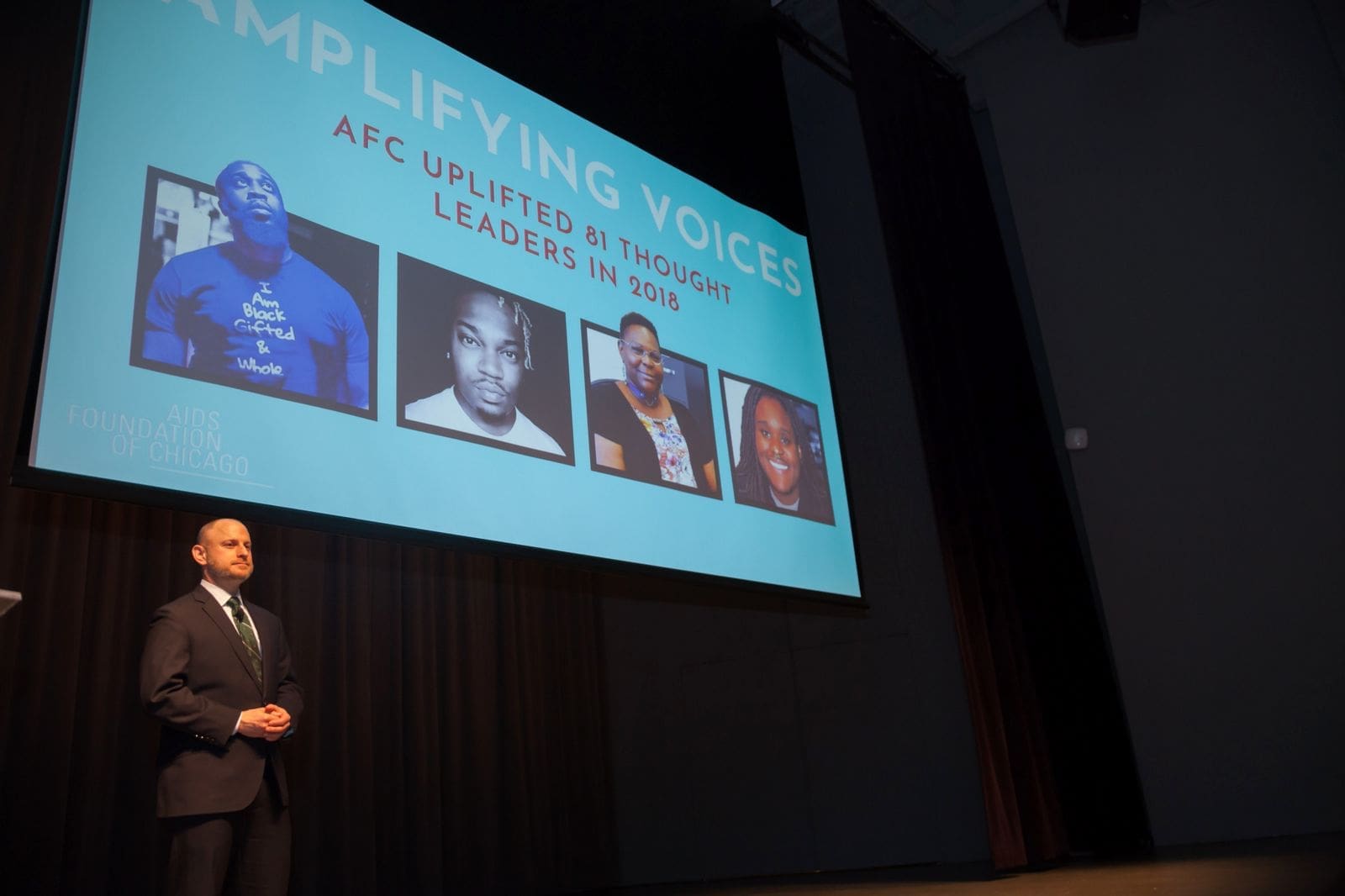 Hello and good evening! Thank you, Anna, for kicking our party off tonight and for leading AFC’s Board to achieve great things in 2018. I’m so grateful for the leadership and support you have offered me and AFC this past year.
In 2018, we kicked off a great race toward an amazing goal — a goal we couldn’t have imagined when the AIDS Foundation of Chicago opened its doors 34 years ago. That goal is simple: to end new HIV transmissions in Illinois by 2030. All the work we do at AFC contributes to that goal: from leading case management and housing, to collaborating with the health care system in Illinois, to advocating in Springfield and Washington — we are advancing health equity so that one day we can end the HIV epidemic in Illinois.
Thank-yous
Setting the pace means being a leader and guide for others — we do NOT do this work alone. We owe deep thanks to many people in this room who have contributed to our success in 2018.
In addition to the AFC Board, I want to thank our Associate Board for their deep commitment to our movement. We are grateful for everything you have done for AFC — especially cochairs Brooke Morris-Chott and Keith Bukowski.
Next, I want to recognize the Service Providers’ Council, which is made up of leaders from 32 organizations across the HIV sector in Illinois. Thank you for providing a vibrant, direct connection to the 6,000 people AFC serves each year. Thanks especially to Erie Crawford and Norma Rolfson for leading this group.
Our donors showed deep commitment to our vision of a world in which all Illinoisans thrive. We are so grateful for every dollar you gave to us to fuel our work in 2018.
First, I want to recognize our corporate gifts, which reached more than $1.1 million dollars last fiscal year. Thank you! And thank you especially to 9 companies that are part of our Corporate Partnership Program. They each gave more than $25,000 to AFC with Gilead Sciences and ViiV Healthcare leading the pack.
Foundations that share our vision to end new HIV transmissions have come to the table through about $1.5 million in contributions to AFC. Thank you for sharing our priorities.
Thank you also to government partners like the Chicago and Illinois Departments of Public Health and the U.S. Department of Housing and Urban Development for funding and entrusting AFC’s work in overseeing case management and housing for people living with HIV.
Let’s give all our foundation, corporate, and government supporters a round of applause!
Now, let’s recognize the people who donated to AFC last year. Through events, CommunityDirect teams, online donations, Facebook campaigns, major gifts and more, people like you donated approximately $1.5 million dollars in fiscal year 2018.
Thanks especially to our Founder’s Circle members, who each gave $10,000 or more to advance our work, and Sable Sherer Legacy Society members, who have pledged to include us in their will or estate plans.
Our events not only raise awareness and spirits — they also netted more than $700,000 in fiscal year 2018 to support AFC’s programs. Thanks for fundraising for or attending AIDS Run & Walk Chicago, TEAM TO END AIDS, Tee UP to End AIDS, World of Chocolate, and Dance for Life, presented by Chicago Dancers United.
And here’s some big news for 2019: we have a date for AIDS Run & Walk Chicago! It’s going to be on Saturday, October 5, 2019. Mark your calendar and start your Couch-to-5K 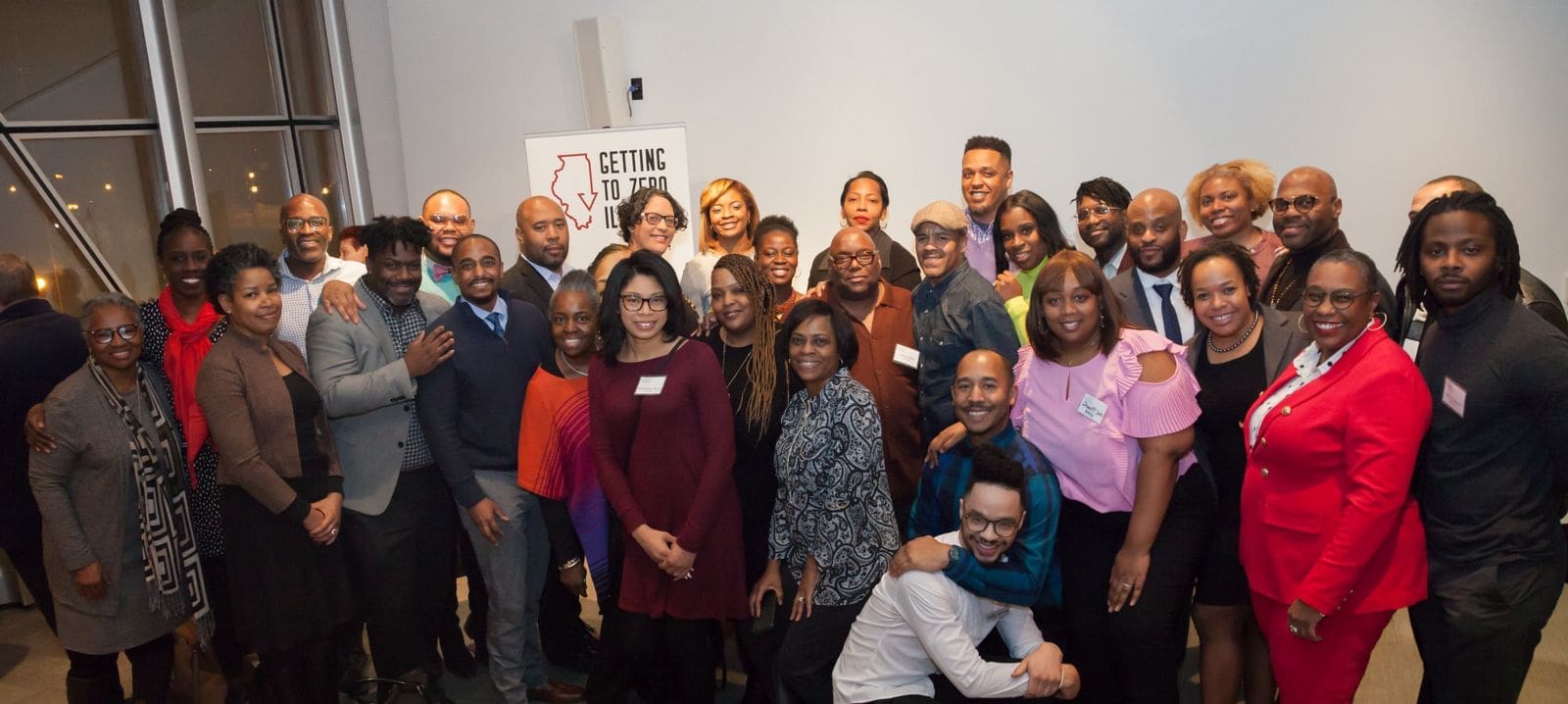 program tomorrow!
I want to give an extra-special thanks to Edward and the entire fundraising and special events team for supporting our event attendees, foundations, corporate supporters, and vibrant community of donors.
No list of thank-yous would be complete without recognizing the talented staff of AFC. Thanks for helping us move the needle closer toward health equity through your teamwork, compassion and so much more. I particularly want to thank our Research Evaluation and Data Services team, led by Banita and Joel, and Program Development team, led by Andrea, for crunching many of the numbers you will see on screen tonight. I also am grateful for Laurie and our Finance team and Tom and our Operations team for literally keeping the organization running and making sure we all get paid. Thanks to Brian Solem and Ashley Brown for their amazing work on tonight’s presentation. Thank you!
Epidemiological successes and viral suppression
Our theme this year is setting the pace: AFC’s work sets the tone and vision for the HIV and AIDS service sector in Illinois. HIV service providers across the state have a lot to celebrate: the latest data shows that the number of new cases of HIV in IL has dropped almost 25% over the last decade. Plus, almost 87% of AFC’s Ryan White case-managed clients were virally suppressed last year — that’s a whopping 6% increase from 2017. Viral suppression means that their meds are working and they are undetectable. This is amazing news for them, because it means they’re living healthier lives. It’s also amazing news for HIV prevention, because being undetectable EQUALS being untransmittable! U = U means that people with undetectable viral loads can’t transmit HIV sexually.
We still have so much work to do. But thanks to collaborative relationships across systems, partner organizations, and people in Illinois, we are making strides toward improving the health of people across the state!
Health equity
Health equity is AFC’s ultimate goal — to make sure that everyone has access to health care in the way that works best for them. We wanted to bring back this great graphic from the Robert Wood Johnson Foundation to unpack health equity. Right now, we’re in the top system: all the T2 athletes have the same bike, even though it just doesn’t work for most of the cyclists. That’s equality — full of good intentions but bad outcomes. What AFC works toward is the bottom scenario, where all T2 athletes have access to the bikes they need to finish the race. That’s equity.
AFC’s strategic plan
Health equity has been at the core of AFC’s work for decades, but we officially named it in Positive Momentum, our strategic plan from 2016 to 2018. We focused on four priority areas over those three years: improving health equity, preventing new cases of HIV, being a knowledge and collaboration center, and being a bold voice for change. Tonight, we celebrate the work we achieved in 2018 to close out this ambitious plan. We owe a huge thanks to Kathye Gorosh at AFC and Laurie Alpern, who worked tirelessly to build and execute this plan. Thank you!
 Improving health equity
Let’s continue talking about health equity — the first pillar of our strategic plan. We moved the system closer to health equity in five big ways last year:
First, by supporting and training 149 case management positions across 36 agencies. Those case managers provided custom support to over 6,200 clients in 2018. Thank you, Bashirat and the Care team, for supporting our case managers and clients, and to all our partner agencies and case managers!
Second, we know that housing IS health care, which is why we connected 890 people to long-term housing and supportive services to help them thrive in their homes. Now, they will have a dramatically better chance at achieving their health goals. Huge congrats to Pete Toepfer and the Housing team for enduring major growth and taking on incredible feats toward ending homelessness.
Third, our innovative, five-year-old CommunityLinks program found 1,314 people who were disconnected from their health insurance for a variety of reasons and helped them get re-engaged in health care. Big kudos to Saul and the Community Links team — our in-house special investigators — and our partner, Aetna Better Health!
Fourth, our Women’s Connection program reached its peak in 2018 as a collaborative space to exchange ideas and build plans to improve the health of Chicago’s Black cisgender and transgender women. We couldn’t have done it without Cynthia, Donnise and L’Oreal.
They are also the team behind a new program called the Safe and Sound Return Partnership, our fifth major step toward health equity. Its goal is to help people leaving jail or prison who are living with HIV to get what they need on the outside. They are working with 52 people now, and their goal is to help an estimated 215 people gain housing, job training, job placement, peer-led support, and so much more. Watch this video to learn more about the Safe and Sound Return Partnership:
Let’s take a moment to thank Dee, who is here with us tonight, and Raven for producing this incredible video!
Preventing new cases of HIV
Our second strategic plan pillar is preventing new cases of HIV. This work looks so different today than it did even five years ago — and AFC supported three groundbreaking methods of preventing new HIV cases last year.
First, there’s PrEP, a pill and a program that prevents sexually transmitted HIV among people who are HIV-negative. AFC continued to steer the 343-member Illinois PrEP Working Group, which leads efforts in Illinois around the stunning PrEP4Love campaign, new opportunities for adolescent access to PrEP, and more. Thanks to Jim Pickett for his enduring leadership in this arena!
Second, there’s U = U, which, as I mentioned before, means that people with an undetectable viral load can’t transmit HIV sexually. We’re committed to supporting our clients in case management to achieve undetectable viral loads — or whatever level they can achieve. We are so proud to know that almost 87% of AFC’s Ryan White case-managed clients were virally suppressed last year.
Third, we had a major victory with female condoms in 2018, or internal condoms, as they are now called, thanks to AFC-led advocacy with the U.S. Food and Drug Administration. After years of leadership through the AFC-housed National Female Condom Coalition, 2018 brought a radical shift in the way internal condoms are regulated, researched and marketed. Congrats to Sara Semelka and the rest of the Policy team for being a loud voice behind internal condom advocacy for so many years. We did it!
Being a knowledge and collaboration center
We can’t call ourselves the pace-setter for the HIV sector if we’re not offering the sector a space to grow, learn and exchange ideas and best practices. That’s why our third strategic plan pillar focuses on our role as a knowledge and collaboration center.
Last year, Cynthia Tucker and Jim Pickett set the stage for four fascinating conferences that featured nationally recognized speakers and over 100 attendees each. They explored topics like race and HIV, U=U, hepatitis C and the opioid epidemic.
The audience for our conferences is the broader HIV community, but we also offer exclusive trainings for the HIV workforce. Last year, we held 49 in-person trainings and 11 online trainings for case managers to help them grow within an ever-shifting environment and help clients with ever-changing needs. Thanks to Mara and the Care team for making the trainings meaningful!
Being a bold voice for change
As always, AFC raised its own voice in 2018 and amplified other voices on a spectrum of issues that impact our communities. Let me offer you a few key highlights that exemplify our final strategic pillar, Being a Bold Voice for Change:
First, we gathered with the Legal Council for Health Justice, Howard Brown Health, and many more partners to challenge the Illinois Medicaid program’s approach to curing Hepatitis C. And because an estimated 1 in 4 people with HIV are co-infected, curing Hep C is essential if we are to improve health equity for people living with HIV. This is Peter McLoyd and amazing advocate, who is living with HIV and was recently CURED of Hep C. Although there has been an easy-to-take cure for hepatitis C for years, the state was restricting access to it for people on Medicaid. Not any longer — thanks to our dialogue (and the threat of a lawsuit by Legal Council for Health Justice), the state changed its policy, and now nearly everyone who needs a cure gets the cure.
Second, with leadership from legislators in Springfield who shared our vision around health insurance that works, we collaborated with the Protect our Care Illinois coalition to help pass a bill that banned short-term health insurance plans in our state. This stopped another one of President Trump’s devastating policies from being enacted here in Illinois.
Speaking of Trump, you can count on AFC to work at the state and national level to defend our community against his administration’s attacks. In our third highlight, we met with leaders in D.C. on 12 trips and brought a team of 8 advocates to AIDSwatch. We navigated the Trump administration’s approaches to health care and HIV, and boosted calls to action from national partners in HIV, immigration, and health equity work.
I want to extend a huge thanks to our Policy and Advocacy team for their tireless efforts to change the conversation about HIV and health equity, and especially Ramon Gardenhire, who just left AFC to work for Governor Pritzker. We’re all excited to have more friends in the governor’s office!
Our Communications team also builds up AFC’s bold voice. Last year, they created space for 81 individuals who represent the communities we prioritize to share their perspectives through storytelling, videos, blog posts, and other mediums. Their voices became AFC’s voice and helped chip away at stigma. Thank you, Comms team!
We are always looking to add new advocates to our ranks! If you want to lend your voice to our work, please text the letters A-F-C to 40649 and get text messages when your advocacy is needed most. Or, join us for our Virtual Advocacy Day on Wednesday, April 24 or our in-person Advocacy Day in Springfield on Tuesday, May 14 to let your voice be heard.
Our next strategic plan
Now that we have closed the books on our 2016-2018 strategic plan, we will build on its core tenets into the next three years. Our new strategic plan, called Positive Momentum 2, revisits the elements that made our previous plan so successful and adds to them.
Racial justice and AFC
Most notably, we have added a new pillar to our strategic priorities: a commitment to strengthening our organizational excellence. Part of strengthening AFC is recognizing our need to work toward ending racism and white supremacy. We will never achieve our mission without first recognizing and dismantling the racist core of so many systems we work within. These systems are part of the reason that HIV disproportionately impacts our priority populations: young Black and Latinx gay men, transgender women of color, and Black women living in high-incidence areas. To start the conversation, we need to look inward. As of February, more than 90% of our staff have attended Undoing Racism, a two and a half day intensive workshop that explores racism and white supremacy. AFC’s Operations and HR teams and the staff Race and Social Justice Committee have worked hard to prioritize diversity, equity and inclusion at our organization and lay the foundation for organizational excellence.
Last year, we built a new set of values for AFC moving into the future. They are: People-first, Compassion, Accountability, Meaningful engagement, Justice in action, and Innovation.
AFC is an assembly of people moving our community forward, and I’m so grateful for the work we have done together to strengthen our organization.
Getting to Zero Illinois
My final note is a glimpse into the future — toward the finish line of our work together: Getting to Zero Illinois. Every success we have described for your tonight has, in some 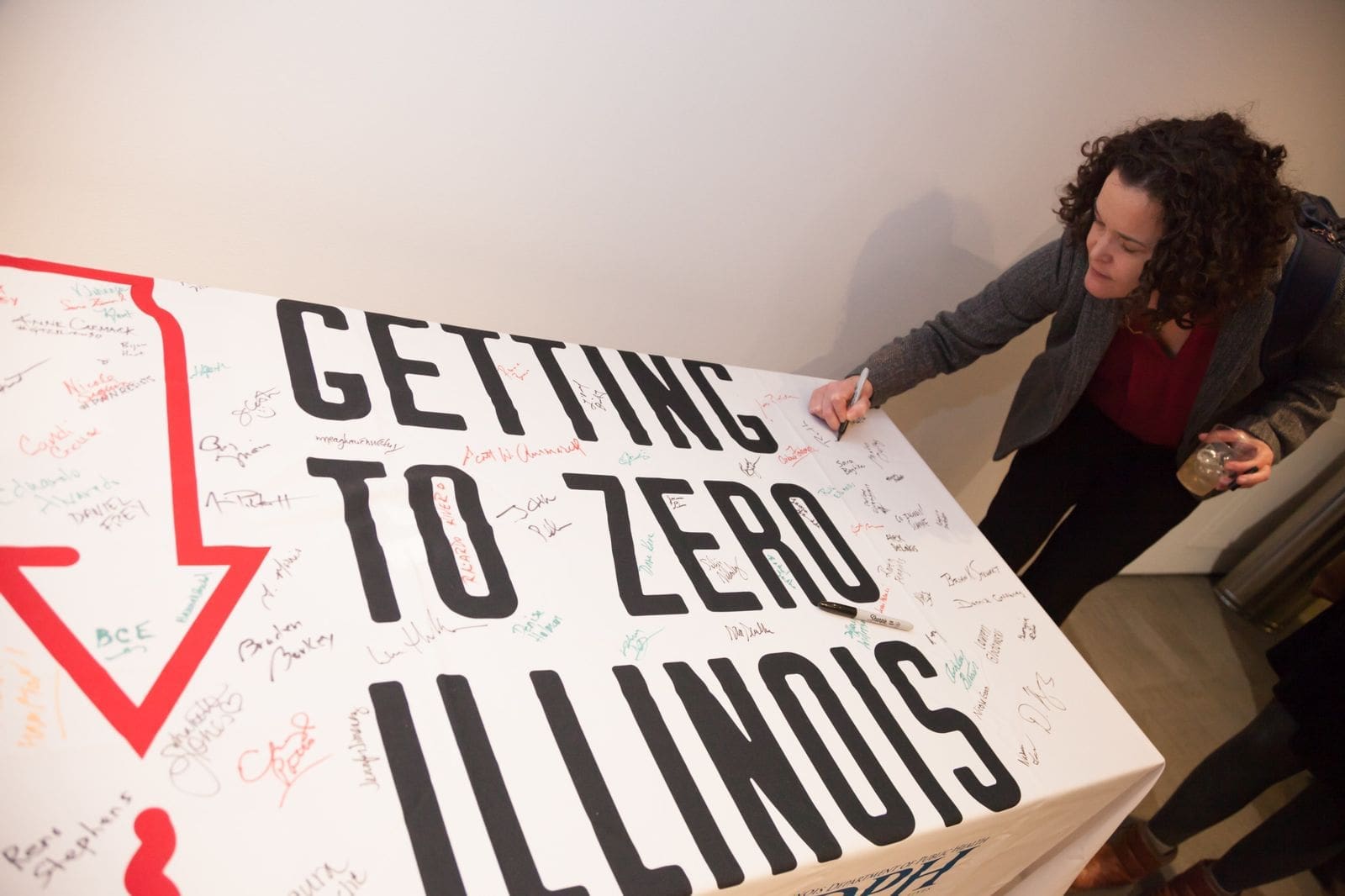 meaningful way, contributed to this plan. We are going to end new HIV transmissions by 2030 through increasing usage of PrEP among HIV-negative folks and HIV medications among HIV-positive people. We’re doing so through making major updates to six components of the HIV care system.
Getting to Zero Illinois is at its core a collaborative effort. We are so grateful to Getting to Zero Illinois’ steering committee, which is made up of health professionals and people living with HIV from across Illinois. Thank you to my co-leaders, Dave and Eduardo at CDPH and IDPH, and AFC staff Sara, Simone, and Meg for being the backbone of this important work. But make no mistake – Getting to Zero will take AFC’s continued efforts to lead policy creation, oversee case management and housing opportunities for our community, and be a leading voice in Illinois against HIV stigma. Stay tuned for the release of our final plan in April.
Farewell!
Thank you once again for being here tonight and for the efforts you made in 2018 to join this race of ours. We will continue to set the pace toward our finish line with your trust and support. Learn more about our efforts last year by visiting pace.aidschicago.org for a full review of our work.
Now, join us for beer, wine and snacks in the main hall — and let’s continue this conversation about reaching true health equity in Illinois!
 Today, Gov. Pritzker fulfilled a campaign promise and announced that Illinois Medicaid will cover gender-affirming health care services for transgender and gender-nonconforming people!
Read the official statement here.
For many years, Illinois Medicaid had likely violated the state’s own Human Rights Act by banning Medicaid coverage for medically-necessary, gender-affirming care. The AIDS Foundation of Chicago (AFC) and advocates have pushed Medicaid to provide coverage for medical treatment that transgender and gender-nonconforming people need to thrive. We are extremely grateful to Gov. Pritzker for taking action on this issue.
“Today, Illinois took another critical step toward treating transgender people with dignity and respect by recognizing that their health care needs must be affirmed and fulfilled,” said John Peller, president/CEO of AFC. “Low-income trans Illinoisans — some of the most vulnerable people in the state — will finally be able to get the medically-necessary health care services that are their right.”
AFC thanks partners Howard Brown Health, the ACLU of Illinois, Equality Illinois, the TransLegal program at Chicago House and Social Service Agency, Lambda Legal Defense and Education Fund, and the National Center for Transgender Equality for their leadership and advocacy to ensure that transgender people and gender-nonconforming folks have access to lifesaving and medically-necessary treatment.
 By Sarah Pasternak
When I tell my friends and family that I’m fundraising for the AIDS Foundation of Chicago through TEAM TO END AIDS (T2), I tend to get some follow-up questions: Why am I SOOOO into raising money for HIV and AIDS services? Why am I signed up for a second marathon with T2? Why have I had the Until There’s a Cure bracelet since 1996?* Why did I join the Ribbon Project AIDS Awareness club in college when I wasn’t putting it on my resume to get into medical school?
Read on for some answers!
I remember growing up in the eighties, and my parents would watch the news in the morning and night. I would block out the boring stuff, but I got sucked in by the human-interest stories. The one that stuck with me most was the story about Ryan White.
I remember his story was all over the news. This kid had an illness and they would not let him go to school. People protested about it and said awful things about him … about a KID. I asked my parents about it. I watched every news story about Ryan White that I could. I tried to make sense of why people would be SO MEAN to a kid who was struggling with something that he could not change.
I wanted to be his friend. I wanted him to know that not everyone was scared of him. Based on my understanding about how the virus is transmitted, he was not a threat to anyone around him, and I simply couldn’t understand why people would be so incredibly awful.
This story stuck with me. I read Ryan White’s autobiography and joined his “fan club.” I wore my Until There’s a Cure bracelet with the idea that if people could not get rid of their virus I wouldn’t take off my bracelet until the virus was no longer being transmitted. I participated in awareness campaigns, attended a training at Camp Heartland, and joined the AIDS Awareness club at college. (This is actually where I met my husband!)
Fast forward to 2018: Two of my friends got into the Bank of America Chicago Marathon. I didn’t (it’s a lottery system, so not everyone who wants to run the Chicago marathon gets to do so). I decided to go the charity route, but I had to find one I could wholeheartedly stand (run?) behind. I saw T2 — the TEAM TO END AIDS — and I was in. I felt a bit guilty that I had used a charity to get my race bib, but I quickly realized this was the team I was destined to be on: a great cause, great people, and an experience I will treasure forever. And then repeat again this October.
Recently, I was looking for a book in my collection and I stumbled upon the copy of Ryan White’s autobiography that I read as a kid. I showed it to my daughter, and she was also taken by his story. She’s just at the beginning, but I’m very curious what she takes out of the story and how it shapes her own thinking.
The story of Ryan White and the senseless prejudice he endured shaped the person I am today. We are all human beings who deserve love and acceptance and the ability to live life to the fullest and not be affected by the fear and prejudice of others.
I’m running the Bank of America Chicago Marathon on Sunday, Oct. 13, 2019 with my T2 family in honor of those who are living with HIV and AIDS and in memory for those who have left us too soon.
To improve awareness of PrEP among Chicago’s Black cisgender women and the providers who serve them, the local award-winning HIV prevention campaign PrEP4Love today released a three-song “visual EP” in partnership with local OB/GYN and rapper Dr. Every Woman — a.k.a. Dr. Wendy Goodall McDonald — and Northwestern University-based media platform OTV – Open Television.
 Titled “Catch Desire” with lyrics and vocals by Dr. McDonald, the EP reimagines all-time favorites Computer Love by Zapp, Shoop by Salt-N-Pepa and Anaconda by Nicki Minaj into a seamless musical and visual experience uplifting the sexual lives, health and wellness of Black women. Witty, engaging and fun, the EP features information on PrEP, a once-daily pill that protects against HIV.
While PrEP is an important HIV prevention intervention for adults and adolescents vulnerable to HIV, very few cisgender women are taking PrEP. Out of approximately 5,400 individuals using PrEP in 2017 in Illinois, around 370 were cisgender women, with 135 in the Chicago area.
“It is so exciting to be releasing this work,” said Dr. McDonald. “In partnering with PrEP4Love, my goal was to not only reach sexually active black women – directly – about PrEP, but to influence the health care providers who serve my community, my colleagues. Quite honestly, too many of us don’t know about PrEP, or think it’s only for gay men, when in fact, one in six new HIV infections in Chicago are among women. PrEP, which is up to 99% effective, can drastically reduce those numbers among my sisters.”
Funded by a grant from the Chicago Department of Public Health, the EP was produced by an all-people-of-color crew led by People Who Care, Inc. with direction by Elijah McKinnon, Ashley Battle and Demetrius Barry. Filmed at Silent Funny on Chicago’s West Side, the EP highlights appearances by local influencers, such as recording artist and model Syren, advocate and actor Damon Williams, choreographer and stylist Darling Shear, and dancers Melody and Melissa Koops.
“Sex is about connection. It’s about communication and intimacy,” said McKinnon of People Who Care, who has spearheaded community mobilization activities for the PrEP4Love initiative since the campaign launched in February 2016. “We all deserve to enjoy healthy sexual lives without HIV interfering. We want more women to know that PrEP is a great option for them to consider.”
A project of the Illinois PrEP Working Group and managed by AIDS Foundation of Chicago, PrEP4Love launched on Valentine’s Day 2016. Visit www.prep4love.com to experience the EP and learn more.
 By Raven Feagins
UPDATE: On June 26, 2019, Governor Pritzker signed a bill into law that will legalize recreational cannabis for adults in Illinois by the start of 2020. Once this new law is in place, all Illinoisans 21 years and older will be legally allowed to possess up to 30 grams of cannabis, as well as varied amounts of THC (the psychoactive ingredient in cannabis)-infused products. With this, Illinoisans living with HIV and other chronic conditions who benefit from consuming cannabis and cannabis-derived products will no longer need to jump through hoops to access the products they need to stay healthy and have a better quality of life.
Cannabis has had a long, demonizing and even racist history in the United States. However, throughout the country, laws are changing to legalize the sale and use of cannabis (also known as marijuana, pot and other casual names) for both recreational and medical use. Even Illinois, which currently has legalized medical cannabis and decriminalized possession of small amounts of the substance, seems to be headed toward legalizing cannabis for recreational use. However, legalizing cannabis for medicinal purposes in particular has become more popular over the years because of its known anti-inflammatory and appetite-inducing properties, on top of a number of the other positive benefits for lots of people living with various health conditions. Although there is research that warns about the effects of smoking cannabis (and there is still more research to be done) for people living with HIV, it is well known in the HIV community that cannabis consumption can help offset the effects of muscle soreness, nausea, loss of appetite and other symptoms that often come with HIV and the medications used to treat it. Despite these benefits, however, there are still providers who are skeptical.
“A lot of physicians who sign for patients with HIV to get their [medical cannabis] card don’t always want their patients on medical cannabis,” said Richard Park who has been in the cannabis industry since 1998 and currently works as a retail consultant for Dispensary 33, a medical cannabis provider in Chicago’s Andersonville neighborhood. “People try to provide cannabis as the last resort, but that’s the absolute wrong way to go about it. It’s not compassionate.”
Park went on to explain that many of the modern medications that would be used to treat symptoms, such as nausea, can be a lot more aggressive on the body than cannabis and would also just add another pill on top of someone’s already intensive regimen. This is one reason why Park and many others advocate for cannabis as a less harmful alternative for people living with chronic conditions.
“When I started on HIV treatment meds in ’97 or so, I was on a protease inhibitor. The pills were huge, and I took eight at a time. I was nauseous every day for 2 years — it was really hard,” said Jim Pickett, senior director of prevention advocacy and gay men’s health at the AIDS Foundation of Chicago. “It got to a point just looking at the pills would make me incredibly queasy.”
Pickett has been living with HIV since 1995 and recalls all that his body endured within those first few years of being on his original HIV treatment. Because of the constant nausea, Pickett was unable to enjoy even the smell of food. The constant stigma and not knowing how much longer he had to live developed into anxiety and depression – things he still struggles with, actually. At the time, there were not as many options available for HIV treatment as there are now, so Pickett had to stick with what was keeping him alive. He had to find ways to find ways to help keep him on his HIV treatment but counteract the downsides.
“I always enjoyed pot recreationally, and one day I realized that just taking a hit before taking my medication made me feel so much better,” said Pickett. “The nausea disappeared almost instantly. I could take my pills, I had an appetite, and I wasn’t walking around all day feeling like I was going to puke at any moment. I had never honestly seen pot as a medical thing, but it made me feel more like a human. Looking back, I think it also helped with anxiety … when I had the opportunity to switch my meds, I did, but I wouldn’t have been able to stay on those earlier meds without pot. I think it was a really important bridge for me.”
Pickett was not the only person living with HIV to realize the benefits of consuming cannabis as part of their treatment. In fact, AIDS activists in the early years of the epidemic were also huge advocates for the legalization of medical cannabis and helped propel the movement toward recognizing the medical benefits of cannabis and the movement towards legalization happening today.
While there is a lot of research that still needs to be done on the benefits (and the long-term effects) for people living with HIV who consume cannabis, it is important to recognize the reasoning behind the desires of the people seeking access to cannabis.
“All patients living with chronic conditions … you have to take into account that their conditions are never going away,” said Park.
Cannabis may never be the cure for chronic medical conditions, but many people with chronic conditions have better-quality lives because of it. Who knew a plant could be so powerful?
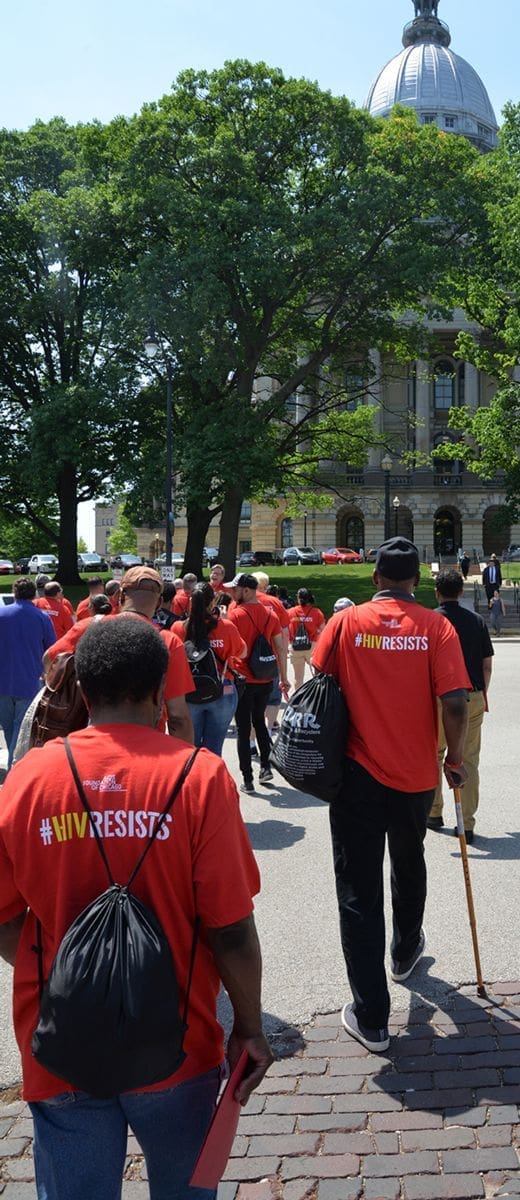 Illinois Gov. JB Pritzker gave his first budget address on Wednesday, Feb. 20, which included level funding for HIV services in fiscal year 2020 (FY2020). Pritzker stated that his proposed budget is more austere than he would like, but it is the first step in a four-year plan to put Illinois back on the path of prosperity and growth for its people, communities, businesses and economy. The governor noted that the state faces a $3.2 billion budget deficit and a $15 billion backlog of unpaid bills.
The AIDS Foundation of Chicago (AFC) is relieved to see a budget that, for the first time in at least four years, does not cut the health and human service infrastructure. Specific to health and human services, most programs were either flat-funded when compared to fiscal year 2019 (FY2019) or saw modest increases:
- Funding for the state’s flagship HIV prevention and treatment fund (the “HIV Lump Sum”) received a small increase of $77,200, for a proposed total of $25.5 million.
- The African American HIV/AIDS Response Act and other funding focused on HIV in communities of color is proposed to be flat-funded at $1.4 million.
- Supportive housing services, which provide vital assistance for people living with HIV or chronic behavioral or physical conditions, is flat-funded at $32.7 million, while Homelessness Prevention has a small proposed increase of $250,000.
- Medicaid, which provides health care services to a vast number of Illinoisans living with HIV and AIDS, is nearly flat-funded at $25.1 billion (this number includes the federal match).
AFC looks forward to working with the governor and the General Assembly to pass the revenue solutions needed to put Illinois back on the right financial footing, so that there is stable funding for services and programs needed to allow all Illinoisans to thrive and be their healthiest selves. AFC has long-supported the Fair Tax, which would move Illinois toward a progressive taxing structure under which higher-income people pay a higher percent of their income in taxes, while lower-income people pay less.
AFC’s President/CEO John Peller shared his own cautious optimism for the budget conversations in the coming weeks and months. “We are disappointed that the governor did not propose HIV funding increases to reach the Getting to Zero Illinois goal of ending the HIV epidemic by 2030. We look forward to continuing the conversation with the governor’s staff and state legislators to ensure that Illinois is making smart and equitable short and long-term investments in HIV screening, prevention and treatment.”
AFC pledges to work with legislators and advocates over the coming weeks and months to advocate for a $1 million increase in the HIV Lump Sum and a $1 million increase for HIV funding focused on communities of color for FY2020.
AFC urges advocates from across Illinois to save the date for HIV/AIDS Advocacy Day in Springfield on Tuesday, May 14, 2019.
On Friday, Feb. 1, Governor JB Pritzker expressed his administration’s commitment to ending the HIV epidemic by signing Executive Order 2019-08 in Rockford. We share our deepest gratitude for Gov. JB Pritzker’s commitment to signing an Executive Order to strengthen investment in HIV services and programs, and to use viral load metrics to ensure Illinoisians living with HIV are receiving quality support in their health care.
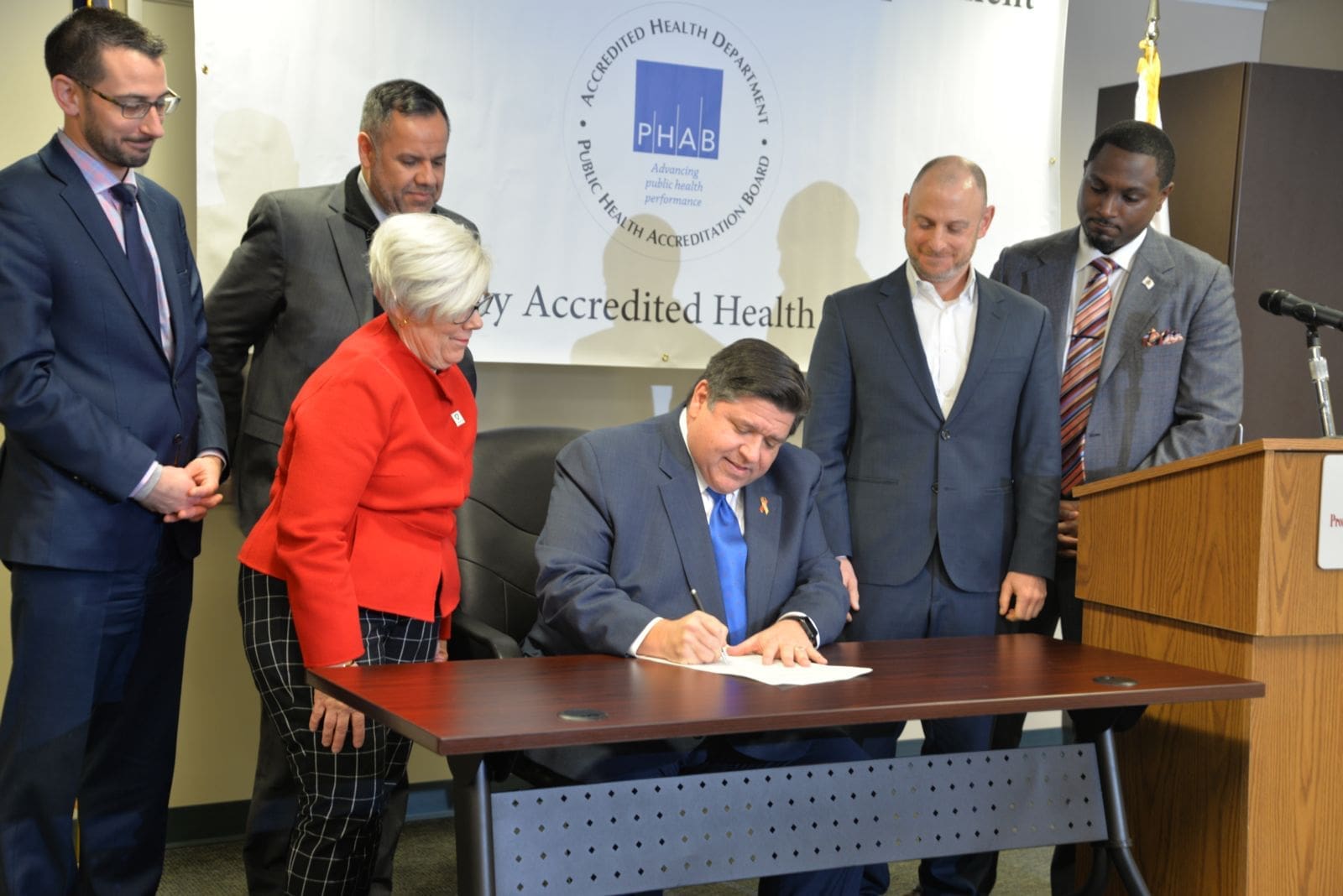 “While 1,375 people were newly diagnosed with HIV in 2017 alone and unacceptable health disparities in communities of color continue, over the past few years we’ve seen HIV prevention funding dry up, HIV testing rates go down, and HIV prevention and treatment agencies lay off staff,” said Gov. Pritzker.
“Now is not the time to back down from this fight. Now is the time to double down. This executive order defines the state’s commitment to the HIV epidemic and serves as a first step in ensuring the state is a good partner in this fight.”
During the period when there was no state budget under previous governor Bruce Rauner’s administration, only $200,000 was allocated to the African American HIV/AIDS Response Act at a time when the Black community is facing a public health emergency. We saw extensive decreases in funding to state programs and community-based clinics that support services for people living with HIV.
Today marks a momentous dedication from the state of Illinois to support communities of color, and to support HIV organizations’ statewide mission to end new HIV transmissions by 2030.
“We are proud to see the state of Illinois taking critical steps to end the HIV epidemic,” said John Peller, President/CEO of the AIDS Foundation of Chicago. “With a partner like Gov. Pritzker in the governor’s office, Illinois can eliminate health disparities and improve health outcomes for people living with HIV by holding Medicaid accountable for tracking and reporting viral suppression.”
Next steps:
Read the full press release here.
Join us in thanking Gov. Pritzker’s commitment to helping us end the HIV epidemic in Illinois!
Happy 2019! The new year brings in renewed energy, and AFC staff are back at work continuing their plans towards advancing health equity! With new and continuing projects underway, we checked in with three staff members about to see what they are most excited about for 2019.
 “In 2019, I am looking forward to being able to give the reentry returning citizens housing and employment opportunities through the Safe and Sound Return
  Partnership program.”
Donnise Gaffeney, Special Projects Manager
“A few of our long-term research and evaluation projects will wrap up data collection in 2019, like the Supportive Housing: Optimizing Placements study which is looking at health outcomes for people in different types of permanent supportive housing programs. I’m looking forward to diving into the data to shine a light on the ways that AFC’s programs impact our clients’ lives so our programs can evolve with those outcomes in mind.”
Amanda Peters, Research & Evaluation Data Analyst
 “In 2019, I am looking forward to continued collaboration with our Housing department to develop and implement a screener that will be used throughout Housing and Care programs. This new screener will standardize how we ask clients about their mental health and substance use issues so we can better connect them to appropriate services.”
Alex DeLakis, Medical Case Manager
Want to stay up to date on all that we are doing this year? Click here to sign up for our newsletter!
 By Pride Action Tank
Today, we bear witness to one of the ways Donald Trump will influence American history for years to come. On this day, the Supreme Court of the United States, in a five to four decision, led by the conservative justices, allowed discrimination against transgender people in the military to stand while legal battles continue to play out in lower courts. Pride Action Tank strongly condemns this decision and believes in the humanity and dignity of the more than 15,000 transgender members of the US armed services.
Although members of both parties, military commanders, veterans and many in the general public have criticized the Trump Administration’s proposed ban and other restrictions on transgender people in the military, the Supreme Court has given the green light for this abhorrent policy to continue. This is not right!
We’ve seen how a Supreme Court made up of a majority of conservative justices can roll back, slow down and even erase the civil rights gains of minority groups. We cannot let this happen to our transgender, gender nonconforming, and intersex kin.
The American democratic system of checks and balances centers on “we the people.” We must remind our elected officials that we will not stand for this. And, we must elect people into office who believe in the humanity of all people and deploy their power and influence in support of this belief.
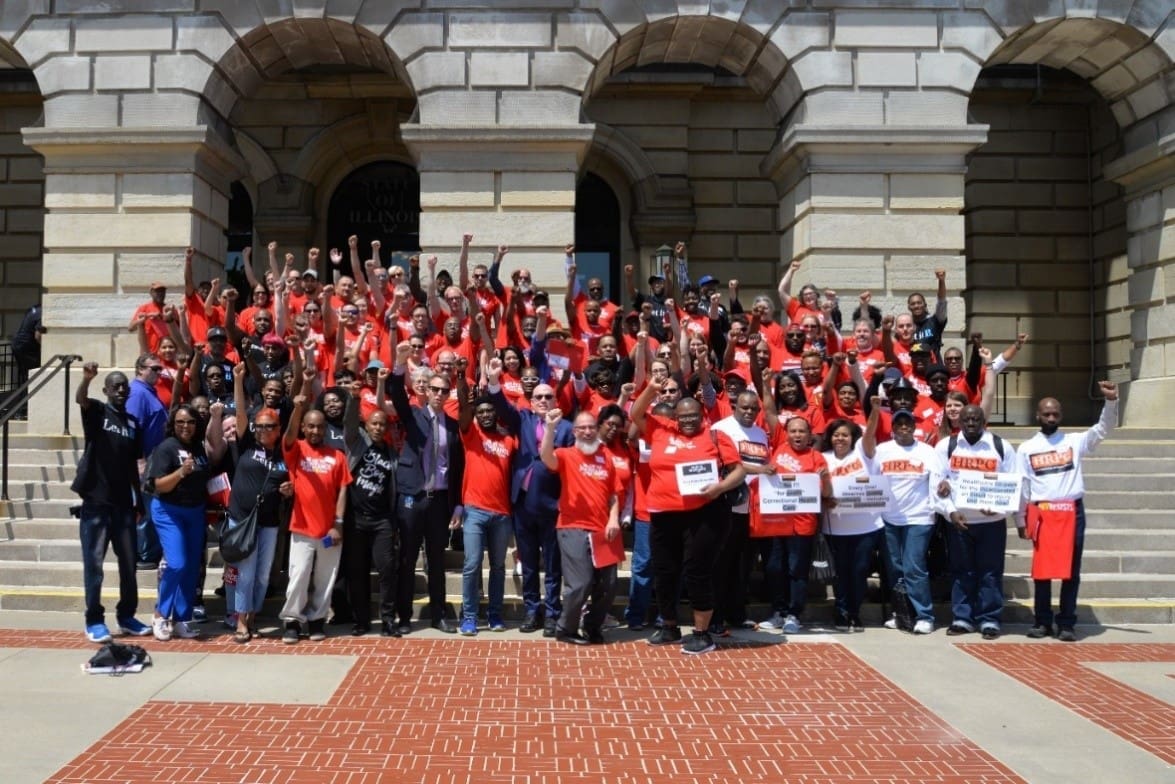 2018 was another year full of policy and legislative ups and downs on all levels. However, AFC and like-minded advocates across the country stayed strong when faced with sometimes harsh and inhumane policies that threatened the livelihoods of our communities. Here are a few of the most influential policy and legislative highlights of the year.
Illinois Medicaid hepatitis C treatment restrictions lifted
25% of people living with HIV are also living with Hepatitis C (HCV), the deadliest infectious disease in the U.S.
Good news: There’s a cure.
Bad news: Individuals enrolled in Illinois Medicaid were required to have severe liver damage before receiving coverage for treatment that would cure them of HCV. Additionally, some Medicaid participants were required to provide proof of sobriety for six months, a further barrier to access.
The Win: AFC collaborated with the Legal Council for Health Justice, Howard Brown Health and other partners to help identify and recruit Illinois Medicaid participants to file a federal class-action lawsuit to challenge these restrictions. Together with attorneys from Legal Council, Jenner & Block LLP and the Center for Health Law and Policy Innovation at Harvard Law School, a formal letter was sent on behalf of those participants, which resulted in Illinois Medicaid changing this policy and covering HCV medications without additional barriers or restrictions.
 Female (Internal) condom reclassification could expand access
Female condoms (now renamed as internal condoms to de-gender the sexual health device) were reclassified this year by the U.S. Food and Drug Administration (FDA) to fall under the same category as external condoms. This change will make the product more accessible to consumers and will lessen the burden on manufacturers when seeking FDA approval for already existing and newly developed versions of the product. AFC has worked as the secretariat for the National Female Condom Coalition, a key leader in the fight to reclassify female condoms, since its inception in 2011 and celebrates this victory as a major step toward expanding access and opening the door to more options for folks to take control of their sexual health.
Unregulated junk health insurance – no more in Illinois!
Short-term health insurance plans were originally created for those in between longer-term plans, such as those provided by an employer. While short-term plans may seem more affordable than their counterparts, they do not cover nearly as many services, can leave consumers with very high medical bills and are not a replacement for comprehensive health insurance. Consumers buying these plans would be left with no real coverage for the services they need, especially those related to pre-existing conditions, mental health and prescriptions. Regardless, new federal rules now allow short-term plans to extend for a year and can even be renewed for as long as three years. However, AFC and its partners in the Protect Our Care Illinois coalition led Illinois consumer advocates and worked with state legislators to pass a bill that would limit these plans. The bill defining and regulating these plans in Illinois will now become law, and these “junk” insurance plans are limited to six months of coverage and come with clear “buyer beware” disclosure language.
Continued Illinois funding for HIV prevention, supportive housing and more!
Thanks to the hundreds of HIV advocates throughout the state who contacted their legislators, traveled to Springfield to meet with their legislators and the governor, and to the legislators who championed continued funding for HIV services and other supportive services throughout the state, Illinois has a healthy budget for HIV services in FY19. The final budget for FY19 provides $25.4 million for the state’s primary HIV funding account, $1.2 million for HIV services geared towards reducing the disparity of new HIV and AIDS diagnoses among Black populations, and $13.4 million for supportive housing. While Illinois is seeing overall lower numbers for new HIV-positive diagnoses each year, sustained funding is important to continue offering HIV screenings and access to prevention education and supportive services for those living with and vulnerable to HIV.
Will Wilson in D.C. to advocate for people living with HIV
Long-time HIV advocate and AFC community leader, Will Wilson, was invited to Washington, D.C., to share his story with key stakeholders in the name of protecting equitable health care access. During his one-day trip, he spoke about his experience with his former junk health insurance plan that did not cover his HIV-related care and eventually pushed him into medical bankruptcy. He also addressed the dangers of Medicaid work requirements, particularly for people living with HIV, and advocated for such requirements to no longer be allowed. Will’s advocacy helped emphasize the importance of keeping health care comprehensive, affordable and less stressful, especially for those who access the medical system the most. Read more about Will’s experience on our blog.
Proposed federal Public Charge Rule
This past year, the Trump administration proposed expanding the list of criteria that would render an immigrant unable to apply for a green card or change their immigration status. This expanded list would mean that some people looking to change their immigration status in the U.S. would have to choose between changing their immigration status or programs like Medicaid, SNAP (food stamps) or housing assistance programs. These proposed changes are inhumane, which is why AFC stands with local and national partners in an effort to fight back against them.
What’s next? The period for public comment on this public charge rule ended Dec. 10, 2018, but AFC will continue to monitor the status of this proposed rule as well as weigh-in and share opportunities to fight back against it in 2019 and beyond. Thank you to the numerous advocates and organizations who pushed back against the implementation of this ruling and to the legislators who are ensuring that our communities have continued equitable access to supportive services.
Want to get more involved with policy and advocacy? Join AFC’s Mobile Engagement Network and get updates on state and federal actions that affect health equity.